REVIEW · ATHENS
Acropolis: Acropolis and Parthenon Guided Walking Tour
Book on GetYourGuide →Operated by Athens Walks Tour Company · Bookable on GetYourGuide
Parthenon views come fast. This guided climb from the Theatre of Dionysus up to the Parthenon turns ancient ruins into a storyline you can follow, and the wireless hearing devices help you keep up even when the Acropolis hill is packed. The main downside to plan around is that it is not suitable for wheelchair users, and you will be doing real walking over uneven ancient surfaces.
I like that you don’t just stare at big monuments. You get a sequence of places with clear explanations, from sacred entry points to temples, plus those smart panoramic stops where the city layout clicks in your head. You’ll finish near the Acropolis Museum area, and the museum add-on can be worth it if you want more context after the hill.
Before you go, pack for comfort. Bring comfortable shoes, a sun hat, and sunscreen, and expect crowds at peak times. If tickets sell out on the day, it’s easier when you choose the option that includes Acropolis entry.
In This Review
- Key things that make this Acropolis tour work
- A tight route from Dionysus Theater to the Parthenon (2–4 hours)
- Meeting at Porinou 5 and hearing every word with wireless devices
- Theatre of Dionysus: the start of Greek drama
- Odeon of Herodes Atticus: music, crowds, and power
- Athena Nike, Propylaea, and the feeling of entering a sacred world
- Erechtheion and the Caryatids: myths you can see
- The Parthenon: precision, purpose, and panoramic Athens
- Asklèpieion and Odeon details: small stops that add up
- Optional Acropolis Museum visit: when it makes sense
- Price and value: what $36.14 covers (and what it doesn’t)
- Practical tips to enjoy it more on a crowded hill
- Who this Acropolis and Parthenon tour is best for
- Should you book this Acropolis and Parthenon guided walking tour?
- FAQ
- FAQ
- How long is the Acropolis and Parthenon guided walking tour?
- Where do you meet the guide?
- Does the tour include wireless hearing devices?
- Is skip-the-line entrance included?
- Is the Acropolis entry ticket included?
- Can I add the Acropolis Museum to the tour?
- What should I bring, and is there anything I can’t bring?
Key things that make this Acropolis tour work

- Licensed guide with historical storytelling: You’ll get context for how the site was used, not just what it looks like.
- Wireless hearing devices: Helps you hear directions and explanations clearly in a loud, crowded area.
- The route is built for flow: Starting at the Theatre of Dionysus and ending near the Acropolis Museum keeps the story moving uphill.
- Skip-the-line access (when selected): Separate entrance plus pre-booked tickets can save you from day-of ticket stress.
- Parthenon viewpoints included: You’ll pause long enough to connect the views with the architecture.
- Optional Acropolis Museum add-on: If you choose it, you get the museum visit too, with skip-the-line entry.
A tight route from Dionysus Theater to the Parthenon (2–4 hours)
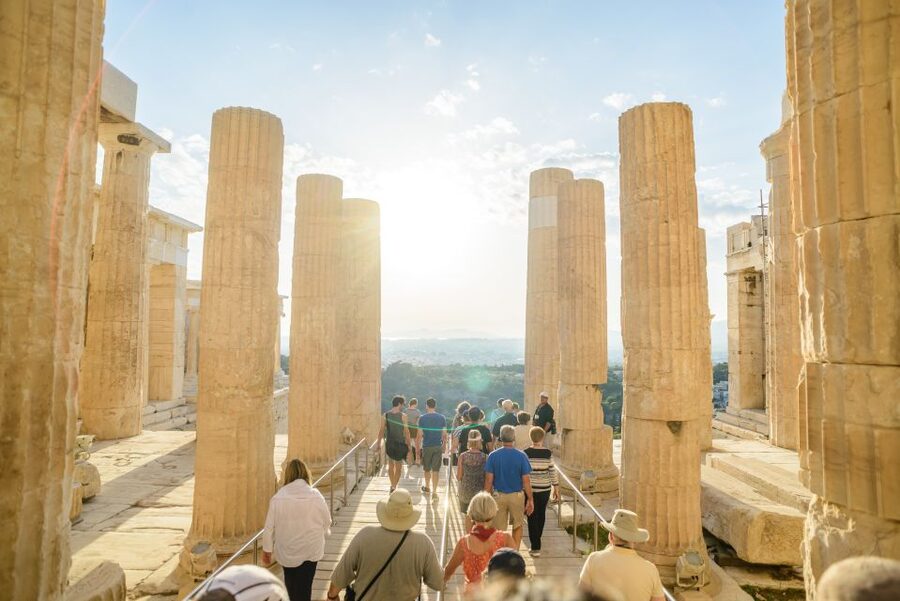
This tour is designed for people who want the big Acropolis hits without losing the thread. In 2–4 hours, you cover the main monuments that explain why Athens looked the way it did in the classical period, and you also get the kind of visual “checkpoints” that make the Parthenon feel real instead of abstract.
The smart part is pacing. You’re not sprinting from photo spot to photo spot. You’re walking between places where the guide can explain what you’re seeing and why it mattered. That’s the difference between collecting snapshots and coming away with a mental map of the Acropolis.
You’ll also benefit from having an organized meeting and grouping system. The meeting point is at Porinou 5, at the Athens Walks tour office, and it’s about a two-minute walk from the Acropolis metro station. That matters in Athens, where a few wrong turns can cost you precious time on a crowded hill.
You can also read our reviews of more walking tours in Athens



Meeting at Porinou 5 and hearing every word with wireless devices

Meet at the Athens Walks tour office at Porinou 5, 11742. You’ll start there and (as stated by the tour format) the activity ends back at the meeting point. So even if you finish near the Acropolis Museum (Μουσείο Ακρόπολης), the plan is still to bring your group back to where you began.
One practical win: wireless hearing devices are included. On the Acropolis, sound gets swallowed by wind, crowds, and people moving in different directions. Having the audio helps you catch the guide’s explanations and reminders so you stay with the group.
One small consideration: if you end up far from your guide, the audio can be less clear. So try to keep a comfortable distance from the person speaking, especially at bottlenecks near gates and temples.
Theatre of Dionysus: the start of Greek drama

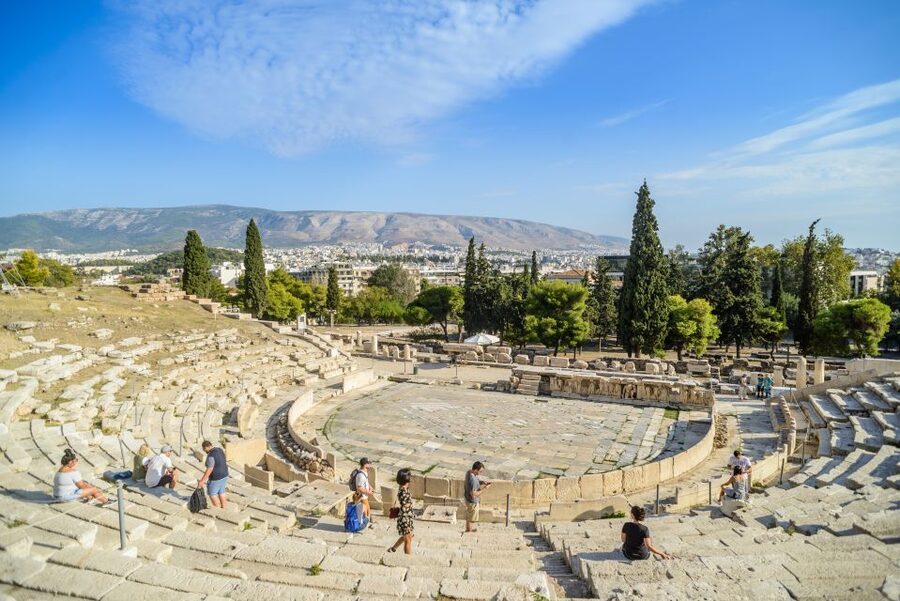
The tour kicks off at the Theatre of Dionysus, the birthplace of drama and the oldest Greek theater still in existence. Even if you don’t know the details of Greek tragedies, standing among the old stone seats makes the whole idea of civic life click. This wasn’t background entertainment; it was a public event tied to identity, religion, and politics.
You’ll get a short guided stop here (around 15 minutes of walking plus guided time in the wider flow), and it sets up what comes next: theater, worship, and power all share the same Acropolis “language.” It’s a strong opener because it gives you a theme before you start climbing.
In the same area logic, the early stops also help you avoid later confusion. When you start the Parthenon section, you’ll already understand the idea of sacred space and civic performance, which makes the architectural details easier to hold onto.
Odeon of Herodes Atticus: music, crowds, and power

From Dionysus, you’ll move toward the Odeon of Herodes Atticus. This stop is guided (about 15 minutes) and it’s worth paying attention to because it shows how Athens used large spaces for culture and spectacle long after the oldest layers of the city were built.
What you’ll take from this moment isn’t just that it’s an old theater. It’s the sense of scale and intention: Athens liked public gatherings, and they built places that could hold attention. After this, climbing toward the temple zone feels less like random walking and more like moving through a planned civic space.
Athena Nike, Propylaea, and the feeling of entering a sacred world
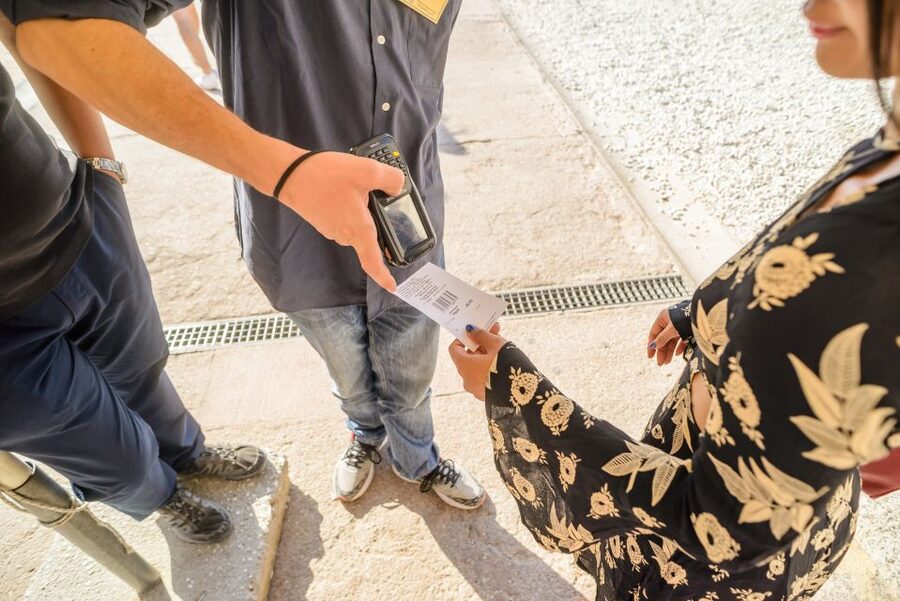
Next, you’ll encounter the Temple of Athena Nike (guided about 10 minutes) and then head to Propylaea, the monumental entrance gateway (guided about 15 minutes). This is where the tour starts to feel architectural in the best way.
The Temple of Athena Nike anchors the idea that religion and civic identity are braided together. Then Propylaea shows you a different kind of power: symmetry, scale, and an entrance designed to impress. Even from a few angles, it helps you understand why people talk about the Acropolis as something more than ruins—it was meant to be seen.
If you’ve ever visited a big monument and felt like you missed what the builders intended, this section helps. You’ll stand at the gateway and the guide’s story gives the space a job: transition from city life to sacred place.
You can also read our reviews of more guided tours in Athens




Erechtheion and the Caryatids: myths you can see
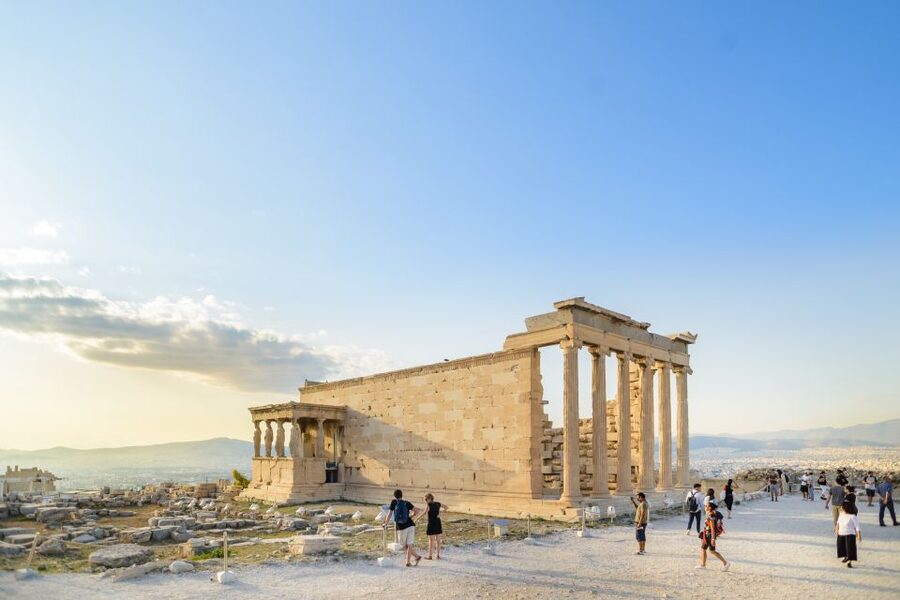
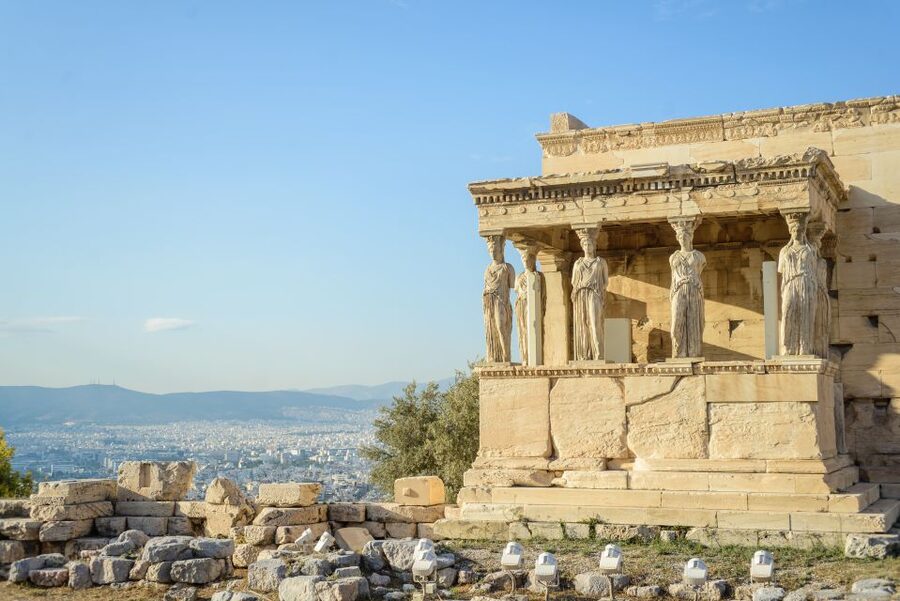
The Erechtheion is one of the most interesting stops because it’s not just a “pretty temple.” You’ll focus on the Caryatids, the female figures used as supporting columns, and you’ll hear the legends tied to this sanctuary.
The guide also connects you to the mythic layer: the story involving Athena and Poseidon for Athens’ patronage is part of why this place carries weight. Once you connect myth to architecture, the Caryatids stop being generic “statues” and start being part of how Athenians talked about protection, identity, and divine choice.
This stop is guided for about 15 minutes, and it’s usually a good moment to slow down. Uneven stone can make you rush, but the better move is to pause and let your brain read what you’re looking at.
The Parthenon: precision, purpose, and panoramic Athens
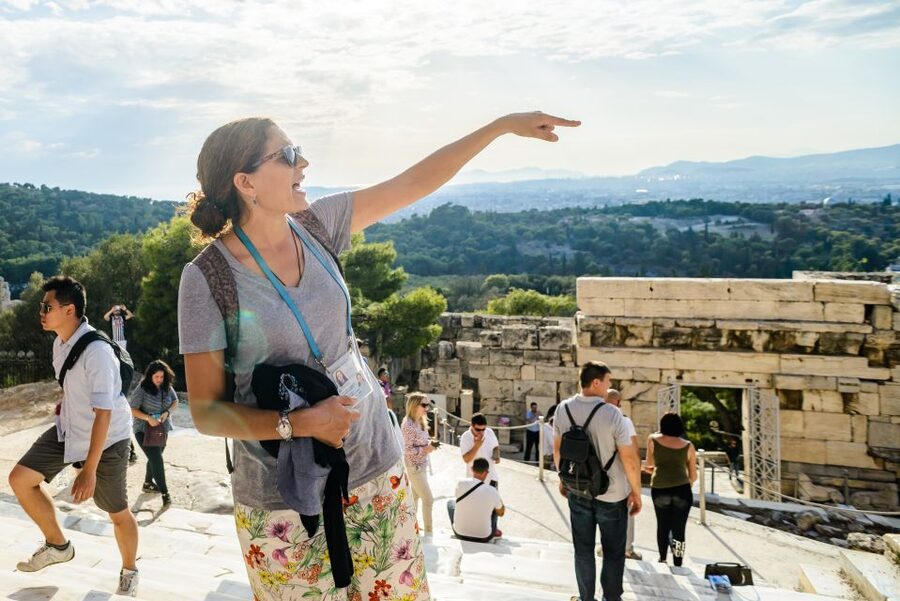
Then comes the main event: the Parthenon, guided for about 30 minutes. This isn’t just the tallest photo spot on the hill. The guide explains why the Parthenon was built as a sanctuary for Athena, and why it became a symbol of Athens’ influence.
Here’s what I think you’ll enjoy most if you like understanding design: you’ll get the sense of how ancient builders aimed for precision. You’ll also connect the building to the idea of civic pride and religious meaning. It’s not only about one temple; it’s about what the temple represented.
And yes, there are panoramic views. You’ll look out over modern Athens and see how the ancient layout sits inside today’s streets. This is one of those “I get it now” moments where the story you heard earlier starts to make spatial sense.
If you’re short on time, don’t skip the pauses. The guide’s explanation is timed to land while you’re oriented to the view. Try not to run ahead for photos; staying with the group helps you catch the key points.
Asklèpieion and Odeon details: small stops that add up
Some of the stops on this route are shorter but still useful. You may pass through the Asklepieion of Athens area (guided about 10 minutes) and you’ll also spend time at the Odeon of Herodes Atticus. These bits can feel like filler if you’re only chasing the Parthenon photo.
But in practice, they help you understand the Acropolis as a lived-in religious and cultural center. Athens didn’t treat its landmarks like separate postcards. It treated them like parts of one big sacred-and-civic system.
These short guided windows are also helpful when the hill is busy. Instead of wandering and hoping you’ll find the meaning yourself, you get a guided interpretation that keeps you from missing the important stuff.
Optional Acropolis Museum visit: when it makes sense
Your tour route finishes in the neighborhood of the Acropolis Museum (Μουσείο Ακρόπολης). You can also choose an option that adds a guided museum visit and skip-the-line entry for the museum (stated as available in the English version).
If you’re a visual person, I’d lean toward the museum add-on. The Acropolis walk gives you the big outdoor layout. The museum tends to let you zoom in on details you can’t properly see on the hill.
Also, if you’re the type who likes to connect objects to stories, the museum format helps you remember what you just learned. It’s especially good after you’ve stared up at architecture for a while and want to bring that story back down to human scale.
Price and value: what $36.14 covers (and what it doesn’t)
The price shown is $36.14 per person, for an experience listed at 2–4 hours depending on starting times. What makes it feel like decent value is what’s included.
You’re getting:
- a tour with an expert licensed guide
- wireless hearing devices
- skip-the-line entrance tickets if you select the option with tickets
- a convenient meeting point near the metro
Also, depending on the option you choose, you might include:
- entry ticket to the Acropolis
- skip-the-line entry for the Acropolis Museum
- a guided Acropolis Museum visit (English version)
Food and drinks are not included, and there’s no hotel pickup or drop-off. That’s normal for a city-walk style tour, but it does mean you should plan your day around it. Bring water if you know you’ll need it, and keep meals separate from your walking time.
One smart note: Acropolis tickets can be hard to secure on the spot. You’ll do yourself a favor by choosing the option that includes tickets, since it’s commonly tough to find available entrance tickets at the last minute.
Practical tips to enjoy it more on a crowded hill
This tour is straightforward, but a few habits make a big difference.
- Wear comfortable shoes. You’ll be on uneven stone and steep sections.
- Bring a sun hat and sunscreen. Athens sun can be intense.
- Use your passport or ID card. It helps with reduced ticket eligibility for people under 25 (you should show a photo of your passport or ID).
- Pack light. Pets are not allowed, and luggage or large bags are not allowed.
If you’re going with a group or you’re sensitive to crowd noise, the wireless devices are your friend. Just don’t expect them to replace staying close to the guide at key moments.
Who this Acropolis and Parthenon tour is best for
This is a great fit if you:
- have only 1–2 days in Athens and want the core Acropolis story fast
- like guided context more than self-guided wandering
- want organized skip-the-line help so you don’t lose time at the entrance
- enjoy architecture plus myth explanations
It’s less ideal if you:
- need wheelchair-friendly access (the tour is stated as not suitable for wheelchair users)
- hate walking uphill or on uneven surfaces
- want total flexibility to go at your own pace without group timing
Should you book this Acropolis and Parthenon guided walking tour?
If you want a clean, fast route with a real guide story, I think this is a smart booking. The guide format plus wireless hearing devices solve two of the biggest Acropolis problems: crowd noise and confusion about what you’re looking at. And with optional museum time, you can turn a short hill visit into a fuller Athens lesson.
I’d book it especially if you’re trying to avoid ticket headaches and you like the idea of a guided plan that starts at Dionysus and ends with a Parthenon viewpoint payoff.
FAQ
FAQ
How long is the Acropolis and Parthenon guided walking tour?
It’s listed as 2–4 hours, depending on starting times. Check availability to see the exact start schedule.
Where do you meet the guide?
Meet at the Athens Walks tour office at Porinou 5, 11742, which is about a two-minute walk from the Acropolis metro station.
Does the tour include wireless hearing devices?
Yes. Wireless hearing devices are included so you can hear the licensed guide clearly.
Is skip-the-line entrance included?
Skip-the-line entrance tickets are included only if you select the option with tickets. The tour also notes skip-the-line entry through a separate entrance.
Is the Acropolis entry ticket included?
It depends on the option you choose. The tour states that an entry ticket to the Acropolis is included only if the option is selected.
Can I add the Acropolis Museum to the tour?
Yes, but it’s optional. A guided tour of the Acropolis Museum and skip-the-line entry are included only if you select the Acropolis Museum option (English version).
What should I bring, and is there anything I can’t bring?
Bring passport or ID, comfortable shoes, a sun hat, and sunscreen. Pets aren’t allowed, and luggage or large bags aren’t allowed.