REVIEW · BELFAST
A History of Terror – Belfast City Centre Walking Tour
Book on Viator →Operated by DC Tours · Bookable on Viator
Belfast’s hard history has clear street names. This 2.5-hour walk connects the long British-Irish relationship to The Troubles, then ends at the river with stories of resilience and peace.
I love that headsets help you hear every word, even in tight city corners. I also like how the tour uses real locations—City Hall, Donegall Place, and Ann Street—so big politics turns into human stories you can picture.
One consideration: the topics are heavy. You’ll want a ready mindset, because parts of the route focus on violence, loss, and consequences, not casual sightseeing.
In This Review
- Key things to know before you go
- City Hall to The Troubles: setting the tone in 20 minutes
- Donegall Place and the Ring of Steel: where the city feels different
- Castle Lane: the Troubles in street-level detail
- The Spirit of Belfast (aka the Onion Rings): resilience made visible
- Cathedral Quarter: street art, nightlife, and a path toward peace
- Ann Street and policing: how the rules changed
- The Waterfront and Beacon of Hope: ending with a look forward
- Price and value: why this tour costs $36.06
- What it feels like on the ground: listening, stopping, and staying steady
- Who should book this and who might skip it
- Should you book A History of Terror in Belfast City Centre?
Key things to know before you go
- Small group size (up to 25): easier questions, less rushing at each stop.
- Headsets included: you’re not stuck craning your neck for whispers.
- 1.5 miles of mostly flat walking: comfortable shoes matter, but it’s not hill country.
- Seven major stops tied to key moments: City Hall to the Waterfront forms a clear story arc.
- Cathedral Quarter + street art side of Belfast: you finish with regeneration, nightlife, and modern Belfast in view.
- Weather-proof planning: you dress for rain, because the tour runs in all conditions.
City Hall to The Troubles: setting the tone in 20 minutes
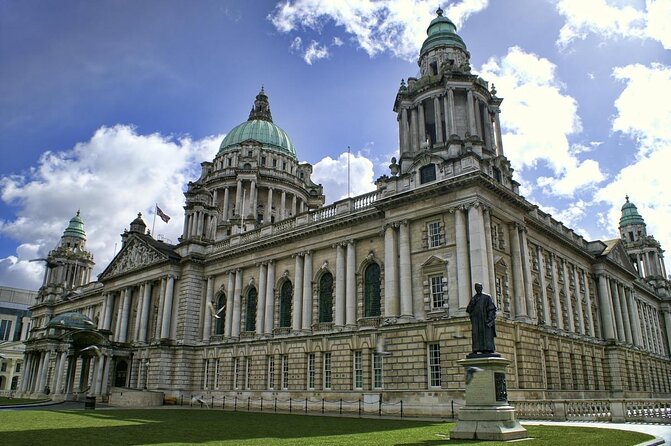
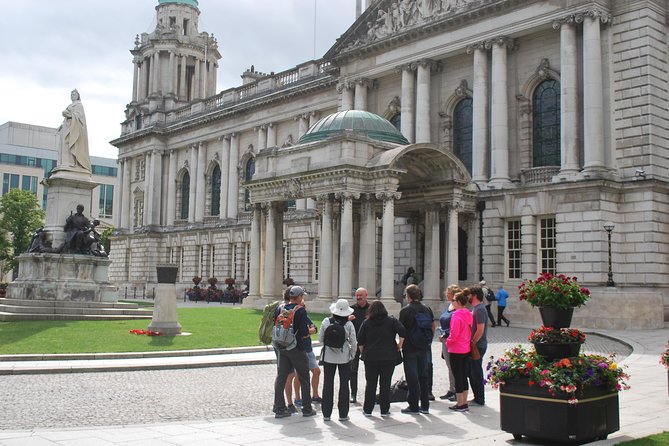
Your tour starts at Belfast City Hall, right by Donegall Square North. Before you even hit the shopping streets, your guide frames what you’re about to see—centuries of relationship between Britain and Ireland, and then the late-1960s spark that led to The Troubles.
This first stop matters more than you might think. If you show up knowing only the headline term, the City Hall introduction helps you understand why people became radicalized, why institutions changed, and why the conflict dragged on for so long. You’re not asked to pick sides here. You’re asked to understand how the situation formed.
You’ll also notice how the tour uses Belfast itself as the textbook. The buildings, the streets, and even the layout of the centre help your brain connect the timeline.
You can also read our reviews of more walking tours in Belfast

Donegall Place and the Ring of Steel: where the city feels different
From City Hall, you head toward Donegall Place, Belfast’s main shopping street. Today it can feel like any other British or Irish high street—until your guide points out what used to happen here.
This stop focuses on a 1971 nightclub bombing and the tragic chain of events that followed. It also introduces the idea of the Ring of Steel, the security approach that shaped daily life for years afterward. The key value of this moment is the contrast: you get to stand in a normal-looking place and understand how “normal” was altered by surveillance, fear, and the constant sense that something could happen.
Practical note: this is a short stop, around 15 minutes. You’ll get the context fast, and then you’ll move on—so listen closely, and don’t assume you’ll have time to ask everything right there.
Castle Lane: the Troubles in street-level detail
Next is Castle Lane, tucked in the pedestrian precinct area. This is one of those Belfast streets where foot traffic today makes it easy to forget how tense and dangerous the same streets were in the height of the Troubles.
Your guide explains the realities of daily life during that period and shares details of an event that still sits prominently in Belfast’s memory. Even without dramatic set design, the point lands: violence wasn’t abstract. It was calendar dates, specific streets, and real people whose routines got shattered.
What I like here is that this stop keeps you from turning The Troubles into a distant “history lesson.” You’re still moving on foot, still seeing shops and street life, and your guide keeps tying the timeline to what’s directly around you.
The Spirit of Belfast (aka the Onion Rings): resilience made visible
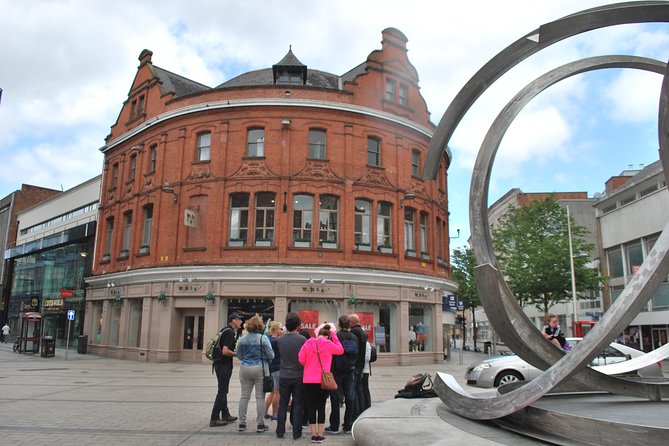
Then you arrive at an artwork called Spirit of Belfast—which many people know by its more playful nickname, the Onion Rings. You stand in its shadow while your guide connects the art to the city’s resilience and regeneration.
This stop is designed to pivot. You’ve spent time on the mechanics of violence and security. Now you hear how escalation happened—your guide talks about events that started in a nearby bar in 1971, and how that period spiraled into more violence.
That change of pace is important for your emotional balance. You’re not left in shock. You’re guided to see how Belfast processed trauma and rebuilt life after it.
If you’re the type who likes to understand the “why” behind modern identity, this is one of the best moments on the route—because public art is how a city tells its own story when nobody’s watching.
Cathedral Quarter: street art, nightlife, and a path toward peace
After the symbolic stop, you walk into the Cathedral Quarter. This area is known for culture and nightlife today, but your guide uses the regeneration story to bring the 1970s back into focus—then show how far Belfast has come since those dark years.
Expect two layers at once: you’ll notice street art, alleys, and lively bars, and you’ll also hear about how peace became possible. The guide’s job here is hard. They have to keep the mood respectful while also making you feel the momentum toward change.
This is where the tour really helps you understand Belfast as a working city, not just a memorial site. If you’re doing the tour on an early day—especially your first day in town—this stop can give you the context to enjoy the rest of your time with better eyes.
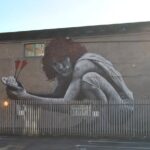
Ann Street and policing: how the rules changed
You then reach Ann Street, standing near what’s described as the largest police station in Belfast. This stop puts the spotlight on policing during The Troubles and explains how it evolved after the peace agreement.
Your guide also touches on the potential impact of Brexit on borders. That’s a smart inclusion for a modern tour because it connects “then” and “now.” Even if the violence ended, politics didn’t stop shaping daily life.
What helps here is how the story becomes institutional. You’re no longer just hearing about attacks. You’re seeing how governments and security systems reacted—and how those systems influenced the city’s rhythms.
This stop is also a reminder to be present. Watch the street layout, the way people move, and the sense of scale around official buildings. Belfast’s political history isn’t hidden. It’s written into the streets.
The Waterfront and Beacon of Hope: ending with a look forward
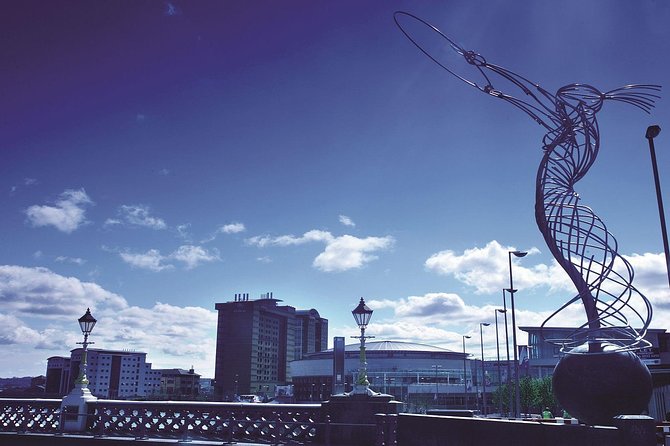
You finish at Beacon of Hope on the waterfront along the River Lagan. The ending location matters: it shifts you away from the densest political sites into a wider public space where you can breathe.
Here, your guide compares Belfast today with one of the darkest days in its history and explains how Belfast achieved fragile peace. Then it turns to what the future may hold, including how choices about identity and borders continue to matter.
The practical payoff is that the tour doesn’t dump you in the middle of nowhere. It ends around Oxford Street, and you can walk about five minutes back toward City Hall.
I also like the emotional structure. You move from conflict → security → everyday streets → public resilience → a forward-looking endpoint. It feels like a complete arc, not a scattered list of landmarks.
Price and value: why this tour costs $36.06
At about $36.06 per person for roughly 2 hours 30 minutes, this is priced like a serious guided experience, not a casual wander. The value comes from several practical elements working together:
- Headsets are included, so you get full audio clarity without strain.
- The route is mostly outside with no paid admissions at the stops listed.
- You’re not just hearing names of events—you’re getting the “how we got here” explanation at City Hall, then seeing related locations one by one.
- You’re walking a modest distance (about 1.5 miles) on a route described as completely flat, which makes the time feel efficient.
The tour also caps at 25 people, which helps keep the guide’s attention available. If you want a single, high-impact overview early in your Belfast stay, this price feels fair.
What it feels like on the ground: listening, stopping, and staying steady
This is not a “move fast for photos” tour. It’s structured, with stops around 15–20 minutes each, and a lot of the work happens while you’re standing and listening.
One reviewer-style theme (and it shows up in the design): the tour is often emotionally heavy, and you may do more hearing than walking. If that’s not your preferred pace, know that going in will save you from feeling impatient.
On the practical side:
- It’s offered in English.
- Your ticket is mobile.
- The tour runs in all weather. A waterproof jacket is recommended, and warm layers help in winter.
- Minimum age is 12.
- Service animals are allowed.
- Public transportation is nearby, and the route is flat, so you’re not fighting hills or steps—just Belfast pavement.
A simple tip: bring something to write on. Even if you don’t plan to take notes, you’ll hear details that are easier to keep if you can jot them down for later.
Who should book this and who might skip it
This tour is ideal if you want:
- A guided, fact-based explanation of The Troubles without turning it into sensational horror.
- A Belfast city walk where politics connects to everyday streets.
- Context you can use while visiting other sites afterward.
It’s also a strong first-day option. By the time you reach the Cathedral Quarter and the Waterfront, you’ll understand why Belfast looks the way it does and why people talk about peace the way they do.
If you prefer light, purely entertainment-focused sightseeing, this might feel too intense. You’re walking through a conflict’s legacy, not just a set of pretty corners. Go only if you’re comfortable handling difficult history.
Should you book A History of Terror in Belfast City Centre?
Yes, if your goal is to understand Belfast rather than just photograph it. For $36.06, you get a structured story from City Hall to the river, headsets that make the experience accessible, and a route that ties violence, policing, and eventual peace to the places you’ll actually see.
I’d book it if you:
- Want the balanced context that helps you make sense of competing memories.
- Like learning from someone local and story-driven.
- Can handle heavy subject matter with respect.
Skip it if you want a relaxed stroll, because this one asks for steady attention and emotional readiness.
If you do book it, wear comfortable shoes, pack a waterproof layer, and plan to carry the story with you for the rest of your Belfast days.