REVIEW · ROME
Rome: City Highlights Moonlight Walking Tour
Book on GetYourGuide →Operated by Carpe Diem Tours · Bookable on GetYourGuide
Night in Rome turns monuments into mood. This guided evening walking tour is built for an easier pace and better photos, with stops that feel iconic without the daytime crush. You’ll start near Piazza Navona, then move through key sights like the Pantheon and Trevi Fountain—and yes, you’ll get that illuminated look at the Colosseum under the moon.
What I like most is the way the tour connects places into a story. Guides often bring the streets alive with details people remember, including lively, narrative-style guiding from folks like Domenica, Vladimir, and Sila. A second win: you get Trevi at a calmer moment than the busiest daytime rush, so you can actually pause, look closely, and take photos that don’t feel like a sightseeing sprint.
One thing to consider: it’s still a walking tour. If you’re expecting lots of sitting down or short stops only, the format might feel a bit brisk, especially with uneven Roman sidewalks. Bring comfortable shoes and plan for steady steps.
In This Review
- Key Highlights Worth Your Time
- Why Rome Feels Different at Night
- Price and Value for a $28 Guided Walk
- Where You Start: Piazza d’Aracoeli or Piazza di Pasquino
- Piazza Navona: Bernini’s Fountain Over an Ancient Stadium
- From Navona to the Pantheon: Rome’s Big Engineering Flex
- Church Stop: Sant’Ignazio di Loyola and the Artful Side Streets
- Trevi Fountain at Night: Quieter Time, Better Photos, and Coin Ritual
- Piazza Venezia and the Altar of the Fatherland Area
- Via dei Fori Imperiali: A Straight Shot Through Ancient Rome
- Trajan’s Column to the Colosseum: Ending with Moonlight
- Guides Make or Break This Night Walk
- What to Bring and How to Prepare
- Who This Tour Is Best For
- Should You Book This Rome Night Walk?
- FAQ
- How long is the Rome City Highlights Moonlight Walking Tour?
- Where does the tour start?
- Where does the tour end?
- Does this tour include entry tickets to attractions?
- Are food and drinks included?
- What languages are the guides?
- Is the Colosseum included?
- What should I bring?
- Is private group available?
Key Highlights Worth Your Time
- Trevi Fountain at the quietest time of day for better photos and less shoulder-to-shoulder crowding
- Pantheon passes by with time to look at what makes it engineering-famous, including its dome details
- Piazza Navona’s ancient layer above an old Roman stadium, with Bernini’s Fountain of the Four Rivers as the centerpiece
- Illuminated Colosseum sighting outside the monument as you wrap up the walk
- Small, human pacing described by multiple guides who keep it lively and question-friendly (names like Pauline/Paulina, Csenge, and Sarah come up)
- Two starting options (Piazza d’Aracoeli or Piazza di Pasquino) so you can match your day’s plan
Why Rome Feels Different at Night
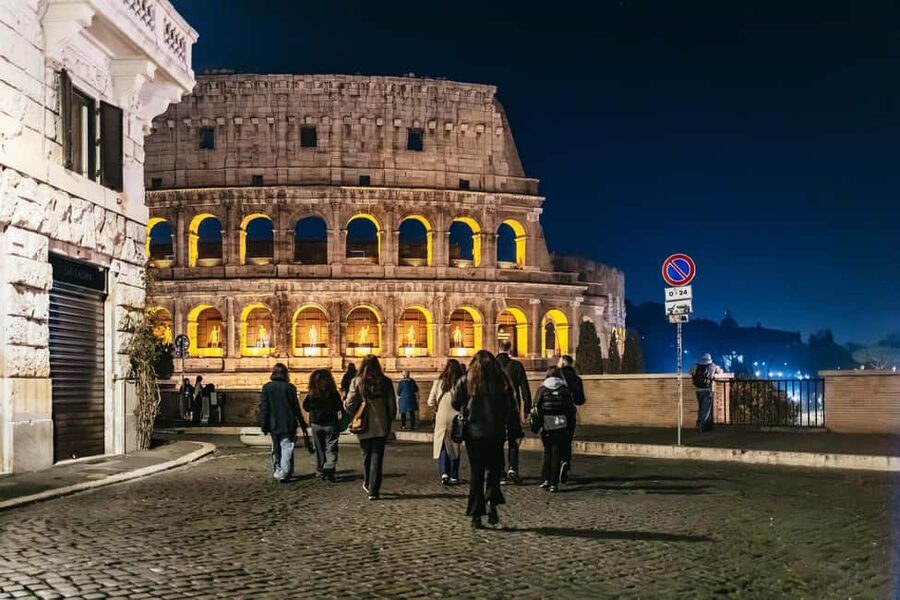
Rome at night has a trick up its sleeve. Street lights flatten the glare, shadows soften the edges, and you start noticing the details you’d miss during the hot, busy daytime hours. On this tour, that effect isn’t accidental. The whole route is designed around evening rhythm—walk a bit, pause a bit, listen a bit.
The best part is how the tour balances the big names with the human texture of central Rome. You’re not just checking boxes; you’re moving through squares, churches, and side streets while your guide explains how the city’s past still shows up in the layout. That narrative approach is exactly what people praise when they mention guides like Domenica or Alina—excited, energetic, and focused on making you understand what you’re seeing rather than reciting facts at you.
The pace matters too. At 2 to 2.5 hours, you’re not trapped all night, but you do get enough time for the highlights to land. And because it’s at night, the experience often feels like you’re getting your bearings fast—great if it’s one of your first outings in the city.
You can also read our reviews of more walking tours in Rome


Price and Value for a $28 Guided Walk
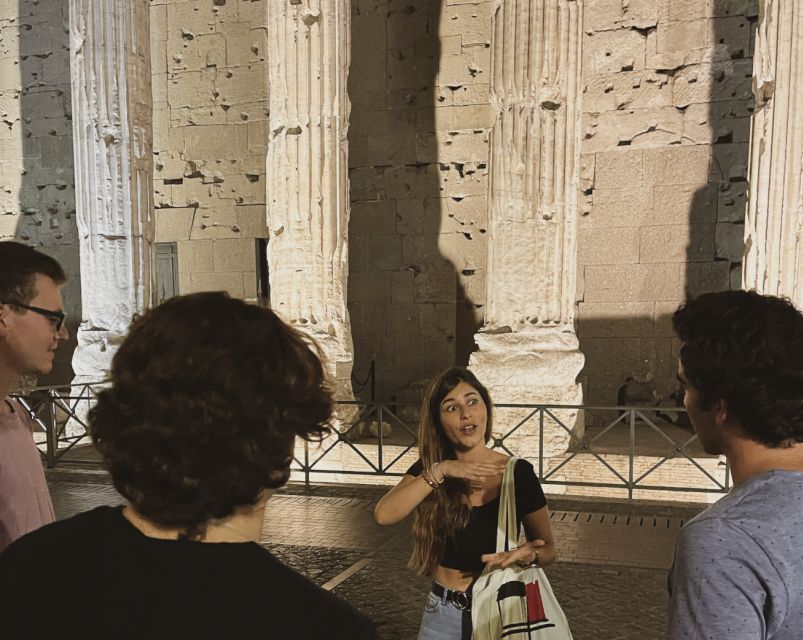
At $28 per person, this tour is priced like a practical add-on that can save time and effort. You’re paying for three main things: a live guide (English or Spanish), an organized route that hits the best-known sights efficiently, and enough interpretive time at stops to make the monuments click.
It’s also a good fit for travelers who want a “worth it” use of their evening. You won’t need taxis or transit planning for the core experience since it’s a walking circuit. And you avoid the common issue of wandering alone with a phone that only tells you what a place looks like, not why it matters.
What’s not included is just as important for value. There’s no entry to attractions and no food or drinks. That means your money is going toward guiding and the experience of seeing, not toward admission tickets. If you plan to add entrance tickets on another day, that’s easy. You’re basically using tonight for orientation and atmosphere.
Where You Start: Piazza d’Aracoeli or Piazza di Pasquino
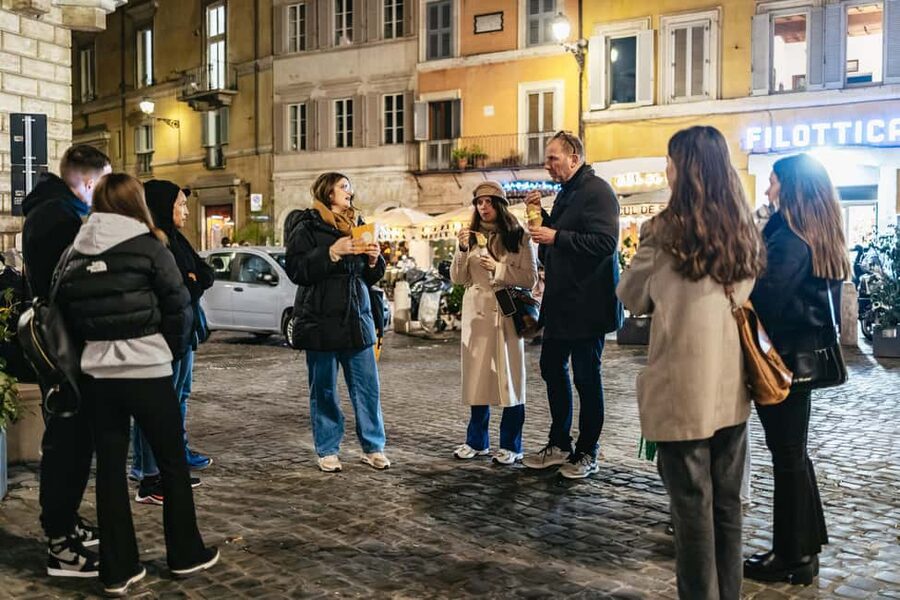
Your meeting point can vary depending on the option booked: either Piazza d’Aracoeli or Piazza di Pasquino. The tour ends back at the meeting point, which makes planning simpler if you’re already thinking about dinner afterward.
Even with different starts, the tour converges on the core central sights. The logic is straightforward: get you into the historic center when it looks best and move you toward the big monuments in a sequence that flows.
If you’re deciding between start options, think about how you’ve been spending your day. Want a slightly more natural warm-up walk before the tour? One meeting point may feel closer to where you’ll be before evening. Want to reduce transit and keep your night tight? Choose the start that matches your current location. Because the tour is short, those small choices actually matter.
Piazza Navona: Bernini’s Fountain Over an Ancient Stadium
The tour begins in the area around Piazza Navona, where ancient Romans once watched athletic contests. Today, the piazza sits above the bones of that older world. The setup is perfect for night guiding because the space feels intimate even though it’s famous.
You’ll spend about 20 minutes guided here, and the centerpiece is Gian Lorenzo Bernini’s Fountain of the Four Rivers. At night, the fountain often looks more dramatic than during the day, partly because the lighting changes how you perceive shapes and textures. And with a guide, it becomes more than a photo stop. You’ll learn how the piazza connects ancient sport to Renaissance-era spectacle.
A practical tip: keep your phone ready, but don’t live through the lens. This is one of those places where a quick look around the edges helps you understand the scale of the square and how it sits over the old stadium.
From Navona to the Pantheon: Rome’s Big Engineering Flex
From Piazza Navona it’s a short hop to the Pantheon, with a roughly 5-minute walk mentioned as part of the route. You’ll pass by the Pantheon for about 20 minutes. That’s enough time to slow down, look upward, and let the building do its work.
The Pantheon is one of the most preserved monuments from the Roman Empire, and the guide points out why people still talk about it: its unreinforced concrete dome. Even if you’re not an architecture nerd, standing there with the explanation in your head makes it feel less like a random must-see and more like a real technical achievement that shaped how people built afterward.
This is also a good moment for night energy. The Pantheon’s exterior and immediate surroundings feel calm compared with the daytime crush. If you’re the type who likes to understand before you start wandering on your own, this guided pass is a strong use of time.
You can also read our reviews of more city tours in Rome

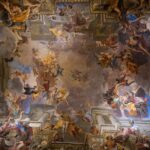
Church Stop: Sant’Ignazio di Loyola and the Artful Side Streets
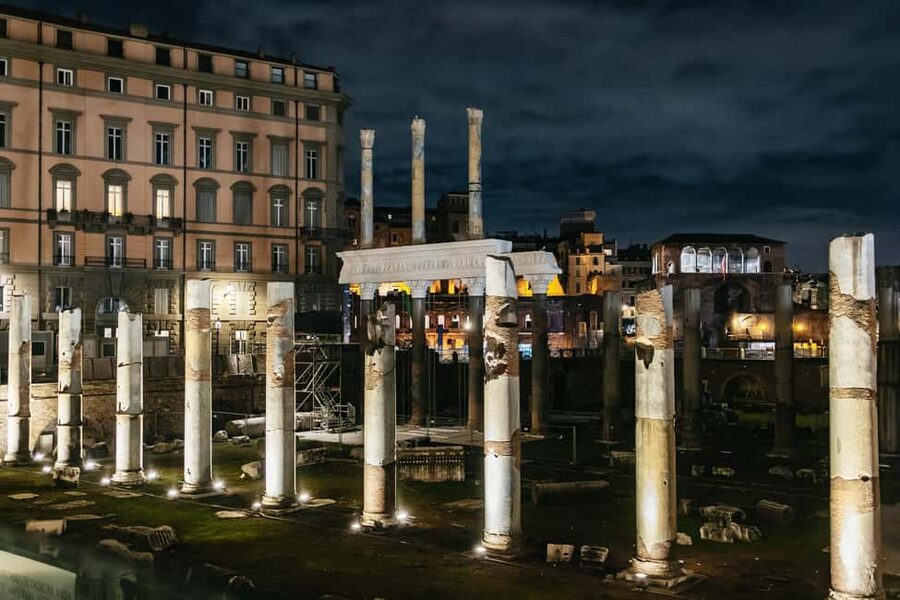
Next you’ll visit Church of Sant’Ignazio di Loyola for about 30 minutes, and then continue into other nearby stops. This is one of the tour moves that feels smarter than it sounds. A lot of walking tours rush through churches or treat them like quick exterior stops. Here, the timing suggests you’re getting more than a glance.
Why it’s valuable: churches in central Rome often act like story anchors. They mark shifts in style, taste, and power. Even if you only catch a few key ideas from your guide, the stop helps you feel how Rome evolved from ancient civic spaces into later religious and artistic settings.
After that, you’ll head to Galleria Sciarra for around 20 minutes. This kind of location is exactly why night walking tours work. You’re not only chasing the biggest landmarks; you’re also getting a sense of the city’s texture—passageways and quieter corners that can feel out of place in a daytime-only itinerary.
Trevi Fountain at Night: Quieter Time, Better Photos, and Coin Ritual
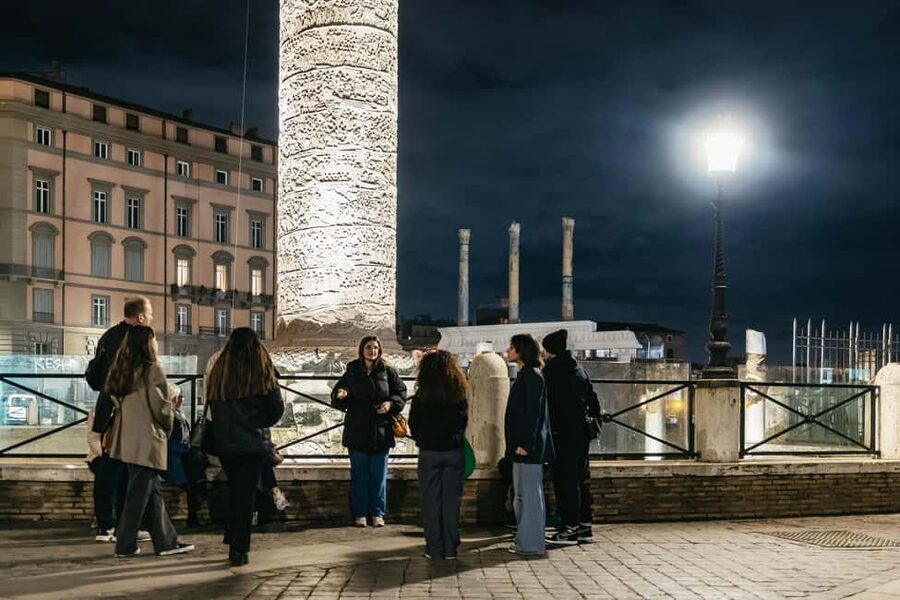
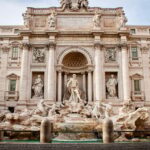
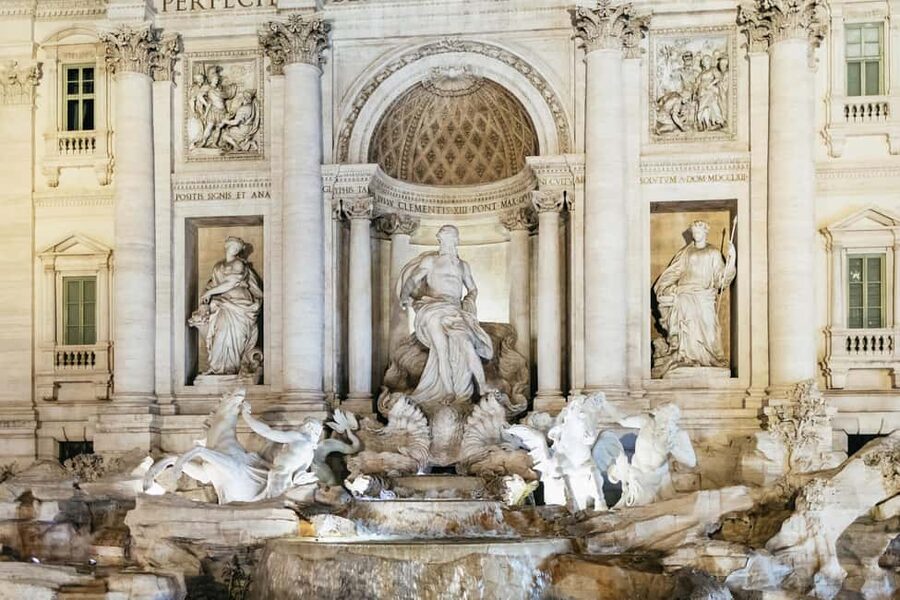
The tour’s Trevi segment is built around the moment you want: Trevi Fountain at the quietest time of day. You’ll spend about 30 minutes at the fountain with a guided explanation.
This is where you get a photo-friendly pause without the daytime level of crowd pressure. Your guide also decodes symbols, so the fountain becomes more meaningful than a backdrop. And yes, you’ll participate in the classic ritual—tossing a coin over your shoulder as part of the experience.
A realistic note: you’ll still be in a famous place, so it won’t feel empty. But the evening timing is the point. You’ll have space to look, listen, and take pictures that aren’t just crowd silhouettes.
If you care about photos, do your planning right. I’d spend the first minute soaking it in without shooting. Then take a second round of photos after your guide points out the details. You’ll get more variety than just snapping from the same spot.
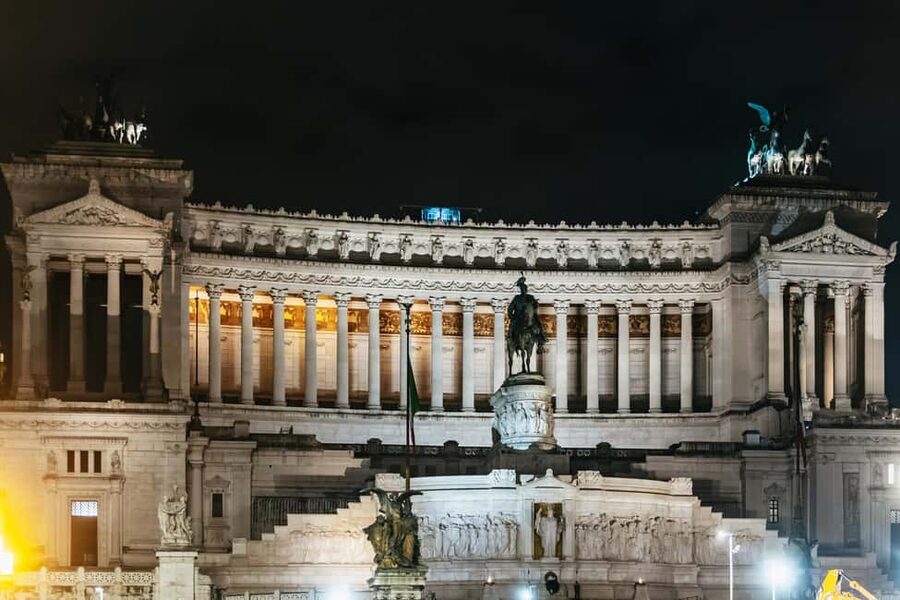
Piazza Venezia and the Altar of the Fatherland Area
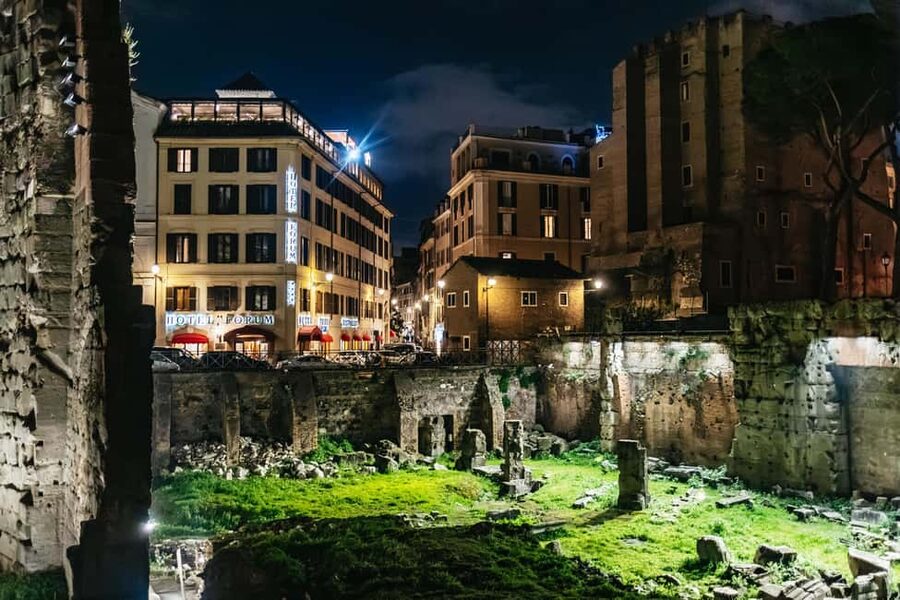
After Trevi, the route moves toward Piazza Venezia, with about 20 minutes guided here. This area is significant because it sits at the foot of Capitoline Hill and ties into the Altar of the Fatherland.
Even if you don’t plan to enter anything, the value of this stop is context. Piazza Venezia acts like a hinge between what you’ve already seen and what comes next: ancient Rome’s monumental density, followed by later layers of national identity that Rome wears like a second outfit.
At night, Piazza Venezia can feel more dramatic than you expect. Wide views and monument lighting help you understand why the area became a center of attention. And because your guide gives you the “why” while you’re standing there, you’ll likely feel more oriented for future walks on your own.
Via dei Fori Imperiali: A Straight Shot Through Ancient Rome
Next up is Via dei Fori Imperiali, guided for about 20 minutes. This is one of those Roman experiences that’s hard to replicate by wandering. The boulevard cuts through ancient Rome and takes you past layers of history that would be annoying to piece together solo.
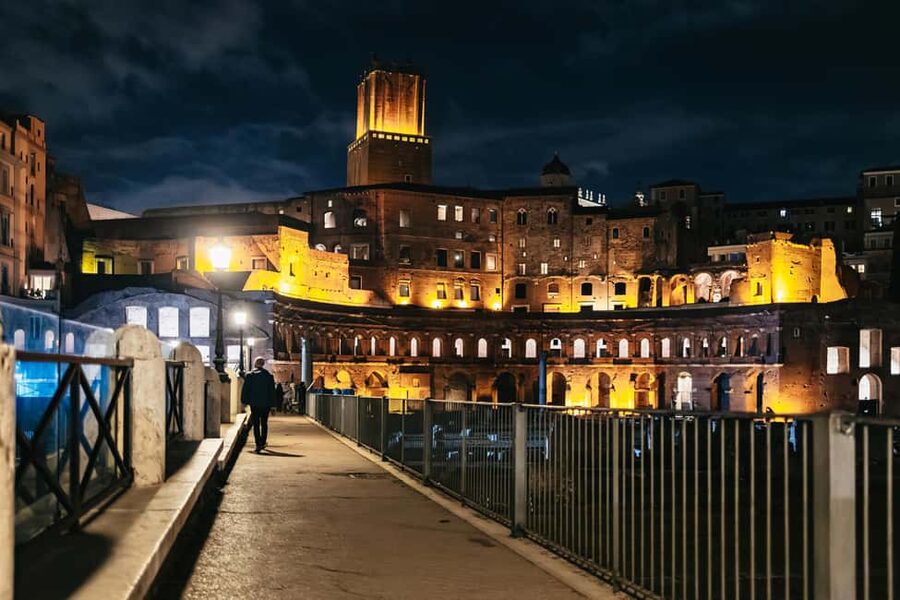
Your guide points out Trajan’s Column, then walks you alongside the forums connected with Trajan, Augustus, and Nerva. The practical advantage is that you get a guided map of the area in motion. Instead of staring at stone and guessing what it was, you’re hearing how these spaces worked as part of an empire’s public life.
If you like history but don’t want a textbook lecture, this portion hits a good middle ground. It’s active enough to keep attention while still giving the key landmarks you’ll recognize later.
Trajan’s Column to the Colosseum: Ending with Moonlight
You’ll pass Trajan’s Column for about 20 minutes and then continue along Via dei Fori Imperiali until you reach the final viewing: the Colosseum area. The tour culminates with an outside look at the monument, and one of the highlights specifically calls out seeing the illuminated Colosseum under moonlight.
This matters more than it sounds. The Colosseum can be visually overwhelming in the daytime. At night, the lighting makes the monument feel sculpted and dramatic rather than just large. The goal here isn’t ticketing or an inside visit—it’s the outside impression, plus the route context you’ve gained by the time you arrive.
Also, finishing around one of the most famous landmarks in the world helps you “close the loop” on the ancient story you’ve been hearing all evening. You end with a payoff, then you’re done in a manageable time window.
Guides Make or Break This Night Walk
The most consistent praise across guide experiences is the combination of clarity and energy. People specifically call out guides such as Pauline/Paulina, Domenica, Vladimir, Chenge, Sila, Sarah, and Alina for being engaging, funny, and excited to share history in a narrative way.
What that means for you in practical terms: the tour is more likely to feel like a guided walk with a story than a lecture with a stopwatch. And when guides add context—symbol meanings at Trevi, the dome discussion at the Pantheon, and connective tissue between piazzas and ancient streets—you’ll understand more without needing to look things up afterward.
If you’re choosing this tour because you want to learn, pay attention to how your guide explains. The best version of this experience feels like you’re being shown how to see, not just where to stand.
What to Bring and How to Prepare
This is a walking tour, so set yourself up for comfort:
- Comfortable shoes are non-negotiable on uneven sidewalks.
- Comfortable clothes help you stay focused on the sights rather than on adjusting layers.
- Bring your patience for crowds where you’ll hit famous stops, even at night.
If you’re prone to sore feet, consider doing minimal sightseeing earlier in the day. This tour is your evening plan, so keep your daytime legs from being completely fried.
Who This Tour Is Best For
This tour is a strong match if:
- You want a first-time orientation to central Rome.
- You’re short on time and still want a guided route hitting the headline sights.
- You prefer night ambiance over daytime heat and crowds.
- You enjoy narrative explanations, like the kind people mention with guides who keep the pace moving.
It’s also a good option for people who don’t want to commit to ticket lines or extra admissions tonight. Since entry isn’t included, you can pair this walk with another day for museums or monument interiors.
Should You Book This Rome Night Walk?
I’d book this tour if you want an efficient, guided way to see the core highlights while Rome is at its most photogenic. For $28, you’re getting a planned route, a live guide, and a strong night atmosphere—especially the payoff stops like Trevi Fountain and the illuminated Colosseum outside view.
Skip it if you’re looking for a heavily indoor, ticket-based itinerary. This one is built for walking, guided looking, and evening context, not entry-heavy sightseeing.
If you want, tell me your travel dates and whether you prefer the meeting area near Piazza d’Aracoeli or Piazza di Pasquino, and I’ll help you pick the start option that best fits your day.
FAQ
How long is the Rome City Highlights Moonlight Walking Tour?
The tour lasts 2 to 2.5 hours.
Where does the tour start?
The starting meeting point can vary by option: Piazza d’Aracoeli or Piazza di Pasquino.
Where does the tour end?
The tour ends back at the meeting point.
Does this tour include entry tickets to attractions?
No. Entry to attractions is not included.
Are food and drinks included?
No. Food and drinks are not included.
What languages are the guides?
Guides are available in English and Spanish.
Is the Colosseum included?
Yes, you’ll see it outside as part of the tour and enjoy views of the illuminated Colosseum.
What should I bring?
Bring comfortable shoes and comfortable clothes.
Is private group available?
Yes. Private group available is offered.