REVIEW · ROME
Rome City, Pantheon, and Trevi Fountain Walking Tour
Book on Viator →Operated by Republic Experiences · Bookable on Viator
Rome’s history feels like a street map.
This small-group walk keeps things personal with a cap of 15, yet still lands you at Rome’s big icons: Trevi Fountain and the Pantheon—plus quieter spots like Galleria Sciarra. One thing to plan for: Pantheon access costs extra, and this is a true walking tour (not ideal if your feet have issues).
I like that the stops are short and purposeful, so you get context without burning half a day in transit. You’ll also get plenty of chances to ask questions, and you can choose a morning or afternoon departure. The only real “watch out” is that you’ll want to have enough energy for cobblestones and steady strolling.
In This Review
- Key Things I’d Focus on Before You Book
- A 2-Hour Rome Walk That Knows What Matters
- Small-Group Size (15 Max) and Why It Changes Everything
- Where You Start (Piazza d’Aracoeli) and Where You Finish (Piazza Navona)
- Piazza Venezia: Ancient Rome Through Several Rebrands
- Galleria Sciarra: The Art Nouveau Detour
- Trevi Fountain: The Famous One, Made Understandable
- Chiesa di Sant’Ignazio di Loyola: The Baroque “Dome Trick”
- Pantheon: The Must-See, Plus the One Ticket Catch
- Piazza Navona: Your Ending Point for Food and Photos
- Price and Value: $24.20 for a Focused Hits-and-Surprises Tour
- Morning vs Afternoon: When the Tour Feels Best
- How Much Walking Is Actually Involved?
- Who Should Book This Walk (and Who Should Skip It)
- Booking Smart: Confirmation, Language, and Tickets
- Should You Book This Rome City, Pantheon, and Trevi Fountain Walk?
- FAQ
- How long is the Rome City, Pantheon, and Trevi Fountain Walking Tour?
- What is the group size limit?
- Is the tour offered in English?
- Where does the tour start and end?
- Which major sights are included on the walk?
- Is Pantheon admission included?
- Are the other stops ticketed?
- Is the tour suitable for people with foot injuries?
- Is the tour accessible by public transportation?
- Can I get a refund if I cancel?
Key Things I’d Focus on Before You Book
- Max 15 travelers keeps the tour from feeling like a moving crowd.
- Galleria Sciarra is the kind of detour you’d miss on your own.
- Trevi + Pantheon + Piazza Navona gives you Rome’s greatest hits in 2 hours.
- Short stop times help you see more without constant rushing.
- Pantheon ticket not included means you should budget time and money for entry.
A 2-Hour Rome Walk That Knows What Matters
Rome can hit you like a firehose. This tour is designed for sanity. It moves fast enough to cover major landmarks, but it stays slow enough to explain what you’re actually looking at. In about 2 hours, you’ll get orienting context for parts of the city that often get lumped together into one blurry “Rome sightseeing” block.
The big win is pacing. Each stop is long enough for meaning, short enough to avoid fatigue. And because the group is capped at 15, it stays chatty—like a guided walk with a plan, not a lecture with no personal space.
You can also read our reviews of more walking tours in Rome



Small-Group Size (15 Max) and Why It Changes Everything
When a tour caps at 15 travelers, you benefit in very practical ways. You can hear your guide without craning your neck. You can ask questions that pop up in your mind—like why a building looks the way it does, or what changed when Rome reinvented itself over centuries.
This is where the tour’s reputation makes sense. People specifically praise guides by name—Anna, Domenica, Dan, Sharon, Pollina, and Vlad show up repeatedly as standouts. That matters because a good guide turns famous monuments into understandable places, and that’s exactly what you want on a first or early visit.
Where You Start (Piazza d’Aracoeli) and Where You Finish (Piazza Navona)
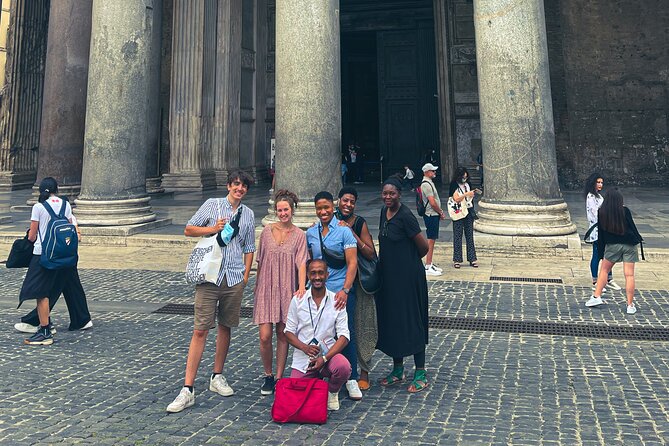
You begin near Piazza d’Aracoeli (Via di S. Venanzio, 8, 00186 Roma RM). You end at Piazza Navona. That end point is a smart move: Piazza Navona is lively, photogenic, and packed with restaurant choices.
You’ll probably want to keep walking after the tour. That finish location makes it easy to pivot into dinner instead of spending your evening figuring out where you’re going next.
Also note the tour is near public transportation, so you’re not committing to an entire day of walking just to get to the start point.
Piazza Venezia: Ancient Rome Through Several Rebrands
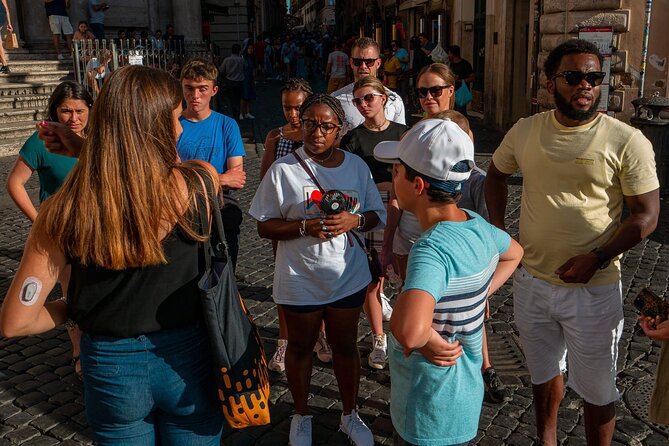
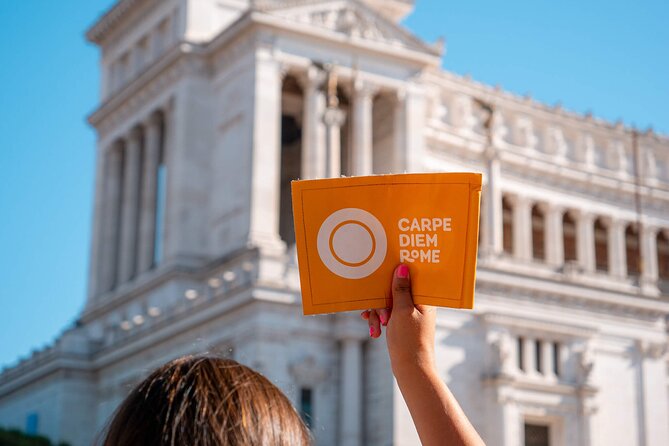
The tour opens at Piazza Venezia / Ancient City, where you get a quick visual timeline of Rome. You start with the ancient world—Roman power and planning—then you connect it to later eras like the Renaissance and the Napoleonic period.
What I like about this start is that it gives you a framework for the rest of the walk. Rome isn’t one city; it’s many cities stacked. When you first see Piazza Venezia with that lens, the later monuments stop feeling random. They start feeling like chapters in the same story.
This is also a good moment to settle in. With about 20 minutes here, you get the “what am I looking at?” basics without yet being overloaded by detail.
Galleria Sciarra: The Art Nouveau Detour
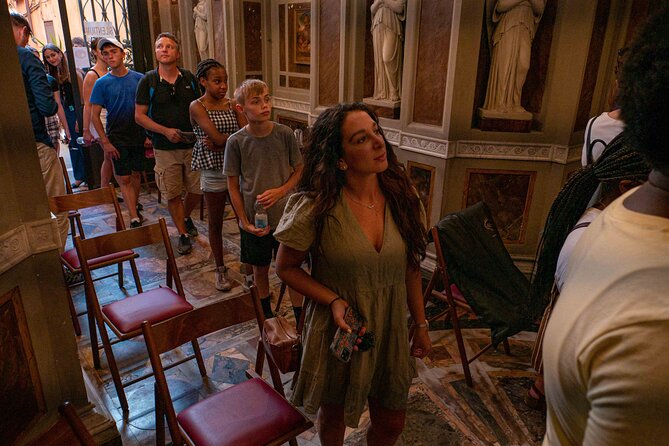
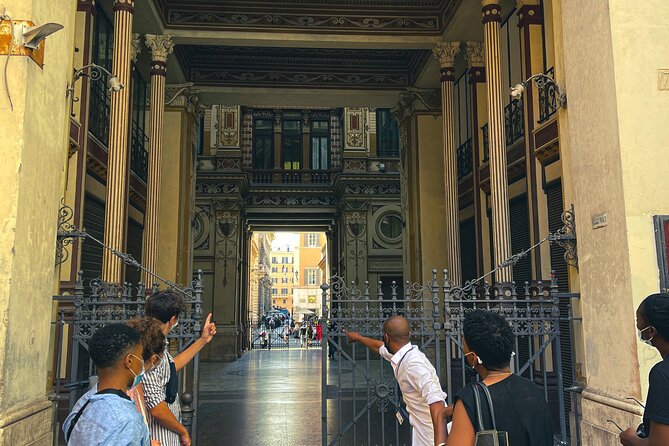
After Piazza Venezia, you head into Galleria Sciarra—a 19th-century building known for its Art Nouveau frescoes and paintings. This is the kind of stop that makes a guided walk worth it, because it’s not the first thing most people think to search for once they arrive in Rome.
The charm here is contrast. You’re in a city built on outdoor monuments, then suddenly you’re looking at interior decoration that feels made for lingering. You get a short visit (about 10 minutes), so you can appreciate it without the “just rush through it” feeling.
If you want Rome to feel more human and less like a checklist, this is the moment.
You can also read our reviews of more city tours in Rome





Trevi Fountain: The Famous One, Made Understandable
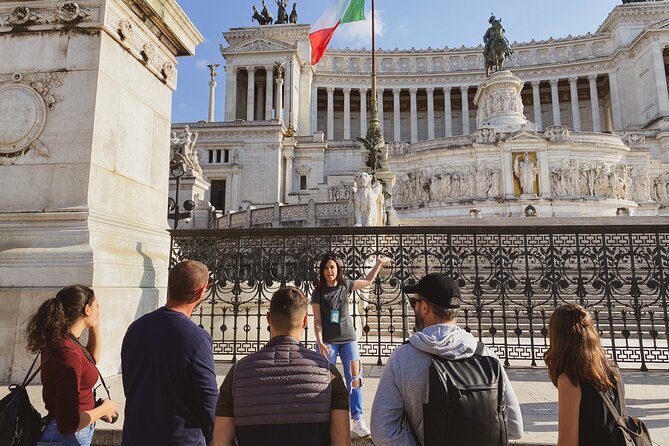
No Rome walk would be complete without Trevi Fountain. Here, you get about 20 minutes to see it, while your guide helps the sculpture feel less like a photo backdrop and more like an artwork with meaning—especially with the way it’s presented during the tour.
Trevi is famous for a reason, but the challenge is that it’s also famous for crowd chaos. This tour doesn’t promise you’ll have the fountain to yourself, but the structure helps. With a small group and a timed stop, you’re more likely to actually look at details rather than just stand in the stream.
Practical tip: wear comfortable shoes. Trevi area streets and sidewalks can be uneven, and you’ll want to stay steady so you can focus on what the fountain is doing artistically.
Chiesa di Sant’Ignazio di Loyola: The Baroque “Dome Trick”
Next comes Chiesa di Sant’Ignazio di Loyola, one of Rome’s major Baroque churches—including an artificial dome.
This stop is short (around 15 minutes), but it can be very memorable because Baroque architecture is all about optical effect: the way space, light, and form play games with your eyes. A guide helps you see what’s intentional, not just what’s impressive.
If you enjoy the “wait, how did they do that?” feeling, this is a great stop. And since the tour keeps things moving, you won’t spend half an hour stuck trying to interpret symbolism while everyone else is still arriving.
Pantheon: The Must-See, Plus the One Ticket Catch
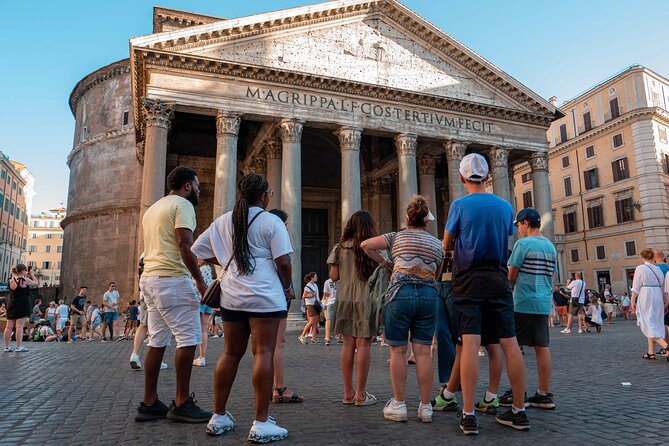
Then you reach Pantheon for about 20 minutes. This is ancient Rome’s most well preserved temple, later converted into a church. The impact is immediate: it’s hard not to stare.
Two key practical notes:
- Pantheon access is not included.
- You’ll need to manage the extra step so you don’t lose momentum or get held up after the group moves on.
The good news is that the tour’s guidance is the main value at this stop. You’re not only seeing a big monument—you’re getting architecture explained in a way that helps you notice what makes it special, like how the space works and why people still talk about it centuries later.
If you’re the type who likes to revisit sites independently later, this is your “bookmark for return” moment. You’ll likely want more time inside after the guided introduction.
Piazza Navona: Your Ending Point for Food and Photos
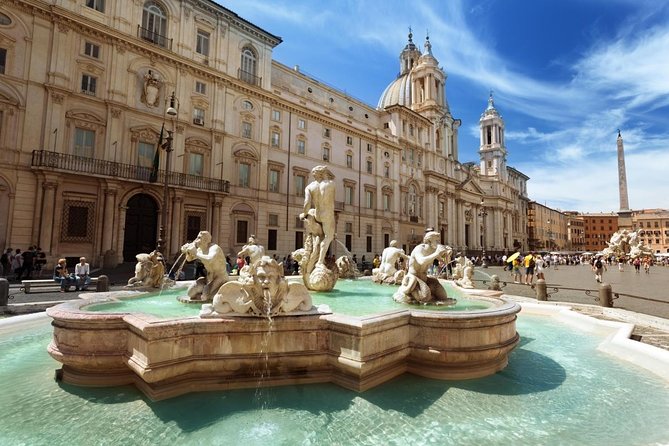
The tour finishes around Piazza Navona, with about 15 minutes here. It’s one of the most famous squares in Rome, known for three fountains and the Baroque church of Sant’Agnese in Agone.
This is a strong ending strategy. You end in a place where you can naturally transition into dinner—meaning you won’t have to “plan your evening” from scratch right after sightseeing. Your guide is also ready to recommend where to eat and drink nearby, including ideas like gelato spots and good viewpoints.
If you’re doing this on your first day, Piazza Navona also helps you understand the layout of central Rome. It’s a visual anchor.
Price and Value: $24.20 for a Focused Hits-and-Surprises Tour
The price is $24.20 per person for about 2 hours. On paper, that’s a budget-friendly way to get a structured day in a city that can otherwise eat your time with indecision.
What’s making the value work:
- Guided walking tour plus a local guide.
- Small group limit (15), which is less common at this price point.
- Multiple highlights plus quieter stops like Galleria Sciarra.
- Most stops don’t require paid admission during the tour—Pantheon is the exception.
The main cost variable is simple: you’ll likely pay for Pantheon access separately. So if you’re trying to budget tightly, add that in before you book.
If you’re traveling with limited time, or you want a reliable way to see the center without getting lost, this tour is good value because it reduces your guesswork.
Morning vs Afternoon: When the Tour Feels Best
You can pick either a morning or afternoon departure. I generally like starting earlier because Rome’s core sites feel easier before the day fully heats up and crowds peak. That said, the tour can also work well later in the day, especially if you like the atmosphere of Rome at different light levels.
One detail that comes up for this experience: people have enjoyed it during the evening/night hours with guides like Anna. If your schedule allows a later slot, consider it. The goal isn’t just photos—it’s seeing familiar places with a different mood.
How Much Walking Is Actually Involved?
The tour is a walking tour, and it’s not labeled as easy strolling. It’s about 2 hours, and you’ll move between several central landmarks. That means you should be prepared for cobblestones, stairs or sloped sidewalks, and standing time at each stop.
It’s not recommended for travelers with foot injuries. If your mobility is limited, it’s worth considering something with more vehicle transfers or a shorter route.
If you’re normally fine for city walking—especially in old European centers—most people can participate.
Who Should Book This Walk (and Who Should Skip It)
This is a great fit if you:
- Are seeing Rome for the first time and want orientation fast
- Want a mix of major monuments and a couple of “how did we end up here?” stops
- Prefer a small group and a guide who helps you read the city, not just point at it
- Like to end with dinner options already in place (Piazza Navona is a smart finish)
Skip it if you:
- Can’t do steady walking (foot injuries)
- Don’t want to handle Pantheon access separately
- Want a super slow museum-style pace with long inside time at every building
Booking Smart: Confirmation, Language, and Tickets
The tour is offered in English, and you’ll receive confirmation at booking time. It uses a mobile ticket, which helps keep things simple when you’re moving quickly.
Also, plan for your Pantheon moment. The tour includes seeing it, but not the entry itself. Build that into your day so you don’t end up scrambling.
Should You Book This Rome City, Pantheon, and Trevi Fountain Walk?
Yes—if you want a reliable, efficient introduction to central Rome that mixes famous monuments with a couple of quieter, more interesting stops. The 15-person cap is a big deal, and it lines up with what people consistently praise: guides who can explain what you’re seeing and keep the experience relaxed and engaging.
Book it especially early in your trip. You’ll come away with a clearer mental map, and that makes every later museum ticket and street stroll easier to plan.
If Pantheon tickets are a hassle for you, or if you need a lower-impact route, then look for an option with easier pacing. But for most visitors, this is an excellent way to turn Rome from a blur into a set of understandable places.
FAQ
How long is the Rome City, Pantheon, and Trevi Fountain Walking Tour?
It runs about 2 hours (approx.).
What is the group size limit?
The tour has a maximum of 15 travelers.
Is the tour offered in English?
Yes, it is offered in English.
Where does the tour start and end?
It starts near Piazza d’Aracoeli (Via di S. Venanzio, 8, 00186 Roma RM) and ends at Piazza Navona (00186 Roma RM).
Which major sights are included on the walk?
You’ll see Piazza Venezia, Galleria Sciarra, Trevi Fountain, Chiesa di Sant’Ignazio di Loyola, Pantheon, and Piazza Navona.
Is Pantheon admission included?
No. Access to the Pantheon is not included.
Are the other stops ticketed?
The other listed stops are shown as admission ticket free in the tour details.
Is the tour suitable for people with foot injuries?
It is not recommended for travellers with foot injuries.
Is the tour accessible by public transportation?
Yes, it’s near public transportation.
Can I get a refund if I cancel?
Yes. You can cancel for a full refund up to 24 hours before the experience start time.