REVIEW · ROME
Rome: Guided City Center Evening Sightseeing Walking Tour
Book on GetYourGuide →Operated by Rome Your Way · Bookable on GetYourGuide
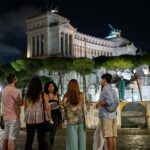
Rome looks best at dusk. This guided evening walk strings together some of the city’s most famous sights with the softer light you only get in the late day. I love the sunset viewpoint from Pincio Terrace, and I also love how the route gives you a quick sense of where everything sits in the middle of Rome. The one thing to keep in mind is that this is a true walking tour: you’re on your feet for the full 3 hours, including some uphill effort.
You also get the kind of iconic moments that feel better at night than in the daytime crowds. I especially like the Trevi Fountain coin-toss stop paired with Bernini’s nearby Barcaccia Fountain at the Spanish Steps. If you’re hoping for a relaxed stroll with lots of sitting breaks, this probably won’t feel like that.
In This Review
- Key highlights worth planning around
- Start at Piazza del Popolo: where your evening route makes sense
- Pincio Terrace sunset: the best payoff for the walk uphill
- Spanish Steps and Barcaccia Fountain: Rome’s meeting point in stone
- Trevi Fountain at night: coin toss legend and big-Baroque scale
- Pantheon exterior: the ancient-to-church timeline in a few steps
- Piazza Navona: Bernini’s Four Rivers and the square’s dramatic design
- End at Campo de’ Fiori: where the night takes over
- Price, walking time, and value for money
- What kind of traveler fits this evening walk best
- Should you book this Rome evening sightseeing walking tour?
- FAQ
- How long is the Rome evening walking tour?
- Where do I meet for the tour?
- What sights are included during the walk?
- Is the tour wheelchair accessible?
- Does the tour include headsets?
- Is this tour good for families with young children?
Key highlights worth planning around
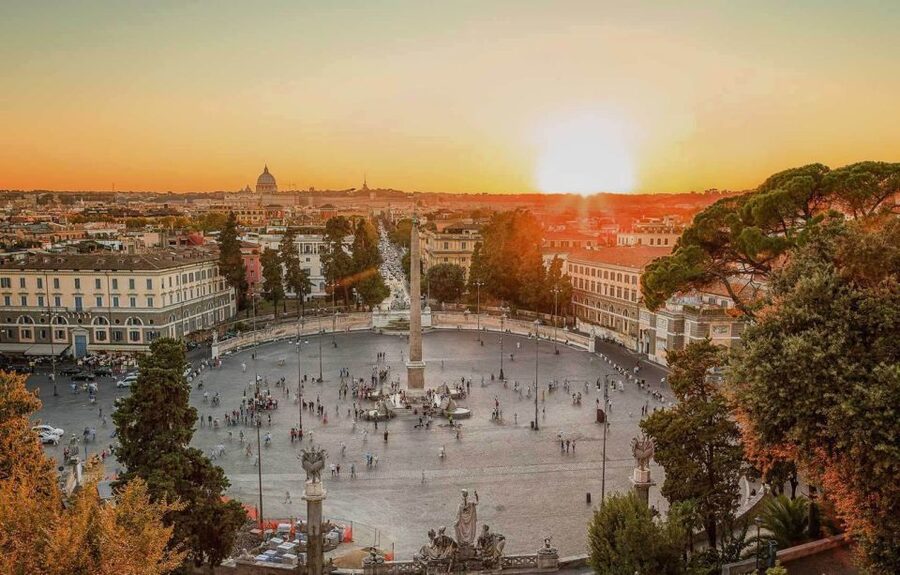
- Pincio Terrace sunset views over Rome’s rooftops, right in the center of your route
- Spanish Steps and Bernini’s Barcaccia Fountain, with the classic photo angles
- Trevi Fountain at night and the legend of tossing a coin back toward Rome
- Piazza Navona’s Bernini fountains, including the Four Rivers Fountain in the middle of it all
- Pantheon exterior storytelling, with the ancient-to-church timeline explained as you pass
- Campo de’ Fiori after dark, where the tour ends and nightlife begins
Start at Piazza del Popolo: where your evening route makes sense
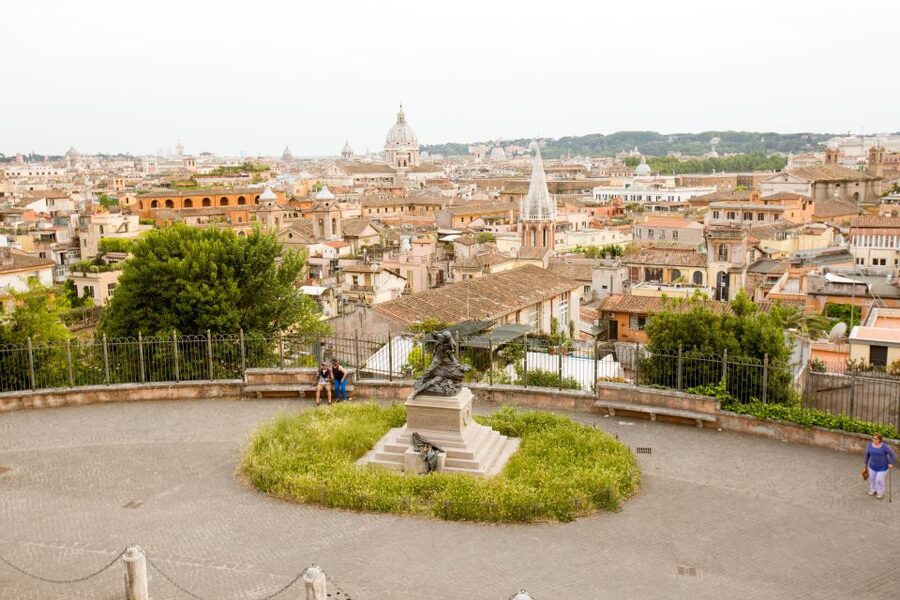
Your tour begins in Piazza del Popolo, meeting in front of Santa Maria del Popolo Church (it’s next to the Leonardo da Vinci Museum). Look for the guide holding a Rome Your Way sign.
This is a smart starting point because the square is already packed with eye candy: churches, monuments, and fountains that give you a “map in real life” feeling. If you’re the kind of traveler who wants to get your bearings fast, this opening stretch helps. Even before you reach the headline sites, you’ll start recognizing the geometry of central Rome.
No hotel pickup here, so plan to arrive on your own and be ready to walk. Also note the tour isn’t described as wheelchair-friendly, so the safest plan is to have solid walking shoes and no problem with uneven sidewalks.
You can also read our reviews of more walking tours in Rome


Pincio Terrace sunset: the best payoff for the walk uphill
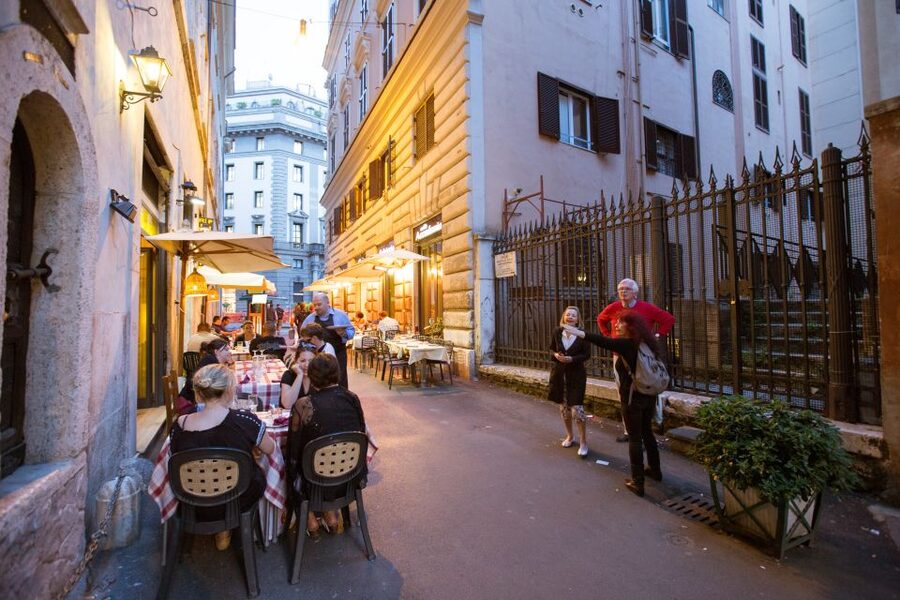
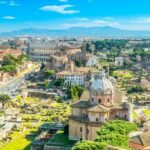
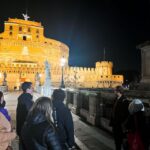
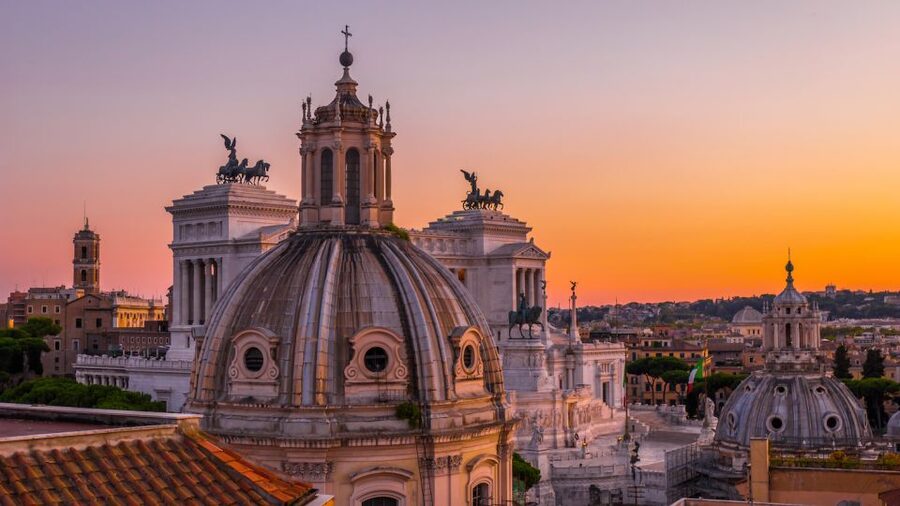
One of the tour’s best moments happens after you move from the street level up toward the viewpoint at Pincio Terrace. This is where you watch the light change over Rome’s rooftops, and you get that classic postcard panorama without needing a separate ticketed viewpoint.
It’s also where you learn that Rome is built in layers. From here, you can mentally connect the city’s broad avenues to the clusters of domes and church towers below. It’s the kind of view that makes later stops feel more meaningful, because you’re no longer seeing monuments as random stops.
Practical note: the climb to the terrace is real enough that at least one traveler mentioned it as a steep start. If you’re sensitive to hills or steps, take it slow and pace yourself right away.
Spanish Steps and Barcaccia Fountain: Rome’s meeting point in stone
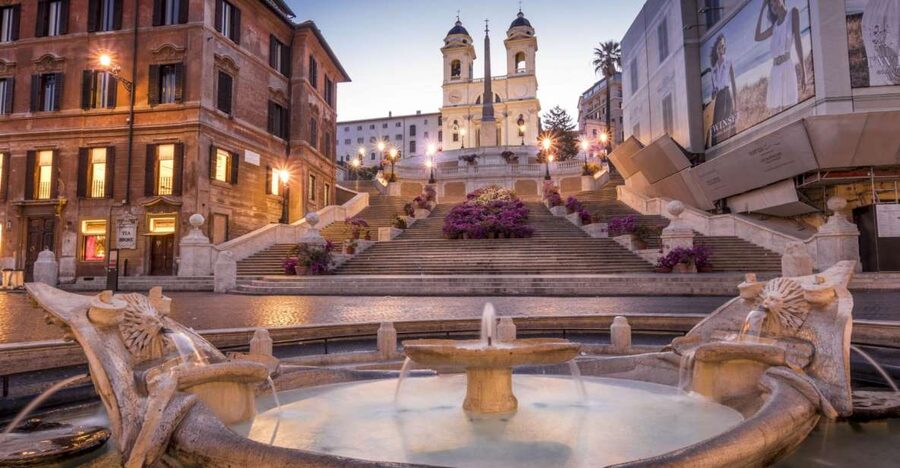
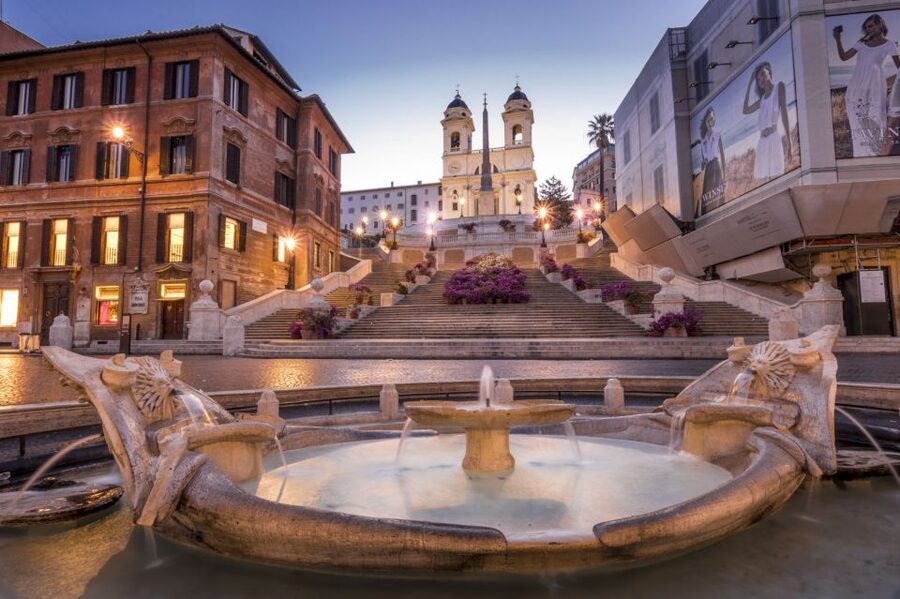
Next up, you’ll reach Piazza di Spagna and Bernini’s Barcaccia Fountain (the famous Barcaccia sits right where you’ll want to pause for photos). This is the part of the walk where the city feels like a stage set: the steps rise, people gather, and the fountain becomes a focal point.
I like this stop because it’s not only pretty. It’s also a quick lesson in how Rome uses drama in public space. The Spanish Steps aren’t just stairs, and the Barcaccia isn’t just decoration. You’ll hear how Bernini’s style fits the broader Baroque taste for motion and theatrical curves.
If you’re carrying a camera, this is a good time to think about angles. At dusk, you’ll often get softer shadows than midday, which means the stone looks smoother and the photos tend to feel less harsh.
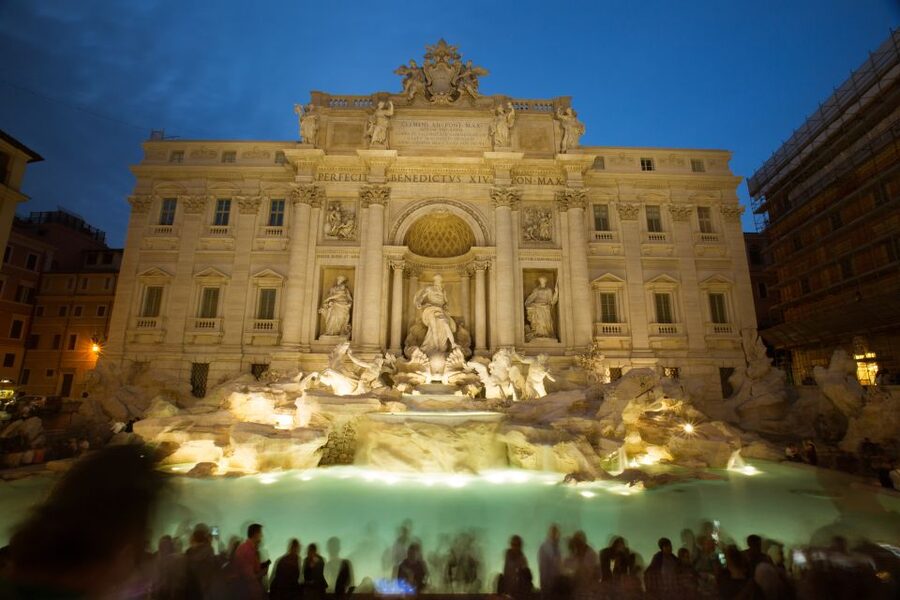
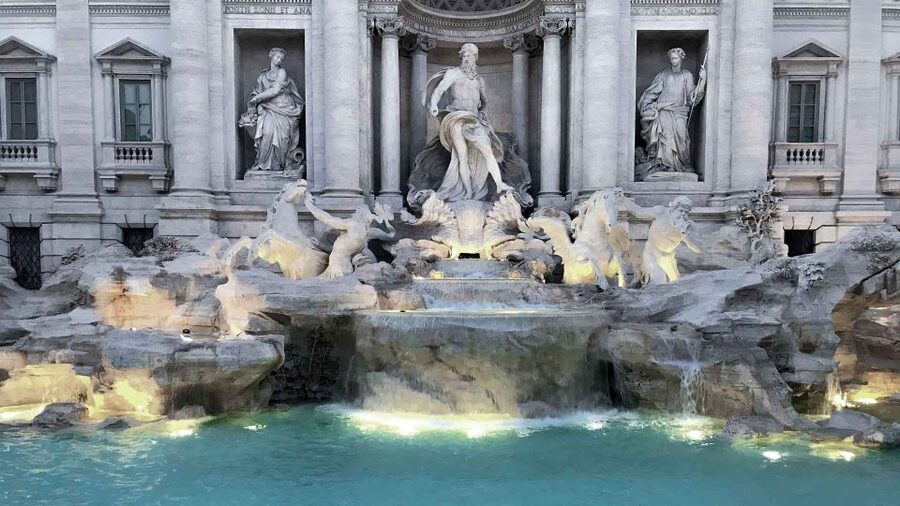
Trevi Fountain at night: coin toss legend and big-Baroque scale
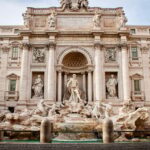
Then you hit Trevi Fountain, which the tour describes as the largest Baroque fountain in Rome. This is one of those sights where “big” is hard to explain until you’re standing there.
The famous moment is the coin toss legend: toss a coin over your left shoulder into the fountain, and the story says you’ll return to Rome one day. Even if you don’t treat legends as facts, the tradition is part of the experience. It gives you something playful to do while you take in the scale and details.
What makes Trevi especially good on an evening walk is the atmosphere. In night light, the fountain can feel more cinematic, and the whole area turns into a living backdrop for the stories your guide will share. It’s still a popular place, but your timing with the rest of the route helps.
Pantheon exterior: the ancient-to-church timeline in a few steps
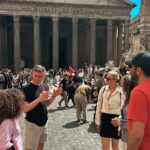
After Trevi, the tour moves toward Piazza della Rotonda. You’ll admire the exterior of the Pantheon rather than going inside, and that matters. From the outside, you still get a powerful sense of why this building has lasted. You’re seeing the shell of an idea that has outlived governments and religions.
Here’s what your guide will likely connect for you: built in 27 B.C., it was dedicated to all Roman gods. Later, in the 7th century, it became a church dedicated to Mary and the martyrs. You’ll also hear that it’s the resting place of major Renaissance artists, including Raffaello.
Even when you don’t enter, this stop can change how you see the rest of Rome. It shows that the city doesn’t “switch” from one era to the next. Rome layers eras on top of each other, and buildings become physical bookmarks.
You can also read our reviews of more guided tours in Rome
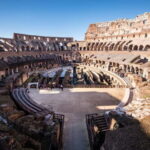
Piazza Navona: Bernini’s Four Rivers and the square’s dramatic design
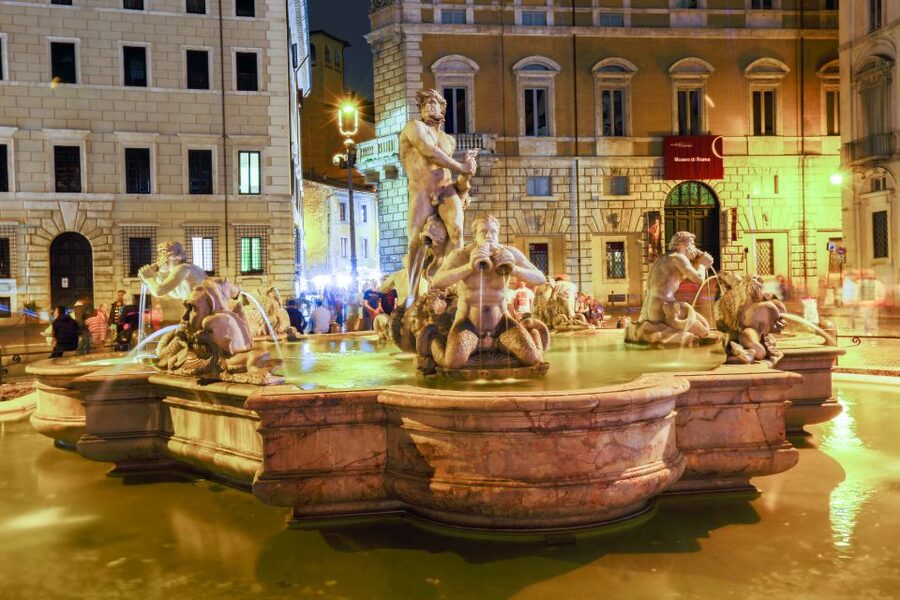
The walk finishes its big-stops run in Piazza Navona, home to Bernini’s Four Rivers Fountain in the center. This fountain is one of those sights where it’s hard to look away because it’s both sculptural and theatrical. The tour also frames the square as a kind of outdoor gallery, with other important architecture and sculpture you’ll see around the edges.
Depending on where you pause, you may notice:
- Church of Sant’Agnese in Agone by Borromini
- Palazzo Pamphili
- Neptune Fountain at the northern end
- Moor Fountain at the southern end
This is also where guides often shine by connecting art, politics, and religion without making it feel like homework. A number of guides for this tour have stood out for this style, including people like Andrada, Carolina, Ava, Marzia, Elida, Rosa, Ghil, and Juliano. When the guide knows how to tell a story, Piazza Navona stops feeling like a photo stop and starts feeling like a place you understand.
End at Campo de’ Fiori: where the night takes over
Your tour wraps at Campo de’ Fiori. The square has a tough past: it was once noted for races and executions. Today it’s a lively public space, acting as a busy morning market and a nightlife hub after dark.
In the middle, you’ll see the statue of Giordano Bruno. Ending here is practical because it gives you immediate options after the tour. If you want dinner, a drink, or just more wandering under streetlights, you’ll already be in the right neighborhood.
Price, walking time, and value for money
The tour costs $46 per person and lasts 3 hours. That price feels reasonable for what you get: a guided route that hits a cluster of top central Rome sights in one evening, plus context that’s hard to piece together on your own without turning your trip into reading marathons.
The value is strongest if you:
- want a first-night Rome orientation
- like learning the story behind landmarks as you see them
- want to reduce decision fatigue by following a planned path
The main trade-off is effort. Since you’re on your feet most of the time, it’s not the choice if you want a slow, sit-down evening. If you’re visiting with someone who gets tired easily, consider doing this early in the trip so you still have flexibility later.
What kind of traveler fits this evening walk best
This tour is a great fit for couples, solo travelers, and anyone who likes Rome in digestible chunks. It’s also a smart choice on a time crunch, especially if you arrive mid-day and want a structured way to see the core sights before planning the rest of your days.
It’s less ideal if:
- you need step-free access (it’s marked not suitable for wheelchair users)
- you hate hills or expect frequent breaks
- you only want one or two major stops, not a full circuit through central Rome
Should you book this Rome evening sightseeing walking tour?
Yes, if you want a high-impact evening that pairs classic landmarks with stories you’ll remember later. I’d book it when I’m doing my first Rome night, when I’m trying to get my bearings, or when I want a guided plan that hits Pincio, Spanish Steps, Trevi, Piazza Navona, and the Pantheon area in one go.
Skip it if you’re looking for a low-walking, minimal-effort stroll or you need accessibility accommodations that go beyond what’s described here. If you can handle a steady walk and a hill or two, this is the kind of Rome experience that makes the next days easier, because you’ll already understand where everything fits.
FAQ
How long is the Rome evening walking tour?
It lasts 3 hours.
Where do I meet for the tour?
Meet at Piazza del Popolo square in front of Santa Maria del Popolo Church (next to the Leonardo da Vinci Museum). Look for a guide with the Rome Your Way sign.
What sights are included during the walk?
You’ll see the Spanish Steps and Bernini’s Barcaccia Fountain, Trevi Fountain, Piazza della Rotonda with the Pantheon exterior, Piazza Navona with Bernini’s Four Rivers Fountain, and you’ll end at Campo de’ Fiori.
Is the tour wheelchair accessible?
No. It’s listed as not suitable for wheelchair users.
Does the tour include headsets?
Yes. Headsets are included when needed.
Is this tour good for families with young children?
Children 5 years and younger go free.