Rome can feel big and confusing on day one. This walk makes the center click fast, with a small-group pace and story-driven stops. I especially love the way it strings together monuments you already know with places you’d likely miss alone, and I also like the Trevi moment at night, when the fountain feels like a scene rather than a postcard. The main drawback to plan around: Pantheon entry isn’t included, so you’ll need to handle that separately if you want to go inside.
You’ll cover classic highlights—Pantheon, Trevi Fountain, and Piazza Navona—plus a couple of lesser-seen stops that add real Roman flavor. It runs about 2 hours, in English, with a max of 15 people, which helps if you like asking questions or you’re traveling with kids. One more practical note: double-check the meeting pin on the day of the tour so you don’t get pulled toward the wrong Piazza.
In This Review
- Key things I’d bet you’ll care about
- Why this Pantheon–Trevi–Navona route is a smart use of 2 hours
- A practical “heads up”
- Starting at Piazza d’Aracoeli and the Imperial story you’ll actually remember
- What to watch for
- Galleria Sciarra: the courtyard stop that changes your idea of Rome
- Why it’s worth your time
- Trevi Fountain at night: the legend, the light, and the crowd math
- A crowd tip that matters
- Chiesa di Sant’Ignazio di Loyola: Baroque illusion in a fake dome
- What you’ll likely enjoy most
- Pantheon: world-famous architecture, with one important entry detail
- How to make the most of the stop
- Piazza Navona: how to finish strong and eat with zero stress
- Quick practical move
- Guides and pace: why people keep giving top scores
- If you care about comfort
- Getting the most value from a $30 Rome walking tour
- Who should book this walk (and who might want a different style)
- Should you book this Rome highlights walk?
- FAQ
- How long is the Rome walking tour?
- What stops are included on the walk?
- Is the tour in English?
- Is Pantheon entry included?
- How much does the tour cost?
- How large is the group?
- Where do you meet and where does it end?
- Is the tour suitable for most people?
- Are service animals allowed?
- What happens if the weather is poor?
Key things I’d bet you’ll care about
- Small-group size (max 15) keeps the pace friendly and the guide easier to hear
- Nighttime Trevi Fountain turns the usual rush into something more atmospheric
- Courtyard detour at Galleria Sciarra adds art and style without long waits
- Baroque illusion at Chiesa di Sant’Ignazio gives you a wow moment in minutes
- You end in Piazza Navona with easy options for dinner nearby
- Pantheon not included for entry means you should plan tickets if you want inside time
Why this Pantheon–Trevi–Navona route is a smart use of 2 hours
If your Rome schedule is tight, this type of walk is exactly what you want. Two hours is long enough to get your bearings in central Rome, but short enough that you don’t burn your whole day in lines and logistics. You’re paying about $30.23 per person, and the value comes from the guide time: you get someone to explain what you’re seeing and what to look for, without you having to build your own route.
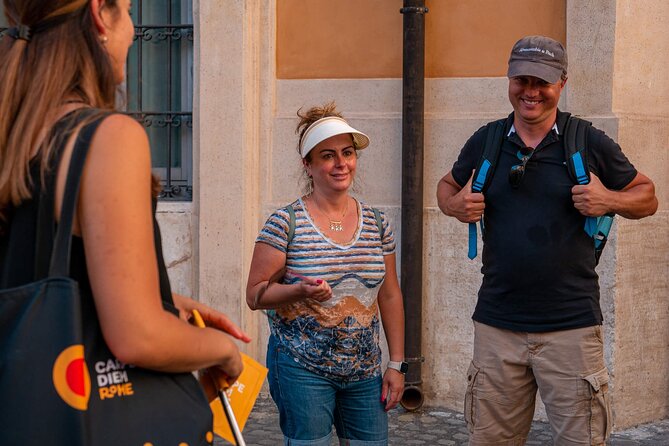
The format also matters. With a maximum of 15 people, the group stays small, which makes directions clearer and crowd management easier. A lot of the positive feedback I see centers on guides who kept the pace workable (especially on warm days) and made it easy for everyone to follow along—whether it’s your first trip or you’re traveling with family.
You can also read our reviews of more walking tours in Rome


A practical “heads up”
The tour is focused on seeing and learning, not doing every interior. The Pantheon is the only big site called out as not included for access, so treat that as your one planning item.
Starting at Piazza d’Aracoeli and the Imperial story you’ll actually remember
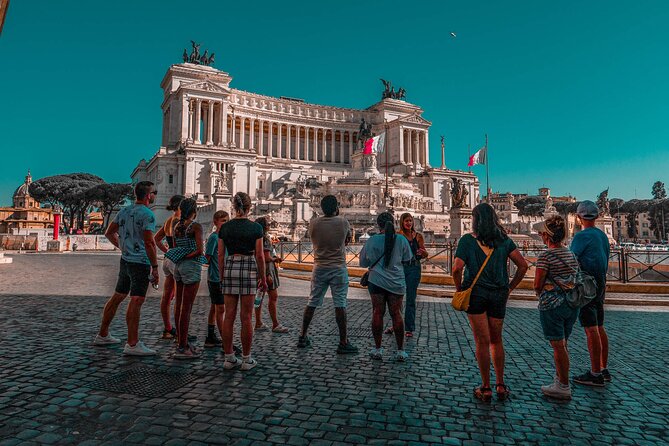
The walk begins at Piazza d’Aracoeli, near Via di S. Venanzio, and it starts by zooming you into the ancient-to-modern timeline. You’ll get your first dose of Roman scale at the Imperial Forums area, where power shifted over centuries—ancient Rome as a political engine, then later eras reusing and reshaping the same bones.
I like this start because it gives you a mental map before you reach the famous “photo stops.” Without context, the center can look like a random pile of great buildings. With context, you start noticing why certain spots feel like they do—why buildings face certain ways, where the lines of sight come from, and how the city’s “layers” create a sense of continuity.
What to watch for
You’ll be standing in a place that represents major shifts in Rome’s priorities. So even if you’ve seen pictures, give yourself a minute to notice how the area feels more like a system than a single landmark.
Galleria Sciarra: the courtyard stop that changes your idea of Rome
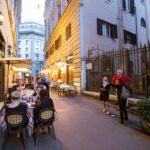
Next you step into Galleria Sciarra, one of those places that feels like Rome hiding a secret in plain reach. This is a 19th-century courtyard with art nouveau frescoes and intricate paintings—small-scale, decorative, and very different from the grand stone surfaces you’ll see later.
This stop is short, so it’s not a time-sink. That’s a big plus in Rome: you want variety without losing your momentum. Also, courtyards like this are where you start sensing how Rome works day to day—less about monuments and more about texture, design, and the way people use space.



Why it’s worth your time
You’ll learn the “real Rome” rhythm. After major landmarks, a courtyard like this refreshes your eyes and gives you something calmer to absorb. If you’re traveling with kids, this kind of stop often keeps attention better than one more stone facade.
Trevi Fountain at night: the legend, the light, and the crowd math
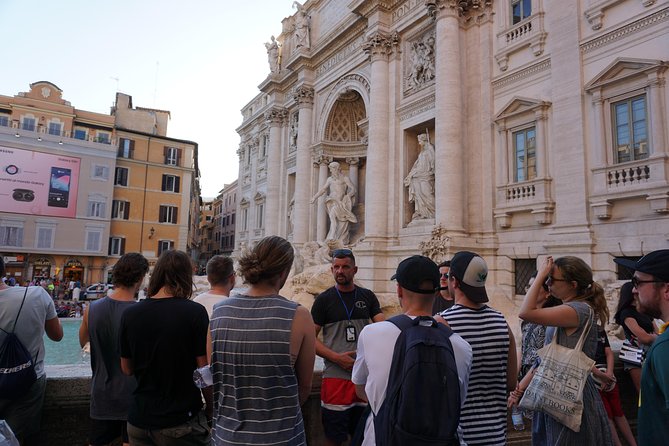
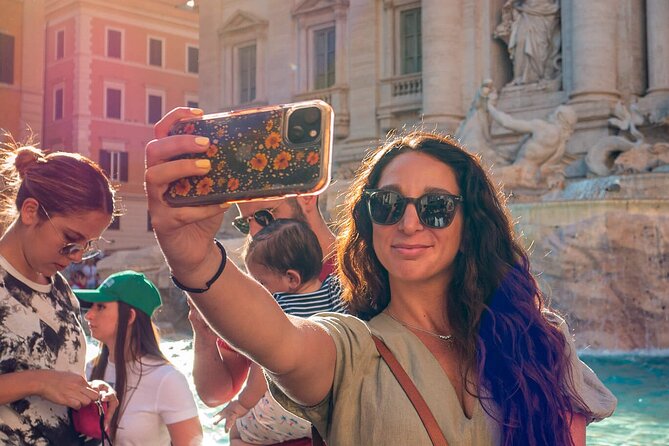
Trevi Fountain is the headline, and the timing is a key part of why this tour feels different from a daytime sprint. You’ll experience it at night, when the lighting turns the sculpted details more dramatic and the whole scene feels less like a busy checkpoint.
The guide will cover the legends tied to the fountain’s beauty and you’ll also join the long-running coin-toss tradition for good luck. Beyond the ritual, though, the real value is learning how the fountain became the kind of symbol it is—why it’s so central to Rome’s identity, and what you’re seeing when you look at the statuary.
A crowd tip that matters
Even at night, Trevi can be packed. The tour’s structure helps because you’re not arriving alone at the worst second. If you’re concerned about heat or crowds, choose the evening timing and pay attention to the route your guide uses to get there.
Chiesa di Sant’Ignazio di Loyola: Baroque illusion in a fake dome
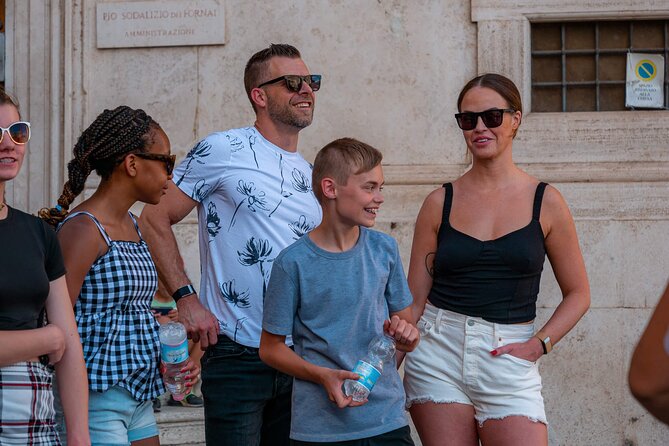
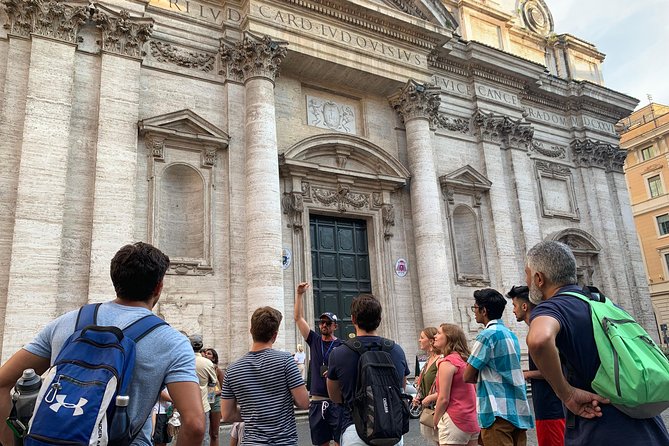
This stop is a fast ticket to wonder. Chiesa di Sant’Ignazio di Loyola is a grand Baroque church known for illusionist art, including an awe-inspiring fake dome effect that plays tricks with your sense of space.
I love this because it teaches you how Baroque art was designed. It wasn’t only about decoration; it was about persuasion—making the church feel larger, higher, and more alive than plain architecture could.
What you’ll likely enjoy most
If you like details, look up and watch how the artwork interacts with your viewpoint. The illusion works because of perspective. You don’t need a technical background; you just need a few quiet minutes and permission to stare at the ceiling.
Pantheon: world-famous architecture, with one important entry detail
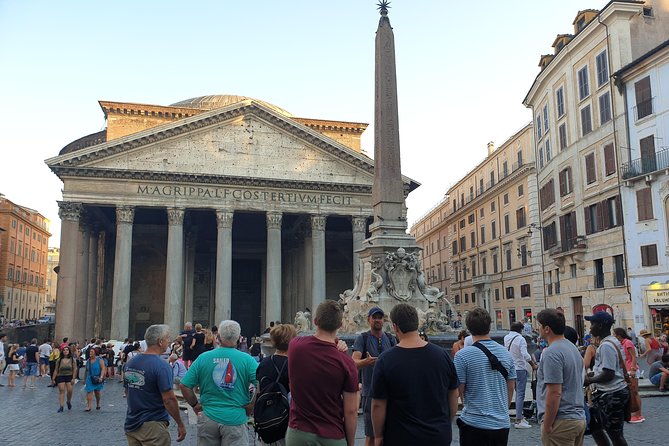
The Pantheon is the kind of building where even short time feels meaningful. You’ll get to marvel at the huge dome and the way the space feels engineered—once a Roman temple and now a church. The opening you’ll notice fast is how the dome’s geometry draws your eye upward, and how the building’s interior lighting creates a kind of calm drama.
That said, here’s the planning reality: Pantheon access is not included. That means your tour experience may focus on seeing and understanding it from the appropriate public areas, while entry (if you want it) requires separate arrangements. If the inside is the whole reason you’re coming, plan for that ahead so you’re not stuck deciding at the last minute.
How to make the most of the stop
If you don’t have entry time, still treat this as more than a photo moment. Look for the dome structure and the building’s proportions. A good guide can help you read the architecture like a map.
Piazza Navona: how to finish strong and eat with zero stress
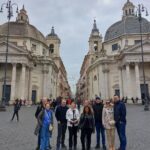
You wrap up at Piazza Navona, one of Rome’s liveliest squares, framed by Baroque beauty and busy with street life. You’ll admire the fountains and the church of Sant’Agnese in Agone, then the tour ends right where you can keep the evening going.
This is smart for your energy. Many tours end somewhere inconvenient, forcing you to navigate transit when your feet are already tired. Ending at Piazza Navona gives you an easy next step: dinner, drinks, or just wandering nearby streets after the history fades from your head but doesn’t disappear from your memory.
Quick practical move
When you’re done, stay close. The square itself is the draw, but the smaller side streets right around it are where you’ll find the Rome you can’t photograph as easily—quiet corners, small piazzas, and the casual feeling that the city is still living.
Guides and pace: why people keep giving top scores
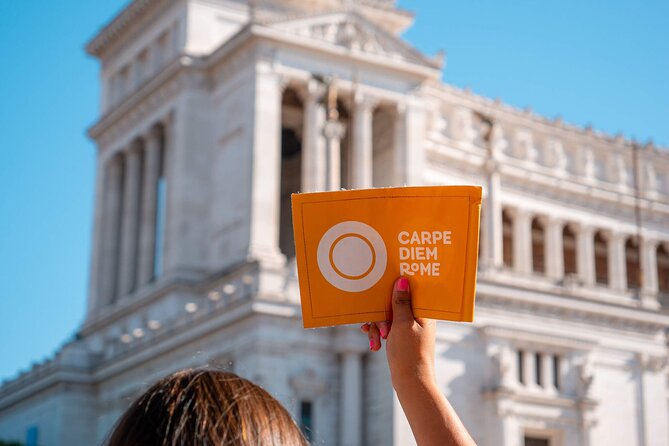
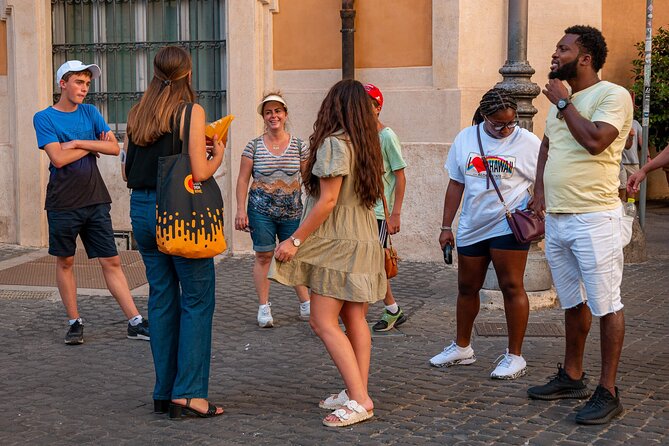
What really drives this tour’s quality isn’t only the sights. It’s the way the guide runs the walking rhythm and turns “stuff I’ve seen online” into “I get what I’m looking at.”
In the feedback you provided, guides like Sharon, Yussef, Dan Salve, Sila, Domenica, Alina, Pauline, Eva, Vlad, Anna, Clara, and Eleonora show up with a consistent theme: they keep groups together, explain clearly, and make it fun to ask questions. A few notes that are especially useful if you’re picky about guides:
- You’ll get clearer instructions and a pace that helps you stay with the group
- On hotter days, some guides actively try to keep you comfortable and out of harsh sun when possible
- If you’re a first-timer, strong guides help you connect the dots instead of dumping dates
- If you’re traveling with family, the structure can work well for kids
If you care about comfort
Bring water, wear shoes you can walk in for two hours without thinking about it, and plan to move slowly through the famous stops. Trevi and Navona are popular; your best advantage is how the guide times and positions the group.
Getting the most value from a $30 Rome walking tour
At $30.23 for about 2 hours, you’re not buying a miracle. You’re buying time from a local expert plus a tighter route than you’d likely create yourself. That’s the value equation.
Here’s how to “win” with this tour:
- Come with a light plan. Don’t try to stack too many must-sees for the same day.
- Ask questions. With a group up to 15, you’re not yelling into the void.
- Pay attention to the non-headline stops. Galleria Sciarra and Sant’Ignazio are the kind of stops that change your whole Rome experience.
Also, you get a mobile ticket, which makes the start smoother. Small things like that matter when you’re trying to meet at the right spot in a city that has many similar-sounding squares.
Who should book this walk (and who might want a different style)
This is a great fit if:
- You want a first-visit overview that still feels more than generic
- You like architecture, art details, and the story behind famous landmarks
- You’re traveling with family and want a route that can keep kids interested
- You don’t want to spend hours creating a route and timing it yourself
It might be less ideal if:
- You specifically need guaranteed Pantheon interior time as part of the tour price
- You dislike walking. It’s a walking experience, and Rome pavement can be uneven
If you’re choosing between multiple Rome tours, think of this one as your “connect the center” option. Once you finish, you’ll know where to go next on your own.
Should you book this Rome highlights walk?
Yes, if your goal is to get oriented quickly and learn what matters at Pantheon, Trevi, and Navona, without turning your day into a line-management project. The price-to-time ratio is solid, and the small group size is the kind of detail that makes the difference between hearing stories and getting lost.
Book it especially if you want the extras: the courtyard at Galleria Sciarra, and the Baroque illusion at Sant’Ignazio di Loyola. Just plan one key thing—Pantheon entry—so you’re not surprised at the moment of arrival.
FAQ
How long is the Rome walking tour?
It runs for about 2 hours.
What stops are included on the walk?
You’ll visit Piazza Venezia/Ancient City, Galleria Sciarra, Trevi Fountain, Chiesa di Sant’Ignazio di Loyola, the Pantheon area, and you finish at Piazza Navona.
Is the tour in English?
Yes, the tour is offered in English.
Is Pantheon entry included?
No. Pantheon access is listed as not included.
How much does the tour cost?
The price is $30.23 per person.
How large is the group?
The tour has a maximum of 15 travelers.
Where do you meet and where does it end?
It starts at Piazza d’Aracoeli, Via di S. Venanzio, 8, and ends at Piazza Navona.
Is the tour suitable for most people?
Most travelers can participate, and it’s near public transportation.
Are service animals allowed?
Yes, service animals are allowed.
What happens if the weather is poor?
The experience requires good weather. If it’s canceled due to poor weather, you’ll be offered a different date or a full refund.