REVIEW · ROME
Rome: Between Holy Doors Small Group Walking Tour
Book on Viator →Operated by Treasures of Rome · Bookable on Viator
Rome has two faces: the postcard sights and the quieter soul. This small-group Holy Doors walk takes you into church interiors most people skip, with a guide who explains the stories behind the art, relics, and symbols you’d otherwise walk past. You’ll cover up to seven basilicas and chapels in about 3 to 4 hours, with time to ask questions instead of just following a ribbon of tourists.
Two things I especially like: the route is built around meaning (not just buildings), and the group stays small enough to move and talk comfortably. One drawback to consider is that it’s still a serious walking loop—cobblestones, some stairs, and lots of standing—so plan for an active morning.
In This Review
- Key Highlights You’ll Actually Feel During This Tour
- Holy Doors in Seven Churches: Why This Walk Makes Sense
- Group Size and Timing: Moving Through Rome Without Losing Your Day
- Dress Code in Roman Churches: The One Rule That Can Ruin Your Day
- The Itinerary: What Each Stop Gives You (and What to Expect)
- Stop 1: Santa Maria Maggiore’s Holy Door and High Bell Tower
- Stop 2: Santa Prassede’s Ancient Apse Mosaic and a Relic Connection
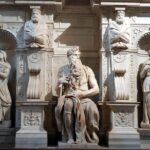
- Stop 3: San Pietro in Vincoli’s Moses Sculpture and the Chains of Saint Peter
- Stop 4: San Clemente’s Old Layers and a Standout Apse
- Stop 5: Ss. Quattro Coronati and the Fresco Legends of Saint Silvester
- Stop 6: Arcibasilica di San Giovanni in Laterano’s Catholic Heart
- Stop 7: Pontifical Sanctuary of the Holy Stairs (Scala Sancta)
- What Makes the Guide Role So Valuable Here
- Practical Tips So You Don’t Feel Rushed or Unprepared
- Is the Price Worth $83.48 for 3–4 Hours?
- Should You Book This Holy Doors Tour?
- FAQ
- How long is the Rome Holy Doors small group walking tour?
- How much does the tour cost?
- How many people are on the tour?
- What language is the tour offered in?
- Do I need to buy tickets to enter the churches?
- What should I wear to enter the churches?
- Where does the tour start and end?
- Is it mostly walking, or is there a lot of transit?
- Will I be able to go through the Holy Doors?
- Is there a place to use the restroom during the tour?
- What if the weather is bad?
Key Highlights You’ll Actually Feel During This Tour
- Up to seven church interiors packed into a short, efficient walk across Rome’s sacred core
- A small maximum of 5 people, so you can ask real questions in the middle of busy spaces
- Holy Door focus, with an itinerary that may shift during Jubilee events (access can’t be guaranteed)
- Free admission at each stop, including major sites and chapel spaces that are easy to miss on your own
- A guide who points out relics, mosaics, sculptures, and architectural details you’re unlikely to notice solo
Holy Doors in Seven Churches: Why This Walk Makes Sense
If you’ve visited Rome before, you probably saw plenty of big monuments. This tour goes after the other side of the city—churches that are famous to historians, but often invisible to people rushing between the main squares. The payoff is not just that the churches are gorgeous. It’s that you get a clean, guided way to understand what you’re looking at: why a mosaic matters, why a relic is kept here, and why a door is treated like a pilgrimage destination.
You also get a concentrated route. Instead of spending your trip mapping addresses and figuring out opening hours, you follow a planned loop that fits into a morning. That’s especially valuable if you’re the type who wants one “meaningful” activity day without turning the rest of your vacation into logistics.
One more practical win: you’re not stuck in long queues for hours of wandering. The structure is designed to keep you moving site to site, while still making room for questions inside places that can get crowded fast.
You can also read our reviews of more walking tours in Rome


Group Size and Timing: Moving Through Rome Without Losing Your Day
This is a walking tour with a maximum of 5 travelers, which changes the whole vibe. In a big group, you get moved like luggage. Here, your guide can slow down for questions, adjust the pace when needed, and keep you from feeling steamrolled through marble hallways.
The tour runs about 3 to 4 hours and starts at 9:00 am, ending at Basilica di San Giovanni in Laterano. Starting early helps in two ways: churches are easier to enter and the city streets feel less chaotic. Also, finishing near San Giovanni gives you an easy launch point for lunch or a second round of exploring.
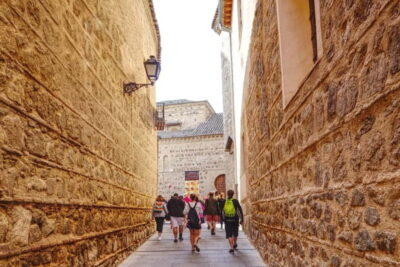
If you’re worried about pace, take it seriously. The route involves a few hills, irregular cobblestones, and stairs of different shapes and sizes. Plan for a day where you stand a lot and take in details that rewards good footwear.
Dress Code in Roman Churches: The One Rule That Can Ruin Your Day
Church interiors in Rome tend to be strict about modesty. For this tour, you need shoulders, back, and knees covered to enter the churches. That means tank tops and short shorts can stop you at the door.
My advice is simple: pack a lightweight layer you can throw on fast—something that works like a shawl or thin jacket. You’ll be happier walking in summer heat when you can cover up without fuss. And once you’re inside, you’ll notice the difference between a place you enter politely and one you rush through.
The Itinerary: What Each Stop Gives You (and What to Expect)
Stop 1: Santa Maria Maggiore’s Holy Door and High Bell Tower
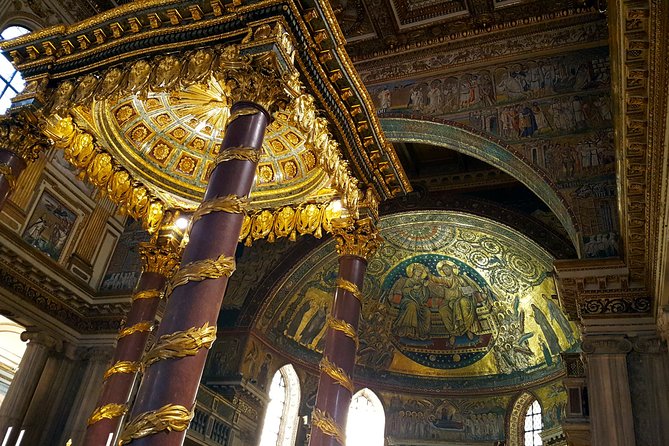
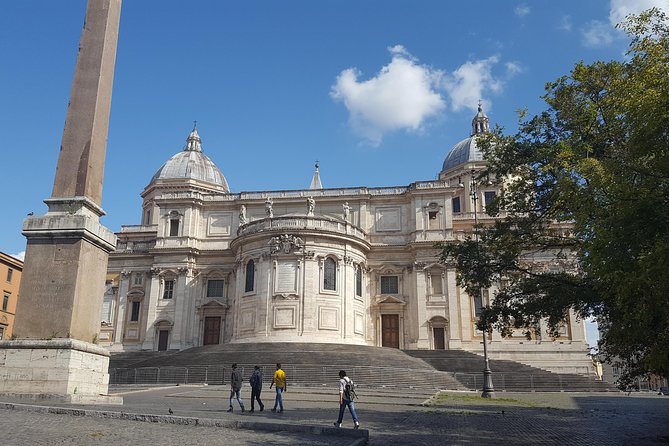
Santa Maria Maggiore is the first anchor of the morning, and it’s a strong choice. It’s described as Rome’s biggest church dedicated to Saint Mary, and it also has the city’s highest bell tower. That matters because it sets the stage: this is not a “quick photo and go” church.
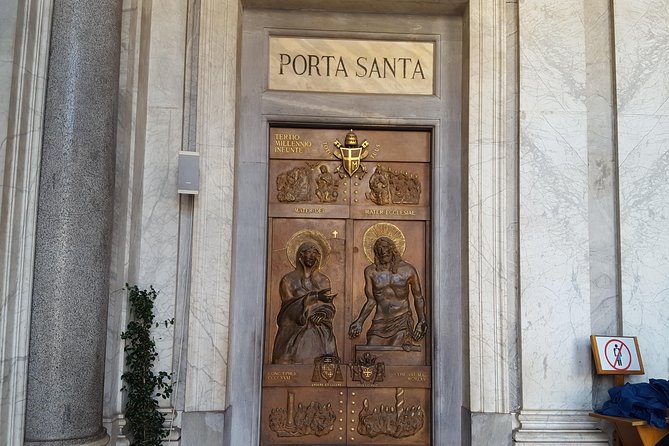
What makes this stop memorable is the combination of scale and symbolism. You get the sense of how major Marian devotion shaped Roman sacred space, plus the presence of a Holy Door, which turns this from a static monument into a pilgrimage-style destination. The chapels are also singled out as especially impressive, so don’t treat this like a lobby—set aside mental room to look slowly at what’s around you.

Stop 2: Santa Prassede’s Ancient Apse Mosaic and a Relic Connection
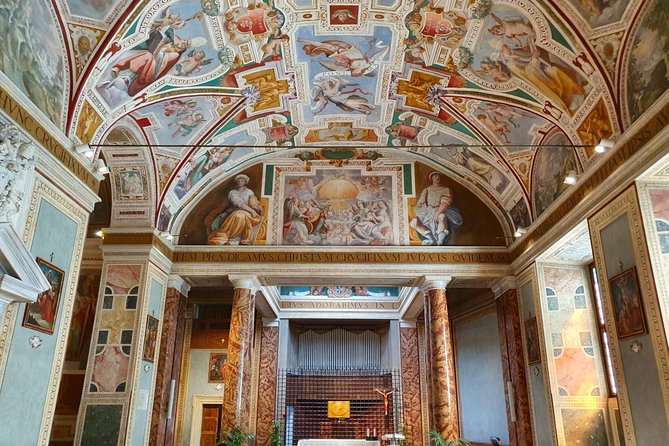
Next comes Basilica di Santa Prassede, and this stop feels like it’s built for people who love art that carries a spiritual story. The big draw is the old apse mosaic—one of the oldest in the world—and it’s tied to a religious relic connected with the Passion of Christ.
Even if you’re not a mosaic expert, the guide’s role here is crucial. Mosaics can look like decoration until someone explains the visual language: what you’re seeing, why it’s placed that way, and what it meant to the faithful over centuries. This is the kind of stop where, without context, you’d miss half the point.
Stop 3: San Pietro in Vincoli’s Moses Sculpture and the Chains of Saint Peter
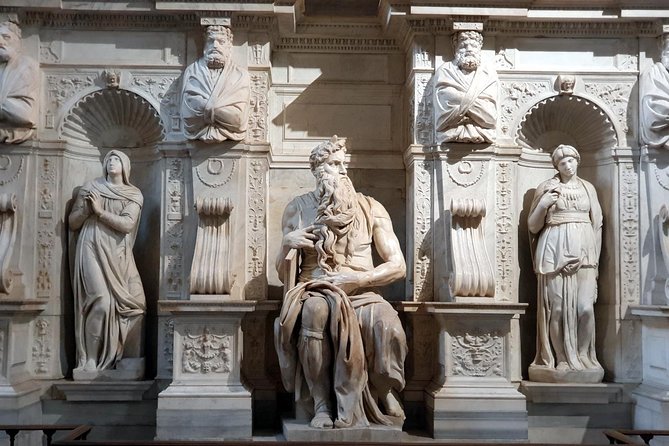
San Pietro in Vincoli is where Rome turns from “beautiful church” into “wow, that’s specific.” This church is famous for Michelangelo’s Moses and for the wonder-working chains of Saint Peter.
If you’ve seen Michelangelo’s work outside Rome, you know he has a way of making stone feel alive. Here, the guide helps connect the statue to the broader religious meaning of the site. And the chains are not just a detail—they’re part of why this church mattered to pilgrims. Think of it as devotion you can point to with your own eyes.
Stop 4: San Clemente’s Old Layers and a Standout Apse
Basilica of San Clemente is often described as one of the city’s oldest churches, and it delivers that “older-than-you-thought” feeling. You’ll spend time looking at its impressive apse, and you’ll likely notice how the architecture reflects different eras of sacred building.
Stops like this work well in a short tour because they add contrast. After ornate mosaics and famous sculpture, San Clemente gives you a sense of depth—this is Rome where religious sites weren’t invented from scratch every generation. They were reused, rebuilt, and re-remembered.
Stop 5: Ss. Quattro Coronati and the Fresco Legends of Saint Silvester
At Ss. Quattro Coronati, the highlight is a fresco depicting legends of Saint Silvester. This is the kind of detail that’s hard to find on your own because most people don’t know to look for it.
A guide’s job becomes more obvious here. Without someone pointing it out, you might admire the general atmosphere and walk past the specific story the church is trying to tell. With the explanation, you get to connect artwork to narrative—how local devotion became part of the church’s identity.
Stop 6: Arcibasilica di San Giovanni in Laterano’s Catholic Heart
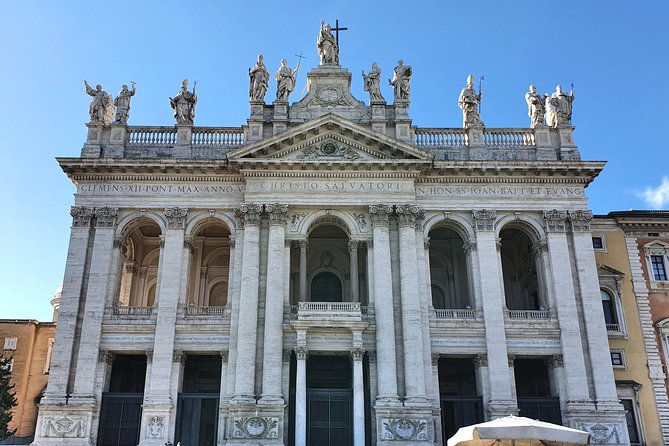
The Arcibasilica di San Giovanni in Laterano is one of the biggest “why this matters” stops. It’s described as the most important church for Catholics and is associated with relics of Saint Peter and Saint Paul. This is the moment where your walk stops feeling like a nice cultural circuit and starts feeling like a religious map of Rome.
It also helps that this is near your tour’s end point. Even if you’re not Catholic (or even if you are and you still want context), you can appreciate what it represents: centrality, legitimacy, and continuity. The guide’s explanations turn what could be a formal visit into something more personal and easier to understand.
Stop 7: Pontifical Sanctuary of the Holy Stairs (Scala Sancta)
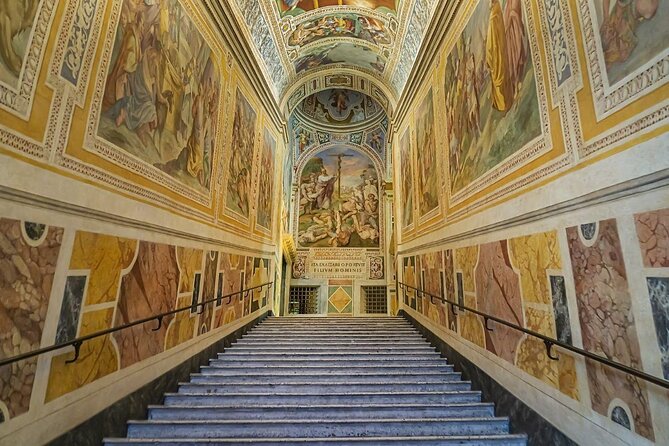
The final stop is the Pontifical Sanctuary of the Holy Stairs, where the highlights include impressive frescoes and the stairs said to be from Pontius Pilate’s palace. This is one of those Rome sites where people come for devotion, not sightseeing.
What to know: climbing the Holy Stairs is a personal devotion, and your experience can depend on your own pace. There’s also an important rule environment-wise—talking and photography aren’t permitted inside. The tour approach is to explain key context just outside the building, then let you enter and do the devotion at your own rhythm. After the explanation, you’re not shoved through on someone else’s timetable.
During Jubilee periods, waiting lines and special events can affect how long you spend here. And since the tour can need adjustments during Jubilee, you can’t count on guaranteed Holy Door passage.
What Makes the Guide Role So Valuable Here
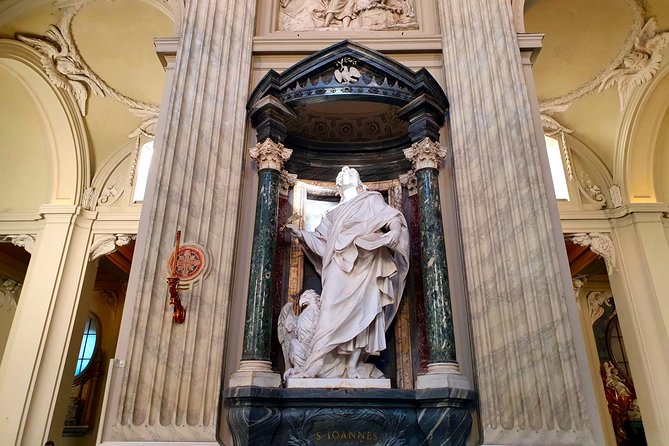
This tour isn’t only about getting into churches. It’s about knowing what you’re looking at once you’re inside. The guide (many know the name Roberto) is praised for adding context that changes the way the churches land in your mind.
You’ll hear explanations that connect:
- art details (mosaics and frescoes),
- famous works (like Michelangelo’s Moses),
- and relic symbolism (like the chains and other sacred objects).
That kind of guidance is the difference between checking off “churches seen” and leaving with a better understanding of Rome’s religious language.
Also, the experience is described as reverent and professional. That matters because these spaces aren’t museums first—they’re active sites of worship.
Practical Tips So You Don’t Feel Rushed or Unprepared
A walking tour like this can be brilliant, but it only works if you show up ready.
Wear comfortable shoes with grip. Expect cobblestones and uneven stone, plus stairs. If you’re the type who normally uses taxis too quickly in Rome, this time is different—you’ll be walking long enough to feel it.
Bring something to cover up your body easily. Shoulder and knee coverage isn’t optional for entry.
Plan to be standing most of the time. Restroom access is described as available at the start and again around the halfway point. If you need a break during the tour, a pause at a local bar can happen, but facilities are not presented as a guaranteed mid-tour service on every step of the route.
Finally, set your expectations around Jubilee season. Holy Door access can’t be guaranteed, and the itinerary may adapt because of special events and longer waits. If your travel dates line up with Jubilee, arrive with flexibility and a “slow pilgrimage” mindset.
Is the Price Worth $83.48 for 3–4 Hours?
At $83.48 per person for about 3 to 4 hours, the price can look steep—until you break down what you actually receive.
You’re paying for three things that add real value:
- A tight route through major and lesser-known churches, so you’re not spending your limited time mapping, routing, and re-checking entry rules.
- Free admission at the stops included in the visit windows, meaning your money goes mostly to interpretation and guidance.
- Small-group attention (up to 5 people). That’s not just comfort—it’s more time for context while you’re inside places where silence rules and attention is earned.
If you’re the kind of person who can enjoy churches without explanations, you could do a self-walk cheaper. But if you like symbolism, art details, and understanding why a relic matters, this price starts to feel fair.
My take: for a short Rome trip, this is a strong “value per hour” option because it packs a focused theme—Holy Doors and Christian art—into a morning.
Should You Book This Holy Doors Tour?
Book it if you want a Rome that isn’t just sightseeing. This is a great fit for anyone who:
- loves churches for art and story, not only architecture,
- enjoys learning how religious symbols work in real sacred spaces,
- and prefers a small group where questions are actually possible.
Skip it (or consider a different format) if you:
- struggle with stairs or long standing,
- need lots of guaranteed facilities during the walk,
- or can’t handle route changes during Jubilee periods.
If you can walk a couple miles, handle stairs, and you’re excited to see Roman sacred history in a structured way, this tour is one of the best ways to get a meaningful hit without turning your whole day into a complicated route plan.
FAQ
How long is the Rome Holy Doors small group walking tour?
It runs about 3 to 4 hours.
How much does the tour cost?
The price is $83.48 per person.
How many people are on the tour?
The tour has a maximum of 5 travelers.
What language is the tour offered in?
The tour is offered in English.
Do I need to buy tickets to enter the churches?
Admission tickets are listed as free for the stops.
What should I wear to enter the churches?
To enter the churches, shoulders, back, and knees must be covered.
Where does the tour start and end?
It starts at the Statua di San Giovanni Paolo II area (Esquilino) and ends at Basilica di San Giovanni in Laterano near the Metro Line A station San Giovanni.
Is it mostly walking, or is there a lot of transit?
It’s a walking tour.
Will I be able to go through the Holy Doors?
During Jubilee or special events, the itinerary may need adaptation, and passage through the Holy Doors can’t be guaranteed.
Is there a place to use the restroom during the tour?
Facilities are described as available at the start and again around the halfway point; if needed, the guide may be willing to pause at a local bar.
What if the weather is bad?
The experience requires good weather. If it’s canceled due to poor weather, you’ll be offered a different date or a full refund.