REVIEW · ROME
Private Walking Tour of the Squares and Fountains in Rome
Book on Viator →Operated by Italy Rome Tour · Bookable on Viator
Rome’s best squares are all within reach. This private walking tour strings together Piazza del Popolo, the Spanish Steps, Trevi Fountain, Piazza Navona, and more, with an English-speaking pro who helps you make sense of what you’re seeing as you go. I especially like how the tour keeps things efficient for time-crunched first-timers, and I like that most of the stops are outdoor and free to enjoy on the spot.
The main consideration is pacing and effort: it’s a lot to pack into 3 to 4 hours, including the Spanish Steps’ 135 stairs if you choose to climb. Also, the Pantheon admission isn’t included, and food, drinks, and getting between sights aren’t part of the price.
In This Review
- Key things that make this tour worth your time
- Why this private squares-and-fountains walk fits Rome like a glove
- Price and value: what $229.78 covers (and what it doesn’t)
- Meeting point, end point, and why that matters more than you think
- The core route: how Rome’s big squares connect
- Piazza del Popolo: Rome’s people-facing entry plaza
- Via del Corso: the city’s central artery, about 1.6 km
- Spanish Steps: 135 stairs, built with political roots
- Trevi Fountain: the baroque showpiece you can feel from blocks away
- Fontana del Pantheon area: pausing near the ancient landmark
- Piazza Navona: where Baroque Rome turns a square into a performance
- Fontana dei Quattro Fiumi: a fountain that tells you where Rome draws power from
- Piazza della Minerva and Santa Maria sopra Minerva: a quieter contrast
- Your final landing: Pantheon drop-off and how to use it well
- What the best guides do here: the difference between a walk and a guided day
- Who should book this tour (and who might skip it)
- Quick planning advice before you go
- Should you book this Private Walking Tour of the Squares and Fountains?
- FAQ
- How long is the Private Walking Tour of the Squares and Fountains in Rome?
- What sights are included on the tour?
- Is this a private tour?
- What language is the tour offered in?
- Are tickets or admission included?
- Is hotel pickup included?
- Where does the tour start and end?
- Is food, transportation, or drinks included?
- What is the cancellation policy?
Key things that make this tour worth your time
- Private guide, private group: Up to 8 people per booking, so you get real attention (not a lecture with earbuds on).
- Hotel pickup included: You start the day easier, then move through central Rome with less hassle.
- Icon hits with a smart tempo: Short, focused stops that help you orient yourself fast.
- Most stops are free: You can enjoy piazzas and fountain views without buying extra tickets for many stops.
- Trevi, Navona, and more—without the stress: You get a guided path through the “greatest hits” zone.
Why this private squares-and-fountains walk fits Rome like a glove
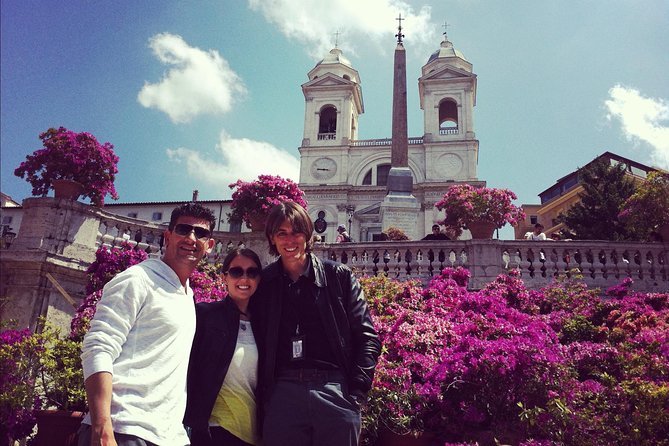
If it’s your first time in Rome, you’ll quickly realize something: the city is big, and your energy is limited. This tour is built for that reality. In just a few hours, you get the feeling of “oh, so this is how Rome’s center is laid out,” because you move through major squares that connect to the grand streets and big monuments people talk about for a reason.
What makes it work well is the mix. You’re not stuck in one place, and you’re not sprinting through ten museum rooms. Instead, you’re walking between famous outdoor landmarks—piazzas and fountains—the kind of Rome you can actually experience with your eyes first and your feet second.
It’s also the kind of route that helps you stop and look like a local. You’ll have time for the atmosphere—street life, the geometry of the spaces, and how the monuments sit in real neighborhoods—not just the postcard angle.
You can also read our reviews of more walking tours in Rome



Price and value: what $229.78 covers (and what it doesn’t)
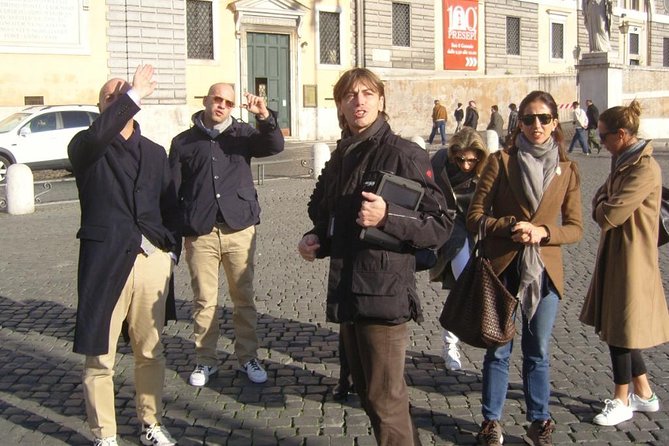
At $229.78 per person, this is not a “cheap and cheerful” activity. It’s paying for a private, professional guide plus hotel pickup. That matters in Rome because the value is not only the sights—it’s the sense-making: why these places are where they are, what to notice, and how they connect.
Here’s how the money plays out in practice:
- You’re getting a private experience (only your group participates), with an English-speaking guide.
- Many stops are free to enjoy outdoors, which saves time and keeps your day simple.
- You’re not being charged entry fees at most stops, based on the tour’s structure.
What’s not covered:
- Food and drinks
- Transportation between sights
- Any transfers by taxi or private transport
- Pantheon admission is listed as not included
So the value depends on your travel style. If you want someone to keep your day coherent—especially if you’re short on time—this can be a solid spend. If you prefer to wander freely with no guidance, you might feel like this is paying for direction you’d rather buy on your own.
Meeting point, end point, and why that matters more than you think
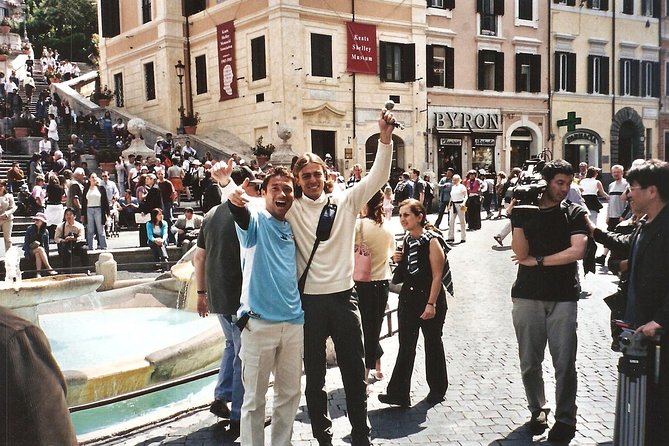
The tour starts at Fontane dei Leoni Egizi, on Via del Teatro di Marcello. That’s a central Rome meeting zone, and it’s helpful because it sets you up to move through the heart of the city without beginning your day stuck on the wrong side of the map.
It ends with a drop-off at the Pantheon. That’s a smart move, because the Pantheon is one of those places where you might want extra time—either to go inside or just to linger and soak in the scale.
One practical note: because the tour ends at Pantheon, build your schedule with a little breathing room afterward. You’ll likely want to keep exploring once you’re there.
The core route: how Rome’s big squares connect
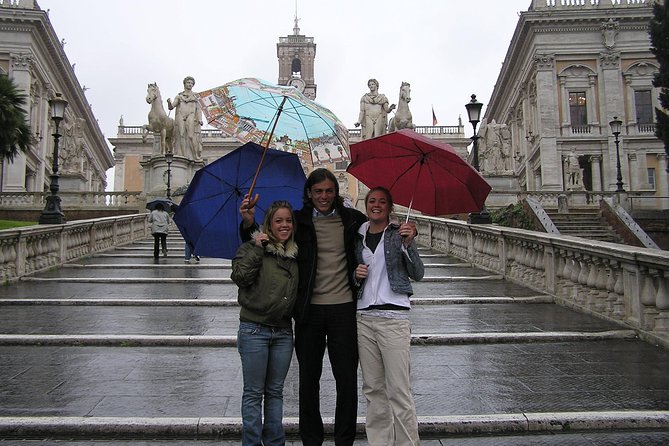
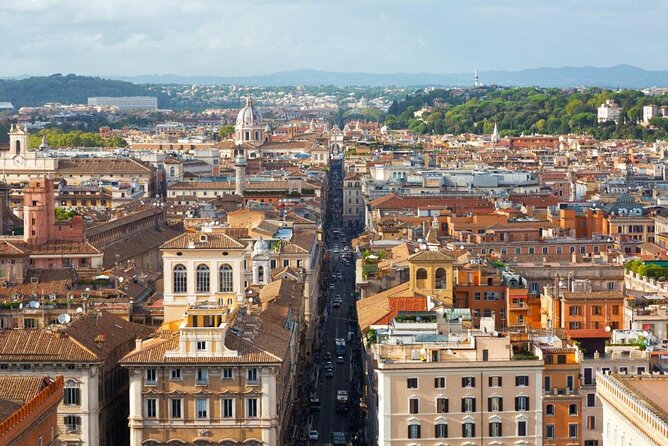
You’re basically traveling along Rome’s central “axis” of famous sights. It starts with a dramatic welcome from the north, then works its way through the trident-like layout of major streets and piazzas, and finally lands you in the dense, photogenic heart around Trevi, Navona, and the Pantheon zone.
Think of it like this:
- Squares act like anchors: you orient your bearings by looking at landmarks that are visible even before you reach them.
- Streets act like connectors: walking Via del Corso links major squares into a single mental map.
- Fountains act like time markers: you don’t just see water—you see Baroque Rome flex its design muscles.
Piazza del Popolo: Rome’s people-facing entry plaza
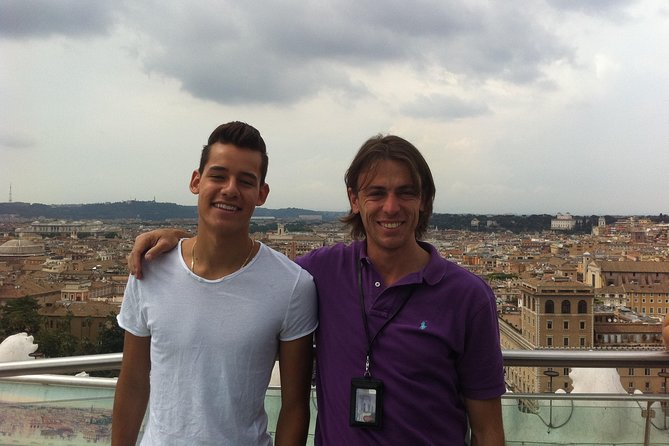
Piazza del Popolo is one of those must-see squares that instantly tells you you’re in the central story of the city. Even the name has an interesting twist. In Italian, it means People’s Square, but the name also connects to poplars that once surrounded the oval space.
The square’s neo-classical design was created between 1811 and 1822, and its original purpose was to welcome visitors and pilgrims arriving from the north via the Via Flaminia. That detail helps you see the square with a sharper lens: it’s not just pretty architecture—it’s a built welcome.
You’ll spend about 20 minutes here. That’s enough time to orient, take in the symmetry, and grasp why this square is a launchpad for the rest of your walk.
You can also read our reviews of more private tours in Rome
Via del Corso: the city’s central artery, about 1.6 km
Next is Via del Corso, a historic street that connects Piazza Venezia to Piazza del Popolo. It runs roughly 1.6 kilometers and forms the center of Rome’s famous trident layout.
Walking a proper stretch of Via del Corso is one of the most useful parts of the day. It helps you stop thinking of Rome as separate attractions and start seeing it as connected neighborhoods and corridors—where people actually live, shop, and move around daily.
It’s also a break in pace: you’re not standing in one spot. You get that in-between time where Rome feels like Rome, not like a checklist.
Spanish Steps: 135 stairs, built with political roots
The Spanish Steps connect Piazza di Spagna at the base with Trinità dei Monti at the top. They’re dominated by the church at the summit, and the monumentality is the point: you feel the climb even before you start.
A few details make this stop more than a photo moment:
- The stairway has 135 steps
- It was built using a bequest of 20,000 scudi from French diplomat Étienne Gueffier between 1723 and 1725
- Architects involved were Francesco de Sanctis and Alessandro Specchi
This is where Rome’s international influence shows up in real stone. The steps linked the church and French patronage with the Spanish Embassy to the Holy See.
You’ll have about 20 minutes. If you want a quicker stop, hang out at the lower and mid-landing views. If you’re up for the climb, the top has a different feeling because you’re suddenly looking back with the church as your reference point.
Consideration: if stairs are a challenge for you, this is the one stop on the route that could slow you down.
Trevi Fountain: the baroque showpiece you can feel from blocks away
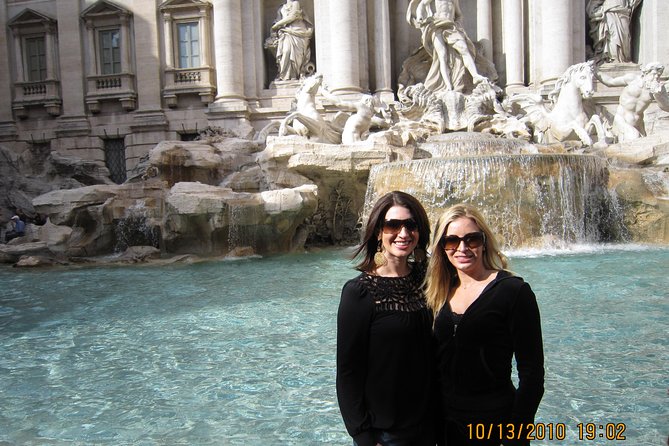
Then you hit Trevi Fountain, Rome’s famous water spectacle. It’s an 18th-century fountain in the Trevi district, designed by Nicola Salvi.
Even with a short stop (about 20 minutes), a guide helps you look past the obvious. You’ll be paying attention to how it’s staged in the streetscape—why the fountain feels like it commands the block, and why it’s surrounded by that constant movement of people taking their time in short bursts.
This stop is ideal if you want something instantly recognizable without spending half your day waiting around.
Tip for your day: plan your time so you’re not rushing your look-and-capture moment. Trevi works best when you slow down for a minute and just watch how the street frames the fountain.
Fontana del Pantheon area: pausing near the ancient landmark
After Trevi, the tour includes Fontana del Pantheon, but the description centers on the Pantheon itself—an ancient Rome building founded in 27 BC by Marcus Vipsanius Agrippa. It was built as a temple dedicated to all past, present, and future divinities.
So what should you expect here? A pause that helps you understand what you’re looking at, even if you don’t immediately go inside. A guide is useful because the Pantheon can feel simple from the outside, but once you know what to notice, it gets a lot more interesting fast.
This stop is about 30 minutes, and it sets you up for the final drop-off at the Pantheon later.
Piazza Navona: where Baroque Rome turns a square into a performance
Piazza Navona is one of Rome’s most famous monumental squares, built in monumental style at the behest of the Pamphili family, with Pope Innocent X tied to its development.
This square is different from many others because it feels like it was designed for staying. You get people watching, open-air energy, and fountains that make the geometry of the space more dramatic than you expect.
You’ll spend around 20 minutes here. With a guide, you’ll notice how the square’s layout and surrounding architecture guide where you look—so your photos end up feeling more intentional and less random.
Fontana dei Quattro Fiumi: a fountain that tells you where Rome draws power from
At Piazza Navona, you’ll also visit Fontana dei Quattro Fiumi. This fountain was commissioned by Pope Innocent X and designed so water from the Aqua Virgo could be brought to the square. In 1647, Innocent X commissioned Francesco Borromini and announced a competition for the fountain’s design.
There’s also an added layer: the pope wanted to recover an obelisk later called Agonale, which lay in ruins in the circus of Maxentius on the Appia Antica.
This stop is great if you like understanding how Rome’s major monuments are connected to politics, water engineering, and reused materials. Even if you only have 20 minutes, that context makes the fountain feel like a story instead of just a pretty object.
Piazza della Minerva and Santa Maria sopra Minerva: a quieter contrast
Next is Piazza della Minerva, a square tied to an older religious presence. The name comes from an ancient temple dedicated to Minerva, connected to the area’s cult statue history (and later, this square’s modern religious center).
The church Santa Maria sopra Minerva sits at the center of the square. It’s referenced as early as the 8th century under the name Ecclesia S. Mariae in Minervio.
This is one of the better stops for a change of pace. After the high-energy squares, Minerva can feel more human-scale. It’s still famous, but it doesn’t demand that you be only a camera.
Your final landing: Pantheon drop-off and how to use it well
The tour ends with a drop-off at the Pantheon after about 20 minutes. And importantly, Pantheon admission is listed as not included.
This gives you a useful choice:
- If you only want the exterior views, you can keep moving on.
- If you want to go inside, plan your time so you can handle entry separately.
Because the Pantheon is a major draw, this is where I’d personally think strategically. Don’t schedule something tight right after. Give yourself time to decide on the spot—inside or outside—based on how your feet feel and what the line situation looks like when you arrive.
What the best guides do here: the difference between a walk and a guided day
Two names came up in standout feedback: Paulo and Gaia. The common thread isn’t just facts—it’s energy and attention.
Paulo’s impact is described as passion and top-notch knowledge that made the trip feel worthwhile. Gaia is praised for giving a city-center overview while keeping teenagers engaged. That tells you something important: this tour isn’t only for adults who want to be historians for a few hours. A good guide can adapt the pace and the explanations so the day lands well for different interests.
That matters because this route moves quickly. A guide’s job is to keep it from becoming a blur.
Who should book this tour (and who might skip it)
You should book if:
- You’re seeing Rome for the first time and want the essentials in a focused timeframe.
- You want a private experience with undivided attention.
- You like learning what you’re looking at while you walk through real neighborhoods.
You might skip or change expectations if:
- You hate stairs or know you’ll struggle with the Spanish Steps.
- You want long, slow visits where you can linger for an hour or more at each stop.
- You’re looking for a low-cost walking tour with no paid guide.
Quick planning advice before you go
- Wear shoes that can handle uneven pavement and lots of standing.
- Bring water and small snacks, since food and drinks are not included.
- If the Pantheon matters to you, budget for admission on your own since it’s not included.
And one more practical note: the experience is listed as non-refundable and cannot be changed for any reason. So only lock it in when you’re confident your dates are solid.
Should you book this Private Walking Tour of the Squares and Fountains?
If your goal is to get your bearings fast and hit Rome’s most iconic central piazzas and fountains without feeling lost, this private format makes a lot of sense—especially with an English-speaking guide and hotel pickup.
At $229.78 per person, I’d book it when you value guidance and time savings more than you value DIY wandering. The route is strong for first-timers, and the highlights are the kind of Rome that sticks in your head long after the photos fade—Piazza del Popolo, the Spanish Steps, Trevi, Piazza Navona, and a clean finish at the Pantheon.
FAQ
How long is the Private Walking Tour of the Squares and Fountains in Rome?
It runs about 3 to 4 hours.
What sights are included on the tour?
You’ll visit Piazza del Popolo, Via del Corso, the Spanish Steps, Trevi Fountain, the Pantheon area, Piazza Navona, Fontana dei Quattro Fiumi, Piazza della Minerva, and you end with a drop-off at the Pantheon.
Is this a private tour?
Yes. It’s private, and only your group will participate. The maximum is 8 people per booking.
What language is the tour offered in?
The tour is offered in English.
Are tickets or admission included?
Admission tickets are listed as free for stops 1 through 8. Pantheon admission is listed as not included.
Is hotel pickup included?
Yes, hotel pickup is included.
Where does the tour start and end?
It starts at Fontane dei Leoni Egizi on Via del Teatro di Marcello and ends at the Pantheon.
Is food, transportation, or drinks included?
No. Food and drinks are not included, and transportation between sights (including taxi/private transport transfers) is not included.
What is the cancellation policy?
It’s non-refundable and cannot be changed for any reason.