REVIEW · ROME
Guided Walking Tour of Rome: Top Sights & Baroque Treasures
Book on Viator →Operated by Eternal Experiences · Bookable on Viator
Rome’s best hits, on foot and on time. This small-group guided walk threads together iconic stops like the Trevi Fountain, the Pantheon, and Piazza Navona, plus a serious dose of Baroque inside the Church of St. Ignatius of Loyola. I especially like how it’s paced for hearing your guide, not just shuffling through crowds.
The other thing I love is the art-focus: you’ll step into Chiesa di Sant’Ignazio di Loyola for a quick look at the ceiling frescos, and you get the context that makes the church’s style make sense. Guides such as Anna and Dan are repeatedly praised for story-telling that stays clear, not overwhelming.
One consideration: the Pantheon entrance ticket isn’t included, so plan on paying that on your own. Also, one past booking flagged a last-minute meeting point confusion, so it helps to confirm the exact location right after booking and follow the map on the day.
In This Review
- Key things that make this tour work
- Why This Rome Walk Works in 2 Hours
- Starting at Piazza d’Aracoeli: Getting Your Bearings in the Right Neighborhood
- Palazzo Venezia and the King Who Unified Italy (Exterior-Only Stops)
- Trevi Fountain: Classic Photos, Plus a Guide-Provided Reason to Look Longer
- Chiesa di Sant’Ignazio di Loyola: Ceiling Frescos and the Story Behind the Baroque Style
- The Pantheon: World-Class Architecture, With a Realistic Time Plan
- Fontana dei Quattro Fiumi: Bernini’s Sculpture Work in a Short, Focused Stop
- Piazza Navona: Baroque Fountains, a Place to Land, and Easy Dining
- Price and Logistics: Is $30.25 Worth It?
- Who This Tour Fits Best (and Who Might Want a Different Plan)
- Tips That Make This Tour Easier (Before You Even Start)
- Should You Book This Walking Tour of Rome?
- FAQ
- How long is the walking tour?
- What is the price per person?
- Is the tour in English?
- How many people are in the group?
- Which major sights are included?
- Is Pantheon admission included in the price?
- What is the main focus at Chiesa di Sant’Ignazio di Loyola?
- Is the ticket mobile?
- Is free cancellation available?
- Is the tour easy to join for most people?
Key things that make this tour work
- A tight route in ~2 hours that still includes major landmarks plus a few less-obvious streets
- Chiesa di Sant’Ignazio di Loyola inside time (including ceiling frescos) instead of only exterior sightseeing
- Crowd-smart timing and guidance, so you can actually hear and take photos
- Pantheon outside approach first, with the big architecture story before you decide how to handle entry
- Small group (max 15), which keeps the pace moving but the experience more personal
- Photo-friendly stops at Trevi Fountain and Piazza Navona, with time set aside for pictures
Why This Rome Walk Works in 2 Hours
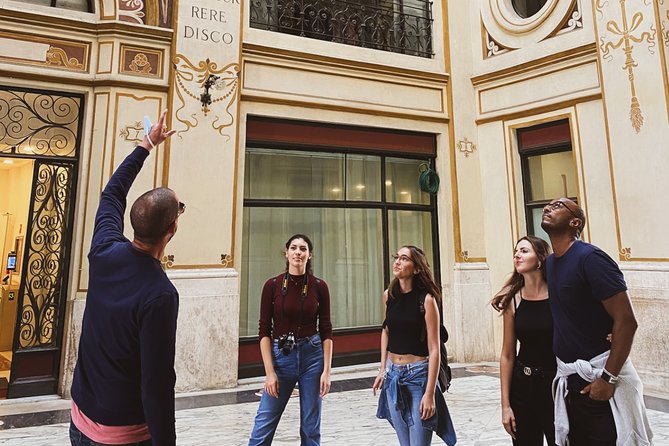
Rome is big, but your best first-day strategy is small steps. This tour is built for a compact loop in central Rome, so you can hit top sights without spending the whole afternoon crossing the city.
At about two hours, it also helps you get your bearings fast. By the time you reach Piazza Navona, you’ll understand how the streets connect and which monuments sit in the same visual neighborhood.
And because the group stays under 15 people, your guide can keep you together. That matters in Rome, where the sidewalk can feel like it’s made for five people, not fifty.
You can also read our reviews of more walking tours in Rome



Starting at Piazza d’Aracoeli: Getting Your Bearings in the Right Neighborhood
You’ll meet near Piazza d’Aracoeli (Via di S. Venanzio, 8). That location is handy because it puts you in the thick of the historic center right away, with short walks between stops instead of long transfers.
The start point matters for another reason: it sets you up for an orderly flow. Several guides on this route are praised for staying organized through busy areas, and you’ll feel that as you move from place to place.
You’ll also get a mobile ticket, which is usually the easiest way to check in when you’re juggling maps, photos, and gelato stops.
Palazzo Venezia and the King Who Unified Italy (Exterior-Only Stops)
You’ll spend time at Palazzo Venezia from the outside. Even without entry, the stop is useful because it frames what you’re about to see next: power, politics, and old Rome rubbing shoulders with later Italian history.
The tour includes explanations about the king who unified Italy, and you’ll get that storyline while passing significant monumental spaces. In practice, that means you won’t just see stone and arches—you’ll understand what period you’re looking at and why it matters.
One of the highlights here is scale: the palace is described as covering 110,500 square meters, noted as the ninth-largest palace by area. That’s the kind of fact that makes an exterior stop feel less like filler and more like setup.
Trevi Fountain: Classic Photos, Plus a Guide-Provided Reason to Look Longer
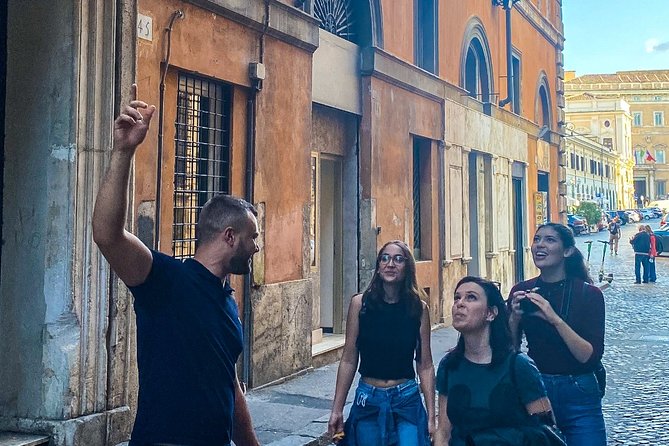
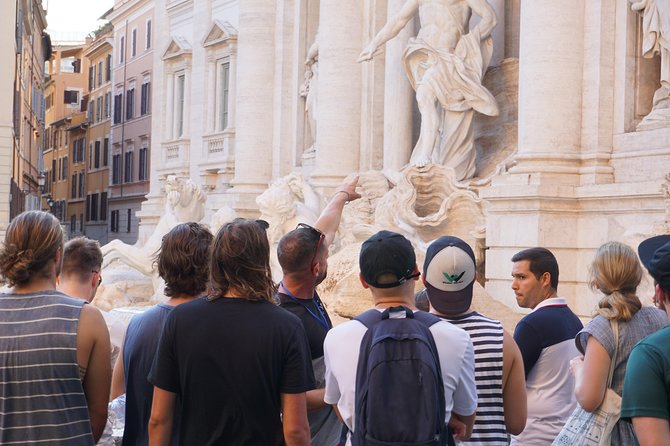
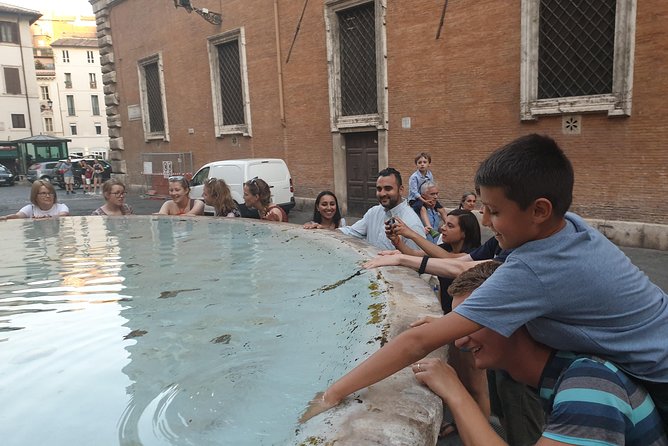
Trevi Fountain is the stop everybody knows, but it’s still worth doing with a guide. You’ll get about 20 minutes here, including time for photos and the famous coin moment.
What makes Trevi work on this tour isn’t just the spectacle. It’s that your guide sets context and points out what to notice as you stand there, so your photo doesn’t become the only thing you remember.
Practical tip: Trevi can be loud with movement and phone cameras. Build your plan around the time you have—snap your shots early, then slow down for the details your guide calls out.
Chiesa di Sant’Ignazio di Loyola: Ceiling Frescos and the Story Behind the Baroque Style
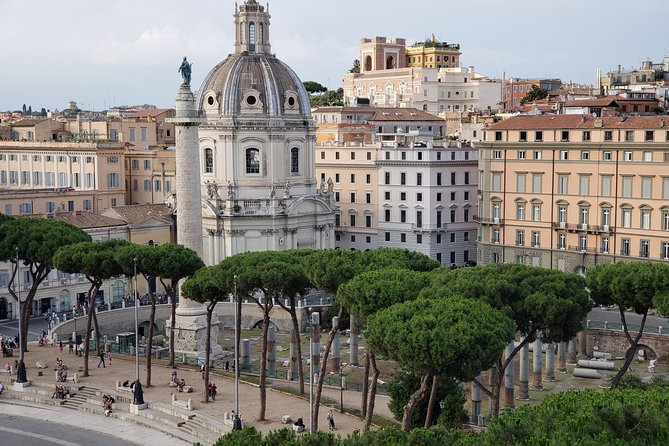
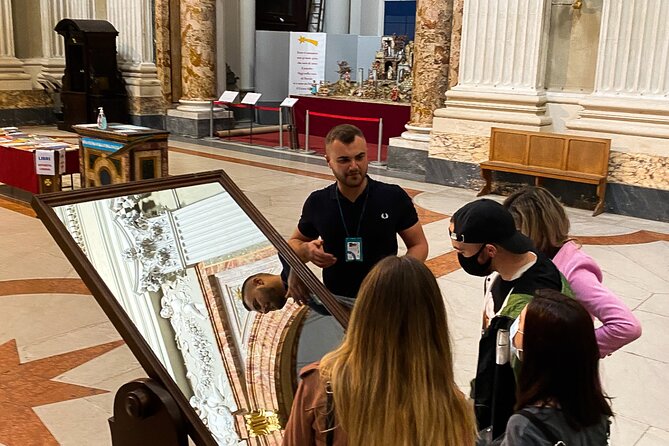
This is where the tour shifts from big monuments to art that rewards close attention. You’ll spend around 5 to 10 minutes inside Chiesa di Sant’Ignazio di Loyola, and the focus is the ceiling frescos.
Why it matters: Baroque churches can feel like visual overload if you don’t know what you’re looking for. With a guide, you get the meaning behind the drama—composition, illusion, and how artists aimed to move viewers emotionally.
One specific point you’ll hear about is a feud between artists that helped define the beauty and character of the church. That’s the kind of detail that turns a quick interior glance into a memorable scene, especially when you’re comparing Baroque styles across Rome.
Also, this stop helps with pacing. It’s a brief pause from walking, and it gives you a calmer moment to process what you’ve already seen.
You can also read our reviews of more guided tours in Rome

The Pantheon: World-Class Architecture, With a Realistic Time Plan
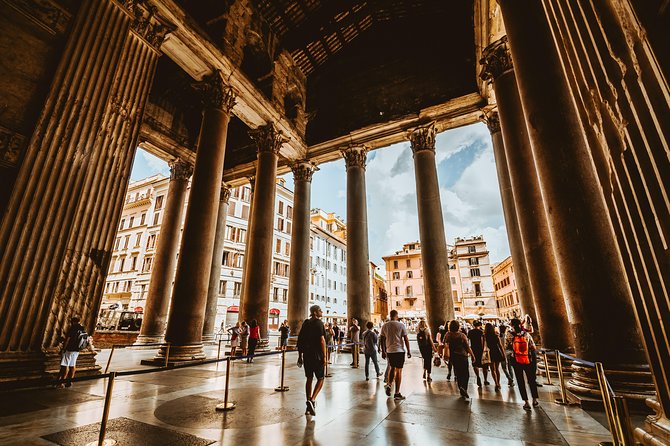
You’ll reach the Pantheon for about 30 minutes. The tour is structured so you first take in what it looks like from the outside, with the architecture story attached.
You’ll hear about Emperor Hadrian and the Pantheon’s dome—specifically noted as the largest unreinforced dome in the world. Whether you’re an architecture person or not, that fact gives you a mental anchor while you look up.
Important: Pantheon entrance isn’t included on this tour. That doesn’t make the stop less valuable; it just means you’re deciding for yourself whether to pay for entry. If you want the interior too, budget that extra time and ticket cost.
One smart way to use the time: take exterior photos first, then decide quickly if you’ll upgrade to the interior. The Pantheon is one of those places where the line and crowd flow can shift your experience minute to minute.
Fontana dei Quattro Fiumi: Bernini’s Sculpture Work in a Short, Focused Stop
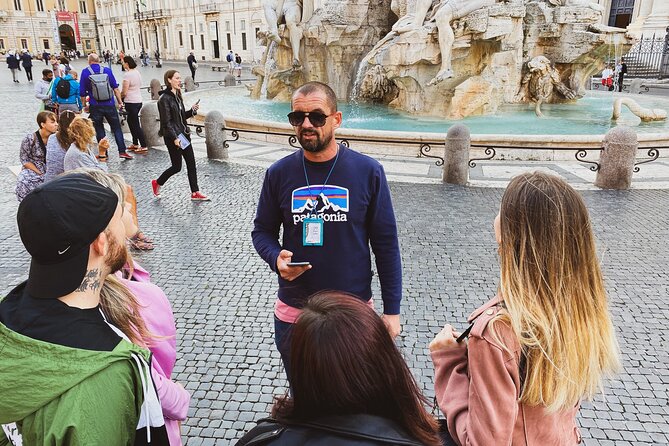
Next comes Fontana dei Quattro Fiumi, with about 10 minutes at the fountain. Short stops can feel rushed, but this one is focused on a specific credit: it’s associated with Gianfranco Bernini.
This is a good moment to switch your brain from building scale to sculpted detail. Look for how the fountain’s elements are arranged and how they create drama in a small space.
Even in a quick visit, the guide framing helps. Instead of just seeing water and stone, you start to see the artistic choices and symbolism that make Baroque fountains feel like theatre.
Piazza Navona: Baroque Fountains, a Place to Land, and Easy Dining
You’ll finish around Piazza Navona after roughly 20 minutes here. This is one of Rome’s most famous piazzas for a reason: it’s designed like a stage, with Baroque fountains and a square layout that keeps drawing your eyes back to the center.
The tour wraps in a practical way because Piazza Navona is loaded with places to eat nearby. Since you’ll be done while the day is still young, you can use the late afternoon energy to wander and choose your own pace.
Also, if you’re planning a second pass at Rome’s big sights, Piazza Navona is a great base point. You’ve now walked the route and learned what sits where, so your follow-up visit will be calmer and more targeted.
Price and Logistics: Is $30.25 Worth It?
At $30.25 per person for about 2 hours, the value comes from guidance plus a tight route. You’re paying for someone to connect the dots between landmarks, explain what matters, and keep the walk organized.
The big cost caveat is the Pantheon entrance. Since that ticket isn’t included, you may add a little on top depending on whether you choose to go in. Still, even if you don’t, you’ll get plenty from the exterior stop and the story setup.
There’s also the small-group size (max 15). In Rome, that can make a noticeable difference in how much you hear and how efficiently you move.
And the price sits in a sweet spot if you’re trying to do a first-day “orientation tour” before you book separate, ticketed experiences.
Who This Tour Fits Best (and Who Might Want a Different Plan)
This walk is ideal if you:
- Want a first-day understanding of central Rome’s layout and top highlights
- Prefer walking with structure over wandering with no plan
- Like art and architecture enough to stop briefly inside a church
It may be less ideal if you:
- Hate walking in busy streets (you’ll be on your feet for the whole loop)
- Want every major sight with built-in admission (Pantheon entry is not included)
- Need a very exact meeting point with zero margin for confusion, since one past issue mentioned vagueness around meeting details
If you’re traveling with adults who want stories and context, this works well. If you’re traveling with kids, it can work too, but you’ll likely need a bit more patience for the short-but-steep-walking rhythm.
Tips That Make This Tour Easier (Before You Even Start)
Bring comfortable shoes. Rome sidewalks can be uneven, and the route is tight enough that you’ll feel every slow step.
Plan for photos quickly at Trevi Fountain. The stop is timed, so don’t spend the full window framing one perfect shot.
At Chiesa di Sant’Ignazio di Loyola, keep expectations realistic: the interior time is brief. Think of it as a guided snapshot that helps you understand what you’re seeing, not a long museum visit.
And if you’re sensitive to noise, you’ll be happier arriving with a mindset of short pauses and quick shifts in position. The guide method is often praised for crowd management, which helps you stay oriented while you move.
Should You Book This Walking Tour of Rome?
Book it if you want an efficient, story-driven walk that hits major sites like Trevi, the Pantheon area, and Piazza Navona, plus the art inside St. Ignazio. The combination of landmark scale and Baroque details is a strong match for a first Rome trip.
Skip or modify if you only care about ticketed interiors and would rather spend your money solely on places you can enter. In that case, you might add Pantheon entry separately and adjust your plan for more time.
FAQ
How long is the walking tour?
It runs for about 2 hours.
What is the price per person?
The price is listed as $30.25 per person.
Is the tour in English?
Yes, it is offered in English.
How many people are in the group?
The tour has a maximum of 15 travelers.
Which major sights are included?
The route includes Trevi Fountain, Piazza Navona, the Pantheon, Fontana dei Quattro Fiumi, and stops at Palazzo Venezia and Chiesa di Sant’Ignazio di Loyola.
Is Pantheon admission included in the price?
No. Pantheon entrance is not included.
What is the main focus at Chiesa di Sant’Ignazio di Loyola?
You’ll go inside for a short visit and look at the ceiling frescos, plus learn about the artistic stories tied to the church.
Is the ticket mobile?
Yes, the tour uses a mobile ticket.
Is free cancellation available?
Yes, you can cancel for a full refund if you cancel at least 24 hours in advance of the start time.
Is the tour easy to join for most people?
Most travelers can participate, and it’s near public transportation. Service animals are allowed.