REVIEW · MUNICH
Munich in the 3rd Reich and WW2 private walking tour
Book on Viator →Operated by Dark History Tours · Bookable on Viator
Munich tells two stories at once. This private walking tour traces the city’s path through the Third Reich, ending with how Allied forces took control in 1945. You’ll move through the places tied to the Nazi rise and the events that followed, from propaganda moments to the machinery of persecution.
I especially love the one-on-one pace of a private tour. You can ask real questions, get answers on the spot, and even shift the route if your time is tight. I also love the visual approach some guides use, with photos and historical memorabilia to make the sites snap into focus.
One thing to consider: this is heavy subject matter, and you’ll be walking for about 3.5–4.5 hours in all kinds of weather. It’s history, not a casual stroll, so plan your energy and dress for the day.
In This Review
- Key things to know
- Munich in the Third Reich and WW2: what this private walk really gives you
- The route: start at Isar Gate, end near Odeonsplatz
- From the Treaty of Versailles to the Nazi rise: why Munich was a magnet
- The Beer Hall Putsch and the power of public theater
- Kristallnacht, the SS, and how persecution became system
- Nazi Party Headquarters and the Munich Pact: diplomacy with consequences
- Allied bombing campaigns and the fall of Munich in 1945
- What the best guides do here (and why it matters)
- Walking pace, meeting points, and weather reality
- Price and value: $423.44 per group up to 6
- Who should book this tour
- Should you book this Munich WW2 private walking tour?
- FAQ
- What’s the duration of the Munich 3rd Reich and WW2 private walking tour?
- How many people are included in a private group?
- Where does the tour start and end?
- What language is the tour offered in?
- What topics are covered during the walk?
- Is the tour mostly walking or does it use transportation?
- Is there a stop for food or drinks during the tour?
- Does the tour run in bad weather?
- How much notice do I need to cancel for a full refund?
Key things to know
- Private and small-group format (up to 6) for real Q&A and personalized pacing
- 4 big themes covered: war aftermath, Nazi rise, persecution, and Munich in the final push of WW2
- No bus needed: it’s a walking route with moderate walking and weather-proofing
- A guided break usually happens in a beerhall linked to the history, with the option to choose a café
- English-language guiding with photo props that help you connect events to specific places
Munich in the Third Reich and WW2: what this private walk really gives you
If you’ve ever stood in Munich’s elegant squares and wondered how something so beautiful could host something so monstrous, this tour is built for that question. It connects the city’s landmarks and meeting points to the major steps that led Germany into another world war—and what that war did to Munich and beyond.
This is a private walking tour for your group (up to 6 people). That matters because Munich is big on “look, another church” tourism. Here, the guide keeps you focused on cause and effect: the political chaos after World War I, how Nazi power grew in public, and how brutal decisions became routine.
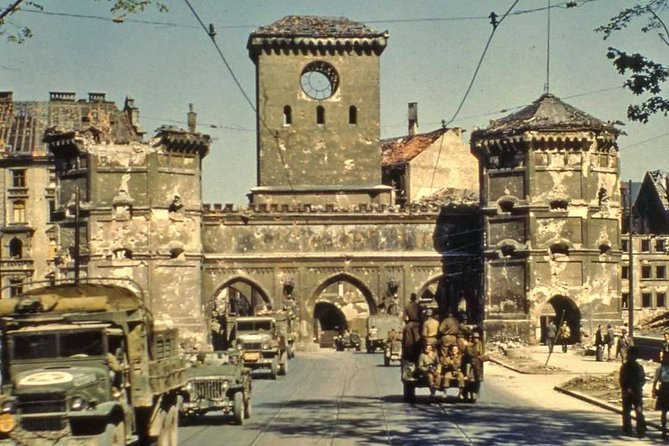
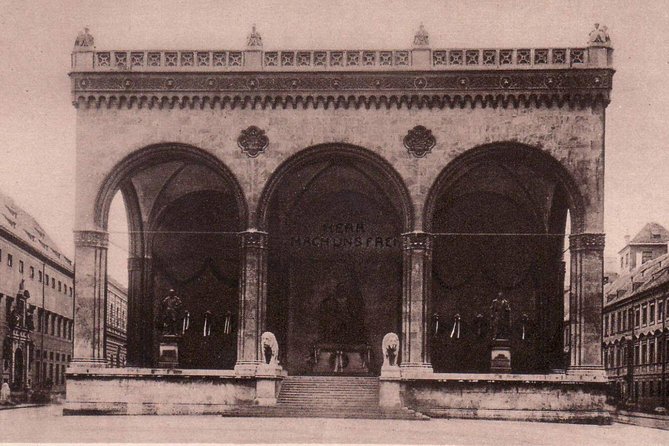
You’ll start at Isar Gate (Tal 50, 80331 München) and finish at Odeonsplatz (Odeonspl. 3, 80539 München), a short walk from Marienplatz. That ending point is useful because Odeonsplatz is one of the city’s central stages—perfect for tying the story together instead of sending you back into the maze too early.
You can also read our reviews of more walking tours in Munich

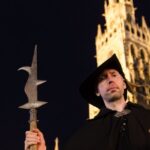
The route: start at Isar Gate, end near Odeonsplatz
The tour is designed as a walk you can actually follow without a bus. You’ll be moving at a moderate pace for roughly 3 hours 30 minutes to 4 hours 30 minutes, depending on timing, questions, and breaks. There’s no car or coach option to reduce the walking, so wear shoes you trust.
Starting near Isar Gate gives you a practical entry point into the center. It’s also a good “first impression” spot: you get a real sense of the city’s geography early, which helps when you later hear how the Nazis used central Munich as their political stage.
The finish at Odeonsplatz is where the story lands. It also sets you up well for your next stop—whether that’s a lunch, museums, or simply wandering with sharper eyes.
Tip: because it runs in all weather, pack for comfort even in cold or wet conditions. The tour isn’t the kind of experience you want to rush because you’re freezing.
From the Treaty of Versailles to the Nazi rise: why Munich was a magnet
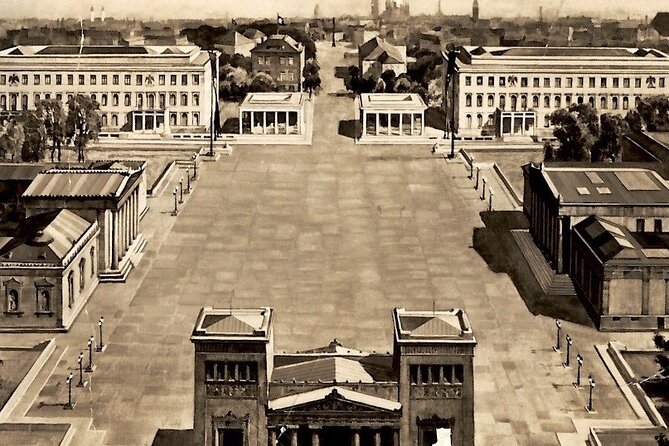
The tour begins with the shockwave of World War I and the Treaty of Versailles. That part matters because it explains why so many people were ready to believe that Germany had been humiliated and betrayed. The guide doesn’t treat this like distant background; it’s the engine that turns public anger into organized power.
Then you move into the origins of the Nazi Party, including how extremist politics took root during an era of deep social and economic unrest. Munich becomes the key setting: it was not just a random German city; it was one where these ideas gained traction fast.
One reason I like this structure is that it’s chronological. Instead of jumping straight to the war years, you understand how the groundwork formed—how slogans, rallies, and political theater became tools, not just words.
The Beer Hall Putsch and the power of public theater
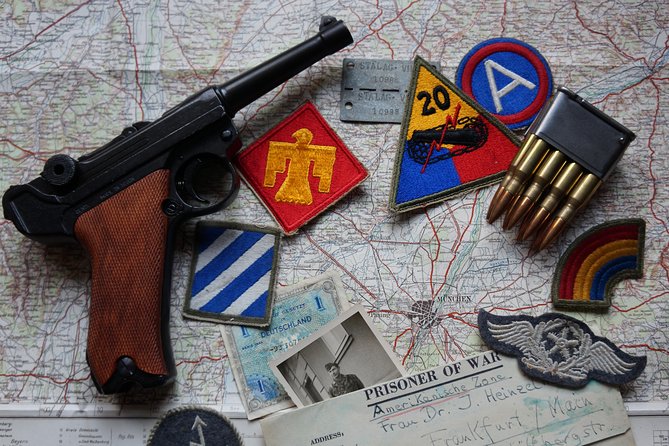
Next comes one of the most famous but often misunderstood moments: the Beer Hall Putsch. The key is how the guide frames it. It’s not just the event itself; it’s what the attempted uprising represented to the Nazi movement—an early attempt to seize momentum by making conflict visible.
Munich’s public spaces are central to this discussion. As you walk, you start to see how political power can become performance: who stands where, what crowds are shown, and how leaders try to shape history in the street.
There’s also usually time for a break in a beerhall connected to the history. This is one of those choices that works well in practice because beerhall culture is deeply tied to Munich’s identity—yet the tour uses that connection to talk about how the Nazis exploited familiar social settings for political legitimacy.
If you’d rather skip the beerhall context and take a breather in a café, tell your guide. Refreshments aren’t included, but you’ll get the break you need without losing the flow.
Kristallnacht, the SS, and how persecution became system
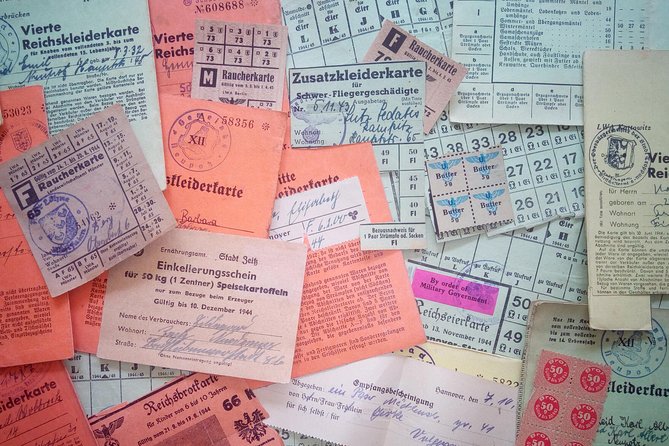
The tour doesn’t stop at rise-and-rally politics. It also tackles the darker pivot points: Crystal Night (Kristallnacht) and the origins of the Holocaust. This part can be emotionally heavy, but the way it’s taught is what makes it useful.
Instead of only naming atrocities, the guide connects events to the decision-making and institutions that enabled them. That’s where learning about the birthplace of the SS becomes more than a trivia point. You start understanding that terror wasn’t random—it was organized, staffed, and normalized.
You’ll also get context on how propaganda and fear worked together: how a regime could turn neighbors into threats, and how policy could be implemented with the cold logic of bureaucracy.
Practical note: this portion of the walk can be mentally tiring. If your group needs a slower pace, private format makes it easier to take a breath and keep moving.
You can also read our reviews of more private tours in Munich

Nazi Party Headquarters and the Munich Pact: diplomacy with consequences
One standout theme on this tour is how it covers the political peak and its aftermath. You’ll see and learn about the Nazi Party Headquarters, and you’ll also cover the signing of the Munich Pact.
These topics matter because they show a crucial lesson: history isn’t only made by battles. It’s also made by meetings, negotiations, and decisions that let aggressive moves happen faster than anyone should have tolerated.
When the guide ties the pact to the sites and to what came next, you get a stronger sense of the timeline: what was promised, what was ignored, and how quickly events turned once the regime gained room to maneuver.
And this is where the tour’s private format shines again. You can ask questions about what the pact meant, what leaders believed at the time, and why it failed to stop catastrophe. A standard group tour often won’t allow that kind of back-and-forth.
Allied bombing campaigns and the fall of Munich in 1945
The second half of the story turns from political theater to war reality. The tour includes the Allied bombing campaign, then moves to how the city fell to US forces in 1945.
This is not taught as just dates and destruction. The guide uses the Munich setting to help you picture what it means for a city to be targeted, and what the end of a regime looks like for ordinary places—streets, institutions, and everyday life.
You’re walking through the same urban layout that people later had to navigate under occupation and upheaval. That physical connection is why a walking tour can work so well for WW2 history: the city is still here, but the meaning behind the buildings has changed.
What the best guides do here (and why it matters)
The tour’s overall reputation is built on how the guide teaches the material. In particular, you’ll see the emphasis on visuals and real explanations rather than memorized speeches.
Many guides use photos and historical props to support what they’re pointing out on the street. Some guides even use small acting or dramatization to make key moments clearer—without turning it into a gimmick.
You’ll also notice flexibility from experienced guides. People have praised guides for staying on schedule even in tough weather, and for adjusting the route if time runs short while still keeping the main story intact.
The big takeaway for you: private tours make it easier to match the pacing to your interests. If you’re more interested in political mechanics, Nazi propaganda, or later resistance context like the White Rose movement, your guide is more likely to incorporate that than a one-size-fits-all group script.
Walking pace, meeting points, and weather reality
Expect moderate walking the whole way. This is designed as a true walking tour: no bus rides, no skipping distance. If your group has mobility limits, you should plan carefully and consider whether you can handle several hours on foot in changing weather.
Meeting options are straightforward:
- You’ll meet at Isar Gate (Tal 50) to start.
- The tour provider also notes pickup may be near Hauptbahnhof (main station) or Marienplatz, depending on the arrangement.
So if you’re already near central Munich, you won’t have to do a giant detour just to start.
All-weather note: the tour operates in bad weather too. That’s normal for Munich, but you should still take it seriously. Bring a warm layer, rain protection, and gloves if it’s winter. Cold weather can make the walking feel longer, especially during heavier historical segments where you may pause more often.
Price and value: $423.44 per group up to 6
At $423.44 per group (up to 6 people), this is priced for private history fans rather than budget backpacking. But the value is real if you split it among your group.
Here’s the practical way to think about it:
- You’re paying for undivided guide attention for about half a workday.
- You’re getting visual aids and the ability to ask questions that you usually can’t on a standard tour.
- You’re also getting flexibility—like shortening the walk if needed without losing key context.
If you’re traveling as a couple or a small family, the per-person cost drops quickly compared to paying individually. If you’re solo, the price may feel steep, unless you strongly prefer private attention over group learning.
For history-heavy trips, I think this price makes sense when your goal is clarity and context, not just seeing “the spots.”
Who should book this tour
This tour fits best if you:
- Want WW2 Munich context in a clear timeline, not scattered facts
- Prefer private Q&A over a headsets-and-herding experience
- Like guides who use photos, memorabilia, and scenario-based teaching to keep the story understandable
It also works for mixed-age groups, since guides have managed to keep younger visitors engaged (including teens). That said, keep it in mind that the subject matter is intense, so it’s worth considering what your group can handle emotionally.
If you’re in Munich for only a day or two and you want a high-impact history experience, this is also one of the more focused ways to spend your time. You don’t just see sites; you learn why they mattered and what happened next.
Should you book this Munich WW2 private walking tour?
I’d book it if you want your Munich visit to have a backbone. The city is stunning, sure—but this tour adds a hard, necessary context that makes those landmarks feel real in a different way.
Book it if:
- You can handle a serious history topic
- You’re ready to walk for most of the afternoon
- You want a guide who can go beyond a fixed script when you ask better questions
Skip it or swap to something lighter if:
- You want a relaxing sightseeing day
- Your group doesn’t do well with long walks in cold or wet weather
- You’d rather avoid the emotional weight of events like Kristallnacht and the origins of the Holocaust
If your goal is to understand how Munich fit into the Nazi story—from the aftermath of WWI to the fall in 1945—this private walk is one of the most direct, practical ways to do it.
FAQ
What’s the duration of the Munich 3rd Reich and WW2 private walking tour?
It runs about 3 hours 30 minutes to 4 hours 30 minutes.
How many people are included in a private group?
It’s a private tour for your group, up to 6 people.
Where does the tour start and end?
Start: Isar Gate, Tal 50, 80331 München. End: Odeonsplatz, Odeonspl. 3, 80539 München.
What language is the tour offered in?
The tour is offered in English.
What topics are covered during the walk?
It includes the Great War and the Treaty of Versailles, the origins of the Nazi Party, the birthplace of the SS, the Beer Hall Putsch, Kristallnacht and origins of the Holocaust, Nazi Party Headquarters and the Munich Pact, Allied bombing campaigns, how the city fell to US forces in 1945, and more.
Is the tour mostly walking or does it use transportation?
It involves a moderate amount of walking and does not use a car or bus.
Is there a stop for food or drinks during the tour?
The tour generally stops for a break in a beerhall associated with this history. Refreshments are not included, and you can ask the guide to choose a café instead.
Does the tour run in bad weather?
Yes, it operates in all weather conditions, so wear appropriate clothing and shoes.
How much notice do I need to cancel for a full refund?
You can cancel for a full refund up to 24 hours in advance of the experience’s start time.