A walk here hits fast. You’ll connect Amsterdam’s Jewish community—from Sephardic roots in the Dutch Golden Age to the Nazi occupation from 1940–1945—through real streets and landmarks. I like that the tour ends right outside the Anne Frank House, so the story lands while you’re still standing in the neighborhood. I also like the small group size (max 15), which keeps the pace human and the questions welcome.
One thing to plan for: this tour includes heavy WWII material, and some people may find certain stops emotionally intense. If you’re sensitive to Holocaust topics, go in with the mindset that your guide will set the tone and you can take breaks as needed.
In This Review
- Highlights You’ll Feel on This Walk
- Why This Jewish Quarter Walk Works So Well in Two Hours
- Meeting at Amstel 51C: Logistics That Don’t Waste Your Time
- Sephardic Roots and the Synagogue You Can Still See in Use
- Monuments, Deportations, and the Part of WWII People Skip
- Resistance: When History Isn’t Only About Survival
- Deportation Camps: Heavy Material, Clear Structure
- Plantage Area Charm With Real Historical Weight
- Spinoza Monument: Philosophy in Stone
- Dam Square, the Royal Palace, and Then Anne Frank House
- What the Top Guides Do Differently
- Price and Value: What You’re Really Paying For
- My Booking Checklist (So You Don’t Miss Anything)
- Who Should Book This Tour (and Who Might Want a Different Fit)
- Should You Book This Amsterdam Jewish Quarter Heritage Walking Tour?
- FAQ
- FAQ
- How long is the Jewish Quarter Heritage Walking Tour?
- Where is the meeting point for the tour?
- Does the tour end at the same place?
- What’s the maximum group size?
- Is the tour offered in English?
- Is pickup from hotels included?
- Is the Anne Frank House ticket included?
- Is food and drinks included?
- Is the tour affected by weather?
- Can I get a full refund if I cancel?
Highlights You’ll Feel on This Walk
- Small-group pace (15 max) that lets you ask questions and stay engaged
- Big-picture WWII context (1940–1945) tied directly to what you see on the street
- Ends outside the Anne Frank House museum, so you can continue immediately with your own visit
- Sephardic Jewish history and an active synagogue that still matters today
- Memorial and deportation focus, including a Holocaust wall listing 102,000 names from the area
- Plantage-area storytelling, plus a stop at the Spinoza monument
Why This Jewish Quarter Walk Works So Well in Two Hours
Amsterdam has a lot of history, but most visitors get stuck doing it in fragments: one museum here, a plaque there. This tour is designed to stitch the neighborhood together into one clear timeline. In about 2 hours, you move from the Jewish community’s earlier prominence to the events of occupation and deportation, then into the modern-day memorial spaces people recognize today.
The value is the sequencing. You’re not just shown buildings. You’re taught what those buildings meant, who used them, and how the community’s fate changed under Nazi control. That’s why it feels like more than a sightseeing walk; it reads like a guided story you can walk through.
At $29.52 per person, you’re also paying for something practical: an expert on the ground, working in English, taking a small group between multiple key sites without you needing to research each stop yourself.
You can also read our reviews of more walking tours in Amsterdam



Meeting at Amstel 51C: Logistics That Don’t Waste Your Time
The tour starts at Amstel 51C, 1018 EJ Amsterdam, and it finishes back at the meeting point. That matters because you’re not doing a long “half-day hike” across town just to connect two neighborhoods—you stay in a tight area and keep your day flexible.
A couple helpful details:
- It’s offered in English
- It’s near public transportation
- You get a mobile ticket
- Hotel pickup/drop-off is available for selected hotels only
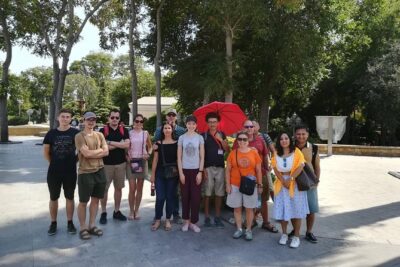
Because the group is capped at 15 travelers, you should expect an intimate feel. In real terms, that means the guide can slow down when someone asks a question—and you’re not always listening from the back while the front disappears around corners.
Also, service animals are allowed, and most people can participate. Since it’s a walking tour, you’ll still want to wear shoes you trust for cobblestones and a steady pace.
Sephardic Roots and the Synagogue You Can Still See in Use
The tour kicks off with the history of Amsterdam’s Jewish community, with strong attention to the Sephardic community during the Dutch Golden Age. You’ll hear how this group became one of Europe’s largest and wealthiest Jewish communities—and how that prosperity showed up in architecture.
One of the most striking parts is that the synagogue connected to this story isn’t only a relic. It’s described as an active place of worship and also a popular tourist attraction. That blend changes how you see the building. Instead of treating it like a closed-off monument, you understand it as a living institution that has carried history across centuries.
Practical tip: when you’re standing near an active synagogue, keep your voice down and be respectful about photo timing. The tour gives you context, but you still share the space with people who have real daily use for it.
Monuments, Deportations, and the Part of WWII People Skip
After the early-history foundation, the tour moves into the Nazi occupation and what followed for Jewish life. You’ll stop at a monument tied to Jewish deportation, and the guide connects the meaning of the site to the broader story of what happened between 1940 and 1945.
Here’s what I think makes this section work: the tour doesn’t treat deportation as a distant concept. It frames it as something that happened to specific communities, in specific places, connected to the streets you’re walking. Even if you already know the basics, the pacing and site-based framing tend to make it feel less abstract.
A standout emotional moment comes from a Holocaust memorial wall listing the names of 102,000 Jews from the area who were killed. That’s the kind of detail that turns history into individual reality. It also helps explain why the guide’s tone matters—this part isn’t for quick clicks or casual sightseeing.
Resistance: When History Isn’t Only About Survival
Next, you’ll learn about the resistance of the Jewish community during the war. This stop gives the story another angle, one that’s easy to forget when you focus only on persecution.
I like this part because it shifts you from pure tragedy to human agency. You still get the gravity, but you also learn that people responded with courage and action, not just endurance. That’s a theme that several guides are praised for: discussing difficult moments with sensitivity and a care for how people process what they’re hearing.
If you’re the kind of person who likes to ask questions, this is a good time. Resistance is often discussed in school as a category. On this walk, the guide’s job is to translate it into understandable human choices.
You can also read our reviews of more historical tours in Amsterdam




Deportation Camps: Heavy Material, Clear Structure
Then comes the section about deportation camps. The tour is explicit that this is part of what you’ll learn, and that’s important because you don’t get to pretend the story ends with arrests. You’re shown the next step in the system and what that meant for communities in Amsterdam.
I’ll be honest: this portion is emotionally heavy. The good news is the tour format helps. You’re not sitting in a classroom. You’re moving, you’re listening, and you’re seeing memorial and neighborhood context around you. That keeps it from turning into a lecture with nowhere for your mind to land.
The other key detail is how the guide handles the flow. In the feedback, a repeated theme is a compassionate approach—guides checking on participants’ comfort and pacing the group thoughtfully. That matters a lot when the topic is this painful.
Plantage Area Charm With Real Historical Weight
After you’ve worked through the WWII chapters, the tour shifts to the beautiful Plantage area and its history. This is a smart way to structure a walking tour about trauma: you don’t leave people stuck only in memorial mood. You help them understand what the neighborhood is in everyday terms—so the history has a place to live.
You’ll get an overview of the Plantage area’s history and what it meant for Jewish life over time. Even if you don’t know the neighborhood yet, this part helps you see it as more than a “past landmark.” You start to recognize why the Jewish quarter is remembered as a real place where people lived, worked, celebrated, argued, and built community.
Spinoza Monument: Philosophy in Stone
One stop that adds a different texture is the Spinoza monument. The guide uses it to connect the neighborhood to intellectual life and Jewish cultural contributions. That doesn’t erase the war story; it balances it.
I find this kind of stop essential for understanding Amsterdam beyond the headline. It’s easy to see Jewish history in wartime terms only. A philosophy marker like this reminds you there was a long arc of culture, learning, and ideas before the darkest chapters.
Dam Square, the Royal Palace, and Then Anne Frank House
As the walk continues, you’ll walk to Dam Square and the Royal Palace. This is where the tour expands your frame from the Jewish quarter to the center of Amsterdam. It’s also practical: Dam Square is a major reference point for navigating the city afterward, so you end the tour near an area you can easily explore on your own.
Then you finish with the Anne Frank story, ending the tour right outside the Anne Frank House museum. The key point: the entrance ticket to the Anne Frank House is not included, so if you want to go inside, plan ahead for that separate ticket.
Ending outside the museum is a big part of why this works. The Anne Frank material lands while you’re still in “street-history mode,” so you don’t feel like you’re jumping to a random unrelated attraction at the end.
What the Top Guides Do Differently
You’ll likely travel with a guide such as Aaron, James, or Andrea. Names matter here because different guides bring different energy, and the praise is consistent: guides deliver facts with structure, but they also tell the story like it’s about real people.
The most repeated high marks you should expect:
- Human anecdotes and clear explanation, not dry dates
- Answers to questions without rushing you
- A compassionate tone for emotional stops
- A pace that feels right for a 2-hour walking format
If you’re the type who likes to learn details and ask follow-ups, this is the kind of tour that rewards that. You’re not just collecting sights—you’re building understanding.
Price and Value: What You’re Really Paying For
At $29.52, this isn’t priced like a “special museum day” tour. It’s priced like an efficient historical orientation with a real guide, multiple major sites, and a capped group size.
You’re getting:
- A guided route through key Jewish historical locations
- WWII context tied to where you stand
- Small-group attention that usually costs more in bigger-city tours
The “not included” list also keeps the cost honest. Food and drinks aren’t included, and Anne Frank House entry isn’t included. That’s normal. It means you can plan your day your way—grab a snack before or after, and decide independently whether you want the museum inside.
My Booking Checklist (So You Don’t Miss Anything)
This tour runs on foot, so a little prep goes a long way.
Bring:
- Comfortable walking shoes
- A light layer (Amsterdam weather likes surprises)
- A willingness to pause and reflect at memorial stops
Plan around the fact that it requires good weather. If it looks rainy, keep an eye on your date decision. The tour provider can offer a different date or a full refund if canceled due to poor weather, so you’re not stuck.
Finally, if you care about making the most of the tour: come with 1-2 questions. Ask about anything that feels confusing—like how Amsterdam’s Jewish community changed over time, or how deportation fits into the neighborhood’s story. A guide can’t read your mind, but this tour’s format makes it easy to get answers.
Who Should Book This Tour (and Who Might Want a Different Fit)
This tour is a strong match if you:
- Want a guided history walk that connects sites to stories
- Prefer small-group learning over big bus tours
- Care about understanding WWII from the perspective of Amsterdam’s Jewish community
It’s also a good fit if Anne Frank is on your list and you want to approach it with more neighborhood context first. Ending outside the Anne Frank House sets you up well for the next step.
A possible mismatch if you:
- Want a light, purely sightseeing walk (this one includes deportations and concentration-camp topics)
- Get overwhelmed easily by memorial-focused stops
Should You Book This Amsterdam Jewish Quarter Heritage Walking Tour?
If you want an efficient, meaningful way to understand the Jewish quarter and the WWII story without doing hours of independent research, I’d book it. The mix of early community history, occupation-era events, and the walk ending at Anne Frank House is exactly the kind of sequencing that makes history stick.
The only real decision point is emotional readiness. If you can handle serious topics with respect and patience, this tour delivers strong educational value and a humane approach that helps the story land.
FAQ
FAQ
How long is the Jewish Quarter Heritage Walking Tour?
It lasts about 2 hours.
Where is the meeting point for the tour?
The tour starts at Amstel 51C, 1018 EJ Amsterdam, Netherlands.
Does the tour end at the same place?
Yes, it ends back at the meeting point.
What’s the maximum group size?
The tour has a maximum of 15 travelers.
Is the tour offered in English?
Yes, it is offered in English.
Is pickup from hotels included?
Hotel pickup and drop-off are included for selected hotels only.
Is the Anne Frank House ticket included?
No. The entrance ticket to the Anne Frank House is not included.
Is food and drinks included?
No. Food and drinks are not included.
Is the tour affected by weather?
Yes. The experience requires good weather and may be rescheduled or refunded if canceled due to poor weather.
Can I get a full refund if I cancel?
You can cancel for a full refund up to 24 hours in advance of the start time.