REVIEW · PARIS
Le Marais District & Jewish Quarter Guided Walking Tour 12ppl Max
Book on Viator →Operated by Babylon Tours Paris · Bookable on Viator
Paris starts here in the Marais. This Le Marais & Jewish Quarter guided walking tour strings together royal Paris, Jewish Paris, and modern Paris on one doable 2.5-hour walk. I like the small-group setup (max 12) because questions don’t get lost in the crowd, and the tour includes an English-speaking guide who talks history in a way you can actually follow. My main caution: synagogues are not entered, since access is restricted to worshippers for security.
You’ll start near Saint-Paul and work your way through highlights like Saint-Paul-Saint-Louis, Place des Vosges, the Pletzl area, and ends at Hôtel de Ville. The route covers a lot, but it’s still a walking tour with a moderate fitness level requirement, so come ready for steps and cobblestones.
In This Review
- Key Points at a Glance
- Getting Your Bearings in Le Marais (Fast and Fun)
- Why the Small-Group Format Actually Helps
- Stop-by-Stop: From Jesuit Church to the Royal Marais
- Saint-Paul-Saint-Louis Church
- Cour et jardin de l’Hotel de Sully
- Place des Vosges: The Square That Sets the Tone
- Rue des Francs Bourgeois to Musée Carnavalet: Fashion Street Meets Old Paris
- Rue des Francs Bourgeois
- Hôtel Carnavalet and Musée Carnavalet (What You Get Without Waiting in Lines)
- The Jewish Quarter around the Pletzl and Rue des Rosiers
- La Rue des Rosiers
- Jardin des Rosiers and Joseph Migneret: WWII History in a Tiny Space
- Pompidou’s Exterior and Hôtel de Ville: Two Parises, One Walk
- Centre Pompidou (Outside Time)
- Hôtel de Ville (Ending at the Civic Heart)
- What Guides Tend to Do Well on This Tour
- Price and Value: What $59.69 Buys You Here
- Logistics That Matter (So You Don’t Lose Time)
- Who Should Book This Walking Tour
- Should You Book This Le Marais and Jewish Quarter Tour?
- FAQ
- How long is the Le Marais District & Jewish Quarter guided walking tour?
- What is the group size limit?
- Is the tour offered in English?
- Where does the tour start and end?
- Does the tour run in rain?
- Are synagogues included in the tour?
- Are museum entries included for Musée Carnavalet and the Centre Pompidou?
- Is the tour suitable for wheelchair users or those with walking disabilities?
- What should I bring for the walk?
Key Points at a Glance
- Max 12 people keeps the vibe friendly and question-friendly.
- English guide storytelling makes big-picture history feel personal and practical.
- Pletzl and Rue des Rosiers focus on the Jewish Quarter’s everyday life, not just landmarks.
- Joseph Migneret’s garden stop adds a WWII thread you can see right in the streetscape.
- Museums aren’t the whole point (Musée Carnavalet and Pompidou entry are not included), so you’re not stuck waiting for tickets.
Getting Your Bearings in Le Marais (Fast and Fun)
Le Marais can feel like a maze if you wander alone. One minute you’re on a gorgeous square, the next you’re in a narrow street packed with shops, and it’s easy to miss why the area matters. This tour helps you get oriented quickly, then fills in the why behind the architecture and street layout.
I also like that the tour doesn’t just throw names at you. You get a guided narrative that connects centuries: where the Marais was once on the edge of Paris, how it later became a center of power, and how the Jewish community became a major part of its identity during the 18th and 19th centuries.
And yes, it’s efficient. In about 2.5 hours, you move from church history to royal squares, then to the Pletzl area and the streets around Rue des Rosiers, and finally to modern Paris at Pompidou and the older civic center at Hôtel de Ville.
You can also read our reviews of more walking tours in Paris



Why the Small-Group Format Actually Helps
This is a semi-private walking tour with a maximum of 12 guests. That matters more than it sounds. With a small group, the guide can adjust pace, answer follow-ups, and point out details you’d otherwise walk past.
It also matches how the guides seem to work in practice. In the feedback, guides such as Eden, Hugo, Adrien, Tamari, Emma, Augustina, and Angelina come up repeatedly, with praise for staying engaging and answering lots of questions. One of the smartest travel moves in Paris is booking something where your guide’s personality actually comes through, and this format supports that.
The tour also runs rain or shine. Paris weather is not shy, so planning for it makes the day easier.
Stop-by-Stop: From Jesuit Church to the Royal Marais
Saint-Paul-Saint-Louis Church
You’ll begin at the 17th-century Saint-Paul-Saint-Louis church, built by the Jesuits. The design is inspired by the Gesù church in Rome, which is a nice way to connect Paris to older European Catholic architecture. Even if you don’t go inside, the guide’s context helps you understand why it looks the way it does and why it belongs in the Marais story.
Practical note: the tour timing here is short, so focus on listening more than photographing. If you try to do both at once, you’ll miss the point of the stop.
Cour et jardin de l’Hotel de Sully
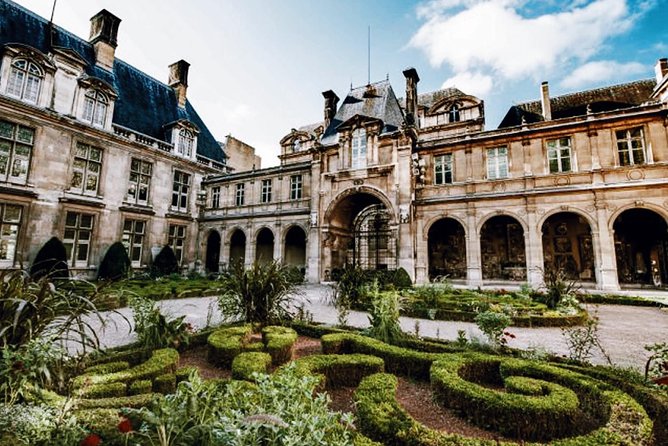
Next comes the Hotel de Sully, built between 1624 and 1630. You’re checking out the Renaissance style with Baroque elements—basically a Parisian blend of grandeur and artistic flair. You’re also getting a glimpse of how monumental building shaped this part of the city.
This stop is a good example of why the guide’s eye matters. The Marais looks beautiful, but without explanation you might just see “pretty old buildings.” With a guide, you learn what to look for: style shifts, design choices, and how the hotel fit into broader monumental development in the area.
You can also read our reviews of more guided tours in Paris






Place des Vosges: The Square That Sets the Tone
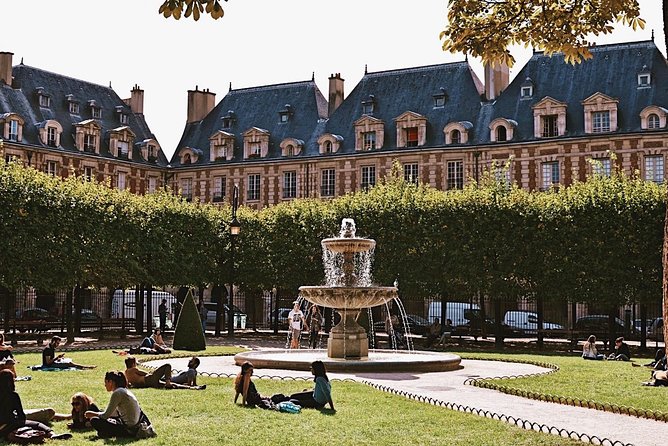
Place des Vosges is the oldest planned square in Paris. That alone makes it a must-see. But the tour does something useful: it positions the square within the Marais’s royal era, so you’re not only admiring stonework—you’re understanding the power geography of the city.
If you like people-watching and architecture at the same time, this is where you’ll slow down naturally. It’s also a spot where you can get your bearings for the rest of the walk—after this, Rue des Francs Bourgeois and the Jewish Quarter streets start to make more sense.
Rue des Francs Bourgeois to Musée Carnavalet: Fashion Street Meets Old Paris
Rue des Francs Bourgeois
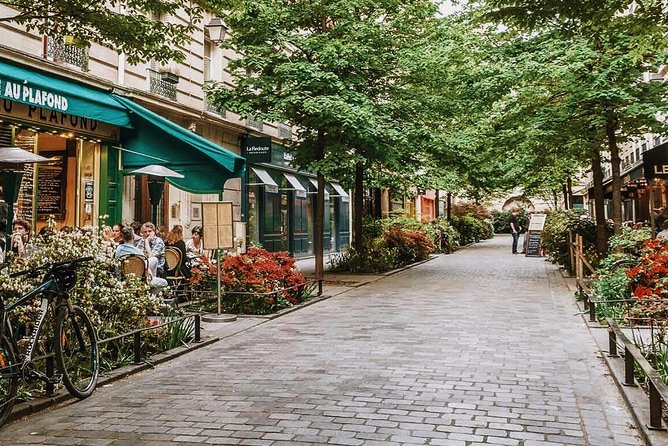
Rue des Francs Bourgeois is one of the longer streets in the Marais and it’s known for fashion boutiques. The tour treats it as more than a shopping strip. The guide helps you connect commerce with the area’s identity, showing how the Marais keeps reinventing itself while still holding onto historic bones.
When you’re traveling, I find that the most useful shopping-area info is not store names. It’s knowing where you are. This street gives you that sense of place.
Hôtel Carnavalet and Musée Carnavalet (What You Get Without Waiting in Lines)
You’ll see Hôtel Carnavalet and the Musée Carnavalet, which highlights the history of Paris. This museum stop is listed as not included for admission, which matters if you were hoping for guaranteed entry.
So here’s the smart way to think about it: the tour gives you orientation—architecture, setting, and context—then you decide later whether you want museum time. If you do want inside access, plan an extra visit on your own schedule.
If you’re the type who loves museums but hates rushing, this arrangement is a good trade. You get the story while walking, then you can choose depth later.
The Jewish Quarter around the Pletzl and Rue des Rosiers
This is where the tour earns its name.
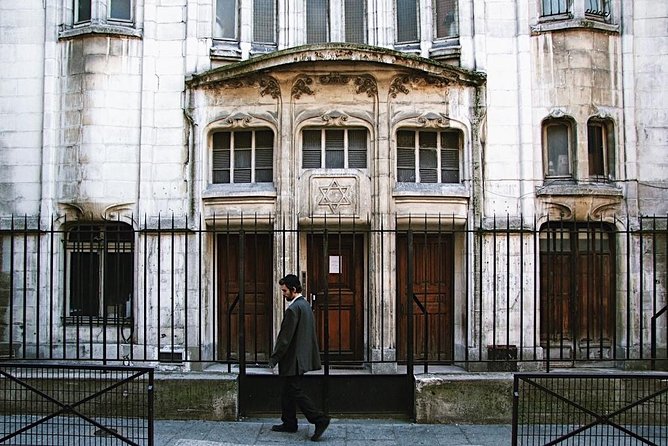
The walk moves through the old Jewish Quarter, centered on areas commonly referred to as the Pletzl and the streets around Rue des Rosiers. Instead of only focusing on synagogues, the tour emphasizes lived community life—bakeries, boutiques, and the street-level feel of the neighborhood.
One of the strongest takeaways for me is how the guide frames the Jewish community’s impact from the 18th and 19th centuries. The Marais isn’t just a pretty backdrop here; it becomes a stage for people building community in the city’s shifting social landscape.
La Rue des Rosiers
Rue des Rosiers sits at the heart of the Jewish Quarter. The point of this stop isn’t to check off another street photo. It’s to understand why this cluster of life mattered historically and why it still feels like a center point on the map today.
If you’re doing Le Marais for the first time, this street helps connect the dots between the “historic Paris” you’ve seen so far and the more human-scale neighborhood story the tour is telling now.
Jardin des Rosiers and Joseph Migneret: WWII History in a Tiny Space
This part of the walk is short, but it’s memorable because it’s personal.
You’ll visit the Jardin des Rosiers, a small garden tucked between buildings and hidden behind boutiques. The garden is named for Joseph Migneret, a school principal who helped students by hiding them in his home during WWII. He was eventually arrested and killed.
This is the kind of stop that makes you look up at the buildings differently. Instead of seeing a quiet little garden between shops, you start seeing it as a marker of risk, courage, and survival—woven into the neighborhood, not packaged as a museum exhibit.
If you want one moment on this tour that really sticks, this is often the one.
Pompidou’s Exterior and Hôtel de Ville: Two Parises, One Walk
Centre Pompidou (Outside Time)
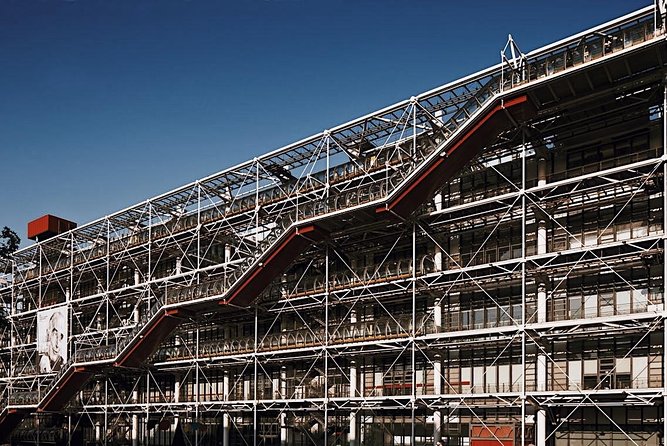
You’ll make your way close to the Centre Pompidou, the contemporary museum known for its high-tech style and eye-catching exterior. Admission is not included, so you’re not promised entry.
That’s fine. The walk uses Pompidou as a “then and now” contrast. You’ve been in centuries of Paris. Now you get the modern side without committing to museum hours.
Hôtel de Ville (Ending at the Civic Heart)
The tour ends at Hôtel de Ville, the city hall building. It has been the headquarters of the municipality of Paris since 1357. Ending here is a smart choice because it brings the story back to governance and city structure—two themes you’ve been hearing throughout the walk.
You also get a glimpse next to Hôtel de Ville: Église Saint-Gervais-Saint-Protais, described as the first example of French baroque style in Paris. It’s now associated with the Monastic Fraternities of Jerusalem. Even as a brief stop, it adds another layer to the way the Marais area keeps changing roles over time.
What Guides Tend to Do Well on This Tour
One reason this tour scores so high is that the guide seems to drive the experience, not just the route.
From the feedback you can sense a pattern: guides like Hugo, Eden, Adrien, Tamari, and Augustina are praised for warmth, humor, and clear answering of questions. Several names show up alongside comments about architectural detail you might otherwise miss, plus extra help like restaurant recommendations and other suggestions.
So if you like the kind of sightseeing where your guide points out the stuff you’d otherwise overlook—doorways, design choices, and the meaning behind the street plan—this format fits.
Price and Value: What $59.69 Buys You Here
At about $59.69 per person for roughly 2.5 hours, the price is reasonable for Paris—especially because you’re paying for expertise, not for lots of paid entrances.
Many stops have free admission tickets listed (like the churches, Place des Vosges area, and several street/junction points). The two big “not included” items are Musée Carnavalet and Centre Pompidou. That means you’re mostly buying context, pacing, and smart routing.
In other words, you’re not paying to sit in a line for a single attraction. You’re paying to understand an entire neighborhood fast, then optionally extend the story on your own at the sites where you want deeper time.
Logistics That Matter (So You Don’t Lose Time)
You’ll need a mobile phone number for the tour. You should also know that the route can shift due to national celebrations, and in those cases refunds or discounts aren’t provided. It’s rare, but it’s worth planning around.
You’re also not allowed large bags or suitcases. Bring a day bag only, and keep your essentials light.
Finally, this isn’t a wheelchair-friendly tour, and it’s not recommended for walking disabilities. It’s built for moderate physical fitness and a steady walking pace.
Who Should Book This Walking Tour
Book it if you want:
- A focused Le Marais intro with both royal-era and Jewish Quarter context
- A small-group walk with an English guide who handles questions
- Street-level history: courtyards, squares, small gardens, and neighborhood lanes
Skip it if:
- You need wheelchair access or step-free routes
- You’re hoping for guaranteed synagogue entry (not included for security reasons)
If you enjoy walking, architecture, and stories that connect centuries together, you’ll likely get good value from this one.
Should You Book This Le Marais and Jewish Quarter Tour?
I’d book it if your goal is to understand Le Marais beyond the postcard stuff. The combination of Place des Vosges, Hotel de Sully sights, the Jewish Quarter focus around the Pletzl and Rue des Rosiers, and the Joseph Migneret garden stop makes the tour feel like it’s doing more than sightseeing.
But be honest with yourself about your priorities. If you want inside synagogue access, this tour won’t satisfy that. And if walking is an issue, look for a more accessible option.
If those two points don’t apply to you, this is a strong, efficient way to get your bearings and leave with a real sense of what the neighborhood has meant to people over time.
FAQ
How long is the Le Marais District & Jewish Quarter guided walking tour?
The tour lasts about 2 hours 30 minutes.
What is the group size limit?
The tour is semi-private with a maximum of 12 travelers.
Is the tour offered in English?
Yes, the guide conducts the tour in English.
Where does the tour start and end?
It starts at Saint-Paul 75004 Paris and ends in Le Marais, Paris.
Does the tour run in rain?
Yes, it runs rain or shine.
Are synagogues included in the tour?
No. The tour does not include entry into synagogues because access is restricted to worshippers for security reasons.
Are museum entries included for Musée Carnavalet and the Centre Pompidou?
No. Musée Carnavalet and the Centre Pompidou are listed as not included for admission.
Is the tour suitable for wheelchair users or those with walking disabilities?
No, it is not recommended for those with walking disabilities or using a wheelchair.
What should I bring for the walk?
Bring comfortable shoes, water, and a plan for weather (an umbrella in case of rain and a hat during summer). You also should not bring large bags or suitcases, and you must provide a mobile phone number (with country code).