REVIEW · LISBON
Lisbon Walking Tour – The Perfect Introduction to the City
Book on Viator →Operated by Hi Lisbon Walking Tours · Bookable on Viator
One of Lisbon’s best starts is a good walk. This tour strings together downtown landmarks and the stories behind them, from the 1755 earthquake to the Carnation Revolution. You’ll get your bearings fast in Baixa and Chiado, with a guide who helps you connect what you see to what happened.
What I like most is the sheer amount of key sights you pass in just 2 hours 30 minutes, with no heavy planning on your part. Second, the guide approach really matters here: some guides, like Tiago/Tiabo, Natalia, Jose, and Walter, bring the city to life with sharp, memorable storytelling plus practical tips for where to eat and what to do next.
One consideration: if your guide speaks very quickly (it happens with some groups), you might miss a detail or two. Also, the tour ends with pay-your-guide style guidance, and that can feel uncomfortable if you dislike tip talk at the start.
In This Review
- Key highlights to expect
- Why This Lisbon Walk Is a Top First-Day Plan
- Meeting at Praça do Comércio and What to Watch For
- The Downtown Loop: A Stop-by-Stop Lisbon Story
- Stop 1: Statue of D. Jose I
- Stop 2: Praça do Comércio
- Stop 3: Municipal Square (City Hall area)
- Stop 4: Elevador de Santa Justa
- Stop 5: Praca Dom Pedro IV (Oldest square stop)
- Stop 6: Rua Augusta (Lisbon’s main street)
- Stop 7: Memorial for Victims of the 1506 Jewish Massacre
- Stop 8: Igreja de S Domingos
- Stop 9: Avenida da Liberdade (Fancy avenue)
- Stop 10: Casa do Alentejo (Charming house)
- Stop 11: Largo do Carmo (Carnation Revolution + Carmo Church ruins area)
- Stop 12: Estação do Rossio (Old central station)
- Stop 13: Igreja de Sao Roque (Survived the 1755 earthquake)
- Stop 14: Praca Luis de Camoes (Iconic square)
- Stop 15: Bairro Alto (Nightlife area)
- Price, Pace, and the One Thing to Plan for: Walking Comfort
- How the Guides Make the Difference (Names You’ll Hear)
- Who This Tour Fits Best
- Should You Book This Lisbon Walking Tour?
Key highlights to expect
- Downtown starter route through Baixa and Chiado, built for first-timers
- Santa Justa Elevator and classic squares you’d otherwise skip
- Big historical moments explained through the places you walk by
- Carmo Church ruins area plus the story tied to the Carnation Revolution
- Earthquake 1755 context with a stop at Igreja de Sao Roque, known for surviving
- Jewish history memorial related to the 1506 massacre
Why This Lisbon Walk Is a Top First-Day Plan
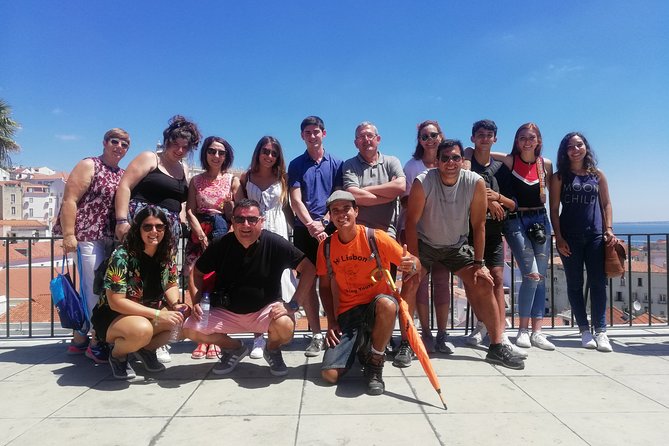
If Lisbon is new to you, the hardest part is deciding what to pay attention to. This walk helps because it doesn’t treat the city like a museum of random postcards. It stitches together the major downtown spaces and then explains why Lisbon looks the way it does—through real events you can tie directly to the buildings around you.
You also get a lot of value for your time. The tour runs about 2 hours 30 minutes and hits around 15 stops, so you’re constantly seeing something that pulls you forward. And the route is designed for a downtown loop, not a scattered route across town. That matters because Lisbon has hills, and even when you’re not struggling, you’ll still want a plan that doesn’t waste energy.
Price is another reason this works. At $1.25 per person, the ticket is essentially a gateway to a guided orientation plus a route you can’t easily replicate on your own without doing a ton of research first. In practice, what you’re paying for is the guide’s ability to connect landmarks to story, and that’s where the reviews really line up—people frequently mention guides like Tiago/Tiabo, Natalia, Jose, and Walter as the reason the walk feels worth it.
One more thing: the tour is kept small, with a maximum of 20 travelers. Smaller groups usually mean it’s easier to ask questions and get personal attention, and it tends to keep the walk from feeling like a moving crowd.
You can also read our reviews of more walking tours in Lisbon



Meeting at Praça do Comércio and What to Watch For
You start in Praça do Comércio, Lisbon’s major public square. Your key job at the beginning is to find the guide quickly—because once the group starts moving, you’ll be following the route at a steady walking pace.
The meeting point detail that helps most: look for your guide with an orange umbrella in Praça do Comércio, between the big arch and the statue in the middle. That’s specific enough that you don’t need guesswork. If you arrive early, take one minute to locate that orange umbrella, then relax. The rest of your time will be spent walking and listening, not searching.
The tour ends on Praça Luís de Camões (Largo Luís de Camões). That finish matters because it places you in an area where you can keep exploring on foot afterward instead of needing a whole new logistics puzzle.
Also, this is an English-offered tour and uses a mobile ticket, so you’re not juggling paper vouchers. And if you rely on public transit, the route is described as being near public transportation, which is a big plus when you’re hopping between viewpoints and neighborhoods.
The Downtown Loop: A Stop-by-Stop Lisbon Story
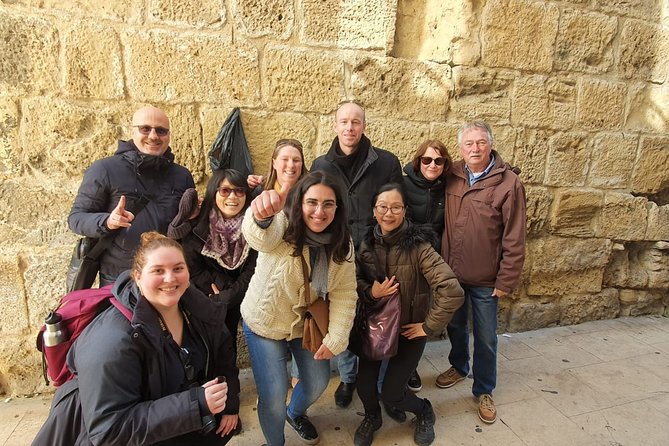
This is the part you’ll remember most: each stop acts like a chapter. Some are landmarks you already recognize (like Santa Justa), but others are the kinds of places first-timers often walk past without understanding why they matter.
Below is what to expect as you move through the city.
Stop 1: Statue of D. Jose I
You begin at the Statue of D. Jose I in Praça do Comércio. This is more than a starting photo spot. It’s a way to frame Lisbon as a city shaped by authority, public space, and big historical shifts. When a guide sets the story here, the rest of the walk feels less like sightseeing and more like understanding.
Stop 2: Praça do Comércio
Next is Praca do Comercio, described as Lisbon’s biggest square. Standing in a large open space helps you reset your sense of scale. Guides often use places like this to explain how the downtown core works and how people historically moved through the center.
Practical note: on a square this big, you’ll often get the clearest “listen up” moment of the walk. So it’s smart to stay close to the guide here so you don’t miss the opening context.
You can also read our reviews of more city tours in Lisbon

Stop 3: Municipal Square (City Hall area)
At Municipal Square, you’re at the area where the city hall is located. This stop is useful because it connects Lisbon’s story to governance and civic life. Even if you don’t go inside, it gives you a sense of how the city organizes itself around these central areas.
Stop 4: Elevador de Santa Justa
Then you reach the Elevador de Santa Justa, one of Europe’s famous landmarks. Even when you’re not taking the elevator itself, you’ll feel why it’s iconic: the structure is a visual marker for the downtown layers and elevation changes.
This is a great stop for orientation. If you’re the type who hates walking without knowing why you’re walking, this landmark gives you a “reason” for paying attention to direction and streets.
Stop 5: Praca Dom Pedro IV (Oldest square stop)
You’ll move to Praca Dom Pedro IV, noted as the oldest square in Lisbon. Old squares act like history anchors, and a good guide will explain how events and everyday life tend to repeat in new forms around the same central spaces.
If you’re hoping to learn quickly what’s important downtown, this is one of the more efficient moments to listen closely.
Stop 6: Rua Augusta (Lisbon’s main street)
Next is Rua Augusta, described as Lisbon’s most important street. This is where the tour shifts from “major spaces” to “major movement.” Listening along Rua Augusta helps you understand how a city’s main street isn’t just a path—it’s a timeline. You can also use this stop to spot where you’d want to return later.
Stop 7: Memorial for Victims of the 1506 Jewish Massacre
You’ll then reach Memorial as Vitimas do Massacre Judaico de 1506, a memorial connected to the thousands of Jewish victims of the 1506 massacre. This stop is heavy, but it’s also one of the most important in the entire walk because it reminds you that Lisbon’s history includes communities that were targeted and erased.
If you prefer historical context that doesn’t just float in the abstract, this is the kind of place that makes history feel specific.
Stop 8: Igreja de S Domingos
At Igreja de S Domingos, you’re at one of Europe’s most impressive churches (as described on the route). Churches like this often serve as visual landmarks—easy to spot, hard to forget.
On a walking tour, impressive churches work double duty: they help you learn while also giving you a satisfying pause point in the walk.
Stop 9: Avenida da Liberdade (Fancy avenue)
Then comes Avenida da Liberdade, Lisbon’s most fancy avenue. This is a useful contrast stop. You’ve just been in older squares and downtown lanes; now you see a different mood—more formal, more “show,” less timeless-square.
If you’re photographing, this is a natural spot to stop and look around instead of only focusing on what the guide says.
Stop 10: Casa do Alentejo (Charming house)
Next is Casa do Alentejo, described as one of Lisbon’s most charming houses. This kind of stop is exactly why guided walks can beat self-guided ones. You get told what to notice, and then you’re more likely to spot character that you’d otherwise pass over.
Stop 11: Largo do Carmo (Carnation Revolution + Carmo Church ruins area)
At Largo do Carmo, you learn about the place where the Carnation Revolution took place. This is also tied to seeing the Carmo Church ruins as part of the big historical themes the guide is covering.
This moment often lands well because it mixes emotional history with a physical reminder. You’re not just hearing about events; you’re standing in the kind of place where history left marks you can see.
Stop 12: Estação do Rossio (Old central station)
You then reach Estacao do Rossio, described as the old central station of Lisbon. Stations are practical history: they show you how a city connected people and goods. Even if you’re not planning your next train ride on the spot, learning station geography helps you navigate later.
Stop 13: Igreja de Sao Roque (Survived the 1755 earthquake)
Now you hit the earthquake thread in a concrete way. Igreja de Sao Roque is one of the only churches in Lisbon to survive the 1755 Great Lisbon Earthquake. This is the stop where the story becomes physical.
A guide’s explanation here can be surprisingly memorable because it’s not just “there was an earthquake.” It’s “this place endured,” which changes how you read the city immediately.
Stop 14: Praca Luis de Camoes (Iconic square)
You finish your walk’s main run at Praca Luis de Camoes, one of Lisbon’s most iconic squares. This is a strong landing point because it’s a recognizable “you’re here now” zone for continuing your day.
If you want a smooth flow after the tour, plan to linger here. You’ll already know what you’re looking for by then.
Stop 15: Bairro Alto (Nightlife area)
Finally, the walk reaches Bairro Alto, Lisbon’s famous nightlife area. Even if you don’t plan to party, this is a useful stop for understanding Lisbon’s energy after dark.
It’s also a good “where next” hint. A guided walk like this is great for building options, and ending near nightlife means you can keep your evening open-ended.
Price, Pace, and the One Thing to Plan for: Walking Comfort
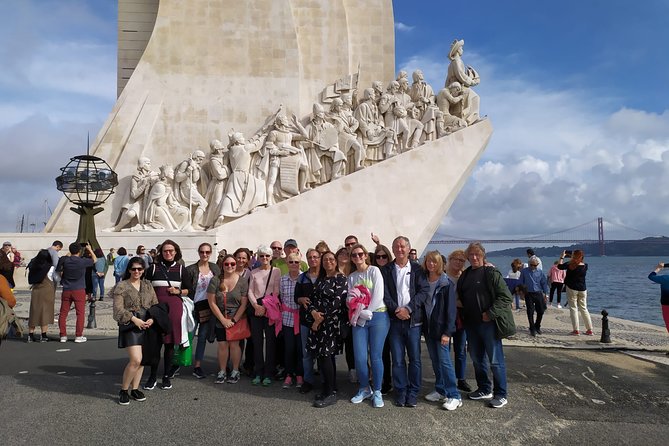
Let’s talk value and effort, because that’s where expectations can make or break the experience.
The ticket cost is $1.25 per person, which is unbelievably low for a guided city orientation. In reality, the value isn’t in paying for admissions—it’s in using a guide to connect the dots across downtown. The stops are listed as free-entry on the route, so you’re not hit with a sequence of paid attractions mid-walk.
That said, this is still a walking tour. It lasts about 2 hours 30 minutes, and it moves through multiple squares and streets. Wear shoes that won’t punish you after day one. Reviews repeatedly point to comfort, and I’d rather you show up prepared than become miserable halfway through.
Now, one more real-world consideration: speaking pace varies by guide. Some people loved guides who were fast and animated; others felt a guide talked too quickly and was hard to follow at times. If you struggle with fast audio, pick a spot where you’re close to the guide, and don’t be afraid to ask to repeat something.
Finally, weather matters in Lisbon. One review specifically notes that the tour continued even during rain, and it recommended bringing ponchos and an umbrella. So if you’re traveling in rainy season, don’t assume you can just wait it out.
How the Guides Make the Difference (Names You’ll Hear)
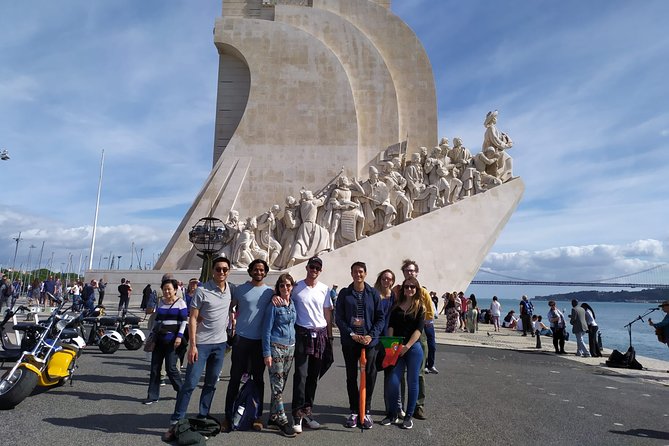
This tour clearly depends on the guide. And the best part is that the guide styles seem to vary in a good way—different personalities, same core mission: help you understand what you’re seeing.
Some guide names that show up in the strongest feedback include:
- Tiago/Tiabo, praised for energetic storytelling, clear historical explanations, and strong restaurant and viewpoint tips
- Natalia, praised for being charming and practical with explanations plus guidance for inexpensive places
- Jose (including Jose Tenorio), praised for combining knowledge with entertainment
- Walter, praised for story-telling and humor
You’ll also see mention of guides like Kate and Clay/Kleiber, with feedback highlighting energy and the ability to keep people moving while still answering questions.
The practical takeaway for you: pick this tour for the first day if you can. When you get those recommendations early, the rest of your trip costs less money and feels less confusing.
Who This Tour Fits Best
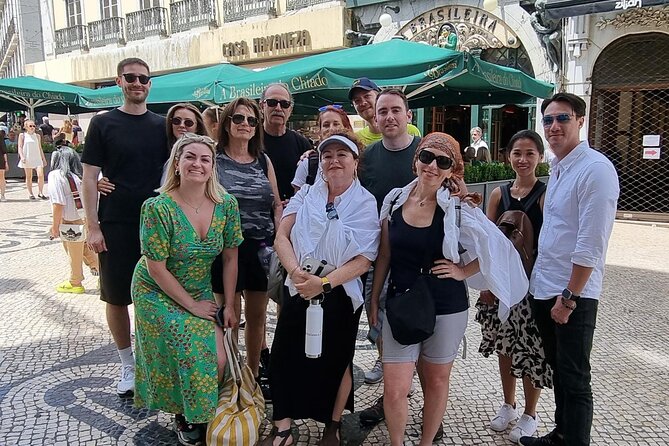
This walk is a great fit if:
- You’re visiting Lisbon for the first time and you want a downtown orientation before you plan the rest
- You like history explained through places, not just through dates
- You want practical tips on where to go next, especially for food and viewpoints
It’s also a good choice if you travel with a stroller or need an easy route within reason, since at least one review mentions that it was manageable even with strollers and kids.
You might think twice if you strongly dislike tip-talk or you’re sensitive to how guides frame pay-at-the-end expectations. Most reviews are positive about the overall experience, and the tour describes end-of-tour pay as what you see fit. Still, one negative review complained about a more forceful minimum-payment framing at the start. If you’re in the camp of fixed-cost-only travelers, this is worth factoring into your choice.
Should You Book This Lisbon Walking Tour?
Yes, I’d book it—especially if this is your first morning in Lisbon. For the low ticket price, you’re buying a guided downtown pass through major landmarks and a set of stories that help you understand Lisbon’s turning points: 1755 earthquake survival, the Carnation Revolution, and even the 1506 Jewish massacre memorial.
Just show up ready to walk, and be close enough to hear your guide clearly. If you hate uncertainty about how much to pay at the end, decide up front what you’re comfortable giving. Then you can relax and enjoy the route.