REVIEW · LISBON
Lisbon: Walking Tour in the Center (Max 12 Participants)
Book on GetYourGuide →Operated by WALK 'N' ROLL Tours · Bookable on GetYourGuide
Lisbon’s hills turn a walk into a lesson. In 3.5 hours you sweep from Baixa to Chiado, Bairro Alto, and Alfama, with lookout moments over the Tagus River and up-close azulejos tile details. I love how much ground you cover in a small group of max 12, and I like that the guide ties what you see to Portuguese culture and history. One drawback: the route climbs and drops across three of Lisbon’s hills, so comfy shoes matter and if stairs are a no-go, you’ll feel it.
The pacing is smart: you start at Rossio Square, head into the lower town, then work your way up toward major viewpoints before finishing right by the water at Praça do Comércio. Along the way, you’ll spot big-photo landmarks like the Elevador de Santa Justa and the Carmo Monastery ruins, plus quieter lanes in Alfama. It’s rain or shine, so dress for weather, carry water, and don’t plan on using a stroller.
You also get a small built-in payoff at the end of the walk: a liquor tasting is included, and the whole experience is led in German by live guides. There’s a private option if you want a slower, more tailored rhythm, but the group format keeps the price around $47 per person feeling like good value for a guided highlights route.
In This Review
- Quick hit checklist
- Starting at Rossio Square: where your Lisbon “map” clicks
- Baixa de Lisboa and the Elevador de Santa Justa: the lower town’s big statement
- Carmo Convent ruins: when history shows up as stone and open air
- Chiado and Praça Luís de Camões: poets, streets, and the art of wandering
- Bairro Alto: residential lanes now and nightlife energy later
- Miradouro de São Pedro de Alcântara: the breath break that makes the viewpoints work
- Rua Augusta and the world-famous arches by the river
- Alfama and the Tagus viewpoint: the final neighborhood gets to linger
- Liquor tasting and the walk’s rhythm: small extras that matter
- Price and value: why $47 can make sense for a highlights route
- What to bring so the 3.5 hours feel good
- Who this walking tour fits best (and who should choose differently)
- Should you book this Lisbon Walking Tour in the Center?
- FAQ
- How long is the Lisbon Walking Tour in the Center?
- Where do I meet the guide?
- How many people are in a group?
- Is there a private tour option?
- What language is the tour guide?
- What does the tour include?
- Is food included?
- Does the tour run in bad weather?
- Is the tour suitable for wheelchair users or mobility impairments?
- What should I bring and what isn’t allowed?
Quick hit checklist
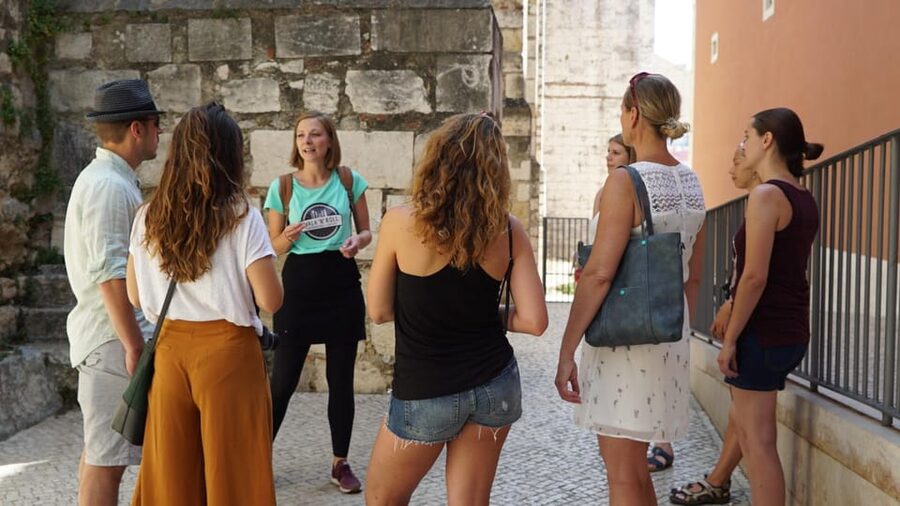
- Small group size (max 12) keeps questions easy and the flow manageable on narrow streets
- Rossio Square North Fountain is a clear start point, with guides wearing mint Walk ’N’ Roll gear
- Santa Justa + Carmo Monastery ruins give you Lisbon’s layers without needing extra sightseeing planning
- Chiado to Bairro Alto adds both historic flavor and real local street energy
- Three hill viewpoints including Miradouro de São Pedro de Alcântara puts the Tagus in context
- Finish at Praça do Comércio for that classic Lisbon river-banks wrap-up
Starting at Rossio Square: where your Lisbon “map” clicks
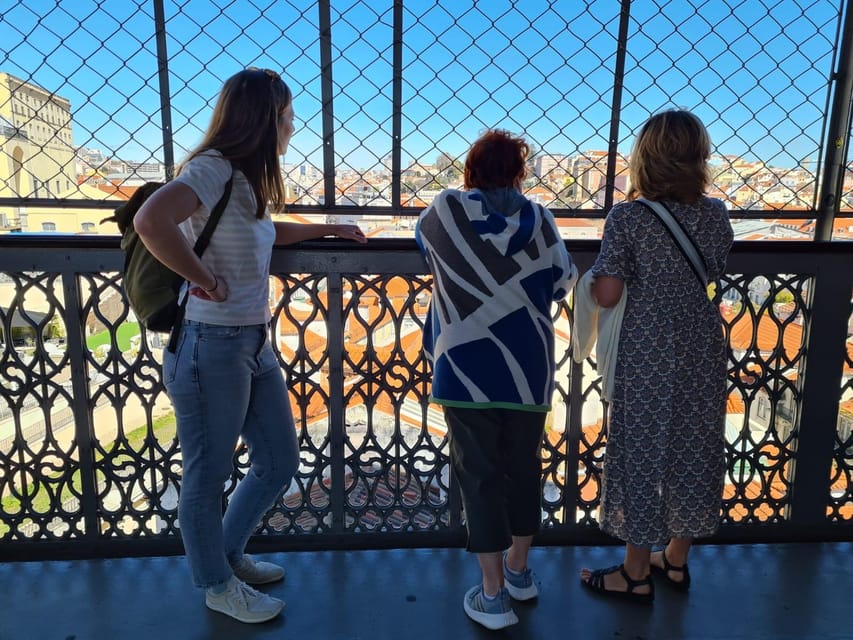
I like starting tours at places where locals already move through the day. Here, you meet at Rossio Square North Fountain, between the National Theater and the Royal Statue, with your guide stationed at the northern fountain. The guide wears either a mint-colored WALK ’N’ ROLL t-shirt or carries a mint-colored burlap bag, so you’re not hunting around for long.
Rossio Square is also a useful mental anchor. From here, you can picture where Baixa sits in the lower town, and why Lisbon feels like a set of connected neighborhoods stacked on hills. The tour begins with a guided push into Baixa de Lisboa, which is great if you’re arriving with a blur of street names and want a system.
One practical note: the group is walking from the first minute. If you’re the type who needs time to wake up your legs, plan for that today. This also explains why comfortable shoes aren’t optional on this one.
You can also read our reviews of more walking tours in Lisbon



Baixa de Lisboa and the Elevador de Santa Justa: the lower town’s big statement
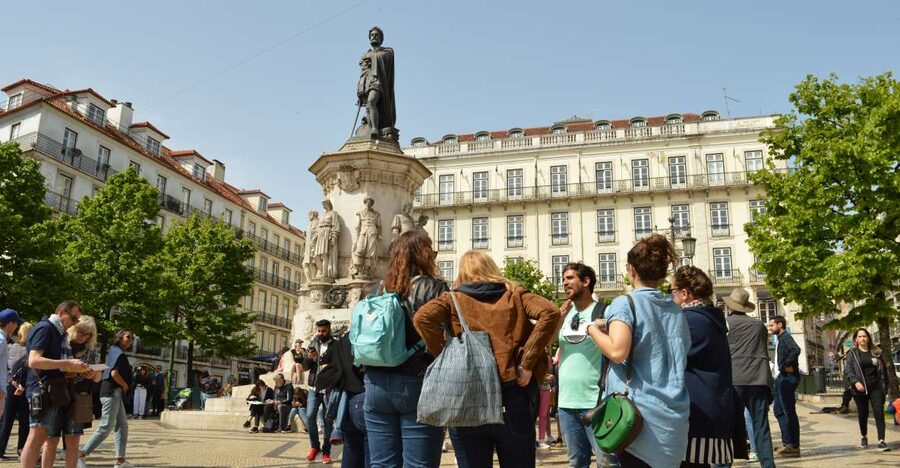
Baixa is Lisbon’s “straight-line” side, at least compared with the city’s usual angles and climbs. In this tour, the guide brings you through the lower town as the foundation for everything that comes later. You get a sense of how Lisbon’s center was designed to be navigable, then you watch the terrain start pulling you upward.
Soon, you’ll come across the Elevador de Santa Justa. You’re not just seeing a landmark for a postcard; you’re using it as a reference point for how Lisbon deals with height. Even without riding anything, the structure gives you the right visual logic: how a hill becomes a challenge, and how the city turns that into infrastructure.
If you’re a first-time visitor, this is a smart moment. It helps you stop treating the hills like a random obstacle and start treating them like a core feature of how Lisbon was built. And because the walk is timed within a 3.5-hour window, you’ll keep moving rather than getting stuck waiting for a ride or a ticket line.
Carmo Convent ruins: when history shows up as stone and open air
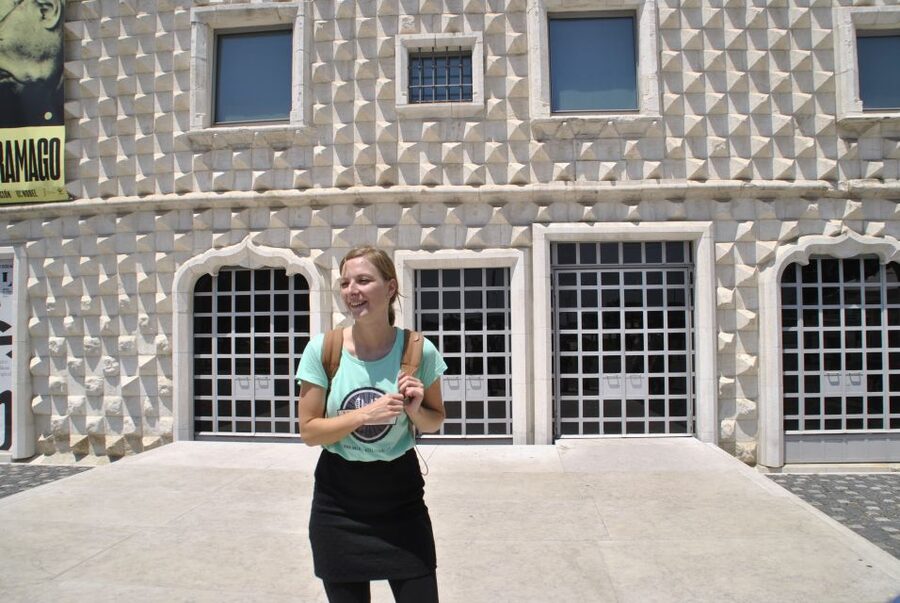
Next comes one of the most atmospheric stops: the Carmo Monastery ruins. The guide’s job here is key. Instead of listing dates, you’ll get a clearer sense of why these ruins matter in the city’s memory. Lisbon is constantly rebuilding, and the presence of what’s left creates a kind of quiet context as you walk.
What I like is that this isn’t just a photo stop. You’ll be guided along the surrounding area so the ruins feel like part of the street scene, not something you visited from a distance. The open-air feel can be a relief during windy or hot stretches, and it’s also an easy place to pause your brain for a second before the tour turns toward Chiado and beyond.
There’s also a practical angle: ruins like this help you understand Lisbon’s scale. The city isn’t only about grand viewpoints; it’s about how big events leave marks in the everyday walking routes.
Chiado and Praça Luís de Camões: poets, streets, and the art of wandering

From Baixa you shift into Chiado, the former poets’ quarter. This change matters because it shifts the vibe from “center and function” toward “culture and personality.” You’ll pass through areas that feel more human-sized, where storefronts, balconies, and street corners add detail to every block.
You’ll also stop around Praça Luís de Camões. This is a classic way to break up the climb-and-walk rhythm while still staying inside the city’s living fabric. It gives you an easy moment to reset your pace and look around before heading into the next neighborhood shift.
This section of the tour is where Lisbon tiles start to become more than decoration. You’ll come across some of the beautiful Lisbon azulejos that give the city its signature look. The guide helps you notice patterns and placement, so you start seeing tiles as storytelling, not just background color.
If you’re the kind of traveler who enjoys how neighborhoods feel different even when they’re close together, Chiado is a highlight. It’s also a good spot for getting your bearings before you hit Bairro Alto.
Bairro Alto: residential lanes now and nightlife energy later

Bairro Alto is where Lisbon gets more “you’re here” energy. Even if you’re not in party mode, the streets feel like they’re built for movement—small climbs, turning corners, and a mix of quieter residential pockets next to nightlife-adjacent streets.
On this tour, you walk through the residential and nightlife district to show you that Bairro Alto isn’t one single thing. It’s a set of moods changing by time of day, with the same streets holding different rhythms. The guide’s context helps you understand why you can’t fully “judge” a neighborhood based on one moment.
The pacing stays reasonable here, but it’s still an active stretch. This is also where the tour nudges you toward the next viewpoint phase—so expect to keep your focus and keep your footing. Cobblestones and uneven surfaces are part of the deal, especially as the route climbs toward the miradouros.





Miradouro de São Pedro de Alcântara: the breath break that makes the viewpoints work

Then comes Miradouro de São Pedro de Alcântara, a viewpoint that earns its spot. You’ll reach it, look out over Lisbon, and then take a break—30 minutes. That break is not random; it’s what makes the viewpoint stops enjoyable instead of exhausting.
This is one of the best times to truly connect what you’ve been walking with what you’re seeing. From higher ground, Lisbon becomes a set of layers: rooftops stacking up, streets spilling down, and the Tagus River defining where the whole city turns toward the water. The guide’s commentary gives meaning to what you can already see, so you end up with a “map in your head” instead of a list of sights.
If you’re taking photos, this is where you’ll want to slow down. The viewpoint gives you a wide view, and the tour’s schedule is built to let you do more than one quick shot and move on. If weather is bad, the break time still gives you a chance to regroup and keep going.
Rua Augusta and the world-famous arches by the river

After you’ve had your view and your rest, you head toward Rua Augusta, the big pedestrian corridor that leads toward the river. Here you get a short food tasting moment—listed as 5 minutes—though the tour notes that food isn’t included. So think of it as a quick taste rather than a meal plan.
You’ll also pass the Arco de Rua Augusta area. This is the kind of place where Lisbon feels grand without being distant: lots of people, lots of street life, and big architecture doing its job. The guide keeps the walk moving, so you get the “enter the finale zone” feeling without getting stuck in crowds for too long.
And then you’re back at the Tagus. The tour ends at Arco da Rua Augusta in Praça do Comércio, right by the banks of the Tagus. That finish is satisfying because you’re closing the loop: you started near Rossio’s central energy, climbed through neighborhoods, and then landed where Lisbon opens up to the water.
Alfama and the Tagus viewpoint: the final neighborhood gets to linger
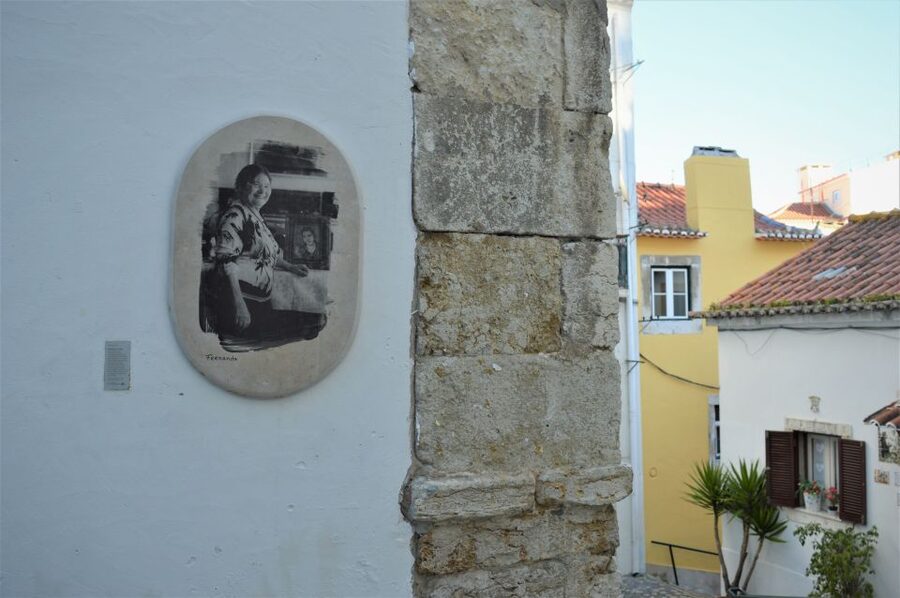
Alfama is the romantic payoff area of this route. This is where the tour shifts into winding alleys and hillside texture, and where the guide’s storytelling tends to land hardest because Alfama is built for small moments. You’ll see why the neighborhood is famous, not only for views but for the way streets fold into each other.
One highlight is the viewpoint overlooking the Tagus River. Even if you’ve already seen a miradouro earlier, Alfama’s viewpoint hits differently because the streets feed into it. You’ve earned it by walking, so the scenery feels less like a stop and more like a reward.
Also, this is where the azulejo details can keep popping up. As you walk, watch for how tiles decorate façades and corners, especially along the gentler street stretches where you can actually look up. The guide encourages you to notice these bits, which is one reason this kind of walking tour can be more rewarding than a strict sightseeing bus route.
Liquor tasting and the walk’s rhythm: small extras that matter
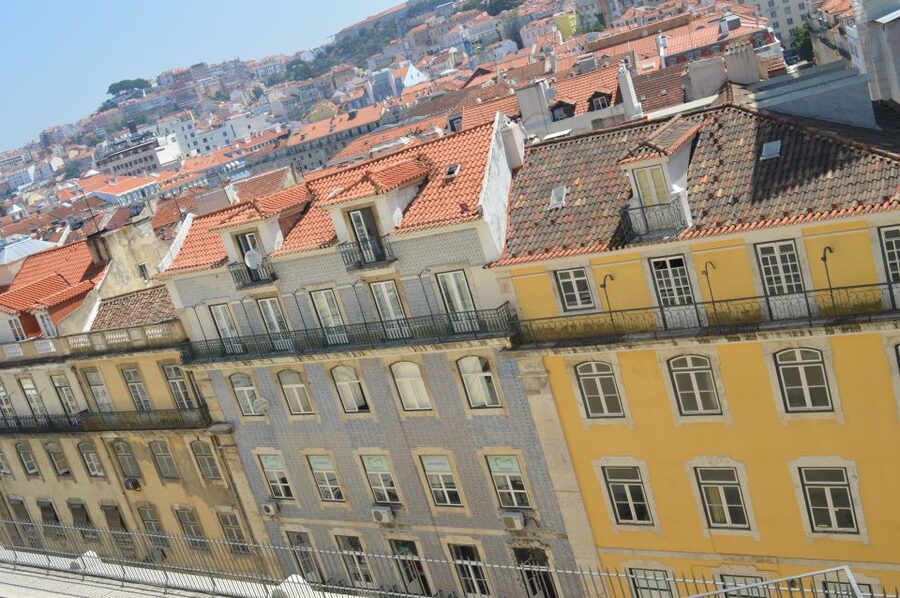
This is a walking tour, so the main value is the route plus the guide. Still, a small extra is included: a liquor tasting. That gives you a local-culture moment that isn’t just photo-based. It also functions like a pacing tool—you get a short, planned pause that breaks up the walking time.
Language also matters. The live tour guide is German, so if you want stories and explanations in that language, this tour makes life easier. If you don’t speak German, you might still enjoy it for the landmarks, but you’ll lose some of what makes a guided walk click.
Group size is another underrated detail. With max 12 participants, you’re not swallowed by a crowd the way you can be on city-center tours. On narrow streets and steep turns, that small-group advantage helps you stay oriented.
Price and value: why $47 can make sense for a highlights route
At $47 per person for about 3.5 hours, you’re paying for three things: a guide, a structured route across key neighborhoods, and an included liquor tasting. You’re not just paying for “seeing Lisbon” from point A to B; you’re paying for interpretation—how the city’s hills, street patterns, and landmarks connect.
The biggest value for me is first-day orientation. If you’re trying to learn Lisbon fast and you want a walk that hits Baixa, Chiado, Bairro Alto, Alfama, plus the river finale, this price can feel reasonable because you avoid the need to plan your own route between neighborhoods. And because you cover only part of the city’s hill system—three of Lisbon’s eight hills—you get a taste of the terrain without turning it into a full-day hike.
One consideration: the tour doesn’t include food as a purchase plan. There’s a short tasting moment, but if you want a proper meal, you’ll need to add it yourself.
What to bring so the 3.5 hours feel good
This tour includes a fair amount of walking up and down 3 hills, and it runs rain or shine. That means your basics are your comfort plan.
Bring:
- Comfortable shoes with grip for uneven pavement
- Water
- Sunscreen (yes, even in shoulder seasons, especially if you’ll be out for hours)
Also, plan to travel light. Strollers aren’t allowed, and you can’t bring luggage or large bags. This is a walking route through older streets, so keep your load small and your attention on your footing.
If you’re traveling in weather that makes surfaces slick, take the uphill segments slowly. The tour keeps moving, but you can still control your own pace.
Who this walking tour fits best (and who should choose differently)
This works best if you want a guided, neighborhood-to-neighborhood experience in a half-day format. It’s ideal for first-time visitors who want Tagus viewpoints, the Elevador de Santa Justa area, Carmo Monastery ruins, and the classic Alfama alleys without building an itinerary from scratch.
It’s also a good fit for travelers who prefer stories and context in real time. The guide approach can be entertaining as well as informative, and the tone tends to keep energy up—even when weather isn’t perfect.
If you have mobility impairments, you use a wheelchair, or you know you can’t manage stairs and uneven surfaces, this isn’t suitable. There’s a clear warning on this point, and you’ll feel it immediately once the hills start.
Should you book this Lisbon Walking Tour in the Center?
Book it if you want the best kind of Lisbon first impression: guided walking through Baixa, Chiado, Bairro Alto, and Alfama, plus viewpoints over the Tagus River and a finish at Praça do Comércio. In a small group up to 12, it’s easier to stay engaged, ask questions, and actually notice the details like Lisbon tiles rather than just “passing by.”
Consider skipping or switching if your legs need more recovery time than you think, or if hills and steps stress you out. And if you don’t speak German, you should temper expectations about how much you’ll understand from the live guide, even though landmarks still do plenty of work for you.
If you’re the kind of traveler who likes a plan you can feel good about—start at Rossio, hit the major historic anchor points, rest at a miradouro, and end on the river—this is a strong match.
FAQ
How long is the Lisbon Walking Tour in the Center?
The tour lasts about 3.5 hours.
Where do I meet the guide?
Meet at Rossio Square North Fountain, between the National Theater and the Royal Statue. The guide is wearing a mint-colored WALK ’N’ ROLL t-shirt or carrying a mint-colored burlap bag.
How many people are in a group?
The group experience has a maximum of 12 participants.
Is there a private tour option?
Yes, a private group option is available.
What language is the tour guide?
The live tour guide speaks German.
What does the tour include?
The tour includes a tour guide and a liquor tasting.
Is food included?
No, food isn’t included. There is a short food tasting stop noted on the route, but you should not count on full meals being provided.
Does the tour run in bad weather?
Yes, it takes place rain or shine.
Is the tour suitable for wheelchair users or mobility impairments?
No. It is not suitable for people with mobility impairments or wheelchair users.
What should I bring and what isn’t allowed?
Bring comfortable shoes, sunscreen, and water. Baby strollers are not allowed, and luggage or large bags aren’t allowed.