REVIEW · WASHINGTON DC
U.S. Capitol and Library of Congress Tour with Rotunda & Crypts
Book on Viator →Operated by Signature Tours of DC · Bookable on Viator
Washington DC hits hardest when you see it up close. This U.S. Capitol and Library of Congress tour pairs two heavyweight icons: you get Capitol entry plus a focused look at the Rotunda and Crypt, then you walk into the Library’s stunning Jefferson Building. The possible drawback? The U.S. Capitol can sometimes restrict access on short notice, since the government can close or cancel portions of tours without warning.
What I really like is how the experience is designed to keep you moving. You go through security, get an orientation moment, then join the official Capitol tour with headsets while your guide helps connect the dots. Another big win: at the Library of Congress, you’re led to the right spot and given timed entry, so you can focus on the Gutenberg Bible and the Main Reading Room rather than wrestling with logistics.
My main consideration is time and comfort. The tour includes some standing and outdoors walking, and the Library visit is self-guided for a short window—so wear good shoes and dress for DC weather. If you’re hoping for a slow, linger-everywhere museum day, this is more of a tight, high-impact hit.
In This Review
- Key takeaways before you go
- Why This Capitol + Library Combo Works on a Tight Schedule
- Meeting at 101 Independence Ave SE and the Pre-Capitol Picture Stops
- Entering the U.S. Capitol: Security, a Break, and Official Headsets
- Rotunda, Crypt, and National Statuary Hall: What to Notice Once You’re Inside
- The Rotunda
- The Crypt
- National Statuary Hall
- The Library of Congress Jefferson Building: Gutenberg Bible and the Main Reading Room in One Short Window
- Quick Pass-By Stops: Supreme Court, Senate Offices, House of Representatives, and Grant
- The Guide Factor: Why Names Like Dwayne, Tyrone, and Rochelle Get Mentioned
- Price and Value: Is $56 Worth It Here?
- Timing, Weather, and Comfort in DC’s Outdoor Pacing
- Should You Book This Capitol Rotunda & Crypt + Library of Congress Tour?
- FAQ
- How long is the tour?
- What is the price per person?
- Is admission to the U.S. Capitol included?
- What language is the tour offered in?
- Where do we meet, and where does the tour end?
- What will we see inside the U.S. Capitol?
- Do we get to see the Library of Congress?
- Are we guided inside the Library of Congress?
- What if the Library of Congress is closed?
Key takeaways before you go

- Capitol access included with security handling and official headsets once inside
- Rotunda and Crypt highlights like the Rotunda ceiling mural and the Crypt’s intended purpose
- Library of Congress Jefferson Building with timed entry and top sights like the Gutenberg Bible
- Small-group feel (max 40) that helps you stay together on a busy Capitol Hill
- Flexible museum swap when the Library of Congress is closed (Capitol Museum instead)
Why This Capitol + Library Combo Works on a Tight Schedule
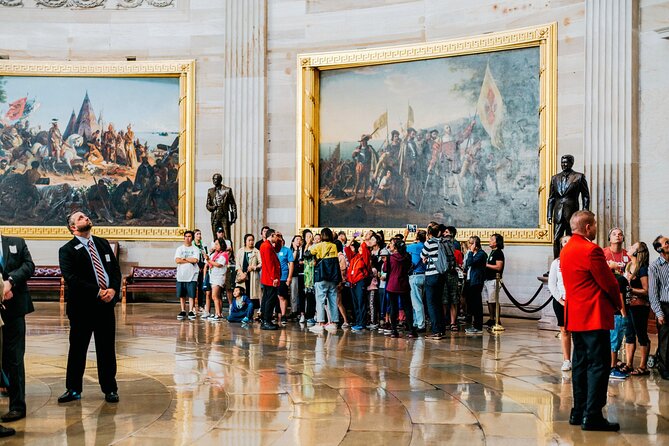
If you only have a couple hours in DC and want two of the most famous buildings in one go, this tour is built for that exact mission. The structure is simple: you start on Capitol Hill, you enter the U.S. Capitol, and then you shift to the Library of Congress.
The value isn’t only the sites—it’s the pacing. You’re not left guessing how early to arrive, how to navigate security, or how to line up for the Library. Even though parts of the experience are timed and official, you still get a guide’s framing so you’re not just looking at marble and ceilings without knowing why they matter.
And at $56 per person for guided Capitol entry plus Library admission, it’s aimed at travelers who care about “what to look for” more than “I’ll figure it out alone.” If you enjoy solo strolling, you can do these institutions independently—but this tour saves you decision-making and time.
You can also read our reviews of more tours and experiences in Washington DC.



Meeting at 101 Independence Ave SE and the Pre-Capitol Picture Stops
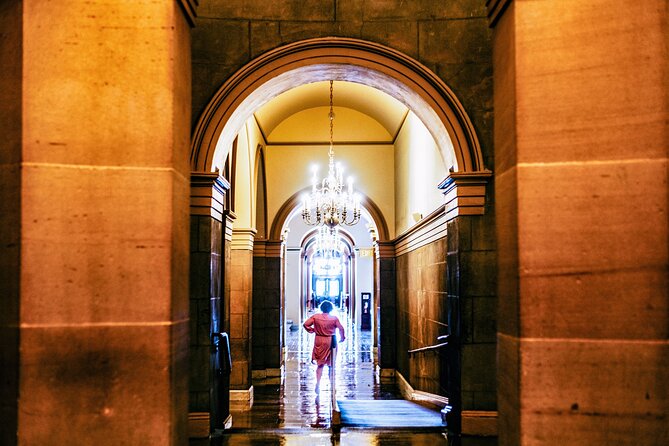
You meet at 101 Independence Ave SE, Washington, DC 20540, with the tour ending at the Library of Congress. From there, your group hits a set of quick “look this way” moments around Capitol Hill before you go through the big security step.
One of the early stops is tied to the U.S. Botanic Garden Conservatory, a historically notable site founded by Congress in 1820. It’s a good way to shake off travel brain and start seeing Washington as a place with layers, not just monuments.
Then you’ll pass major sculptural landmarks, including a giant equestrian statue (it took 20 years to complete). After that comes the Peace Monument / Peace Circle, built to commemorate naval deaths of the Civil War, with figures representing Grief and History. These pauses matter because the tour later connects symbolism inside the Capitol—so you’re not only reacting to famous rooms.
If you get motion-sick or hate short walks, this part might feel like extra. But the tradeoff is you’re getting story and orientation before you hit the most controlled space in DC.
Entering the U.S. Capitol: Security, a Break, and Official Headsets
The core of the tour is the U.S. Capitol visit, listed at about 1 hour 30 minutes with admission included. Your group goes through security, there’s a short break, and you watch an orientation film before you join the official guided tour.
This is where the tour design shows its value. Official Capitol tours use headsets, and your guide helps you make sense of the rooms and what you’re seeing without you needing to read every plaque. Once inside, the tour typically includes major spaces such as:
- The Rotunda
- The Crypt
- National Statuary Hall
- Sometimes the Old Supreme Court or Old Senate Chambers, depending on the day
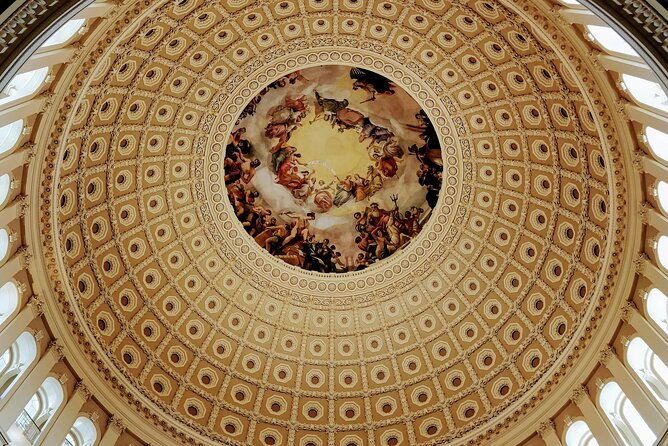
One standout detail is the Rotunda fresco, The Apotheosis of Washington, which sits about 180 feet above the floor. Even if you’ve seen photos, being in that space gives you scale fast—especially when you know what you’re looking for.
In the Crypt, you’ll learn the deeper intent behind the space: it was originally intended for Washington’s burial. That’s the kind of context that changes your whole reaction from pretty rooms to an actual story about power, legacy, and national myth-making.
One important consideration: the tour notes that the government can close or cancel Capitol access without advanced notice. That’s not a gamble you want to ignore—especially if this is your one “must-do” stop.
Rotunda, Crypt, and National Statuary Hall: What to Notice Once You’re Inside

Capitol interiors can feel overwhelming. The fix is knowing what to look for in the time you have.
The Rotunda
The Rotunda is the big visual moment: domed ceiling, monumental space, and that ceiling fresco high above. When you’re inside and someone explains the symbolism, it clicks. You’ll also get a better sense of how the Capitol presents national identity through art.






The Crypt
The Crypt tends to be cooler, darker, and quieter—more “reflection” than “tour mode.” The key detail to keep in mind is that it was meant for Washington’s burial. Even if the outcome was different, the intention helps you read the space like a plan, not just an underground room.
National Statuary Hall
National Statuary Hall is where DC turns into a visual index of the states. If you come in knowing that, you’ll start noticing how each statue contributes to the national story the Capitol wants to tell. It’s also the kind of stop where plaques can be skimmed too fast on a self-tour—so having someone steer you helps.
Depending on your day, you might also get into the Old Supreme Court or Old Senate Chambers. Those spaces can shift your experience from “big showcase rooms” to “what it felt like when government ran differently.” If those chambers are available, I’d treat that as bonus time worth leaning into.
The Library of Congress Jefferson Building: Gutenberg Bible and the Main Reading Room in One Short Window
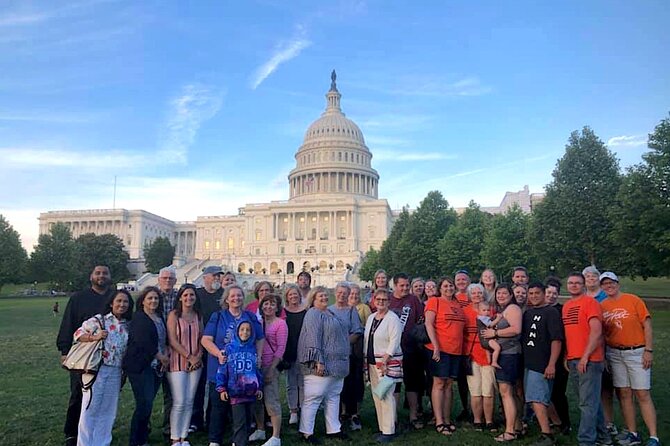
After your Capitol visit, you’re escorted into the area that connects you toward the Library visit. The Library part is self-guided after Capitol, but you’re working with timed-entry passes—so you’re not stuck waiting in the wrong spot.
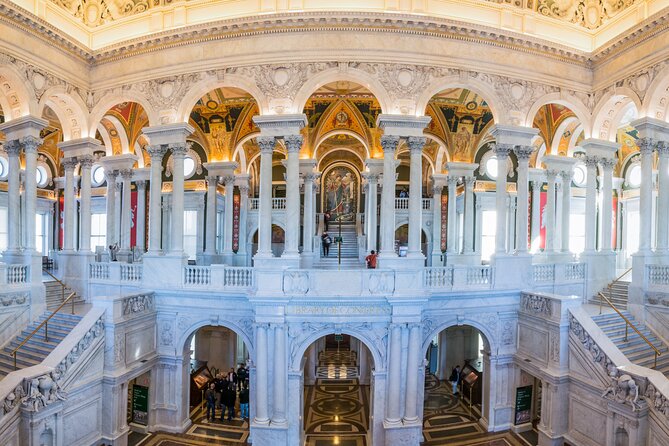
The Library of Congress highlight here is the Jefferson Building, often regarded as the most beautiful of the Library’s spaces. The key sights you can expect in the short visit include:
- The Gutenberg Bible: one of only three perfect vellum copies in existence
- The Great Hall: an Italian Renaissance-style space with marble columns, mosaics, gold leaf, and murals
- The Main Reading Room: the iconic circular room you’ve probably seen in films
- Putti and carvings: cherubic figures representing arts and sciences along the balustrades
- Architectural firsts: early use of electric lighting for a public building and a comprehensive climate-control system
If you only have limited time in the Library, prioritize the big three: Gutenberg Bible (if your route timing allows), the Great Hall, and then the Main Reading Room for that instant-recognition effect. The reading room is the kind of place that makes you slow down even if your schedule says otherwise.
Also, the tour includes a special nod to Thomas Jefferson’s original library. That’s a powerful connection because it links the Library of Congress to the idea of gathering knowledge as a public duty, not a private hobby.
A practical caution: the tour states that the Library of Congress may be replaced. When the Library is closed on Mondays or at 8am, your admission shifts to the Capitol Museum instead. If your visit is Monday morning, plan on that swap.
Quick Pass-By Stops: Supreme Court, Senate Offices, House of Representatives, and Grant
You’ll also see several major DC landmarks from the outside as you connect the route. These are mostly quick looks, but they add context to the “who does what” picture.
You’ll pass the Supreme Court building (no admission included), and you’ll see nearby areas associated with the Senate Offices and the House of Representatives. There’s also an outside stop area connected to the Ulysses S. Grant Memorial.
Even without entering those buildings, it helps to place the Capitol in a wider government map. The outside views work best if you already have a basic mental picture of the three branches—then your eyes start noticing what faces what.
The Guide Factor: Why Names Like Dwayne, Tyrone, and Rochelle Get Mentioned
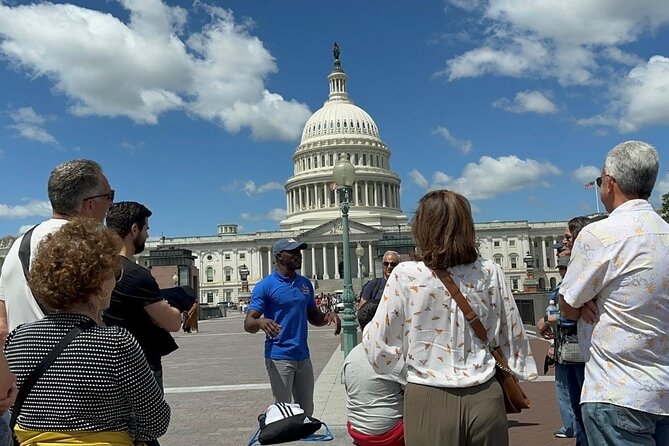
This tour leans hard on the idea that a good guide turns “a place” into “a story.” The strongest praise you’ll see attached to this experience is consistently about guide performance: people highlight guides who explain things with energy, keep groups together, handle sensitive topics with care, and run on time.
Names that show up in positive feedback include Dwayne, Tyrone, and Rochelle. The recurring theme isn’t just facts—it’s how the guide connects small details to bigger meaning. For example, a couple of comments point out guides who add extra Capitol context beyond what you’d catch from signs alone, and one mention praises a guide who corrected the flow of the group quickly when the meet-up point got confused due to an Uber drop-off.
That matters for you because a lot can go wrong in DC tours: security lines shift, timing compresses, and people arrive late. A guide who stays focused can keep your time from turning into chaos.
Still, keep one practical habit: on day-of, confirm what your headset coverage includes once you enter the Capitol tour route. If anything feels off, ask your guide right away so you’re not left assuming.
Price and Value: Is $56 Worth It Here?
$56 isn’t pocket change, so here’s the fair way to judge it.
You’re paying for four things:
- Admission included for the U.S. Capitol portion (and Library admission through timed entry)
- A guide-led flow that handles the early steps like security and orientation timing
- Headset-based official touring inside the Capitol, where your guide helps make the time count
- A short, structured Library experience focused on the Jefferson Building’s top highlights
If you can book timed entry yourself and you already know what you want to see, you might save money by doing it independently. But the hard part in DC is not paying—it’s timing. The tour’s promise is that you don’t spend your half day chasing sold-out slots or trying to figure out the best order.
Also, the Library window is short. That makes “who directs your attention” worth paying for. If you’re the type who likes to see the Gutenberg Bible and the Main Reading Room, not just wander until your feet give out, this price is easier to defend.
Where the value could feel weaker is if your group hits a closure day inside the Capitol or if you end up arriving on a timetable where the Library swap happens. That’s not something you control, so decide accordingly.
Timing, Weather, and Comfort in DC’s Outdoor Pacing
Even though the big moments are indoors, this is not a sit-everywhere tour. You’ll stand and walk, and a decent chunk of the route happens outdoors on Capitol Hill.
The tour advice is straightforward:
- wear comfortable shoes
- dress for DC weather
- expect cold in winter and heat in summer
- bring layers and consider an umbrella
With only about 2 hours total, there’s no time to recover if your feet hurt. I’d treat this as a “good footwear day,” not a “light shoes and optimism” day.
Should You Book This Capitol Rotunda & Crypt + Library of Congress Tour?
Book it if:
- you want two must-see landmarks handled in one outing
- you like your history explained in plain, usable ways
- you don’t want to fight timed-entry planning
- you’d rather spend your limited time seeing the big scenes (Rotunda, Crypt, Gutenberg Bible, Main Reading Room) than reading everything on your own
Skip or rethink it if:
- the U.S. Capitol access is your fragile only-day plan and closures would ruin your trip
- you prefer total self-guided wandering with no security or fixed route energy
- you’re traveling on Monday and specifically want the Library of Congress rather than the Capitol Museum swap
My honest take: if you’re a first-timer or you’re short on time, this is a smart way to get your bearings fast and still leave with the right “I get it now” feeling.
FAQ
How long is the tour?
The tour runs about 2 hours (approx.).
What is the price per person?
It costs $56.00 per person.
Is admission to the U.S. Capitol included?
Yes. Entry to the U.S. Capitol is included in the tour.
What language is the tour offered in?
The tour is offered in English.
Where do we meet, and where does the tour end?
You meet at 101 Independence Ave SE, Washington, DC 20540, and the tour ends at the Library of Congress.
What will we see inside the U.S. Capitol?
You’ll typically visit the Rotunda, Crypt, and National Statuary Hall, and sometimes the Old Supreme Court or Old Senate Chambers depending on the day.
Do we get to see the Library of Congress?
Yes. After the Capitol visit, you’re provided timed-entry access to the Library of Congress (or a different site if the Library is closed).
Are we guided inside the Library of Congress?
The Library portion is self-guided after the Capitol visit.
What if the Library of Congress is closed?
When the Library of Congress is closed on Mondays or at 8am, the tour includes admission to the Capitol Museum instead.