REVIEW · LISBON
Lisbon – Small Group Walking Tour
Book on Viator →Operated by My Lisbon Tours · Bookable on Viator
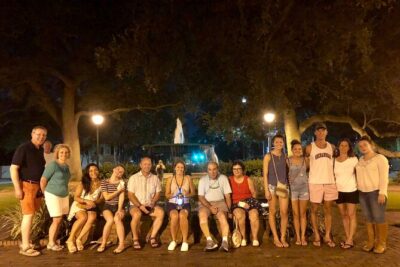
Lisbon hits different when you walk it with a local. This small-group 3-hour guided walk strings together Baroque churches, gritty-old neighborhoods, and iconic viewpoints without feeling like a stampede. You’ll also get built-in photo stops, so Lisbon doesn’t just get explained—it gets seen.
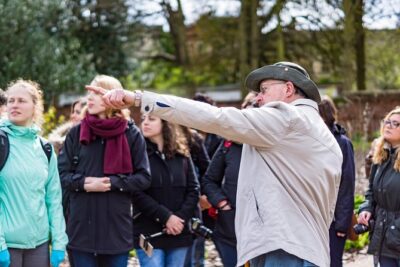
I especially like how the tour balances big names with the in-between streets. One guide (Rui Fernandez) kept the pace easy and the stories sharp, while guides like Andre and Andriy made the history feel practical, answering questions without rushing you out the door.
One possible drawback: it’s still a real walking tour in a city of hills. If your stamina is limited or you’re uncomfortable on uneven sidewalks, you’ll want to plan your day and wear your most reliable shoes.
In This Review
- Key things I’d plan around
- A 3-hour Lisbon walk that gives you context fast
- Where you start (and why it matters)
- Igreja de São Roque: Baroque art, not just a church stop
- Bairro Alto, Bica, and Cais do Sodré: old streets with personality
- Trindade: a quick stop with big story energy
- Largo do Carmo: Gothic ruins and the earthquake that changed everything
- Elevador de Santa Justa: the Lisbon viewpoint you plan around
- Chiado: traditional shops and the downtown rhythm
- The world’s oldest bookstore and a Neo-Manueline station moment
- Largo de São Domingos: the 1506 Jewish massacre memorial
- Igreja de São Domingos: a unique interior worth the time
- More squares, downtown lanes, and that Santa Justa backdrop
- Praça do Comércio (Terreiro do Paço): finish at the waterline
- Praça Dom Pedro IV: the Baixa Pombalina stage set
- Price, pacing, and what small-group really changes
- How to plan your day around this walk
- Should you book the Lisbon Small Group Walking Tour?
- FAQ
- How long is the Lisbon Small Group Walking Tour?
- How much does the tour cost?
- What’s the group size limit?
- Is the tour offered in English?
- Where does the tour start and end?
- Are admission tickets included for the stops?
- Are food and drinks included?
- Do I need moderate physical fitness?
- Can I bring a child or service animal?
- What’s the cancellation policy, and does weather matter?
Key things I’d plan around
- Max 8 people means you can actually ask questions and hear the guide clearly.
- Major Lisbon sights, short stops: churches, squares, and neighborhoods packed into a 3-hour loop.
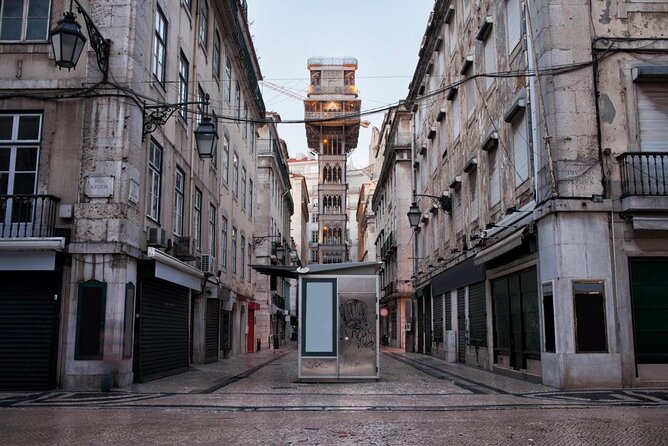
- Santa Justa Elevator viewpoint time gives you that classic city-and-river perspective.
- Family-friendly in theory since kids must be with an adult (so manage your own pacing).
- English guide keeps the stories usable, not just scenic.
A 3-hour Lisbon walk that gives you context fast
If Lisbon is your first stop on a trip, this kind of tour is pure value. You’re not trying to “see everything.” You’re building a mental map: where people lived, where faith and politics collided, and how the city rebuilt itself after major shocks.
The price—$39.78 for about three hours—works because you get a real guide, a small group (maximum 8), and a route that touches several major areas: the churches of the center, the lively old districts, and the grand squares at the water. Plus, the tour notes free admission for the stops listed along the way, which helps your budget.
Best part: the tour is designed so you’re not trapped in one single theme. You’ll bounce from Baroque art to old street life to Jewish history to views over the Tagus River.
You can also read our reviews of more walking tours in Lisbon



Where you start (and why it matters)
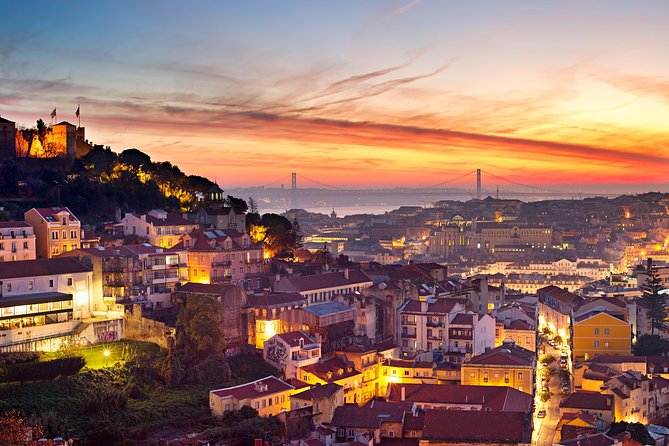
You meet at the Church of Saint Roch (Largo Trindade Coelho, 1200-470 Lisboa). That’s a smart start point because it puts you close to where the story of downtown Lisbon starts to branch into multiple directions.
You end at Praça do Comércio (Terreiro do Paço) in the Baixa waterfront area (1100-148 Lisboa). This finish is useful because it’s a natural “turn-around” point. After the walk, you can keep exploring with confidence: food, transit, and sightseeing options cluster around the plaza.
Also, it’s near public transportation, which matters if you want to pair this with something else later.
Igreja de São Roque: Baroque art, not just a church stop
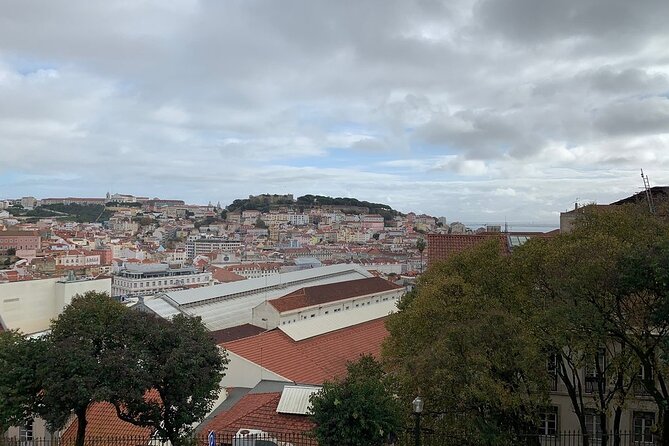
The first stop is Igreja de São Roque, and it’s an ideal opener. The tour frames the Saint Roque Mission as a showcase of Portuguese artists, with Baroque art that many people don’t expect to see in Lisbon’s everyday streets.
What you’ll get in the time you’re there:
- A guided look at why this church is considered one of Portugal’s standout Baroque examples
- A chance to photograph inside/outside details without the pressure of a long visit
Why I like this start: it sets the tone. You’re not just walking and hoping something interesting appears. The guide gives you a lens—what to look for—so you notice details faster as the tour moves on.
Bairro Alto, Bica, and Cais do Sodré: old streets with personality
Next you shift into older, messier, more human Lisbon: Bairro Alto, Bica, and Cais do Sodré. The guide takes you through some of the oldest neighborhood streets with a focus on what makes them feel eccentric—real local geography, not postcard-only corners.
This is where your brain starts to “click”:
- Why Lisbon’s neighborhoods don’t feel interchangeable
- How street layout and elevation shape everyday life
- How the city’s identity shifts block to block
Practical note: this segment is short, so keep your camera ready and don’t plan to linger. Save longer exploring for after the tour when you know what you want to repeat.
Trindade: a quick stop with big story energy
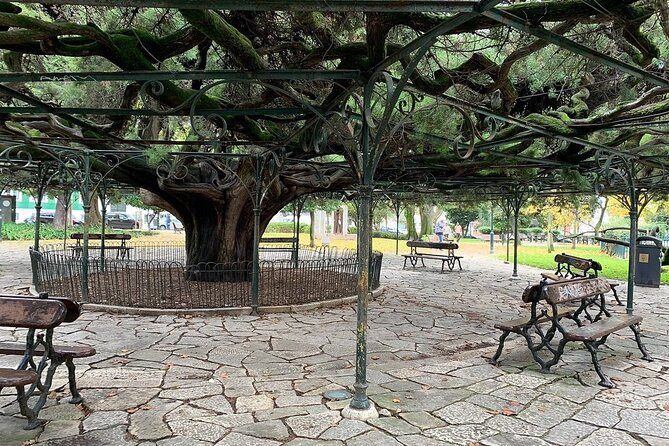
You’ll get a short visit in Trindade to learn about one peculiar Lisbon restaurant—and its ties to Catholic worship, beer, and freemasonry.
Even if you’re not a “history mode” person, this kind of stop helps you understand Lisbon as a place where different forces overlap. It turns the city from architecture into culture. And because the time window is small, it’s easy to enjoy without it hijacking your day.




Largo do Carmo: Gothic ruins and the earthquake that changed everything
At Largo do Carmo, you’ll see one of Lisbon’s most idyllic squares, but with a sobering anchor: the Gothic ruins of the Carmelite Convent, connected to the earthquake of 1755.
This stop is valuable because it gives you the city’s “why.” Without this context, Lisbon can feel like a beautiful puzzle with no explanation. With it, you start seeing how disaster reshaped space, planning, and what you can still recognize today.
Photo tip: aim for wide angles first (square + ruins), then go closer for textures. The contrast between elegant public space and damaged stone is part of what makes this stop memorable.
Elevador de Santa Justa: the Lisbon viewpoint you plan around
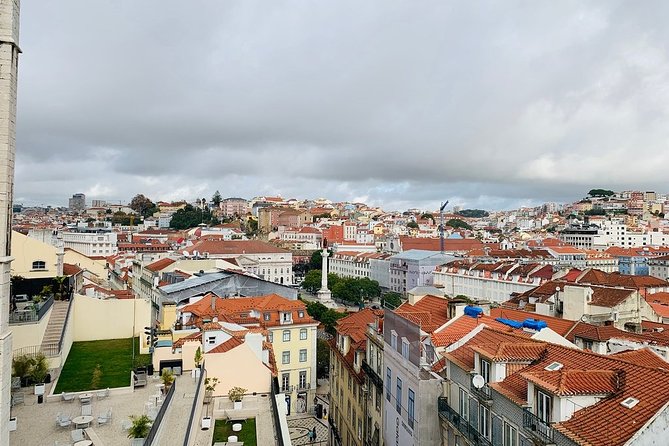
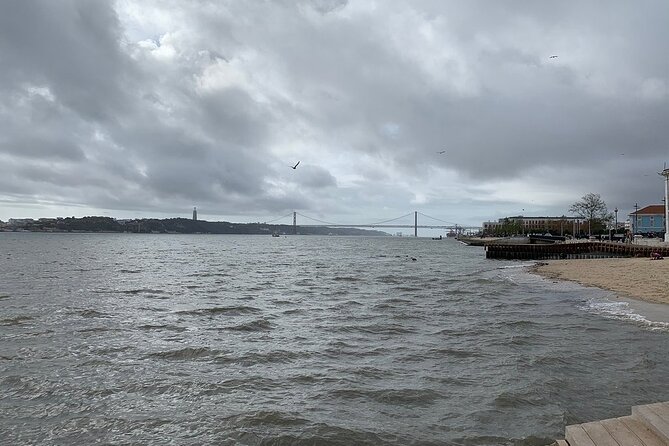
The big iconic moment is Santa Justa Elevator. You get the chance to visit it and see Lisbon from above, with views that include the River Tagus.
Why this matters on a walking tour:
- You’re learning the city on foot at street level
- Then you get an aerial “map” moment to stitch it together
This stop also helps if you’re the type who hates walking loops without payoff. Here, you earn a view—then you can keep moving.
If it’s a busy time, don’t expect to race through. The elevator experience is one of those “worth it, but take your time” moments.
Chiado: traditional shops and the downtown rhythm
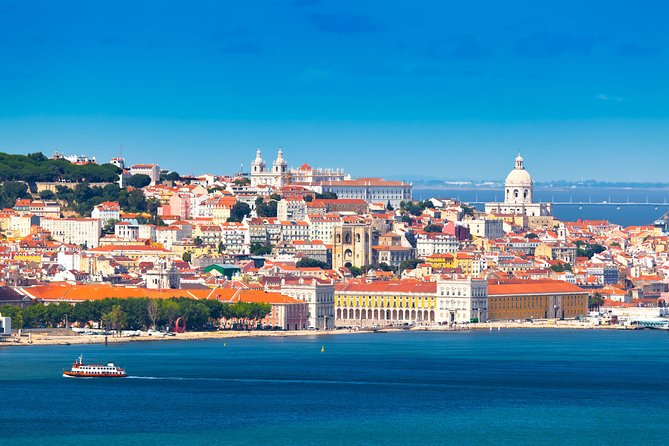
From there you move into Chiado, where the focus shifts to daily life and shopping streets. The tour highlights the largest concentration of traditional stores and businesses, which is exactly what you want if you’re trying to understand Lisbon beyond landmarks.
What you’ll feel walking through:
- Lisbon’s mix of old-school commerce and modern visitor energy
- A sense of scale for downtown—this is where people actually spend time
Chiado is also a useful breather section. If you’re feeling a little overloaded with churches and squares, this part resets you with the feeling of a living city.
The world’s oldest bookstore and a Neo-Manueline station moment
The tour includes two quick, high-reward detours:
1) The world’s oldest bookstore
Even with no other context, this stop is instantly satisfying. It’s the kind of place you can connect to on a human level: books, shelves, and the sense that reading culture has long roots here.
2) A late-19th-century train station with Neo-Manueline architecture
This is another “look up” moment. Neo-Manueline details tend to be ornate and very Lisbon, so the architectural style becomes a guide for what to notice.
Why these stops are smart: they break the tour into “architecture, then ideas, then transit-era design.” That variety makes the full 3 hours feel lighter than you might expect.
Largo de São Domingos: the 1506 Jewish massacre memorial
At Largo de São Domingos, the conversation turns serious. You’ll learn about the Jewish Massacre of 1506 that took place in one of the city’s oldest squares, and you’ll contemplate the memorial honoring victims of religious persecution.
This is the kind of stop that makes Lisbon’s story deeper than pretty stone. You don’t need to linger long to feel the weight of the moment, but it changes how you experience the rest of the tour.
If you like history that’s not sanitized, don’t treat this as a quick photo stop only. Listen to the guide’s explanation so the memorial connects to real place, not just a marker.
Igreja de São Domingos: a unique interior worth the time
Right after, you visit Igreja de São Domingos, described as one of Lisbon’s most unique places of worship. The focus is on the church interior—where the guided glance is the whole point, because a building like this can look like “just another church” unless someone points out what makes it distinct.
This stop is shorter, but it fits the tour’s pattern: each location is picked to teach you something specific, not just to check boxes.
More squares, downtown lanes, and that Santa Justa backdrop
The tour then moves through more classic downtown segments:
- You’ll admire historical city squares and pass by historical businesses
- You’ll stroll along a main pedestrian street in downtown, with Santa Justa Elevator as a nearby landmark
- You’ll get a sense for how the old parts of the city function as everyday space
This section is great for two reasons. First, it gives your legs a steady rhythm before the waterfront finale. Second, it shows Lisbon as a place where history and daily life happen on the same block.
Praça do Comércio (Terreiro do Paço): finish at the waterline
The tour ends at Praça do Comércio (Terreiro do Paço), one of Lisbon’s most famous squares. The guide ties it to key figures and events, including the Marquis of Pombal and the regicide of 1908.
Why this ending works:
- You get a grand visual payoff after churches and narrow streets
- You finish where you can easily keep going—more food, more viewpoints, more transit options
You’ll likely feel like you’ve reached the “big stage” of the city. That’s a good mental reset before you branch out on your own.
Praça Dom Pedro IV: the Baixa Pombalina stage set
After Praça do Comércio, you’ll also visit Praca Dom Pedro IV and enjoy the sights in the Baixa Pombalina district. The highlights mentioned include Queen Mary National Theater and Opera house, plus local businesses such as Tabacaria Mónaco.
This is a fitting last architectural moment because it rounds out the tour’s mix:
- Baroque churches earlier
- Earthquake-era public space here
- Lisbon’s layers visible in how the city’s key squares feel and function
It’s also a nice chance to end with something lively but still structured, so your memories stay anchored.
Price, pacing, and what small-group really changes
Let’s talk value in plain terms.
At $39.78, you’re paying for three things:
- A real guide who connects the dots
- A route that hits multiple key areas in a short window
- A maximum of 8 people, which keeps the experience personal
That last part isn’t just a nice-to-have. In the reviews, the strongest praise centers on pacing and guide interaction—people felt the tour wasn’t rushed, asked questions freely, and got clear answers. Guides such as Rui Fernandez and Andre come up often for being patient and good at timing. Andriy is also mentioned for pacing that kept things smooth, even when the weather turned rainy.
So what should you expect on the ground?
- A structured walk with short stops (so you’re always moving, but not sprinting)
- Frequent opportunities for photos
- Time for the guide to explain the “why” behind each place
And yes, you might get a shade-and-slowdown moment if weather changes. Lisbon weather can be dramatic, and good guides know how to handle it.
How to plan your day around this walk
A few practical tips that make a difference:
- Wear shoes you can trust. Lisbon sidewalks are not always flat.
- Bring a light layer. Church interiors and shaded streets can feel cooler than expected.
- If you want photos, keep your camera easy to grab. Many stops are short.
- Plan this as a start-of-trip tour. It helps you navigate what you see afterward—especially around Baixa and the central districts.
Also, keep in mind this is commonly booked about 56 days in advance. If you’re traveling in peak season or around holidays, it’s smart to book earlier rather than hope.
Should you book the Lisbon Small Group Walking Tour?
If you want a smart first taste of Lisbon—churches, neighborhoods, viewpoints, and major squares—this is a strong pick. The small group size makes it feel like a guided stroll, not a lecture with headsets. The route gives you a mix of architecture and human stories, including memorable stops like Igreja de São Roque, Largo do Carmo, Santa Justa Elevator, and the final sweep at Praça do Comércio.
Skip it only if you know you can’t do a steady 3-hour walk, or if you prefer fully independent sightseeing with no structured stops. Otherwise, it’s a good way to get your bearings fast and come away with Lisbon that feels more than scenic.
FAQ
How long is the Lisbon Small Group Walking Tour?
It runs for about 3 hours.
How much does the tour cost?
The price is $39.78 per person.
What’s the group size limit?
The tour has a maximum of 8 travelers.
Is the tour offered in English?
Yes, it’s offered in English.
Where does the tour start and end?
It starts at the Church of Saint Roch (Largo Trindade Coelho, 1200-470 Lisboa) and ends at Praça do Comércio (1100-148 Lisboa).
Are admission tickets included for the stops?
The stops listed on the tour are marked as admission ticket free.
Are food and drinks included?
No. Food and drinks are not included.
Do I need moderate physical fitness?
Yes, the tour recommends a moderate physical fitness level.
Can I bring a child or service animal?
Children must be accompanied by an adult. Service animals are allowed.
What’s the cancellation policy, and does weather matter?
You can cancel for a full refund up to 24 hours in advance. The experience requires good weather, and if it’s canceled due to poor weather, you’ll be offered a different date or a full refund.