REVIEW · TBILISI
Tbilisi Old Town Walking Tour with a Local Guide
Book on Viator →Operated by Views Georgia Tours · Bookable on Viator
Old Town in Tbilisi moves fast. This 3-hour walking tour threads together ancient churches and modern landmarks, with a local guide who explains what you’re seeing as you go.
I especially like the mix of eras: Anchiskhati Basilica from the 6th century sits a short distance from the Bridge of Peace over the Mtkvari (Kura) River. I also like the small group size (max 15) because you get answers when you ask, not just a rushed monologue.
One thing to keep in mind: you’ll be walking for most of the 3 hours, and church visits come with rules like a dress code and no photos inside.
In This Review
- Key points worth planning around
- Why this Tbilisi Old Town route works in 3 hours
- Price and what you actually get for $38
- Walking etiquette: churches, photos, and what to wear
- Stop-by-stop through Tbilisi Old Town (and beyond)
- 1) Berikaoba sculpture group near Dry Bridge
- 2) Anchiskhati Basilica: the 6th-century church anchor
- 3) The Bridge of Peace over the Mtkvari (Kura)
- 4) Shardeni Street: a compact old-town stroll
- 5) Rezo Gabriadze Marionette Theater and its clock tower
- 6) Sioni Cathedral complex: fence, bells, and the meaning of Sioni
- 7) Tamada statue: Georgia’s wine-and-feast culture in bronze
- 8) The monument by Metekhi Church watching the river
- 9) Europe Square: EU flags in the wind
- 10) The Great Synagogue: heritage from 1895 to 1903
- 11) Tree of Life monument (2016) by David Monavardishvili
- 12) Rike-Narikala cable car: big views from the top
- 13) Kartlis Deda: Mother of Georgia above the city
- Food stop, wine tasting age rules, and how to handle lunch
- The guide experience: what good leadership looks like here
- Practical tips so your day goes smoothly
- Should you book this Tbilisi Old Town walking tour?
- FAQ
- How long is the Tbilisi Old Town walking tour?
- What is the price per person?
- Is the tour offered in English?
- How many people are in the group?
- Where does the tour start and end?
- What’s included in the tour price?
- Is lunch included?
- Are there rules for visiting churches?
- Is wine tasting included, and is there an age requirement?
- Can I get a full refund if I cancel, and what if the weather is bad?
Key points worth planning around
- Small group feel with a max of 15 people, led by a professional English-speaking guide
- Old + new Tbilisi in one route, from the 6th-century Anchiskhati Basilica to the modern Bridge of Peace
- Cultural stops beyond the usual highlights, including the Great Synagogue and Europe Square EU flags
- Church etiquette is part of the experience, including a dress code and a no-photo rule inside churches
- A cable car ride to Narikala for wide city views (Rike-Narikala section)
Why this Tbilisi Old Town route works in 3 hours
This tour is designed for getting your bearings fast. You start at 17 Ioane Shavteli St and end at Freedom Square, which means you’re not just walking in circles. You get a “map in your head” after a single afternoon: where the religious landmarks sit, where the river bends, and how the old streets connect to the viewpoints.
The timing is tight in a good way. Each stop is brief (often around 10 minutes), so you see a lot without getting stuck waiting around. On top of that, the pace is manageable for most visitors since you have travel time included in the total 3 hours 15 minutes.
There’s also a practical planning perk: the tour is capped at 15 travelers, and it’s offered in English. That combo makes it easier to ask questions and keep moving when the group stays cohesive.
You can also read our reviews of more walking tours in Tbilisi

Price and what you actually get for $38
At $38 per person, this isn’t a “pay for a bus and stand still” kind of tour. You’re paying for a guide’s interpretation plus the included cable car segment. Many of the sites on the walk are listed with free admission tickets, so your cost is mainly going toward your guide and the one paid transport piece.
What’s not included is food. The tour includes a stop at a traditional Georgian bakery where lunch can cost around 3–5 Gel (about 2–3 euros). That’s your flexible part: you can buy something light, grab a snack, or sit out if you’re already fed.
One more value angle: the route includes landmarks that people often separate into multiple days—church history, Jewish heritage, modern EU symbolism, and city views—so you don’t have to keep hopping across town.
Walking etiquette: churches, photos, and what to wear
If you’re planning to visit churches during your trip, this tour is a good match because it comes with clear expectations. There’s a dress code for churches, and taking pictures inside the church is not allowed.
So what does that mean for your day? Wear something you can adjust quickly (think shoulders covered and clothing that won’t feel uncomfortable when you’re stopped for viewing). And treat church interiors as places to observe quietly rather than a photo studio.
Also, the tour operates best in good weather. If conditions are poor, you’ll be offered a different date or a full refund. That’s important in Tbilisi, where skies can change quickly.
Stop-by-stop through Tbilisi Old Town (and beyond)
This route is a blend of storytelling and “stand here and look.” Your guide points out what to notice, from symbolism to architecture. Expect short pauses, then movement, then another “aha, that’s what it meant” moment.
1) Berikaoba sculpture group near Dry Bridge
You start with the Sculpture Group Berikaoba, near Dry Bridge. The figures are lively and expressive, captured in motion, and they’re meant to reflect the spirit of freedom and rebellion tied to Georgian cultural tradition. Even if you only spend a few minutes, it’s a strong opener because it sets the tone: this city isn’t only about old stone, it’s also about attitude.
You can also read our reviews of more guided tours in Tbilisi

2) Anchiskhati Basilica: the 6th-century church anchor
Next is Anchiskhati Basilica, described as the oldest church building in Tbilisi. It’s a three-nave basilica dating back to the 6th century, so it’s the kind of stop that makes you slow down without being a long stop. When you get inside (or around it), keep the church rules in mind: dress appropriately and remember photos inside aren’t allowed.
3) The Bridge of Peace over the Mtkvari (Kura)
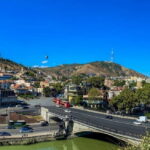
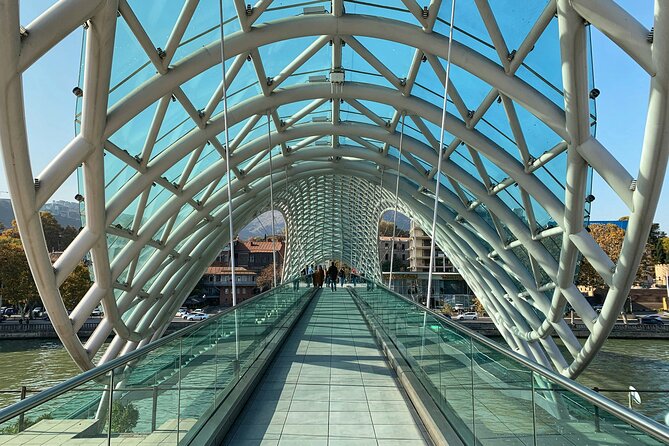
Then you hit one of the most recognizable “modern Tbilisi” sights: The Bridge of Peace. It’s a bow-shaped bridge made of glass and steel, spanning the Mtkvari (Kura) River. Because it’s relatively new, it works well as a visual reset after centuries of stone and religious architecture.
4) Shardeni Street: a compact old-town stroll
You’ll also spend time on Shardeni Street in the Upper Kala district, between Vakhtang Gorgasali square and Sioni Street. This is the kind of narrow walking street where your guide helps you connect what you’ve just seen to how the old town actually feels on foot. It’s short, but it adds texture to the route.
5) Rezo Gabriadze Marionette Theater and its clock tower
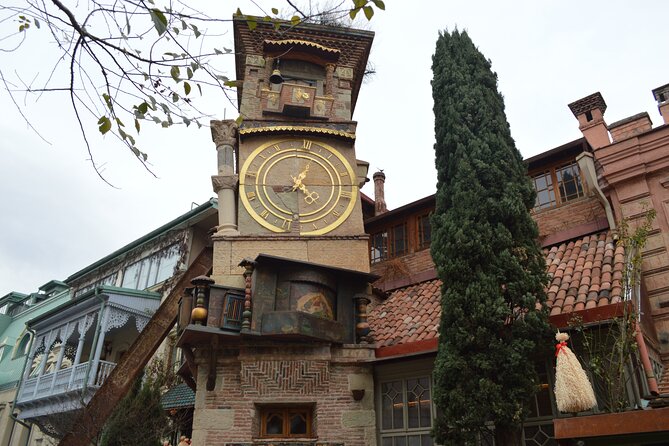
At the Rezo Gabriadze Marionette Theater, the front clock tower and distinctive architecture are the headline. Your guide explains why this place is such an interesting stop in Tbilisi. It’s an easy win if you like quirky details that you might otherwise miss from the sidewalk.
6) Sioni Cathedral complex: fence, bells, and the meaning of Sioni
Next comes Sioni Cathedral Church, part of a complex that includes a fence, the Cathedral of the Assumption, and two bell towers. The name “Sioni” is explained as coming from a sacred mountain in Jerusalem, and it’s described as a Hebrew word meaning sunny.
This stop is more than a quick look at church buildings. It’s the kind of moment where the guide’s explanation helps the place feel less like a landmark and more like a living tradition.
7) Tamada statue: Georgia’s wine-and-feast culture in bronze
Near Sioni Cathedral is the Tamada Statue. It’s a bronze sculpture of the traditional Georgian toastmaster holding a wine horn (kantsi) in a classic toasting gesture. The statue connects directly to Georgia’s wine culture and supra (Georgian feast) traditions.
Here’s the detail I like: the Tamada figure is inspired by an ancient figurine found in Vani dating back over 2,000 years. That kind of continuity makes it easier to understand why Georgian hospitality isn’t a slogan—it’s a role with history.
8) The monument by Metekhi Church watching the river
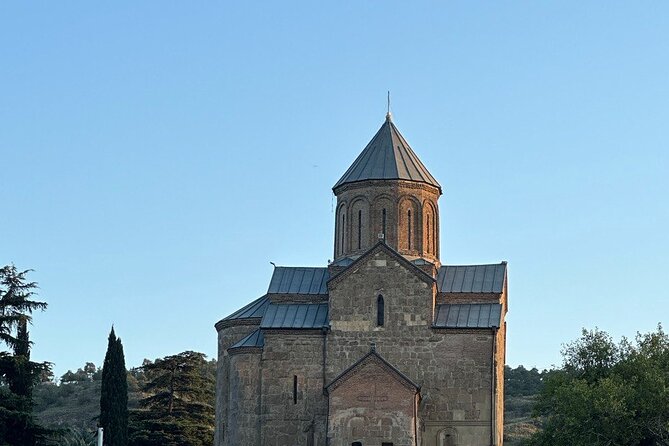
You’ll also see a monument created by Georgian artist Elguja Amashukeli in front of Metekhi Church, gazing down toward the Mtkvari (Kura) River. It’s a quieter stop, but it adds perspective because the river becomes a thread through the whole afternoon.
9) Europe Square: EU flags in the wind
At Europe Square, you’ll notice EU flags moving in the wind. The guide frames this as Georgia’s long-running aim toward the EU, visible to anyone visiting Tbilisi. It’s a useful stop because it shows that today’s Tbilisi is political and present-tense, not just historic and scenic.
10) The Great Synagogue: heritage from 1895 to 1903
Then you reach the Great Synagogue of Tbilisi, built from 1895 to 1903 by Georgian Jews from Akhaltsihe. This is a strong cultural contrast to the church-heavy stretches of the route. It’s also a good reminder that old towns are layered with more than one religious story.
11) Tree of Life monument (2016) by David Monavardishvili
The Tree of Life monument, created in 2016 by artist David Monavardishvili, is next. You’ll have time to explore what might have inspired the design—possibly reflecting lifestyle in older Tbilisi. Even if you’re not a sculpture person, it’s worth the pause because it invites you to look at the city’s art and not only its architecture.
12) Rike-Narikala cable car: big views from the top
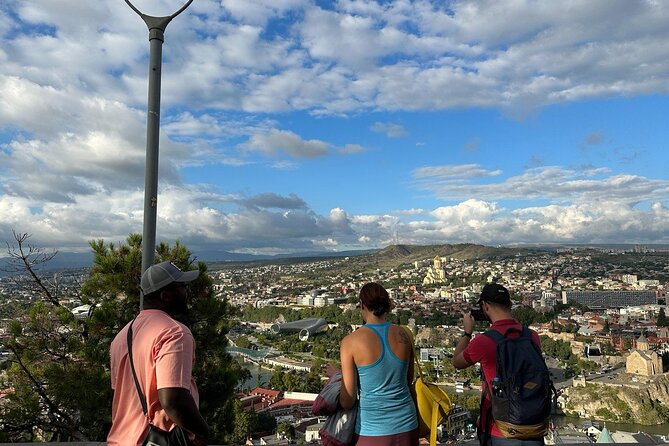
Now you shift from street-level to height. You take the Rike-Narikala Cable Car from the lower station, with the ride timed into the tour (about 15 minutes). The top of the mountain is reached by cable car, and you’ll get city views that you simply can’t see at foot level.
Also, Rike Park is described as the center of Tbilisi, and that matters: you’re leaving the street route and literally rising above it, which makes the rest of the walking feel more understandable.
13) Kartlis Deda: Mother of Georgia above the city
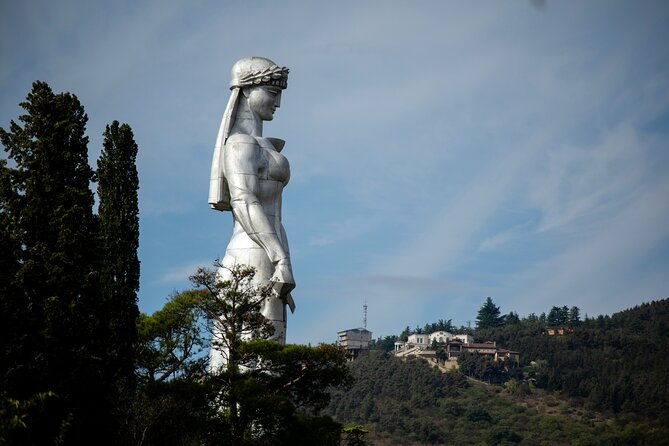
Finally, you end at Kartlis Deda, the mother of Georgia monument. The statue gazes down over the city and represents Georgian women. It’s a fitting close because it ties back to the earlier theme of cultural roles, but in a more sweeping, citywide way.
And then you wrap up back toward Freedom Square, where the tour finishes.
Food stop, wine tasting age rules, and how to handle lunch
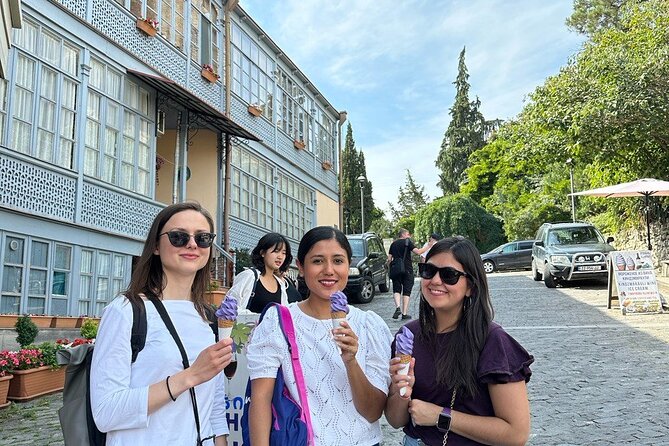
The tour includes a traditional bakery stop. Lunch isn’t included, and you’re told it can cost around 3–5 Gel (about 2–3 euros). This gives you control: you can budget a small amount and keep your energy up, or you can skip a meal if you already ate earlier.
There’s also a minimum age of 18 for wine tasting. That’s important for planning with teens or younger travelers. If you’re bringing someone under 18, expect that wine tasting won’t be part of their plan even if the rest of the group goes.
The guide experience: what good leadership looks like here

This is the kind of tour where the guide matters. You’ll get a professional guide service, and with a max of 15 travelers, it tends to stay interactive.
Two guide names come up often: Teona and Monica. When you’re with a guide like Teona, you’ll get lots of context and story-based explanations, and your questions are answered thoroughly. If you’re with Monica, the focus often stays on explaining monument details clearly, including when the group is small.
Either way, the biggest “why this feels worth it” factor is that you’re not just walking past things—you’re learning what the symbols mean.
Practical tips so your day goes smoothly
- Plan for churches: dress appropriately and don’t plan to take photos inside.
- Wear walking shoes. Even though each stop is short, the total time is mostly on foot.
- Bring a light layer. Weather can shift, and the tour requires good weather to run.
- Expect a small group. It’s capped at 15, which helps the pace stay sane.
- Know where you start and finish: meeting at 17 Ioane Shavteli St and ending at Freedom Square makes it easier to plan dinner after.
- Use the mobile ticket. It’s included, and it keeps the start smoother.
Should you book this Tbilisi Old Town walking tour?
Book it if you want one afternoon that ties together the parts of Tbilisi most people struggle to connect: the 6th-century church side, the river and Bridge of Peace, the old-town streets, religious heritage beyond Christianity, and modern political symbolism at Europe Square. The small group size and the included cable car ride make the $38 feel practical rather than pricey.
Skip it if you hate walking or if you want long, quiet time inside major sights. This is a “see and understand” tour with short stops, not a “linger and read every plaque” day.
FAQ
How long is the Tbilisi Old Town walking tour?
It runs for approximately 3 hours 15 minutes, and travel time is included in that duration.
What is the price per person?
The tour costs $38.00 per person.
Is the tour offered in English?
Yes, it’s offered in English.
How many people are in the group?
The tour has a maximum of 15 travelers.
Where does the tour start and end?
It starts at 17 Ioane Shavteli St, Tbilisi, Georgia, and ends at Freedom Square, Tbilisi, Georgia.
What’s included in the tour price?
Included are the professional guide service and the cable car.
Is lunch included?
No. Lunch is not included. You’ll go to a traditional Georgian bakery where lunch can cost around 3–5 Gel (about 2–3 euros).
Are there rules for visiting churches?
Yes. There is a dress code for churches, and taking pictures inside the church is not allowed.
Is wine tasting included, and is there an age requirement?
Wine tasting has a minimum age requirement of 18 years old.
Can I get a full refund if I cancel, and what if the weather is bad?
You can cancel for a full refund if you cancel at least 24 hours in advance. The tour requires good weather, and if it’s canceled due to poor weather, you’ll be offered a different date or a full refund.