REVIEW · TORONTO
Old Town Toronto History Walking Tour
Book on Viator →Operated by Tour Guys · Bookable on Viator
Downtown Toronto hides a surprising drama. In about 1 hour 30 minutes, this walk traces how the city grew from a small military setup into a major urban hub, with stories that include murders, duels, plagues, and the bigger political forces behind the streets you recognize today.
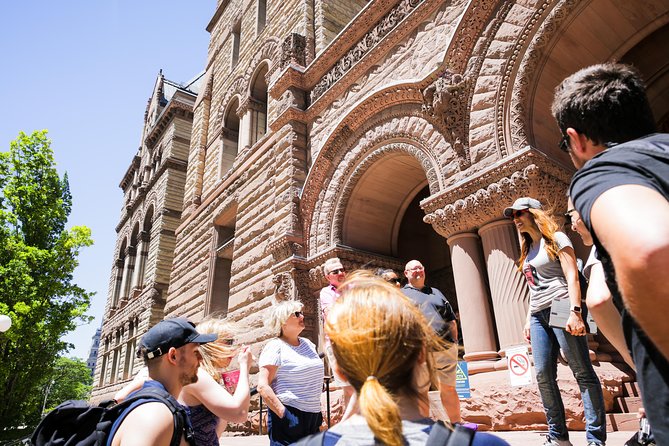
I especially like the architecture-focused stops: Old City Hall, Holy Trinity To, Mackenzie House, and St. James Cathedral give you quick anchors you can point to later when you explore on your own.
One drawback to keep in mind: the tour leaves on time and the guide can’t wait if you’re late, so you’ll want to find the meeting spot right away.
In This Review
- Key highlights you’ll actually care about
- Turning Old Town into a timeline in 90 minutes
- Price at $4.45 and tips: getting value without overpaying
- Old City Hall and Holy Trinity To: where Toronto grew up
- The commercial core near Toronto’s LED Times Square
- Mackenzie House: the first mayor’s story (and the haunting)
- St. James Cathedral: faith for the powerful, faith for the city
- St. Lawrence Market finish: lunch plans for hungry history fans
- The stories you might not expect: murders, duels, plagues, and big-city politics
- How to make this walk work for your schedule
- Should you book this Old Town History tour?
- FAQ
- How long is the Old Town Toronto History Walking Tour?
- Where do I meet for the tour?
- Where does the tour end?
- Is the tour tips-based?
- What’s included in the price?
- Is St. Lawrence Market open every day for lunch after the tour?
Key highlights you’ll actually care about
- Tips-based model means you can match your payment to what you thought of the storytelling and pacing.
- A tight 90-minute route packs major Old Town landmarks into one easy afternoon walk.
- Free-to-view stops keep costs low while you still get variety (city hall, churches, and historic houses).
- St. Lawrence Market finish is a built-in lunch plan, with the added detail that it’s closed Mondays and civic holidays.
- Small group size (max 30) helps keep the walk feeling friendly rather than chaotic.
Turning Old Town into a timeline in 90 minutes
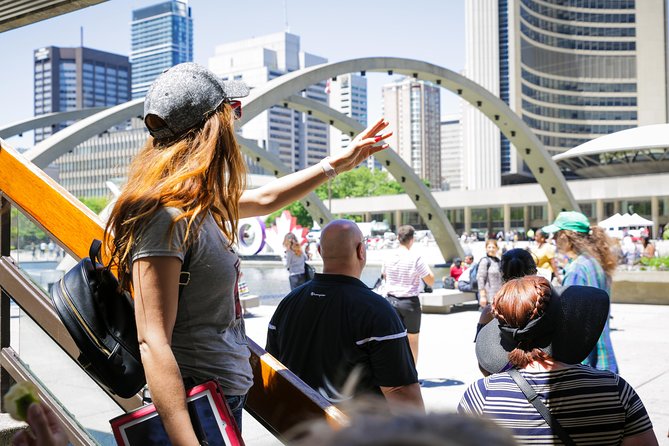
This is the kind of tour I like for a first or second afternoon: short enough that you don’t have to plan your whole day around it, but structured enough that you leave with clear mental “chapters.”
The walk runs on a simple idea: Toronto didn’t just grow. It changed its job and its identity over time. You’ll start at Old City Hall and then move through church buildings, historic homes, and the commercial core, so you see the city in layers—government, community life, and everyday business all in one go. The route is designed for a straightforward stroll, and most people can participate.
A nice bonus is that your guide doesn’t just list facts. They bring the past to the street level, with story-driven historical details. You can expect darker episodes like murders and duels to the death, plus the more uncomfortable stuff like plagues. The goal is not gloom for its own sake. It’s context: why some neighborhoods formed, why certain buildings rose, and why Toronto looks the way it does now.
You can also read our reviews of more walking tours in Toronto



Price at $4.45 and tips: getting value without overpaying
At $4.45 per person, the price feels almost too low for a guided, landmark-focused walk. The key is that this is a tips-based tour, so the amount you pay isn’t locked in. That’s good for you because you’re not stuck thinking you already “paid enough” no matter what.
Here’s how to think about value:
- If you enjoy short, story-led walking tours, you’ll likely feel good about adding a tip because you’re getting multiple stops worth of context.
- If you’re the type who likes questions and back-and-forth, this format can be worth more to you than a fixed-price tour, since the guide can tailor the moment.
- If you prefer strict history lectures with no personality, you might find some story choices more fun than formal—so tips let you calibrate.
Also, a practical point: you’ll use a mobile ticket, and there’s an English-speaking guide. Add the small group size (max 30) and you’ve got a setup that aims to feel personal without being slow.
Old City Hall and Holy Trinity To: where Toronto grew up
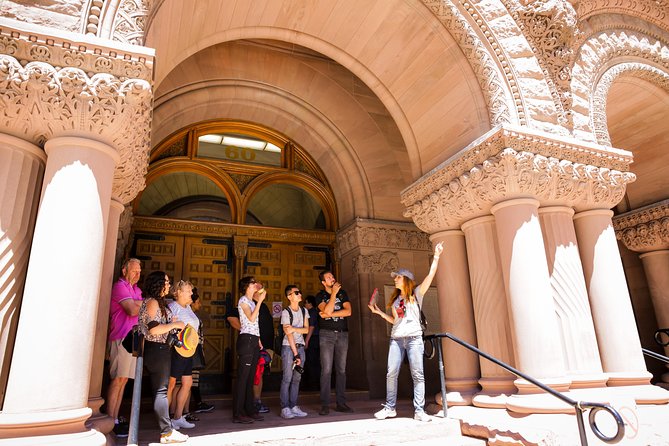
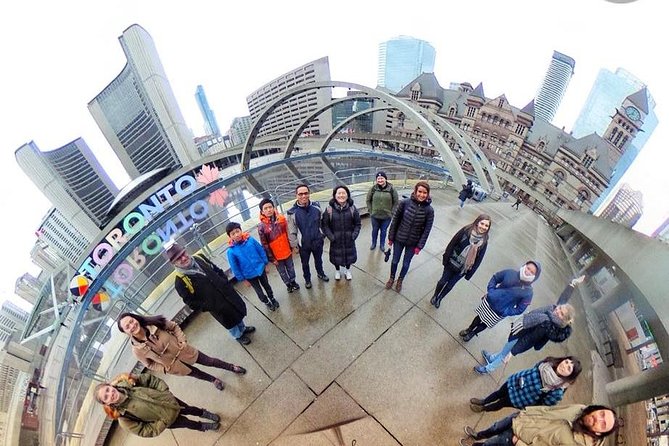
Stop one is Old City Hall at 60 Queen St W. It’s not just a pretty facade. It’s a clue to how Toronto wanted to see itself as it expanded—an administration building shaped by the city’s growing ambitions in the Victorian era.
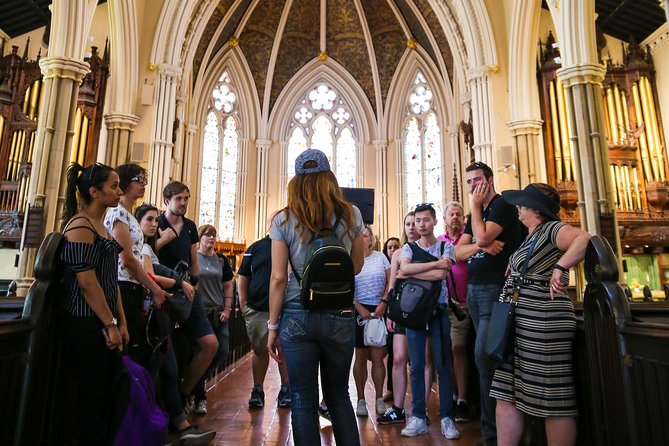
From there, you head to Holy Trinity To, a church completed in 1847. One detail I really like here is the math: it’s said to be 20 years older than Canada, since Canada’s Confederation dates to 1867. That small fact turns the building into more than a landmark. It becomes a reminder that older institutions and communities existed before the modern political story many people learn in school.
What makes these two stops work together is contrast. Old City Hall represents the city’s official face—big decisions, civic power, and formal administration. Holy Trinity To points toward community life, including the mention that it served poor residents from St John’s Ward, a slum area that grew up around the city.
If you like history that connects architecture to real lives, this pairing is a strong start.
Potential drawback at this stage: because the first stop is your anchor for the whole walk, you’ll want to show up early enough to orient yourself at Old City Hall. The tour leaves on time, and the guide can’t wait if you’re still searching.
The commercial core near Toronto’s LED Times Square
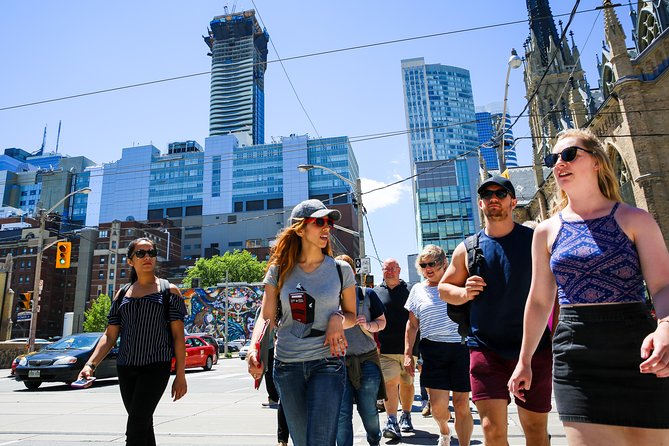
One of the most fun switches on this itinerary is moving from older buildings into the city’s modern attention-grab zone. You’ll pass through what’s described as the Times Square of Toronto, with giant LED screens, billboards, and a busy street scene.
What I like about including this kind of stop is that it forces an interesting mental comparison. You go from Victorian civic and religious structures into a place designed for commerce, spectacle, and foot traffic. Your guide’s job here is to help you connect the dots: today’s hype sits on top of older patterns of movement and value.
You might also notice the human side of the street—buskers, people selling religious items, and hawkers. That’s not just color. It shows you what the city does now: it attracts crowds, trades attention, and constantly rebrands the street experience.
If you’re someone who needs quiet to hear your guide clearly, keep in mind that this area can get noisy. One guide was noted for handling street noise from construction without letting the narration lose momentum, which is a good sign for how they manage harder listening environments.
Mackenzie House: the first mayor’s story (and the haunting)
Next up is Mackenzie House, tied to Toronto’s first mayor. This is also one of the oldest standing houses in the area, and it’s remembered here as a preserved piece of the city’s earlier domestic scale.
The story element at this stop is the “haunting” detail—some believe the first mayor’s spirit lingers in the house. Even if you don’t care about ghosts, it’s still a smart storytelling device because it makes you pay attention to what preservation means. A building like this survives because someone decided the city shouldn’t erase every trace of its earlier self.
What you’ll get from Mackenzie House is a shift from institutions (city and churches) to the personal scale of leadership and daily life. It’s the kind of stop that helps history feel less like a list and more like people and choices.
A small practical note: because the tour keeps a steady pace, you’ll get about the same short time at each stop (around 10 minutes), so don’t expect long museum-style wandering here. Treat it like an on-foot orientation, then follow up later if you want deeper research on your own.
You can also read our reviews of more historical tours in Toronto


St. James Cathedral: faith for the powerful, faith for the city
The walk includes The Cathedral Church of St. James, presented as a center of spiritual life for the rich and powerful in Toronto more than a century ago. That framing matters because it changes how you look at a church: you can see it not only as a place of worship, but as a marker of social structure and influence.
You’ll also get the building’s origin story. The current structure was completed in 1853, after a massive fire, and it’s identified as the fifth church building to stand on that site. That kind of detail helps you understand the building as a living record of disasters, rebuilding, and persistence—not a single static monument.
If you enjoy comparing church architecture styles in different cities, this stop is useful because it anchors you in the specific Victorian-era timeline that shaped Toronto’s most visible civic and religious architecture.
St. Lawrence Market finish: lunch plans for hungry history fans
The tour ends at St. Lawrence Market. I like this finish because it turns the walk into something you can immediately enjoy. You can go straight into local food without having to guess what’s worth your time.
You’ll also get guidance from your guide—recommendations of where to eat around the market area. That matters because St. Lawrence Market is famous, and when a place is famous, the decision can feel harder than it should be. A local recommendation saves you from overthinking.
Important timing detail: St. Lawrence Market is open Tuesdays to Saturdays and is closed on Mondays and civic holidays. So if your tour day is near those dates, plan your lunch accordingly.
If you have food cravings, this is the point where you can reward yourself. If you’re not hungry yet, it’s still a great last stop because it’s a public, easy place to orient and continue exploring afterward.
One extra fun note that came up in guide-style comments: some guides have pointed out a printing press at work during the overall experience. That kind of moment makes the ending feel less like a drop-off and more like a living snapshot of city trade and communication.
The stories you might not expect: murders, duels, plagues, and big-city politics
The marketing pitch is history. The reality is story-driven history with sharp edges.
You can expect tales about:
- Murders
- Duels to the death
- Plagues
- Other events that helped shape Toronto’s development
What makes this worth your time is that the guide isn’t using these events as shock value. The value is in cause-and-effect. When a city deals with violence, illness, or social unrest, neighborhoods and power structures change. Buildings go up. Streets get reorganized. Civic decisions shift. The guide helps you see the backstory behind what you’re walking past.
There’s also a political angle: Toronto’s origins are tied to being a small military town connected to Fort York, and your guide should connect that early role to the city you see now.
One heads-up if you’re sensitive to international commentary: a couple of guide styles include discussion touching on Canada-U.S. tensions, including the idea of Canada being referred to in heated political ways. If that topic might annoy you, it’s worth keeping your expectations flexible.
How to make this walk work for your schedule
This is a dependable afternoon plan, especially if you like finishing with a practical win. It runs at 1:00 pm and lasts about 1 hour 30 minutes, with frequent stops designed for quick viewing and short narration chunks.
Here’s how to fit it into your day:
- Treat it as a first pass through Old Town: you’ll come away with the “where is what” knowledge that makes later wandering easier.
- Plan lunch at St. Lawrence Market right after, but confirm it’s open for your specific day since it closes on Mondays and civic holidays.
- Expect lots of street time. This isn’t a bus tour, so bring comfortable shoes.
Also, the group size is capped at 30, which usually keeps the walk from feeling like a stampede. Still, it’s not a private tour, so if you like one-on-one answers, be ready to ask your questions as they come up during the walk.
If you’re visiting and want quick connections to other Toronto landmarks, you might also hear guide explanations that link Old City Hall’s era to later iconic sites—one example that came up was a connection people made to Casa Loma, even though the tour’s focus stays on the Old Town corridor.
Should you book this Old Town History tour?
I’d book it if you want a low-cost, high-effort-for-your-time introduction to Toronto’s Old Town. The price is low because the tour is designed to earn its real value at the end through tips, and the route hits enough major landmarks that you leave with a mental map, not just random facts.
You should consider skipping or swapping to a different tour if:
- You hate walking in busy areas with lots of visual noise.
- You don’t handle punctual departures well (the guide can’t wait if you’re late).
- You prefer purely formal, neutral commentary with zero political friction.
If you fall in the first group—someone who likes city stories, architecture you can name afterward, and a built-in ending at a real food market—this is a very sensible afternoon plan.
FAQ
How long is the Old Town Toronto History Walking Tour?
It runs for about 1 hour 30 minutes.
Where do I meet for the tour?
You meet at Toronto Old City Hall, 60 Queen St W, Toronto, ON M5H 2M3.
Where does the tour end?
The tour ends at St. Lawrence Market, Toronto, ON M5E 1C3.
Is the tour tips-based?
Yes. It’s described as a tips-based tour where you decide how much the experience is worth at the end.
What’s included in the price?
An English-speaking tour guide is included.
Is St. Lawrence Market open every day for lunch after the tour?
No. St. Lawrence Market is closed on Mondays and civic holidays, and it’s open Tuesdays to Saturdays.