REVIEW · COPENHAGEN
Copenhagen Highlights: Small Group Walking Tour – Max 10 people
Book on Viator →Operated by Copenhagen By Mie · Bookable on Viator
Copenhagen walks fast when a local leads. This max-10 small-group tour gives you an efficient, story-led route through Copenhagen’s biggest sights without feeling like cattle. I love the intimate size—questions are easy, and you don’t get lost in the crowd noise.
I also love the way the tour mixes famous landmarks with the real context behind them, from the Little Mermaid myth-to-facts chat to politics and welfare at Christiansborg. The one consideration is the brisk pace with cobblestones and stairs, so you’ll want solid shoes and a little stamina for 2–2.5 hours of moving.
In This Review
- Key highlights in plain English
- Starting at Toldboden: where the easy part begins
- Gefion Fountain to Churchill Park: origin myths and wartime memory
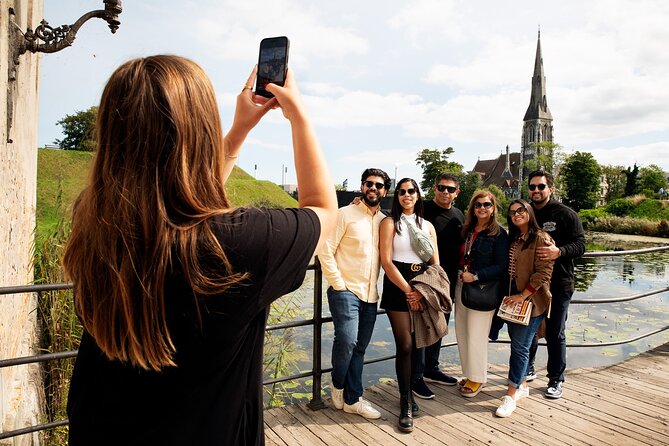
- St. Alban’s Church: a Copenhagen church with a specific twist
- Kastellet viewpoints: a Citadel outside view and 1,000-year storytelling
- Little Mermaid to Amalienborg: fairy tale, then the fact check
- Marble Church alignment and the Opera House across the harbor
- The Playhouse, Amaliehaven, and Nyhavn: canal colors and photo angles
- King’s New Square to Nikolaj Kunsthal: spires, shopping history, and old streets
- Christiansborg Slot: parliament, welfare, and the end of the walk
- Small group pacing: why max-10 feels better than big buses
- Price and value: what $50.81 buys for a 2.5-hour highlights run
- What to wear: cobblestones, stairs, and weather-proofing your day
- Should you book this Copenhagen Highlights walking tour?
- FAQ
- How long is the Copenhagen Highlights small-group walking tour?
- What’s the group size limit?
- What language is the tour offered in?
- Where does the tour start and end?
- Are there admission tickets you need to pay for the stops?
- Is coffee or tipping included?
- Final call: is this the right match for your Copenhagen trip?
Key highlights in plain English
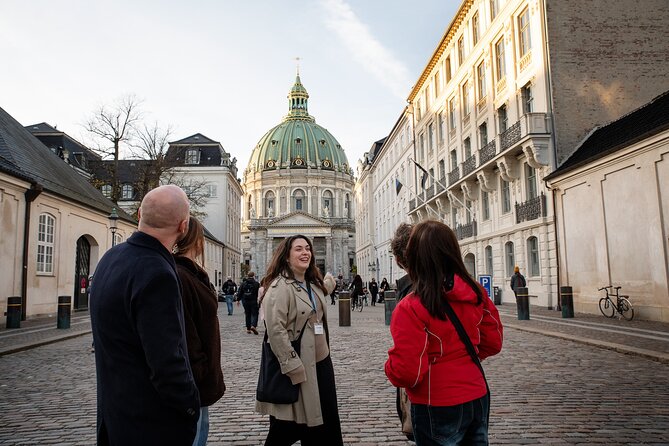
- Max 10 people keeps the walk personal and question-friendly
- Native English-speaking guides with a strong sense of humor (and quick answers)
- Mobile ticket means less fuss before you start
- Free access stops to the main sights you’ll see along the route
- Harbor photo moments at Nyhavn, plus royal-political viewpoints that most DIY plans miss
- 1-on-1 recommendations at the end for where to eat and what to do next
Starting at Toldboden: where the easy part begins
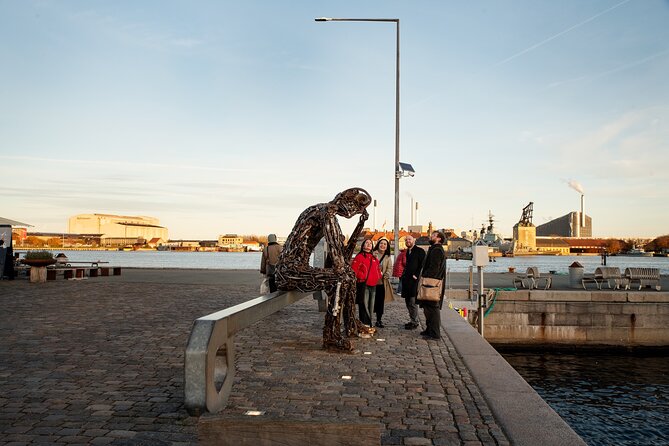
You’ll meet at Zinkglobal by Kim Michael, Nordre Toldbod 12, in the Toldboden area (near one of Copenhagen’s more charming, newer-feeling waterfront stretches). Plan to arrive about 10 minutes early—the guide is there early, and the tour kicks off on time. There’s optional coffee you can buy on your own expense before you start, which is handy on a cold morning.
This is a walking tour with a brisk pace, plus cobblestones and stairs. That matters because Copenhagen can feel “flat” on a map, but the sidewalks and terrain still add up fast. If you’re the type who likes to stop for photos, you’ll have moments, but the tour is designed to keep moving.
You’ll also be using a mobile ticket, which keeps your start simple. And the end point is central—Højbro Plads—so you’re not stuck far from transit when you’re done.
You can also read our reviews of more walking tours in Copenhagen


Gefion Fountain to Churchill Park: origin myths and wartime memory
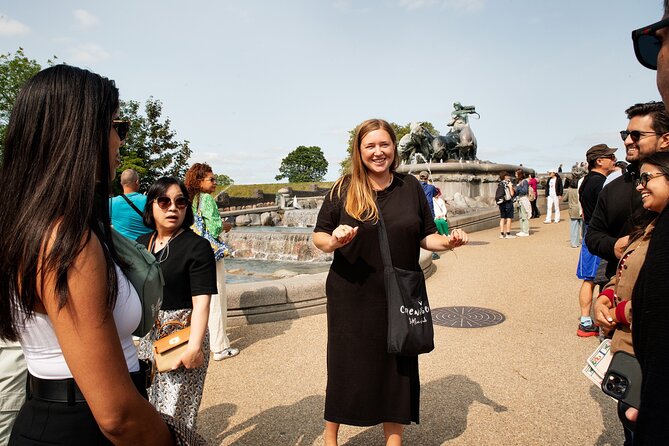
Right away, the route leans into Copenhagen’s storytelling energy. After the initial walk through older parts of the historic center, you’ll reach the Gefion Fountain, the spot where Copenhagen’s origin tale comes in. You’ll hear a Denmark-flavored version of that myth, including the darker tone behind the legend.
Next is Churchillparken, a short stop that acts like a reset button from myth into modern memory. This park commemorates heroes of the Second World War, and it gives the tour a grounded edge that most “highlights” walks skip. It’s only around 5–10 minutes, but it helps the rest of the day land with more meaning.
Even if you’re not a deep-history person, these two stops are a useful pattern: the guide doesn’t just name places, they explain what locals attach to them—whether it’s an origin story or shared wartime remembrance.
St. Alban’s Church: a Copenhagen church with a specific twist
After Gefion and the park, the walk includes St. Alban’s Church. The key detail here is that it’s different from other Copenhagen churches for a particular reason—the tour format gives you the explanation in the moment, not before you arrive.
This is one of those stops that works well even when you’re short on time. You get a quick visual break, plus a reason to look more closely at what you might otherwise walk past. If you like architecture and small surprises, this stop is worth paying attention to.
Keep an eye out for how the guide points out features while you’re still near the street. With a brisk group pace, you’ll get more value by listening for the specific clues the guide mentions.
Kastellet viewpoints: a Citadel outside view and 1,000-year storytelling
Then you’ll head toward Kastelle. Kapellet i horsholm for an outside-view moment. This is where the tour brings in that Game of Thrones-worthy Citadel vibe—your guide uses the appearance of the fortifications as a way to talk about Denmark across centuries.
Expect about 10 minutes here, mostly focused on what you can see from the outside. You won’t be doing a long interior visit; instead, you’re getting a big-picture timeline told through military and political shifts. If your travel style is more “understand the place” than “collect tickets,” this stop fits.
The practical downside: viewpoints and walls can mean you’ll be standing for a short spell. If you’re traveling in colder months, having a layer ready helps.
Little Mermaid to Amalienborg: fairy tale, then the fact check
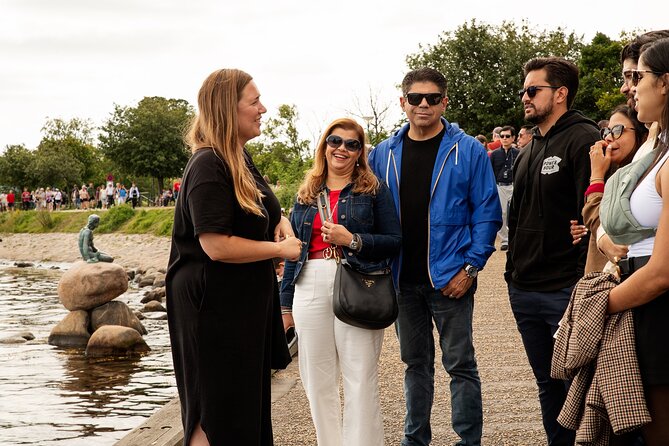
The route takes you out a bit for one of Copenhagen’s most famous photo icons: The Little Mermaid. Plan around 15 minutes here. The tour angle is playful but pointed—your guide explains why it’s not exactly what people assume when they only know the famous statue.
This is a strong stop for first-time visitors because it anchors the city’s “storybook” reputation in something more human. You’ll hear the mismatch between myth and reality, which is a better way to experience the site than just taking a quick snapshot and moving on.
From there, you’ll reach Amalienborg Palace Museum for another 15 minutes, and the tone shifts from myth into Danish royalty. You’ll learn about the Royal Palace and the Royal Guards, including insider-style stories that focus on how the guards work and what’s special about the daily routines.
A fun added detail: you get a short game tied to the current royal family—specifically, where Daisy lives. It’s light, but it also helps you remember facts you’d otherwise forget.

Marble Church alignment and the Opera House across the harbor
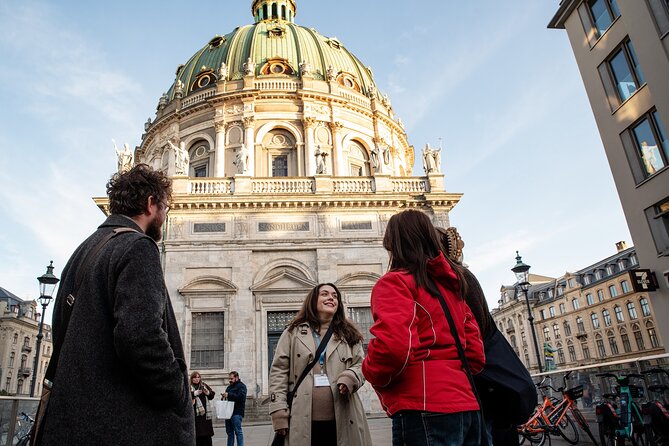
After Amalienborg, the tour continues to Frederiks Kirke (Marmorkirken) for a brief stop (about 5 minutes). The big idea is the visual alignment: the Marble Church lines up with the Royal Palace, so the guide helps you see why Copenhagen’s royal and religious landmarks feel planned, not accidental.
This is one of the quickest stops, but it’s a great one for your camera. Even a short visit becomes memorable when you know what you’re looking for.
Next comes Copenhagen Opera House, also around 5 minutes, with a harbor-side view. The value here is that the walk positions you for a sightline across water, not just a landmark photo from the nearest curb. If your Copenhagen day feels “too much walking, not enough payoff,” this stop is built to deliver payoff.
The Playhouse, Amaliehaven, and Nyhavn: canal colors and photo angles
As you move toward Nyhavn, you’ll pass The Playhouse (about 5 minutes) with views toward the harbor area and the home of the Royal Actor. This stop sets you up for the canal portion, where Copenhagen starts to feel like a postcard.
Then you’ll hit Amaliehaven for about 5 minutes. It’s described as a cute green garden along the canals, and your guide also explains why locals weren’t thrilled about these kinds of spaces at first. Even without long explanations, this kind of “how people felt then” detail keeps the tour from sounding like a list.
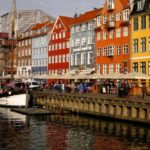
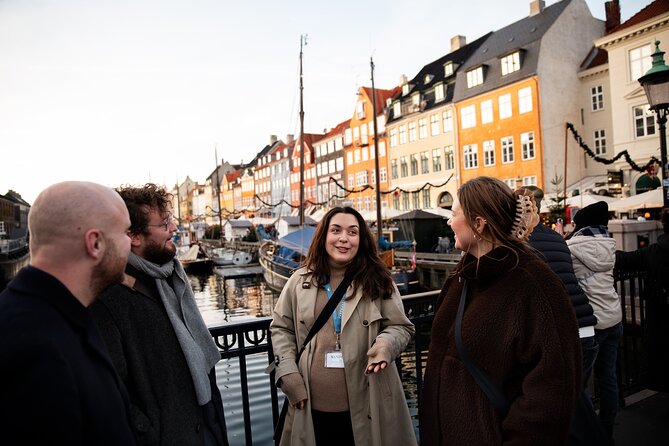
Finally, you get to Nyhavn for roughly 15 minutes. This is the big harbor-canal moment—colorful buildings, classic Copenhagen energy, and a point of view your guide can help you use for better photos. If you want that iconic image without guessing where to stand, this is exactly the moment.
Practical note: Nyhavn is also where your pace slows naturally because it’s hard not to look around. The guide keeps you moving, but you’ll still get time to enjoy it.
King’s New Square to Nikolaj Kunsthal: spires, shopping history, and old streets
After Nyhavn, you’ll cross to Copenhagen King’s New Square (about 5 minutes). This stop is designed for context—what you see on the square isn’t just pretty. You’ll also get a quick sense of shopping history, notable older hotels, and the Royal Theatre that dominates the scene.
It’s short, but it works as a connector between the harbor and the final political finish.
Then comes Nikolaj Kunsthal with another quick 5 minutes stop. Your neck will probably feel it, because the focus is on the spire of one of Copenhagen’s oldest churches. This is the kind of visual detail you’d miss on a DIY walk unless you already knew where to look.
If you like those “wait, look up there” moments, this stop delivers.
Christiansborg Slot: parliament, welfare, and the end of the walk
The tour ends at Christiansborg Slot area, with about 10 minutes for the final stretch. This is where you’ll see the view over Christiansborg Palace—today home to the Danish parliament. The tour ties what you’ve been seeing all day (royalty, churches, national stories) back to how Denmark actually runs: politics and welfare.
After that, you finish near Højbro Plads, right by the main pedestrian street. That’s a smart end point because you’re instantly connected to food, transit, and the rest of your day.
You’ll also get your guide’s 1-on-1 recommendations for further exploring Copenhagen—often the most useful part for turning a good half-day into a great one.
Small group pacing: why max-10 feels better than big buses
The best part of this tour format is the control you feel as a visitor. With up to 10 people, the guide can slow down for specific questions and keep the story flowing for everyone at once.
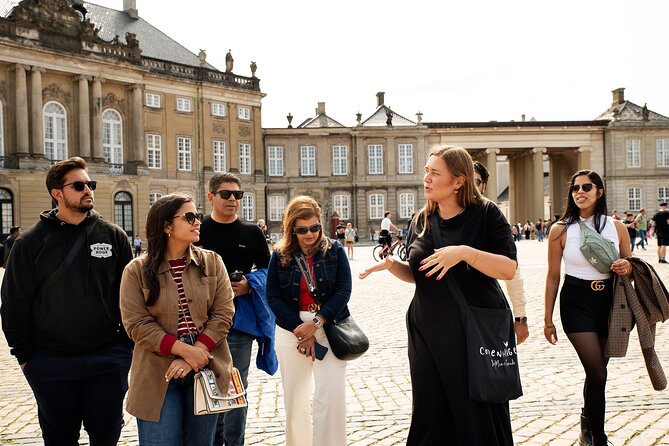
You’ll get a lot of humor built into the delivery style—guides such as Kenneth, Oskar, Peter, Liva, Sandra, Nathan, and Lukas are repeatedly mentioned for mixing wit with history and answering questions in a way that keeps the group comfortable. One person asked something, the answer was explained, and the whole walk didn’t stall.
This is a tour for people who want a quick overview but still want to feel like you’re talking to a real person—not reciting facts at you from a microphone.
Price and value: what $50.81 buys for a 2.5-hour highlights run
At $50.81 per person for about 2 hours 30 minutes, you’re paying for four things you’d struggle to assemble yourself: a tight route, a native English guide, the context between famous sites, and time-saving structure.
Is it expensive compared to walking around on your own? Sure. But DIY doesn’t give you the story thread linking myths to royalty, churches to symbolism, and palace views to how Denmark thinks about governance and welfare. This tour is built to compress that into one efficient walk.
Also, many stops are effectively admission-ticket free within the walking experience, so you’re not paying additional entry fees as you go (the itinerary lists each stop as free). That makes the cost easier to predict.
One more practical point: it’s commonly booked about 49 days in advance, which usually means the slots fill when people plan early. If you’re traveling in peak season, booking sooner can save you stress.
What to wear: cobblestones, stairs, and weather-proofing your day
Copenhagen weather is real, and this tour expects it. Bring an umbrella or rain jacket—the guidance calls it out directly. Stairs and cobblestones mean your shoes matter more than you think, even if you’re just “walking a city.”
If you’re at moderate fitness, you’ll likely handle it fine, but keep your schedule flexible. You’ll be walking briskly, and the tour duration is flexible in practice (around 2–2.5 hours). If you have a hard dinner reservation across town, give yourself cushion.
Also, if you’re hoping to linger at Nyhavn for a long time, you’ll get moments, but you’ll enjoy it more if you treat photos as quick captures rather than marathon sessions.
Should you book this Copenhagen Highlights walking tour?
Book it if you want a first-pass orientation to Copenhagen—royalty, harbors, churches, and the political finish—wrapped in a small-group format with a native English guide and plenty of room to ask questions. It’s especially good as your day-one or day-two plan when you want to understand what you’re seeing before you go exploring on your own.
Skip it only if you hate walking at a brisk pace, struggle with stairs/cobblestones, or prefer ultra-slow sightseeing with lots of unstructured time. In those cases, a slower pace tour or a more flexible self-guided route may suit you better.
Quick practical note: there’s free cancellation up to 24 hours before start, so if your schedule is still in flux, you’re not locked in.
FAQ
How long is the Copenhagen Highlights small-group walking tour?
It runs for approximately 2 hours 30 minutes, and the duration is described as flexible but typically around 2–2.5 hours.
What’s the group size limit?
The tour has a maximum of 10 travelers.
What language is the tour offered in?
The guide is native English-speaking, and the tour is offered in English.
Where does the tour start and end?
It starts at ZinkGlobal by Kim Michael, Nordre Toldbod 12, 1259 København and ends at Højbro Plads, Højbro Pl., 1200 København.
Are there admission tickets you need to pay for the stops?
The itinerary lists each stop as admission ticket free.
Is coffee or tipping included?
Coffee is not included, and tips/gratuities for your guide are not included either.
Final call: is this the right match for your Copenhagen trip?
If you want a fast, well-paced route that hits the classics and explains what’s behind them, this is a smart way to start. The small group size, native English guide, and ending with tailored recommendations make it feel practical—not just scenic.