REVIEW · BUDAPEST
Budapest walking tour: Parliament and Shoes Memorial
Book on Viator →Operated by Luna Walking Tours · Bookable on Viator
Budapest can feel like a lot at first. This walk gives you the big landmarks plus the stories behind them. I like the small-group size, which means you’re not stuck listening at a distance. I also like that you get legends and no-taboo conversations, not just dates and facts.
You’ll start at St. Stephen’s Basilica, then move along the Danube for the Parliament, the Shoes on the Bank memorial, and a string of classic downtown stops. One heads-up: the meeting area is crowded, and the start point isn’t always where you’d assume, so plan to arrive a bit early.
In This Review
- Key points to know before you go
- Why this 2-hour Parliament and Danube walk is a smart first-day choice
- Meeting at St. Stephen’s Basilica: arrive early and check the location twice
- St. Stephen’s Basilica: 15 minutes of church history plus legend
- Hungarian Parliament Building: the golden dome, and what’s not included
- Shoes on the Danube Bank: a free memorial that hits hard
- Vörösmarty Square and Café Gerbeaud: downtown meeting point energy
- Chain Bridge and Vigadó: unity on the river, then culture on the waterline
- Hungarian Academy of Sciences: language, science, and inventions you’ll recognize
- Erzsébet Square, Danubius Fountain, and the Danube theme at street level
- Gresham Palace near the finish: luxury history and famous names
- Price and value: why $3.63 can be a steal (with one budget note)
- The guides and the tone: why humor and questions matter on this route
- Should you book this Budapest walking tour?
- FAQ
- FAQ
- How long is the Budapest Parliament and Shoes Memorial walking tour?
- How much does the tour cost?
- What language is the tour offered in?
- How many people are in the group?
- Do I get a mobile ticket?
- Where does the tour start and where does it end?
- What time does the tour begin?
- Is admission included for the Hungarian Parliament Building?
- Are the Shoes on the Danube Bank tickets free?
- Are tips included in the price?
- Can I cancel for free if my plans change?
Key points to know before you go
- Max 10 people keeps the tour conversational, with time for your questions
- English tour with mobile ticket means less hassle once you’re there
- Parliament stop includes a clear note that admission is not included
- Shoes on the Danube Bank is free and emotionally heavy in the best way to understand the city
- Short, efficient stops pack major sights into about 2 hours
- Guides share trip tips like where to eat, drink, and plan museums or spas
Why this 2-hour Parliament and Danube walk is a smart first-day choice
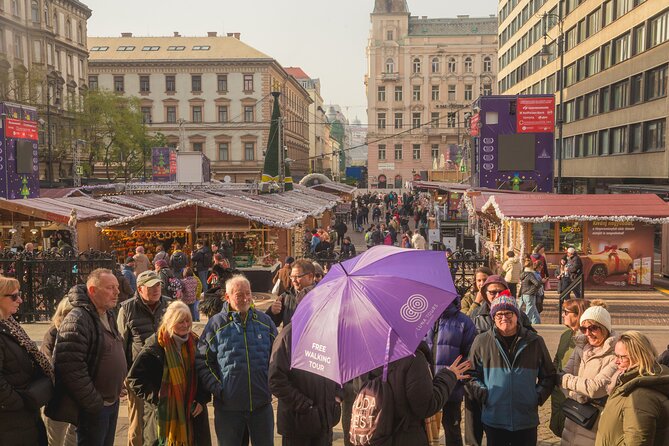
If you’re short on time in Budapest, this tour is built for that reality. You’re walking a flat-ish route and hitting major markers fast: grand civic architecture, a Holocaust memorial, and the Danube’s famous riverfront vibe. The payoff isn’t just seeing places—it’s getting the little bits that help you connect the dots later.
What I like most is the mix. You’re not only looking at famous buildings; you’re also hearing legends tied to how people in Budapest think and talk about their city. That’s the kind of context that makes the rest of your trip feel easier, because suddenly the neighborhoods and monuments aren’t random dots on a map.
And because the group is kept small (up to 10), you can ask questions as you go. That matters more than people think. Standing in front of the Hungarian Parliament, it’s much more useful to get answers right there than to hunt online afterward.
You can also read our reviews of more walking tours in Budapest

Meeting at St. Stephen’s Basilica: arrive early and check the location twice
The tour starts at Szent István Bazilika (St. Stephen’s Basilica) at 11:00 am, and it ends near Kossuth Lajos tér. That sounds straightforward, but there’s a practical catch: the meeting area can be busy, and the guide’s spot may not be at the most obvious point in front of the church.
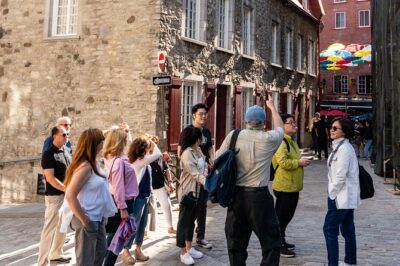
Plan to arrive a little early. If you’re having trouble, one good tactic is to ask other guides with colored umbrellas whether they know where your guide is. Also, pay attention to the note from one guide experience: the meeting point can be on the other side and to the left when you’re facing the basilica’s front.
Once you’re lined up, the tour moves efficiently. There’s a nice rhythm from the first walk-and-talk to the Danube stops—no dragging, no long waits, and a pace that fits most people.
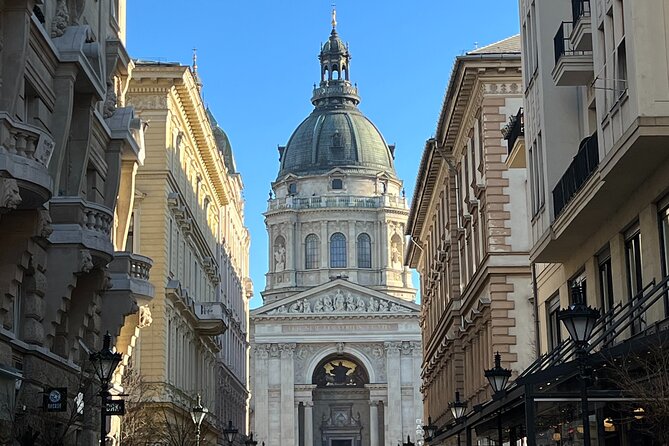
St. Stephen’s Basilica: 15 minutes of church history plus legend
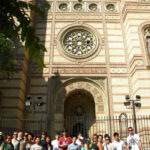
Before you even hit the big skyline shots, you get a primer at St. Stephen’s Basilica. The guide spends about 15 minutes walking around the area and sharing the church’s background and legends—plus how locals tend to understand its meaning.
This is a smart warm-up. It gives you a mental framework for Budapest’s identity before you start looking at power, memory, and national symbols along the Danube. Even if you’re not a hardcore architecture person, you’ll likely find the stories make the place feel less like a stop and more like a starting point.
If you want photos, this is your moment to get oriented quickly. Just remember: this is also an active religious site, so keep it respectful and avoid blocking walkways.
Hungarian Parliament Building: the golden dome, and what’s not included
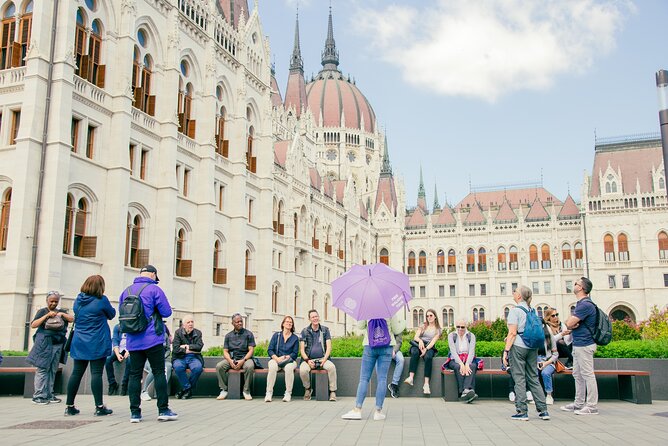
Next comes the Hungarian Parliament Building, with its shimmering golden dome and intricate details that look even better in person than in photos. You get around 15 minutes here, and this is one of those stops where the guide’s commentary changes what you see.
One thing to know clearly: admission ticket is not included for the Parliament stop. That doesn’t make it a bad stop—it just means you’re mainly there for exterior views and orientation unless you buy admission separately on your own.
Because the time is short, focus your effort. Don’t try to see everything from every angle. Instead, pick a couple of photo points, then use the guide time to understand the symbolism and layout so you can recognize what you’re looking at from different viewpoints.
Shoes on the Danube Bank: a free memorial that hits hard
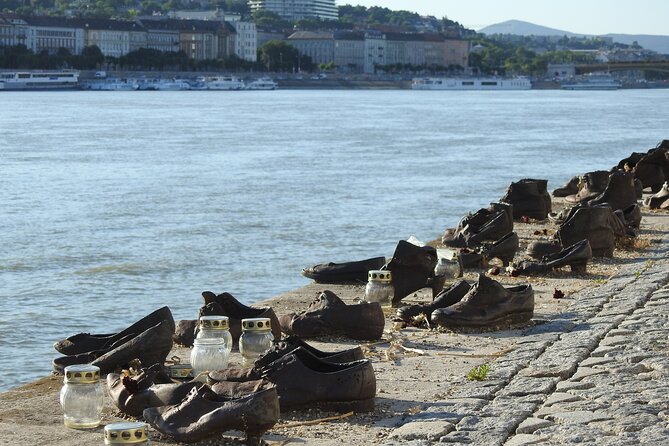
Then the mood shifts—quickly, and for good reason. The Shoes on the Danube Bank stop is about 15 minutes, and it’s free.
This memorial is dedicated to victims of the Holocaust in Budapest, and the guide’s framing matters here. You’re not just standing by an “interesting sculpture.” You’re looking at a deliberate reminder of lives taken and the sorrow written into this city’s story. It’s a heavy stop, but it’s also one of the most meaningful ways to understand Budapest beyond postcards.
Practical advice: slow down your pace here. If you’re thinking about photos, keep your camera use respectful. Give space for people who want quiet time. This is the kind of moment where your own reactions are part of the experience, not a distraction.




Vörösmarty Square and Café Gerbeaud: downtown meeting point energy
After the memorial, you land in Vörösmarty Square (Vörösmarty ter) for about 10 minutes. This area is described as part of Budapest’s UNESCO-listed zone, with elegant architecture and iconic cafés.
What I like about this stop is that it shows a different side of the city. You move from memory to everyday life. The guide connects the square to broader downtown identity, so it doesn’t feel like just a random “pretty square” along the route.
Then you roll into Café Gerbeaud, also around 10 minutes. This is the kind of café that feels like it belongs in a movie: the interior is known for a royal look with chandeliers and marble, and you can connect the moment to the history of the Gerbeaud family and their famous cakes.
Even though entry is listed as free for the stop, the real value is what you learn while you’re there. If you want a sweet break, this is where it fits naturally. If you’d rather keep your food budget for later, you can still enjoy the ambiance and the stories without buying anything.
Chain Bridge and Vigadó: unity on the river, then culture on the waterline
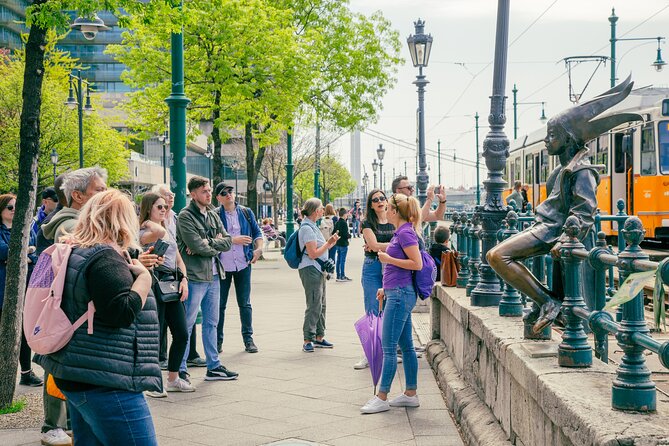
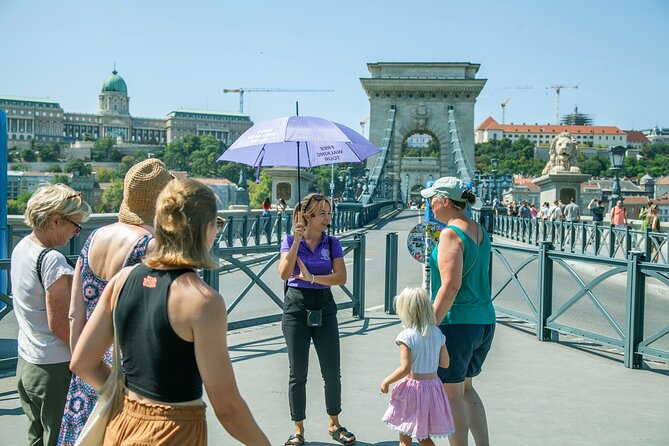
Next is the Széchenyi Lánchíd (Chain Bridge) for about 10 minutes. The famous stone lions aren’t just decoration—they’re part of the legend and national symbolism the guide shares. The bridge is often described as a link between Buda and Pest, but the way you understand it depends on the story you hear while you stand there.
From there, you head to Pesti Vigadó, the grand concert hall on the Danube, for another 10 minutes. You’ll hear how it’s tied to Romantic architecture and how it was once a gathering place for emperors and artists. Today it still hosts cultural events, so it’s not just a pretty facade—it has a living role in the city’s arts scene.
If you like architecture, you’ll get value here. If you don’t, you’ll still get something: a sense of Budapest as a city that performs, not just a city that survives.
Hungarian Academy of Sciences: language, science, and inventions you’ll recognize
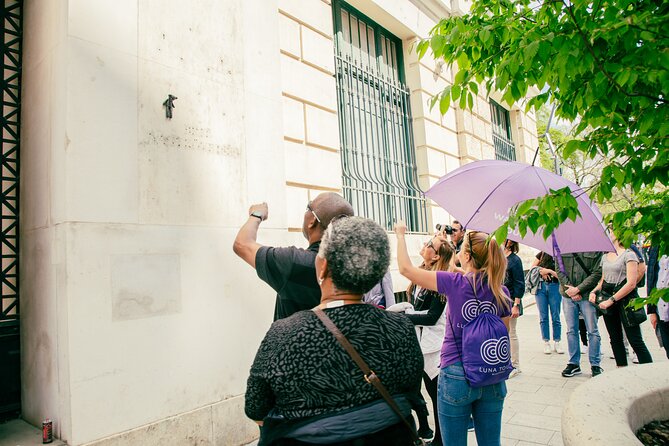
One of my favorite “wait, that’s here?” stops is the Hungarian Academy of Sciences. You spend about 10 minutes there, and the guide frames it as a neoclassical landmark on the Danube with intellectual pride at its center.
The guide also ties the institution to preserving the Hungarian language and supporting innovation, using examples like the Rubik’s Cube and the ballpoint pen. Even if you’ve never studied Hungary’s science legacy, it’s a quick way to connect national identity with real-world inventions you already know.
This is also a nice break in the walking rhythm. You get to slow down and take in a serious building without it feeling like a school field trip.
Erzsébet Square, Danubius Fountain, and the Danube theme at street level
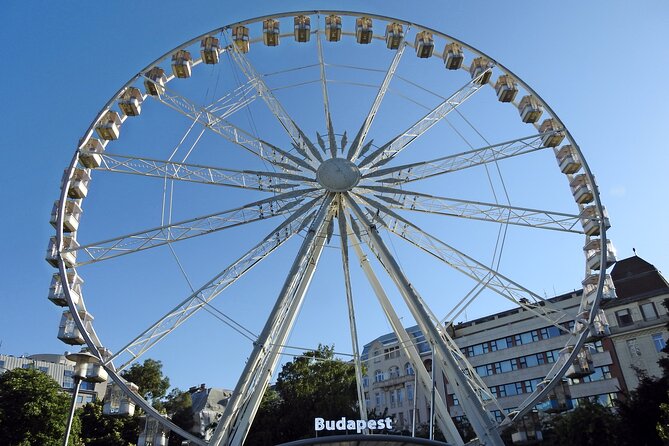
You’ll then reach Erzsébet ter (Elizabeth Square) for about 10 minutes. The focus here is the square’s role as a main meeting spot, with the Budapest Eye Ferris wheel and fountains nearby.
After that, you stop at the Danubius Fountain for around 5 minutes. The point of this short stop is the symbolism: the Danube is treated as Hungary’s lifeline, and the fountain’s sculptures depict the Danube and its tributaries. It’s a compact way to keep the theme consistent after all the major monuments: everything keeps circling back to the river.
Because the stop is brief, don’t rush to exhaustively photograph it. Instead, let it act like a visual pause before the final stretch.
Gresham Palace near the finish: luxury history and famous names
Your last stop is the Gresham Palace, which is now a Four Seasons hotel, for about 10 minutes. This is where the tour shifts again—away from memorial gravity and toward old-world prestige.
The stories attached to the building include notable guests such as Winston Churchill, Queen Elizabeth II, Clint Eastwood, Catherine Zeta-Jones, and Jennifer Lawrence. Even if you don’t care about celebrity history, it gives you a sense of how Budapest has hosted power, culture, and international attention over time.
This stop also helps with pacing. By the time you reach the finish around Kossuth Lajos tér, you’re ready to continue on your own—either to explore more of the Parliament area, hop into a museum, or just soak in the river views.
Price and value: why $3.63 can be a steal (with one budget note)
At $3.63 per person for about 2 hours, this is strong value—especially because you’re getting more than one major sight plus story time. The group is capped at 10 travelers, which usually means you’re paying not just for walking and pictures, but for actual conversation with a guide.
The tour includes a local tour guide, history, legends, no-taboo conversations, and personal recommendations for restaurants, bars, museums, and spas. That “what should I do next?” piece is real money. A good recommendation can save you both time and frustration later.
The one clear budget note: Parliament admission is not included. So if you want to go inside, you’ll need to plan for that extra cost separately. Everything else in the listed stops is free for the stop itself, including the Shoes memorial.
In short: you’re paying for orientation plus context. If you show up ready to listen, that’s where the value shows.
The guides and the tone: why humor and questions matter on this route
A lot of this tour’s strength is how the guide talks. Several guides on different departures have a friendly style that mixes humor with careful explanations. Names you might encounter on this route include Claudia, sometimes with Geza on other dates, and Juan, plus guides like Klaudia.
What that means for you in practice: you’re more likely to remember the stories because the guide keeps things human. The comments about the pace also matter. The walk is comfortable for most people, and there’s time to hear the guide and ask questions rather than racing ahead.
Also, the guide’s willingness to share “no-taboo” conversation topics is a big part of why this tour feels less generic. You’re not stuck with a script that sounds like it belongs in a museum brochure. You get a conversation version of Budapest.
Should you book this Budapest walking tour?
Yes—if you want a fast, story-driven introduction that helps you understand what you’re seeing. This is especially good on day one because it gives you a map of meaning: Parliament as national symbol, Shoes as memory made visible, and the downtown stops as everyday Budapest.
Book it if you like guided context and you’re the type who asks questions when something catches your eye. The small group size (up to 10) makes that realistic.
Skip it (or pair it with other plans) if you’re mainly interested in deep museum time or you know you’ll want hours inside the Parliament. The tour gives you excellent orientation, but Parliament admission isn’t included, and you only get about 15 minutes at that stop.
FAQ
FAQ
How long is the Budapest Parliament and Shoes Memorial walking tour?
The tour lasts about 2 hours.
How much does the tour cost?
It costs $3.63 per person.
What language is the tour offered in?
The tour is offered in English.
How many people are in the group?
The maximum group size is 10 travelers.
Do I get a mobile ticket?
Yes, the tour includes a mobile ticket.
Where does the tour start and where does it end?
It starts at Szent István Bazilika and ends at Kossuth Lajos tér.
What time does the tour begin?
The listed start time is 11:00 am.
Is admission included for the Hungarian Parliament Building?
No. The Parliament stop notes that the admission ticket is not included.
Are the Shoes on the Danube Bank tickets free?
Yes. The Shoes on the Danube Bank stop is free.
Are tips included in the price?
No. Tips are not included.
Can I cancel for free if my plans change?
Yes. You can cancel up to 24 hours in advance for a full refund.