REVIEW · CHARLESTON
Historic Charleston Walking Tour: Rainbow Row, Churches, and More
Book on Viator →Operated by Bulldog Tours · Bookable on Viator
Rainbow Row gets a lot better with a guide. This Charleston Historic District walking tour mixes street-level photo time with stories you can actually use on your next stop, with guides like Keith and Diane bringing the blocks to life. I love the leisurely pace for a 2-hour walk, and I love that Powder Magazine Museum admission is included. One heads-up: you still spend most of the time on your feet, so wear comfortable shoes and plan for sun.
For $40.50, you’re not just ticking off famous names like Rainbow Row and the Waterfront Battery—you’re getting context for the architecture, the Revolutionary and Civil War eras, and the why behind the city’s most recognizable angles. The group stays small (up to 20), the pace is meant to feel relaxed, and you get English commentary on a morning or afternoon departure.
In This Review
- Quick hits before you go
- Entering the Charleston Historic District from the right starting point
- The 2-hour walk: what leisurely really means on your legs
- Rainbow Row: why those 13 houses are more than a postcard
- Waterfront Battery and Fort Sumter: the best free views in the Historic District
- Cobblestones, iron gates, and the architecture details you’ll miss on your own
- Hidden gardens, courtyards, churches, and graveyards
- Powder Magazine Museum: the one ticket stop that adds real weight
- What makes the guides matter (and the names to watch for)
- Weather, timing, and comfort: how to avoid a miserable walk
- Price and value: what $40.50 buys you in Charleston
- Who should book this tour (and who might want something else)
- Should you book the Historic Charleston Walking Tour?
- FAQ
- How long is the Charleston walking tour?
- What is the price per person?
- Where do I meet the tour?
- Is Rainbow Row included, and is there an admission fee?
- What museum admission is included with the tour?
- Do I get to see Fort Sumter?
- Is the tour available in the morning and afternoon?
- What pace should I expect?
- Are tickets delivered digitally?
Quick hits before you go

- Rainbow Row photo stop with the 13 colorful 18th-century houses, free to see
- Waterfront Battery viewpoints for cannons, cannonballs, palmettos, and Fort Sumter sightlines
- Hidden gardens and courtyards plus Charleston single house architecture details
- Historic churches and graveyards tied to Revolutionary and Civil War stories
- Powder Magazine Museum included so you don’t need a separate ticket
- Small group size (max 20) and a leisurely pace, but it’s still a walking tour
Entering the Charleston Historic District from the right starting point

Charleston’s Historic District is beautiful, but it can also feel like a lot at once. This tour helps you connect the dots quickly by walking the core areas you’ll keep seeing later in guidebooks and Instagram posts anyway. You’ll start at 115 Meeting St, then end right back there, which makes it easy to plug into the rest of your day.
The setup is straightforward: you’ll get a mobile ticket, the tour runs in English, and you can choose a morning or afternoon slot. The pace is described as leisurely, and the tour is capped at 20 people, so you’re not stuck in a huge herd. That matters because Charleston streets are narrow, and a smaller group keeps the stops calmer.
One practical note from the way the tour is run: arrive about 15 minutes early. This isn’t a “drift in whenever” situation. If you show up late, you can lose your spot before the group moves out.
You can also read our reviews of more walking tours in Charleston



The 2-hour walk: what leisurely really means on your legs
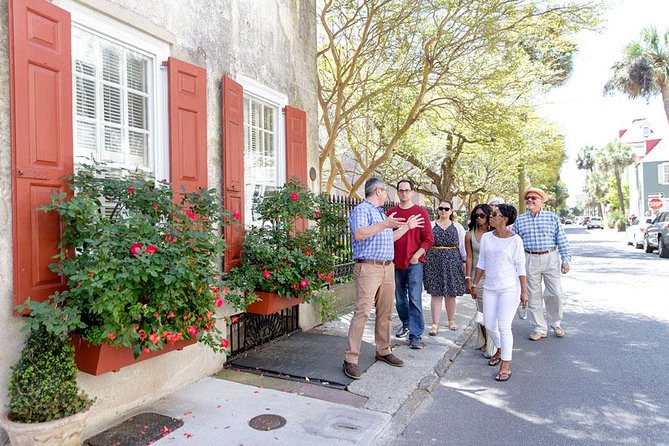
Two hours sounds simple until you remember it’s mostly standing and walking on cobblestones. The tour is positioned as leisurely, but reviews also line up with the reality that you’ll be on your feet for the full duration. So I’d treat this as a real walking tour, not an easy stroll.
The upside is that the guide-led pacing is built for comprehension and photos. In warmer conditions, guides are known to pause in shaded spots when possible. That kind of planning is not just “nice”—it can save your energy so you’re still paying attention when the stories start getting detailed.
If you’re traveling with kids, this is one of those tours that can work because the commentary isn’t just names and dates. Several guides are described as funny, engaging, and good about answering questions. If you’re traveling with a stroller, there’s also evidence the group can be accommodating, as long as you’re ready for sidewalk navigation and turns.
Rainbow Row: why those 13 houses are more than a postcard
Rainbow Row is the stop everyone recognizes, and for good reason. You’ll see those 18th-century homes painted in a range of colors, and the site is often described as the longest pre-Revolutionary structure of its kind in America. Even if you’ve seen it online, it’s worth seeing in person because you can finally study the details: window spacing, porch lines, and how these houses sit along the street.
This part of the tour is a great early win because it gives you a foundation for the rest of what you’ll see. Charleston single houses are a big theme on this walk, and you’ll hear how they’re typically one room deep. They’re also oriented with the short access toward the street, with the entrance area along the long side that often opens into an alley. That setup looks odd at first—until you understand why it’s built that way.
At Rainbow Row, admission is free, and the tour time here is about 10 minutes. That’s enough to get a few photos, spot the color variations, and listen for the architecture context without turning the stop into a long detour.
Waterfront Battery and Fort Sumter: the best free views in the Historic District

After Rainbow Row, the walk turns toward one of the easiest areas to photograph in Charleston: the Waterfront Battery zone. This is where you’ll catch views of southern mansions, cannons and cannonballs, palmettos, and wide angles back toward Fort Sumter. The tour also includes a visual tour of Fort Sumter, which is helpful if you don’t have time to add a ferry or other excursion.
The Battery area works because it gives you a real sense of geography. From these viewpoints, the stories make more sense: you can picture the shoreline, the positioning, and why the harbor mattered. Even if you’re not a history buff, the physical cues help you remember the names.
Practically, this is also where the photos happen. If you care about pictures, this is one of the stops where you’ll likely want to pause longer. If you don’t, the guide’s commentary still helps you understand what you’re looking at, which is the difference between seeing a scenic spot and learning something you’ll carry into the rest of your trip.
Cobblestones, iron gates, and the architecture details you’ll miss on your own
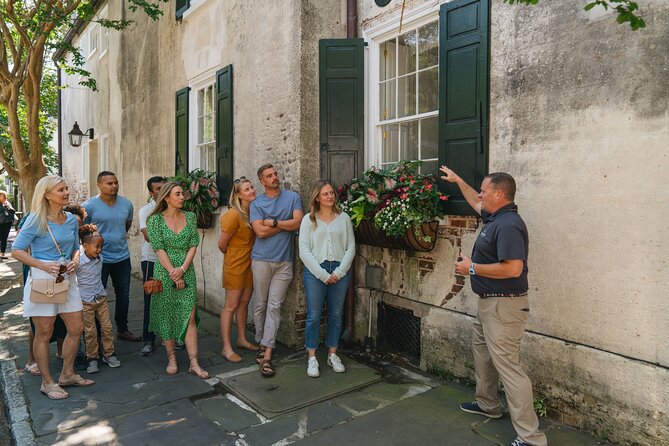
One thing I really like about this tour is how it treats the streets like a museum you can walk through. You’ll move through areas with cobblestone streets and custom iron gates, then get pointed toward distinctive Charleston 18th- and 19th-century architecture. This is the part that helps the city feel less random.
The guide also connects architectural quirks to everyday life. The Charleston single house layout—single-room depth and the alley access—comes up again as you walk, plus the way courtyards and outdoor spaces create a second layer of the city. That’s how you start noticing places that look like “random side streets” when you’re wandering solo.
And if you’re the type who likes small details, you’ll probably enjoy how guides point out what makes a building look Charleston. Several guides are described as great at answering questions and talking through the reasons behind what you’re seeing, which turns a normal street walk into something you’ll actually remember.
You can also read our reviews of more historical tours in Charleston






Hidden gardens, courtyards, churches, and graveyards

Charleston has a habit of surprising you with calm spaces tucked in between busy streets. This tour includes hidden gardens and courtyards, plus historic churches and graveyards. That mix is more than scenic—these stops help explain the city’s spiritual and community life across different eras.
You’ll also hear commentary tied to the Revolutionary and Civil War periods. What I like about this approach is that it doesn’t treat history like a lecture. When you hear the context while standing near the relevant locations, the stories feel grounded instead of floating in time.
A minor trade-off: graveyards and churches can mean extra quiet time and slower listening moments. If you’re the kind of traveler who wants constant action, this may feel a bit slower than you expect. But if you want your Charleston time to feel thoughtful—not just “look and go”—this is where the tour delivers.
Powder Magazine Museum: the one ticket stop that adds real weight

Powder Magazine is the museum stop included with your tour purchase, with admission covered. For many visitors, a guided walking tour can feel like mostly outdoors. Adding an indoor museum break helps you regain a bit of energy and makes the walking feel more intentional.
This stop also makes the tour feel complete. The Battery provides visuals tied to the harbor and conflict-era imagery. Then Powder Magazine gives you a structured museum component so the theme doesn’t stay just in the scenery.
I’d think of this as the stop that turns the experience from a nice overview into something you can point to later: you’re not only saying you saw Rainbow Row and the Battery; you also visited a named museum tied to the same broader story.
What makes the guides matter (and the names to watch for)

The guide quality seems to be a big part of why this tour earns such consistently high ratings. Names that come up include Keith, Graham, Gordon, Eric, Diane, Faith, Nelson, David, Linda, Fran, Boyd, Andrew, and Lacie. More than the names, though, the recurring theme is how guides manage pacing, questions, and explanations.
Some guides are described as entertaining and funny, with the kind of storytelling that helps kids stay engaged too. Others are praised for answering questions clearly and keeping an easy rhythm without rushing people. There are also references to guides working around heat by choosing shaded spots and building in moments to rest your feet or your back.
If you’re trying to decide whether to book this over a self-guided day, the guide-driven factor is the difference. Charleston is gorgeous, but it’s also full of nuance. This tour is designed to help you connect those nuances in a way that a map alone won’t do.
Weather, timing, and comfort: how to avoid a miserable walk
This tour runs in all weather conditions, but it’s also described as requiring good weather, meaning cancellations for poor conditions can happen. The real takeaway for you: pack for variability. Bring a light rain layer if storms are possible, and plan for sun if you’re touring in warmer months.
Comfort is the big practical issue. Reviews repeatedly emphasize comfortable shoes. That’s sensible because you’re walking on cobblestones, turning corners, and standing at multiple stops for the guide’s explanations and photos. If you’re not used to city walking, treat this like a mini training session and start with good footwear.
Timing matters, too. The tour leaves strictly on time, so don’t assume you have a flexible window. If your schedule is tight, build in enough buffer to get to 115 Meeting St and be ready before departure.
Price and value: what $40.50 buys you in Charleston
At $40.50 per person for about 2 hours, the big value question is whether you’re getting more than outdoor sightseeing. You are, because the museum admission is included at Powder Magazine. That single inclusion helps the price feel more “real,” especially if you’d otherwise pay separately or skip the museum entirely.
You also get guided stops at major headline sights: Rainbow Row and the Waterfront Battery area, plus churches, graveyards, hidden courtyards, and architecture commentary throughout. And the tour includes a visual tour of Fort Sumter, which is useful if you’d rather spend money on other activities than an additional paid excursion.
So I’d frame this as a practical intro to Charleston. It’s not trying to replace a full day of museums. Instead, it compresses a lot of the city’s most recognizable spaces into a guided storyline that makes later wandering easier and more meaningful.
Who should book this tour (and who might want something else)
This is a strong fit for first-timers who want orientation fast. You’ll see major landmarks like Rainbow Row, the Waterfront Battery area with Fort Sumter views, and you’ll get architectural context for the Charleston single house layout. If you like history that connects to buildings and streets, this works well.
It’s also a good choice for families who want a manageable time commitment. The group stays small, the pacing is leisurely, and guides are described as keeping kids engaged. Just remember you’re still on your feet for roughly two hours.
If you want a very quiet, low-interaction experience, a guided walking tour may feel a bit structured. And if you’re dealing with mobility limits or you hate walking, you might feel the cobblestones and stop-and-start rhythm more than you expect. In that case, consider a more transit-friendly option.
Should you book the Historic Charleston Walking Tour?
Yes, if you want your first Charleston day to feel organized without being stiff. This tour’s biggest strength is how it pairs famous photo stops with interpretation: Rainbow Row becomes more than colors, the Battery becomes more than cannons, and the included Powder Magazine Museum stop adds weight to the themes.
Book it especially if you appreciate guides who handle questions, keep a good pace, and use shaded breaks when weather gets hot. And go in with the right mindset: wear comfortable shoes, arrive a little early at 115 Meeting St, and treat it as two hours of walking plus learning. If you do that, you’ll leave with a clearer sense of where everything is—and why it matters.
FAQ
How long is the Charleston walking tour?
The tour lasts about 2 hours.
What is the price per person?
The price is $40.50 per person.
Where do I meet the tour?
You meet at 115 Meeting St, Charleston, SC 29401.
Is Rainbow Row included, and is there an admission fee?
Rainbow Row is included, and admission is free for the Rainbow Row stop.
What museum admission is included with the tour?
Admission to the Powder Magazine Museum is included with the tour purchase.
Do I get to see Fort Sumter?
You get a visual tour of Fort Sumter, and the Waterfront Battery area is a place to view it from afar.
Is the tour available in the morning and afternoon?
Yes, you can choose either a morning or afternoon tour.
What pace should I expect?
The pace is described as leisurely.
Are tickets delivered digitally?
Yes, you receive a mobile ticket, and the tour is offered in English.