REVIEW · CHARLESTON
Behind the Scenes of Shem Creek Shrimp Walking Tour
Book on Viator →Operated by Charleston Historic Tours LLC · Bookable on Viator
Shrimp history, told like a story. I love how Captain Bryan turns Shem Creek into a living, funny timeline, and you’ll also get a cast net demonstration that makes the shrimping part hands-on. This is one of those Charleston-area tours that feels like a local lesson, not a staged performance.
One possible drawback: this is more history-and-industry walk than a nonstop, full-time dockside shrimp-busyness show. If you’re expecting long time on active shrimp boats or a guaranteed shrimp snack, go in planning for lunch after.
In This Review
- Key things to know before you go
- Entering Shem Creek’s shrimp world from Mt. Pleasant
- Captain Bryan and the kind of guide you want on vacation
- Price and timing: why $29 can feel like a smart deal
- Meeting at 111 Coleman Blvd and finishing on the creek boardwalk
- How much walking is really involved?
- Stop on Mary Street: the harbor’s big changes, from conflict to bugs
- Magwood Drive and the shrimp shacks story
- At Shem Creek: Captain Peter Lewis House and the ferry system
- Hibben Street and the Hibben House: mid-1700s beginnings
- Mt Pleasant Seafood: the family facility and the decline in trawlers
- Shem Creek Park boardwalk and the shrimp trawler view
- The cast net demonstration: learn by doing, not by staring
- Who this tour is best for (and who might want another option)
- Practical tips to make the day smoother
- Should you book the Shem Creek Shrimp Walking Tour?
- FAQ
- How long is the Shem Creek Shrimp Walking Tour?
- What does the tour cost?
- Where do I meet, and where does the tour end?
- How far do we walk?
- Is the tour offered in English, and will I get a mobile ticket?
- Is the cast net part included?
Key things to know before you go
- Small group size (max 15) keeps the walk personal and question-friendly
- Captain Bryan’s storytelling connects streets, houses, and real working shrimping
- You’ll cover about 1.5 miles at a slow pace, ending on a creek boardwalk
- History is built into each stop, not tacked on after the fact
- Cast net finale gives you a try at catching your own shrimp (instruction, not just watching)
- Free admission tickets at each stop makes the value feel cleaner at $29 per person
Entering Shem Creek’s shrimp world from Mt. Pleasant
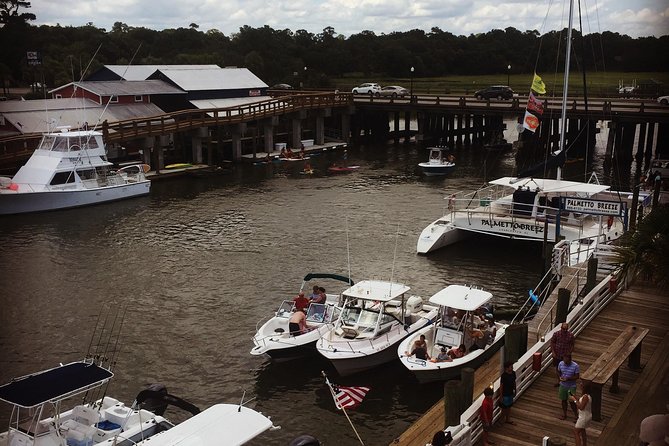
This tour starts in Mt. Pleasant and walks you into the Shem Creek shrimping scene without forcing you into a bus or a crowd. The whole point is connection: how this waterfront community grew, how it survived setbacks, and how shrimping still shapes daily life there.
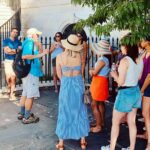
The group stays small, capped at 15 travelers, which matters more than it sounds. With fewer people, the guide can slow down for questions and keep kids and adults from checking out mid-sentence.
You can also read our reviews of more walking tours in Charleston
Captain Bryan and the kind of guide you want on vacation
The guide on this tour is Captain Bryan, and the big difference is how he links practical details to the big stories. He doesn’t just name buildings—he explains why certain things mattered to shrimpers and how the past still shows up in the present.
In the best moments, he makes the walk feel interactive. That includes a hands-on cast net segment at the end, plus lots of room for conversation as you move from street to street. Even if you’re not a history nerd, the format works because the facts keep feeding into the next stop.
Price and timing: why $29 can feel like a smart deal
At $29 per person for about 1 hour 30 minutes, you’re paying for a local guide, a themed route, and hands-on shrimping instruction. You’re also not stuck paying for extra add-ons just to make the tour feel “worth it.”
It also helps that this is booked ahead. On average, the tour is reserved about 25 days in advance, so you’ll want to secure your slot early—especially if you’re traveling in summer or on a weekend.
Meeting at 111 Coleman Blvd and finishing on the creek boardwalk
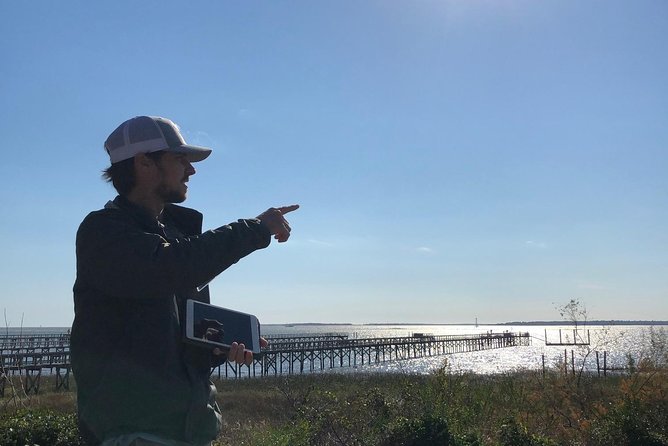
You meet at 111 Coleman Blvd, Mt Pleasant, SC 29464 (near the Mt Pleasant side of the waterfront). The tour finishes at 1313 Shrimp Boat Ln, Mt Pleasant, SC 29464, then you can continue a short walk onto the public boardwalk.
That ending matters. You don’t just hear about the waterfront—you end where you can keep looking at boats, water, and the activity around Shem Creek. If you like slow sightseeing after a tour, this finish point gives you an easy next step.
How much walking is really involved?
Plan on about 1.5 miles of walking. The tour notes also flag summer heat as a real factor, so bring water and wear walking shoes you’re comfortable in.
The pace is described as a slow walk, and that’s a big plus if you’re traveling with kids or you just don’t want to sprint between stops. Still, if you have mobility limits, think about whether a 1.5-mile route at outdoor temperatures will work for you.


Stop on Mary Street: the harbor’s big changes, from conflict to bugs
Mary Street is where you start to get your bearings fast. You move through the area to see an overview of Charleston Harbor, then connect that view to how the seaside community faced major pressures over time.
You’ll talk about changes brought by conflict, natural disasters, and even insect infestations. It’s not the kind of history that stays in a classroom. It’s the kind that explains why coastal communities built, rebuilt, and adapted the way they did.
What I like here: this stop sets context before you get into shrimping details. You’ll understand why the waterfront life unfolded the way it did, so later stops land harder.
Magwood Drive and the shrimp shacks story
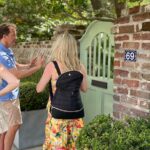
Next is Magwood Drive, where you pass by the home of the first commercial shrimper on Shem Creek. You’ll also see the shrimp shacks—the historic homes where original shrimpers lived.
This is the moment when the tour shifts from wide-view history to everyday life. Instead of thinking of shrimpers as vague “water people,” you start imagining how they lived, stored gear, and built routines around the tides and the catch.
If you like architecture, this section gives you small details to notice while still moving. If you dislike walking past residential streets, you may want to treat this as a quick, story-focused step rather than a long photo stop.
At Shem Creek: Captain Peter Lewis House and the ferry system
On Shem Creek, you’ll discuss the Captain Peter Lewis House (1855) and the importance of the ferry system that once operated there. This is one of the more practical history stops because it explains how people and goods moved through the area.
When shrimping became commercial, access mattered. Ferries and crossings affected timing, labor, and how close communities could stay to working waterfront zones.
This stop also helps you connect the dots between the “old” Shem Creek and the working waterfront you’re seeing today. The guide ties it back to shrimping in a way that feels logical instead of random.
Hibben Street and the Hibben House: mid-1700s beginnings
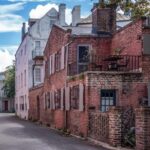
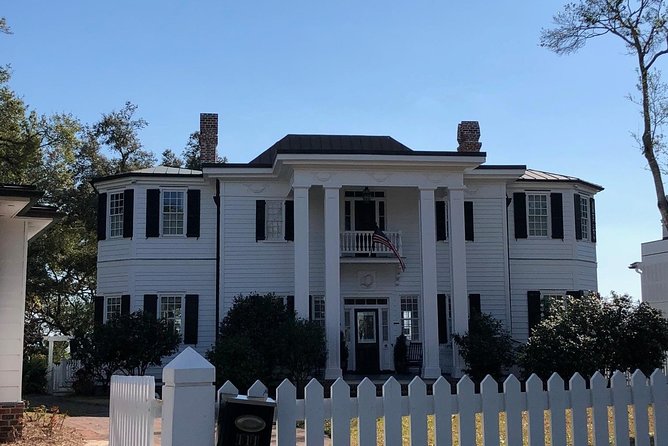
On Hibben Street, you’ll view the Hibben House, described as the oldest structure standing in the town and dating to the mid-1700s. Then you use that timeline to understand how commercial shrimping likely took root in the area.
This stop is a good reminder that shrimping didn’t start yesterday. It grew within a long coastal story, where older settlement patterns and waterfront access influenced what kind of industry could develop.
One consideration: if you’re craving pure “boat and net” action, you might feel this is still heavy on the background. But if you’re the type who likes understanding how modern shrimping fits into an older community, this part is a strong payoff.
Mt Pleasant Seafood: the family facility and the decline in trawlers
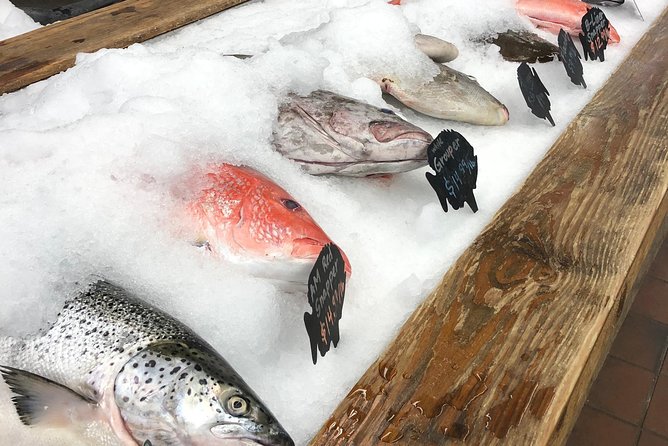
At Mt Pleasant Seafood, you’ll see an assortment of locally sourced seafood at a generational family facility. You’ll also talk about the decline of the fishery—specifically how the town went from nearly 100 trawlers down to 4 by 1998.
That number hits. It’s not a vague “things changed” story. It gives you a clear picture of how the industry shrank and what that means for the people who depended on it.
This stop also grounds your tour in the present. You’re not only learning what shrimping used to be—you’re seeing where local seafood fits into today’s community and how families keep the business going.
Shem Creek Park boardwalk and the shrimp trawler view
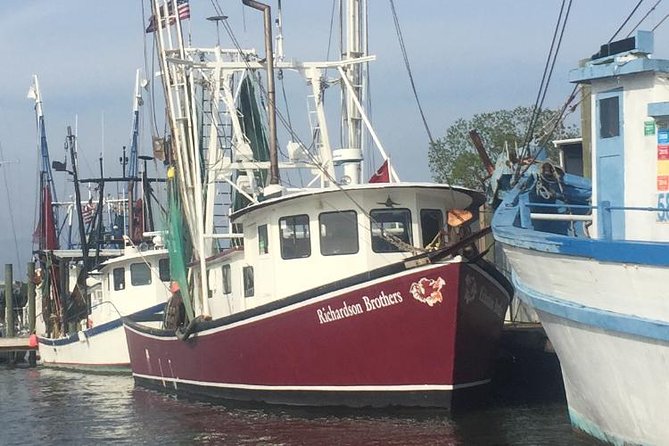
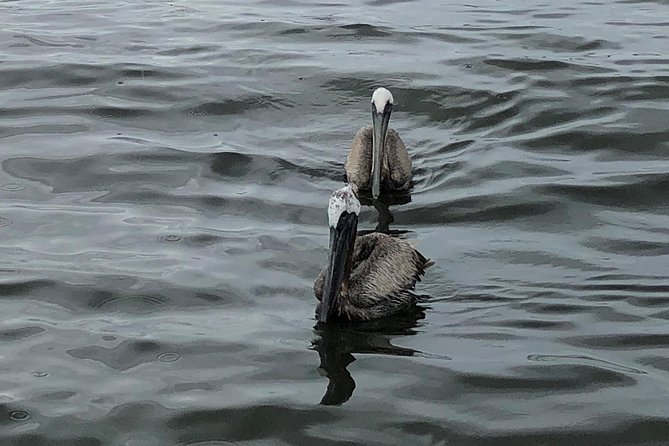
Then you head to Shem Creek Park, crossing the boardwalk to see shrimp trawlers and learn how they operate. This is where the tour starts feeling more like you expected from the title.
The boardwalk setting makes a difference. You can watch the waterfront without getting stuck in a cramped dock area, and the guide explains what you’re seeing in a way that connects back to earlier stops.
If the weather is nice, this section is simply pleasant. If it’s hot, you’ll appreciate that you already got the most context-heavy parts earlier—so you’re not roasting through the entire heavy history portion.
The cast net demonstration: learn by doing, not by staring
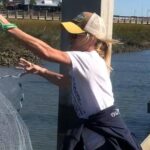
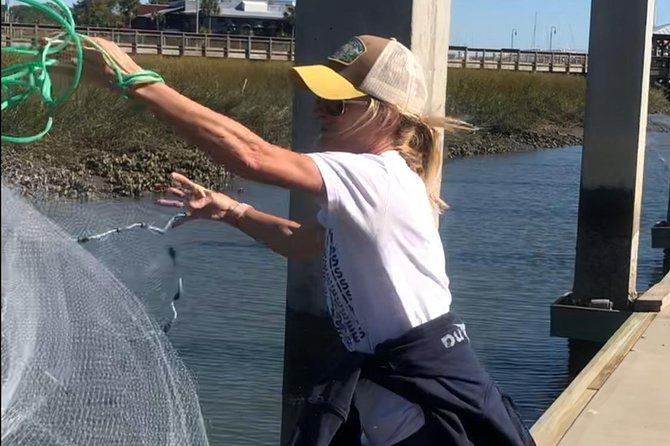
The tour ends with a cast net demonstration where you learn how to catch shrimp. This is the hands-on finale people remember, because you’re not just looking—you’re trying.
In real life, the cast net moment is where the guide’s energy pays off. It’s also a great “vacation skill” you can share afterward. Even if you don’t come home with shrimp in a bag, you’ll leave with a better sense of how labor, technique, and timing all connect in shrimping.
One note: you should go in expecting instruction and practice, not a guaranteed haul. The point is learning the method and understanding how shrimpers work.
Who this tour is best for (and who might want another option)
This tour fits best if you like:
- Charleston-area history that connects to a living industry
- Waterfront walking that ends with a view you can keep enjoying after
- Families who want something engaging for kids and still meaningful for adults
If you prefer pure, nonstop boat action or a food-focused outing, you may find the pace and the history-heavy structure a mismatch. One review issue described the tour as not matching the idea of a shrimp snack, and that’s a fair heads-up: treat this as a historical shrimping tour, then eat after.
Practical tips to make the day smoother
Bring water and plan for sun. Even though the tour is about 1.5 miles total, it’s outdoors, and summer heat can sneak up fast.
Wear walking shoes with grip. You’ll be on streets and a boardwalk, so you want comfort and traction.
If you’re traveling with children, this format can work well. The guide is known for keeping the group engaged and handling kids with care during the walk and the final demo.
Should you book the Shem Creek Shrimp Walking Tour?
Book it if you want a small-group, guided walk that teaches you how shrimping grew into what you see at Shem Creek today. The combination of Captain Bryan’s storytelling, the town-and-harbor context, and that cast net finale makes it a strong value at $29.
Skip it (or rethink expectations) if you mainly want a food tasting or a long, dockside view of active shrimping without the history and street sections. In that case, you might be better served by a different kind of seafood experience.
If you do book, plan for lunch after the tour and use the boardwalk ending to keep the waterfront mood going.
FAQ
How long is the Shem Creek Shrimp Walking Tour?
The tour runs about 1 hour 30 minutes (approx.).
What does the tour cost?
It costs $29.00 per person.
Where do I meet, and where does the tour end?
You start at 111 Coleman Blvd, Mt Pleasant, SC 29464 and the tour ends at 1313 Shrimp Boat Ln, Mt Pleasant, SC 29464.
How far do we walk?
The walking distance is around 1.5 miles, and the tour notes especially recommend being ready for summer heat.
Is the tour offered in English, and will I get a mobile ticket?
Yes. It’s offered in English and you’ll receive a mobile ticket.
Is the cast net part included?
Yes. The tour finishes with a cast net demonstration so you can learn how to catch your own shrimp.