REVIEW · CHARLESTON
Historic Charleston Guided Sightseeing Walking Tour
Book on Viator →Operated by Walks of Charleston · Bookable on Viator
Charleston gets personal when you hear the street-level stories. This 2-hour guided walking tour threads together key landmarks from City Hall to Rainbow Row and the Battery, with a local explaining what you’re seeing and why it matters.
I love how the route links major sites in a logical flow, so you’re not just collecting photos. The walk also targets the big “wow” moment of White Point Garden views over toward Fort Sumter, not only the pretty streets.
One thing to plan for: it’s still a walking tour in real downtown conditions—so bring comfortable shoes and a water bottle, especially in warm weather.
In This Review
- Key points you’ll actually care about
- City Hall Start: the Four Corners of Law at 80 Broad St
- French Quarter Highlights: Dock Street Theatre, churches, and the darker chapters
- Rainbow Row: what to notice on the Battery side of South of Broad
- White Point Garden and the Fort Sumter viewpoint over the water
- Guide energy and pacing: why the history sticks
- Price and value: why $30 makes sense for a 2-hour city primer
- Getting ready: water, restroom timing, and comfortable shoes
- Logistics that keep the day smooth: departures, meeting point, and parking
- Should you book the Historic Charleston guided walking tour?
- FAQ
- Where does the tour start?
- How long is the Historic Charleston walking tour?
- Is the tour guided, and what language is it in?
- What kinds of stops will I see?
- Is admission included for the stops?
- Do I need to bring water?
- Will the tour run in bad weather?
- What is the group size?
- Is there parking near the meeting point?
- Do I need to plan for restroom access?
Key points you’ll actually care about
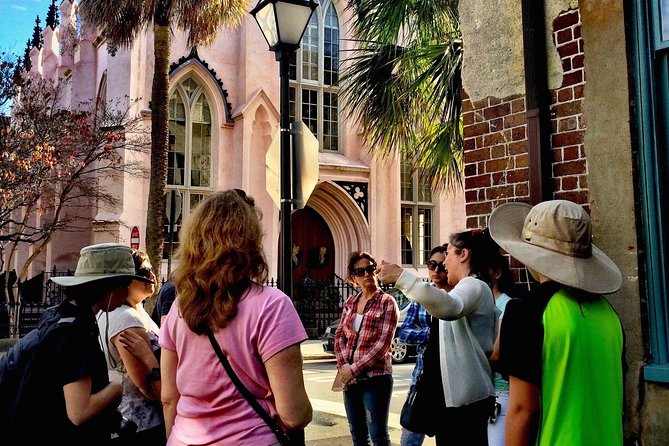
- City Hall start at Meeting and Broad, tied to Charleston’s Four Corners of Law
- French Quarter stops that cover everything from churches to the Slave Mart Museum area
- Rainbow Row context so you know what you’re photographing (not just how it looks)
- South of Broad focus with views across the water to Fort Sumter
- Small group size (up to 20) keeps the tour from feeling crowded
- Professional local guides who use stories to make architecture and events click
City Hall Start: the Four Corners of Law at 80 Broad St
The tour begins at 80 Broad St, in front of Charleston City Hall. This is a smart opening point because it frames the city’s civic identity right away. The City Hall sits at one corner of the famed Four Corners of Law, alongside the Courthouse, the Post Office, and St. Michael’s Church at the intersection of Meeting Street and Broad Street.
St. Michael’s Church is a standout early moment. You’ll hear the connection to George Washington worshipping there—one of those historical tidbits that makes the whole peninsula feel like it’s been used, argued over, and rebuilt over and over. Even if you’re not a history nerd, this start gives you a map in your head: Charleston isn’t just pretty; it was organized, defended, and governed.
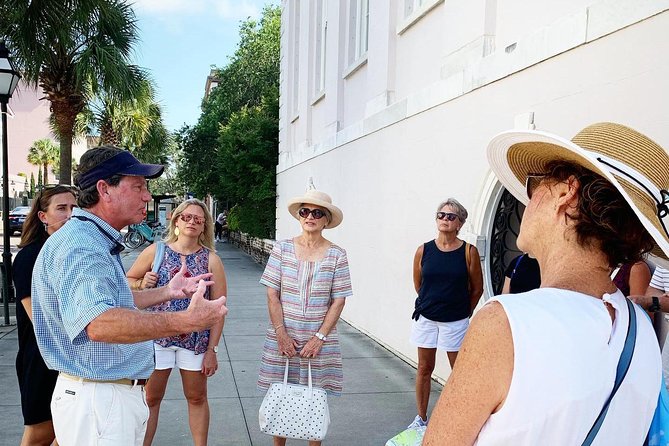
You also get a sense of how the guide will run the day: quick orientation, then stories tied to real corners and buildings. That matters because Charleston’s streets can look similar if you’re wandering. With a guide, you’re learning to read the city like a text.
You can also read our reviews of more walking tours in Charleston



French Quarter Highlights: Dock Street Theatre, churches, and the darker chapters
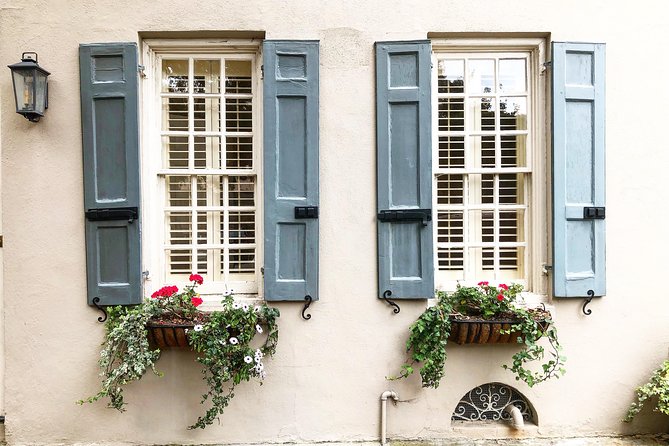
After the City Hall introduction, you head into the French Quarter, where the tour leans into both famous landmarks and the fuller story of the city. A big concentration here is around the Dock Street Theatre area. It’s notable because it’s described as America’s first theatre, and the guide uses that cultural milestone to talk about Charleston as a place where performance, politics, and power met.
You’ll also see St. Philips Church (spelled St. Philips in the tour description). Churches on this part of Charleston’s peninsula do more than point at the sky; they connect to community structure, wealth, and how people organized public life.
Then there’s Slave Mart Museum. Even on a casual walk, this stop keeps the tour from staying purely postcard-friendly. Charleston’s story includes slavery, resistance, and aftermath—and this is one of the places where that reality is directly acknowledged. If you want a Charleston tour that includes the hard parts instead of skipping over them, this one gives you a scheduled moment for it.
Other French Quarter stops you may cover include the Powder Magazine, the French Huguenot Church, and the Pink House. The Powder Magazine especially helps you understand Charleston’s strategic mindset: it’s not only a scene of old buildings, it’s tied to storage, defense, and planning for conflict.
One practical note: the exact French Quarter stops can vary by guide. That means you should treat the tour as a themed route—City Hall to French Quarter core, then onward—rather than a strict checklist of identical exterior views.
Rainbow Row: what to notice on the Battery side of South of Broad
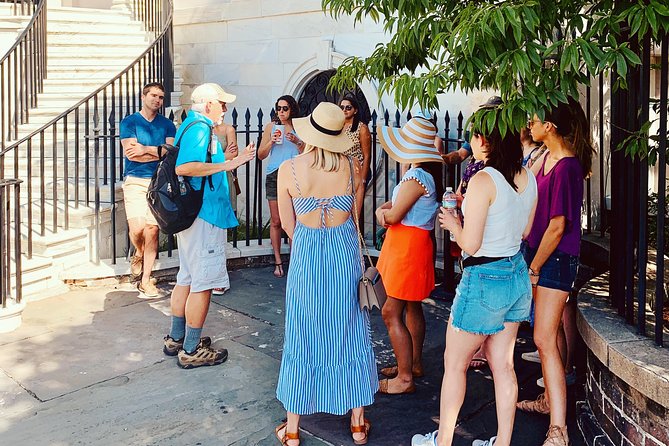
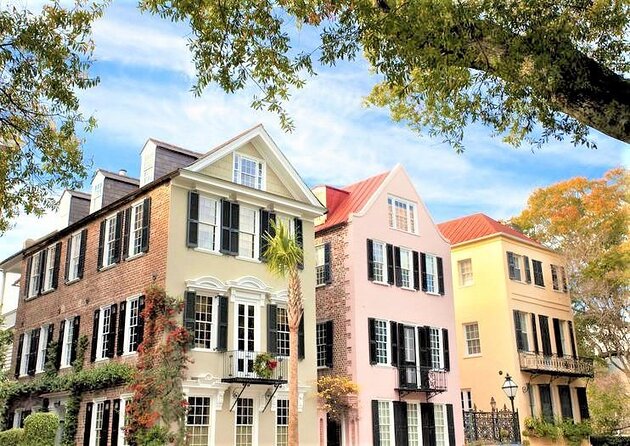
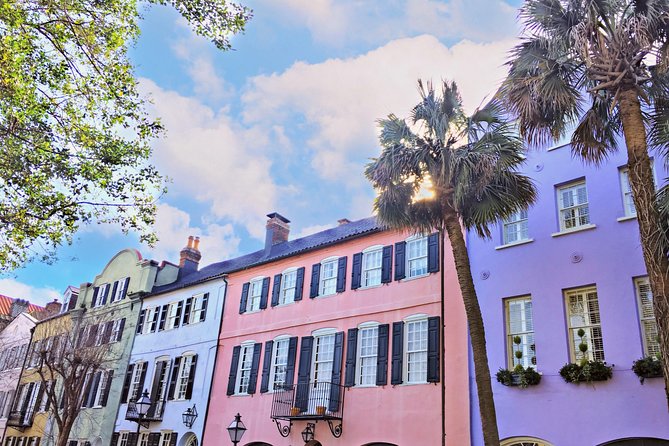
From the French Quarter, the route typically swings toward Rainbow Row, those 13 colorful waterfront houses that show up on nearly every Charleston photo. The value here isn’t just the picture spot; it’s the background you’ll get about what you’re looking at and where it sits in the neighborhood story.
Rainbow Row is part of the South of Broad area you’ll explore. The guide’s framing helps you understand why the homes line up so neatly and how the Battery area connects to both daily life and the broader shoreline geography. The tour also points out that you’ll learn about the homes along the waterfront, including antebellum-era mansions located along the famous Battery.
Short stop, big payoff. Ten minutes is enough time to get oriented, learn what makes Rainbow Row special, and take photos without losing your whole morning. If you’re the type who shoots first and reads later, this is the right order: learn the context while you’re still standing there.
If you’re timing your day, this is also where you’ll want to be ready for foot-traffic and tight sidewalks. That’s not a reason to skip; it’s a reason to keep your pace calm and your camera accessible.
White Point Garden and the Fort Sumter viewpoint over the water
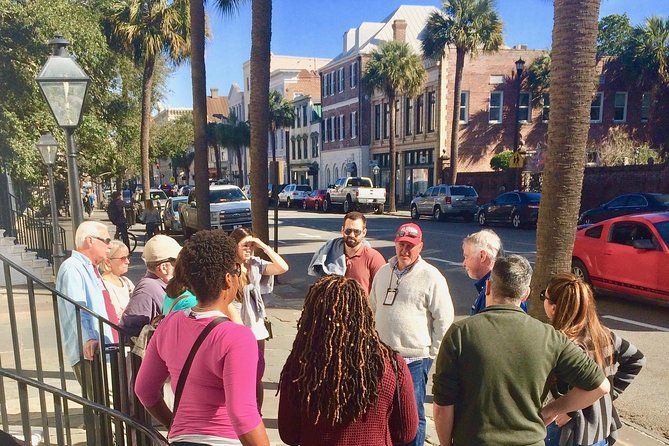
The tour’s final main stretch centers on South of Broad, including the Battery and White Point Garden. If you only do one Charleston walking experience, this is the part that helps you feel the place. The water-facing views over toward Fort Sumter are the payoff.
White Point Garden is described as being in the heart of the historic district, and the guide uses that position to connect Charleston’s land story to the coastal story. When you can see the direction of Fort Sumter, Charleston stops feeling like a set of buildings and starts feeling like a strategic port city.
The Battery segment is also important because it helps you understand how the city’s prominent homes and public edges face the water. Expect that the tour will not cover the entire length of the Battery. That’s okay. You’ll still get the main look-and-learn moments without turning this into an all-day endurance event.
This is the part that makes the tour a good first-timer move. You get the “where am I looking?” answer while you’re still close enough to remember the skyline geometry.
Guide energy and pacing: why the history sticks
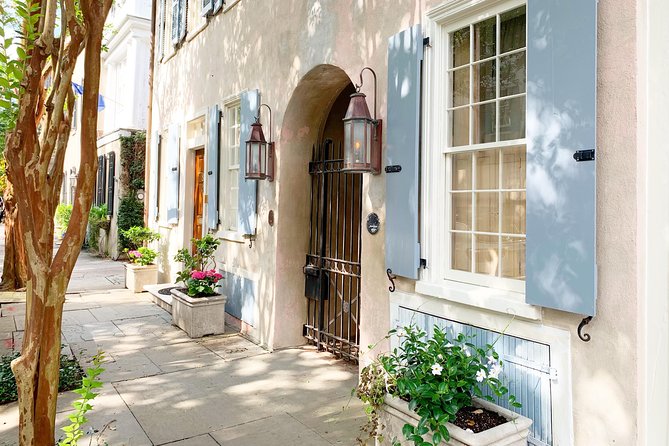
Here’s where this tour earns its strong ratings: the guiding style and pacing. Multiple guides are named in traveler feedback, and the common thread is that stories connect to buildings, not just dates on a timeline. Guides such as Evans Byrd (also listed as Evan Byrd), Al, Duggar, and Dennis come up repeatedly, often praised for clear explanations and humor.
What I think you’ll feel during the walk is this: the guide isn’t treating Charleston like a museum. They’re turning streets into cues. You’ll hear why certain homes look the way they do, and how architecture ties into events—Revolutionary War moments, the post–Civil War restoration of Charleston’s grandeur, and how storms and hurricanes have shaped repairs over time (this type of storm-and-rebuild angle shows up in named guide feedback).
The pacing is also repeatedly described as moderate—not a sprint, not a slow drag. In other words, you don’t want to arrive exhausted. This tour is set up as a 2-hour introduction, so you finish with enough energy left to explore on your own afterward.
Another practical bonus: several named guides are said to offer restaurant recommendations. Even if you already picked where to eat, that kind of real-time advice can help you adjust when you learn what’s nearby and what’s a pain to reach.
Also, since the tour runs in all weather conditions, your guide’s tone matters. When it’s cold, a funny, moving guide helps. When it’s hot, a guide who keeps breaks and pace in mind helps. Either way, the day still functions.
You can also read our reviews of more guided tours in Charleston



Price and value: why $30 makes sense for a 2-hour city primer
At $30 per person for about two hours, this isn’t a luxury experience—it’s a high-value way to get oriented fast. Here’s what you’re paying for:
- A professional and licensed local guide who explains what you’re seeing
- A focused route across landmark clusters (City Hall, French Quarter, Rainbow Row, South of Broad)
- A small group limit (maximum 20), which keeps questions possible
- A walking format that helps you build a mental map quickly
Is it possible to do Charleston on your own? Yes. But you’ll miss the why. Charleston’s streets look calm, yet the city’s past is layered. A guide helps you connect names, institutions, and architecture to real events—especially at stops like Slave Mart Museum and St. Michael’s Church.
Where the price logic may not fit you: if you dislike walking, or if you prefer deep museum time rather than outdoor civic and neighborhood storytelling. Also, because some stop details vary by guide, you might want a flexible mindset. You’re buying the tour theme and route flow, not a guaranteed exact repeat of every exterior view.
Still, for a first or second day in Charleston, this price typically feels like a good trade: you invest a couple hours now, then you travel smarter afterward.
Getting ready: water, restroom timing, and comfortable shoes
This tour is outdoors and weather runs the show. The operator notes it operates in all weather conditions, but tours may cancel in potentially dangerous conditions. So you’ll want to check the forecast and be ready to adapt.
Bring a water bottle. Water is not provided, and the tour notes that there are very few places to purchase water along the route. In summer, this turns from a comfort issue into a safety issue.
Use the restroom before you start. There are no public restrooms along the tour route. That’s a small instruction, but it can save you from an annoying interruption right when your guide is hitting key story points.
Wear comfortable shoes. The route is described as an easy walk by at least some visitors, with no hills mentioned in feedback. Still, Charleston sidewalks can be uneven, and you’ll be in motion for about two hours.
Arrive early. You’re asked to arrive 15 minutes prior, since tours begin promptly. If you’re habitually late, build extra time.
If you like digital convenience, you’ll get a mobile ticket. It’s small, but it cuts friction when you’re in a busy downtown area.
Logistics that keep the day smooth: departures, meeting point, and parking
The tour has numerous departure times, which helps if you’re juggling other Charleston plans. It’s commonly booked ahead (about 14 days in advance on average), so if you’re traveling in a busy season, lock in a time that fits your energy level.
Meeting is clearly set at 80 Broad St. The end location can vary depending on the route taken, but you can request that the guide walks you back to the start.
Parking isn’t handed to you, but downtown options exist. The tour info recommends a garage at 85 Queen Street. If you’re “pay as you go” parking friendly, that’s a useful anchor.
Public transportation is nearby, so if you don’t want to deal with downtown driving, you can keep your focus on the walk instead of parking math.
Service animals are allowed, and the tour notes that most participants can join. If you have mobility limits, the safest plan is to choose footwear, pace, and timing that match your comfort—this is a city-walking experience.
Should you book the Historic Charleston guided walking tour?
If you want a fast, organized introduction to Charleston’s major neighborhoods—French Quarter, Rainbow Row, and South of Broad—this tour is a strong pick. It’s especially worth booking if you like your history told through real streets and buildings, and if you want the Fort Sumter viewpoint woven into the route rather than tacked on later.
I’d skip or swap to something else if you hate walking, want a museum-heavy schedule, or prefer to read on your own with no guide. Also, if you only want upbeat postcard moments, the inclusion of Slave Mart Museum makes this a fuller, more honest experience—and that may or may not be your goal.
If you’re making plans for your first day in Charleston, book this early. You’ll finish with a clearer sense of direction, a better sense of context, and a route style that makes it easier to explore the rest of the city afterward.
FAQ
Where does the tour start?
The tour starts at 80 Broad St, Charleston, SC 29401.
How long is the Historic Charleston walking tour?
It runs for about 2 hours.
Is the tour guided, and what language is it in?
Yes. It includes a professional and licensed local guide, and it’s offered in English.
What kinds of stops will I see?
You’ll visit major landmarks including Charleston City Hall, French Quarter sites such as Dock Street Theatre and churches, Rainbow Row, and South of Broad areas such as the Battery and White Point Garden. Stops may vary by guide.
Is admission included for the stops?
Admission is not included for some stops. The Dock Street Theatre stop is listed as free, while other stops note admission ticket not included.
Do I need to bring water?
Yes. Water is not provided, and there are very few places to buy water during the walk. Bring a water bottle.
Will the tour run in bad weather?
It generally operates in all weather conditions, but it may cancel in potentially dangerous weather. If that happens, you’ll be offered a different date or a full refund.
What is the group size?
The tour has a maximum of 20 travelers.
Is there parking near the meeting point?
There are nearby parking garages and lots. A recommended option is the parking garage at 85 Queen Street.
Do I need to plan for restroom access?
Yes. You’re advised to use the restroom prior to the tour, because there are no public restrooms along the tour route.