REVIEW · CHARLESTON
Charleston historical walking tour with a Professor of History at The Citadel
Book on Viator →Operated by Charleston History Walk by Eric Lager, Ph.D. · Bookable on Viator
Charleston history walks fast. This small-group tour pairs a Professor of History with a tight route through key sites, so you leave with names, dates, and meaning—not just pretty buildings. I love the small group of no more than 12, because you can actually hear the guide and ask follow-ups. I also like that the tour runs across centuries of the city’s story, with Eric Lager, Ph.D. from The Citadel leading the discussion. One thing to consider: the pace is built for seeing a lot in about 3 hours, so you’ll want comfy shoes and a willingness to keep moving.
You start downtown near Meeting Street and finish on the Battery near Rainbow Row, with a series of stops that mix exterior viewpoints and places where the tour includes admission fees when listed as free. Most stops are short, so you get a steady stream of context—Civil War signals, Revolutionary-era politics, church history, and even the architectural “why” behind the city’s look. You’ll walk Charleston’s historic core, and you’ll come out better at reading what you see on your own.
In This Review
- Key takeaways before you book
- Why a Citadel professor changes the whole tour
- Price and time: is $40 a good value?
- The route: from 108 Meeting St to the Battery by Rainbow Row
- Stop-by-stop: what each landmark adds to Charleston’s story
- Stop 1: Mills House Hotel (Civil War role)
- Stop 2: Dock Street Theater (first theatre in North America)
- Stop 3: Pink House Gallery (built around 1712)
- Stop 4: Washington Square (monuments and memory)
- Stop 5: Charleston City Hall (a former meat market and bank)
- Stop 6: Charleston County Courthouse (old statehouse)
- Stop 7: St. Michael’s Church (completed in 1761)
- Stop 8: Heyward-Washington House (George Washington, 1791)
- Stop 9: Old Exchange & Provost Dungeon (British public building, Constitution ratified)
- Stop 10: French Huguenot Church (French Huguenot story, Gothic Revival)
- Stop 11: French Quarter (charm, plus what the charm hides)
- Stop 12: Hibernian Hall (Greek Revival connection and seeds of disunion)
- Stop 13: Fort Sumter National Monument (view from the Battery)
- The small-group feel: questions, pacing, and hearing the story
- Practical tips so you get the most out of the walk
- Who this tour is for (and who should skip it)
- Should you book the Charleston History Walk with Eric Lager, Ph.D.?
- FAQ
- How long is the Charleston historical walking tour?
- What is the group size limit?
- Is the tour offered in English?
- What does the price include?
- Are admissions included for all stops?
- Where do you meet and where does the tour end?
- Is bottled water included?
- What should I know about cancellations?
- Is the tour suitable for everyone physically?
- Can I bring a service animal?
Key takeaways before you book
- A Ph.D. historian at The Citadel as your guide: you’re getting a research-minded take, with room for questions.
- Max 12 people: the group size is small enough that the narration doesn’t get lost.
- A single, practical route: Meeting Street to the Battery means you cover a lot of ground without hopping around.
- Frequent stops, short talks: you get multiple eras in one morning/afternoon block.
- Admission notes are clear: several stops are listed as free for the tour, while a few are not included.
- Fort Sumter view without the crowds: you look from the Battery instead of going out to the fort.
Why a Citadel professor changes the whole tour
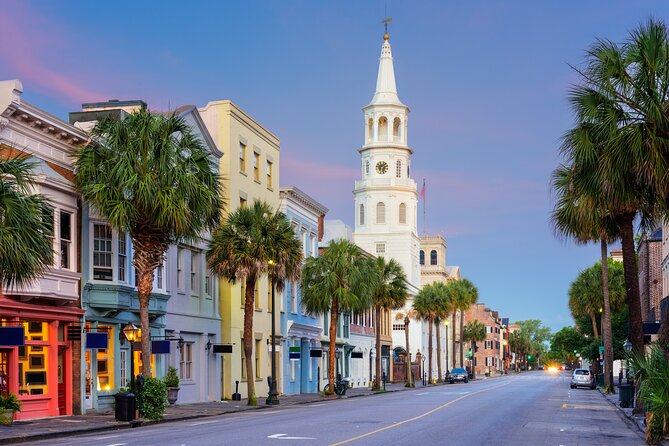
This isn’t the usual “Here’s a building, it’s old, move along” style. What you’re paying for is a guide who can connect Charleston’s streets to bigger stories—Revolution, early America, the Civil War, and the political ideas that shaped the South. Eric Lager, Ph.D., a professor at The Citadel, brings that academic lens in a way that still feels like a conversation, not a lecture you have to survive.
The best part is how the tour keeps context close to the curb. When you hit a church, you don’t just get the facts of dates and architecture. You also get the why behind the choices people made and how those choices show up later in Charleston’s political and cultural life. When you stand in civic spaces, you hear how power and public life evolved over time—sometimes with surprising turns (like buildings changing roles).
And you can feel the intention behind the format. With a maximum of 12 people, the guide can respond to your questions instead of rushing past them. That matters in Charleston because the city rewards people who notice small details—an inscription, a style choice, a street layout. A history professor has the tools to explain what those details are telling you.
You can also read our reviews of more walking tours in Charleston



Price and time: is $40 a good value?
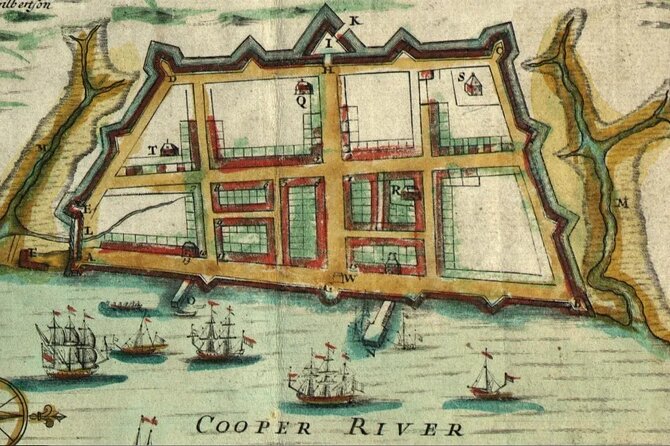
At $40 per person for about 3 hours, the value comes down to two things: the guide and the focus. You’re not just buying admission to a handful of stops. You’re buying a structured walk through the historic core, guided by someone trained to interpret history—not just repeat it.
Also, many stops are listed with free admission tickets as part of the tour. That’s a quiet win for your budget: you’re less likely to hit “surprise fees” at each stop. A few stops are marked as not included, so you may decide whether to pay for entry depending on your interests, but the tour still gives you the historical framing either way.
For what you cover—multiple landmarks, a tight time window, and a coherent timeline—the price feels fair for a city tour. It’s especially strong if you’re history-first. If you’re looking mainly for scenic photo stops with minimal walking, this may feel too focused. But if you want meaning, names, and cause-and-effect, $40 is the kind of spend that pays back the rest of your trip.
The route: from 108 Meeting St to the Battery by Rainbow Row
You meet at 108 Meeting St, Charleston, SC 29401, and you end at 39 E Battery, near the Rainbow Row area. That end point is smart. The Battery area is where you can keep exploring without needing a ride right after the tour.
The walking is described as suitable for travelers with a moderate physical fitness level. That usually means: expect steady walking, short stops, and some time outside. Bring good shoes. Bring sun or rain protection. Even if you’re only stopping for 5 to 15 minutes at each place, the hours add up fast.
This is also set up for small-group listening. With up to 12 travelers, you’re not stuck behind people who are blocking your view of the guide. That doesn’t just help with comfort. It improves the quality of the tour—when you can hear clearly, you retain more, and the history lands better.
And since it’s offered in English with a mobile ticket, you’ll have what you need without extra paperwork. Confirmation is received at booking, and service animals are allowed.
Stop-by-stop: what each landmark adds to Charleston’s story
Below is the sequence you’ll experience, along with what each stop tends to mean on a real history-first tour.
Stop 1: Mills House Hotel (Civil War role)
You begin at the Mills House Hotel area, where you’ll hear how the hotel ties into early American Civil War history. This opening sets the tone: Charleston isn’t presented as frozen in time. It’s presented as a city shaped by conflict and strategy, where even later landmarks have earlier layers.
Why it works for you: it trains your brain early. After this, every building you see has more than one “job” across time.
You can also read our reviews of more historical tours in Charleston





Stop 2: Dock Street Theater (first theatre in North America)
Next is Dock Street Theater. The story here is about the first theatre built in North America, plus the colorful, infamous characters linked to its history. It’s a sharp pivot from military and civic themes to public life—what people gathered to watch, who had influence, and how culture operated in the city.
Possible consideration: theatre history can go fast because the stop is brief. If you’re the type who loves follow-up reading, jot down questions during the walk.
Stop 3: Pink House Gallery (built around 1712)
You stop at the Pink House Gallery, one of the oldest Charleston buildings dating to around 1712. This is a quick hit of early colonial-era context. It’s also a reminder that Charleston’s “old” doesn’t mean uniform—different neighborhoods and eras overlap.
Why you’ll like it: it gives you a visual anchor for the early part of the city’s timeline.
Stop 4: Washington Square (monuments and memory)
Washington Square is where you slow down slightly. This stop focuses on a historic square with multiple monuments. The guide ties those memorial choices to the bigger question: who gets remembered, and why?
What to pay attention to: look at how the square’s layout supports public gathering, then connect it to the eras you’ve already covered.
Stop 5: Charleston City Hall (a former meat market and bank)
At Charleston City Hall, you learn how the building’s roles shifted over time—first serving as a meat market and bank before becoming City Hall. That’s a real “Charleston logic” lesson: institutions evolve, and buildings often get reused instead of erased.
Why it matters: it helps you read the city as a living system, not a museum.
Stop 6: Charleston County Courthouse (old statehouse)
The Charleston County Courthouse stop explains what was once the old South Carolina statehouse. This is where civic power enters the conversation in a more direct way: government isn’t just laws and paperwork. It’s tied to place.
Stop 7: St. Michael’s Church (completed in 1761)
St. Michael’s Church comes next, with a focus on Charleston’s oldest church edifice, completed in 1761. Churches in Charleston aren’t just places of worship; they’re also landmarks of community identity, architecture, and social history.
Good to know: even when you only have about 10 minutes, this is the kind of stop where a guide can point out what you might miss if you stroll past on your own.
Stop 8: Heyward-Washington House (George Washington, 1791)
You’ll see where George Washington stayed while visiting Charleston in 1791. The tour lists admission here as not included, so you may choose not to enter depending on timing and interest.
Why this still matters even if you skip entry: it’s a specific, high-signal historical detail. Washington’s presence turns the surrounding setting into a chapter of early national history.
Stop 9: Old Exchange & Provost Dungeon (British public building, Constitution ratified)
This stop centers on the last public building built by the British in North America and on the site where the Constitution was ratified in 1788. Admission is also not included here.
This is one of those “Charleston punched above its weight” moments: it signals how important the city was during critical political turning points. Even if you’re not a constitutional history nerd, the guide’s framing helps you understand why this building mattered.
Stop 10: French Huguenot Church (French Huguenot story, Gothic Revival)
You move to the French Huguenot Church, hearing about the French Huguenots in Charleston and the fact that this church was the first built in the Gothic Revival style. It’s a cultural-and-architectural stop that widens the story beyond politics.
Why you’ll feel the difference: this is where Charleston starts to look less like a single-note “Southern city” and more like a place shaped by immigrant communities and global influences.
Stop 11: French Quarter (charm, plus what the charm hides)
In the French Quarter, the tour leans into beauty and charm—but with context. The guide can connect the neighborhood’s look to the people who built and shaped it.
Tip for you: walk slowly here. This is the stop where you’ll be most tempted to photograph. Do it, but keep listening for the “what this says about the city” points.
Stop 12: Hibernian Hall (Greek Revival connection and seeds of disunion)
Hibernian Hall is another architecture-linked story, tied to Greek Revival design and the seeds of disunion. Admission is not included here.
This is a clever pairing: the guide uses architecture as a way to talk about ideology. That’s when the tour becomes more than sightseeing—it becomes interpretation.
Stop 13: Fort Sumter National Monument (view from the Battery)
You finish with Fort Sumter National Monument by looking at it from the Battery on Charleston Harbor rather than going out to the fort. The tour notes admission is not included.
Even from a distance, this stop lands hard. It’s one of the most recognizable Civil War touchpoints in the city, and the view from the Battery keeps the tour efficient while still giving you that “I get it now” feeling.
The small-group feel: questions, pacing, and hearing the story

The tour’s small-group size is one of its biggest selling points for a practical reason: it’s easier to hold a dialogue. With no more than 12 travelers, the guide can pivot when someone asks a question that matters to the group. That’s why people come away feeling like they didn’t just receive information—they got answers tailored to what they cared about.
The style also seems built for momentum. Stops are short—often 5 to 15 minutes—so you get continuous variety: buildings, streets, civic institutions, faith communities, and the events that shaped the nation.
If you like asking questions, this is a strong match. If you dislike walking for 3 hours and just want to sit, you may find the format a bit intense. But if you want a guided “course” through Charleston’s core, the pace helps you keep the timeline straight instead of wandering into random facts.
Practical tips so you get the most out of the walk
A few practical things make this tour smoother:
- Bring water or plan to buy some nearby. Bottled water is not included.
- Wear comfortable shoes. You’ll be on foot for the duration, with multiple stops.
- Check the weather mindset. The tour is described as requiring good weather. If it’s canceled due to poor weather, you’ll be offered another date or a full refund.
- Keep an eye on admission notes. Several stops list free admission tickets, while Heyward-Washington House, Old Exchange & Provost Dungeon, Hibernian Hall, and Fort Sumter are marked as not included. If you want to go inside those, budget time and money accordingly.
- Use the mobile ticket. It’s part of how you access the experience.
One more smart move: do this early in your Charleston days. The tour covers a lot of the historic core and the political and architectural logic behind it, so you’ll start recognizing patterns when you walk the streets later on your own.
Who this tour is for (and who should skip it)
Book this if you’re a history-first traveler. You want context. You like architecture-as-clue. You care about what happened and why it affected daily life, not just the fact that an old building still exists.
It’s also a good choice if you want a group that stays small. With a maximum of 12 travelers, you’ll likely get a more personal experience than the big-bus style tours.
Skip this if you mainly want casual sightseeing with minimal walking and minimal talking. This is designed for a history lesson delivered on the move. You’ll enjoy it most if you’re ready to listen and keep walking.
Should you book the Charleston History Walk with Eric Lager, Ph.D.?
If you’re deciding between a generic Charleston tour and one that treats the city like a set of connected stories, I’d lean toward this one. The combination of a Professor of History (Eric Lager, Ph.D. at The Citadel), a small group up to 12, and a route that moves from civic spaces to churches to Civil War landmarks is exactly the kind of value that makes a first visit click.
One last reason to book: a lot of the tour’s power is in how it explains meaning. When the story is told by someone who can connect eras—Revolution to Civil War and beyond—you end the walk seeing Charleston more clearly. If that’s what you want from your time in town, this is a strong choice.
FAQ
How long is the Charleston historical walking tour?
It runs for approximately 3 hours.
What is the group size limit?
The tour has a maximum of 12 travelers.
Is the tour offered in English?
Yes, it is offered in English.
What does the price include?
The tour price includes all fees and taxes.
Are admissions included for all stops?
Not all stops are fully included. Several stops list free admission tickets, while some stops are marked as admission ticket not included.
Where do you meet and where does the tour end?
You start at 108 Meeting St, Charleston, SC 29401, and end at 39 E Battery, Charleston, SC 29401 near Rainbow Row.
Is bottled water included?
No, bottled water is not included.
What should I know about cancellations?
You can cancel for a full refund if you cancel up to 24 hours in advance. If it’s canceled due to poor weather, you’ll be offered another date or a full refund.
Is the tour suitable for everyone physically?
It’s recommended for travelers with a moderate physical fitness level.
Can I bring a service animal?
Yes, service animals are allowed.