REVIEW · CHARLESTON
Lost Stories of Black Charleston Walking Tour
Book on Viator →Operated by Tour Charleston, LLC · Bookable on Viator
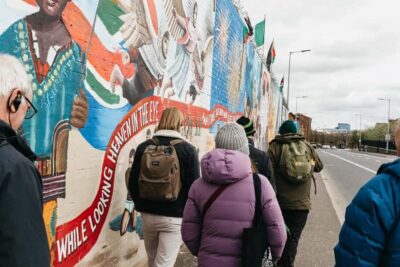
This walk tells Charleston from a missing angle. You’ll hear lost stories of Black Charleston threaded through real downtown sites, with Damon Fordham blending history and personal perspective in a way that’s hard to forget. Expect stops tied to daily life, big national culture, and the brutal parts of the city’s past.
I especially love the way the tour sticks to places you can actually see—from the Charleston City Market area to the Old Slave Mart Museum—so the stories don’t float above the street. Second, I like the guide’s mix of education and performance, including his engaging, sometimes musical, delivery, plus plenty of time for questions in the group.
One consideration: the subject matter is heavy and the guide’s style can come off firm. If you prefer a softer tone when emotions run high, you may want to go in with that in mind.
In This Review
- Key highlights that make this tour worth your time
- Lost Stories of Black Charleston: what makes it different on foot
- Damon Fordham’s role: writer-historian educator with real stage presence
- The route in plain English: City Market to the Harbor
- Charleston City Market and the Catfish Row connection
- Heyward-Washington House: a signer’s house, seen through another lens
- Old Slave Mart Museum: the stop that changes how you see the street
- Waterfront Park and the harbor walk: from slavery through civil rights
- The Mother Emanuel A.M.E. Church thread you’ll hear along the way
- Price and value: $39 for two hours, plus a couple admission calls
- Who should book this walking tour (and who might want a different day)
- Practical tips for a 3:30pm walking tour in Charleston
- Should you book Lost Stories of Black Charleston?
- FAQ
- How long is the Lost Stories of Black Charleston walking tour?
- Where does the tour start?
- Is the tour offered in English?
- What sites will I see during the walk?
- Are admission tickets included for Heyward-Washington House and Old Slave Mart Museum?
- Is there a group size limit?
- Do I need a printed ticket?
- Can children join the tour?
- What is the cancellation and refund window?
- What happens if the tour is canceled due to weather?
Key highlights that make this tour worth your time
- Damon Fordham’s storytelling: author and educator style with strong narrative flow and humor
- Real downtown stops: City Market, Catfish Row area, Heyward-Washington House, Old Slave Mart Museum, Waterfront Park
- A clear historical through-line: slavery → Reconstruction → civil rights, with stories beyond what you’ll guess on your own
- Small group size: capped at 20 travelers for a more human, question-friendly feel
- Good value for the length: $39 for about 2 hours of guided walking and on-the-ground context
- Mobile ticket and an easy start/end point at Buxton Books
Lost Stories of Black Charleston: what makes it different on foot
If you’ve visited Charleston before, you probably know the classic photo stops: pretty streets, grand homes, and familiar landmarks. This walking tour takes the same downtown layout and uses it like a classroom—one where the lessons are the ones that too often get skipped.
You’ll walk for about 2 hours, starting at 3:30pm at Buxton Books, 160 King St. The pacing is built around listening, not rushing, and the route connects neighborhood landmarks to the people who lived through the city’s defining shifts.
What I find especially smart is the tour’s focus on continuity. It isn’t just isolated facts about the distant past. Instead, it moves from slavery to Reconstruction and civil rights, so you leave with a sense of how history keeps shaping what comes next.
You can also read our reviews of more walking tours in Charleston


Damon Fordham’s role: writer-historian educator with real stage presence
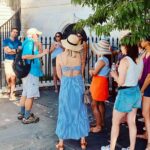
The tour’s core strength is the guide. Damon Fordham is described as a writer, historian, educator, and licensed tour guide, and the way people talk about the experience points to a specific talent: he can hold a group’s attention while still giving solid, researched material.
You’ll feel that in the structure of the walk. He combines historical facts with personal perspective, so the stories land with more weight than standard walking-tour narration. Some of the praise also mentions humor and even musical touches, including time on a melodica, which gives certain moments a memorable rhythm instead of turning them into lecture mode.
The practical takeaway for you: if you want a guide who can answer follow-up questions and keep the tone engaging, this is built for you. And if you’re expecting a gentle, passive “just facts and photos” tour, you might find it more forceful than that.
The route in plain English: City Market to the Harbor
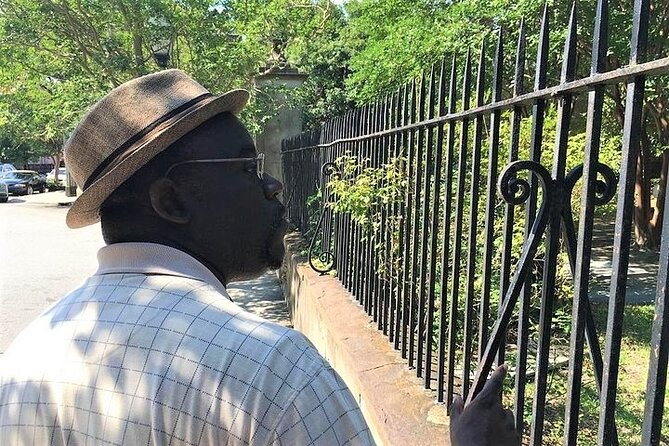
This is a downtown walking route that stays mostly in the city’s historic core, finishing back near where you started. The timing is set so you’re out in the afternoon light for a lot of the walk—though you’ll still spend time standing in place while the stories unfold.
The walk is arranged around key checkpoints. You begin at the Charleston City Market area and move through sites connected to Black life and broader American culture. Then you shift into two major “you can’t ignore this” stops: the Heyward-Washington House area and the Old Slave Mart Museum. Finally, you head into Waterfront Park and finish along the harbor area.
A big part of the value here is that you aren’t just seeing names on plaques. You’re moving along a timeline, and the guide ties each location to the larger story of how Charleston’s Black communities were forced to navigate (and resist) the city’s changing rules.
Charleston City Market and the Catfish Row connection
The tour kicks off at the Charleston City Market, described as a historic marketplace in downtown Charleston. This is a smart opening stop because it starts where ordinary life and commerce overlap with history.
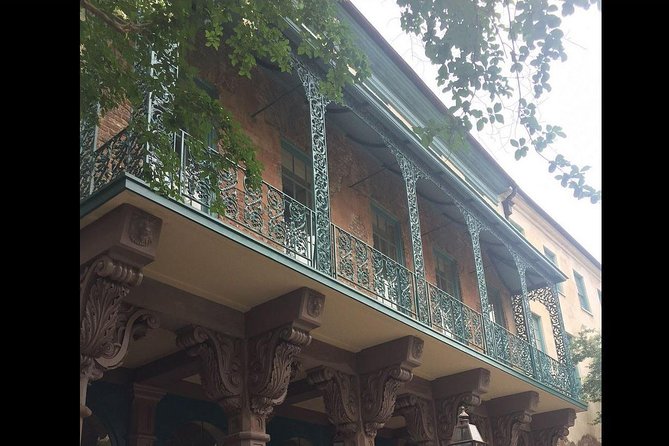
From there, you’ll move toward key cultural touchpoints in the downtown grid. The tour specifically calls out the Jehu Jones Hotel site and Catfish Row, noted as the setting associated with the opera Porgy and Bess. This matters because it reframes popular culture as an entry point—not a replacement for real history.
When you’re walking these blocks with a guide, you can notice how the built environment shapes what’s remembered. The market area gives you context for everyday Charleston, then the narrative shifts to sites where Black history is either tucked away—or falsely minimized by the usual tour script.
Heyward-Washington House: a signer’s house, seen through another lens
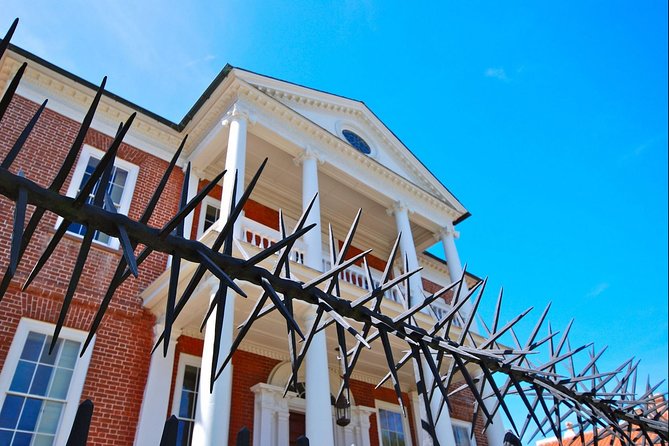
One of the stops you pass is the Heyward-Washington House, associated with Thomas Heyward Jr., a signer of the United States Declaration of Independence. You’ll spend a short time here—about 10 minutes—mostly as a close look from the street and a story connection.
This stop is valuable because it forces you to hold two ideas at once. You’re learning about a famous name in American history, but the guide’s framing brings you back to the city realities underneath those achievements.
Also note the practical piece: admission is not included for the Heyward-Washington House. The time you get is short, so treat this as a “see it, learn it, and decide later” moment rather than a guaranteed full museum visit.

Old Slave Mart Museum: the stop that changes how you see the street
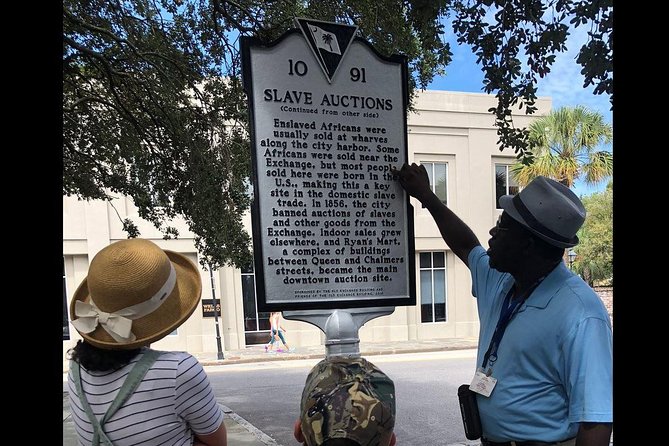
If your goal is understanding, this is the pivot. The tour includes time at the Old Slave Mart Museum, described as the building that once held slave auction galleries in downtown Charleston, with about 15 minutes spent there.
This is one of those sites where the story is not abstract. The tour’s format helps you confront what happened in a way that matches the location’s purpose—so you don’t just hear about slavery as a concept. You see it tied to a specific building in a specific place in the city.
Again, there’s a practical note: admission is not included here. If you want deeper time inside the museum, you’ll likely need to plan for separate entry. Either way, even the time outside (and the guide’s framing) is designed to make you understand why this address can’t be treated like just another stop on a “best-of” list.
Waterfront Park and the harbor walk: from slavery through civil rights
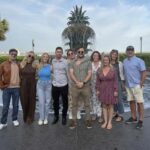
After the harder historical stop, the tour broadens into a larger historical arc at Charleston Waterfront Park. This portion runs about 30 minutes, and it’s where the guide’s narrative seems to pull threads together.
The tour specifically describes a walk that traces the path from slavery through Reconstruction to civil rights. That’s not just a catchy phrase. It tells you the tour isn’t ending at the moment the country “changed.” It’s showing how people kept dealing with power, rights, and exclusion as history moved forward.
You’ll also move toward the harbor area and the waterfront setting is part of the contrast. The landscape can look peaceful, but the stories you’re hearing aren’t. That tension is exactly what makes the moment hit: the city’s waterfront beauty doesn’t erase the past; it sits next to it.
The Mother Emanuel A.M.E. Church thread you’ll hear along the way
The tour includes stories tied to Mother Emanuel A.M.E. Church, described as stories that have faded from memory over the centuries. You may notice this shows up as a recurring emotional anchor during the walk, connecting past events to the way communities remember, grieve, and persist.
Even if you don’t come in already familiar with every detail, the way the tour is built helps you follow the meaning. It’s not about name-dropping. It’s about showing how Black Charleston’s history is carried through places of worship, community leadership, and lived experience.
That connection is also part of why the tour doesn’t feel like a checklist. It feels more like a guided way to see the city’s memory system—who gets remembered, who gets edited out, and what it takes to bring those voices back.
Price and value: $39 for two hours, plus a couple admission calls
At $39 per person for about 2 hours, this tour sits in the sweet spot between “short and generic” and “full-on museum day.” You’re paying for guided walking time, a licensed and credentialed guide, and a route with multiple major downtown reference points.
Two practical value points to keep in your planning:
- The Charleston City Market and Waterfront Park stops are noted as free (no admission ticket required).
- Heyward-Washington House and the Old Slave Mart Museum list admission tickets not included, so you should expect there may be extra cost if you want entry.
That doesn’t make the tour a bad deal. It just means you should decide what you want from those sites. If you prefer learning through the street-level look and narration, the $39 may feel more than enough. If you want museum time on top of the guided stops, budget for separate tickets.
Who should book this walking tour (and who might want a different day)
This tour is ideal if you want Charleston in a fuller-spectrum way—especially if you care about how Black communities shaped the city and how that history is treated in public memory.
It’s a strong fit for:
- History-minded travelers who want context, not just photos
- People who like story-led tours with time to ask questions
- Couples and small groups who want an organized walk without switching between multiple venues
It may be less ideal if:
- You want a relaxed, casual narration where the guide never corrects or refocuses the group
- You’re sensitive to emotionally intense topics and prefer a gentler pace
One more practical fit note: the group max is 20. That usually helps the experience feel personal, but it also means you’ll be part of a shared conversation where the guide controls the flow of attention.
Practical tips for a 3:30pm walking tour in Charleston
Because this is a walking tour, a few comfort basics matter.
- Wear supportive shoes. You’ll be moving through historic streets and standing during story moments.
- Plan for heat and humidity. You’ll be out in the afternoon, and one review note specifically mentioned that it can be worth it even in the heat.
- Bring a small water strategy. The tour itself doesn’t list drinks or breaks, so it’s smart to come prepared.
- Check your weather tolerance. The experience requires good weather, and if it’s canceled for poor conditions you’ll be offered a different date or a full refund.
Also, the tour uses a mobile ticket and is offered in English, so make sure your phone battery is ready before you head to the start.
Should you book Lost Stories of Black Charleston?
I think this is a top pick if you want Charleston history that doesn’t stop at the postcard version. With 4.9 out of 5 and a 98% recommendation rate, it’s clearly landing for people who value guided explanation, strong storytelling, and on-the-ground context.
Book it if you:
- want a guided route through major Black-history landmarks in downtown Charleston
- like story-driven narration with a smart, credentialed guide
- are okay paying some extra admission if you choose to go into the paid sites
Pass or consider another option if you:
- dislike firm, direct guiding styles
- want a light, purely scenic walking tour without heavy subject matter
- can’t handle standing time and limited break moments
Overall, this tour feels built for people who want to understand the city’s past and how it still presses into the present—one block at a time.
FAQ
How long is the Lost Stories of Black Charleston walking tour?
It lasts about 2 hours.
Where does the tour start?
You meet at Buxton Books, 160 King St, Charleston, SC 29401, at 3:30pm.
Is the tour offered in English?
Yes, it is offered in English.
What sites will I see during the walk?
You’ll walk by the Charleston City Market area, the Jehu Jones Hotel site, Catfish Row, the Heyward-Washington House, and the Old Slave Mart Museum, then finish along Waterfront Park and the harbor.
Are admission tickets included for Heyward-Washington House and Old Slave Mart Museum?
No. Admission for those two stops is not included.
Is there a group size limit?
Yes. The tour caps at a maximum of 20 travelers.
Do I need a printed ticket?
No. The tour uses a mobile ticket.
Can children join the tour?
Children must be accompanied by an adult.
What is the cancellation and refund window?
You can cancel for a full refund up to 24 hours in advance. If you cancel less than 24 hours before the start time, the amount paid is not refunded.
What happens if the tour is canceled due to weather?
If it’s canceled due to poor weather, you’ll be offered a different date or a full refund.