REVIEW · ROME
Rome Evening Panoramic Walking Tour Including Trevi Fountain and Spanish Steps
Book on Viator →Operated by Your Way Tours · Bookable on Viator
Rome glows better after dark. I love the sunset viewpoint from Terrazza del Pincio and the slow, photo-friendly pause at Trevi Fountain. This small-group evening walk stitches together Rome’s most famous squares in time for that sweet hour when monuments look cinematic.
The big watch-out is simple: timing and meeting points matter. If you show up late or expect a lot of extra time at each stop, you may feel a little squeezed, especially around the Spanish Steps and during busier evening moments.
In This Review
- Key points worth planning for
- Why this Rome sunset route is a smart first-night move
- Piazza del Popolo: meet the city where it once went dark
- Terrazza del Pincio: the sunset payoff over Rome’s rooftops
- Spanish Steps and the Barcaccia fountain: iconic, but don’t over-plan
- Trevi Fountain at dusk: Baroque drama with better mood
- Pantheon exterior and Piazza della Rotonda: history you can feel in your feet
- Piazza Navona after dark: Bernini’s Four Rivers in motion
- Campo de’ Fiori: the best kind of ending, right where Rome continues
- What you can expect from the guide and the group size
- Timing, walking pace, and how to dress for a 7 pm start
- Price and value: is $42.24 worth it?
- Possible hiccups to keep in mind before you go
- Should you book this Rome evening panoramic walk?
- FAQ
- What is the meeting point for the tour?
- Where does the tour end?
- How long is the Rome evening walking tour?
- What time does the tour start?
- What’s included in the price?
- Are food and drinks included?
- What language is the tour offered in?
- Is the tour dependent on weather or minimum group size?
Key points worth planning for
- Terrazza del Pincio gives you a classic rooftop-and-skyline payoff before the crowds thicken.
- Spanish Steps + Bernini’s Barcaccia fountain are quick but iconic, and the area is fun even if you only have one round.
- Trevi Fountain at dusk feels different than daytime, with fewer people jammed in for every angle.
- A small group (up to 18) means you’re less likely to get lost and more likely to hear the guide.
- A guide-driven route helps you connect the dots between Rome’s ancient, Baroque, and everyday street life.
- Campo de’ Fiori is the practical end point to keep going after the tour.
Why this Rome sunset route is a smart first-night move
If your Rome game plan is mostly first-timers: day sights, then an evening reset. This tour fits that. In about 3 hours, you walk a line of landmarks that normally take a lot of planning and backtracking.
I like that it’s built for the light. You’re not racing through stone in the heat; you’re using the evening glow to make places feel more personal. It also gives you orientation. Once you’ve walked Piazza-to-piazza with a guide, you start recognizing what’s around the corner, not just what’s on postcards.
And yes, price matters. At $42.24 per person, you’re paying for a professional guide plus an efficient route through major squares, with headsets when needed and a group kept to 18 or fewer. For many visitors, that’s cheaper than paying for separate taxis or trying to stitch together multiple paid experiences on your own.
One note before you go: you’ll be walking. This isn’t a sit-down show. Bring comfortable shoes and be ready to move.
You can also read our reviews of more walking tours in Rome
Piazza del Popolo: meet the city where it once went dark
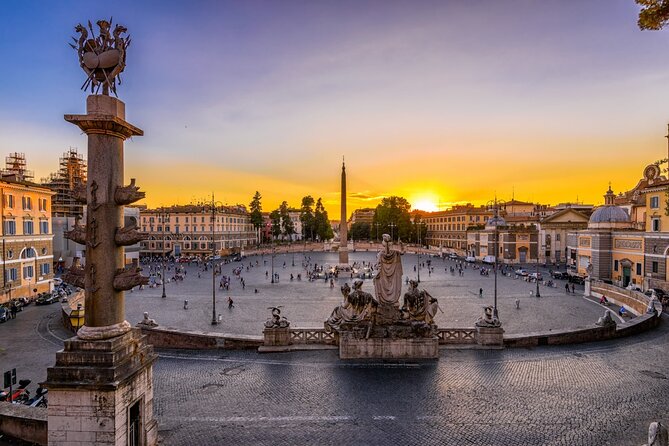
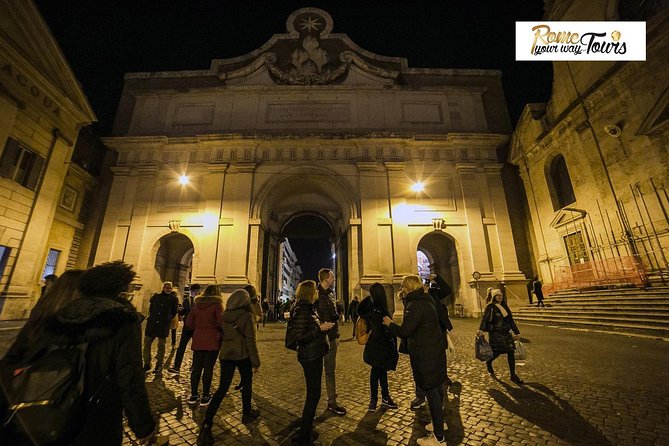
The tour starts at Piazza del Popolo, at the Basilica Parrocchiale di Santa Maria del Popolo. The square looks like a lively “front door” to Rome, but the guide framing matters here. Historically, the area has been associated with public executions, so the stories create a darker thread running through the beauty.
At 7:00 pm, it’s a good moment to meet. The square is active enough to feel alive, but not so packed that you’re fighting your way to the right spot. This stop is short—about 20 minutes—so think of it as a warm-up: get your bearings, learn the “why” behind the setting, then head out while the sky is still changing.
Practical tip: arrive a bit early and stand where the group actually forms. A few minutes of delay can be the difference between a smooth start and a stressful one.
Terrazza del Pincio: the sunset payoff over Rome’s rooftops
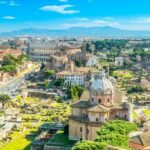
Next comes the Pincio Terrace—the romantic viewpoint locals and visitors both chase. The point isn’t just the view. It’s the moment when the route starts to feel worth it. Rooftops soften. Shadows stretch. Streets look deeper.
You’ll get around 20 minutes here, which sounds short, but it’s enough time to do two things:
1) take the wide panorama photos, and
2) pause long enough to actually enjoy the light.
If the sky is clear, you may also catch a sense of the wider direction of the city. One traveler specifically mentioned a sunset view that made Vatican City feel close, which makes sense from this kind of terrace vantage point.
Bring a jacket. Evening in Rome can shift fast, and one of the most repeated pieces of advice from guides and groups is to plan for that cooler air.
Spanish Steps and the Barcaccia fountain: iconic, but don’t over-plan
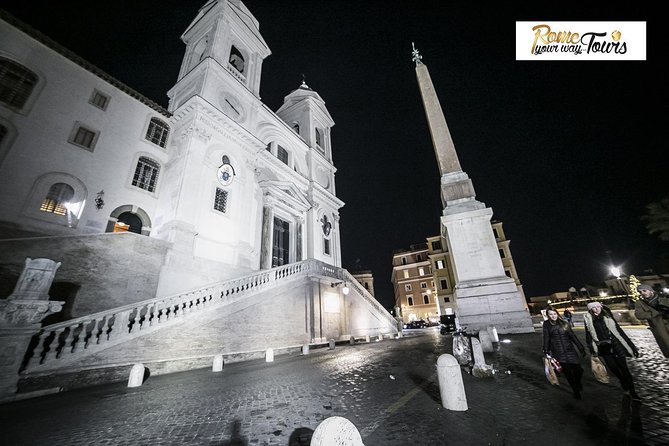
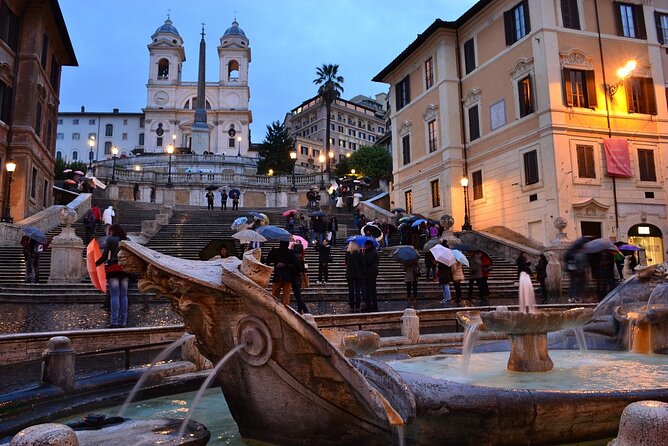
The route then hits Piazza di Spagna to see the Barcaccia fountain by Bernini and the world-famous Spanish Steps. This stop is another 20 minutes, so it’s best thought of as a photo-and-walk-through window, not a long linger.
Here’s the practical truth: the Spanish Steps area gets busy. Even if you arrive at a good time, you’ll be sharing angles. If you want shots from specific levels of the stairs, don’t wait for the group schedule to make it happen. I’d give yourself permission to move a bit on your own within the allotted time—reach your preferred step area first, then circle back for the fountain and street scenes.
Also, if steps are important to your memories, plan on doing your own climb. The tour includes the area, but the time can be tight for going up and down slowly. If you treat it like a quick visit plus optional extra steps once you’re there, you’ll leave happier.
This stop is fun even beyond the monuments. You’ll see the rhythm of Rome shopping streets, sidewalk chatter, and the constant movement that makes the whole place feel like a living set.
Trevi Fountain at dusk: Baroque drama with better mood
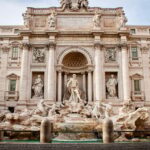
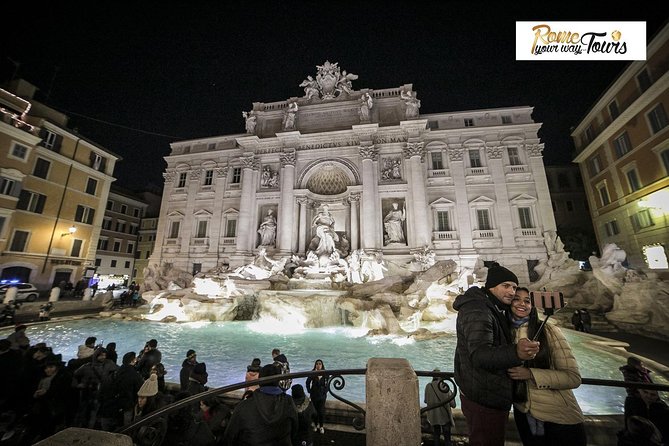
Then you reach the star of the evening for most people: Trevi Fountain, described as Rome’s biggest Baroque fountain. At night, it feels less like a statue garden and more like a stage. You’ll wander there for about 20 minutes, which is a sweet spot: enough time to get your photos, read the scene through your guide’s stories, and still not feel trapped in a crowd for hours.
The classic legend is part of the experience: toss a coin, and you’re ensured a return to Rome. Everyone knows the ritual, but what I like is the guide framing—why the fountain became part of Rome’s public myth and how the fountain sits inside the city’s larger design.
One of the more memorable guide themes you may hear on this walk is Rome’s water story. A group highlighted learning about aqueducts beneath the city and why you can drink from many fountain spouts in Rome. Even if you already know the basics, hearing it connected to the fountains in front of you makes it stick.
Photo tip: if you want fewer people in the foreground, position yourself slightly to the side and wait for gaps. You’ll get better framing than trying to win a race to the center.
You can also read our reviews of more evening experiences in Rome


Pantheon exterior and Piazza della Rotonda: history you can feel in your feet
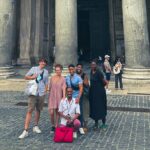
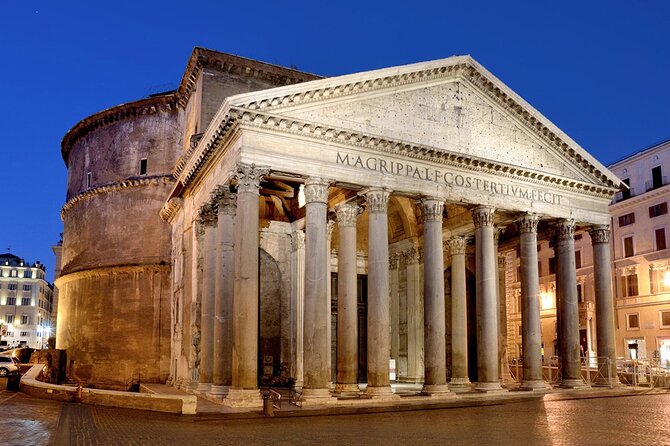
From Trevi, the pace turns toward another iconic stop: Piazza della Rotonda and the Pantheon. You won’t go inside here; you’ll see it from the exterior as the group passes through the area.
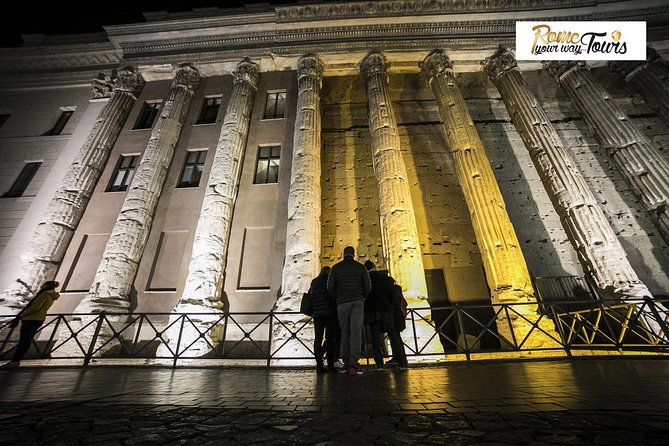
Still, this is a good use of time. The Pantheon’s scale is hard to grasp from a distance, and the square helps you understand why it became a long-lasting symbol for Roman architecture. The structure dates to 27 BC and was dedicated to all Roman gods. Your guide should connect that ancient purpose to how the building continued to matter across centuries.
This is also a useful break in the evening route. Trevi and Navona are intense visual moments. Pantheon exterior time gives you a chance to slow down, look up, and let the architecture reset your mental camera.
If you’re trying to avoid museum fatigue on your first night, this exterior stop hits the sweet spot: landmark recognition without a long wait.
Piazza Navona after dark: Bernini’s Four Rivers in motion
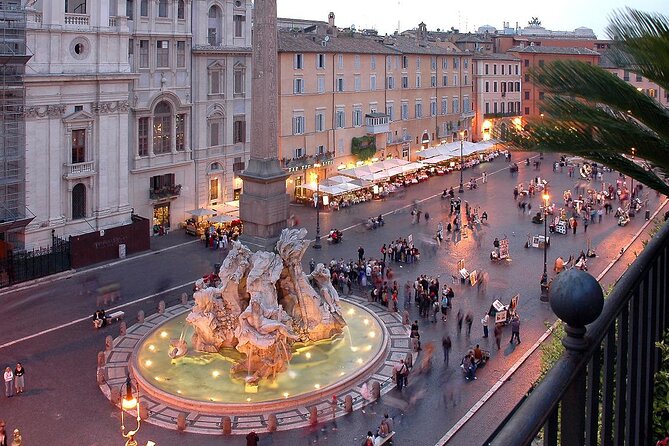
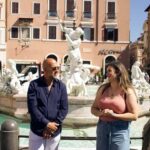
Next is Piazza Navona, one of Rome’s most famous Baroque squares, with fountains that steal the show. The group stop centers around Bernini’s Fountain of Four Rivers, set right in the middle of the square.
Here, the evening works in your favor. The square comes alive without being as brutal as midday. You’ll see the fountains, the surrounding facades, and the way people fill the space when the temperature cools down.
This stop is also a good time for “Rome logistics” in your head. Even though you’re still on the tour, your guide may point out where to linger after. If you plan to eat or grab a drink nearby, Navona is a solid anchor neighborhood.
One caution: Navona can feel crowded because it’s a magnet. Keep your small-group mindset. Let the guide set the rhythm, then step aside for photos once you know where the best angles are.
Campo de’ Fiori: the best kind of ending, right where Rome continues
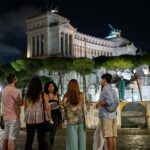
The walk finishes at Campo de’ Fiori, around 22:00. This is a smart ending because it’s not a dead-end tourist pocket. It’s a square with real daily life, and it changes depending on the time of day.
Historically, the area had a darker past connected to executions. Today it’s known as a busy market area in the morning and a lively nightlife center after dark. In other words: when your tour ends, you’re already in the zone where you can keep moving.
If you want a low-stress follow-up evening plan, this is one of the best places the route could end. It’s easy to find dinner, a casual bar, or a place to wander without doubling back across town.
Tip: before the tour ends, take a moment to ask your guide what direction they’d recommend for food or a quick dessert stop. Even a short recommendation can save you time when you’re tired and hungry.
What you can expect from the guide and the group size
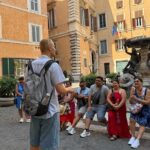
The tour runs with a professional guide and a small group of up to 18. That’s a real advantage on a walking route through famous places. You’re less likely to lose the group, and it’s easier for the guide to manage pace and questions.
Headsets are included when needed, which matters in open squares where sound carries and traffic noise competes with storytelling. If you’re hard of hearing or you know you struggle in loud areas, it’s worth reminding the guide at the start that you want clear audio.
The human part matters most. Some guides shine in a way that makes the whole walk feel like a guided movie. People highlighted guides like Gill for mixing ancient and modern stories and for being accommodating with small delays to grab coffee when it was cold. Others mentioned Francesca with passionate, honest storytelling. Carolina was described as enthusiastic and intensely focused on the history of what you’re walking past.
Even if you don’t get one of those specific guides, the tour format is designed so that a good guide can do what Rome tours should do: give context that makes you look twice at the same stone.
Timing, walking pace, and how to dress for a 7 pm start
This is an evening walk starting 7:00 pm and lasting about 3 hours. That’s not a “lazy stroll.” You’ll move from stop to stop and spend limited time at each major site.
So plan your expectations like this:
- You’ll get short, meaningful stops for photos and stories.
- If you want extra time for climbs (like the steps), you may need to be more proactive.
- The evening temperature can change quickly, especially once you’re in open squares.
For comfort, I’d dress for layers. A jacket matters, and closed-toe shoes help on cobblestones and crowded sidewalks. If you’re the type who likes taking photos from multiple angles, build in extra time in your head even if the official stop time is fixed. The way to avoid disappointment is to decide what matters most to you before you start.
Price and value: is $42.24 worth it?
At $42.24, you’re paying for a guided route that stacks several top-tier sights in one evening. Let’s look at what you’re getting that’s hard to DIY at the same quality level:
- A logical sequence of major stops: Popolo → Pincio Terrace → Spanish Steps → Trevi → Pantheon exterior → Navona → Campo de’ Fiori.
- A local storyteller who connects the monuments to the streets around them.
- Small-group attention (max 18) that keeps the walk smooth.
- Headsets when needed, which is a practical inclusion on a sound-heavy city walk.
You’re not paying for hotel pickup, and you’re not buying food or drinks (so you’ll handle that yourself). But for many first-night visitors, that trade-off is fine. You’re paying for efficient sight connection and an evening atmosphere that you’d otherwise have to plan hard to reproduce.
If your budget allows and you want the “see a lot, understand what you’re seeing” experience without maze-like navigation, the price feels fair for what you cover.
Possible hiccups to keep in mind before you go
Rome evenings can be romantic. They can also be unpredictable, which is true for any small-group, weather-dependent walking tour.
A few practical things to watch:
- Arrive early at the meeting point. Missing a departure can turn into a stressful scramble.
- Weather matters. This experience requires good weather, and if conditions aren’t right, you may be offered another date or a refund.
- The group size affects operations. If minimum participation isn’t met, the tour can be canceled.
- Stop-time expectations: the tour is short at each site. If you want a long, unhurried climb or lots of shopping time, this likely won’t be your best fit.
Keep your plan flexible for the rest of the evening, especially if this is your first night and you’re still learning the city.
Should you book this Rome evening panoramic walk?
I’d book it if you want a single evening that combines panoramic sunset views with a guided sweep through the big icons: Spanish Steps, Trevi, Pantheon exterior, and Navona. It’s a great way to get your bearings fast and understand why these places matter, not just what they look like.
I’d think twice if you need long stops at each monument, you hate walking, or you’re extremely sensitive to schedule changes. In that case, you might prefer a slower day itinerary with more time per site.
If you do book, go with the right mindset: treat each stop like a well-timed chapter. You’ll leave with photos, direction, and stories you can use for the rest of your Rome trip.
FAQ
What is the meeting point for the tour?
The tour starts at Basilica Parrocchiale di Santa Maria del Popolo, Piazza del Popolo, 12, 00187 Rome, Italy.
Where does the tour end?
The tour ends at P.za Campo de’ Fiori, 00186 Rome, Italy, around 22:00.
How long is the Rome evening walking tour?
The duration is about 3 hours.
What time does the tour start?
The tour starts at 7:00 pm.
What’s included in the price?
A professional guide is included. Headsets are provided when needed. The tour is a small group (up to 18 people) and children 5 and younger are complimentary.
Are food and drinks included?
No. Food and drinks are not included.
What language is the tour offered in?
The tour is offered in English.
Is the tour dependent on weather or minimum group size?
Yes. It requires good weather, and it also has a minimum number of travelers; if the minimum isn’t met, you’ll be offered a different date/experience or a full refund.