REVIEW · AMSTERDAM
Small Group Walking Tour – Hello Amsterdam
Book on Viator →Operated by Who Is Amsterdam Tours · Bookable on Viator
Want Amsterdam in two hours? This small-group walking tour is a fast, fun way to get your bearings while learning how the city ticks. You’ll cover major center-city sights on foot, then finish near Westerkerk and the Anne Frank House area, with plenty of local tips along the way.
I especially like the small group size (max 15). It keeps the pace friendly and gives the guide room to talk one-on-one, not just lecture from a distance. I also like the game-style learning, including a true-or-false moment on Damrak, which makes the facts stick without feeling like school.
The main consideration: you’ll be walking for about 2 hours, and that means you need decent shoes and a weather check. One more practical thing—finding the guide at the meeting point can be a little tricky if your ticket details aren’t crystal clear.
In This Review
- Key Takeaways Before You Go
- Why This Amsterdam Walking Tour Works for First-Timers
- Two Hours, Eight Stops: What the Walk Feels Like
- Dam Square and Damstraat: Where Amsterdam’s Big Stories Begin
- Beurs van Berlage: Trading Roots in a Single Stop
- Damrak by the Red Light District: A Fun Culture Quiz
- Haarlemmersluis: The Canal Belt Gateway and Why Bikes Win
- Singel: Dancing Houses from the Canal Side
- Torensluis: UNESCO Canals and the Harder Chapter of Slavery
- Keizersgracht (Emperor’s Canal): Family Culture and a UNICEF Fact
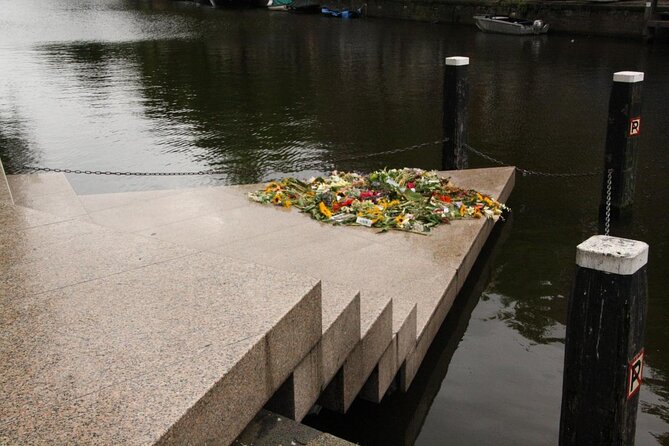
- Westerkerk: Anne Frank House Area, Gay Monument, and Live-and-Let-Live
- Price and What You’re Actually Paying For
- Who Should Book This Tour (and Who Might Prefer Something Else)
- Should You Book Hello Amsterdam?
- FAQ
- How long is the Small Group Walking Tour – Hello Amsterdam?
- How much does the tour cost?
- Is the tour offered in English, and how big is the group?
- Where do I meet, and where does the tour end?
- Do I need a printed ticket?
- Is the tour affected by weather, and is cancellation free?
Key Takeaways Before You Go
- Max 15 people means you get more guide time and a more personal feel.
- Games on the route turn quick facts into something you’ll remember.
- Canal belt views show Amsterdam from the “walkable” perspective, not from behind a bus window.
- Bike culture storytelling at Haarlemmersluis gives context for why Amsterdam loves two wheels.
- UNESCO canal belt + harder history at Torensluis adds real-world context, not just pretty pictures.
- Finish near Westerkerk and Homomonument, so you can roll straight into more sights.
Why This Amsterdam Walking Tour Works for First-Timers
Amsterdam can feel like a puzzle at first: canals, bridges, neighborhoods, and a lot of “wait, which direction is home?” This tour is built for the moment when you want orientation fast. You get motion, fresh air, and a guided route that hits big, recognizable landmarks without making it feel like you’re sprinting from one box to another.
At the same time, it’s not just sightseeing. The guide-led stops are designed to explain how Amsterdam became Amsterdam—politics at Dam Square, trade through the Beurs van Berlage, day-to-day culture around Damrak, and the canal belt’s story from multiple angles. You’ll also get practical recommendations for where to eat and shop, which is worth its weight in stroopwafels once you’re figuring out the rest of your trip.
You can also read our reviews of more walking tours in Amsterdam



Two Hours, Eight Stops: What the Walk Feels Like
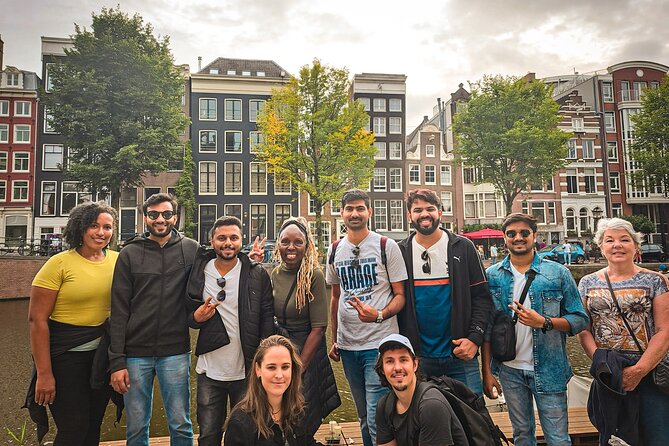
This is a small group tour in English, starting at 10:00 am. It runs about 2 hours and is described as a moderate amount of walking that still covers key central areas. That’s a good match if you want a “morning reset” or your first planned activity after you arrive.
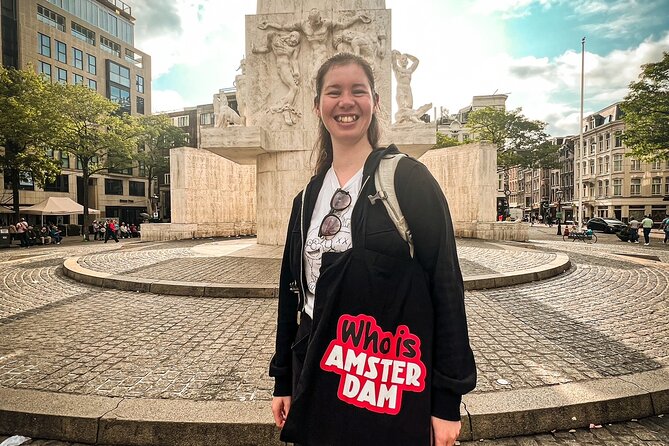
The route starts at the National Monument on Dam (Dam, 1012 JS Amsterdam) and ends at the Homomonument by Westermarkt (1016 DW Amsterdam). That end point is only a short walk from the Anne Frank House area and right by Westerkerk, so you can keep your sightseeing momentum without needing to re-route yourself.
Dam Square and Damstraat: Where Amsterdam’s Big Stories Begin
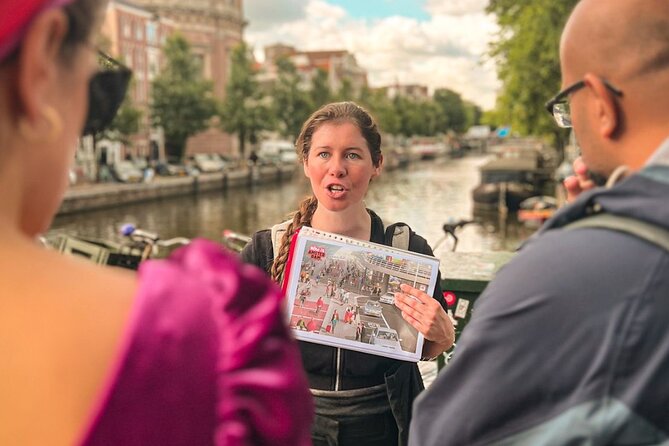
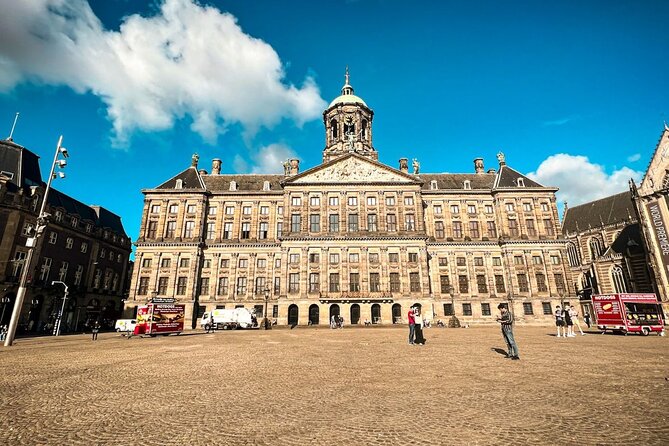
You start at Dam Square, with the National Monument as your anchor point. This is where Amsterdam’s public life, official landmarks, and crowd energy meet. You’ll see the kinds of buildings that define the city’s identity from a distance, but the guide also gives you the meaning behind them—especially around the Royal Palace and the New Church.
Then you move along toward Damstraat, a street that feels like a shopping and city-center artery. For first-time visitors, this segment is useful because it helps you understand the geography. After this, you’ll have a mental map of where the “core” is, which makes the rest of your walk later feel less guesswork and more like you planned it.
Potential drawback: Dam Square can be busy, and you’re starting right in the thick of it. If you’re sensitive to crowds or waiting for a photo moment, arrive with patience and good expectations for quick stops.
Beurs van Berlage: Trading Roots in a Single Stop
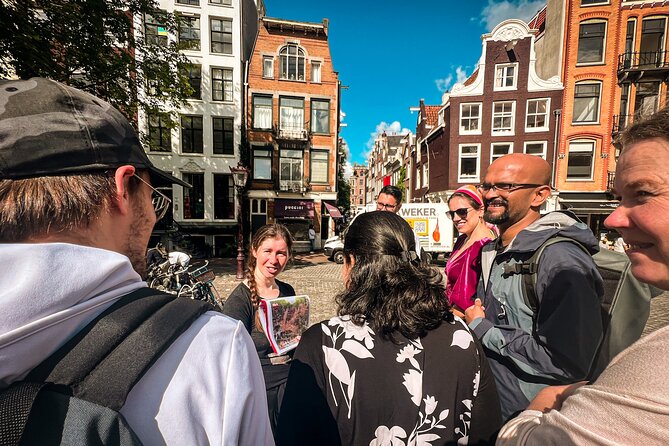
Next up is Beurs van Berlage, one of the city’s most recognizable historic buildings. This stop is about Amsterdam’s financial power—how the city pioneered the stock exchange and became a major trading force during the 17th century. In other words, it’s not only an architecture stop; it’s a “how Amsterdam grew” stop.
What makes this worth your time is the way it reframes the city. You see the building, then you understand why it mattered. Amsterdam isn’t just canals and bicycles; it’s also banking, trade networks, and wealth that shaped the city’s layout and influence.
Time-wise, you’ll only spend about 15 minutes here, so treat it like an orientation chapter. If you’re the type who could read every plaque for an hour, you might want more time later on your own, but for a 2-hour tour this is a smart hit.
Damrak by the Red Light District: A Fun Culture Quiz
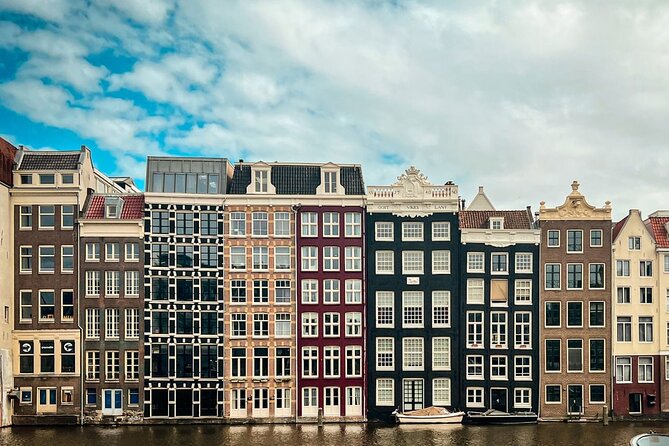
At Damrak, you’re near the edge of the Red Light District, and the vibe changes from “main plaza” to “real neighborhood Amsterdam.” This stop mixes location awareness with culture. The guide leads a quick true-or-false game that doesn’t require prior knowledge, which is a great way to keep everyone engaged.
The point isn’t to shock you. It’s to test what you think you know about Dutch culture—things like tolerance and coffeeshops—then correct your assumptions with plain, grounded explanations. Add in the view of the dancing houses nearby, and you get both a visual and a cultural snapshot.
Small consideration: because this area is close to nightlife, the street can feel different depending on the time of day. Starting at 10:00 am helps, but you’ll still want to be ready for an active city-center atmosphere.





Haarlemmersluis: The Canal Belt Gateway and Why Bikes Win
Haarlemmersluis is one of the spots where the city’s canal belt identity shows up clearly. The guide frames it as a gateway, and you get a strong view for appreciating Amsterdam’s water-centered layout.
The big theme here is bikes. Amsterdam’s cycling culture isn’t presented as a cute fact; it’s explained as a system—so you understand why there are so many bicycles, how the city supports them, and why that changes daily life. The storytelling focus on “more bikes than people” is memorable because it’s instantly observable once you look around.
Time is about 10 minutes, which means you don’t get stuck in one place. You get a pause to reset your bearings, then you’re on to the next canal scene.
Singel: Dancing Houses from the Canal Side
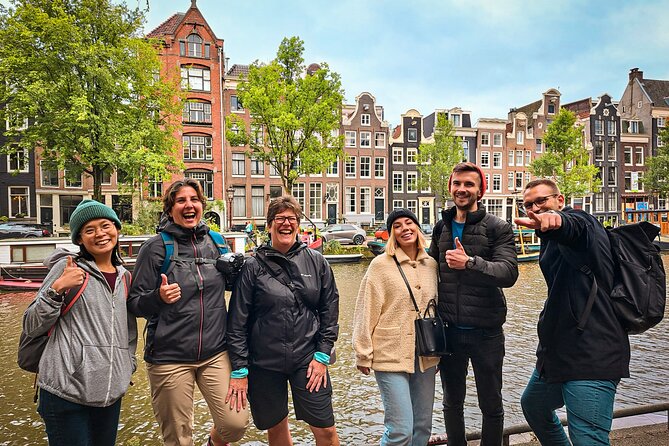
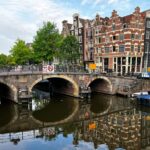
Then you’re at Singel, where the canal view does most of the heavy lifting. This stop focuses on the Dancing Houses—those tilted canal-front buildings that look like they’re leaning toward the water. The guide connects the “wow” factor to the backstory, walking you through why these houses look the way they do.
What I like about this part of the tour: it’s not only picture-taking. You come away with a sense of how Amsterdam’s architecture fits the canal environment, and you learn to “read” the city visually. After this, other canal streets start making sense because you know what to notice.
If you dislike waiting for photos, this is still manageable. The stop is short, and the guide keeps the group moving while giving you enough time to see the key angles.
Torensluis: UNESCO Canals and the Harder Chapter of Slavery
At Torensluis, the tour shifts from postcard scenes to the kind of history that complicates the story. The guide connects this spot to the UNESCO canal belt, then acknowledges a darker chapter tied to slavery.
This is a meaningful turn, because it avoids the common trap of treating Amsterdam’s canal belt as only decorative. You’ll see how the city’s success and beauty can coexist with painful realities, and you’ll get a chance to think about legacy with respect—not just curiosity.
The time here is about 10 minutes, so it’s handled as a focused, respectful stop rather than a long lecture. Still, it’s enough to leave a mark, especially if your other sightseeing tends to stay surface-level.
Keizersgracht (Emperor’s Canal): Family Culture and a UNICEF Fact
At Keizersgracht, the theme is Dutch culture in a very human way: family life and what shapes everyday happiness. The guide points to an UNICEF 2017 reference about Dutch kids being among the happiest in the world, then connects that to how daily life and community values show up in real ways.
I like this because it’s not an abstract culture lecture. You get a specific detail, then you’re encouraged to think about why it could be true in a country with strong social norms and a lot of emphasis on civic life. It’s also a nice contrast after the more serious stop at Torensluis.
You’ll also be outside in canal-country again, which helps keep the tour balanced: reflection, then scenery, then the “okay, now I understand Amsterdam a little better” feeling.
Westerkerk: Anne Frank House Area, Gay Monument, and Live-and-Let-Live
The final stop is Westerkerk, in the area around the Anne Frank House and the Gay Monument. The guide frames Amsterdam as a place shaped by acceptance—live and let live—and you’ll hear how the city’s “people mentality” is part of what makes it distinctive.
This is also a natural ending point because the route finishes where you can immediately continue exploring. If you’ve planned time for the Anne Frank House, this is a convenient location to head next. If you’re staying in the area, you can also keep walking toward nearby streets without needing transport.
One more reason this ending works: by the time you reach Westerkerk, the tour has covered politics, trade, culture, architecture, and the canal belt’s history. Ending with diversity and acceptance gives you a final lens for seeing the city as more than just buildings and waterways.
Price and What You’re Actually Paying For
At $35.07 per person for about 2 hours, the value comes less from museum entry fees and more from guided interpretation. The stops are listed as admission ticket free, so you’re paying for the guide’s time, route planning, and the effort to explain what you’re seeing.
You also get small-group dynamics, including a guide who prompts interaction through games and quick questions. That’s a real quality-of-experience factor. If you’ve ever done an audio guide while walking alone, you know how much gets lost without a person to connect the dots.
If your priority is to tick off famous spots without much context, you might find this tour short. But if your priority is to understand Amsterdam while moving through it, this price feels fair for what you get.
Who Should Book This Tour (and Who Might Prefer Something Else)
This tour is a strong fit if:
- You’re in Amsterdam for the first time and want a fast, guided orientation
- You like mixing exercise with stories
- You want recommendations for food and shopping, not just photos
- You enjoy learning facts in a playful way, including games
It may be less ideal if:
- You dislike walking for a full couple of hours
- You want a deep, museum-style explanation at one site
- You prefer your sightseeing to avoid the city’s harder historical topics
Should You Book Hello Amsterdam?
Yes, if you want a first-day win. The route hits the places you’ll recognize later, and it pairs big landmarks with specific context—trade, architecture, canal-belt meaning, bike culture, and even the city’s tougher history. The small group size and the game format make it feel lively without sacrificing substance.
If you’re already staying central and you have energy for a planned walk, this is an efficient way to get your bearings and start exploring with confidence.
FAQ
How long is the Small Group Walking Tour – Hello Amsterdam?
It lasts about 2 hours.
How much does the tour cost?
The price is $35.07 per person.
Is the tour offered in English, and how big is the group?
Yes, it’s offered in English, and the tour has a maximum of 15 travelers.
Where do I meet, and where does the tour end?
You meet at the National Monument on Dam (Dam, 1012 JS Amsterdam). The tour ends at the Homomonument near Westermarkt (1016 DW Amsterdam), about a 2-minute walk from the Anne Frank House area and by Westerkerk.
Do I need a printed ticket?
You’ll receive a mobile ticket.
Is the tour affected by weather, and is cancellation free?
The tour requires good weather. If it’s canceled due to poor weather, you’ll be offered a different date or a full refund. Cancellation is free up to 24 hours in advance for a full refund.