REVIEW · ROME
Rome: Under the Moonlight Evening Walking Tour
Book on GetYourGuide →Operated by Global Experiences · Bookable on GetYourGuide
Rome looks different after dark, and this walk makes that difference count. You’ll cover major landmarks like the Pantheon and Trevi Fountain while twilight turns the streets softer and more walkable. It’s a guided route built for atmosphere: plazas, classic façades, and that moment when big ancient stone starts to glow rather than glare.
I especially like the mix of big-name sights and smaller stops. Piazza Navona sets the mood, then the itinerary keeps shifting gears with places like the Church of Sant’Ignazio di Loyola and Galleria Sciarra. Another reason I’m a fan is the nighttime pacing and crowd control you tend to feel on a well-planned evening walk—less pressure to sprint, more time to look, listen, and take photos without fighting a daytime crush.
One thing to consider: it’s still a lot of walking in the late evening. If you’re sensitive to long strolls, wear comfortable shoes and plan to move at a steady pace.
In This Review
- Key Highlights You’ll Feel More Than You’ll Memorize
- Moonlight Rome: Why This Walk Changes the Whole City
- Starting Points: Piazza d’Aracoeli or Piazza di Pasquino
- Piazza Navona at Night: Fontana dei Quattro Fiumi First Impressions
- Pantheon: Hadrian’s Monument to the Gods (Seen Up Close on Foot)
- Church of Sant’Ignazio di Loyola: A 30-Minute Story Stop You Don’t Expect
- Galleria Sciarra: When Small Stops Beat Another Monument Photo
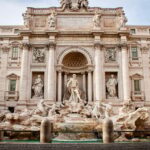
- Trevi Fountain: Coin Toss Time and Photos That Don’t Feel Rushed
- Piazza Venezia, Trajan’s Column, and the Roman Forum: Turning Landmarks Into a Real Map
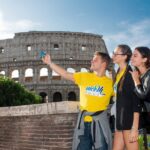
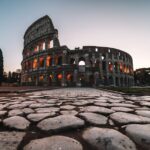
- The Colosseum Moment: After-Sunset Glow Without the Daytime Noise
- Pace, Comfort, and What to Bring for a 2–2.5 Hour Evening Walk
- Guides Make or Break It: Expect Big Energy and Clear Storytelling
- Price Value at $28: Is It Worth It?
- Where It Ends: Drop-Offs Near Piazza Venezia and the Colosseum Area
- Should You Book This Moonlight Walking Tour?
- FAQ
- How long is the Rome Under the Moonlight Evening Walking Tour?
- How much does the tour cost?
- Where do I meet the guide?
- Which languages are available for the live guide?
- Is food or drink included?
- Where does the tour end?
- Is a private group option available?
Key Highlights You’ll Feel More Than You’ll Memorize
- Colosseum-area views after sunset: seeing the ancient stones lit up changes the whole mood
- Piazza Navona’s sound and scale: the Fontana dei Quattro Fiumi is a natural meeting point for the evening’s pace
- Pantheon as a true anchor: the stop centers on Hadrian’s monument to the gods and its standout preservation
- Trevi Fountain time for the ritual: you’ll get a guided segment and time to toss your coin and photos
- Stories that make stops connect: the route links Imperial fora sights, Trajan’s Column, and the Roman Forum into one mental map
Moonlight Rome: Why This Walk Changes the Whole City
Rome is famous for its monuments, but at night it becomes famous for its tone. Instead of rushing from one photo spot to the next, you can actually hear the city around you. This tour leans into that. You start in a classic central piazza, then you move site to site like you’re watching Rome’s lights come on in layers.
Two things make this kind of evening format work well. First, many of Rome’s iconic landmarks feel less overwhelming when the crowd energy drops. Second, the streets between them become part of the experience. The route isn’t just a highlights reel; it’s designed so you see how spaces connect—plazas, churches, and ceremonial areas feel linked rather than scattered.
You can also read our reviews of more walking tours in Rome


Starting Points: Piazza d’Aracoeli or Piazza di Pasquino
Your start depends on the option you book, with two meeting point choices: Piazza d’Aracoeli or Piazza di Pasquino. Don’t stress about which one is best ahead of time. Either way, you’re beginning in a central area where you can get your bearings quickly for a night walk.
This matters because your first ten minutes set the tempo. Once you’re with your group and local guide, you’ll head toward Piazza Navona, where the tour officially gets underway. If you’re arriving on foot, build a small buffer so you’re not late and distracted right at the start.
Piazza Navona at Night: Fontana dei Quattro Fiumi First Impressions
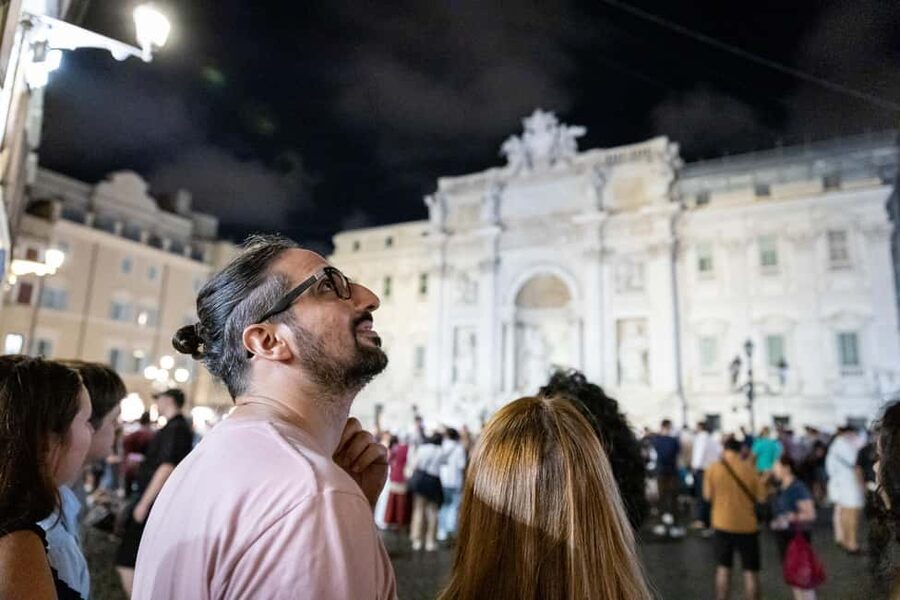
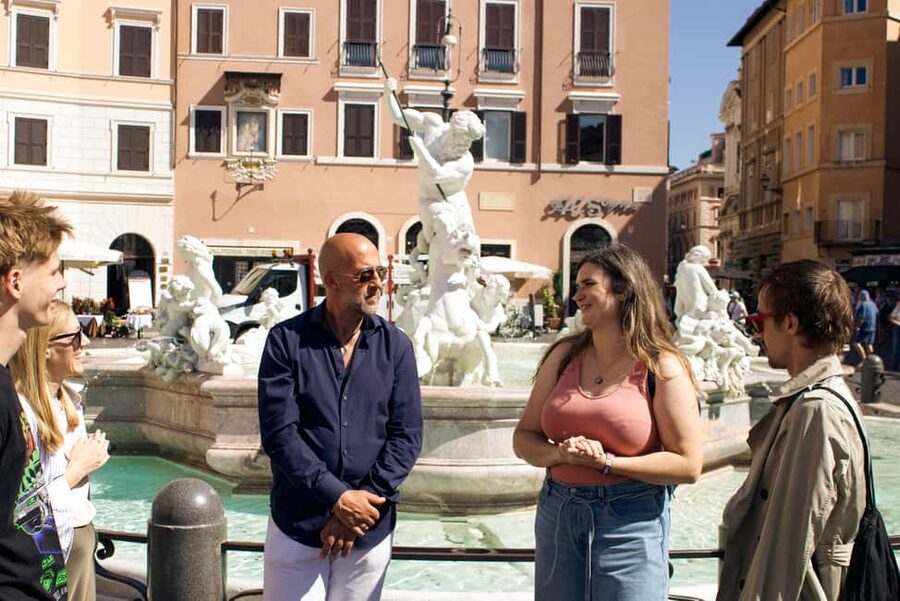
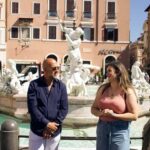
Piazza Navona is one of those places that looks great in daylight and becomes something else after dark. Here, the tour starts its guided phase with a segment focused on the Fontana dei Quattro Fiumi—the calming water in the center of the square gives you a perfect anchor for the evening.
What I like about starting here: you’re not yet deep into the walking portion, so you can settle into the group rhythm. And because it’s a major piazza, it’s easy to orient yourself visually for what comes next. If your guide tells stories about how the space feels and why it matters, this is where those details land best—because you can look around while you listen.
Pantheon: Hadrian’s Monument to the Gods (Seen Up Close on Foot)
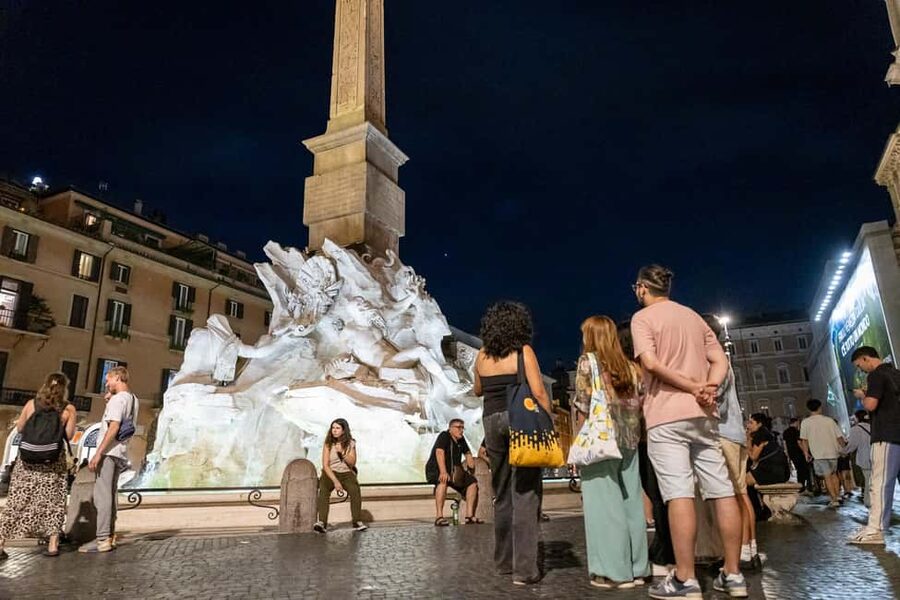
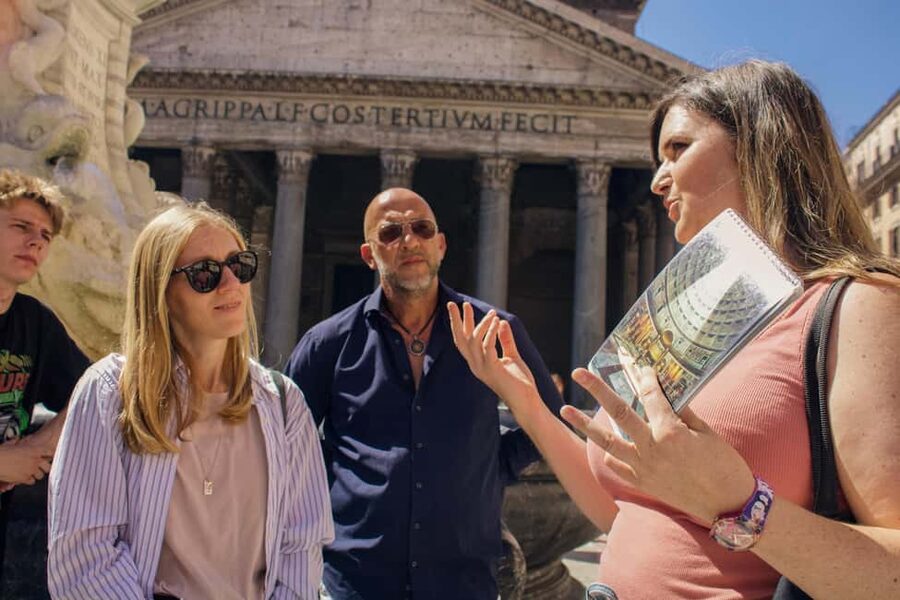
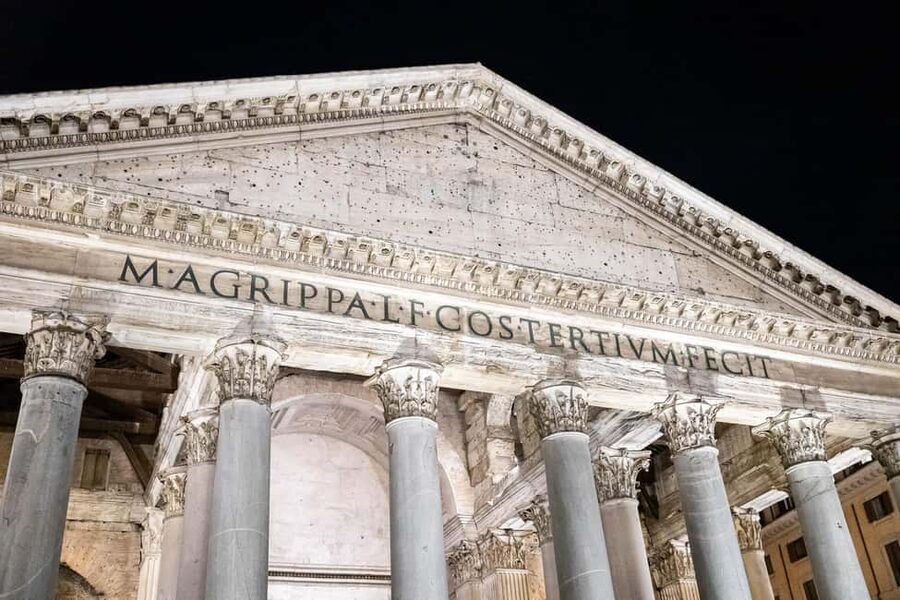
Next comes the Pantheon. You won’t just pass it like a transit stop—you get a guided look timed for the evening atmosphere, with about 20 minutes built in.
The Pantheon is a powerful anchor on this itinerary because the tour frames it as a monument built by the emperor Hadrian and notes its standout preservation. That combination matters: you don’t just admire it as an old building; you understand why it still commands attention. Even from the outside perspective you get on a walk, it’s the kind of structure that makes your brain switch from modern city mode into Roman-era logic.
Practical tip: since this is an evening tour, you’ll be standing and walking more than sitting. If your feet get tired easily, plan to slow down briefly when your guide stops the group to point things out.
Church of Sant’Ignazio di Loyola: A 30-Minute Story Stop You Don’t Expect
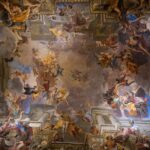
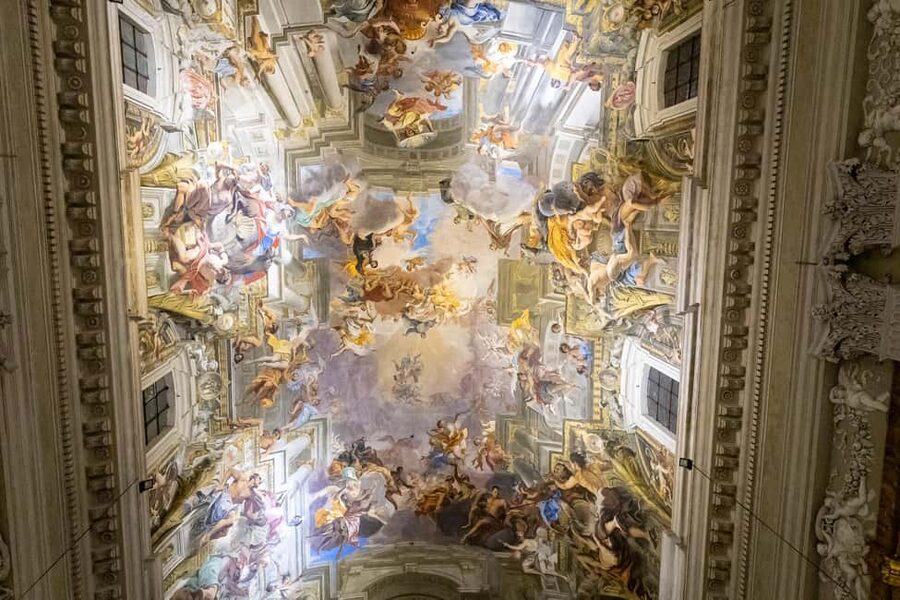
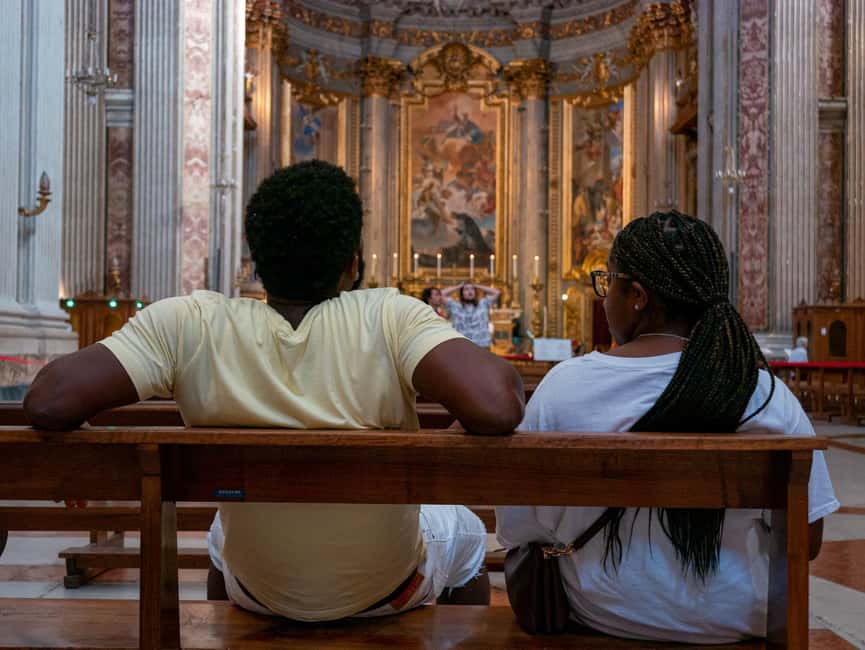
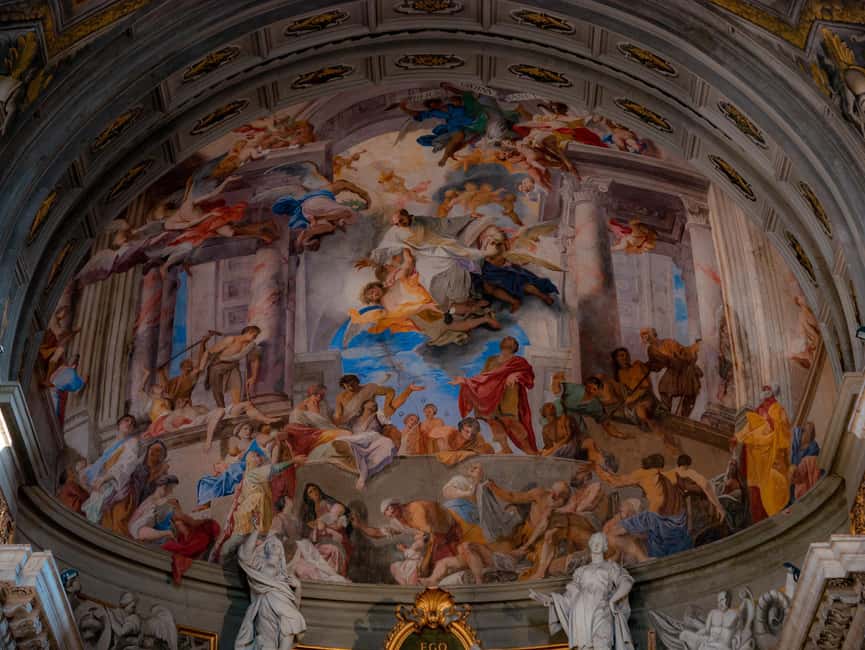
You’ll spend about 30 minutes at the Church of Sant’Ignazio di Loyola. This is one of those moments where the itinerary proves it’s not only about the usual postcard hits. Churches can feel like a quick photo detour on some city walks, but here it’s treated as a real stop with a guided segment.
Why it works: it breaks the route into a new texture. After the Pantheon, you shift from one kind of monumental presence to another—then the tour continues onward before you hit the Trevi Fountain highlight. If you like when an evening tour avoids turning into a straight line of major sites, this is part of why the pacing stays enjoyable.
You can also read our reviews of more evening experiences in Rome


Galleria Sciarra: When Small Stops Beat Another Monument Photo
The itinerary includes Galleria Sciarra for about 20 minutes. A review detail I love here is that people specifically mention noticing its Art Deco character—the kind of place you can walk past in daylight and never clock as important.
This is the value of having a guide on a night walk. Rome has layers, but you don’t automatically see them. A guided segment helps you understand what you’re looking at and why a less-famous interior space can become one of your favorite moments.
If you’re the type who likes “wait, that’s cool” stops—this is built for you.
Trevi Fountain: Coin Toss Time and Photos That Don’t Feel Rushed
Then it’s on to Trevi Fountain, with a 30-minute guided segment. This is the cultural ritual stop: toss a coin and make a wish, then take your photos while the fountain’s lighting does its thing.
What makes this segment work is not just the famous landmark—it’s the way the guide uses the time. You’re not being yanked along immediately. You get enough time to pause, gather your shot, and still listen to the tour’s explanation before moving again.
A balanced note: the Trevi Fountain area can still get busy, even at night. This tour’s structure helps, but you’ll want to plan for some standing time around the fountain basin.
Piazza Venezia, Trajan’s Column, and the Roman Forum: Turning Landmarks Into a Real Map
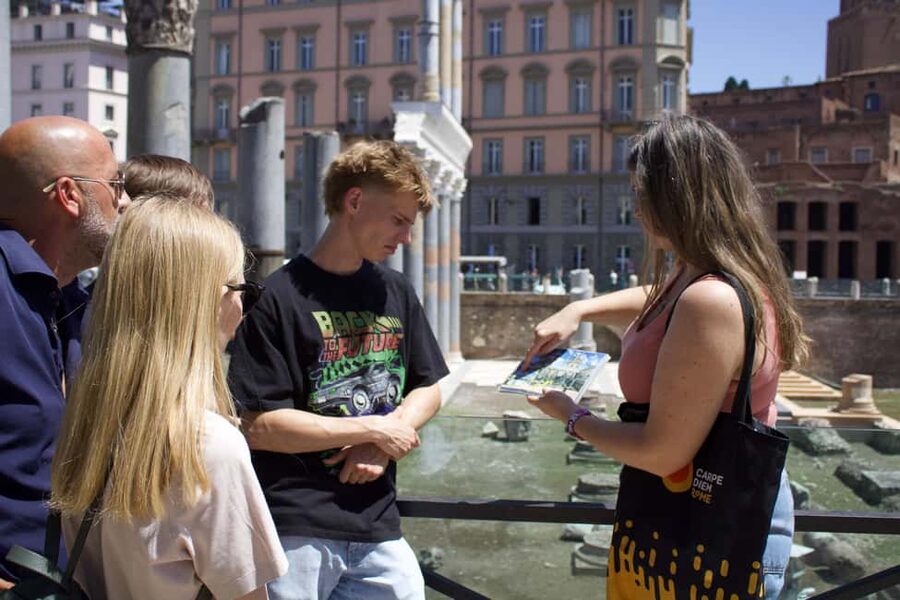
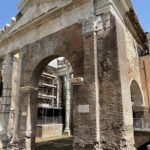
From Trevi, you work your way toward Piazza Venezia (about 20 minutes) and continue into the region of major ancient anchors: Trajan’s Column (about 20 minutes) and Roman Forum (about 20 minutes).
Why this stretch matters: it’s where the walk stops being a set of disconnected stops and starts feeling like one coherent story. You’ll pass through areas linked to the Imperial fora, then you’ll reach the kind of monuments that help you mentally “draw” ancient Rome’s layout—less like reading a textbook, more like building a map in your head while you walk.
Trajan’s Column is especially useful here because it gives you a fixed landmark to orient toward. The Roman Forum is then the payoff: you’re in the right zone to understand the scale and the purpose of these spaces, even if you’re only there for a guided segment rather than hours of solo wandering.
Also, this portion of the evening is often when the mood clicks. Many people love seeing large sites lit up because the shadows make the architecture feel more dimensional. You get that “Roman theater set” effect without the daytime glare.
The Colosseum Moment: After-Sunset Glow Without the Daytime Noise
One of the top reasons people book is the chance to see the Colosseum glowing after dark. The tour includes the Colosseum area experience as a major highlight, built into the walk late enough to feel like a real evening payoff.
Even when you’re not doing a full Colosseum interior visit, the view and the lighting can make it feel new. Night transforms the stone, and the crowds tend to behave differently. The tour’s route also aims to keep you moving, so you get the impact without spending all your time trapped in one spot.
Pace, Comfort, and What to Bring for a 2–2.5 Hour Evening Walk
This is a 2 to 2.5 hour walking tour. That duration is short enough to feel realistic after a day of sightseeing, but long enough that shoes matter.
Bring:
- Comfortable shoes
- Comfortable clothes
The clothes line is simple but important. Even in warmer months, nights can be cooler, and you’ll be outside for hours. I’d also plan to drink water before you start since food and drink aren’t included.
If you’re traveling with kids or people who don’t like standing and walking for long stretches, consider whether 2+ hours on foot fits your group’s energy.
Guides Make or Break It: Expect Big Energy and Clear Storytelling
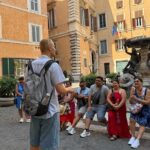
The quality of the guide is a consistent highlight in the feedback. Names that show up again and again include Mary, Vladimir, Csenge, Dan, Domenica, Alina, Sila, Amanda, Sharon, Max, Vlad, and Sarah. You can’t guarantee a specific person, but you can expect the role to matter here.
What people respond to isn’t just facts—it’s the human side. Several guides are described as interactive, humorous, and good at keeping groups engaged while still answering questions. One review even praised how guides explained how to look at details (like what to notice in Galleria Sciarra) and gave practical pointers for Rome beyond the tour.
If you’re doing Rome on your first day, this is a smart time to come. You get a guided framework for what to seek out later.
Price Value at $28: Is It Worth It?
At $28 per person, this tour isn’t a budget “quick look.” It’s an evening-guided route that packs multiple major sites—Piazza Navona, the Pantheon, Trevi Fountain, and the Colosseum-area zone—plus guided segments at stops along the way.
Here’s the value logic I’d use:
- You’re buying guided time (local guide, live English/Spanish narration).
- You’re buying route intelligence, meaning you’re not just wandering randomly at night.
- You’re buying organized pacing across a dense part of central Rome.
The only missing piece is food and drink. Since the tour is relatively short, you’ll likely appreciate being free to grab dinner afterward on your own terms.
Where It Ends: Drop-Offs Near Piazza Venezia and the Colosseum Area
The tour ends back at the meeting point, but drop-off options include central locations such as Piazza Navona and Piazza del Colosseo (Colosseum area). That flexibility is handy if you’re trying to line up your evening plan—dessert, gelato, or a longer wander after the tour.
In other words, you’re not stuck in one far-flung spot at the end. You’ll finish near the heart of the action.
Should You Book This Moonlight Walking Tour?
Book it if you want a guided way to see Rome’s big icons without spending your evening fighting crowds or planning a route from scratch. I’d also recommend it if you care about mood. Twilight changes the city’s personality, and this itinerary is timed and shaped to let that happen.
Skip it (or at least rethink it) if walking 2–2.5 hours through central Rome feels too much for your plans. It’s not an easy sit-and-watch tour, and you’ll want to bring your best evening-shoe game.
Overall, for the price and the variety of stops—from Piazza Navona’s water sound to the Pantheon’s presence, then Trevi, and the Colosseum-area glow—this is one of the smarter ways to kick off Rome at night.
FAQ
How long is the Rome Under the Moonlight Evening Walking Tour?
It lasts about 2 to 2.5 hours. Starting times vary, so you’ll want to check availability for the specific times offered.
How much does the tour cost?
The price is listed as $28 per person.
Where do I meet the guide?
The meeting point can vary based on the option booked, with starting locations such as Piazza d’Aracoeli or Piazza di Pasquino.
Which languages are available for the live guide?
The tour is offered with a live guide in English and Spanish.
Is food or drink included?
No. Food and drink are not included in the tour.
Where does the tour end?
It ends back at the meeting point. There are also drop-off locations listed in the central area, including Piazza Navona and the Colosseum area.
Is a private group option available?
Yes, private group availability is offered.