REVIEW · ROME
Haunted Rome Ghost Night Walking Tour
Book on Viator →Operated by Carpe Diem Tours · Bookable on Viator
Rome at night tells darker stories. This Haunted Rome Ghost Night Walking Tour uses the city’s real, spooky past to guide you through central sights when sidewalks are calmer and the heat is gone.
I like two things right away: the spooky tone stays rooted in real places, and the pacing is built for a short outing that still feels full. You also get a route that mixes famous names (like Campo de’ Fiori and Castel Sant’Angelo) with smaller, stranger details such as madonelles, warning fountains, and a church tied to human remains.
One consideration: it is a street walk with a group, so it can get hard to hear if you’re farther from the guide or if traffic noise is loud. If you’re sensitive to that, plan to stay close to the front and don’t count on audio clarity everywhere.
In This Review
- Key points I’d circle before booking
- Night Rome: the heat-proof way to see the city
- Price and value: why $35.07 can make sense
- Small-group format: comfort, pacing, and crowd control
- Where it starts and ends: Campo de’ Fiori to Castel Sant’Angelo
- Stop-by-stop route: Campo de’ Fiori and Piazza Farnese
- 1) Campo de’ Fiori (the execution square)
- 2) Piazza Farnese (the secret passage legend)
- Street-level eerie details: madonelles, Ponte Sisto, and a warning fountain
- 3) Via del Mascherone & Vicolo dei Venti (madonelles)
- 4) Ponte Sisto (Rome’s oldest bridge, with a grim reputation)
- 5) Fontana del Mascherone (the fountain with a warning)
- Churches and prisons: when death is part of the decor
- 6) Chiesa di Santa Maria dell’Orazione e morte (human remains)
- 7) Via di Monserrato (haunted apartment block, former prison)
- 8) Chiesa di Santa Maria in Monserrato degli Spagnoli (a dramatic story)
- Via Giulia and the idea that cosmetics could kill
- 9) Via Giulia (cosmetics, danger, and a real street)
- 10) Via dell’Arco dei Banchi (Mastro Titta, executioner ties)
- Castel Sant’Angelo: the final act and the Cenci family tale
- The endpoint story: bodies on display, then angels and Cenci tragedy
- What this tour feels like: more crime legend than cartoon ghosts
- Tips for you: shoes, warmth, and how to hear the guide
- Who should book this tour?
- Should you book the Haunted Rome Ghost Night Walking Tour?
- FAQ
- How long is the Haunted Rome Ghost Night Walking Tour?
- How much does the tour cost?
- Where does the tour start?
- Where does the tour end?
- Is the tour offered in English?
- How large is the group?
- Is there a mobile ticket?
- What sites are included on the walk?
- Can I upgrade to a private tour?
- Is free cancellation available?
Key points I’d circle before booking
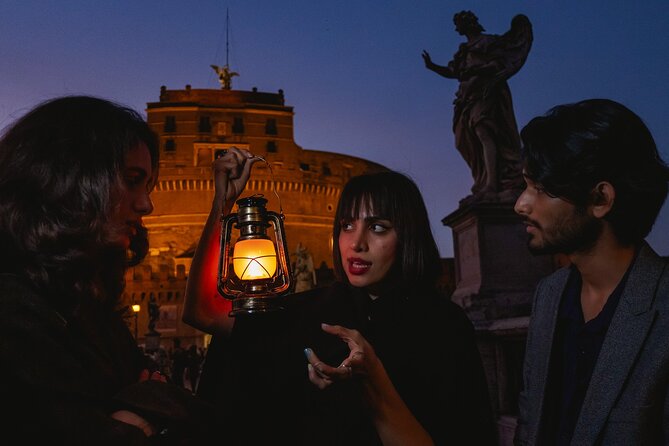
- Night timing beats the daytime squeeze: you get the city after dark, with fewer crowds and more comfortable temperatures.
- Spooky without cheesy theatrics: the vibe leans more toward true crime and grim legends than jump-scare ghost stuff.
- You’ll notice details on your own afterward: madonelles, warning signs, and specific street corners give you a new Rome filter.
- Stops are quick and focused: each location is about 10 minutes, so the tour stays moving for roughly 2 hours.
- Finish at Castel Sant’Angelo: it’s a strong endpoint where you can keep your evening going nearby.
- Guides like Youssef, Ana, and Antonio bring energy: you’ll want a guide who can mix humor with grim facts, and the tour’s standout guides do exactly that.
Night Rome: the heat-proof way to see the city
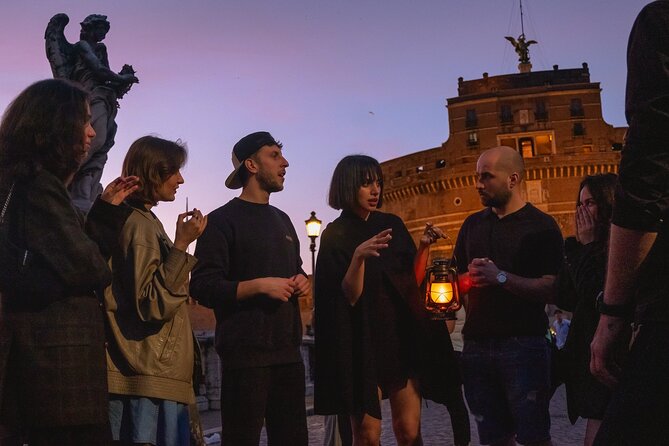
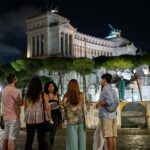
Daytime Rome can be intense. At midday you’re fighting sun, crowds, and long waits. This tour flips the equation. It’s a 2-hour walking route at night, so you get to cover ground while the streets feel more human-sized.
The best part is what night changes emotionally. Rome’s stonework, statues, bridges, and church façades look different under streetlights. That matters here because the tour is designed to explain the city through its “sinister history” lens. It’s not just where you go, it’s the timing that makes the stories land.
You can also read our reviews of more walking tours in Rome


Price and value: why $35.07 can make sense
At about $35.07 per person for roughly two hours, this is not a budget miracle, but it is fairly priced for a guided night walk in central Rome. The value comes from three places:
First, the route is concentrated. You’re not bouncing around the outskirts. You’re moving through a tight central corridor with major landmarks plus smaller sites you likely would not seek out on your own.
Second, the stops are structured. About 10 minutes at each location keeps the story focused instead of turning into one long talk. That format also helps if you want something that fits your first night schedule.
Third, you get free admission listed for the stops. The tour schedule shows admission ticket as free at each location, which usually means you’re not paying entry fees during the walkthrough (you’re seeing exteriors and viewpoints rather than buying museum tickets mid-tour).
Small-group format: comfort, pacing, and crowd control

The group size cap is 20 travelers. That matters in two ways.
You get a guide who can keep moving without constant stop-starting. And you tend to get better attention at each point than on huge-city-bus-style tours.
That said, there is still a street reality. A common issue with night walking tours is hearing the guide over people and traffic. One practical fix is positioning. Don’t hang back. If you want the story details, walk where you can see the guide clearly and stay near the front half.
Where it starts and ends: Campo de’ Fiori to Castel Sant’Angelo
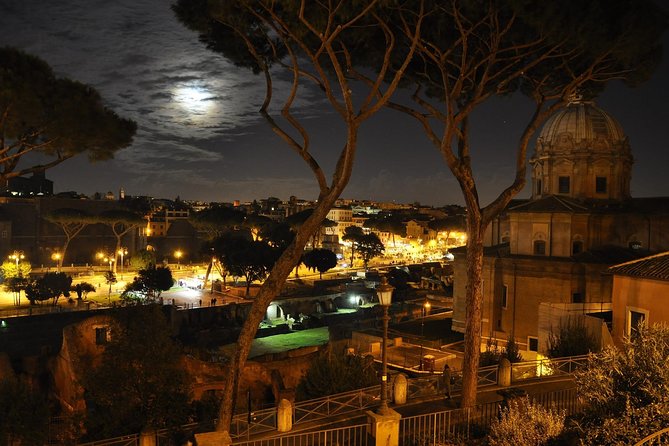
The tour meeting point is Piazza Campo de’ Fiori (P.za Campo de’ Fiori, 00186 Roma RM). It ends at Castel Sant’Angelo on Lungotevere Castello (Lungotevere Castello, 50, 00193 Roma RM).
This is a smart setup. Campo de’ Fiori is easy to find and lively even at night, which helps you get oriented. Finishing at Castel Sant’Angelo also gives you options. You can keep exploring the riverfront area afterward without needing another transit plan.
The tour uses a mobile ticket, and it’s offered in English. You’ll also want to know it’s near public transportation, so if you’re pairing this with dinner nearby, routing is easier.
Stop-by-stop route: Campo de’ Fiori and Piazza Farnese
You can also read our reviews of more evening experiences in Rome



1) Campo de’ Fiori (the execution square)
You start at Campo de’ Fiori, one of Rome’s most famous piazzas. Today it’s all bars and restaurants. The tour frames it differently: it was once an execution site. That contrast is the trick. You look at the same square but with a darker timeline in your head.
Even if you only skim the edges of the square on your own, a guided story here helps you read the space instead of just passing through it.
2) Piazza Farnese (the secret passage legend)
Next is Piazza Farnese. It’s beautiful now, but it comes with a scandalous legend involving a secret passageway and two popes. This stop is the kind of story that makes Rome feel like a stage set built for intrigue.
The practical payoff is learning how legends attach to real architecture. You start to notice sightlines, building connections, and the way squares and streets can suggest hidden routes.
Street-level eerie details: madonelles, Ponte Sisto, and a warning fountain
3) Via del Mascherone & Vicolo dei Venti (madonelles)
Then you walk through Via del Mascherone and Vicolo dei Venti. The tour points out madonelles, which are small “little madonnas.” Their job wasn’t just religious display. The route explains how they were used to stop crime.
This is one of those Rome details that you’d miss if you were only chasing the big monuments. Here it becomes functional street history—how communities marked danger and asked for protection in plain sight.
4) Ponte Sisto (Rome’s oldest bridge, with a grim reputation)
You move to Ponte Sisto, described as the oldest bridge in Rome. The story is graphic in the ways that street legends like to be: tragic accidents, power struggles, theft, and suspicious deaths.
Bridges are perfect for this kind of tour. You’re on a physical connector, but the guide turns it into a timeline of conflict. You’ll see the bridge as both an everyday shortcut and a place where consequences played out.
5) Fontana del Mascherone (the fountain with a warning)
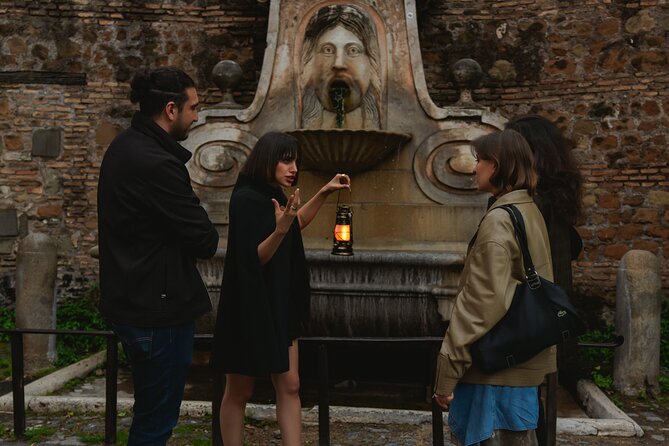
Next comes Fontana del Mascherone. Unlike other fountains, this one includes a warning to those who dare drink from it. It’s a small stop with a strong vibe because it feels like Rome is politely telling you not to mess with history.
If you enjoy odd signs and moral lessons hidden in everyday streetscapes, this is a great moment to pay attention.
Churches and prisons: when death is part of the decor
6) Chiesa di Santa Maria dell’Orazione e morte (human remains)
One stop hits hard: Chiesa di Santa Maria dell’Orazione e morte. The tour describes a 17th-century church decorated with human remains from long ago. Death is literally built into the visuals.
This is where the tour’s “ghost” label makes sense as a metaphor. It’s not about a transparent spirit. It’s about the way Rome uses real bodies, memory, and warning imagery.
If that kind of subject matter makes you uncomfortable, it’s still worth knowing you’re choosing a tour that leans into the darker side of how the city processed death.
7) Via di Monserrato (haunted apartment block, former prison)
Next is Via di Monserrato, now described as a haunted apartment block. Under that modern look is one of the worst prisons in Rome’s history.
This stop can feel strange in the best way. You walk past a normal building and the guide gives it a past that doesn’t belong in daylight. That contrast is what makes the tour memorable after you go back to regular street life.
8) Chiesa di Santa Maria in Monserrato degli Spagnoli (a dramatic story)
Then you reach Chiesa di Santa Maria in Monserrato degli Spagnoli. It’s a Spanish church, and the tour frames it with a saucy legend worthy of a soap opera.
This is a useful balance point. After heavier stops, you get a story that feels more human and scandalous, which keeps the walk from going numb.
Via Giulia and the idea that cosmetics could kill
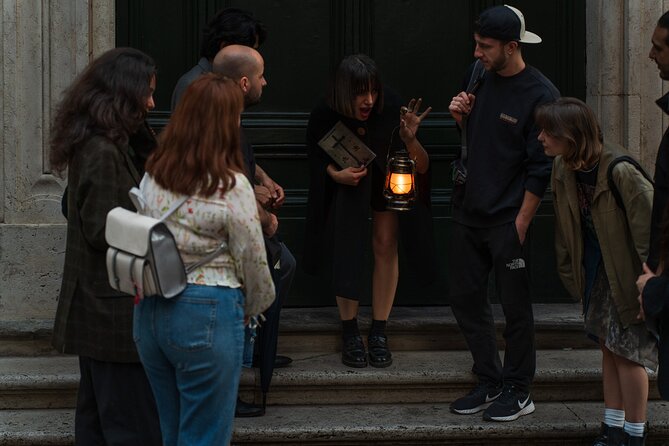
9) Via Giulia (cosmetics, danger, and a real street)
Via Giulia is up next. The tour’s framing is clever: it points out this was once a former beauty shop, and connects it to a story about when cosmetics can kill.
Even if you’re not a “true crime” person, this kind of detail makes Rome feel alive in a different way. It’s not only executions and prisons. It’s daily-life risks, too. You’ll likely rethink how you treat stories about women, fashion, and health in history.
10) Via dell’Arco dei Banchi (Mastro Titta, executioner ties)
The tour continues to Via dell’Arco dei Banchi, where the guide links a house to Rome’s most famous executioner, Mastro Titta. Executioners are not exactly gentle topics, but in Rome, they show up in architecture and street identity.
This stop works well because it turns a profession into a place you can point at. You stop thinking of history as a chapter and start seeing it as street names.
Castel Sant’Angelo: the final act and the Cenci family tale
The endpoint story: bodies on display, then angels and Cenci tragedy
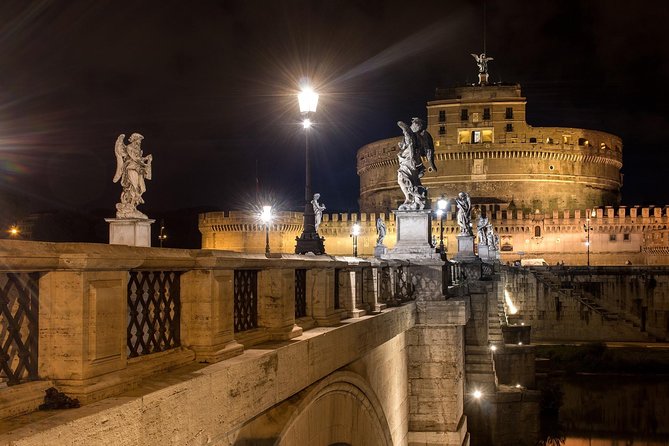
Finally you reach Castel Sant’Angelo. The tour describes the bridge used to expose bodies of executed people as a warning to sinners. Today, the mood is different. The space is surrounded by statues of angels.
Then the guide brings in the story of the Cenci family and how they met their fatal end. It’s a strong finish because it gives you a full narrative arc: fear as a warning, then fear transformed into art, symbol, and memorial.
Even if you decide you want a quieter evening after the tour, the endpoint still lets you keep moving at your own pace around Castel Sant’Angelo and the riverfront.
What this tour feels like: more crime legend than cartoon ghosts
You can expect a “scary” tone, but it doesn’t play like a Halloween skit. The best guides keep it entertaining without turning it into camp. In practice, it often lands as historical spooky stories—dark, dramatic, and funny when the guide has timing.
You’ll also hear a lot about religious imagery and street protections (like the madonelles), death symbolism (like the church with human remains), and the harsh social control of old Rome (like prisons and executions). So if you want ghosts that rattle chains, this isn’t that type of tour.
If you like history with teeth, you’re in the right place.
Tips for you: shoes, warmth, and how to hear the guide
- Wear comfortable shoes. It’s a night walking tour with multiple stops close to each other, but it still adds up on cobblestones.
- Plan for cooler weather if you’re going in the colder months. One comment in the guide’s vibe notes simply to bundle up when it’s chilly.
- For hearing: stand where you can see and hear the guide clearly, especially near busy intersections or where road noise spikes. If you’ve got any hearing sensitivity, consider bringing your own solution rather than assuming perfect audio.
Who should book this tour?
This is a great fit if:
- you want a first-night Rome plan that’s short, central, and story-driven
- you like darker legends but still want the tour to feel grounded and respectful
- you’re traveling with teens who can handle mature themes and enjoy a lively guide style
- you want something different from the usual daytime monument grind
If you’re very sensitive to death-related content or human remains imagery, you should think twice before joining. This tour does not hide from that side of Rome.
If you want more personalized attention, there’s an option to upgrade to a private tour, which can help if your group prefers slower pacing or more questions.
Should you book the Haunted Rome Ghost Night Walking Tour?
I think you should book it if your Rome goal is to understand the city’s layers, not just collect sights. The route is designed for a tight evening: quick stops, strong storytelling, and an ending that lets you continue your walk without planning.
Skip it if you want pure ghost thrills, or if you need perfect hearing conditions in noisy streets. Also, if the idea of human remains in a church stop would be distressing for you, take that seriously.
If you do book, I’d aim to arrive a few minutes early at Campo de’ Fiori so you start relaxed and set yourself up to hear every story as the night unfolds.
FAQ
How long is the Haunted Rome Ghost Night Walking Tour?
The tour lasts about 2 hours.
How much does the tour cost?
It costs $35.07 per person.
Where does the tour start?
The meeting point is Piazza Campo de’ Fiori (P.za Campo de’ Fiori, 00186 Roma RM, Italy).
Where does the tour end?
It ends at Castel Sant’Angelo (Lungotevere Castello, 50, 00193 Roma RM, Italy).
Is the tour offered in English?
Yes, the tour is offered in English.
How large is the group?
The maximum group size is 20 travelers.
Is there a mobile ticket?
Yes, the tour offers a mobile ticket.
What sites are included on the walk?
The tour includes stops such as Campo de’ Fiori, Piazza Farnese, Ponte Sisto, Fontana del Mascherone, Chiesa di Santa Maria dell’Orazione e morte, Chiesa di Santa Maria in Monserrato degli Spagnoli, Via Giulia, Via dell’Arco dei Banchi, and Castel Sant’Angelo.
Can I upgrade to a private tour?
Yes, you can upgrade to a private tour for a more personalized experience.
Is free cancellation available?
Yes. You can cancel up to 24 hours in advance for a full refund.