REVIEW · LONDON
Walking Tour around Spitalfields in the East End of London
Book on Viator →Operated by The Gentle Author's Tours · Bookable on Viator
Spitalfields rewards slow attention, even in just two hours. This walk takes you through old-and-new London with a story focus, from Nicholas Hawksmoor’s baroque landmark to a site whose spiritual use changed again and again. You’ll also spend real time on foot, so you can actually look at details instead of speed-walking for photos.
What I like most is the small group size (max 5), which makes it feel personal, not rushed, and the guide’s habit of explaining the why behind the facts. The ending is also a treat: you finish in an 18th-century drawing room with tea and cakes baked to a 1720 recipe. The only real drawback to flag is the pace and time on your feet: it’s not recommended if you can’t stand and walk for about two hours.
In This Review
- Key things to know before you go
- Spitalfields on foot: a different London, kept human
- Starting at Christ Church Spitalfields: your anchor point
- Nicholas Hawksmoor’s English Baroque: the style that makes you look twice
- Jewish immigrants, East European roots, and the needs of a community
- An ancient market story: how markets survive and change
- Priory of St Mary Spital and the long shadow of origins
- Brewing, two women, and a thoroughfare with ongoing debate
- A Huguenot chapel that became synagogue, then mosque
- Eighteenth-century houses and the Culpeper herb garden
- The 1720 tea-and-cakes finish at Christ Church Spitalfields
- Price and group size: does it feel like value?
- Pace and who will enjoy it most
- Should you book the Spitalfields walking tour?
- FAQ
- How long is the Spitalfields walking tour?
- What is the group size?
- Where does the tour start and end?
- What time does it start?
- What’s included in the price?
- What language is the tour in?
- Is the tour accessible for people who can’t stand for long?
- Is the tour run in bad weather?
- What is the cancellation policy?
- Can I bring a service animal?
Key things to know before you go
- Max 5 people means more questions and less crowd noise.
- 2 hours on foot is ideal if you like details and context, not just quick stops.
- Layers of faith and migration show up repeatedly, including a Huguenot Chapel turned Synagogue turned Mosque.
- Market history and a medieval survival are treated like living stories, not museum labels.
- Tea-and-cakes ending happens at an 18th-century drawing room overlooking Christ Church Spitalfields, with a recipe tied to 1720.
Spitalfields on foot: a different London, kept human
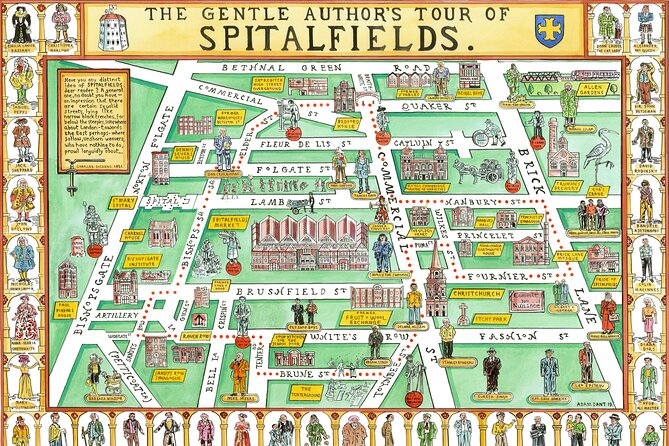
This walking tour is built for people who want the East End as it actually feels: close, lived-in, and full of overlap. Instead of treating Spitalfields as a single “historic area,” the route keeps showing you how different chapters of the city piled on top of each other. That layering shows up not only in the buildings, but also in the people whose lives were shaped by institutions, markets, and work.
You get a tight duration too—about two hours. That’s long enough to connect the dots, but short enough that you can still plan something else later in the day. If your London schedule tends to get packed, this is one of those tours that fits without eating your whole afternoon.
One more smart choice: it’s organized as a stop-by-stop storytelling walk. Each location is used as a jumping-off point for what it meant to the community at the time—and what it means now. It’s the kind of format that makes you look up at façades and down at streets with more purpose.
You can also read our reviews of more walking tours in London



Starting at Christ Church Spitalfields: your anchor point
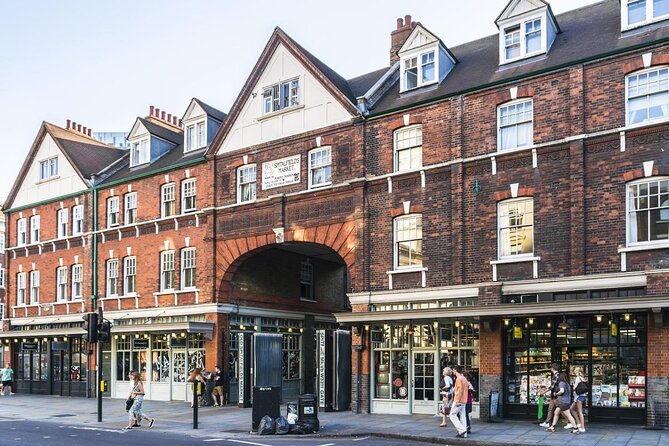
You’ll begin at Christ Church Spitalfields, Commercial St, London E1 6LY, with the tour starting at 2:00 pm. Having a clear anchor like this matters because it helps you orient yourself in an area where streets, squares, and historic sites can feel close together but not obvious.
From the start, the tour’s rhythm is about moving a little, stopping often, and then focusing on what you’re actually seeing. That’s a big deal in Spitalfields, where the city’s story is written in layers—some visible at street level, others tucked behind functions and changing uses.
If you’re coming by public transit, the tour is set up as an easy meeting plan rather than a remote start. It’s also the kind of route where you’re not trapped waiting for long transitions; most of your time goes into the walk and the story stops.
Nicholas Hawksmoor’s English Baroque: the style that makes you look twice
One of the first major moments is Nicholas Hawksmoor’s masterpiece of English Baroque. Even if you’re not a big architecture buff, this stop is a gift because it gives you a clear visual hook early in the tour. Baroque style tends to reward attention: angles, forms, and drama in the stonework all pull your eyes to the details.
What makes this stop more than just a quick photo moment is how it’s used in the story. You’re not just told that it’s “beautiful” or “important.” The tour frames it as a landmark in a neighborhood that has constantly evolved, meaning the building becomes part of the larger Spitalfields timeline rather than a standalone monument.
Jewish immigrants, East European roots, and the needs of a community
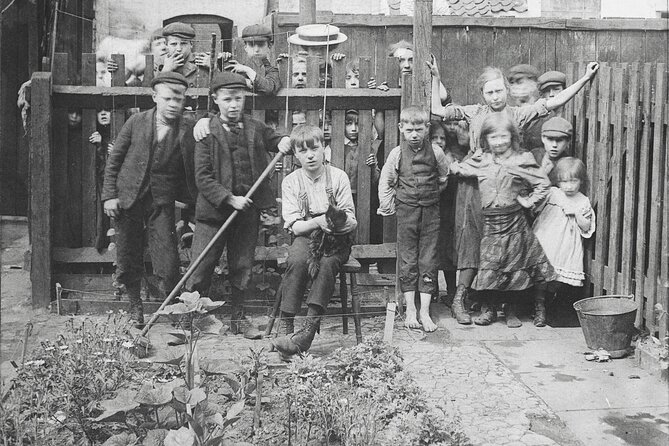
Another key part of the experience is the tour’s focus on the people connected to an institution that served the Jewish immigrant community from East Europe (the area now known as the Ukraine). This isn’t delivered as vague atmosphere. It’s brought in as lived connection—how one institution tied its purpose to meeting needs, ministering to new arrivals, and shaping day-to-day life.
For you, this matters because it changes how you read the streets. Instead of seeing only architecture and old walls, you start thinking about what systems and support networks made survival and settlement possible. That’s also why a small group helps: when you’re hearing human stakes tied to specific places, you tend to have questions, and the format makes that easier.
An ancient market story: how markets survive and change
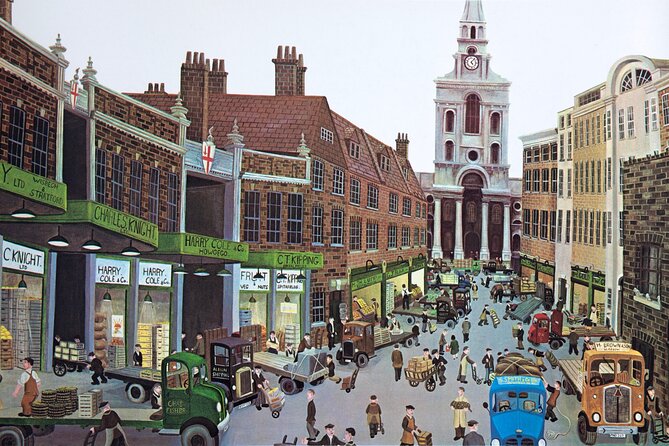
The tour then turns to an ancient market—and the story gets into the surprising staying power of places like this. Markets don’t just sell goods; they become meeting points, social signals, and economic lifelines. In Spitalfields, that idea is especially strong because the area’s identity has been shaped by trade and by waves of newcomers.
You’ll also hear the tour’s note about the purpose of an astonishing medieval survival. That phrase is a useful reminder: some structures are still present for a reason, even if their original function has shifted or is no longer obvious. The guide’s goal is to make you understand what you’re looking at and why it still matters.






Priory of St Mary Spital and the long shadow of origins
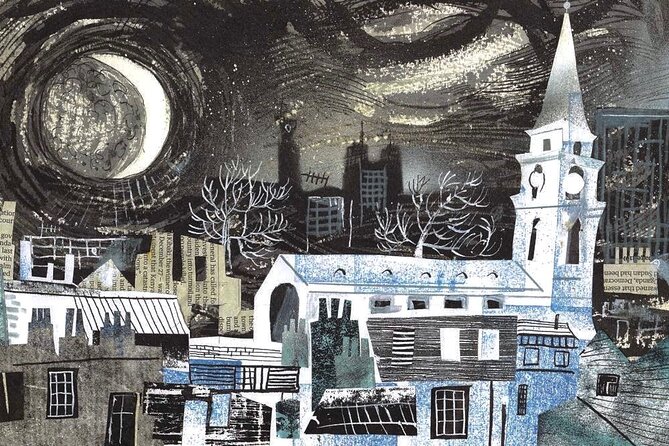
One of the stops takes you to the site of the Priory of St Mary Spital. Priory sites often feel quiet and hard to read from street level, so the value here is interpretation. The tour helps you connect the location to the bigger idea of Spitalfields beginning as a place with religious and institutional roots.
This is also where the walk earns its “why” reputation. You’re not only getting the timeline. You’re getting a sense of how origins influence later layers—because in places like Spitalfields, the city doesn’t delete earlier chapters. It reuses space, transforms purpose, and keeps going.
If you like history you can stand beside, this portion is one of the best uses of the two-hour schedule. It makes the past feel more like a system that shaped real people than like dates on a plaque.
Brewing, two women, and a thoroughfare with ongoing debate
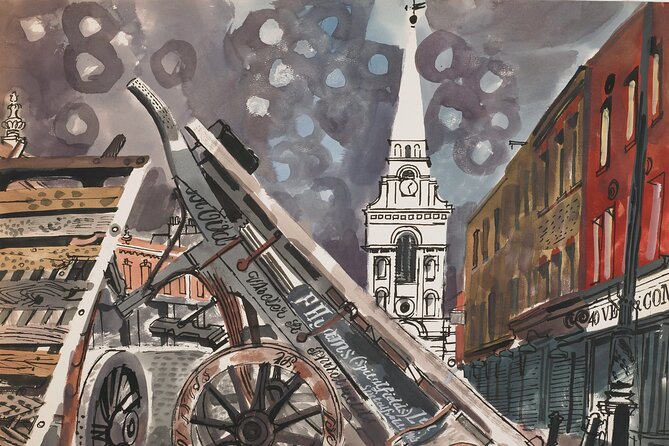
The tour includes a stop about the brewery, told through the lives of two women who worked there. That detail does a lot of work. Stories built around named individuals tend to stick in your mind, and they also help you picture what work and routine might have looked like in the neighborhood.
This is the part of the tour that balances big themes with small human scale. It also makes sense after the immigrant and market stops, because it keeps showing how institutions weren’t abstract. They relied on workers, and workers were part of the story.
Then you’ll hear the story behind a famous thoroughfare and the ongoing controversy over its future. The key value for you is that the tour doesn’t freeze history in a time capsule. It treats the present as part of Spitalfields’ continuing narrative. You leave with a sense that decisions now—about streets, buildings, and uses—can shape what future visitors will think they are seeing.
A Huguenot chapel that became synagogue, then mosque

One of the most compelling stops is the history of a building described as emblematic of Spitalfields: a Huguenot Chapel that became a Synagogue that became a Mosque. That kind of transformation is rare enough that it’s worth slowing down for. Even if you’re not religious yourself, it’s a powerful way to understand migration and community needs over time.
This is the tour’s strongest “layering” moment. When a building moves between different communities and worship practices, it tells you that people carried faith with them—and also that places can be remade without losing their deeper function as gathering spaces.
If you enjoy cultural history, this stop will likely be a highlight because it reframes architecture as something practical. It shows how buildings respond to community life, not just to design trends.
Eighteenth-century houses and the Culpeper herb garden
After the spiritual layering story, the tour turns to what everyday streets look like when you zoom in. You’ll learn the story behind fine eighteenth-century houses, and the guide uses them to explain how Spitalfields evolved in the built environment.
Next is a very specific, very tangible stop: the herb garden of the 17th-century herbalist Nicholas Culpeper. A garden visit works because it shifts you from stone and street layout into something living and practical. Even without turning it into a botany lesson, it gives you a different sensory angle and a sense of how knowledge mattered in the neighborhood.
What I like about including a Culpeper-linked stop is that it broadens the tour beyond immigration and institutional stories. It adds a thread about work, learning, and everyday health in the past. You end up with a more rounded picture of what Spitalfields could be.
The 1720 tea-and-cakes finish at Christ Church Spitalfields
The tour closes in a way that feels designed for memory, not just logistics. You’ll step into a drawing room in an 18th-century townhouse, with views overlooking Christ Church Spitalfields. It’s a thoughtful pause after walking: you put your feet up, catch your breath, and let the stories settle.
Then comes the best-known part of the ending: tea and cakes baked to a recipe of 1720. Some outings like this also include a muffin alongside tea, and the overall feel is that you’re rewarded for staying with the story to the end. The atmosphere matters here. It’s not a rushed stop; it’s about finishing the tour with a small taste of old-school hospitality.
This segment is listed as about 30 minutes, and the stop includes the admission ticket for the townhouse setting. If you’ve done other walks that end with a simple thank-you and a dispersal, this one feels more complete. You leave with a sense that the tour didn’t just show you places—it gave you a moment to experience the neighborhood’s character.
Price and group size: does it feel like value?
At $90.28 per person for about 2 hours, this isn’t a budget walking tour. But it also isn’t priced like a giant-city bus tour either. The math that makes it feel worth it is the mix of:
- Maximum 5 people, so you get a quieter, more personal experience
- Story-heavy stops that require a guide to connect themes across sites
- The included tea-and-cakes finish and the included admission ticket for the final townhouse setting
When a tour includes food and an entry component, you’re not just paying for walking. You’re paying for interpretation plus that sit-down ending. For you, that means you’re more likely to come away with a story you can retell, not just photos.
A nice extra: it’s booked on average 36 days in advance. That suggests demand, so if you have a specific day in mind, it’s smart to lock it in rather than waiting.
Pace and who will enjoy it most
This is a straightforward walking tour: you should expect standing and walking time throughout the route. The guidance is clear: it’s not recommended if you can’t stand and walk for about two hours. If you’re someone who needs frequent breaks, it may feel tight, even though the group is small.
On the other hand, most people can participate, and the tour allows service animals. It’s also listed as operating in good weather, so you’ll want to check forecasts. If weather is poor, you’ll be offered a different date or a full refund.
If you enjoy history that talks to you—history with human motives, work, migration, and real community needs—this fits. If you only want quick facts or prefer self-guided browsing, you might find the guided approach too story-driven for your taste. But for many people, this tour’s strength is exactly that: it slows you down and shows you how the neighborhood got layered into what it is today.
Should you book the Spitalfields walking tour?
I’d book it if you want a small-group walk through the East End’s layered London, with stops that connect baroque architecture, migration, markets, and faith transformations. The ending is also a practical win: you get a real break with tea and 1720-style cakes, not just a walk-off dispersal.
I’d think twice if you’re worried about standing/walking for two hours or if you prefer history told with minimal interpretation. The tour is built around storytelling, and the pace reflects that.
If your ideal London day includes the chance to look closely, ask questions, and leave with a finished experience (not just a route), this one is a strong pick.
FAQ
How long is the Spitalfields walking tour?
It lasts about 2 hours.
What is the group size?
The tour has a maximum of 5 travelers.
Where does the tour start and end?
It starts at Christ Church Spitalfields, Commercial St, London E1 6LY, UK and ends back at the same meeting point.
What time does it start?
The start time is 2:00 pm.
What’s included in the price?
The price includes a mobile ticket, and the tour ends with tea and cakes baked to a 1720 recipe. The townhouse stop also includes an admission ticket.
What language is the tour in?
The tour is offered in English.
Is the tour accessible for people who can’t stand for long?
It’s not recommended if you cannot stand and walk for about two hours.
Is the tour run in bad weather?
It requires good weather. If it’s canceled due to poor weather, you’ll be offered a different date or a full refund.
What is the cancellation policy?
You can cancel for a full refund up to 24 hours before the experience start time.
Can I bring a service animal?
Yes, service animals are allowed.