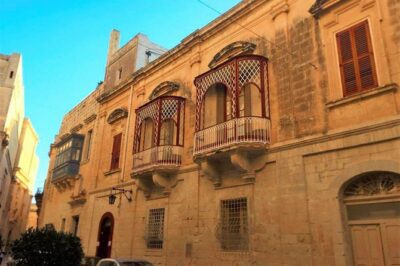
REVIEW · LISBON
Lisbon Fado Experience: Walking Tour, Dinner and Live Music Show
Book on Viator →Operated by Lisbon Destination Tours · Bookable on Viator
Lisbon at night has a special soundtrack, and this one fits. You’ll walk through the lanes of Alfama and Mouraria while your guide explains how Fado became part of Portuguese identity, then you’ll end with a live show and dinner in a traditional Fado house.
I love that the experience is built in two satisfying parts: first a guided stroll with real context at viewpoints like Miradouro de Santa Luzia, then a proper evening meal paired with live music. I also like the value setup—your dinner includes multiple courses plus wine/beer and one alcoholic drink, so you’re not piecing the night together like a scavenger hunt.
The main thing to consider is the walking: this is a night stroll with hills and steep steps, and it can feel long or tiring if you don’t like being on your feet in cold weather.
In This Review
- Key Things I’d Circle Before You Go
- Walking Alfama and Mouraria After Dark: Where Fado Begins
- Miradouro de Santa Luzia: The View Break That Makes the Walk Feel Worth It
- The Guided Walk: History, Identity, and Neighborhood Details That Pay Off Later
- Entering a Traditional Fado House: Dinner Meets Live Music
- What’s Included in Dinner (and What You Should Expect From It)
- Fitness, Weather, and Comfort: The Night Is Better If You’re Prepared
- Price and Value: Why This Usually Works for the Right Buyer
- Who This Tour Fits Best (and Who Might Prefer Something Else)
- Should You Book This Lisbon Fado Dinner and Walking Tour?
- FAQ
- What time does the tour start?
- How long is the experience?
- Is it in English?
- What’s included with dinner?
- Will I need to pay for extra drinks?
- What if the weather is bad or the tour can’t run?
Key Things I’d Circle Before You Go
- Fado explained in plain terms, with a route through the neighborhoods tied to its roots
- Miradouro de Santa Luzia viewpoint time built into the walk
- Dinner + live performance in a traditional Fado house, not a big impersonal venue
- Small-group feel (maximum 30), so the night doesn’t feel like a conveyor belt
- Meal choices and vegetarian options, plus water and soft drinks listed as available
- Comfortable shoes matter more than almost anything else you pack
Walking Alfama and Mouraria After Dark: Where Fado Begins
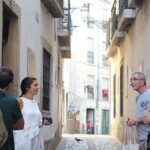
The best thing about this tour is that it treats Fado like something you can feel in the streets, not just something you watch on a stage. You start at Lisbon Destination Hostel by Estação do Rossio, near public transport, with an evening start time of 7:00 pm. From there, you head into old Lisbon’s narrow lanes and up-and-down streets, with your guide setting the scene for where Fado came from and why it sounds the way it does.
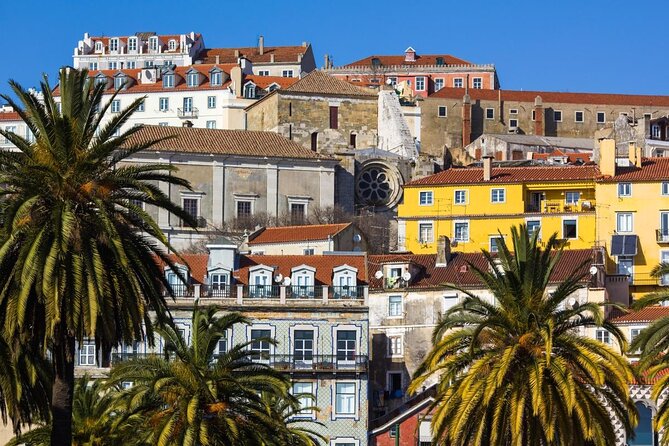
You’ll move through Mouraria and Alfama, the working-class neighborhoods people connect with Fado’s early life. The guide doesn’t just throw dates at you. You get the cultural thread: how Fado reflects local emotions, how it shaped attitudes over time, and how it became part of Portuguese self-image. That kind of context changes what the singers do later. Without it, Fado can feel like “sad music.” With it, you start hearing the story in the lyrics and the guitar phrasing.
One practical note: this is scheduled as a night walking experience, so the air and the ground matter. One common theme from people who did it is that it can be cold and tiring if you’re not used to walking at night on uneven surfaces. I’d go in planning for hills. Pack warm layers, and wear shoes you’d trust on steep cobblestones.
You can also read our reviews of more walking tours in Lisbon



Miradouro de Santa Luzia: The View Break That Makes the Walk Feel Worth It
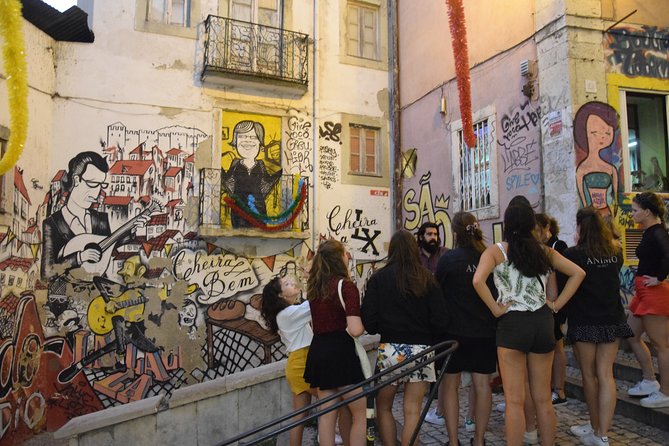
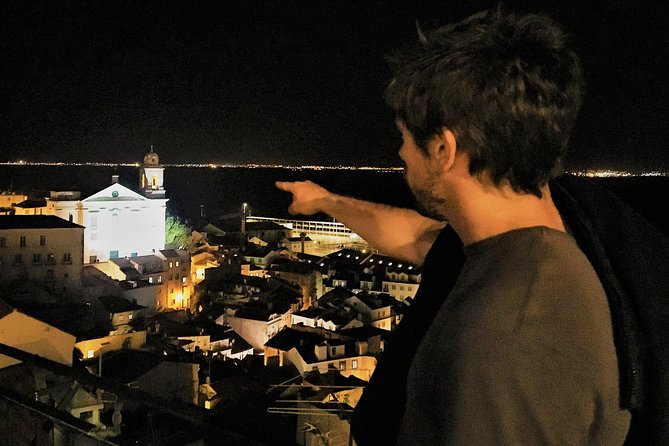
The first stop is Miradouro de Santa Luzia. This viewpoint works like a reset button. You’ve been walking through tight streets, and then suddenly you get that open sightline over Lisbon—plus a moment for the guide to connect the setting to the music.
Even if you’ve been to viewpoints in Lisbon before, this one often lands because it sits in the middle of the “old Lisbon maze” feel. It’s an easy way to remember where you are: you’re not just walking in a neighborhood, you’re moving through a place that shaped a genre of song.
And since the tour’s pacing includes this viewpoint time, you’re not stuck marching continuously until dinner. That said, you still have a full stretch of walking before the Fado house. If you’re the type who gets cranky after 30 minutes, plan for discomfort and bring a small layer you can add or remove quickly.
The Guided Walk: History, Identity, and Neighborhood Details That Pay Off Later
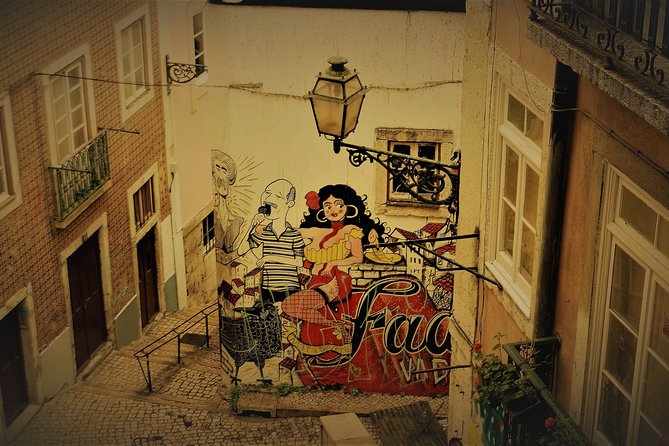
You spend about an hour on the walking portion, heading through Mouraria and Alfama with your guide. This part is where the tour earns its keep, because it’s not only “see this street, take a photo.” Your guide walks you through how Fado was born in these neighborhoods, and why it grew into something wider than music—something tied to identity.
You’ll hear cultural explanations that help you understand the vibe you’re about to experience at the end: the mournful, heartfelt feel that people associate with Fado lyrics, and the way Portuguese guitar becomes the backbone of the performance. It also helps you recognize that Fado isn’t meant to be upbeat background noise. It’s more like a storytelling style.
I also like that the pace stays “small tour” rather than “tour bus with earbuds.” With a maximum of 30 travelers, your group stays human-sized, which tends to make the guide’s interactions feel more normal. People often mention that a great guide can make or break these experiences. In this case, names like Miguel, Ness, Rodrigo, and Riu show up in examples of guides who explain the story well and keep the evening running smoothly.
If you’re someone who asks questions, this format gives you chances to do it during the walk. If you’re shy, you still won’t be left entirely in the dark because the guide is actively filling the time with context.
Entering a Traditional Fado House: Dinner Meets Live Music
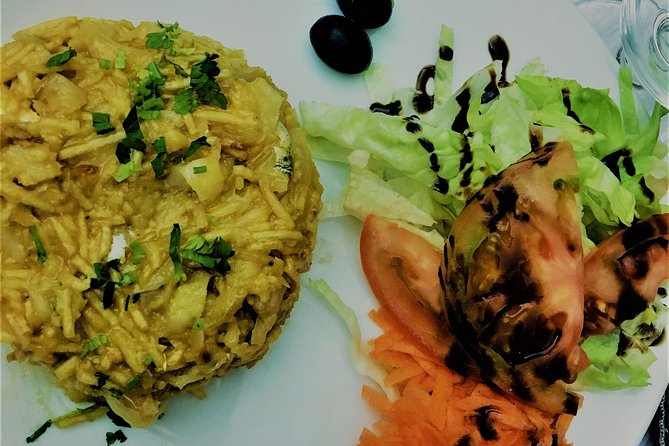
The evening’s centerpiece is the arrival at a traditional Fado house. This is where the tour shifts from sightseeing mode to “sit down and let the night happen” mode. You’re there for about three hours, and the structure matters: you get dinner in the same overall experience window as the live music.
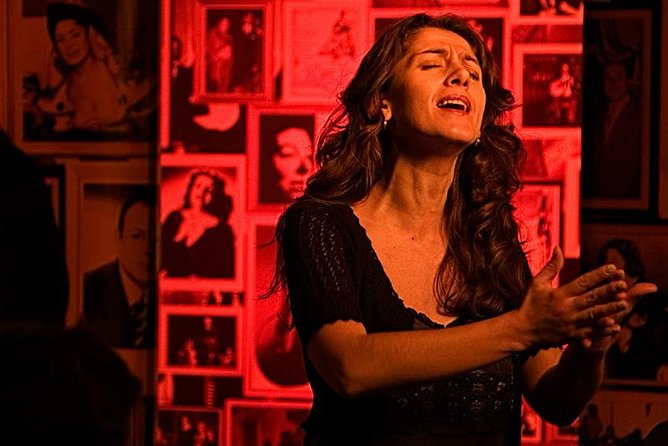
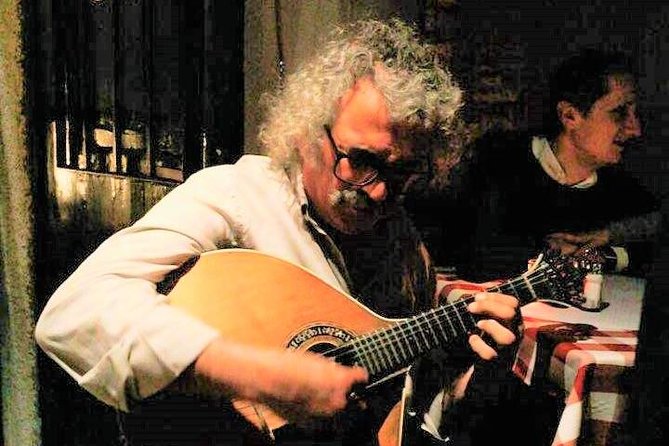
You’ll listen to Fado performed with Portuguese guitar—this is the sound most people come for. The lyrics are typically heartbreak-tinged, and the performers lean into emotional delivery rather than spectacle. You’re not watching a high-tech show. You’re watching a local music form in a smaller room where the atmosphere feels close and personal.
One detail I think helps your enjoyment: the tour’s dinner is integrated into the evening, so you don’t feel rushed to eat before the music starts. You can settle in, then the performance becomes part of the meal experience rather than an interruption.
There’s also a “right place, right time” factor. Lisbon nights in these neighborhoods can feel intimate and alive, but still far from tourist-trap loudness. This tour aims for that sweet spot—traditional, but not stiff.
What’s Included in Dinner (and What You Should Expect From It)
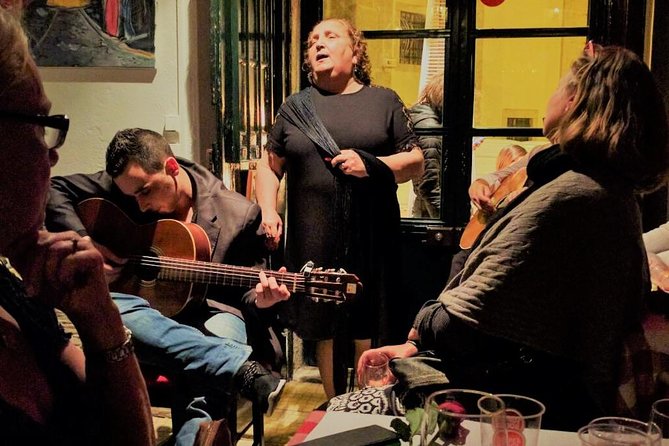
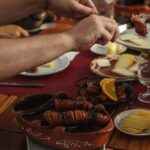
Dinner is a major part of the value here, and it’s clearly structured. You’ll get a dinner couvert first—bread, chorizo, and olives—then a main course with choices such as grilled chicken, mixed meat, cod with cream, or octopus rice. There’s dessert of the day, plus a drink included (options listed include water, wine, beer, or soft drinks).
The listing also notes that you get alcoholic beverages as one drink. Translation: you’re covered for a drink with your meal, but extra drinks are on you. If you like wine with your dinner like I do, you’ll probably want to pace yourself, because you may end up paying for the second round.
How is the food, practically? I’d call it filling and authentic in style. Some people want it to be gourmet-level, but the overall verdict is that the food’s job is to feed you comfortably while you experience Fado in a real setting. If your priority is culinary perfection above all else, you might find other restaurants do more with ingredients. If your priority is an evening that combines tradition, music, and a sit-down meal, the dinner does the job.
And if you’re vegetarian, you should be in good shape—vegetarian options are available. When in doubt, tell the operator your dietary needs when you book.




Fitness, Weather, and Comfort: The Night Is Better If You’re Prepared
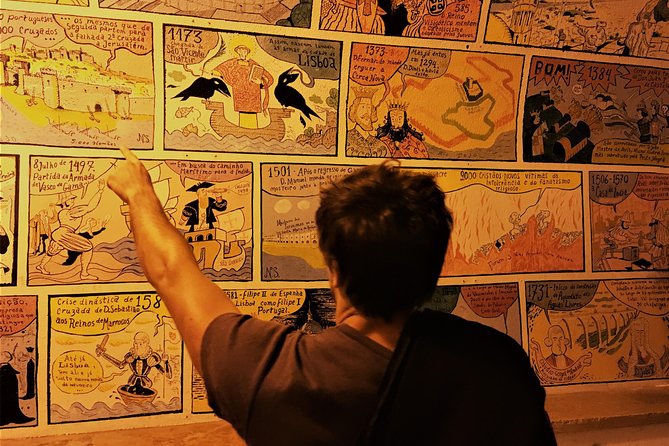
This tour is marked as moderate physical fitness and not recommended for reduced mobility. That matches what you’ll feel in Alfama: steep inclines, uneven streets, and cobblestones. Even if you’re comfortable walking, you’ll likely find the hills tiring after dark.
Cold weather can also be a factor. Some people mention it being chilly enough that they were glad they dressed warm. You can’t control Lisbon’s evening weather, and the experience requires good weather; if conditions aren’t right, the operator may offer an alternate date or refund.
So here’s the practical approach I’d take:
- Wear layers you can handle while moving uphill.
- Bring grippy shoes, not fashion sneakers.
- Expect the walk to take longer than a flat walk of the same distance.
Also note that the experience ends back at the meeting point, so you’re not left figuring out how to get back after dinner and music. That alone can be worth something when you’re trying to keep one night simple.
Price and Value: Why This Usually Works for the Right Buyer
At $59.77 per person for about four hours, you’re paying for a bundled evening: guided walk, live Fado show, and a multi-course dinner with drinks. The best value here is that you’re not buying three separate tickets and then hoping timing aligns.
Let’s break it down in reader terms. If you were to do Alfama at night on your own, you’d still need to find dinner and a legitimate Fado house. Those costs add up fast, and you’d also lose the guide’s explanation that makes the music hit harder. Here, the guide’s job is to connect the neighborhoods to the sound, which can turn Fado from a performance into an experience with meaning.
Is it the cheapest option in Lisbon? No. But you’re buying convenience and structure: a meeting point you can reach easily, a set route with viewpoints, and a traditional performance timed to your meal.
For couples, groups, and solo travelers who want a guided night with dinner included, this kind of package can be a strong deal—especially in a city where “show + dinner” can sometimes turn out to be overpriced and generic.
Who This Tour Fits Best (and Who Might Prefer Something Else)
This tour fits best if you:
- Want to see Alfama and Mouraria with a guide and not just wander without context
- Like seated evenings where you can relax after walking uphill
- Care about culture and want Fado history tied directly to the places you’re walking
- Appreciate small-group energy (max 30) and an intimate music setting
It may not fit if you:
- Need step-free routes or limited walking (it’s not recommended for reduced mobility)
- Hate cold night walks or steep inclines
- Expect a long, constant stream of singing during the whole meal (the show is part of the evening, but the format also includes the dinner experience)
For solo travelers specifically, be aware that group dynamics can vary. A few people have described feeling less engaged depending on the guide’s style and how the group interacts. If you’re outgoing, you’ll likely be fine. If you want very personalized attention, you might consider pairing it with a daytime activity too, so your trip has at least one portion where you feel fully front-and-center.
Should You Book This Lisbon Fado Dinner and Walking Tour?
I’d book it if you want an organized, traditional Lisbon night that combines walking, Fado context, and a meal without stress. The structure makes sense: viewpoint and neighborhood first, then dinner and live music in a real Fado house. When the guide is strong (names like Miguel, Ness, Rodrigo, and Riu have shown up in past runs), the evening can feel like a story you’re walking through.
I’d skip it or choose another option if walking uphill at night in cold or uneven streets sounds miserable to you, or if you need an accessibility-friendly route. And if your main goal is a top-tier restaurant experience, treat dinner as part of the cultural package rather than the star of the show.
If your goal is to leave Lisbon understanding why Fado matters—and to hear it in the place where it fits—this is a solid call.
FAQ
What time does the tour start?
It starts at 7:00 pm.
How long is the experience?
It runs about 4 hours total.
Is it in English?
Yes, the tour is offered in English.
What’s included with dinner?
Dinner includes a couvert (bread, chorizo, olives), a main course choice (grilled chicken, mixed meat, cod with cream, or octopus rice), dessert of the day, and a drink (water, wine, beer, or soft drink). Vegetarian options are available, and alcoholic beverages include one drink.
Will I need to pay for extra drinks?
Extra drinks aren’t included, so you’d pay separately if you order more.
What if the weather is bad or the tour can’t run?
The experience requires good weather. If it’s canceled due to poor weather, you’ll be offered a different date or a full refund. Cancellation can also happen if minimum numbers aren’t met, with an alternative or full refund offered instead.