REVIEW · SOFIA
Communist Walking Tour of Sofia
Book on Viator →Operated by 365 LTD · Bookable on Viator
Sofia’s Cold War buildings have a way of talking. This walking tour turns famous squares and monuments into a clear story of how communism shaped daily life in Bulgaria, then how it faded. You’ll follow a route built around big symbols like the Monument to the Soviet Army and the National Palace of Culture, plus the less-obvious spots where religion and politics rubbed shoulders.
I especially like how the tour mixes politics with everyday life—your guide doesn’t treat it like a museum label. I also like the pacing: about 3 hours with stops for short breaks, and a route that keeps you moving without sprinting across Sofia.
One thing to plan for: it’s a walking tour, so you’ll want decent shoes and to keep an eye on weather. The route is also at its best when it’s light enough to spot details on monuments and façades, since the start time is 4:00 pm.
In This Review
- Key things you’ll notice on this route
- A Cold War Walk You Can Actually Follow
- Price and timing: what $21.77 buys you
- Where the tour starts (and why the end point is smart)
- Stop 1: Sofia Court House and the logic of power
- Stop 2: Palace of Justice and the shadow of institutions
- Stop 3: St. Parascheva (the Old St. Petka) church and religion under pressure
- Stop 4: The Presidency Building and the Soviet arrival story
- Stop 5: Former Bulgarian Communist Party Headquarters and the Red Star/Lenin idea
- Stop 6: City Garden and the Mausoleum story
- Stop 7: The Soviet Army Monument and the evidence of backlash
- Stop 8: National Palace of Culture (NDK) and culture under the system
- Stop 9: The Berlin Wall segment and how the ending lands
- What your guide does that makes the tour feel real
- The walk itself: what to expect on your feet
- Who should book this, and who might skip it
- Should you book the Communist Walking Tour of Sofia?
- FAQ
- How long is the Communist Walking Tour of Sofia?
- How much does the tour cost?
- What language is the tour offered in?
- Where does the tour start?
- What time does the tour start?
- What is the tour end point?
- Is there a ticket for entry at the stops?
- How large is the group?
- Can children join?
- Are service animals allowed?
- What is included in the tour price?
Key things you’ll notice on this route
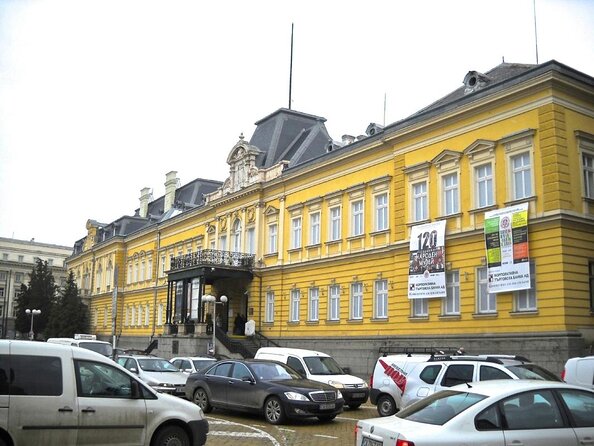
- Cold War landmarks, explained in plain language rather than slogans
- A guide’s personal stories that make the era feel less abstract
- Church and government sites in the same walk, showing how religion and power overlapped
- Controversial memory at street level, especially around the Soviet Army Monument
- The NDK area as the tour’s main stage, ending at a Berlin Wall segment
A Cold War Walk You Can Actually Follow
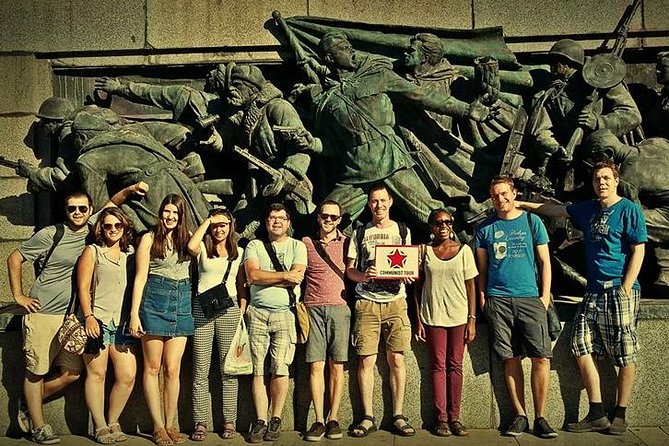
Sofia can look like any other European city until you start matching the buildings to the era that built them. This tour does that job fast. Instead of throwing dates at you, your guide connects places you can point to—courthouses, party headquarters, churches, cultural halls—to the ideas and decisions that shaped communist Bulgaria.
What makes it work is that the route is built like a story with a beginning, middle, and ending. You start with the legal and civic power of the city, move through Soviet arrival and party control, then end with how the system collapsed. By the time you reach the Berlin Wall segment near the National Palace of Culture, you’re not just seeing an object. You’re understanding why it matters.
You can also read our reviews of more walking tours in Sofia
Price and timing: what $21.77 buys you
The price is $21.77 per person for a 3-hour walk, offered in English with a mobile ticket. That’s not a “quick glance” add-on; it’s enough time to hear real context and to cover a good chunk of central Sofia on foot. Also, the stops listed are marked with free admission in the tour flow, so you’re not stacking entry fees on top of the tour cost.
Timing matters here. The tour starts at 4:00 pm. In warmer months, that’s a great start for daylight sightseeing. In winter, it can get dark early, and some monument details are harder to read when the sky drops fast. If you’re visiting in the cold season, I’d prioritize good outerwear and pack a little extra patience for the late-day light.
Where the tour starts (and why the end point is smart)
The meeting point is near Sofia City Court, bul. Vitosha 2, in the Old City Center area. The walk ends by the National Palace of Culture (NDK) on blvd. Bulgaria, specifically next to a piece of the Berlin Wall on the left side of the NDK park.
That end point is more than a neat photo. It’s a clear “wrap-up” location. You finish where the story turns toward the end of the Cold War, so your last impressions land with context instead of being a random monument stop.
Stop 1: Sofia Court House and the logic of power
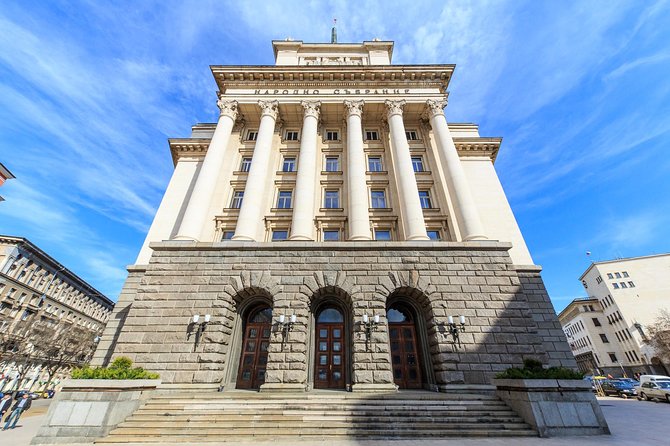
You kick off at the Sofia Court House. Even if you only look at it from the outside, a courthouse is a loud clue about how a state wants to look: official, orderly, legitimate. In communist systems, courts and rules weren’t just about law in the abstract. They were tools that shaped what people could say, do, and organize.
This first stop also works as a warm start. It gives you an anchor before the tour gets more symbolic and more emotional.
Stop 2: Palace of Justice and the shadow of institutions
Next is the starting area by the 365 Association Sofia Tours and the Palace of Justice. The tour uses these civic buildings to set up an important theme: power didn’t live only in statues and parades. It also lived inside institutions—where decisions were made and where pressure could feel normal.
If you like political history that connects to real architecture, this is where the tour starts clicking.
Stop 3: St. Parascheva (the Old St. Petka) church and religion under pressure
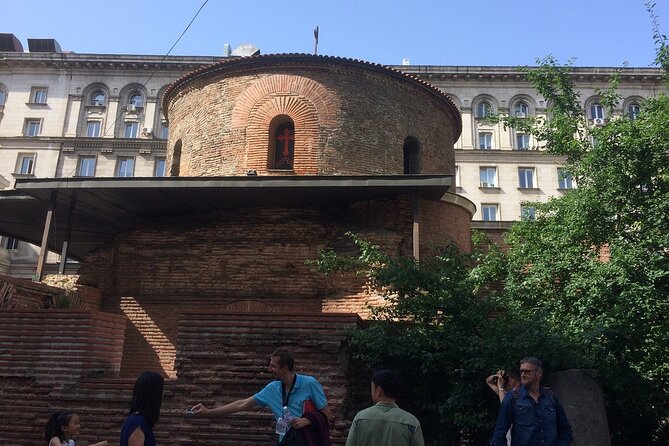
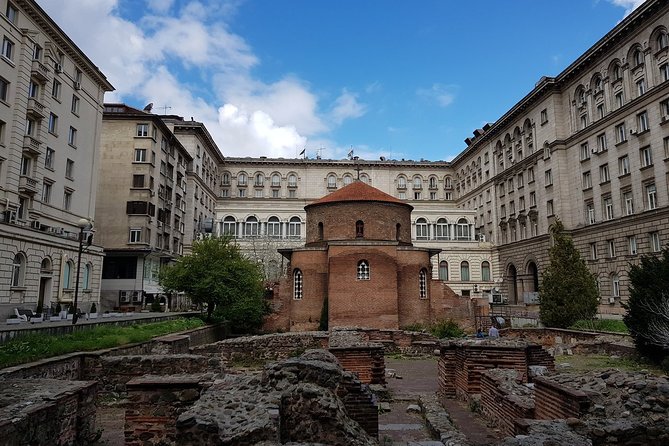
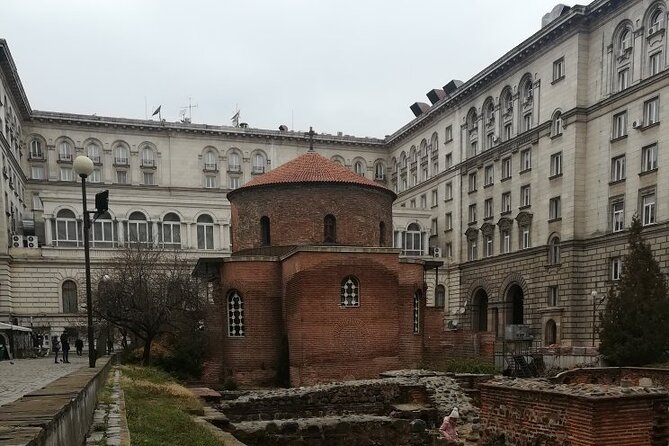
Then you slip toward a hidden spot: Ancient Orthodox Church Saint Parascheva – the Old St. Petka. During the communist period, religion didn’t vanish, but it had to survive in a tight space. This stop brings that tension into focus. You’re not just looking at a building; you’re seeing evidence that belief stayed alive, even when the state favored one ideology.
It’s also a nice contrast after civic buildings. The shift from legal power to spiritual continuity makes the walk feel human.
Stop 4: The Presidency Building and the Soviet arrival story
The tour moves to the Presidency Building, tied to the arrival of the Soviet Army in Bulgaria. This is a key turning point. The story becomes less about how the system was explained, and more about how it arrived and took hold.
If you pay attention here, you’ll start to understand why Soviet influence wasn’t only military. It shaped culture, governance, and the daily vocabulary people used to survive.
Stop 5: Former Bulgarian Communist Party Headquarters and the Red Star/Lenin idea
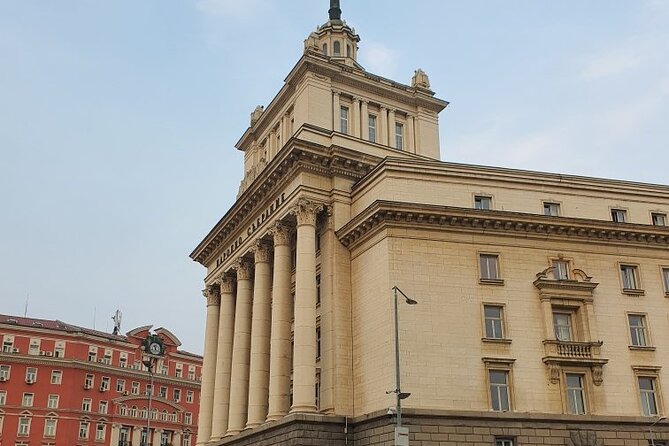
You then reach the Former Bulgarian Communist Party Headquarters and the central Largo Complex. This is where symbols take the lead: the tour points to the story of the Red Star and the Statue of Lenin.
This stop is useful if you’ve ever wondered why communist-era art and monuments feel so direct. They weren’t neutral decoration. They were messaging at street level—meant to be seen on the way to work, school, and public life.
Stop 6: City Garden and the Mausoleum story
In City Garden, the tour talks about the Mausoleum. Mausoleums are a particular kind of monument. They don’t just honor the dead; they project a system’s view of meaning, sacrifice, and permanence.
Here’s what I like: it helps you connect bigger political themes to a specific place. It’s easier to remember the story when your feet are standing right next to it.
Stop 7: The Soviet Army Monument and the evidence of backlash
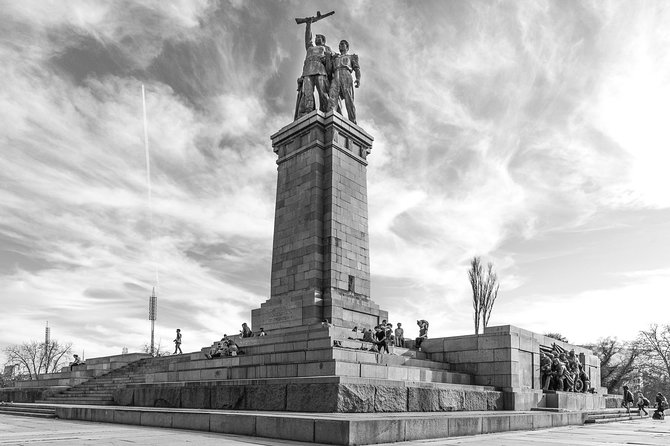
Next is the Soviet Army Monument, described as Sofia’s most controversial monument and linked with graffiti art and early uprisings against the communist regime.
This is one of the stops where the tour’s tone really matters. Public memory in Sofia doesn’t sit quietly. It’s contested, visible, and layered. If you’re sensitive to political history, keep that in mind: this stop isn’t about neat nostalgia.
Also, it’s a good place to slow down and look at details. Even when you can’t read everything, you can usually see the “after-life” of symbols—how people responded once the era started slipping away.
Stop 8: National Palace of Culture (NDK) and culture under the system
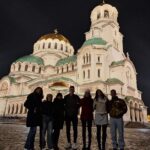
You continue to the National Palace of Culture (NDK), the biggest communist-era landmark on the route. The tour frames it as a cultural hub, not just a building with a specific style.
This is important context for anyone who thinks communism was only about politics. States that run culture also try to shape what people enjoy, where they gather, and what feels acceptable. The NDK is a physical clue to that strategy.
It’s also a practical stop. You get a chance to regroup after monuments and memorials, with lots of space around the area for people-watching.
Stop 9: The Berlin Wall segment and how the ending lands
The final stop is the Berlin Wall theme, with the tour ending next to a piece of the Berlin Wall by the NDK park.
You’ll get the story of how it all ended, and why the fall of communist systems didn’t happen in one single dramatic moment everywhere. By finishing here, you also get an emotional punctuation mark. It’s not just “the past.” It’s a way to connect Sofia’s story to the wider European timeline.
What your guide does that makes the tour feel real
A walking tour lives or dies on its guide. This one has a consistent reputation for storytelling and personal connection. You might encounter guides like Nikola, Vasko, Yoan, Niki, Stefan, or Martin, and the common thread in their approach is simple: they connect the buildings to lived experience.
A few specific strengths show up in that pattern:
- They pace the walk with enough breaks that you don’t get mentally fried.
- They answer lots of questions instead of rushing you past.
- They explain the “pros and cons” angle so the tour doesn’t feel like one-sided propaganda.
There’s also something practical here. People in winter and bad weather often worry that a 3-hour walk will be a grind. The better guides plan for it—short pauses, easier routes, and time to reset.
The walk itself: what to expect on your feet
This tour is about 3 hours and covers multiple central stops. That means you’ll do a fair amount of walking and you’ll want to dress for the day.
One more practical note: the route is near public transportation. That’s helpful if you want an easy return to your hotel after the tour ends at the NDK area.
If you’re traveling with kids, the tour requires children to be with an adult. It can still be a great way to get history beyond textbooks, especially if your kids ask why symbols mattered.
Who should book this, and who might skip it
I think this tour is a smart choice if you want:
- a first “sense-making” history of communist Bulgaria,
- city sights you can understand without reading an encyclopedia,
- and a route that mixes big monuments with smaller, overlooked places like the hidden church.
It’s also a solid value for $21.77 because you’re paying for guiding plus context, and the listed stops include free admission markers throughout the experience.
You might skip it if:
- you hate walking tours,
- you’re only after postcard sights with zero political context,
- or you’re visiting late in winter with very limited day light, since the 4:00 pm start can mean darker views later.
Should you book the Communist Walking Tour of Sofia?
If you’re the type who likes to understand what you’re seeing—not just photograph it—book this. The route hits the big names (Soviet Army Monument, NDK, Berlin Wall segment) but also adds the texture that makes history feel grounded (churches, civic buildings, party headquarters and symbolism).
For me, the best reason to choose it is the storytelling style: you get the political story and the human story in the same walk. That’s the difference between reading history and actually getting it.
FAQ
How long is the Communist Walking Tour of Sofia?
It runs for about 3 hours.
How much does the tour cost?
The price is $21.77 per person.
What language is the tour offered in?
The tour is offered in English.
Where does the tour start?
The meeting point is at Sofia City Court in the Old City Center area, bul. Vitosha 2, 1000 Sofia, Bulgaria.
What time does the tour start?
The start time is 4:00 pm.
What is the tour end point?
The tour ends at the National Palace of Culture (NDK) by blvd. Bulgaria, next to a piece of the Berlin Wall on the left side of the NDK park.
Is there a ticket for entry at the stops?
The listed stops show admission ticket free.
How large is the group?
The tour has a maximum of 25 travelers.
Can children join?
Children must be accompanied by an adult.
Are service animals allowed?
Service animals are allowed.
What is included in the tour price?
It includes a local guide and a professional guide, plus a mobile ticket.