REVIEW · PISA
Pisa: 2-Hour Walking Tour
Book on GetYourGuide →Operated by Pisa Explorer · Bookable on GetYourGuide
Pisa’s famous tilt is just chapter one. This 2-hour walking tour mixes the big photo stops with the smaller, real-life parts of town, guided by David with headsets so you don’t miss the stories. You’ll work your way through Pisa’s quarters and viewpoints and end at the iconic Torre di Pisa area.
I especially like two things. First, the route starts with orientation right at Pisa Centrale, so the city makes sense as you walk. Second, you get detours that most people skip, like the Keith Haring mural and the market atmosphere around Piazza delle Vettovaglie.
One possible drawback: the walk is packed with stops and facts. If you want lots of quiet time for photos, or you’re traveling with kids who get bored fast, you may find you need to manage the pace and attention.
In This Review
- Key points you’ll actually care about
- Why a 2-hour Pisa walk beats a tower-only sprint
- Starting at Pisa Centrale fountain: your shortcut to orientation
- Keith Haring mural: the modern pause most people miss
- Down the south bank: Corso Italia and the quarters of Sant’Antonio and San Martino
- Along the Arno: Ponte di Mezzo and riverbank photo angles
- North bank charm: San Francesco and Santa Maria
- The heart of Pisa walk: Borgo Stretto and Piazza delle Vettovaglie
- Piazza die Cavalieri: where the architecture gets political
- The Square of Miracles finish: Cathedral and Leaning Tower from a better angle
- Guide David (and why the stories help you remember Pisa)
- Price and value: what $30 buys you in real terms
- Pace, listening, and practical comfort tips
- Should you book this Pisa 2-hour walking tour?
- FAQ
- Where does the tour meet?
- How long is the Pisa walking tour?
- What does the tour include for hearing the guide?
- Is the tour in English?
- Does the tour end at the Leaning Tower?
- Is it wheelchair accessible?
- What should I bring?
- Is it family and pet friendly?
Key points you’ll actually care about
- Start smart at Pisa Centrale with a quick intro so Pisa doesn’t feel random.
- Keith Haring mural on the route gives you a modern creative beat in a medieval city.
- Arno River + Ponte di Mezzo viewpoints make the photos feel different from the tower-only shots.
- You walk south bank to north bank so you see how Pisa “turns” as you cross town.
- David’s storytelling sticks because he connects monuments to how Pisa works in daily life.
Why a 2-hour Pisa walk beats a tower-only sprint
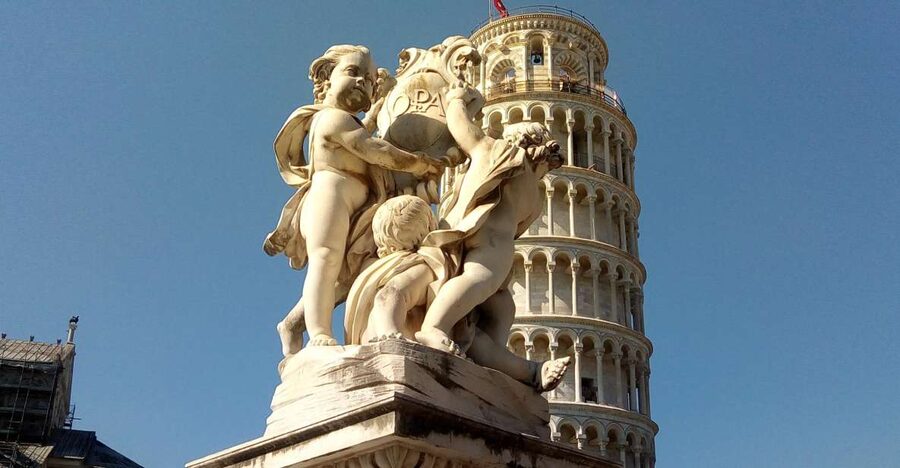
Pisa is easy to misunderstand. You arrive thinking it’s only the Leaning Tower and the Cathedral. Then you spend an hour in the square and realize you need more context—how Pisa got shaped, what people do on ordinary streets, and why certain buildings sit where they do.
This tour is built for that exact problem. It uses a simple plan: walk across town, hit major sights and some lesser-known lanes, and finish with an external look at the monumental complex. In two hours, you get a mental map and a sense of the city’s rhythm—students, locals, river life, and the long shadow of big historic events.
And yes, you still get your Leaning Tower moment. But you also learn how Pisa became Pisa, not just what it looks like.
You can also read our reviews of more walking tours in Pisa
Starting at Pisa Centrale fountain: your shortcut to orientation
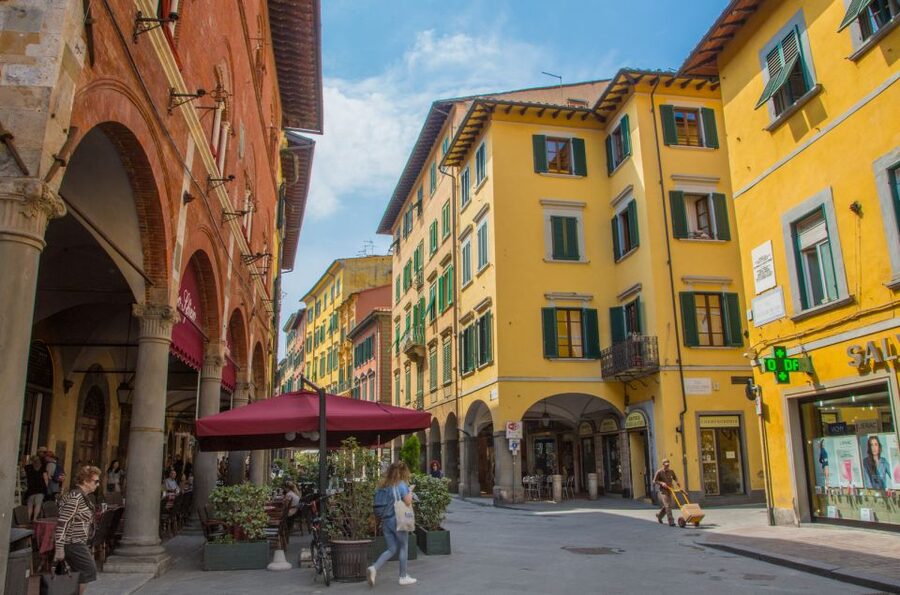
The meeting point is at the fountain in front of Pisa Centrale. That matters more than it sounds. If you’re starting on foot from the station, you immediately move with the city instead of bouncing around using taxis or random routes.
Right after the group gathers, the guide gives a general introduction about Pisa’s territory. This is the behind-the-scenes part that makes the rest of the walk click. When you later hear why certain areas feel more commercial, more historic, or more “river-facing,” you’ll know what you’re looking at.
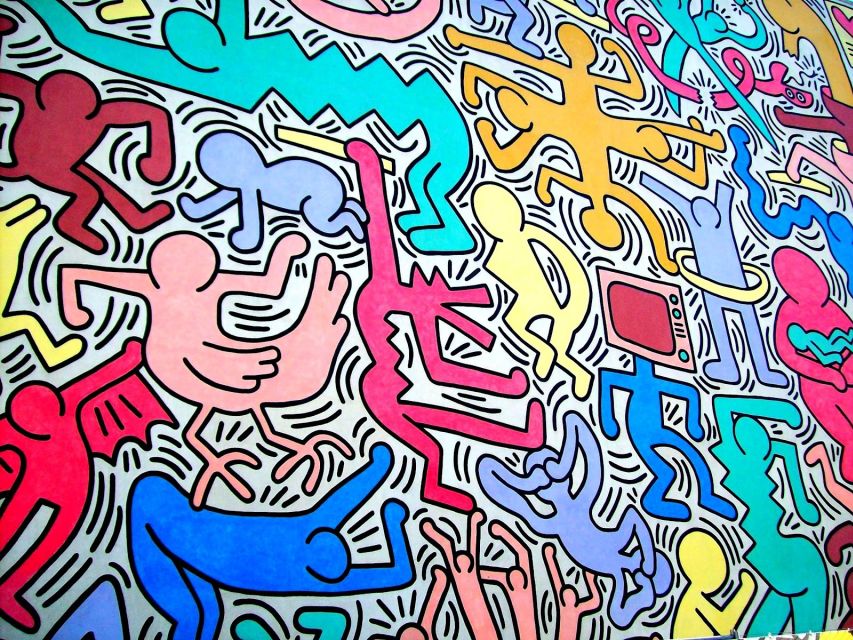
Then there’s a quick cultural hit that sets the tone: a visit to Keith Haring’s mural. This is a good reminder that Pisa isn’t trapped in the past. It’s a living university city with new layers sitting next to old stone.
Practical note: wear comfortable shoes. Pisa is flat-ish in spots, but it’s still a city walk with uneven pavement in places.
Keith Haring mural: the modern pause most people miss
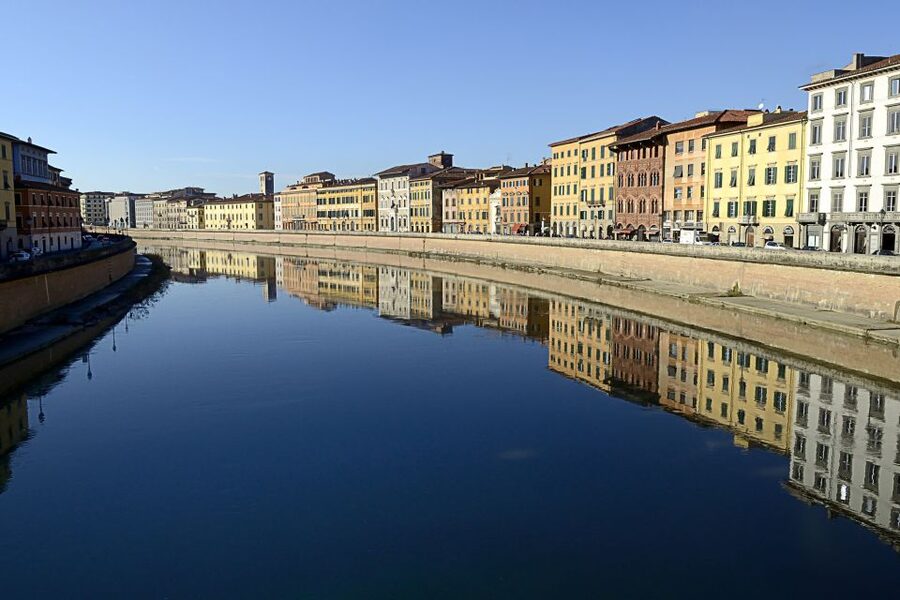
Keith Haring’s mural is the kind of stop that makes the tour feel less like a checklist. Instead of only talking about medieval details, you get a jolt of modern pop art in a very real streetscape.
Why that’s valuable: it helps you practice a key travel skill. Look at how Pisa uses space. The city’s creativity doesn’t only live inside museums. It shows up on walls, in public corners, and in the everyday route locals take.
This stop also helps you wake up your attention early. After a short intro, you’ll be more ready for the deeper historical threads the guide weaves through the rest of the walk.
Down the south bank: Corso Italia and the quarters of Sant’Antonio and San Martino
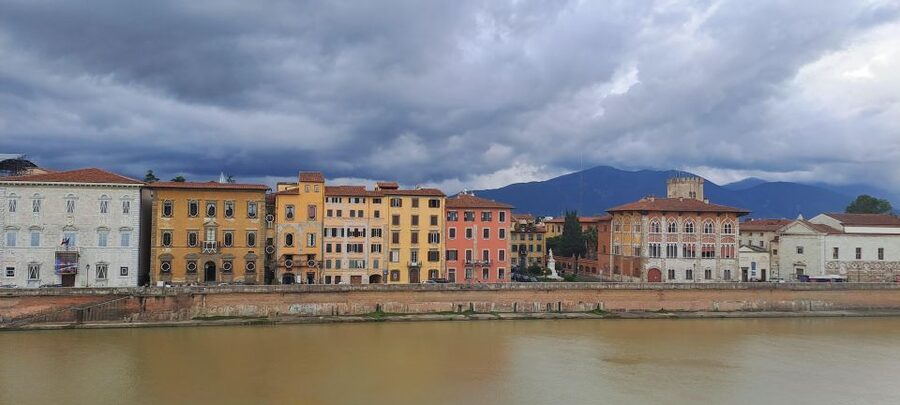
After the mural, the walk continues along Corso Italia, a busy main street that’s useful because it gives you a quick feel for present-day Pisa. This isn’t a slow-walk-only street. You see how motion and commerce work side by side with older neighborhoods.
Then you shift to the south bank quarters: Sant’Antonio and San Martino. This is where the tour starts to feel like a real city geography lesson. Different quarters carry different vibes—built shape, street pattern, and the kind of architecture you notice once the guide points it out.
As you go, the guide shares context about history and everyday life in Pisa. That’s the point of these quarter stops. You’re not just collecting landmarks; you’re learning how Pisa’s layout connects to what happened here over time.
If you’re the type who likes asking why buildings look the way they do, you’ll appreciate this section.
Along the Arno: Ponte di Mezzo and riverbank photo angles
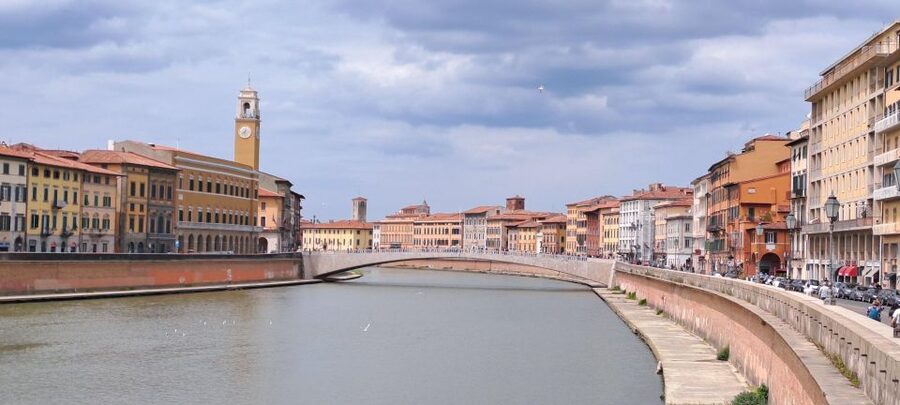
Next comes the river portion: you walk along the river Arno and get great views from the riverbanks. This is one of the best ways to understand Pisa’s “logic,” because the river doesn’t just decorate the town—it shaped it.
Then comes Ponte di Mezzo, a bridge moment where photos feel more three-dimensional. You can frame the city from across the water and see how buildings sit in relation to street levels and nearby lanes.
In short: the river section helps you get away from the tunnel-vision of tower tourism. You start to see sightlines, scale, and the way Pisa opens up in layers.
North bank charm: San Francesco and Santa Maria
After the river crossing experience, you head into the north bank districts: San Francesco and Santa Maria. This move changes what you notice. The streets start to read differently, and the architecture cues shift as you approach Pisa’s more monumental areas.
This part of the walk is also a steady stream of small “look closer” moments. The guide’s style is to point out details so you understand why the city evolved the way it did—eras of building, redesigns, and what survives.
If you’re visiting in a warm month, remember the tour pace is leisurely, but you’ll still be outside. Take quick water breaks whenever you need them.
The heart of Pisa walk: Borgo Stretto and Piazza delle Vettovaglie
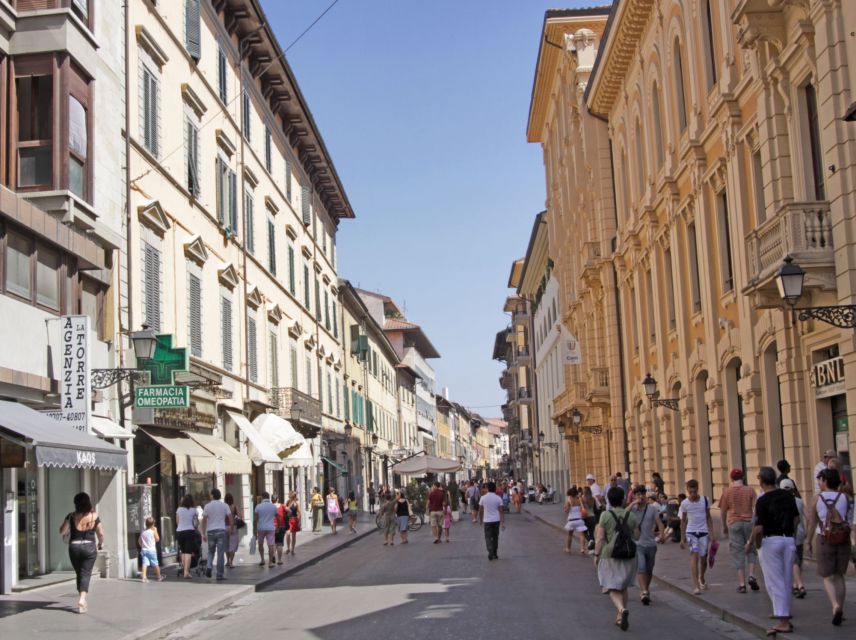
Now you enter the heart of the city along Borgo Stretto. This is one of those streets that feels like you’re walking inside the story, not just next to it. Narrow lanes, stonework, and the sense that people lived their daily routines here long before the modern crowd arrived.
Then there’s Piazza delle Vettovaglie, where the vibe often includes market stalls and trattorias. Even if you’re not there at a peak market moment, the square works as a reminder: this city’s central spaces aren’t only for sightseeing. They’re for eating, shopping, chatting, and passing time.
This stop is a big reason the tour is worth doing even if you’ve seen a bunch of Pisa photos already. You get the feel of the place you’d otherwise only notice while walking through quickly.
Piazza die Cavalieri: where the architecture gets political
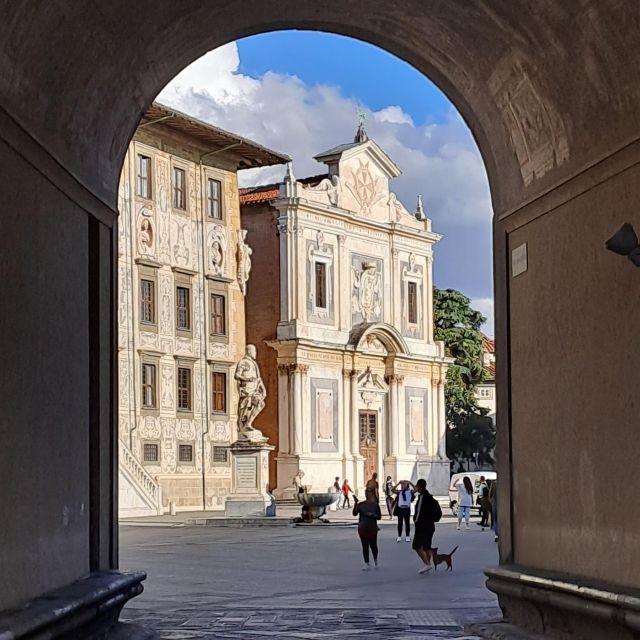
The walk includes Piazza die Cavalieri, a key landmark redesigned at the end of the sixteenth century by Florentine architects. That detail matters. It tells you Pisa didn’t just build over centuries randomly—important institutions shaped what people saw and where civic identity landed.
This square is a good moment to slow down. Look at the lines, the layout, and how the space feels planned rather than accidental. It’s also a bridge in the tour’s storytelling: from everyday quarters to more formal, monumental power.
If you enjoy seeing how architecture reflects control—who had influence, what ideas were celebrated—this stop will land well.
The Square of Miracles finish: Cathedral and Leaning Tower from a better angle
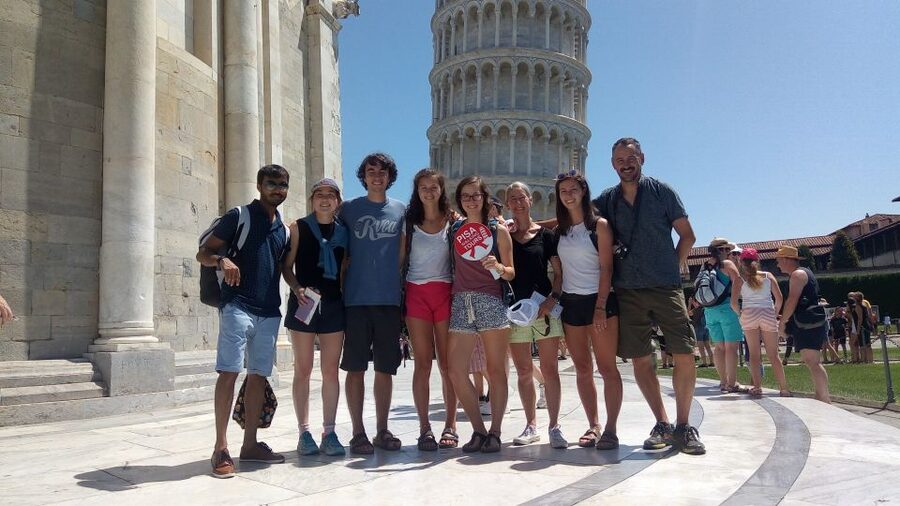
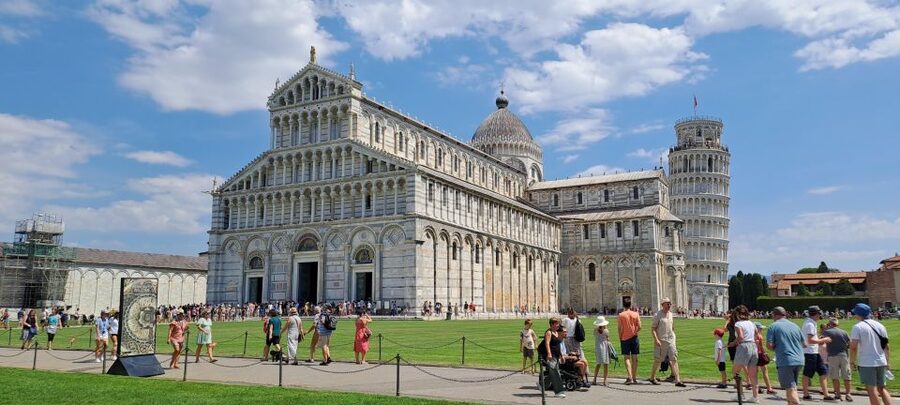
The tour rounds off with an external visit to the UNESCO protected monumental complex of the Cathedral and the Leaning Tower. You’re not locked into the square as a single viewpoint—you’re guided to understand what makes the setting so striking.
One of the best parts is the approach. You reach the iconic sights after already seeing other parts of Pisa, which means the Leaning Tower doesn’t feel like a lonely object. It feels like the end of a walk through the city’s logic.
You’ll also hear about the Leaning Tower’s story in a way that’s more than just the tilt. Based on what people say they learned, expect references to topics like restoration and broader historic context—things that explain why this monument has the reputation it does today.
Photo tip: bring patience for angles. The tour helps you find unusual places to photograph from, so you avoid the same tired postcard composition.
Guide David (and why the stories help you remember Pisa)
Across recent tours, one name shows up again and again: David (sometimes listed as David Giacomo). People consistently describe him as funny, engaged, and able to answer questions with a local historian mindset.
What I like about this kind of guiding isn’t just facts. It’s how he ties together surprising threads you wouldn’t connect alone. In the experiences people share, David connects Pisa to world topics like Galileo, WWII strategy in the region, and even restoration history tied to the Leaning Tower. You may also hear references that connect Pisa’s identity to things like Vespa culture—odd on paper, but memorable on the street.
He also gives practical help, including where to eat. One shared example is the recommendation for cecina, a classic local dish. Even if you don’t take every food suggestion, it’s a big value-add because it saves you time hunting for something good when you’re tired.
And if you’ve had disappointing tours elsewhere, you’ll recognize the difference here quickly: David answers questions in a way that makes you feel included, not shuffled along.
Price and value: what $30 buys you in real terms
At $30 per person for about two hours, this is a solid value in a city where you can spend hours walking and still not know what you’re looking at.
Here’s the math that matters for your trip: you’re paying for three things that would be hard to replicate on your own in the same time window.
- A planned walking route from station area to the monumental finish
- Headsets so you can hear comfortably in busier streets
- A guide who shapes your attention so you notice details you’d otherwise miss
If you’re only in Pisa for a half day, this tour helps you make that time count. If you’re staying longer, it still works as a baseline orientation so you can roam afterward with confidence instead of wandering.
Pace, listening, and practical comfort tips
This tour is described as a leisurely pace. That helps a lot if you’re traveling with kids, older legs, or anyone who wants history without feeling like they’re sprinting.
You’ll also have headsets, which is a quiet lifesaver when you’re walking through crowded streets. The English live guide is another practical point. Pisa has enough visitors that a lot of signage is limited, but being able to ask questions in plain speech makes a big difference.
What to bring:
- Comfortable shoes
Also keep in mind that the tour is pet and children friendly. It’s worth bringing snacks or water if it’s hot, even if the pace is easy.
Should you book this Pisa 2-hour walking tour?
I’d book it if:
- You’re seeing Pisa for the first time and want more than just the tower.
- You like guided context that helps you understand architecture and street layout.
- You want an efficient “walk the city” plan that ends at the iconic sights.
I might skip it if:
- You prefer free roaming with minimal talking and minimal structured stops.
- You want lots of downtime for photos and don’t like info-heavy guiding.
- You’re extremely sensitive to weather and your schedule is very tight.
If your ideal Pisa day is a mix of big sights and real neighborhood feel, this is a smart way to get there in two hours—especially with David leading the way.
FAQ
Where does the tour meet?
The meeting point is at the fountain in front of Pisa Centrale train station.
How long is the Pisa walking tour?
It lasts 2 hours.
What does the tour include for hearing the guide?
You get headsets to hear the guide clearly.
Is the tour in English?
Yes, the live tour guide speaks English.
Does the tour end at the Leaning Tower?
Yes, it finishes at the Torre di Pisa.
Is it wheelchair accessible?
Yes, the tour is listed as wheelchair accessible.
What should I bring?
Bring comfortable shoes for a walking tour.
Is it family and pet friendly?
Yes, it’s described as pet and children friendly.