REVIEW · WARSAW
Old Town Warsaw Walking Tour
Book on Viator →Operated by Walkative! TOUR · Bookable on Viator
Warsaw’s past comes at you fast, on foot. This Old Town walking tour strings together Krakowskie Przedmieście boulevards, the rebuilt medieval core, and a finish at the Warsaw Barbican in about 2.5 hours. It’s a simple plan that helps you get your bearings fast.
I especially like the storytelling focus: you don’t just look at facades, you learn why the city was shaped the way it was. The other big win is how easy it is to join—mobile ticket, English, and a practical route with a moderate walking load. One thing to consider: English delivery can vary by guide, and if you have trouble hearing accents or the audio gets lost, you’ll want to stay near the front.
In This Review
- Key takeaways before you go
- Starting at Krakowskie Przedmieście: your “royal past” warm-up
- Old Town (Stare Miasto) and the Royal Castle: why reconstruction feels real
- New Town Square and the Maria Skłodowska-Curie birth connection
- The flow of a 2 hours 30 minutes walk: pace, group size, and guides
- Price and value: $26.60 for a guide-led city narrative
- Tickets, meeting points, and what you should bring
- Should you book this Old Town Warsaw Walking Tour?
- FAQ
- How long is the Old Town Warsaw Walking Tour?
- What does the tour cost per person?
- Is the tour offered in English?
- What is included in the tour price?
- What’s not included?
- Can I cancel for a full refund?
Key takeaways before you go
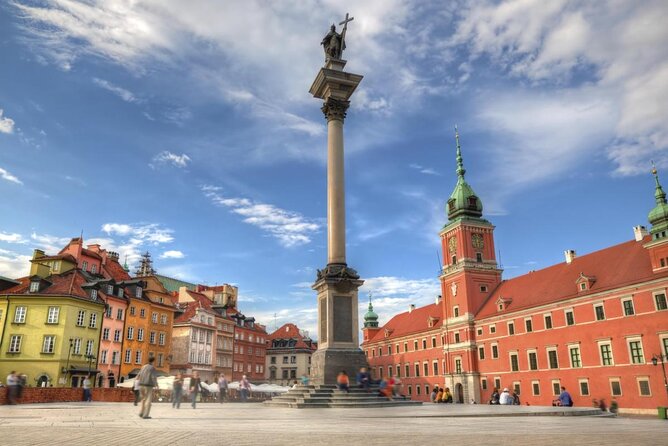
- A tight 2.5-hour route that hits major Warsaw highlights without making you suffer for it
- Reconstruction explained in real places, so the Old Town feels understandable, not confusing
- Chopin and Copernicus nearby at the start, then you move straight into medieval and modern Warsaw
- Small-ish groups (max 40) that still feel lively, not cramped
- A pay-what-you-wish format, with your booking fee covering reservation and guide pay
- All-weather operation, so you’re planning for rain and cold, not hoping for perfect skies
Starting at Krakowskie Przedmieście: your “royal past” warm-up
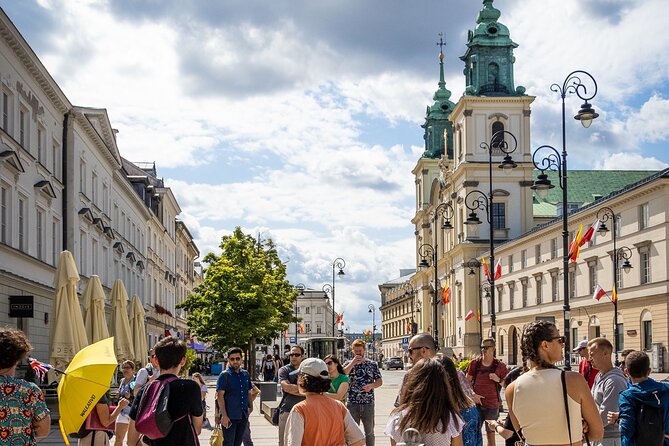
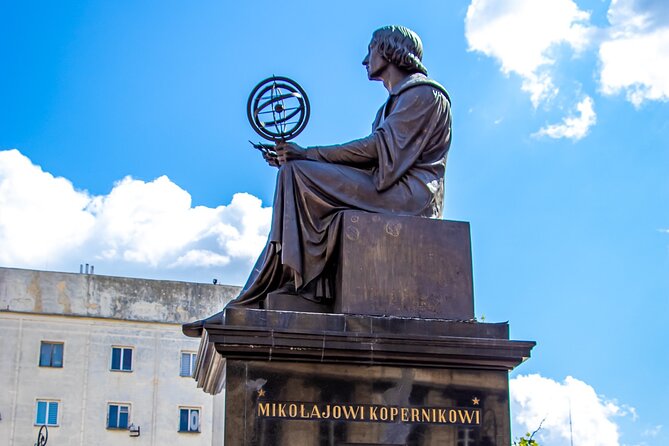
You begin at the Nicolaus Copernicus Monument on Krakowskie Przedmieście. That location matters because it sets a tone right away: you’re not starting in a museum. You’re starting in a working city street that still carries the weight of Poland’s royal-era image.
Krakowskie Przedmieście is the kind of boulevard where everything feels staged by history—palaces, parks, and monuments lined up along a main route. On this walk, you’re pointed toward major sights such as the Presidential Palace area, the Bristol Hotel vicinity, and St. Cross Church. The St. Cross Church stop is especially meaningful because it’s tied to Chopin—his heart is interred here. Even if you’re not a classical-music superfan, that detail gives the city a human anchor.
How long does this take? About an hour. That’s enough time to learn what you’re seeing and to understand why Warsaw’s story isn’t one straight line. It’s a lot of overlapping chapters: old power, cultural identity, then modern survival.
The only practical caution here is pacing. You’ll walk, but this tour also spends time talking while you stand in front of buildings. If you’re the type who gets impatient when everyone halts, you might find the pace more “orientation with frequent stops” than “quick photo sprint.”
You can also read our reviews of more walking tours in Warsaw


Old Town (Stare Miasto) and the Royal Castle: why reconstruction feels real
Then you move into Old Town, the medieval core of Warsaw with the red roofs and colorful facades people picture in postcards. Here’s the twist: this area was heavily destroyed during World War II, and what you see was rebuilt with serious care.
That’s the key to making the Old Town click. A good guide doesn’t just say, It was reconstructed. They explain how meticulous the rebuilding was, and why the result is believable enough that you might have to stop and think. The Old Town includes the Royal Castle area, and the UNESCO status comes with a clear message: this isn’t a pretend theme park. It’s an attempt to restore a place so accurately that the city’s identity could survive.
Expect this stop to feel like a guided walk-through of layers. You’ll look at the exterior and learn how to read it—what parts connect to the earlier medieval shape, and what the postwar work was trying to recover. The tour frames it as both history and emotion: Warsaw rebuilding wasn’t just construction. It was a statement about who the city wanted to be.
One practical note: you’ll want comfortable shoes. Old Town streets can be uneven, and the route includes standing and listening. This is still reasonable for moderate fitness, and many guides keep it moving enough that it doesn’t feel like a long museum tour. But you should plan on walking consistently for the full 2.5-hour experience, not just “a little sightseeing.”
If you’re short on time in Warsaw and want one area that gives you the most “I understand this city now” payoff, this is it. The Old Town stop is where the tour earns its reputation.
New Town Square and the Maria Skłodowska-Curie birth connection
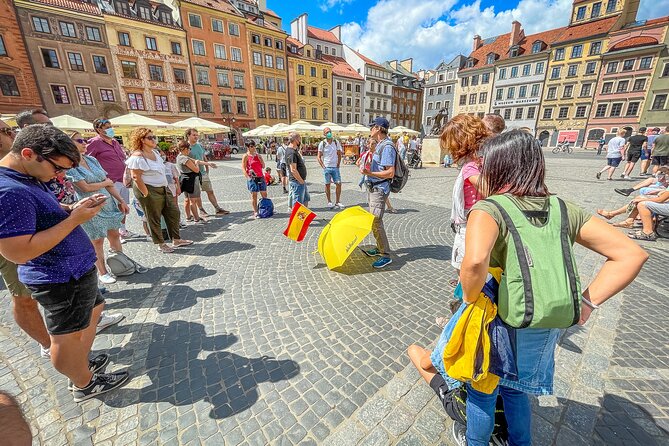
After Old Town, you head toward New Town Square. The name sounds contradictory, but it’s part of Warsaw’s medieval-era logic. This is the kind of place where you learn that Warsaw’s divisions weren’t drawn for modern tourists—they grew from older settlement patterns.
New Town is also tied to one of Poland’s most famous scientists: Maria Skłodowska-Curie. Her birth connection gives the walk a different flavor. You’re no longer focused on royal power and medieval streets. You’re seeing how Warsaw fits into a broader story of ideas and achievement.
This section takes about 30 minutes. That time window is smart. You get the essentials of New Town without overextending the walk into another half-day commitment. It also keeps the tour from turning into a marathon of too many “one-minute photo stops.”
As you get near the end, the guide brings you to the Barbican area. The Barbican stands between the Old Town and the New Town zones, so it works as a natural wrap-up point. It’s a visual hinge: you see the boundary and the shift in time periods in the city’s layout.
By the time you finish here, you’ll have a better sense of how Warsaw’s parts relate to each other spatially. That’s what helps later when you start exploring on your own.
The flow of a 2 hours 30 minutes walk: pace, group size, and guides
Total duration is about 2 hours 30 minutes. In that window, the tour covers three major stops and keeps a clear rhythm: start on a main boulevard, move into the reconstructed Old Town, then end in the New Town/Barbican area.
Group size caps at 40 travelers. That’s large enough to feel social, but small enough that most guides can manage questions and keep people together. You’ll also appreciate the built-in structure: a set start point and a set finish point mean you’re not wandering to find the next group.
The tour includes a local guide and a professional guide. You’ll usually notice this as a style difference—locals provide context and personality; the professional tends to keep the narrative tight and paced. In the reviews, guides named Aga, Andrzej, Jack, Ania, Andres, Oliwia, Andrew, and Josek show up often, which hints at consistent guiding quality. The stand-out theme isn’t just facts—it’s clarity and energy.
Still, here’s the one caution worth repeating: English delivery can vary. A few people noted issues like a strong accent or audio that didn’t carry well. If you’re sensitive to hearing accents or you rely on amplification, position yourself closer to the guide when you can. It makes a difference on any walking tour, especially one with lots of standing-stops.
Overall, this tour feels like an orientation plus story session. That sounds like “lecture,” but done well it’s more like learning to read the city. You start recognizing patterns—where power shows up, where culture shows up, and where tragedy and rebuilding changed the skyline.
Price and value: $26.60 for a guide-led city narrative
The price is $26.60 per person, which is a bargain for a guided 2.5-hour walk that covers Old Town and surrounding highlights. The big value isn’t only the length—it’s the concentration of important stops in a route that’s easy to follow.
Also, your booking is tied to a pay-what-you-wish model. In plain terms: the amount you pay covers a reservation fee and the guide’s payment. If you want a smaller private tour, you can ask the operator to organize it.
That matters for decision-making. You’re not paying for unlimited customization. You’re paying to reserve a seat and fund the guide’s time, and then you can reward accordingly based on how the guide performs for your group.
Is it worth it? If you’re new to Warsaw and want the fastest path to understanding why the Old Town looks the way it does, yes. If you already know Warsaw’s history and just want photos, you might find yourself wanting a self-guided route. But for most first-timers, this price is a solid way to compress a lot of context into a short walk.
Finally, the tour operates in all weather. That’s not always exciting, but it’s useful. You avoid the common problem of booking a walking tour and losing the day when the sky opens up.


Tickets, meeting points, and what you should bring
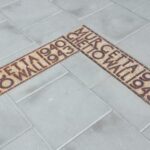
You’ll use a mobile ticket, and the tour is offered in English. The meeting start is at Nicolaus Copernicus Monument, Krakowskie Przedmieście, 00-333 Warsaw. You end at the Warsaw Barbican, Nowomiejska 15/17, 00-257 Warsaw. The tour also includes pickup and drop-off from designated meeting points, but it does not include hotel pickup and drop-off.
That means you should pick a meeting-point plan before you arrive. It’s usually easiest to base yourself near public transport and then walk the final bit to the start. The tour is near public transportation, which reduces the stress of getting there on time.
What about fitness? You’ll need a moderate physical fitness level. That usually means you’re on your feet for a good chunk of the tour with stops. If you’re comfortable walking around a central European old town, you’ll be fine.
Bring the weather gear. The operator runs the tour in all conditions, so pack for rain and cold. A practical tip: have something warm and something that blocks wind, even if the forecast looks mild.
Because the tour is guided and includes a lot of story elements, you’ll also enjoy it more if you’re ready to pause. This isn’t a “keep walking and figure it out” route.
Should you book this Old Town Warsaw Walking Tour?
Book it if you want the fastest, most human introduction to Warsaw’s Old Town and the way the city rebuilt itself after WWII. It’s also a smart choice if you like guides who use humor and clear storytelling to turn big history into something you can actually remember.
Skip it if you prefer mostly silent wandering or if you know you struggle with English audio and you hate being near sound issues. In that case, you can still enjoy Warsaw on your own—but a live guide is what makes this one work.
If you can be flexible on timing and you dress for weather, this tour is a strong way to start your Warsaw trip with context, not just sights.
FAQ
How long is the Old Town Warsaw Walking Tour?
The tour lasts about 2 hours 30 minutes.
What does the tour cost per person?
The price is $26.60 per person.
Is the tour offered in English?
Yes. The tour is offered in English and you’ll receive a mobile ticket.
What is included in the tour price?
It includes pickup and drop-off from designated meeting points, plus a local guide and a professional guide.
What’s not included?
Hotel pickup and drop-off and transportation to/from attractions are not included.
Can I cancel for a full refund?
Yes. You can cancel up to 24 hours in advance for a full refund. If you cancel less than 24 hours before the start time, the amount you paid will not be refunded.