REVIEW · LANCASTER
45-Minute Private Guided Historic Walking Tour in Lititz
Book on Viator →Operated by Lititz Historical Foundation · Bookable on Viator
Lititz history sticks best when you can see the buildings in front of you, and this private Main Street walk does that fast. I love the private group format (your people only, no crowd shuffle) and the way the guide connects Moravian life and early town stories to real architecture you can point at. One thing to weigh: you’ll cover uneven sidewalks, and on hot days the pace may feel longer than you expect, even if the tour is planned for about 45 minutes.
This is a great fit if you’re new to Lancaster County or if you’ve driven through Lititz for years and never really looked up. The tour also works for repeat visitors because it’s not just dates. It’s why these houses and church-root stories matter, told in plain language with lots of Q&A.
In This Review
- Key highlights at a glance
- Walking Lititz the smart way: Main Street on foot
- Your starting point on E Main St, and how the route is set up
- The Mueller House and Schropp House: what the early homes teach
- The Moravian question: why Lititz formed the way it did
- 25+ historic buildings: how the tour keeps it from feeling like a checklist
- Pace, comfort, and why 45 minutes can stretch (in a normal way)
- Who this tour fits best in Lititz
- Price and value: $12 for a private historic guide
- What you should bring and expect on the day
- Quick FAQ for planning your Lititz walk
- FAQ
- How long is the private guided walking tour in Lititz?
- Where does the tour start and end?
- Is this tour private or shared with other groups?
- What is included in the price?
- What language is the tour offered in?
- Can I get a refund if my plans change?
- Should you book this 45-minute private tour?
Key highlights at a glance
- Private and flexible walking pace for your group only
- Main Street historic buildings you can actually see and compare
- Moravian history explained in context of how Lititz formed
- Featured homes from the early 1790s, like the Johannes Mueller and Christian Schropp Houses
- Personal storytelling style, with guides named Kevin, Bob, Kelly, and Sheryl showing up in standout reviews
- Comfort tips from guides, including finding shady spots when weather is rough
Walking Lititz the smart way: Main Street on foot
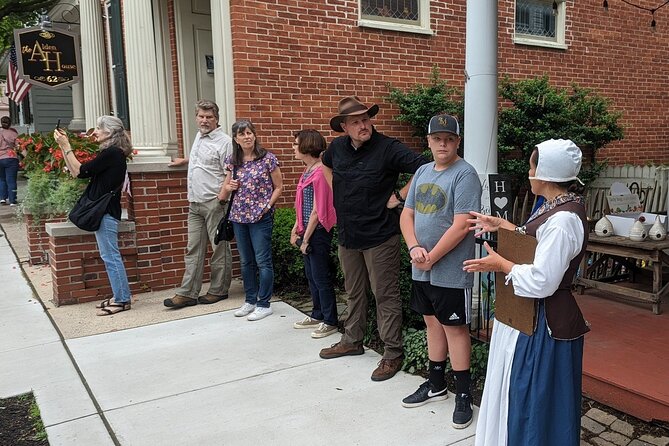
There’s a reason walking tours work here. Lititz is the kind of town where the details matter: stone and brick choices, proportions, and small architectural cues that help you date a building without a textbook. On this tour, you’re not stuck in a bus window. You’re standing close enough to notice what a wall is made of and how the place was built to last.
You’ll walk a historic Main Street route and stop at multiple points where the guide ties the architecture to the people who lived there. That combination is what makes it more than a quick history lecture. You get to see the evidence while someone narrates the story in a way that’s easy to follow.
And because it’s private, you can set a comfortable rhythm. If your group likes to linger at a doorway detail, you can. If someone needs a quick rest, that’s easier than in a big, fixed group tour.
Your starting point on E Main St, and how the route is set up
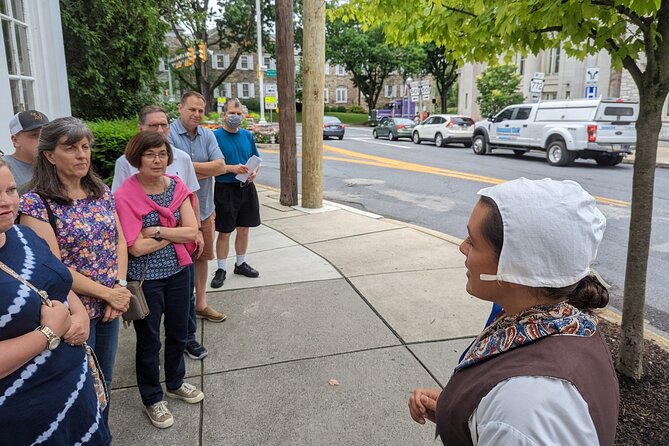
The tour meets at 14 E Main St, Lititz, PA 17543, and it ends at 212 E Main St, Lititz, PA 17543. That matters for two reasons.
First, you’re anchored in the heart of town. You’re not hunting around parking lots and cross streets all afternoon. Second, the walking route is naturally linear, so you can keep orientation without feeling lost. It’s the kind of layout that helps you come away with a mental map of Lititz quickly.
This is also a mobile-ticket experience, and the format is designed for an easy start. If you’re using public transportation, you’ll likely find it manageable since the meeting spot is described as being near public transportation.
Finally, the tour is offered in English, so you don’t need to worry about translation style. It’s meant to be conversational and accessible.
The Mueller House and Schropp House: what the early homes teach
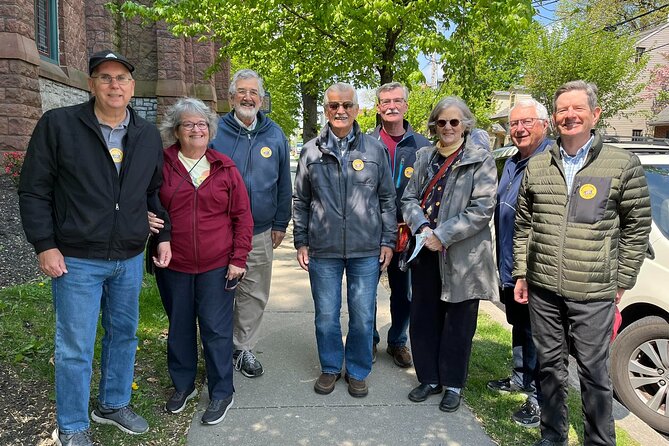
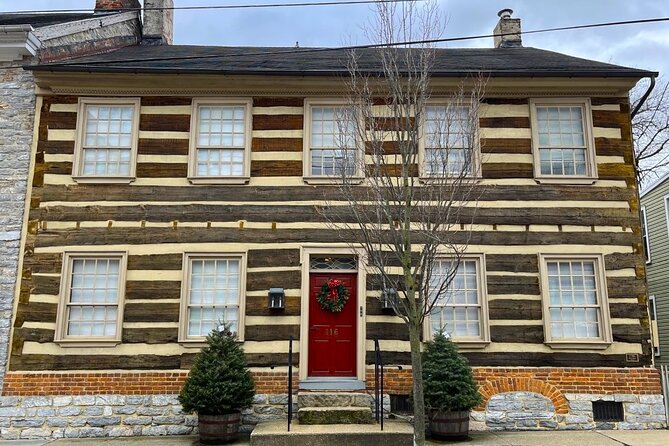
One of the tour’s featured moments is seeing early structures such as the 1792 Johannes Mueller House and the 1793 Christian Schropp House. Even if you’ve never studied historic preservation, these stops teach you how to look at old homes like a detective.
Here’s what I think makes these particular stops valuable for visitors: the tour doesn’t treat them like random “pretty old buildings.” It uses them to explain how Lititz developed and how building styles reflect the needs of the period. When someone talks about materials and construction choices while you’re standing in front of the building, the information sticks.
In some reviews, guides were praised for adding context about architecture and even how you can notice when things were made and used based on stone and brick choices and how work was laid. That kind of commentary turns you from a passive observer into someone who can actually read the street.
Possible drawback to keep in mind: if your group struggles with uneven pavement, this kind of historic walk may feel more challenging than a flat, modern sidewalk route. Bring shoes you don’t mind walking in, and slow down when you need to.
The Moravian question: why Lititz formed the way it did
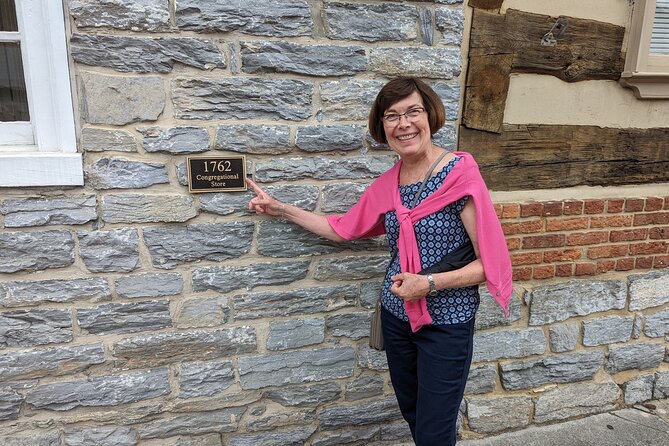
One of the biggest promises of this tour is answering a key question: What exactly is a Moravian? That topic isn’t just a quick definition. In this tour style, it’s connected to why Lititz became what it is.
Lititz is described as a town founded in 1756, and the guide uses personal stories plus architectural cues to explain how the community shaped the town. The Moravian angle is important because it gives you a framework for understanding why you see certain patterns in buildings and street life. It also helps explain why some historic details might look different from what you expect from other Pennsylvania towns.
You’ll hear facts and stories about the people who lived there long ago, not just big-name history. The guides in the reviews were repeatedly praised for making the Moravian story feel human. That’s the difference between memorizing dates and understanding how a town actually functioned.
If you’re the kind of visitor who wants the “why” behind the “what,” this portion is likely to be the highlight.
25+ historic buildings: how the tour keeps it from feeling like a checklist
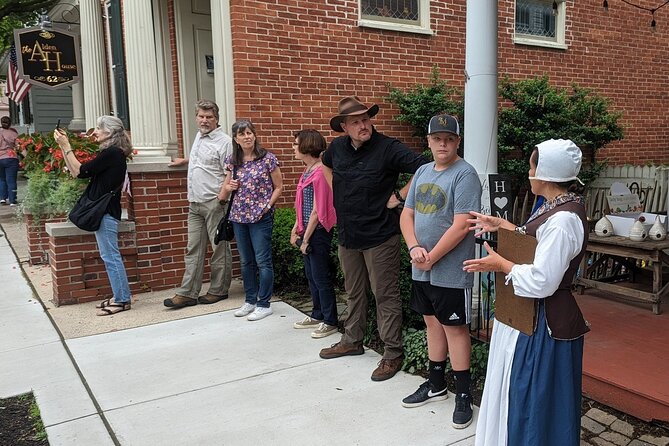
The tour is built around over 25 historic buildings, but it doesn’t have to feel like a spreadsheet of facades. The trick is timing and storytelling. Instead of rushing from one stop to the next, a good guide helps you connect what you’re seeing to what you’re learning.
What I like about this approach is that it gives you a practical takeaway. After the walk, you’re not just thinking, That was nice. You’re thinking, Now I understand why these buildings look the way they do, and how the community grew around its early roots.
A standout theme from reviews is that guides talked in a conversational style rather than reading a script. That matters because you end up asking real questions. And when someone answers with specific detail, your attention stays locked in.
You may also notice that some guides will add extra visual aids. One review mentions photos of buildings as they were originally, which can be helpful if you’re trying to picture what changed over time. Even without that, the street-level view does the heavy lifting.
Pace, comfort, and why 45 minutes can stretch (in a normal way)
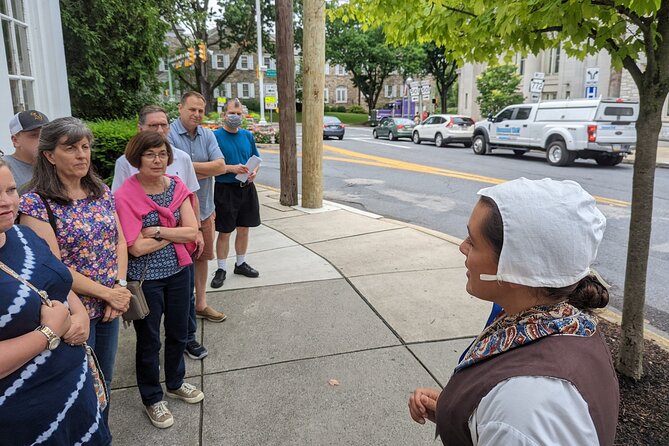
The experience is planned for about 45 minutes, but the reviews suggest a small range depending on conditions. On a very hot day, the pace can stretch, especially if you stop for shade or keep asking questions.
That’s not necessarily a problem. In fact, it can be a sign the guide is working with your group rather than forcing a rush. In one review, a guide was praised for finding shady spots and adjusting for a family’s needs, including taking breaks and keeping a little one comfortable. That’s the kind of flexibility you only get when it’s truly private.
Still, plan like a grown-up. Wear comfortable walking shoes. Expect some uneven pavement. Bring water if it’s warm. And if you’re touring with kids or anyone with mobility limits, mention pacing needs early so the guide can steer the route appropriately.
Who this tour fits best in Lititz
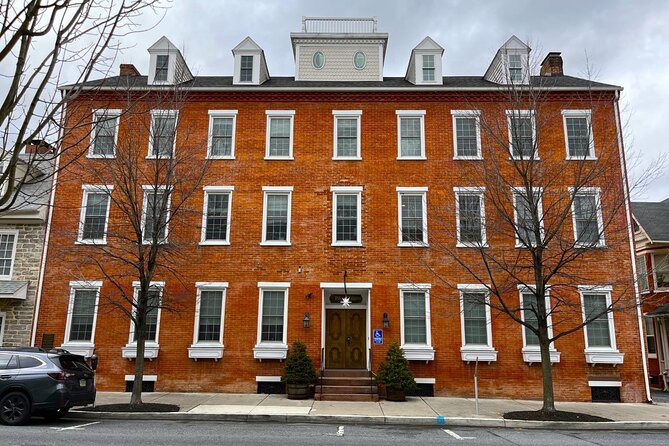
I’d put this tour in three buckets.
New arrivals to Lancaster County: You get orientation and context fast. Within under an hour, you understand why people talk about Lititz with affection and why Moravian heritage matters here.
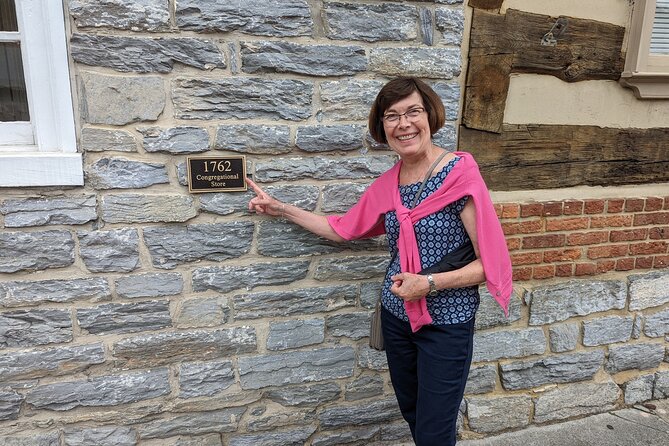
Repeat Lititz visitors: If you’ve passed by these buildings for years, this tour helps you re-see the town. One review specifically called out how someone learned to recognize architecture cues like stone and brick work, and how those details tell you when things were made and how they were used.
History and architecture fans who hate rushed tours: The private format plus guide Q&A time is built for visitors who want to ask follow-ups. Reviews repeatedly highlight guides making sure questions were answered and keeping the experience engaging.
This also makes sense for solo travelers, since a guided walk can feel easier than self-guided wandering if you want structure.
Price and value: $12 for a private historic guide
At $12 per person, the big value is not just the low price tag. It’s the fact that you’re paying for a guided interpretation of historic Main Street, plus a private-group experience.
A 45-minute walk is short enough to fit into almost any day plan, but long enough for the guide to explain more than surface-level facts. You’re not paying for a full afternoon commitment. You’re paying for concentrated attention and context: Moravian origins, why the town formed in 1756, and what early homes like those 1792 and 1793 houses reveal.
It’s also described as including all fees and taxes, so you’re not getting hit later with surprise add-ons for the basic experience.
One more value point: booking seems popular, with an average booking time of about 20 days in advance. If your trip dates are fixed, planning ahead saves headaches.
What you should bring and expect on the day
Bring:
- Comfortable walking shoes for uneven pavement
- Water for warm weather
- A phone with enough battery for the mobile ticket
- Your best curiosity (you’ll likely have time for questions)
Expect:
- A personable guide who ties historic buildings to real stories
- A route that starts on E Main St and ends nearby on E Main St
- Explanations centered on Moravian life and Lititz’s formation in 1756
- Frequent opportunities to ask questions and slow down when something catches your eye
If your guide is someone like Kevin or Bob, reviews describe a mix of entertaining storytelling and strong detail, with answers that feel conversational rather than lecture-like. Another review praised bench breaks and shade stops, which is a practical reminder that comfort is part of the experience.
And yes, one review even mentioned the tour ending with pretzels. That may not be guaranteed every time, but it’s a good example of the “small-town thoughtful” tone this experience can have.
Quick FAQ for planning your Lititz walk
FAQ
How long is the private guided walking tour in Lititz?
The tour runs about 45 minutes.
Where does the tour start and end?
It starts at 14 E Main St, Lititz, PA 17543 and ends at 212 E Main St, Lititz, PA 17543.
Is this tour private or shared with other groups?
It’s a private tour/activity, so only your group participates.
What is included in the price?
The price includes all fees and taxes.
What language is the tour offered in?
The tour is offered in English.
Can I get a refund if my plans change?
Free cancellation is available up to 24 hours in advance of the experience for a full refund.
Should you book this 45-minute private tour?
If you want a quick, high-impact way to understand Lititz, I’d book it. The combo of a private group, a focused walk down historic Main Street, and guided explanations of Moravian roots gives you a lot of payoff for a short time.
I’d be extra thoughtful before booking if your group is sensitive to uneven pavement or if you’re traveling in peak heat with limited patience for walking. In that case, plan for comfort and take shade breaks when the guide offers them.
But for most people—new to town, curious about architecture, or tired of generic history—this is an easy yes. You’ll leave with a clearer sense of how Lititz formed, what the early homes reveal, and why the Moravian story is central to the town you just walked through.