REVIEW · PARIS
Paris: Montmartre Guided Walking Tour
Book on GetYourGuide →Operated by Discover Walks · Bookable on GetYourGuide
Montmartre plays like a street-level storybook. This 90-minute, English small-group walk threads Sacré-Cœur views, Moulin Rouge energy, and local lanes into art and neighborhood tales you’ll actually remember. It’s rain or shine, and the guide aims to walk you away from the densest crowds.
I love how the tour hits the famous spots and then refuses to stop there. You get the headlines (Moulin Rouge, Sacré-Cœur), plus the in-between streets where Montmartre feels like a real village.
One consideration: you’ll be walking uphill on uneven streets. The tour isn’t suitable for wheelchair users or people with mobility impairments, so wear grippy shoes and plan for some climbs.
In This Review
- Key points that make this tour worth your time
- How the walk starts at Place Blanche and why timing matters
- Place Blanche to Moulin Rouge: iconic, but done at walking speed
- Sacré-Cœur and Paris views: not just pretty, with a point
- Moulin de la Galette and Place du Tertre: the art world meets everyday life
- Clos Montmartre vineyard and the village feel beyond postcards
- Artist footsteps: Impressionism stories that actually connect
- How the group size keeps the experience personal
- Pace, walking, and what “rain or shine” really means
- Price value: what $17 buys you in Montmartre time
- Who this tour fits best (and who should skip it)
- Should you book the Paris Montmartre guided walking tour?
- FAQ
- How long is the Montmartre guided walking tour?
- Is the tour offered in English?
- Where do I meet the guide?
- What should I bring?
- Does the tour run in bad weather?
- What’s included in the price?
- Is the tour suitable for wheelchair users or mobility impairments?
- Is there an evening or twilight departure time?
Key points that make this tour worth your time
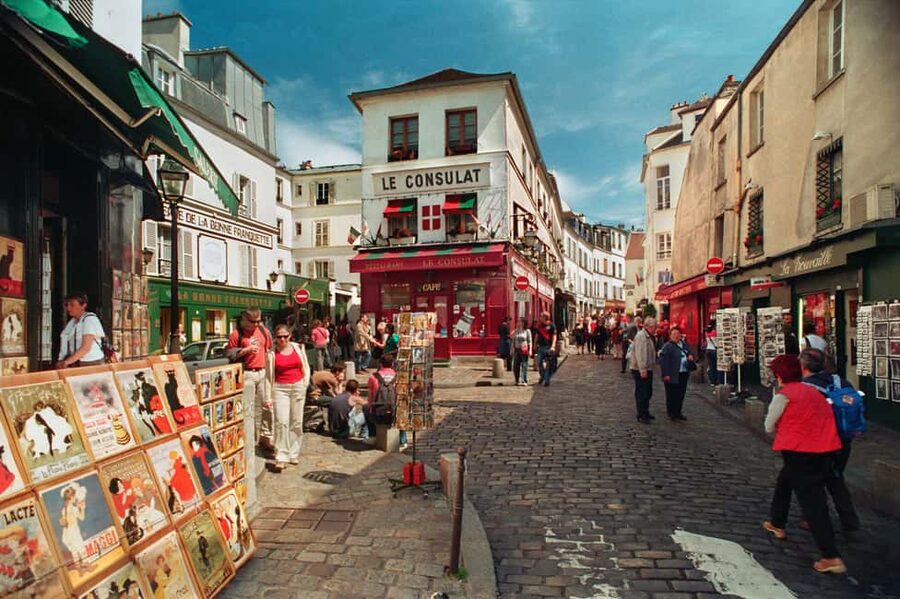
- Small groups (around 12 people) with a second guide added if numbers run higher
- English-only guide who keeps the pace moving and makes time for questions
- Rain or shine with an easy plan for a weather day
- Artist-footstep storytelling tied to Renoir, Van Gogh, Picasso, and Impressionism
- Twilight option at 6:30 PM when daytime crowds start to thin
- Street-level Montmartre from Place Blanche to the final finish at Sacré-Cœur
How the walk starts at Place Blanche and why timing matters
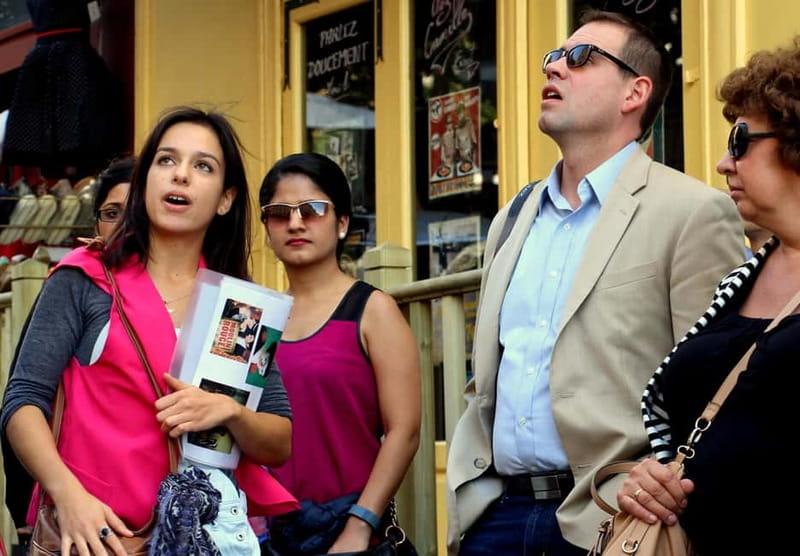
You meet outside the metro station exit at Blanche (Metro Line 2), on street level. Look for the guide in a pink vest. The start time is on schedule, and the tour runs rain or shine, so build your day with that in mind.
Montmartre is famous, but it works best when you approach it like a neighborhood. This tour does that by getting you out of the “stand-and-stare” mode and into an actual walking rhythm. The guide also tries to steer you away from the thickest crowds, which matters because Montmartre can feel like it’s built for photos, not flow.
If you’ve got the choice, the 6:30 PM twilight departure is a smart way to experience the area. The idea is simple: you catch locals as they’re out and about, and you’re there after the worst of the midday crowd crush.
You can also read our reviews of more walking tours in Paris



Place Blanche to Moulin Rouge: iconic, but done at walking speed
Right after meeting at Place Blanche, you begin moving through Montmartre’s layers. Place Blanche is a practical starting point: it’s easy to reach by Metro Line 2, and it puts you at the “real street” end of the story rather than a postcard lookout.
Then you reach Moulin Rouge for a short visit and guided stop, plus scenic views you see along the way (about 10 minutes). This is one of those moments where you’ll get a fast orientation: where the spectacle is, what the area became known for, and how that fits into the bigger Montmartre picture.
What makes this stop work on a walking tour is the framing. Instead of treating Moulin Rouge as a single photo, your guide uses it to connect to the artistic and bohemian world Montmartre became famous for. You’ll still recognize the landmark—but you’ll also understand why it belongs in the neighborhood, not just on a souvenir magnet.
A small practical note: this is a busy area. If you don’t love standing in lines of people, you’ll appreciate the guide’s attempt to move you along and keep you moving.
Sacré-Cœur and Paris views: not just pretty, with a point
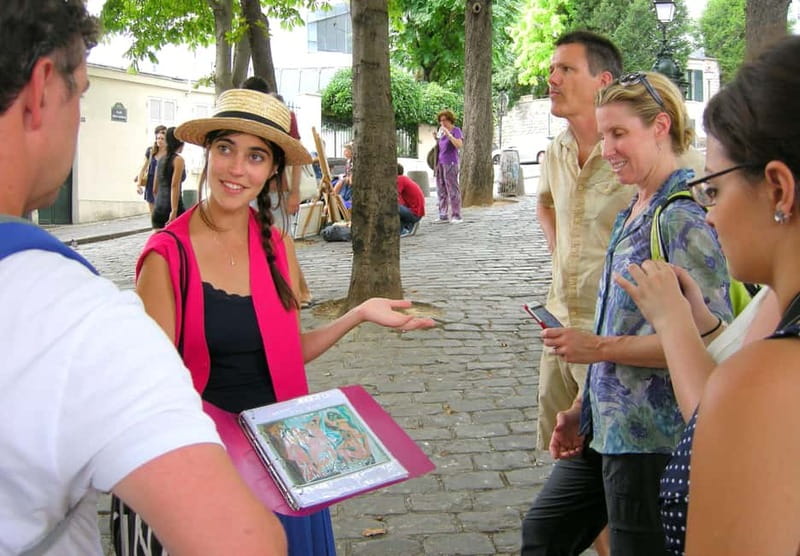
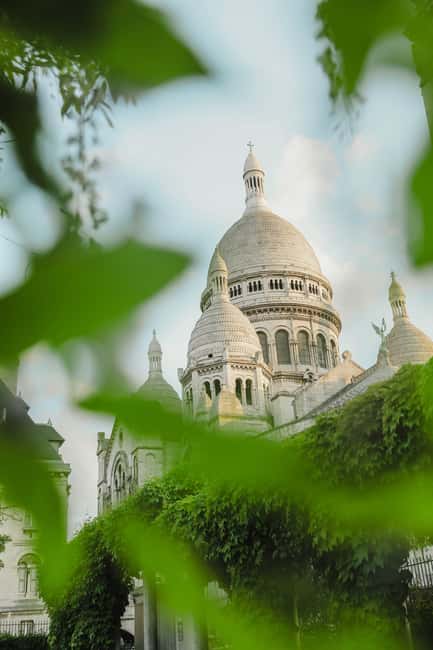
Next comes Sacré-Cœur Basilica with a guided visit (about 10 minutes). Sacré-Cœur is the obvious draw, but what makes a tour like this useful is context. The guide doesn’t just point out the building; they tell you why locals talk about it the way they do.
One of the most interesting angles on this tour is the honesty about local feelings. Yes, Sacré-Cœur is beautiful. But you’ll also hear why some Montmartrois actually dislike it. That kind of detail helps you read what you’re seeing instead of just photographing it.
You also get viewpoint moments over Paris. And since the tour includes both daytime and twilight options, you may catch different shades of the city depending on when you go. Either way, the guided stops keep you from wandering too long trying to find the “perfect” angle.
For planning: the finish is also at the basilica. So you’re not just doing a one-off hit; you’re returning there at the end to wrap up the story.
Moulin de la Galette and Place du Tertre: the art world meets everyday life
After Sacré-Cœur, the route shifts into the kind of Montmartre you can feel through your feet. Moulin de la Galette is next (about 10 minutes). This stop helps balance the picture: it’s not just the big-show Paris icon stuff. It’s more tied to the everyday art-and-culture mood of the hill.
Then you reach Place du Tertre (about 10 minutes). This square is closely associated with artists and street creativity, and the guide uses it to connect Montmartre’s reputation to what actually happened here. You’ll likely get a clearer sense of how the “artist hill” brand became real, not just a tourist label.
Two things I like about stops like this:
1) You see the places, not only the story.
2) You learn what to look for when you’re walking on your own after the tour.
For example, after Place du Tertre, you’ll probably find yourself noticing the little street details—the way shops sit, the way cafés cluster, and how the neighborhood layout supports the “hang out” feeling. That’s where the tour pays off even if you’re only in Montmartre for a day.
Clos Montmartre vineyard and the village feel beyond postcards
Then the tour makes a clever pivot: it adds a quieter nature-and-local-craft moment with Vigne du Clos Montmartre (about 10 minutes). Even if you’re not a wine person, a vineyard on a hill in Paris is a reminder that Montmartre isn’t only about monuments. It’s also about small, local rhythms.
From there, you move into what the route describes as a traditional village section (about 10 minutes). This part matters because Montmartre can start feeling like a theme park if you only chase the big names. The guide’s goal is to help you see why the neighborhood developed its distinct identity—why it felt like its own little place inside a giant city.
This is also the part where you get more “rub elbows with locals” energy: bars, cafés, and street life in the Montmartre style. The tour doesn’t claim it’s private access. It simply helps you understand how the neighborhood works so you can blend better when you wander on your own later.
You can also read our reviews of more guided tours in Paris






Artist footsteps: Impressionism stories that actually connect
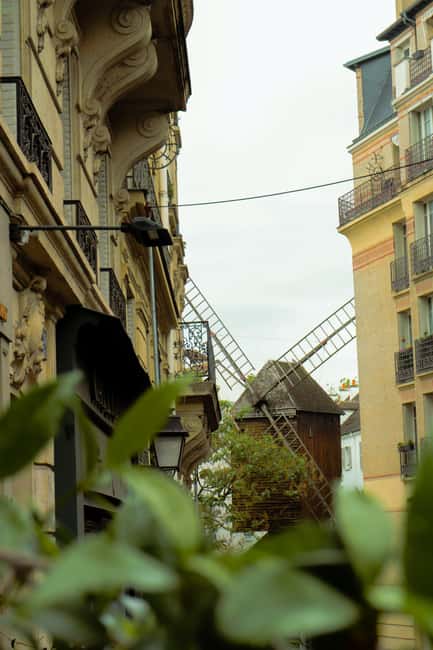
Montmartre is where art legends collected, painted, argued, and reinvented ideas. This tour leans hard into that reality. You’ll hear stories that connect the neighborhood to Impressionism and major artists like Renoir, Van Gogh, and Picasso.
One reason this approach works: it gives you a mental map. When you later see a familiar façade or street bend, you’ll know what the art world was doing there and why. Instead of memorizing dates, you remember relationships: the hill as a magnet, the neighborhood as a studio, the streets as a working canvas.
Your guide also adds the kind of local-history quirks that turn a stroll into something more. For example, the tour mentions stories like the Cabaret of the Assassins and why Montmartre became linked with those cultural waves.
A few guides in this program are also known for pointing out specific visual references tied to famous works—one example from past participants is the spot connected to Renoir’s painting-making at a mill restaurant, and even filming locations tied to Amélie. Even if you’re not chasing movie lore, it’s fun because it adds another layer to what you see in front of you.
How the group size keeps the experience personal
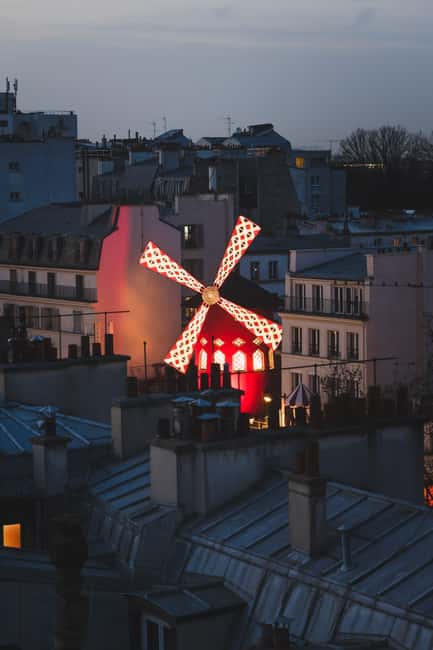
This is an English-only guided walk designed for small groups—usually around 12 people. If the group size climbs up to around 20, there’s an added second guide to keep things smooth.
That matters more than it sounds. In a small group, the guide can adjust the pace, answer questions, and manage transitions between stops without everyone getting lost. You also tend to spend less time waiting around and more time actually looking at what’s in front of you.
The guide’s style is a big part of why this tour earns strong ratings. Past groups described guides like Yago and Nema as passionate, well-prepared, and focused on telling stories clearly. Others, like Anaelle and Mathieu, were praised for mixing historical context with humor and for staying patient with kids and curious adults alike.
The practical takeaway: if you like walking tours where you’re not just herded from one sign to another, this format usually hits the sweet spot.
Pace, walking, and what “rain or shine” really means
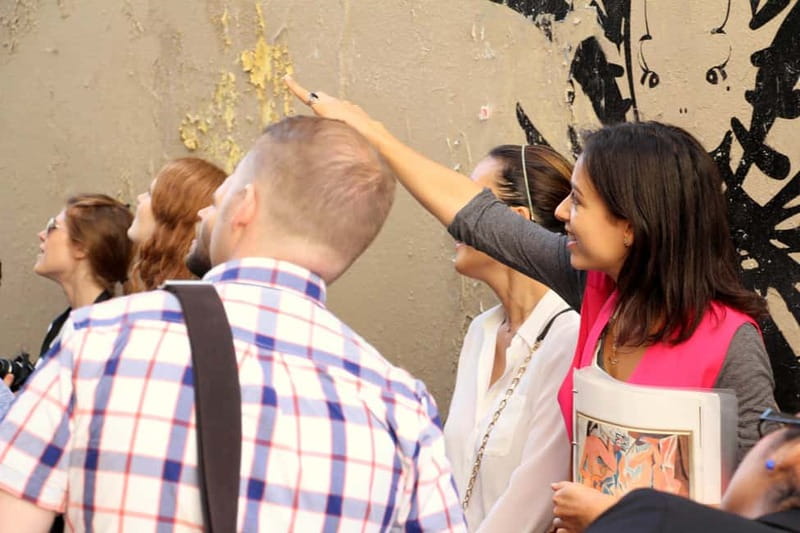
This tour is 90 minutes of walking, and Montmartre is not flat. Plan for uphill sections and uneven surfaces. Several people noted the climb, and even when the pace is managed well, you’ll still feel the hill.
That’s why the essentials are simple:
- Comfortable shoes
- Weather-appropriate clothing
- Reusable water bottle
Rain or shine is not just a slogan here. The tour keeps going, so you’ll want a rain layer you can move in. If it’s wet, grip matters. If it’s hot, you’ll want water and some shade breaks; the guide often creates those naturally by pausing at viewpoints and squares.
Also, keep an eye on the timing. The tour starts on time at Place Blanche, and if you’re late, there’s a backup suggestion: try to find the guide about 15 minutes after departure at the roundabout in front of Moulin Rouge.
Price value: what $17 buys you in Montmartre time
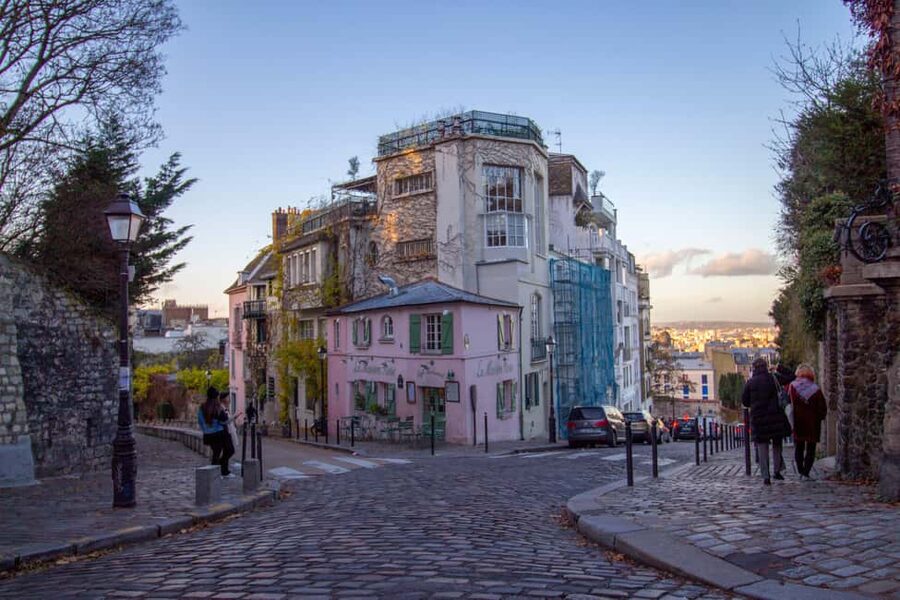
At $17 per person, this tour is priced for value—especially in a city where “a guided experience” often costs far more. Here’s what you actually get:
- An English-only local guide
- A walking tour that focuses on the neighborhood, not just a museum-style checklist
Entry fees are not included, and food and drinks aren’t included either. So the value comes from the guide’s knowledge and the way they guide you through the streets, viewpoints, and story stops.
In plain terms: if your goal is to understand Montmartre quickly and then explore afterward with better instincts, this price can make sense. If your goal is to see only one or two landmarks with minimal walking, you might feel it’s more than you need.
But for most first-timers—and for repeat visitors who want a fresh angle—this cost-to-time ratio is strong because you’re getting guidance that helps you navigate Montmartre’s “what to look at” moments.
Who this tour fits best (and who should skip it)
This experience fits best if you:
- Want an English guide who explains what you’re seeing
- Enjoy walking tours with storytelling, not just photo stops
- Want the famous landmarks plus the local-feeling streets in between
- Like a tour that tries to avoid crowds when possible
It’s not a match if:
- You use a wheelchair or have mobility limitations that make uneven uphill walking difficult
- You want minimal walking or a mostly seated experience
If you’re traveling with teens who enjoy art, or with adults who like history mixed with culture, it’s often a great fit. And if you’re traveling with kids, some guides have been praised for keeping them involved.
Should you book the Paris Montmartre guided walking tour?
I think it’s a solid yes for most people who want to get oriented fast and understand Montmartre beyond the obvious. The combination of small-group size, English storytelling, and a route that includes Sacré-Cœur plus artist-linked streets makes it a strong “first Montmartre” move.
Book it if you like:
- walking with purpose
- a guide who connects landmarks to art and neighborhood life
- flexibility with weather (since it runs rain or shine)
Skip it (or choose carefully) if you can’t handle uphill walking or uneven pavement, since it’s not designed for wheelchair access.
If you do book, show up at Place Blanche on time, wear grippy shoes, and give yourself permission to stop and look up. Montmartre rewards that.
FAQ
How long is the Montmartre guided walking tour?
The tour lasts 90 minutes.
Is the tour offered in English?
Yes. It is an English-only tour with a live guide.
Where do I meet the guide?
Meet your guide outside the metro station exit Blanche (Metro Line 2), street level. The guide wears a pink vest.
What should I bring?
Bring comfortable shoes, weather-appropriate clothing, and a reusable water bottle.
Does the tour run in bad weather?
Yes. It runs rain or shine.
What’s included in the price?
Included are the English-only guided walking tour and a local guide. Entry fees, food, and drinks are not included.
Is the tour suitable for wheelchair users or mobility impairments?
No. It is not suitable for people with mobility impairments or wheelchair users.
Is there an evening or twilight departure time?
Yes. There’s a 6:30 PM tour described as a twilight-hour experience, when locals come out and daytime crowds taper off.