REVIEW · PARIS
Paris: Montmartre Small Group Guided Walking Tour
Book on GetYourGuide →Operated by Exploring Tours and Services · Bookable on GetYourGuide
Montmartre hits different with a small crowd. This semi-private walking tour keeps the group to 8 people, so your guide can slow down, answer questions, and tell the neighborhood’s art story in a way that feels personal. You’ll start at Anvers metro and climb straight to Sacré-Cœur, then work your way through the artist haunts people actually miss when they only do the postcard stops.
I especially love two things about this experience: the focus on stories behind the streets (from painters and cabarets to everyday life) and the practical pacing that makes the climb manageable even if you’re not a “sporty” Paris walker. In the best moments, guides like Jimmy or Melanie bring the places to life with details, humor, and clear explanations that make you look up, not just forward.
One possible drawback: this tour includes a hill walk up to the basilica and is not set up for wheelchair users or people with mobility issues. If stairs and steep grades are a problem for you, plan a different approach.
In This Review
- Why the Small-Group Montmartre Tour Feels Worth It
- The Point of This Montmartre Walk: Stories, Not Just Sightseeing
- Starting at Anvers and Climbing Toward Sacré-Cœur
- Sacré-Cœur Basilica: The Stop That Sets the Tone
- Place du Tertre and the Artists’ Square Up Close
- Lapin Agile, Cabarets, and the Montmartre Side of Nightlife
- Clos Montmartre Vineyards and Why That Detail Matters
- Dalida Statue and the Artist Connections You’ll Actually Remember
- The Wall of Love and Abbesses: Montmartre’s Modern Love Letter
- Moulin Rouge at the Finish: A Last Photo and the Big-City Glance
- Price and Value: What You’re Really Paying For at $74
- Who Should Book This Tour (And Who Might Want Another Plan)
- Should You Book This Montmartre Small Group Guided Walk?
- FAQ
- FAQ
- Where is the meeting point for the Montmartre tour?
- How long is the tour?
- Which languages are available for the guide?
- What is included in the tour price?
- Are funicular tickets included?
- Does the tour run in bad weather?
- Is the tour wheelchair accessible?
- Should I plan for a bathroom stop?
- What should I wear?
Why the Small-Group Montmartre Tour Feels Worth It
- Up to 8 people means less crowd pressure and a more human pace through tight streets
- You get both the famous stops and the off-the-beaten-path streets behind them
- A guided Sacré-Cœur visit plus meaningful art-and-artist context, not just photo stops
- The route mixes big landmarks with small details like cabarets, statues, and old atelier-adjacent corners
- Your guide brings the neighborhood alive through narration and on-the-spot storytelling (some use photo aids or matching music)
The Point of This Montmartre Walk: Stories, Not Just Sightseeing
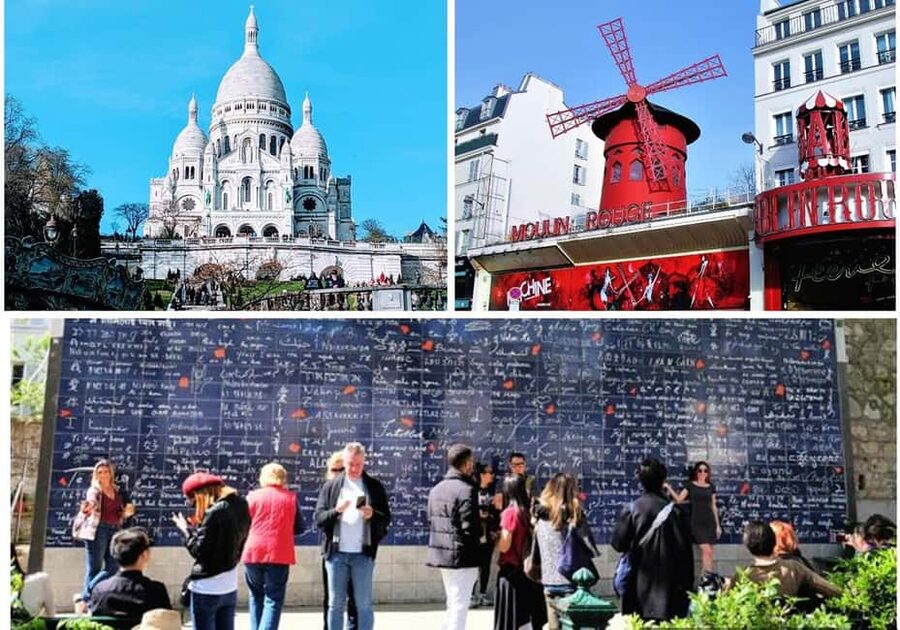
Montmartre is one of those places where the street scene looks simple until you learn what happened there. This tour is built for that exact moment. Instead of rushing you through the usual highlights, it guides you through how the neighborhood became an art magnet—and how it stayed lived-in, not just staged for visitors.
What makes it feel different is the balance. You’ll see the obvious big hitters like Sacré-Cœur and the artist square, but you’ll also get taken through quieter corners that help you understand the daily rhythm of the area. That “how people lived here” angle is what turns Montmartre from a set of views into a real neighborhood.
Also, you can choose your guide language (English, Spanish, Italian, or French). When you’re comfortable with the language, the stories land better—especially the artist connections that make the streets feel meaningful.
You can also read our reviews of more walking tours in Paris



Starting at Anvers and Climbing Toward Sacré-Cœur
The tour meets outside the Anvers metro station (Line 2), where the guide holds a GetYourGuide sign. I’d treat the start time seriously: aim to arrive about 10 minutes early, because latecomers are not guaranteed to join.
Then it’s up. You’ll start climbing the hill with your guide, and the walk is part of the show. As you gain altitude, the city opens up in stages—first rooftops and terraces, then wider views across Paris. If you’ve only visited Montmartre by cable car or bus, this “on foot” climb gives you a different sense of the geometry of the neighborhood.
Bring comfortable shoes. This isn’t a flat stroll, and rain doesn’t cancel the hill—so traction matters.
Sacré-Cœur Basilica: The Stop That Sets the Tone
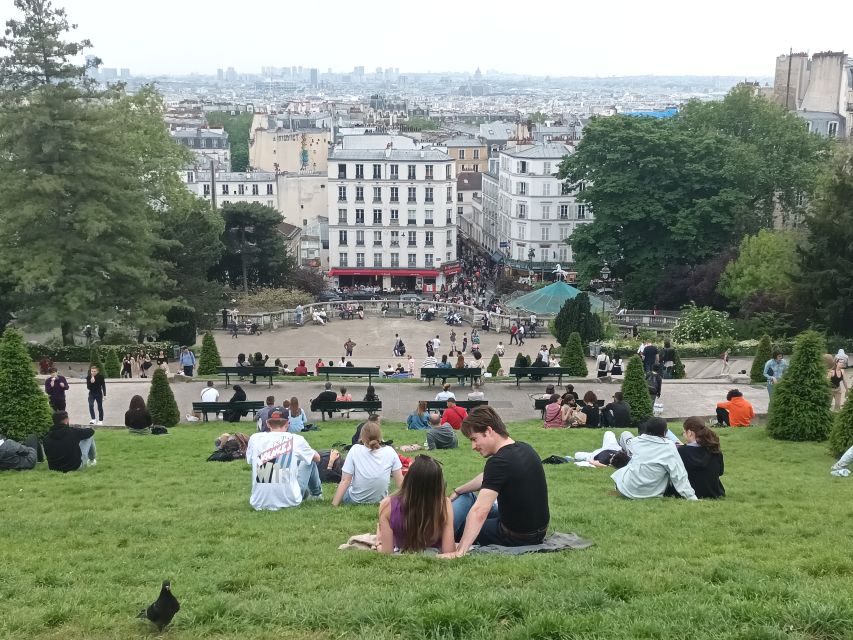
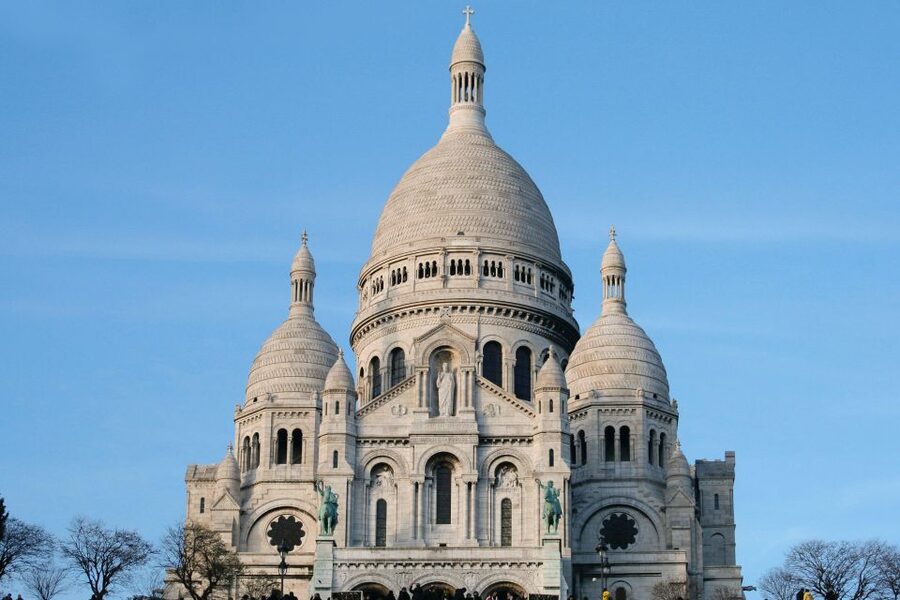
Once you reach Sacré-Cœur Basilica, you’ll get a guided visit. This is the big visual moment everyone talks about, but the value here is learning what to look for while you’re there.
You’ll also get a bit of breathing room—time to settle your feet, take in the view, and do a little shopping in the area around the basilica depending on what’s happening that day. The main point is that your guide frames the basilica as part of the neighborhood’s identity, not just a destination photo.
One practical detail: the tour is rain or shine, and the basilica area can be busy. A small group helps you move without feeling like you’re being swept along.
Place du Tertre and the Artists’ Square Up Close
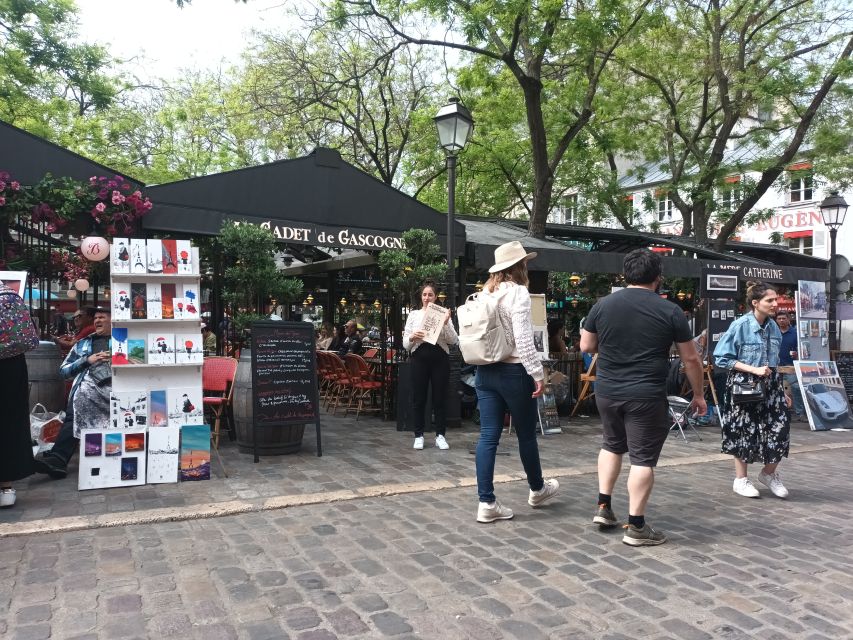
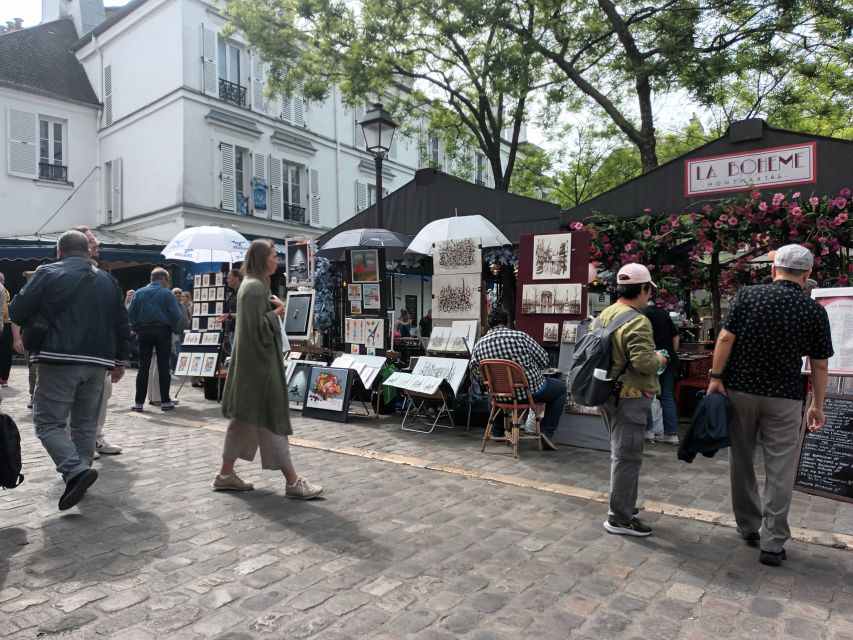
After Sacré-Cœur, you’ll head down toward Place du Tertre, where you’ll see artists displaying their paintings. It’s the classic Montmartre scene—but it works best when you understand why this square matters.
This stop gives you a chance to pause for photos and stroll at a comfortable pace. Your guide explains the story of famous artists who lived in the area, which helps you connect the dots between the square’s street-level art and the broader history of Montmartre as an artistic hub.
You’ll likely find yourself looking at brushwork and styles more carefully once you’ve heard the context. Even if you don’t buy anything, it’s a lively way to meet the neighborhood at human scale.
Lapin Agile, Cabarets, and the Montmartre Side of Nightlife

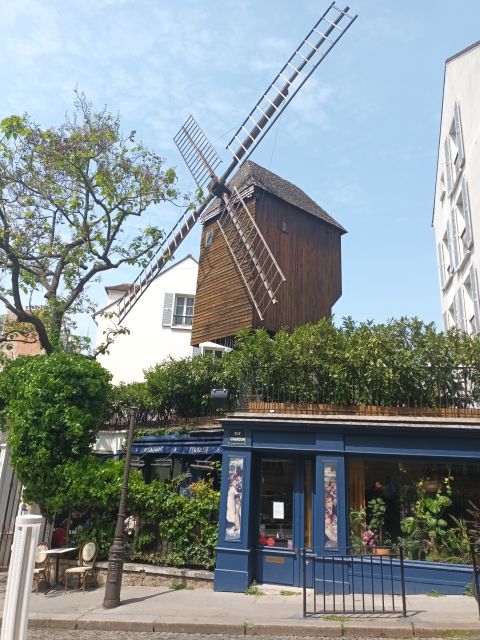
Here’s where the tour stops feeling like a museum walk. You’ll pass by or stop for photos related to Montmartre’s cabaret culture, including Lapin Agile and the Moulin de la Galette area.
These stops matter because Montmartre wasn’t only studios and churches. It was also music, performance, and the kind of creative energy that pulls artists and audiences together. A guide helps you see why places like these became part of the artistic legend.
The Lapin Agile photo stop is short, but the narration is the point: you’ll learn the neighborhood’s character in the way a cabaret has always been about more than the building itself. Same idea with Moulin de la Galette—it’s not just a windmill backdrop. It’s a slice of how Montmartre entertained and inspired.
This is also the section of the day where the pace matters. With a small group, you’re less likely to feel rushed and more likely to get those little explanations that turn snapshots into memories.
You can also read our reviews of more guided tours in Paris





Clos Montmartre Vineyards and Why That Detail Matters
In the middle of all the art legends, you’ll get to see Vigne du Clos Montmartre (a vineyard). It’s only a short stop, but it’s a powerful reminder that Montmartre wasn’t just “pretty views and painters.”
A vineyard here signals something practical and surprising: this neighborhood has always had a working side alongside its artistic reputation. For me, that’s one of the most interesting layers of Montmartre—history doesn’t just sit still in grand monuments. It also shows up in how the land has been used.
Even if you’re not a wine person, this stop helps you understand why Montmartre feels different from other central Paris districts. It has texture and function, not only fame.
Dalida Statue and the Artist Connections You’ll Actually Remember
You’ll make a photo stop at the Dalida statue, which works as a quick “Montmartre culture” checkpoint. It’s an efficient way to add another thread to the neighborhood’s story without turning the tour into a long detour.
Then you’ll move toward artist-linked locations such as Le Bateau-Lavoir. Your guide will point out that artists including Picasso and Van Gogh lived in the area. This isn’t just name-dropping. When you connect those artists to real streets and real neighborhoods, it changes how you picture their work.
One small-group advantage shows up here: your guide can slow down long enough to make the connections clear, so you don’t leave with a list of famous names. You leave with a sense of place.
The Wall of Love and Abbesses: Montmartre’s Modern Love Letter
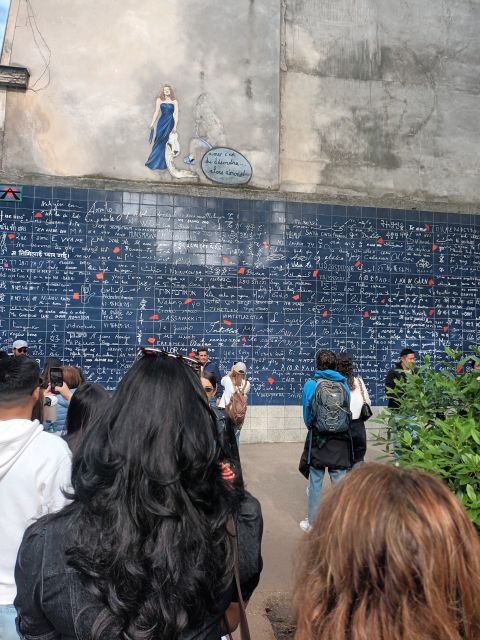
As you arrive around Abbesses, you’ll see the Wall of Love (Je t’aime), a modern art installation that draws plenty of attention. This is a great contrast stop: you’re shifting from painter legends and cabaret lore into modern city emotion.
Your guide will point out what you’re looking at and why it became such a recognizable symbol. Then you’ll have time to check out Place des Abbesses—again, short but satisfying. It’s a moment to breathe, look around, and get a feel for the local vibe beyond the main Montmartre circuit.
If you want a souvenir-style moment or a quick browse, this is one of your better windows during the tour.
Moulin Rouge at the Finish: A Last Photo and the Big-City Glance
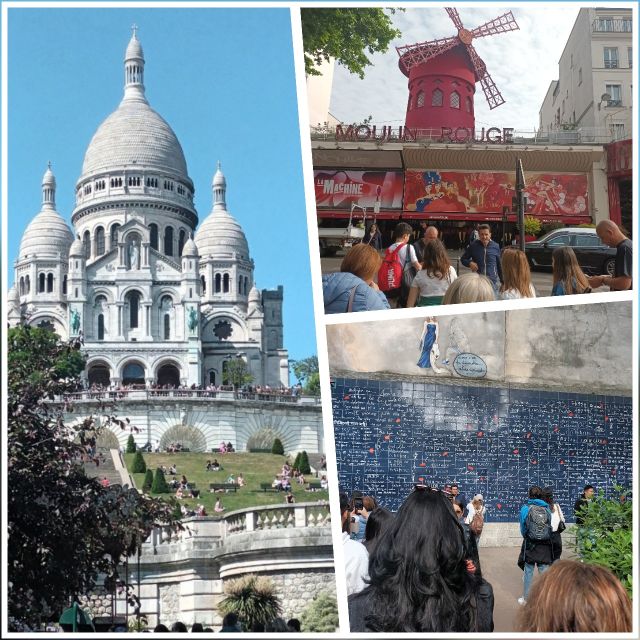
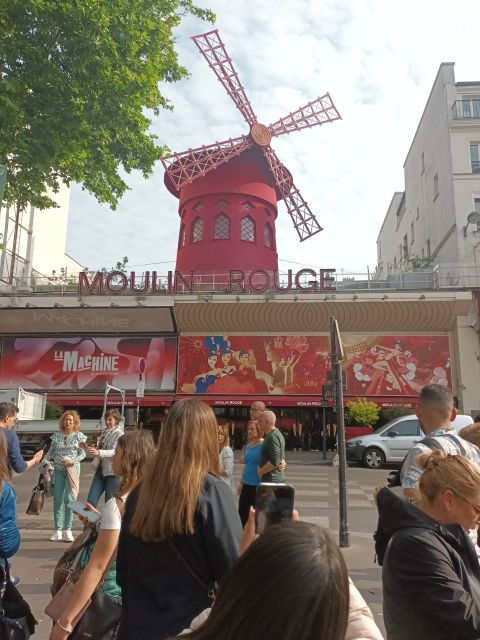
The tour ends at the base of the hill opposite Moulin Rouge. You’ll have a final photo stop, with a bit of time to shop depending on what’s available nearby.
That ending works well because you’re not stuck climbing again at the finish line. You get one last jolt of iconic Montmartre imagery, then you can head off to dinner or keep exploring on your own with your bearings.
Price and Value: What You’re Really Paying For at $74
At $74 per person for about 2 hours (150 minutes), this isn’t the cheapest Montmartre option—but it’s also not just a generic highlight loop.
Here’s where the value shows up:
- Small group size (up to 8) helps the guide’s storytelling land better and makes the route feel calmer
- You get a real expert local guide and a guided basilica visit, not just a walk-through
- The route mixes famous sights with the quieter, everyday-feeling side of Montmartre
- You’re paying for interpretation: learning the neighborhood’s artistic logic, not only where to stand for photos
What’s not included is also part of the budgeting truth: there’s no food and drink, and funicular tickets aren’t included. If you know you’ll want snacks, plan to grab them after the tour. And if you’re hoping to save time with the funicular, factor that in separately.
Who Should Book This Tour (And Who Might Want Another Plan)
This tour is a strong match if you:
- want Montmartre with a human-sized group
- like your sightseeing with stories tied to specific places
- plan to explore afterward and want help understanding the neighborhood’s layout
- prefer guided time in a chosen language: English, Spanish, Italian, or French
It’s not a good fit if you need wheelchair access or have mobility limitations. The tour includes a walk up the hill, rain or shine, and the format isn’t designed for step-free routes. Also note that the bathroom may not be available during the tour, so plan accordingly before you start.
If you’re traveling as a couple, with family, or solo, the small-group setup tends to feel friendly instead of crowded.
Should You Book This Montmartre Small Group Guided Walk?
I’d book this if you want Montmartre to make sense. The Sacré-Cœur climb is memorable, but the real win is what the guide adds: why Place du Tertre matters, how cabarets fit into the art scene, and how vineyards and artist-linked addresses add real texture.
If you’re short on time and want to sample Montmartre before wandering on your own, this tour is a smart primer. Just be ready for the hill, wear grippy shoes, and come with curiosity—your guide’s job is to connect the dots for you, and that’s where the $74 turns into something you’ll remember.
FAQ
FAQ
Where is the meeting point for the Montmartre tour?
The guide meets you outside the exit of the Anvers metro station (Line 2) and will be holding a GetYourGuide sign. Arrive about 10 minutes early.
How long is the tour?
The tour lasts about 2 hours (150 minutes).
Which languages are available for the guide?
You can choose a guide in English, Spanish, Italian, or French.
What is included in the tour price?
The price includes a guided walking tour of Montmartre with an expert local guide, and a visit to the Basilica of the Sacred Heart (Sacré-Cœur).
Are funicular tickets included?
No. Tickets for the funicular are not included.
Does the tour run in bad weather?
Yes. The tour takes place rain or shine.
Is the tour wheelchair accessible?
No. The tour includes a walk up the hill and is not accessible to wheelchairs or people with mobility issues.
Should I plan for a bathroom stop?
The bathroom may not be available during the tour, so it’s smart to plan ahead.
What should I wear?
Wear comfortable shoes and clothing appropriate to the weather, since you’ll be walking for much of the tour.