REVIEW · PARIS
Paris Top Sights Half Day Walking Tour with a Fun Guide
Book on Viator →Operated by Top Sights Tours · Bookable on Viator
Five hours and Paris already makes sense. This half-day tour is a tight, friendly way to see 30+ top sights with a guide who tells the stories behind them, not just the facts. I like the small group size (max 15), which keeps questions easy and the pace comfortable. I also like the built-in help with the Métro so you leave feeling less lost. One thing to weigh: most major landmarks are seen from the outside, with limited time at each stop.
You’ll start in Montmartre, then move across central Paris toward the Seine and end near the Louvre area. The vibe is consistently praised in the reviews, with guides named like Olivia Kool, Chiara, Adva, and Rami described as warm, funny, and fast-moving in a good way. If you’re expecting a sit-down museum day, this is not that. It’s a smart first-trip orientation.
In This Review
- Key things to know before you go
- Montmartre to the Seine: what this tour does best
- The guide makes or breaks the day
- Price and logistics: why the cost is more than just walking
- Your route, step by step: what each stop feels like
- Sacré-Cœur at Montmartre (inside plus stories)
- Montmartre streets (atmosphere time)
- Hôtel de Ville (quick stop, quick context)
- Arc de Triomphe (classic Paris icon moment)
- Louvre Museum (outside, but with meaning)
- Eiffel Tower (outside views only)
- Moulin Rouge (photo snap and history)
- Quartier Latin (student-city energy)
- Jardin des Tuileries (a breather)
- Champs-Élysées (quick postcard moment)
- Trocadéro esplanade (Eiffel views payoff)
- Place du Tertre (Montmartre character)
- Paroisse Saint-Pierre de Montmartre and architecture stops (more street-level context)
- Notre-Dame area on Île de la Cité
- Ending near the Louvre Museum
- Walking time vs. rest time: how to plan your day
- Metro coaching: the secret value for first-timers
- Who this tour suits best
- Should you book it?
- FAQ
- How long is the Paris Top Sights half-day walking tour?
- Is the tour offered in English?
- What is the group size?
- Where do we meet, and where does the tour end?
- Do I need a metro pass for this tour?
- Are any entrance fees included?
- Does the tour go inside the Louvre or Eiffel Tower?
- What landmarks are included for outside viewing?
- How much walking should I expect?
- Is there free cancellation?
Key things to know before you go
- Small-group pacing (max 15): you get attention without feeling herded.
- 30+ stops in 4–5 hours: it’s a highlight reel, not a single-neighborhood deep dive.
- Métro practice included in the experience: you’re taught how to use transit, not just where to look.
- Sacré-Cœur is the one major inside moment: everything else is mainly outside views.
- Photo-friendly viewpoints: especially around the Eiffel Tower area from the Trocadéro side.
- Best as a first-day plan: it sets up where you’ll want to return on your own.
Montmartre to the Seine: what this tour does best
This tour is designed for one goal: help you understand Paris fast. In just 4 to 5 hours, you’ll bounce between neighborhoods that look totally different from each other. Montmartre feels like its own world, then you’re quickly in classic postcard Paris—city squares, grand avenues, and riverfront scenes—ending near the Louvre.
What makes it work is the way it mixes big icons with street-level atmosphere. You’re not only seeing famous buildings; you’re also getting little “why this matters” moments that turn random sights into something you can place on a map. That’s especially handy if it’s your first time in Paris and you want a clean game plan for the rest of your days.
You can also read our reviews of more walking tours in Paris



The guide makes or breaks the day

This tour is built around the guide, and the feedback is strong. Names that come up often include Olivia Kool, Chiara, Adva, and Rami, and the consistent theme is storytelling plus practical city tips. People describe guides as warm, engaging, and very on top of timing.
The best part for your trip: a good guide doesn’t just point. They help you do Paris. Multiple reviews highlight that guides assist with Métro tickets and finding the right exits, which is the difference between sightseeing and accidentally wandering in the wrong direction for 20 minutes (it happens to everyone at least once in Paris).
If you tend to ask questions, this tour fits you. With a group capped at 15, it stays conversational rather than lecture-style.
Price and logistics: why the cost is more than just walking
The tour price is $76.28 per person for about 4–5 hours. On its face, that sounds like a lot for walking. But you’re paying for three things that are hard to DIY efficiently:
- Local guidance: the stories and context at each stop.
- Time savings: it strings together major sights across the center without you figuring out route logic.
- Transit coaching: you’re not only moving between places, you’re learning how to make those moves.
Now for the part you must budget separately: Métro access. The tour data lists the need for an EASY PASS card topped up with a MOBILIS ticket (Zones 1–5) for €12 per person, plus an EASY PASS Paris Metro item for €12 per person. That’s another €24-ish to plan for, depending on what’s exactly provided on the day.
Also note: you’ll likely pay for any sights that require separate entry. In this tour, Sacré-Cœur inside entry is listed as free, while many other landmarks are marked as not included.
Bottom line: the price feels fair when you treat it as a first-day orientation plus photo-and-stories pass, not a museum ticket.
Your route, step by step: what each stop feels like
Here’s how the day typically unfolds, and what you should expect at each highlight.
Sacré-Cœur at Montmartre (inside plus stories)
The tour starts in Montmartre at Basilique du Sacré-Cœur, and you do go inside. That’s the key exception: it’s the major “inside” moment built into the route, and the entry is listed as free.
What you’ll get here is more than a quick look. The guide shares background and stories tied to the basilica, and then you’ll have short time to take it in. Montmartre itself can feel like a maze of streets, so this beginning helps you get oriented right away.
If you’re sensitive to crowds, go in with a calm mindset. This is a top spot and it can be busy. The advantage is that the guide gives you a reason to look beyond the obvious views.
You can also read our reviews of more guided tours in Paris





Montmartre streets (atmosphere time)
After Sacré-Cœur, you’ll move through Montmartre with a guided walk—history, stories, and the kind of neighborhood context that’s hard to piece together on your own.
This is also where you’ll likely appreciate the small-group size. Montmartre streets can squeeze you into the flow of other pedestrians, and being in a group helps you keep your bearings.
Hôtel de Ville (quick stop, quick context)
Next is Hôtel de Ville (Paris City Hall). The time here is short, about 10 minutes, and it’s focused on stories rather than a long visit.
This stop works as a bridge: it connects the Montmartre vibe to the more official, ceremonial side of Paris. Think of it as a scene-setter.
Arc de Triomphe (classic Paris icon moment)
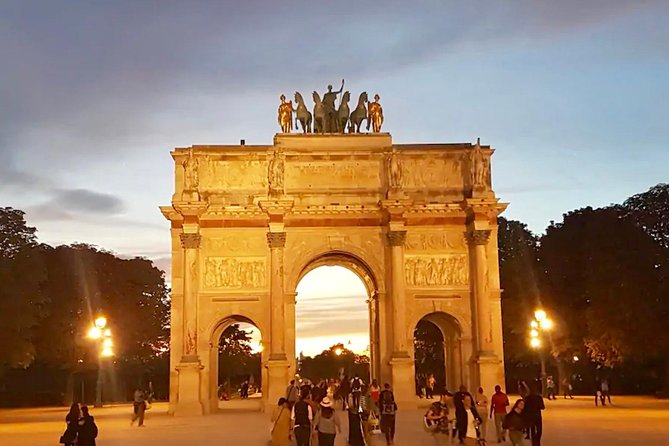
You’ll get about 20 minutes around Arc de Triomphe, with guided history. It’s a great stop for photos and for learning what the monument symbolizes beyond its silhouette.
Because it’s a “see and learn” stop with time constraints, don’t plan to linger like you would on your own. Use the time for the key angles and then move on.
Louvre Museum (outside, but with meaning)
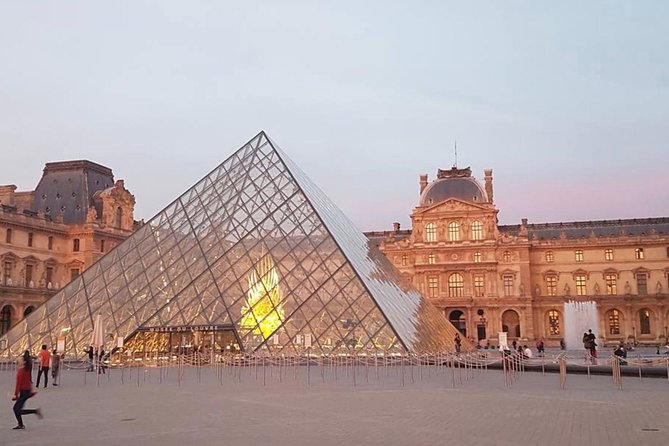
You’ll pass the Louvre Museum for around 20 minutes, and it’s listed as not included for entry. So you’ll see the building and get the guide’s take—where it fits in Paris’s identity and why it matters.
This works best if you plan to return later for a ticketed visit. If you only have time for one Louvre moment, you may still feel the tour whet your appetite instead of fully satisfying it.
Eiffel Tower (outside views only)
The day includes a 30-minute stop for Eiffel Tower, with no inside entry. Expect a “look and learn” experience and then time for photos.
One practical note: the Eiffel Tower draws big crowds all day. You’ll get the Eiffel moment, but it’s not a guaranteed “empty view” situation.
Moulin Rouge (photo snap and history)
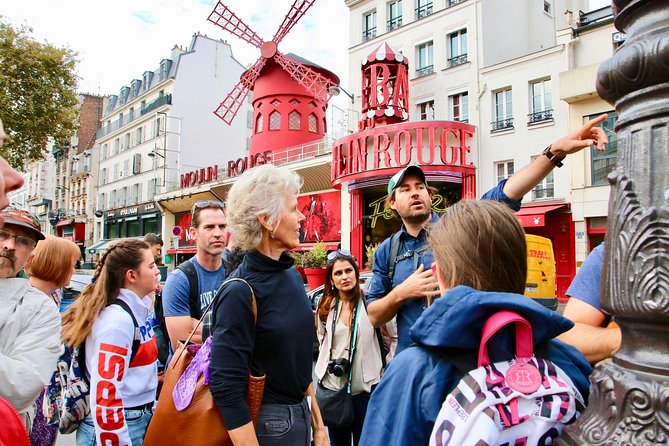
Then comes Moulin Rouge for about 10 minutes. This is short on purpose. The guide’s stories help you understand why this place became an icon of entertainment in the first place.
If you’re hoping to watch a show or linger for drinks, you’ll want a separate night plan. This is a daytime orientation stop.
Quartier Latin (student-city energy)
You’ll move to the Latin Quarter for around 15 minutes, with guided background. This area is lively even without trying. The guide helps you recognize the layers: Paris’s academic past, the street energy, and the reason it keeps showing up in stories and literature.
Jardin des Tuileries (a breather)
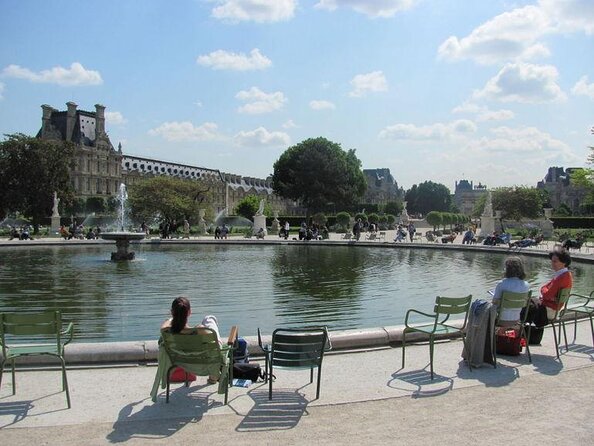
Next is the Jardin des Tuileries for about 20 minutes. Gardens can feel like a luxury when you’ve been moving for hours, and this pause makes the later Seine and island area less exhausting.
This stop is also good for people who want a calmer scene for photos without switching continents of walking every few minutes.
Champs-Élysées (quick postcard moment)
A short 5-minute stop on the Champs-Élysées. You’ll hear the story behind the avenue and get the classic Paris photo context.
It’s brief, so don’t expect shopping time. Treat it like a highlight checkpoint.
Trocadéro esplanade (Eiffel views payoff)
Now comes one of the most useful parts of the day: Le Trocadero and its esplanade for about 20 minutes. Even if you’ve seen Eiffel photos before, the Trocadéro angle is the one that helps your brain connect the landmark to the real city.
This is where you slow down a little for photos and for that classic “oh, there it is” moment.
Place du Tertre (Montmartre character)
Place du Tertre is a short stop (about 5 minutes) and focused on sightseeing and photos. It’s part of the Montmartre theater—artists, street-life energy, and the neighborhood’s famous personality.
You’ll move on quickly, so it’s a good quick look rather than a long wander.
Paroisse Saint-Pierre de Montmartre and architecture stops (more street-level context)
Your route also includes Paroisse Saint-Pierre de Montmartre as a sightseeing and photo moment, plus Cité de l’architecture et du patrimoine as another point along the way.
These aren’t “buy a ticket” stops. They’re here to add context and keep the walk feeling like a guided course of Paris, not just a sequence of big-name monuments.
Notre-Dame area on Île de la Cité
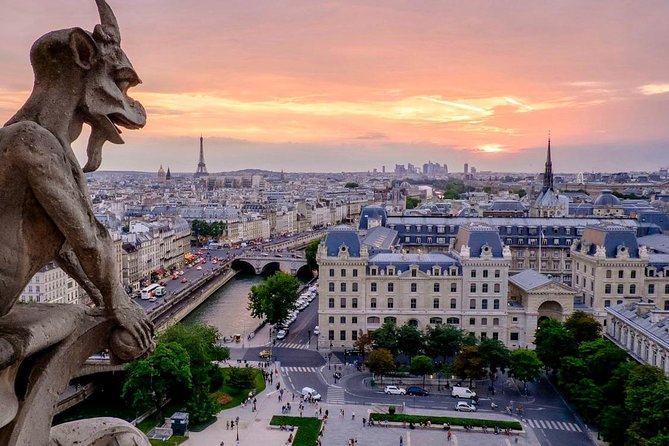
You’ll finish with Notre-Dame de Paris for about 10 minutes. This is sightseeing and photos, with the time allocated for a guided look rather than a long interior visit.
This is also a great closing point because Île de la Cité helps you feel the geography of central Paris: river to islands to streets that connect everything.
Ending near the Louvre Museum
The tour ends in central Paris at the Louvre Museum area. That’s convenient because it drops you close to a huge chunk of sights, cafés, and transit links for whatever you want to do next.
Walking time vs. rest time: how to plan your day
The route is packed. Even with short stops, you’ll be on your feet for most of the tour. One review mentions a stop for snack/restroom/warm up, which is exactly what I hope for on a cold day or if you start to flag.
My practical advice:
- Wear comfortable shoes you trust for uneven sidewalks.
- Bring water or grab a small snack before the tour if you’re the type who gets hungry quickly.
- If you arrive late, you can miss key moments. Reviews mention guides being patient, but the start needs to be on time.
Metro coaching: the secret value for first-timers
This tour isn’t just walking. It includes using the Métro to move between areas efficiently. The tour data is very direct about the transit setup: you’ll need an EASY PASS card and a MOBILIS ticket for Zones 1–5, plus the EASY PASS Paris Metro cost item listed.
What you gain from that is confidence. You’ll learn how to handle entry, how to get to the right exits, and how to keep your bearings as you switch lines. That means future days in Paris feel easier, because you’re not guessing every transit move.
This is also why the group size matters. In a big crowd, metro instructions get messy fast. In a group capped at 15, the guide can keep people together and answer the common questions on the spot.
Who this tour suits best
I’d point you to this tour if:
- You’re in Paris for the first time and want a clean orientation within a half-day.
- You want major icons plus local street stories, without spending days researching routes.
- You like guided context and you’re happy with outside views for some landmarks.
- You value a small group and a guide who helps with transit.
You might want a different plan if:
- You’re hoping for a deep, ticketed museum experience.
- You want long stays at just one neighborhood or just one monument.
- You don’t enjoy moving quickly between stops.
Should you book it?
Yes, if you want the best kind of first-day shortcut. This tour gives you a lot of landmarks in a short span, and the guide-led stories plus Métro coaching are the main reason it feels worth it. You’ll walk away with a mental map of Paris and a short list of where you’ll want to return.
If you book with the right expectations—mostly outside views, one inside moment at Sacré-Cœur, and a strong focus on orientation—you’ll likely feel like you made your whole trip easier.
FAQ
How long is the Paris Top Sights half-day walking tour?
It runs about 4 to 5 hours.
Is the tour offered in English?
Yes, it is offered in English.
What is the group size?
The tour has a maximum of 15 travelers.
Where do we meet, and where does the tour end?
You start at 72 Blvd Marguerite de Rochechouart, 75018 Paris. The tour ends at Louvre Museum, 75001 Paris. The end point is listed as the Louvre area.
Do I need a metro pass for this tour?
Yes. The tour notes you need an EASY PASS card topped with a MOBILIS ticket (Zones 1–5), plus an EASY PASS Paris Metro cost item, both listed as €12 per person.
Are any entrance fees included?
Sacré-Cœur is listed as free to enter in the itinerary. Other listed landmarks are marked as admission not included.
Does the tour go inside the Louvre or Eiffel Tower?
The Eiffel Tower and Louvre Museum are listed as not included for admission, so you should expect outside sightseeing for those.
What landmarks are included for outside viewing?
You’ll see outside viewpoints and guided stops around major icons including Arc de Triomphe, Louvre Museum, Eiffel Tower, Moulin Rouge, and Notre-Dame de Paris.
How much walking should I expect?
The itinerary covers many major sights across multiple neighborhoods in a half day, so expect a lot of walking plus some Métro rides.
Is there free cancellation?
Yes. You can cancel up to 24 hours in advance for a full refund.