Montmartre can feel like a maze. This 90-minute walk makes it make sense fast, with street-level stories and scenic stops tied to artists, singers, and the neighborhood’s changing look. I especially like how the guide turns ordinary corners into mini-history lessons, and I also like the mix of famous landmarks seen from the outside plus lesser-known places you’d skip on your own.
The one thing to keep in mind: you’re on foot with hills and narrow, sometimes busy streets, and the tour is time-limited. If you’re expecting a long, stair-heavy ladder to every viewpoint (or you want the inside of Sacré-Cœur), this isn’t that kind of tour.
In This Review
- Key Highlights You Should Expect
- Montmartre in 90 Minutes: Quick Direction and Art-First Storytelling
- Where the Tour Starts and Ends (So You Don’t Lose Time)
- I Love You Wall: A Poetic Photo Stop With Real Meaning
- Old Streets and Bohemian Montmartre: Why This Hill Became a Magnet
- Bateau-Lavoir: The Artist Residence That Helped Shape Modern Art
- Moulin de la Galette: The Windmill You’ve Seen in Paintings
- The Man Through a Wall and Dalida’s Bronze Bust
- The Pink House Café and the Montmartre Vineyard
- Sacré-Cœur From Outside: Big Views, Clear Advice for Inside
- The Heart of Montmartre: Artists, Painters, and Street Performers
- Walking Logistics: Hills, Crowds, and the Real Pace
- Who This Tour Fits Best (and Who Might Want Something Else)
- Price and Value: Is $38.70 Actually Worth It?
- Should You Book This Montmartre Walking Tour?
- FAQ
- How long is the Montmartre walking tour?
- Where does the tour start and end?
- Is the tour offered in English?
- Does the tour include entry into Sacré-Cœur Basilica?
- Is the tour outdoors the whole time?
- Is the route suitable for people with moderate physical fitness?
- Does the tour include stairs?
- How big is the group?
- Notes on Timing and Weather
Key Highlights You Should Expect
- I Love You Wall with the phrase I Love You written in over 300 languages
- Bateau-Lavoir, tied to artists like Picasso, Modigliani, and Braque
- Moulin de la Galette as Montmartre’s dance-hall-era symbol, shown from the outside
- Dalida bronze bust in a calm square that draws fans to pay tribute
- A working Montmartre vineyard with roots reaching back to 1933
- Sacré-Cœur views from the highest point, with practical tips for a later self-visit
Montmartre in 90 Minutes: Quick Direction and Art-First Storytelling
This is a short tour, built for orientation. You’re walking in Montmartre’s core area, so you leave with a mental map: where the art comes from, why the streets curve the way they do, and how the neighborhood became a magnet for painters, photographers, and performers.
What I like is the way the guide connects each stop to a bigger theme. One minute you’re looking at a poetic wall. The next minute you’re hearing how a former artists’ workshop became part of modern art’s origin story.
You’ll also get the payoff of great views without having to turn it into a full day. Sacré-Cœur sits high on the hill, and the walk sets you up to notice how the city opens up around you.
You can also read our reviews of more walking tours in Paris



Where the Tour Starts and Ends (So You Don’t Lose Time)

You meet at 19 Rue des Abbesses (75018). The tour ends at La Bonne Franquette, at 18 Rue Saint-Rustique.
That finish matters. La Bonne Franquette is a natural spot to keep your momentum, grab lunch, or simply wander for a bit with fresh energy. Since the tour is about 1 hour 30 minutes, that end point helps you avoid the classic problem: you’ve just climbed Montmartre, now you need a plan.
Plan to arrive around 15 minutes early. The tour starts on time, and you won’t be able to “catch up” if you drift late.
I Love You Wall: A Poetic Photo Stop With Real Meaning
The first hit of color and charm is the I Love You Wall—a phrase that shows up in more than 300 languages. It’s the kind of spot that looks simple in photos, but up close it feels like a message from the whole world.
For me, this works as a warm-up. It puts you in the right mood for Montmartre: sentimental, artistic, and a little theatrical. If you like people-watching, this is also a good place to notice how the neighborhood blends tourists with locals and artists.
Practical note: treat it as a “slow moment” in the middle of walking. Even if you’re not a big photographer, you’ll want a minute here.
Old Streets and Bohemian Montmartre: Why This Hill Became a Magnet
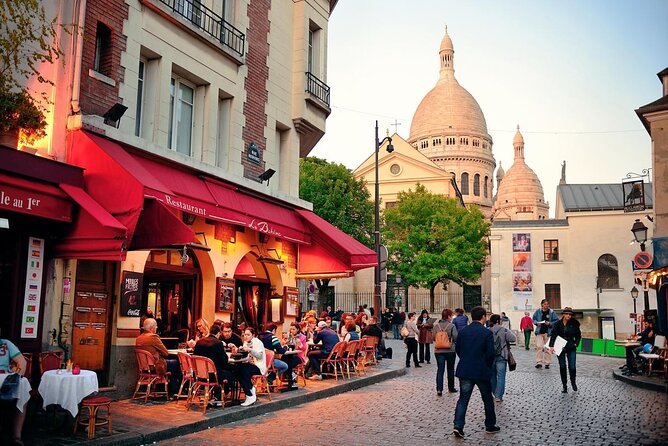
From there, you move through one of Montmartre’s older streets—full of cafes, boutiques, and historic buildings. The guide explains how this area earned its reputation for creative living, from bohemian days to the Montmartre people recognize now.
This portion is where you start understanding the pattern of the neighborhood. Montmartre isn’t just one landmark. It’s a bunch of small scenes that connect: a storefront here, a curve in the street there, and suddenly you see why artists kept coming back.
One useful thing the guide often does well (and guides such as Laura and Sylvia are praised for this style): they highlight what to look at beyond the obvious. You’ll come away knowing which streets to return to later on your own.
Bateau-Lavoir: The Artist Residence That Helped Shape Modern Art
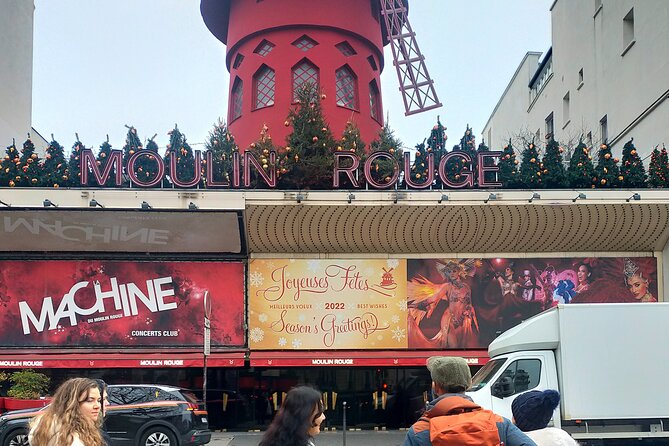
Next up is Bateau-Lavoir, once a humble artists’ residence. It’s strongly linked to big names you’ve likely seen in museums: Picasso, Modigliani, and Braque.
This stop gives you context for why Montmartre is more than postcards. It’s not just that “artists lived here.” It’s that creative communities formed there, and those communities mattered for what came next in art.
Even if you don’t think of yourself as an art-history person, this is still a good stop. It turns a building you might otherwise walk past into a clear story.





Moulin de la Galette: The Windmill You’ve Seen in Paintings
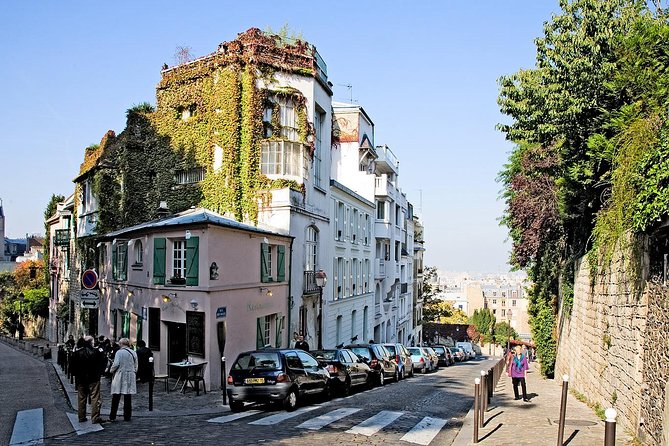
Montmartre’s iconic windmill, Moulin de la Galette, shows up outside the classic Paris list. It appears in paintings by Renoir and Van Gogh, and it also carries another chapter: it used to be a popular dance hall.
You’ll see it as a symbol of the neighborhood’s lively past. And because you’re on foot, you also get a better sense of how the windmill sits in the landscape—why artists loved it and why photographers still chase angles around it.
If you care about photos, keep an eye on how the street layers up toward the windmill. From this walk, you’re building that sense of place rather than just grabbing one quick picture.
The Man Through a Wall and Dalida’s Bronze Bust
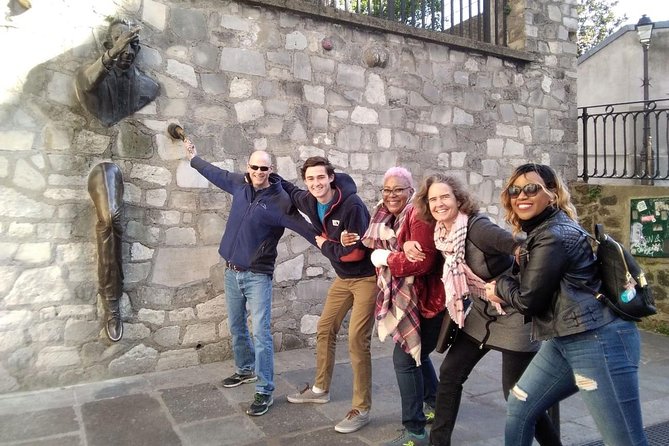
Two of the most fun stops come close together in spirit: whimsical art and real pop-cultural legacy.
First, there’s the sculpture of a man walking through a wall. It’s tied to a short story by Marcel Aymé, and it plays with surreal ideas that match Montmartre’s reputation for playful weirdness. Look closely, and you’ll see how the sculpture turns a simple concept into a street-level joke.
Then you reach the Dalida tribute: a bronze bust in a peaceful square. Dalida was a long-time Montmartre resident, and fans use this spot as a place to pay tribute.
This section is a good reminder that Montmartre wasn’t only about painters. It was also about performers, voices, and the kind of fame that becomes part of local identity.
The Pink House Café and the Montmartre Vineyard
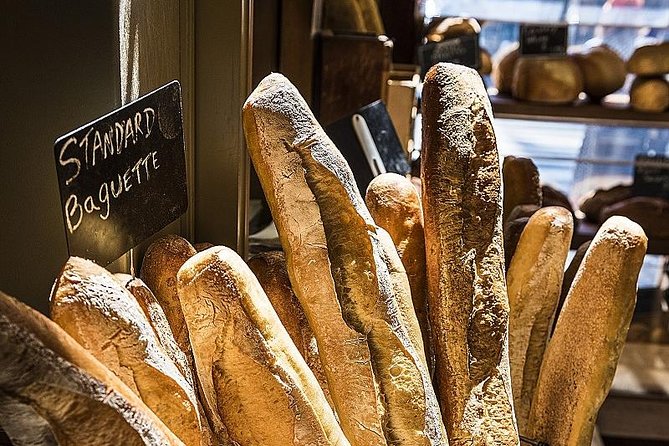
If you like when a tour gives you “I didn’t know this was here” moments, this part hits.
You’ll pass a quaint pink house that’s been an emblem of Montmartre for decades. It’s been frequented by Picasso and Utrillo, and today it functions as a cafe offering French food. Even if you don’t stop for a meal mid-walk, it’s a strong photo op and a great marker that you’re in the Montmartre people actually remember.
Then comes the Montmartre vineyard, tucked into the neighborhood. It produces wine that’s meant to preserve Montmartre’s winemaking heritage, established in 1933. This is one of those stops that feels almost too good to be real—vines in a Paris neighborhood you usually think of as urban stone and art.
If you like food and drink with a story, you’ll enjoy this. And if you just like the concept of places that defy the usual expectations, you’ll still get something from it.
Sacré-Cœur From Outside: Big Views, Clear Advice for Inside
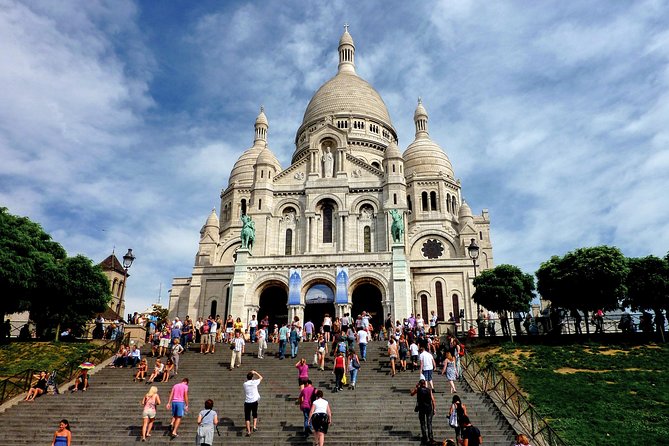
Your walk reaches Sacré-Cœur Basilica at the highest point in Paris. You’ll see it from the outside, built in the late 19th century, with its white domes and intricate mosaics.
The tour does not include entry inside Sacré-Cœur. But your guide shares tips on what to notice if you visit on your own afterward. That matters, because this is one of those buildings where first-time visitors often focus only on selfies. With a few pointers, you’ll look longer.
Also, plan for the vibe. The basilica area tends to feel calmer than the street corners earlier in the day. It’s a good “cool down” after walking and listening.
The Heart of Montmartre: Artists, Painters, and Street Performers
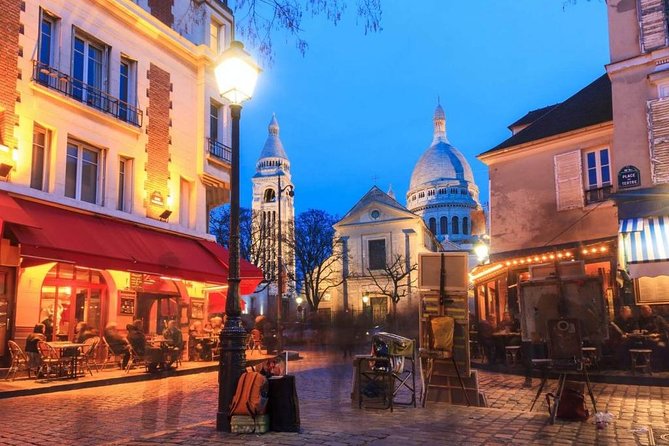
The final stretch includes a lively square that captures Montmartre’s artistic spirit. You’ll see painters, caricaturists, and street performers around the area, with cozy cafes and restaurants nearby.
This is where the neighborhood energy clicks into place. Earlier, you learned how art culture formed here. Now you see what that culture looks like today, in small performances and street-level craft.
If you’re short on time in Paris, this ending helps you finish feeling like you understand Montmartre as a living place, not just a museum map.
Walking Logistics: Hills, Crowds, and the Real Pace
The route is designed to avoid a lot of stair work. The tour says it doesn’t include stairs, but you still deal with hills and narrow streets. Those are real factors in Montmartre.
I’d call this a moderate-fitness walk. You don’t need to be an athlete, but you do need to be comfortable with uphill effort and uneven, crowded sidewalks.
One practical tip: pick an earlier departure if you can. Guides and schedules vary, but the common pattern is simple: Montmartre gets crowded quickly. Earlier often means easier listening, better photo chances, and less shoulder-to-shoulder moving.
Group size is capped at 25. That’s generally enough for a guide to keep everyone engaged without feeling like a lecture hall.
Who This Tour Fits Best (and Who Might Want Something Else)
This walk is ideal if you want a focused Montmartre overview in about 90 minutes. It suits couples, solo walkers, and mixed groups that still want structure but don’t want to rush.
It’s also a smart choice if you like art stories more than pure landmark-chasing. You’ll hear about artists and cultural figures linked to the neighborhood, from modern art origins to Dalida’s local legacy.
If you’re expecting a tour that covers everything like a full-day ticket—multiple major attractions and long interior visits—you might feel shorted. Entry to Sacré-Cœur is not included, and the route is about walking the neighborhood with short, meaningful stops.
Also, this tour’s tone leans artistic. Montmartre includes street art and modern creative layers, and that focus may not match your expectations if you want only the most classic postcard sights.
Price and Value: Is $38.70 Actually Worth It?
At $38.70 per person for about 1 hour 30 minutes, you’re paying for three things: an English-speaking guide, a tight route built for orientation, and access to stories you’d miss if you just wander.
I think the value works best when you do two things before you go:
- Decide you’re there for Montmartre’s creative identity, not a checklist of attractions.
- Plan your day so this tour “sets the stage,” then you explore afterward on your own.
This is not a huge time investment. It’s priced like an efficient, guide-led introduction. And with a near-perfect average rating (4.9) and a very high recommendation rate (97%), the consistency suggests most people come away feeling like they got their money’s worth.
One more plus: the tour uses a mobile ticket, so you’re not fumbling with paper in crowds. Small detail, but in Montmartre, small details save sanity.
Should You Book This Montmartre Walking Tour?
Book it if you want:
- A structured way to see key Montmartre spots on foot
- Art-and-culture storytelling tied to real places like Bateau-Lavoir and Dalida’s bust
- Great views from the Sacré-Cœur area without dealing with extra entry lines
- An earlier-day plan that helps you avoid the worst crowd pressure
Skip it if you strongly prefer:
- Fully guided museum-style time inside big attractions
- A route that ignores artistic layers and sticks only to the most famous, instantly recognizable sights
- A long walk that replaces a day of independent exploration
If you do book, my best advice is simple: come ready for walking, arrive early, and give the guide your attention for the first 20 minutes. Once you do, the rest of Montmartre clicks into place.
FAQ
How long is the Montmartre walking tour?
It runs for about 1 hour 30 minutes (approx.).
Where does the tour start and end?
The tour starts at 19 Rue des Abbesses, 75018 Paris and ends at La Bonne Franquette, 18 Rue Saint-Rustique, 75018 Paris.
Is the tour offered in English?
Yes, the tour is offered in English.
Does the tour include entry into Sacré-Cœur Basilica?
No. The tour passes by Sacré-Cœur from the outside. Entry is not included, but your guide shares tips if you go in on your own.
Is the tour outdoors the whole time?
It’s a walking tour around Montmartre. The info provided emphasizes exterior viewing of key places, and it does not include entry into Sacré-Cœur.
Is the route suitable for people with moderate physical fitness?
The tour is recommended for people with moderate physical fitness. It involves hills and narrow, sometimes busy streets.
Does the tour include stairs?
The tour information says it doesn’t include stairs, but it still involves hills.
How big is the group?
The tour has a maximum group size of 25 travelers.
Notes on Timing and Weather
The tour runs regardless of weather conditions, so dress for rain or shine and wear shoes that handle cobblestones well.