REVIEW · BRUGES
Historical Walking Tour: Legends of Bruges
Book on Viator →Operated by Legends of Bruges Free & Private Tours · Bookable on Viator
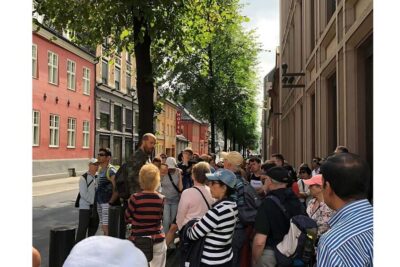
Bruges history moves fast on foot. This Legends of Bruges walk strings together the city’s top landmarks with medieval stories and a tight, first-visit route that works well if you’re short on time. One thing to plan for: it runs outdoors and depends on good weather, so bring layers and expect real walking.
I also like that it’s budget-priced with all fees and taxes included, so there are no surprise add-ons just to see the key sights. Another plus: you get an English mobile ticket, and the group stays small (up to 24), which makes it easier to ask questions. A final consideration: there’s at least one reported no-show case, so it’s smart to arrive a few minutes early and keep an eye on the meeting spot.
In This Review
- Why This Bruges Legends Walk Feels So Efficient
- Key Things I’d Not Miss
- Where You Start: Pieter de Coninck en Jan BreydelMarkt (and How to Be Ready)
- The Markt and Belfort: Bruges as a Medieval Trading Power
- Gruuthusemuseum and De Halve Maan: Beer, Wealth, and Bruges’ Nicknames
- Sint-Janshospitaal and Ten Wijngaarde: Medicine and Community
- Minnewater Lake and Swans: Love Stories with a Political Twist
- Onze-Lieve-Vrouwekerk, Groeningemuseum Garden, and Huidenvettersplein
- Ending at Burg Square: The Political Heart of Bruges
- Price and Value: Why $3.62 Can Still Feel Worth It
- Guide Style, Humour, and the Chance for Extra Touches
- If You Should Skip This Walk
- Should You Book Legends of Bruges?
- FAQ
- How long is the Legends of Bruges walking tour?
- What does the tour cost?
- What language is the tour offered in?
- What ticket format do I get?
- Where does the tour start and end?
- What group size should I expect?
- Are service animals allowed?
- Does the tour run in any weather?
- What is the cancellation policy?
- When do I get confirmation after booking?
Why This Bruges Legends Walk Feels So Efficient
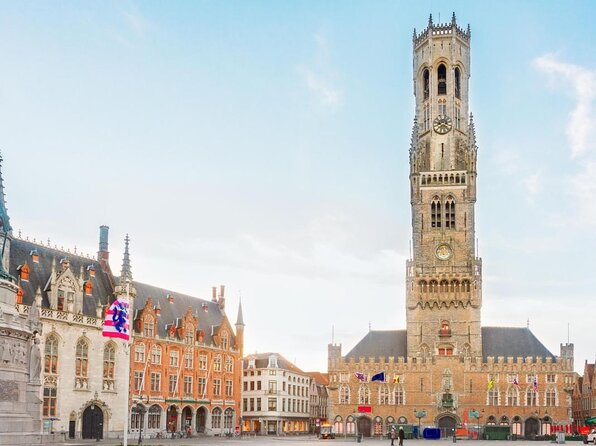
If this is your first time in Bruges, you’ll appreciate the pacing. The tour is built like a guided circuit through the places most people go to anyway, but with context that makes you look twice: why the buildings matter, who held power, and what everyday life was like in medieval Bruges.
The stop times are short—often around 10 to 15 minutes—so you don’t get stuck for ages in one spot. That matters in Bruges, because the real charm is walking from one postcard corner to the next, taking in the canals and brickwork without feeling like you’re stuck in a museum line.
Key Things I’d Not Miss
- A first-time-friendly route that hits the big Bruges names in one run
- Small group size (up to 24) so you can actually interact
- Stories tied to specific places like the beer trade and medieval politics
- Lots of quick stops that keep momentum without exhausting you
- English guides with the kind of narration that makes landmarks feel personal
You can also read our reviews of more walking tours in Bruges

Where You Start: Pieter de Coninck en Jan BreydelMarkt (and How to Be Ready)
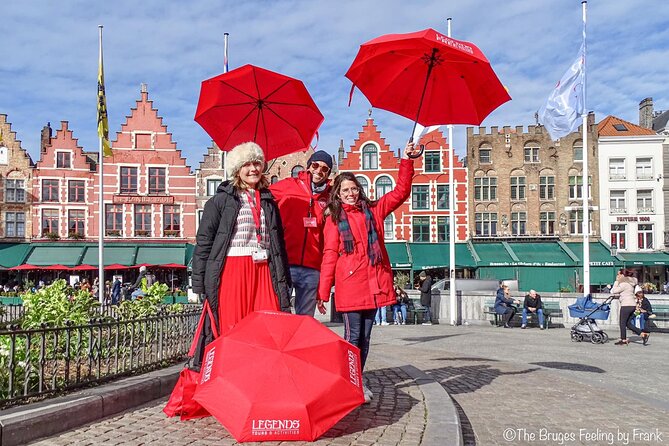
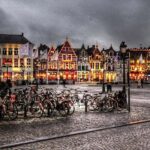
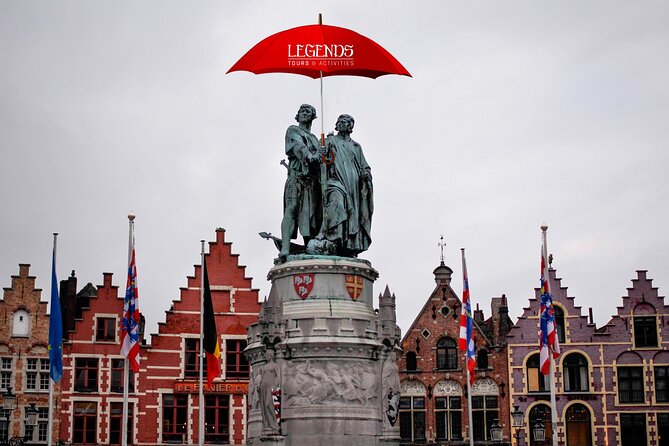
The tour starts at Pieter de Coninck en Jan BreydelMarkt, right in the heart of the Markt area. This is a smart starting point because you’re placed where Bruges history is loudest—right away, you’re surrounded by the kind of medieval buildings that shaped the city’s wealth.
Plan to be there a few minutes early. Meeting point misfires happen when people arrive late or stand in the wrong corner of a busy square. With a walking tour, even 10 minutes can throw off the flow, especially when stops are timed.
You’ll finish at De Burg, Burg 15, back in the civic center of town. That gives you an easy transition to lunch, a café break, or continuing on your own toward museums and viewpoints.
The Markt and Belfort: Bruges as a Medieval Trading Power
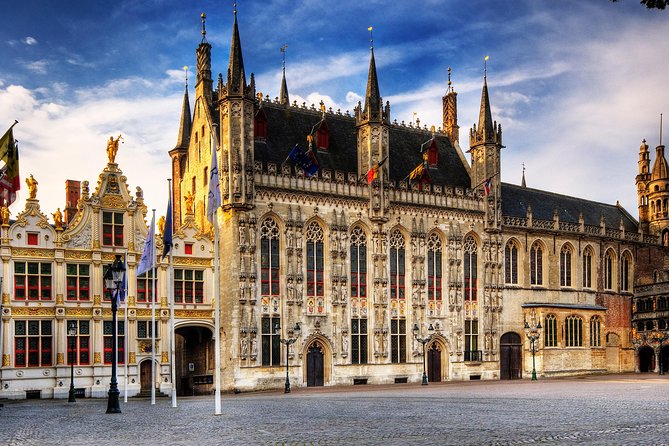
The tour kicks off at The Markt, with a big-picture intro to Bruges’ medieval role as a trading hub. The guide focuses on how wealth and power moved through the city—and how conflict wasn’t some distant concept. You’ll also hear about the tense relationship between Bruges and the French king, which helps you understand why this city became such a political prize.
Then comes Belfort. You’re not just looking at a famous bell tower from the outside—you get a feel for how the tower and its halls functioned in Middle Ages life. This is the kind of stop that pays off later when you’re reading plaques or deciding which towers and churches to climb.
One practical note: if you plan to climb a tower, plan ahead. A guide was clear that tickets to climb should be bought in the morning. Even if you skip the climb, the story around the tower still helps you “read” what you’re seeing.
Gruuthusemuseum and De Halve Maan: Beer, Wealth, and Bruges’ Nicknames
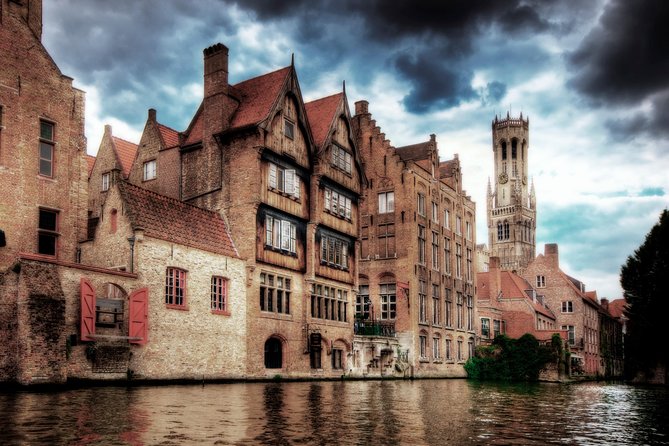
Next is Gruuthusemuseum, a wealthy family palace connected to a monopoly in the beer trade. This is a fun shift away from politics and toward economics—because in Bruges, money wasn’t abstract. It shaped architecture, trade relationships, and even which stories became legends.
From there you’ll head to De Halve Maan Brewery—at least, you stop in front of it. The guide ties the brewery to one of Bruges’ famous nicknames: the Fools of Bruges. You also hear about a beer pipeline beneath the city. That’s the kind of detail that makes a regular landmark feel weirdly alive, like the city has invisible mechanics running under the cobblestones.
If beer isn’t your thing, don’t worry. The value here is how the guide connects industry to city identity. You’ll walk away understanding why Bruges is so particular about tradition.
Sint-Janshospitaal and Ten Wijngaarde: Medicine and Community
At Sint-Janshospitaal, you get a look at the hospital of St John, described as one of the oldest still-existing hospitals in the world and a cornerstone of medieval society. Even if you’re not a history nerd, this stop changes how you view the city. Hospitals back then weren’t just places for sickness—they were part of the social structure.
Then the tour turns to faith and daily life with The Princely Beguinage Ten Wijngaarde. This beguinage is presented as the biggest of its kind in the world, where a community of ladies lived together for over 800 years. The key benefit isn’t only the age—it’s the feeling that this is a real lived environment, not a set piece.
You’ll walk through the beguinage area as part of the tour, which means your brain has a chance to process it. These places reward slow attention, and the guide’s timing gives you just enough pause to notice details without dragging on.
You can also read our reviews of more historical tours in Bruges
Minnewater Lake and Swans: Love Stories with a Political Twist
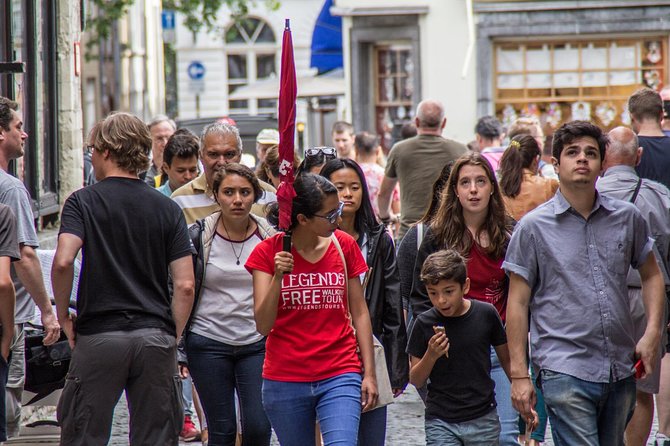
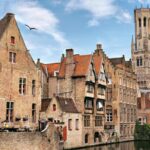
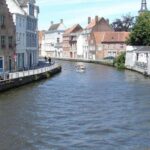
At Minnewater Lake, the tour leans into one of Bruges’ softer myths: the Lake of Love and the swans on the canals. But you don’t just get romance. The guide also explains why Bruges ended up in conflict with Emperor Maximilian of Austria.
That pairing is genuinely smart. It shows how legends and real politics can exist in the same city at the same time. Bruges is full of postcard charm, but the stories behind the charm often involve power and trade.
This stop is also a good reset. If you’ve been moving through squares and buildings, you’ll appreciate the shift to water and open space.
Onze-Lieve-Vrouwekerk, Groeningemuseum Garden, and Huidenvettersplein
The big church stop is Onze-Lieve-Vrouwekerk. This is the iconic church with the second tallest brick tower in the world. The tour includes details about artwork inside and nearby context: it houses a statue by Michelangelo and tombs of the last Dukes of Burgundy.
Even if you don’t go inside right away, the guide helps you understand why people treat this as a must-see. It’s not just architecture bragging rights. It’s a visual summary of who mattered in Bruges history.
Then you’ll pass through the garden area linked with Groeningemuseum, where works by major Flemish masters are displayed. This is a short stop, so think of it as a teaser—enough to point you toward what you might want to see more deeply if you have extra time later.
Finally, Huidenvettersplein brings you to an older working Bruges story: Tanner’s square. You hear how the leather business involved turning skins into leather, and yes, it was a smelly job. That matters because it reminds you the city wasn’t always gentle and neat-looking. It was busy, practical, and sometimes unpleasant.
Ending at Burg Square: The Political Heart of Bruges

The tour closes at Burg Square, described as the political heart and birthplace of the city of Bruges. The best part of ending here is that it ties the whole walk together.
Earlier stops explained trade (markets, tower roles, beer wealth) and society (hospital, beguinage). Ending at Burg Square brings you back to governance and city power. After the walk, you’ll understand why Bruges built certain structures where it did—and what those structures were meant to represent.
If you’re planning your own afternoon, this ending location is a convenient launch point. It’s central, and it keeps you close to cafés and other highlights.
Price and Value: Why $3.62 Can Still Feel Worth It
At $3.62 per person, this is an extremely low-priced way to get a guided overview of Bruges. Even without any extra add-ons, you’re getting a structured walk across major landmarks plus the “why” behind them.
Two things make that value work in real life:
- All fees and taxes are included, so your budget stays intact.
- You’re seeing the key sites that you would likely spend time researching anyway—so the guide saves you time and helps you prioritize what to revisit.
One small reality check: the tour highlights that tips are recommended. And at least one review-style note said guides may need to pay to run the tour. So if you get a guide who’s clearly putting effort into storytelling and pacing, tipping is the easiest way to support the people making the experience work.
Guide Style, Humour, and the Chance for Extra Touches
The experience depends a lot on your guide’s style. Names mentioned in real-world experiences include Louis, Victoria, Thomas, Erik, Wouter, Sander, Emiel, Patrick, Martin, Celine, and Nicholas. That’s a good sign: there’s a steady stream of guides with strong command of Bruges stories.
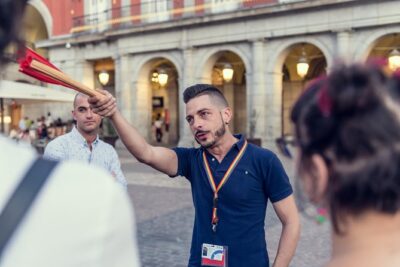
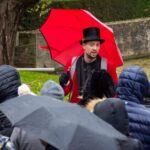
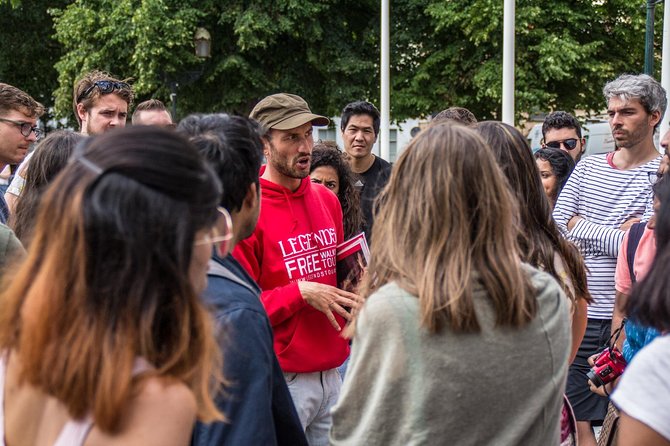
What you’re looking for in a good guide here is balance: historical facts, but told in a way that makes the streets feel relevant. Many of the notes tied the best tours to guides who were funny, friendly, and willing to answer questions—especially when the group ended up very small.
You might also see small extras along the way, like chocolate treats or a free truffle, depending on the day and guide. Don’t count on it as a guarantee, but it’s part of the charm when it happens.
If You Should Skip This Walk
You might want a different approach if:
- You hate walking in cold weather (the tour is outdoors and needs good weather).
- You already know Bruges history deeply and are just looking for long free time inside churches or museums.
- You expect a full museum-style format with long stays inside each site. This is a walk-first tour with short stops.
Also, keep in mind that a no-show case was reported. It’s not something to panic about, but it is enough to justify arriving early and confirming you’re at the correct meeting point.
Should You Book Legends of Bruges?
Yes—if you want the fast, story-driven overview of Bruges that helps you plan the rest of your trip.
This is especially good for:
- First-timers who want the main sights in one route
- Time-pressed visits where you need smart prioritizing
- Anyone who likes history told through real places—markets, towers, hospitals, churches, and water
Book it early enough to fit your schedule. It’s often reserved about 17 days in advance on average, and that’s usually a sign it stays popular.
If you do book, pack for walking, arrive a few minutes early at Pieter de Coninck en Jan BreydelMarkt, and be ready to ask questions. The tour works best when you treat it like a guided conversation, not just a checklist.
FAQ
How long is the Legends of Bruges walking tour?
It runs about 2 hours 15 minutes.
What does the tour cost?
The price is $3.62 per person.
What language is the tour offered in?
The tour is offered in English.
What ticket format do I get?
You receive a mobile ticket.
Where does the tour start and end?
It starts at Pieter de Coninck en Jan BreydelMarkt, 8000 Brugge, Belgium, and ends at De Burg, Burg 15, 8000 Brugge, Belgium.
What group size should I expect?
The tour has a maximum of 24 travelers.
Are service animals allowed?
Yes, service animals are allowed.
Does the tour run in any weather?
It requires good weather. If it’s canceled due to poor weather, you’ll be offered a different date or a full refund.
What is the cancellation policy?
You can cancel for a full refund up to 24 hours in advance. Within 24 hours, the amount paid is not refunded.
When do I get confirmation after booking?
Confirmation will be received at the time of booking.