REVIEW · AMSTERDAM
Anne Frank’s Story – Guided Walking Tour through Amsterdam
Book on Viator →Operated by 360 Amsterdam Tours · Bookable on Viator
Shoes on, history in your footsteps. I love how this small-group walk strings together WWII events with real city landmarks, and I especially like the way you get the Anne Frank story’s context without rushing. One thing to keep in mind: this tour ends outside the Anne Frank House, and museum entry is not included.
I also like that the guide doesn’t just recite dates. Guides such as Yoshi, Ollie, Giovanni, Manuel, and Patrick are described as using photos and personal, human-scale storytelling to connect the Jewish Quarter to what happened in the 1940s. If you prefer a calmer, respectful pace, this format is a good fit.
The walk is about 2 hours, mostly on foot, and it’s best with comfortable shoes. Your route includes several stops where you’ll look from the sidewalk, so if you’re hoping for inside-building access everywhere, adjust expectations early.
In This Review
- Key highlights worth your attention
- Jewish Quarter walking tour: why it works better than a museum-only day
- Price and time: what $39.30 really buys you
- Where you meet and how the walk keeps moving
- Stop 1: Joods Museum from the entrance—context before you get emotional
- Stop 2: Portuguese Synagogue area—why outside views can still teach
- Stop 3: Dokwerker statue—small stop, big symbolism
- Stop 4: Auschwitz Monument—this is where the day turns heavy
- Stop 5: Dam Square National Monument—big public space, WWII gravity
- Stop 6: Statue of Anne Frank—why it’s placed where it is
- Stop 7: ending outside the Anne Frank House—what you’ll learn, what you still need
- Guide style and small-group feel: the real reason people recommend it
- Who should book this, and who should pair it with something else
- Should you book Anne Frank’s Story walking tour?
- FAQ
- How long is Anne Frank’s Story guided walking tour?
- How much does the tour cost?
- What language is the tour offered in?
- How big is the group?
- Is entrance to the Anne Frank House included?
- Are the Jewish Historical Museum (Joods Museum) and the Portuguese Synagogue included?
- Are any stops free?
- Is the tour suitable for families with kids?
- What if the weather is bad?
Key highlights worth your attention
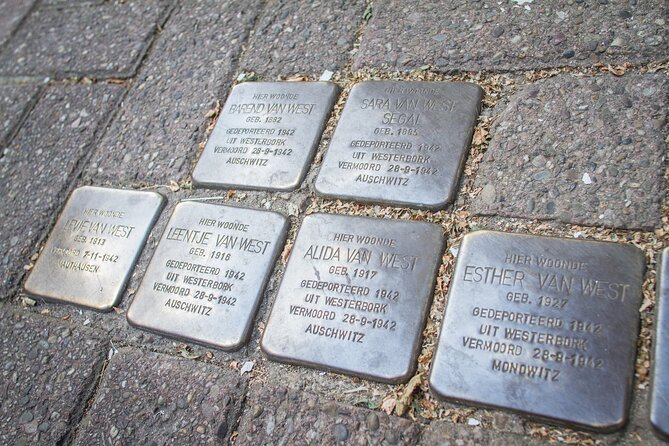
- Small group (max 15) makes it easier to ask questions and hear details clearly
- Jewish Quarter landmarks from the outside give context without line-heavy detours
- Holocaust memorial time adds emotional weight to the historical story
- WWII focus with street-level specifics like the Winter of Hunger and February Strike
- Ends at the Anne Frank House area so you can decide what to do next
Jewish Quarter walking tour: why it works better than a museum-only day
This experience is built around one simple idea: you learn more when you see where history unfolded. You walk through Amsterdam’s historic Jewish Quarter and connect what you’ve read about Anne Frank to the actual neighborhoods, monuments, and institutions tied to that era. Instead of staying inside one building, you get a city view of the story—streets, corners, and reminders that the past isn’t abstract here.
I also like the balanced approach. The tour covers the Nazi occupation of the Netherlands from 1940 to 1945 and its impact on Jewish residents and everyday life across Amsterdam. Then it pivots to Dutch resistance—how people offered secret hiding places to families like the Franks—so the day doesn’t stop at tragedy.
Because the tour avoids a full museum run, it fits neatly into an Amsterdam itinerary. You can treat it like a “story backbone” for the rest of your visit.
You can also read our reviews of more walking tours in Amsterdam



Price and time: what $39.30 really buys you
At about $39.30 per person for roughly 2 hours, you’re not paying for museum tickets. You are paying for a live guide, a tight route, and context that you’d be unlikely to assemble on your own in the same order.
Here’s the practical value: the route hits major checkpoints tied to the Anne Frank story and the wider WWII setting—Joods Museum area, Portuguese Synagogue area, Dokwerker statue, the Auschwitz Monument, Dam Square, and the Anne Frank statue—plus a guided wrap-up outside the Anne Frank House. Even with outside-only viewpoints, that’s a lot of meaningful ground for one guided block of time.
The trade-off is also clear: if your priority is going inside the Anne Frank House itself, this price won’t cover that. You’ll likely want to add the official ticket separately if you can.
Where you meet and how the walk keeps moving
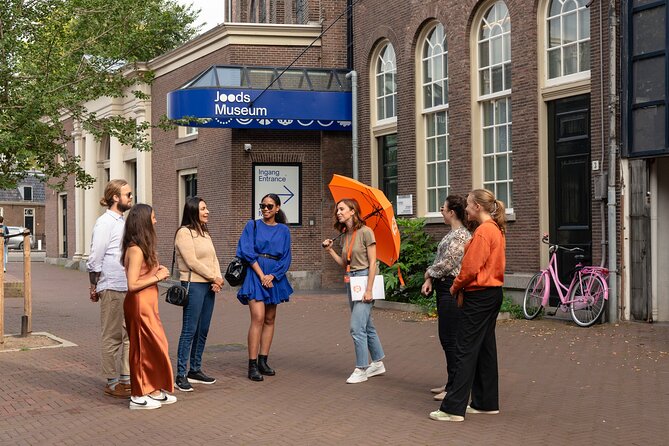
You start and end near Westermarkt 20, right by the Anne Frank House area. That matters because it reduces friction: you’re not zigzagging across town just to finish your day. A mobile ticket is included, and the walking time is long enough to feel substantial without turning into a half-day ordeal.
The group size caps at 15 people, which changes the whole vibe. In a bigger group, you’d spend your time trying to catch up with the guide’s voice. With a smaller group, you’re more likely to get the details and to hear guide photo explanations clearly, even when you stop at quieter corners.
One small practical note: this is a historical walk with multiple outdoor pauses. Check the weather and dress for it. Comfortable shoes are a must, and the pace assumes moderate physical fitness.
Stop 1: Joods Museum from the entrance—context before you get emotional
The tour begins in the vicinity of the Jewish Historical Museum (Joods Museum), with the guide discussing it from the outside rather than entering. That’s an important choice. You get historical framing first—so later memorials and the Anne Frank House area land with more meaning.
Even without entering, the building’s presence helps you “place” the Jewish Quarter in real time. It also sets expectations for the rest of the walk: this is a city-route story, not a ticketed museum marathon.
Possible downside: if you were hoping for immediate indoor access and artifact viewing, this stop may feel more like orientation than a “real visit.” The payoff comes after, when the guide ties each location to what happened in the 1940s.
Stop 2: Portuguese Synagogue area—why outside views can still teach
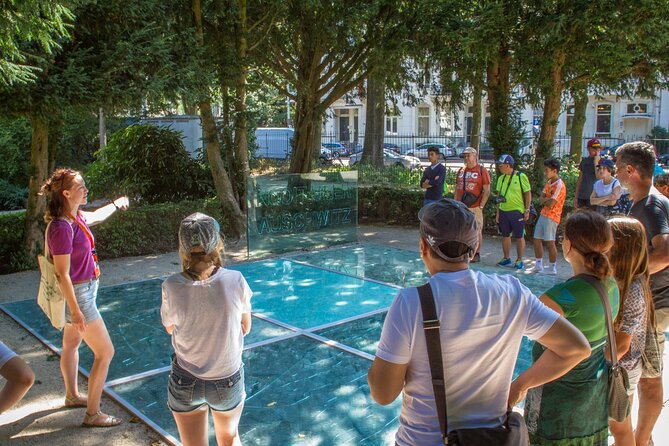
Next you’re at the Portuguese Synagogue area. Again, there’s no inside visit; you’ll learn from the sidewalk. Still, that can be worthwhile. Synagogues aren’t just buildings here; they’re part of how a community lived, worshipped, and endured change over time.
From an educational standpoint, outside talks help you connect architecture and place to the broader story the guide is building. You’re not just hearing about Jewish life—you’re seeing the neighborhood where Jewish community institutions stood.
If you’re the type who likes to take photos, plan on some downtime here. The guide uses the stops to anchor specific points, so pausing for a quick shot won’t derail the experience.
You can also read our reviews of more guided tours in Amsterdam





Stop 3: Dokwerker statue—small stop, big symbolism
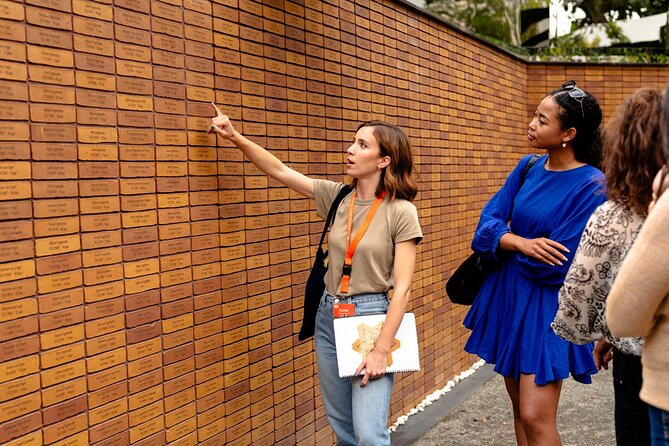
The Dokwerker statue is a short, focused pause with time to look around. It’s one of those stops that works best when you let the guide explain why it matters. The name itself points toward Amsterdam’s working life, which helps widen the story beyond one family and one tragedy.
One real benefit of this kind of stop: it reminds you that WWII history affected everyone in the city. Even when the tour is clearly centered on the Frank family and the Jewish community, the Amsterdam backdrop stays in view.
Practical caution: because you’re outside, you’ll be exposed to weather. If it’s windy or rainy, keep your layers handy.
Stop 4: Auschwitz Monument—this is where the day turns heavy
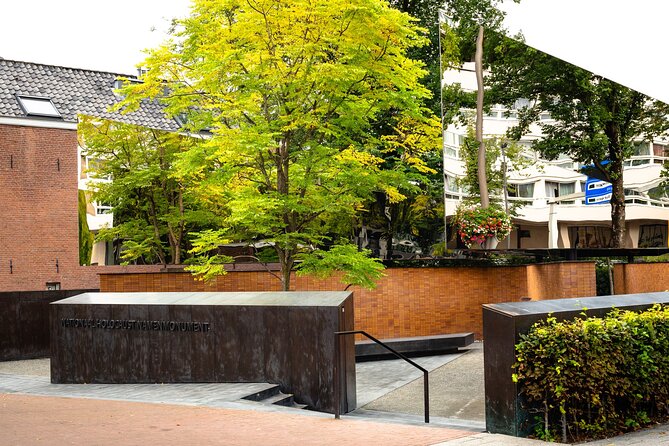
Then you’re at the Auschwitz Monument. This stop is free time-wise and free of admission costs, which makes it easy to give it your full attention. The guide’s explanations here are the emotional center of the walk.
One detail that stands out from guide storytelling: some guides point out why people place rocks at Jewish graves and memorial sites. You may also be invited to place a rock near a name at a Holocaust memorial moment. It’s a small action, but it helps many people process the material more personally.
If you’re sensitive to heavy topics, plan for that up front. This is not a light, sightseeing-heavy tour. It’s built to leave you feeling the weight of the story, then carry that understanding forward.
Stop 5: Dam Square National Monument—big public space, WWII gravity

From the Auschwitz Monument area, you’ll move toward Dam Square and the National Monument of Amsterdam. This is a change in scale—Dam Square is a major civic stage, not a quiet memorial corner. That shift matters because it shows how wartime events and remembrance live within everyday public space.
The guide uses this stop to connect the larger national narrative back to what Amsterdam residents endured. Even if you’ve seen Dam Square before, the historical framing turns it into more than a photo spot.
This stop is shorter, so don’t expect to wander for long. Treat it like a guided waypoint.
Stop 6: Statue of Anne Frank—why it’s placed where it is
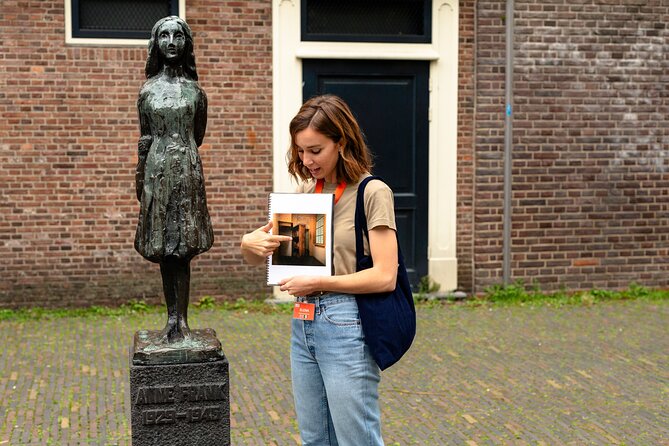
You’ll also see the statue of Anne Frank. It’s a quick stop, but it gives you a moment to reflect on how the Frank story became part of Amsterdam’s public memory. The statue functions like a visual checkpoint: you’re nearing the end of the walk, and the guide’s earlier context should be clicking into place.
One reason I like ending near the story’s physical footprint is emotional pacing. You get time to process before arriving outside the Anne Frank House.
If you’re with kids, this stop can also help younger visitors link the abstract parts of the story to a person they recognize.
Stop 7: ending outside the Anne Frank House—what you’ll learn, what you still need
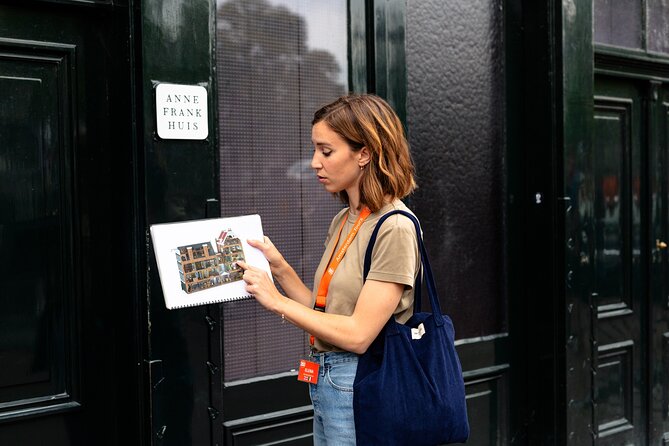
The tour ends next to the Anne Frank House. This is the dramatic finish, and it’s also where the biggest expectation issue can happen. Entrance to the Anne Frank House is not included. The tour does not grant access inside.
Instead, you’ll learn more about Anne Frank’s diaries—how they became legendary and how they were published by her father, Otto Frank. Hearing that explanation right at the end helps it feel less like trivia and more like closure.
Practical advice: if you want to go inside the house, plan that as a separate ticket purchase through the official Anne Frank House website. This walking tour is best seen as the story lens that makes the house visit (if you add it) hit harder.
Guide style and small-group feel: the real reason people recommend it
This kind of tour lives or dies on the guide. Based on what I’ve seen described, guides bring photos, clear explanations, and the right level of seriousness. Names you may run into—depending on your language and schedule—include Yoshi, Ollie, Giovanni, Manuel, Patrick, Edwin, and Peter.
Because the group size is capped at 15, your guide can keep an eye on the crowd and adjust when people can’t see or hear well. Some guides are described as making extra effort so everyone can view photos during stops.
Also, the tour welcomes service animals, which is a big plus for accessibility. And it’s offered in English, so it’s simpler for international visitors who don’t want to risk their history lesson in translation.
Who should book this, and who should pair it with something else
This is a great pick if you:
- want WWII-era history tied to specific streets and landmarks
- like guided storytelling more than reading plaques alone
- want a respectful, meaningful experience without spending the entire day inside museums
- need a tour format that works well for many ages (children must be accompanied by an adult)
If you’re the type who absolutely wants to spend the bulk of your time inside the Anne Frank House, treat this as the prequel. Add the official ticket separately so you get both parts: the guided context here, and the interior visit there.
It also makes sense to plan ahead. The tour is commonly booked around 35 days in advance on average, so if your dates are tight, don’t leave it until the last minute.
Should you book Anne Frank’s Story walking tour?
Yes, if you want a focused, walkable way to understand Anne Frank’s Amsterdam—especially the Jewish Quarter setting and the WWII events that shaped it. The value comes from the structure: a small group, about two hours, and a guide who links landmarks to what happened between 1940 and 1945.
Skip or rethink if you’re expecting included entry into the Anne Frank House or into the Jewish Historical Museum and Portuguese Synagogue. This is an outside-looking, guide-led route with real emotional stops—starting at the Jewish Quarter sites and ending right by the house—so you’ll get the story context either way.
If you book it, do one smart thing: plan your Anne Frank House visit separately (when you can) so the day doesn’t feel like it ended right before the door.
FAQ
How long is Anne Frank’s Story guided walking tour?
It runs about 2 hours.
How much does the tour cost?
The price is $39.30 per person.
What language is the tour offered in?
The tour is offered in English.
How big is the group?
The group size is limited to a maximum of 15 travelers.
Is entrance to the Anne Frank House included?
No. The tour ends next to the Anne Frank House, but admission is excluded and you do not enter the house.
Are the Jewish Historical Museum (Joods Museum) and the Portuguese Synagogue included?
No. Admission to both is excluded, and the tour discusses them from the outside.
Are any stops free?
Yes. Stops such as Dokwerker and the Auschwitz Monument, plus Dam Square and the Anne Frank statue, are listed with free admission for the tour purposes.
Is the tour suitable for families with kids?
Children must be accompanied by an adult, and the tour includes age-appropriate pacing with a manageable walking time.
What if the weather is bad?
This experience requires good weather. If it’s canceled due to poor weather, you’ll be offered a different date or a full refund.