REVIEW · AMSTERDAM
Amsterdam: Anne Frank Guided Small Group Walking Tour
Book on GetYourGuide →Operated by SightSeekers · Bookable on GetYourGuide
Anne Frank’s Amsterdam starts at a bronze bull. This small-group walk ties Jewish history and Nazi occupation to the streets and canals you’re seeing today, with time for questions. I also like the 2-hour format. It’s long enough for real context, but not so long you’re exhausted before you reach the finish.
One heads-up: the tour ends outside the Anne Frank House, so you’ll need separate tickets if you want to go inside.
Guides such as Iris, Tristan, and Leo lead the stories in English or German, keeping the tone reflective and clear.
In This Review
- Key things to notice before you go
- Why this Anne Frank walking tour makes sense in central Amsterdam
- Starting at Beursplein 5: find the bull, then get the story right away
- Dam Square photo stop: where public life met growing danger
- Nieuwezijds Voorburgwal 120: connecting street-level details to the diary
- De Silveren Spiegel: where a “simple walk” becomes a meaningful lesson
- Blauwburgwal: seeing how memory sits inside the city
- Anne Frank Monument: pause at a place built for remembrance
- Finishing outside the Anne Frank House: great timing, but plan tickets now
- How guides keep this story respectful (and actually clear)
- What to bring: keep it simple and you’ll enjoy the walk more
- Price and value: is $28 a good deal for 2 hours?
- Who should book this Anne Frank tour
- Should you book this tour? My quick decision guide
- FAQ
- How long is the Amsterdam Anne Frank guided walking tour?
- What group size should I expect?
- Where is the meeting point?
- Where can the other starting option be?
- Does this tour include tickets to the Anne Frank House?
- What time should I book my Anne Frank House visit if I want to go inside?
- Where does the walking tour end?
- What languages are available?
- What should I bring for the walk?
- Is there free cancellation?
Key things to notice before you go
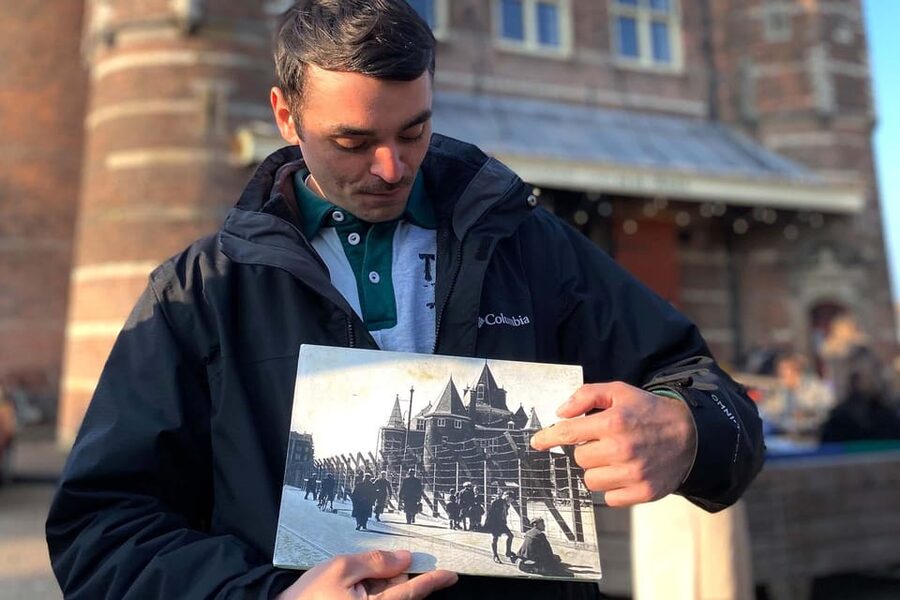
- Small group (max 15): you get space to ask questions without feeling lost in a crowd
- Reflective pacing: the walk is designed for thoughtful listening, not a sprint through checkpoints
- Citywide context: you’re not only learning Anne Frank’s story; you also hear about Amsterdam’s Jewish community under occupation
- Photo stops with meaning: stops like Dam Square and the Anne Frank Monument help you connect names to places
- Finish outside the Anne Frank House: plan your next step in advance since entry isn’t included
Why this Anne Frank walking tour makes sense in central Amsterdam

This is a 2-hour walking tour focused on Anne Frank, but it’s also about Amsterdam’s Jewish history and how daily life changed under Nazi occupation in World War II. The route is built for connection: you see key locations in the city, and your guide helps you understand what was happening around people—Jewish and non-Jewish—during those years.
For me, the best part of tours like this is not the facts alone. It’s the way the guide links the diary’s emotional weight to real streets, public squares, canal-side paths, and memorials. You start to notice how occupation didn’t just happen “somewhere else.” It shaped routines, choices, and risks right where people lived.
At $28 per person for a local guide and a small group, it’s also a practical value. You’re paying for interpretation and pacing, not just walking in a straight line. And because it’s only two hours, it fits neatly into a day that already has museums, canal time, and food stops.
You can also read our reviews of more walking tours in Amsterdam



Starting at Beursplein 5: find the bull, then get the story right away
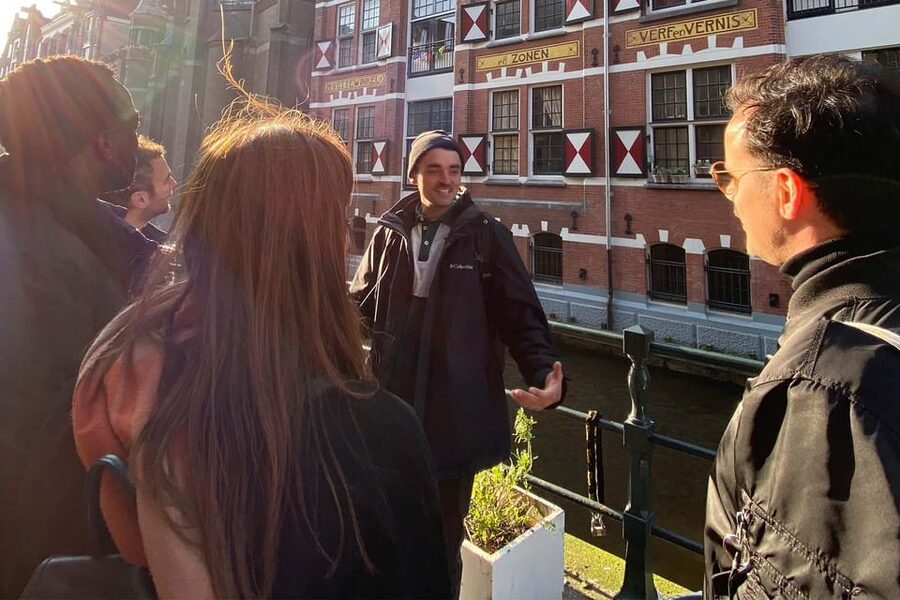
You’ll meet in the Beursplein 5 area, next to a bronze statue of a bull. If you booked the other option, the start can be at Community by Shell Recharge Charging Station—so double-check your confirmation message so you don’t waste time hunting.
From there, it’s just a short on-foot walk to your first major photo stop around Dam Square. That early setup matters. It’s the moment where your guide typically frames what you’ll be seeing: how Amsterdam’s Jewish community was treated under antisemitic laws, how deportations affected families, and how resistance and survival could take different forms.
Also, this is a city where weather changes fast. Build in a buffer for your first 10 minutes so you’re not flustered when the guide starts talking. A comfortable pace here helps the entire tour land better.
Dam Square photo stop: where public life met growing danger
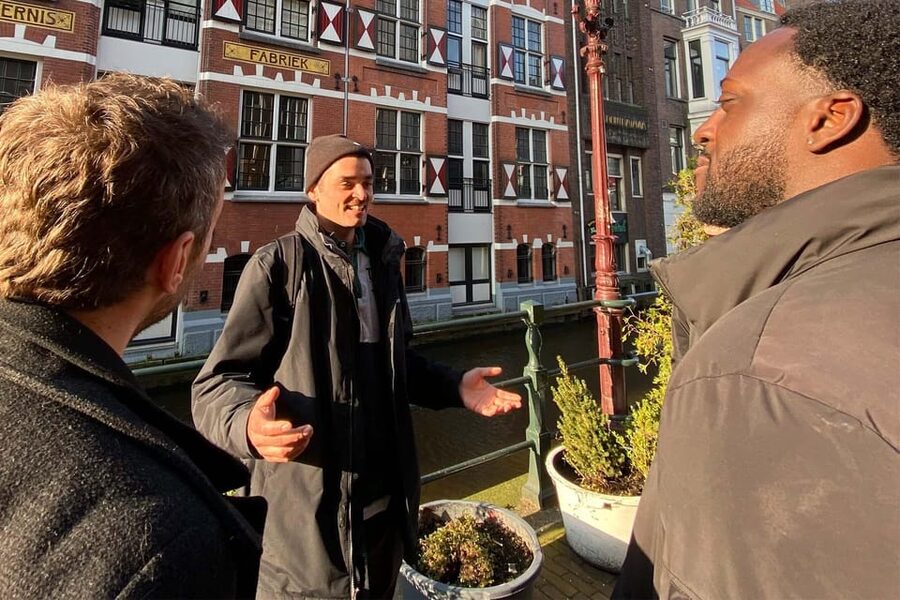
Your walk begins with Dam Square as a guided photo stop. This is one of those places where you can easily picture daily life going on as usual—until occupation reshaped what “normal” meant for Jewish residents.
What I like about starting here is the contrast. You’re in a major public square, so it helps you think about how antisemitic policies weren’t only private. They changed the atmosphere of everyday city life: visibility, safety, and the consequences of being in the wrong place at the wrong time.
Your guide uses this stop to help you understand how the occupation affected both Jewish and non-Jewish people. That balance is important. It’s not only about persecution; it’s also about the difficult choices people faced—whether to help others, keep quiet, or live with the fear of what could happen next.
Nieuwezijds Voorburgwal 120: connecting street-level details to the diary
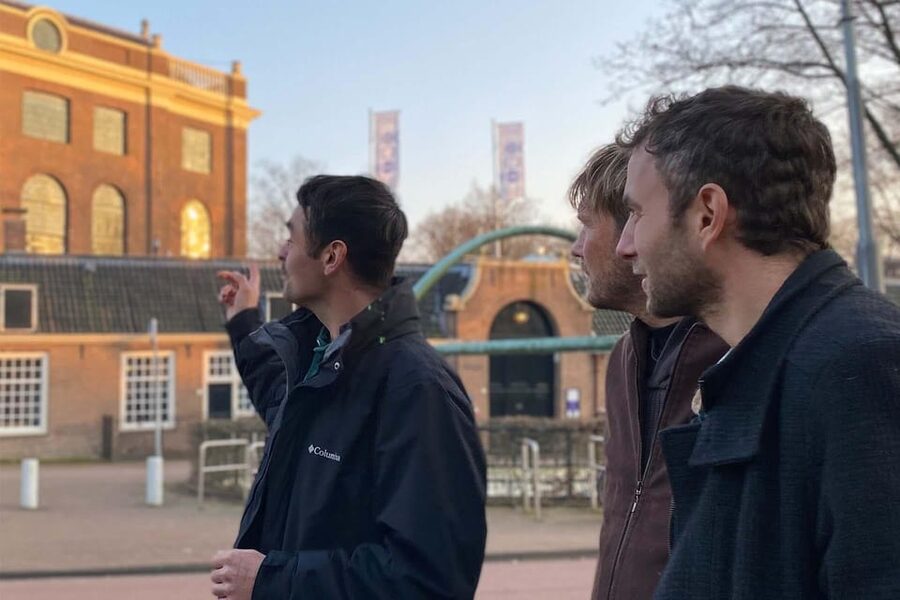
Next comes Nieuwezijds Voorburgwal 120, another guided photo stop. This is the kind of street Amsterdam is known for: historic, walkable, and close to canal-linked neighborhoods. Your guide uses locations like this to connect the wider occupation story back to Anne Frank’s world.
Even without going inside a museum, these stops can feel powerful. The guide doesn’t just say what happened. They point your attention at what’s around you now and translate that into what it meant then—how rules, restrictions, and fear changed daily routines, social life, and movement.
If you’re new to this period, you’ll probably appreciate the tour’s respectful tone and clear explanations. It’s built to work even if you don’t come in with much background. And since it’s a small group, you can ask questions if something feels confusing or heavy.
De Silveren Spiegel: where a “simple walk” becomes a meaningful lesson
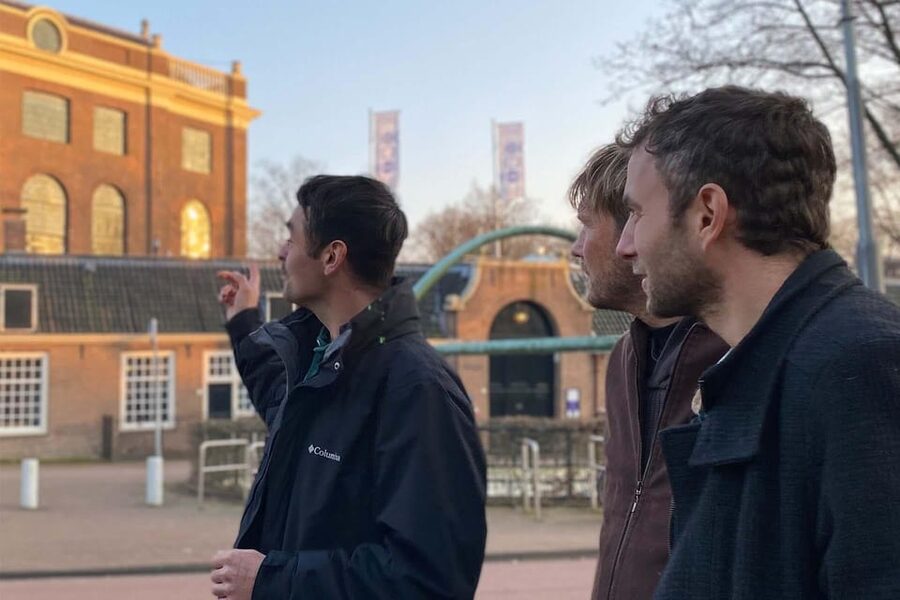
You’ll also stop at de Silveren Spiegel (again, a guided photo stop). Since the tour keeps moving along historic streets, this kind of stop works like a chapter break. It gives your brain a place to reset while still staying in the story.
This is where I find the reflective pace really helps. The guide can connect themes—courage, persecution, resistance, survival—to physical places without turning the walk into a lecture you have to endure. You’re listening while you’re moving. That rhythm matters.
One practical note: some parts of central Amsterdam are busy. If you have trouble hearing in loud streets, position yourself smartly during the stop—stand where your guide can see you and speak directly. In recent tours, that’s been a small hiccup in bad weather and crowd noise.
You can also read our reviews of more guided tours in Amsterdam





Blauwburgwal: seeing how memory sits inside the city
The tour then reaches Blauwburgwal for a short photo stop and guided walk. Canal-side neighborhoods are often where Amsterdam feels most “real,” because the city’s layout keeps pulling your eyes along the water and into side streets.
Your guide uses stops like Blauwburgwal to keep the story grounded. The point isn’t to turn every building into a dramatic set piece. It’s to remind you that history happened in everyday spaces. Antisemitic laws and deportations weren’t abstract. They reached into ordinary lives and changed what people could do—how they traveled, where they gathered, and what they dared to say.
I also like that the tour includes stories of people who risked their lives to help others, and stories of those who remained silent. That doesn’t make the story easier. It makes it more honest and human.
Anne Frank Monument: pause at a place built for remembrance
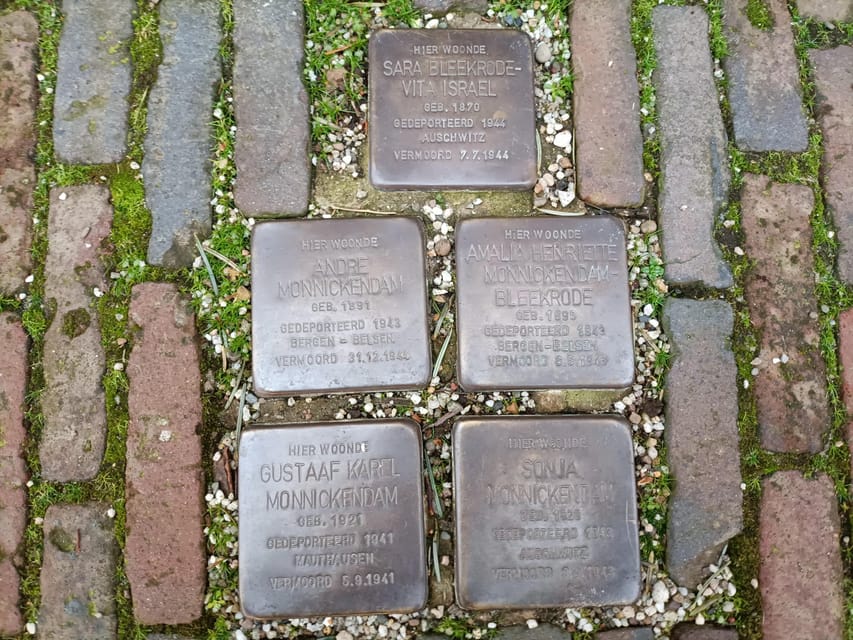
One of the clearest “meaning stops” is the Anne Frank Monument. It’s listed as a photo stop with guided commentary, and that’s exactly how it should be handled: with a pause. A monument gives you permission to slow down, look around, and absorb what the tour has been explaining so far.
This is a good moment to take out your phone for a picture, but also to put the phone away for a minute. The guide’s job here is to help you understand what remembrance is trying to do—keep people’s lives from becoming just a name in a textbook.
If you tend to rush through memorials, tell yourself you don’t need to. This stop is one of the points where the tour’s respectful tone should feel most obvious.
Finishing outside the Anne Frank House: great timing, but plan tickets now
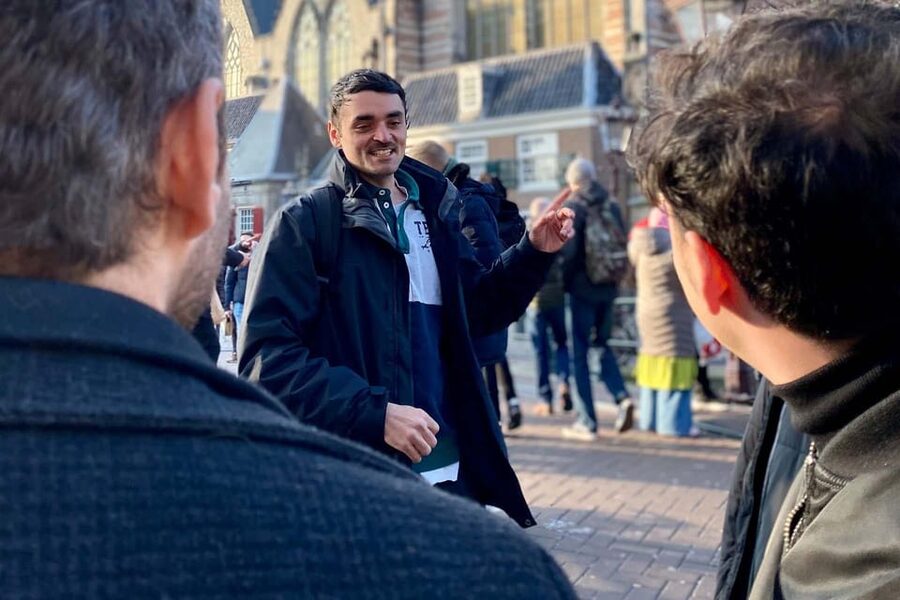
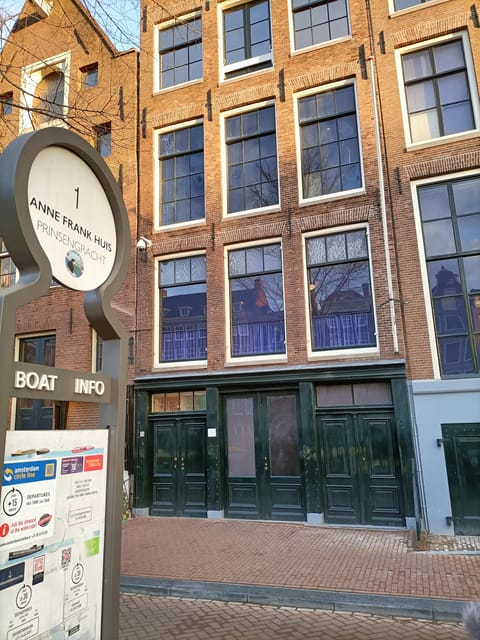
The tour ends at the Anne Frank House. Important: entry tickets are not included. The tour finishes outside, and you’ll need to book separately via the official Anne Frank House website.
This is where I’d plan your day carefully. The tour is 2 hours, and you should ideally book your Anne Frank House visit for a time slot about 2 hours after your tour departure. That buffer helps in two ways: you’re not rushing your walk into a timed ticket, and you have a little time to handle weather, snacks, or transit.
Also, don’t treat the end point as a disappointment. For many people, ending outside works well because it lets the guided context “set the table” before you go inside on your own schedule later.
How guides keep this story respectful (and actually clear)
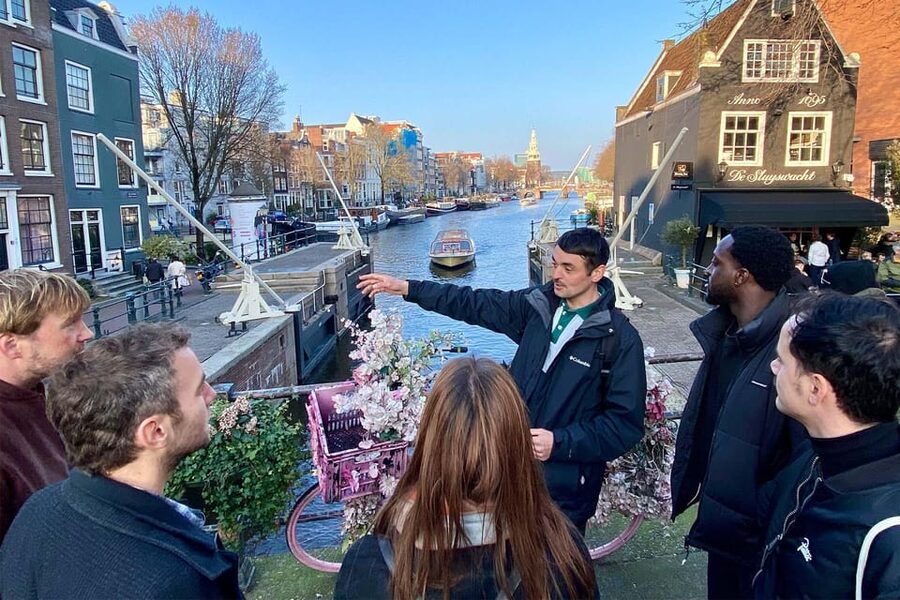
This tour is designed to be informative and respectful, with time for questions and a thoughtful pace. That’s not a small detail. With World War II topics, it’s easy for tours to become too fast, too sensational, or too vague. The small-group size helps prevent that.
From recent tour experiences, you can see a pattern in guide strengths. People have mentioned guides like Iris for friendliness and detailed city-and-history context, Tristan for a warm, engaging style, and Leo for strong storytelling. Even when people noted the weather made hearing harder, the overall feedback points to guides who keep things understandable.
If you’re hoping for a tour that doesn’t just name events but explains how and why daily life changed, you’ll likely enjoy this format. You’ll hear about courage, persecution, resistance, and survival—then your guide pulls those ideas back into what you’re walking past.
What to bring: keep it simple and you’ll enjoy the walk more
You’re walking in central Amsterdam, so your comfort matters. Bring:
- Comfortable shoes (you’ll be on foot for the full 2 hours)
- An umbrella (weather can shift, and rain is common enough to plan for)
- Weather-appropriate clothing
If the day is windy or rainy, the tour still runs. That’s why it’s worth dressing like you expect the weather to change mid-walk. Staying dry enough to focus helps a lot when the topic is emotionally heavy.
And one small tip: arrive 5–10 minutes early if you can. It gives you time to stand in the right spot near your guide and settle your group energy before the story begins.
Price and value: is $28 a good deal for 2 hours?
At $28 per person for a 2-hour guided small-group walk, you’re paying for two things: a local guide and time. You’re not paying for entry tickets to the Anne Frank House (those are separate), and you’re not paying for hotel pickup.
So the value question is really about what you need most. If you want context while you walk, and you like asking questions as you go, then this price is fair for what you get. You also get a maximum group size of 15, which is a big quality factor in a historical walking tour.
If your main goal is the Anne Frank House interior, budget extra for the separate ticket and plan the timing. The tour is best treated as your pre-visit story (or your post-visit reflection), not as a substitute for the house.
Who should book this Anne Frank tour
This is a strong match for you if:
- You want Anne Frank’s story tied to real Amsterdam locations
- You like walking tours with time to ask questions
- You’re traveling with limited time and want a focused 2-hour experience
- You want Jewish history and WWII occupation explained in clear, respectful terms
It may not be your best fit if:
- You specifically need an included Anne Frank House visit
- You want a tour that is strictly about the house itself (this one is broader and city-based)
- You dislike walking in busy city streets for photo stops and memorial moments
Should you book this tour? My quick decision guide
Book it if you want a thoughtful, small-group walk that helps you understand what you’re seeing around central Amsterdam—especially before you visit the Anne Frank House later on your own. The 2-hour length is practical, and the ending outside the house is a useful way to manage your time without rushing through a bigger ticketed experience.
Skip or rethink it if you’re only interested in the inside of the Anne Frank House and don’t want to plan a separate ticket. In that case, you’d be better off putting your time and money directly into the house visit first.
Either way, plan for comfort, arrive early, and let the guide set the context. It makes the streets feel less like scenery and more like a lived place where history had real consequences.
FAQ
How long is the Amsterdam Anne Frank guided walking tour?
The tour lasts 2 hours.
What group size should I expect?
The tour is a small group with a maximum group size of 15.
Where is the meeting point?
The meeting point is at Beursplein 5, next to the bronze statue of a bull. Meeting point may vary depending on the option booked.
Where can the other starting option be?
One starting option is Community by Shell Recharge Charging Station.
Does this tour include tickets to the Anne Frank House?
No. Entry tickets to the Anne Frank House are not included.
What time should I book my Anne Frank House visit if I want to go inside?
The recommendation is to book a time slot about 2 hours after your tour departure.
Where does the walking tour end?
The tour finishes outside the Anne Frank House.
What languages are available?
The live tour guide is available in English and German.
What should I bring for the walk?
Bring comfortable shoes, an umbrella, and weather-appropriate clothing.
Is there free cancellation?
Yes. You can cancel up to 24 hours in advance for a full refund.
If you want, tell me your travel month and whether you’re planning an Anne Frank House time slot. I can suggest a simple day flow so the walking tour and the ticketed visit fit together smoothly.