REVIEW · AMSTERDAM
Amsterdam History Walking Tour
Book on Viator →Operated by SideWalks · Bookable on Viator
Amsterdam tells its story on foot. This 2-hour Amsterdam History Walking Tour runs in English with a small group (max 10), and you’ll get a mobile ticket to join the walk from De Dam’s New Church to the famous slanted houses area.
What I like most is the way it mixes big-name Amsterdam with side streets most visitors skip. I especially enjoy the Golden Age canal conversation around Leliegracht, and the fun lessons at Bloemenmarkt where you hear about tulip fever and the unusual flower lore linked to the market.
One thing to consider: two stops involve places where admission isn’t included (Anne Frank House and Amsterdam Gallery), so your final cost may be higher if you want to go inside. Also, the tour requires good weather, so you’ll want a flexible plan.
In This Review
- Key things to know before you go
- From New Church to Dancing Houses: the route that gives you momentum
- The guide makes the difference: Samuel’s storytelling style
- Kattengat: early Amsterdam and the city’s first momentum
- Oude Nieuwstraat: a quieter street tied to the Red Light District
- Leliegracht and the Dutch Golden Age: why the canals matter
- Anne Frank House: the icon is close, but the ticket isn’t included
- Dam Square: the heart of the city and the center of big stories
- Amsterdam Gallery and the facade tiles: what those plates actually mean
- Spui: where ideas and freedoms take shape
- Kalverpassage: the darker side—prisons and organized crime
- Bloemenmarkt: tulip fever, plus the surprising flower story
- The Dancing Houses: why the buildings slant (and why it’s a perfect ending)
- Price and value: how $6.05 can still feel meaningful
- What to do before and during the walk
- Is this tour right for you?
- Should you book it?
- FAQ
- How long is the Amsterdam History Walking Tour?
- Where does the tour start and end?
- What language is the tour offered in?
- What does the price include?
- What admissions are not included?
- Is a ticket required for the tour?
- How big is the group?
- Is tipping included in the price?
- What happens if the weather is bad?
- Can I cancel for a refund?
- Are service animals allowed, and is it near public transportation?
Key things to know before you go

- Tight, friendly pacing: about 10 minutes at each stop, so you cover a lot without feeling rushed.
- Guide-led, question-friendly: Samuel’s style is active and built around answering questions.
- Famous + overlooked streets: you’ll hit Dam Square and big icons, but also quieter lanes with local texture.
- Canals to courtyards to markets: the route connects the story of Amsterdam across multiple eras and themes.
- Most admissions are free, two aren’t: Anne Frank House and Amsterdam Gallery are the main paid add-ons.
- Finish at the Dancing Houses viewpoint: you end at one of the most photographed spots in the city.
From New Church to Dancing Houses: the route that gives you momentum
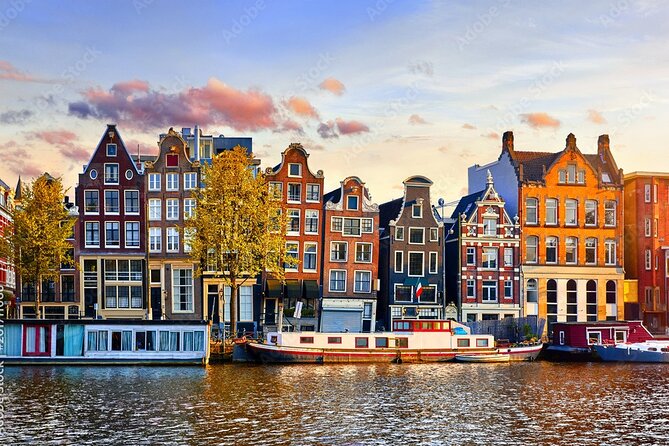
This walk starts at De Dam’s New Church on Dam Square, right in the thick of central Amsterdam. It’s a smart way to begin, because you’re already in the city’s main public space, with landmarks around you that help your brain map the rest of the route.
You’ll finish near the Dancing Houses by Amstel. That ending matters more than you might think. By the time you reach the sloping-houses view, you’ve already heard why Amsterdam grew the way it did and how buildings and canals shape daily life. So the photo spot doesn’t feel like a random stop. It feels like a payoff.
Time-wise, plan on roughly 2 hours total. The tour runs in small numbers—up to 10 people—which usually makes it easier to hear the guide and ask questions without shouting over a crowd.
You can also read our reviews of more walking tours in Amsterdam



The guide makes the difference: Samuel’s storytelling style

A cheap ticket and a good route are nice. A great guide turns it into something you remember. In this tour, the guide name that keeps coming up is Samuel—and the praise isn’t just about facts. It’s about delivery: he’s described as enthusiastic, open to questions, and active with the group.
Here’s why that matters for you: Amsterdam can feel like a collection of photo stops if you’re only skimming surfaces. A guide who links the details—street patterns, canal-era politics, religious communities, and how Amsterdam thought about freedom—helps you connect the dots. You’re not just seeing places. You’re learning how Amsterdam thinks.
Kattengat: early Amsterdam and the city’s first momentum
The first stop is Kattengat, where the tour kicks off with the founding of the city and its earliest years. Even if you’ve read a bit of Amsterdam’s story before, this kind of opener is useful. It gives you a baseline for what you’ll see later—especially once the route starts moving from “where people lived” to “how the city became powerful.”
This is also a good warm-up segment. You get your bearings fast, and you start noticing the small geographic cues that Amsterdam hides in plain sight: where streets run, how neighborhoods connect, and how the city’s growth lines up with water and trade.
Admission is free for this part, so it’s a no-stress start. Spend your energy listening and looking, not planning.
Oude Nieuwstraat: a quieter street tied to the Red Light District
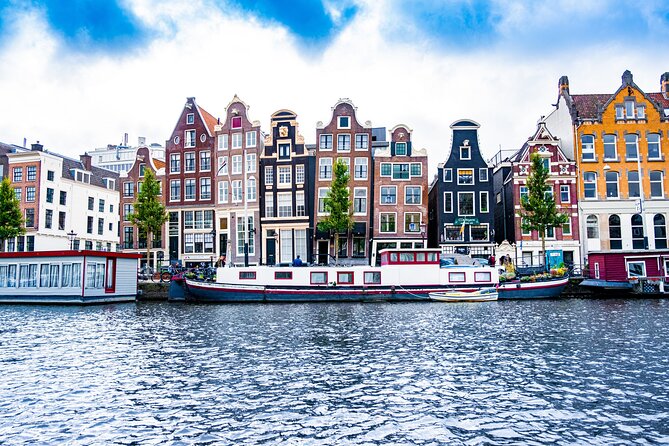
Next up is Oude Nieuwstraat, described as one of the most beautiful and less-known streets tied to the world-famous Red Light District. If you only associate this area with the obvious highlights, this stop gives you a different angle.
What you’re really gaining here is perspective. The street isn’t treated as a single-note attraction. Instead, it’s folded into Amsterdam’s broader story of how city life and reputations form. You’ll also pick up that “tourist Amsterdam” sits next to everyday Amsterdam, and the transition can be more subtle than you expect.
Admission for this stop is also free, so again: low cost, higher value.
Leliegracht and the Dutch Golden Age: why the canals matter

Then you reach Leliegracht, and the tour shifts to the Dutch Golden Age—when Amsterdam dominated the world. This is where canals stop being just pretty water and start becoming historical infrastructure.
You’ll hear how Amsterdam’s rise shows up physically. Canal districts are a clue to wealth, trade, and planning. When you understand that, it’s easier to look at a canal and read it like a timeline.
Leliegracht is also a strong “listen while you walk” moment. The guide can point out what to watch for while you’re still moving, so the area doesn’t turn into a standing-still museum moment.
This stop is free to join in terms of admission.
You can also read our reviews of more historical tours in Amsterdam



Anne Frank House: the icon is close, but the ticket isn’t included
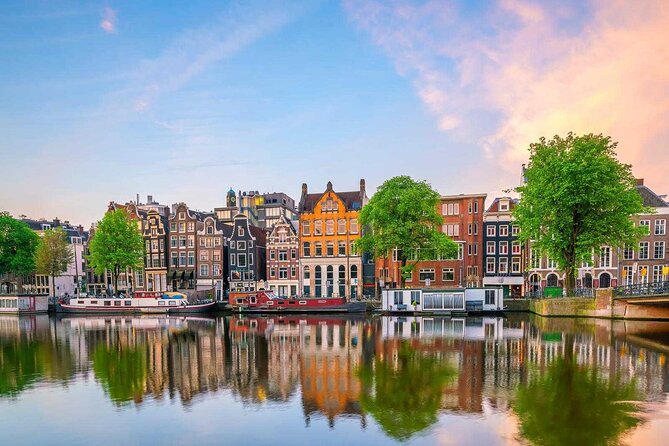
After the Golden Age conversation, the tour continues toward Anne Frank House, one of Amsterdam’s best-known icons. This segment can be emotionally heavy, so it helps that the guide gives you context along the route rather than sending you in cold.
Important practical note: admission to Anne Frank House is not included. That means you should decide ahead of time whether you want to buy a separate ticket and whether your schedule can handle the waiting that can come with a major site like this.
Even if you don’t go in, you’ll still benefit from the walk-by context. But if Anne Frank House is a must-do for you, factor in extra time and cost.
Dam Square: the heart of the city and the center of big stories
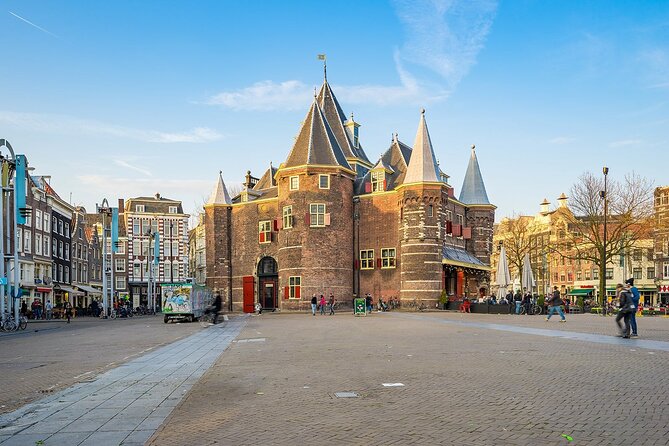
Dam Square is the kind of place that looks simple until you learn how much power and public life it holds. This is your next anchor stop, with the tour framing it as the central square—the city’s heart.
Dam Square is one of those locations where multiple eras overlap in the same view. So even a short segment works because you can see the city’s “stage” in front of you: government, commerce, crowds, and cultural memory.
Admission is free for this stop, and it’s a great place to pause mentally and regroup before the route heads into more specific themes.
Amsterdam Gallery and the facade tiles: what those plates actually mean

The next thematic stop is Amsterdam Gallery, where the tour explains where the decorative plates you see on many facades come from. This is the kind of detail that turns a stroll into something more satisfying, because it gives you a reason to look at building surfaces, not just building shapes.
What you’ll gain: a small skill for noticing. After this explanation, you’re more likely to spot repeating motifs and understand they aren’t random decoration. They reflect craft, identity, and what people wanted to signal to passersby.
Admission here is not included, so treat it as a possible paid add-on depending on what you want to do. If you’re just happy with the exterior context, you can still get value from the walking part.
Spui: where ideas and freedoms take shape
At Spui, the tour moves into a theme about freedom—how the current freedoms that make Amsterdam famous were forged here. Even without turning this into a history lecture, it’s a useful pivot because it reframes Amsterdam not just as a city of canals and trade, but as a city of ideas.
This stop works well if you like civic history: the kind that explains why a city acts the way it does. Spui gives you space to think about how public culture forms, and it pairs naturally with the earlier sections about growth and power.
Admission is free for this segment.
Kalverpassage: the darker side—prisons and organized crime
Then you reach Kalverpassage, described as an old prison and a look into the Dutch prison system, including organized crime. This is the route’s darker turn, and it’s a reminder that city history isn’t only bright and pretty.
What I’d watch for as you go: how the tour keeps themes connected. Amsterdam’s story includes law, control, and underground networks. Once you hear that framework, places like Kalverpassage stop feeling like a spooky detour and start feeling like a necessary chapter.
Admission is free for this stop, so you can spend your budget on what matters most to you.
Bloemenmarkt: tulip fever, plus the surprising flower story
At Bloemenmarkt, you get tulip fever—a classic Amsterdam story that’s almost too well-known until someone explains it in the right context. Here, it’s paired with another flower story: marijuana.
That pairing is oddly effective. It shows how Amsterdam’s market culture is big on stories, symbols, and trade—sometimes in ways people find unexpected. If you like cultural history and want your tour to feel playful without losing meaning, this segment hits that balance.
Admission is free.
The Dancing Houses: why the buildings slant (and why it’s a perfect ending)
Finally, you reach the area of the Dancing Houses, ending at Amstel 102II near that iconic sloping-house viewpoint. This stop is mostly about architecture, and the tour explains why the houses are sloped—turning a photo you’ve seen online into something you can understand.
This is also a practical ending. The view area is easy to recognize, and it’s a natural handoff point for whatever you do next—cafés, canal walks, museums, or just wandering until your feet tell you to stop.
Admission is free for this viewing segment as part of the walk.
Price and value: how $6.05 can still feel meaningful
At $6.05 per person, this tour is priced like an impulse buy. That’s not just a marketing win—it’s the reality of what you’re getting: a guided walk with multiple central stops, plus free admissions at nearly every stop.
The value equation changes once you account for the two not-included admissions: Anne Frank House and Amsterdam Gallery. If you plan to enter both, you’ll pay extra. If you’re happy with the walking context around them, the price still feels like a bargain.
Also keep in mind the tour has a small maximum group size (10 people). Low cost plus small groups usually means you get better interaction than you would on a bigger bus-style tour.
One more timing tip: this is booked about 32 days in advance on average, so if you’re visiting in peak season, reserve earlier rather than rolling the dice.
What to do before and during the walk
This is a walking-first tour, with about 10 minutes at each stop. That makes it ideal if you want a structured orientation without signing up for a long day.
Bring:
- Comfortable shoes (Amsterdam streets can be uneven)
- A phone battery plan, since you’ll have a mobile ticket
- Curiosity. The guide is set up for questions.
If you have a specific interest—canals, architecture, crime history, or civic freedoms—tell the guide what you want more of. The tour is formatted so you can take those interests and match them to the stop themes.
Is this tour right for you?
This Amsterdam History Walking Tour works best if you want:
- A 2-hour overview that’s organized and easy to fit into a busy schedule
- A small group experience with an animated guide named Samuel
- A route that blends major landmarks with lesser-known street moments
- A budget-friendly way to get context before you pick which big-ticket attractions to enter
If you’re someone who only wants full museum entries, you might feel less satisfied because two major sites aren’t included. If you love “walk, listen, look,” you’ll likely find this hits the sweet spot.
Should you book it?
Yes, I’d book this if you’re trying to understand Amsterdam instead of just sightseeing it. The price is low enough that you can afford to be flexible about extra admissions, and the route gives you real variety—from Golden Age canal stories to the darker prison chapter, ending with one of the city’s best-known photo views.
If Anne Frank House is a top priority for you and you plan to enter, book with a plan for buying tickets separately and allowing time. Otherwise, treat this as a guided orientation you can build the rest of your trip on.
FAQ
How long is the Amsterdam History Walking Tour?
It lasts about 2 hours.
Where does the tour start and end?
The tour starts at New ChurchDe Dam, 1012 NP Amsterdam and ends at The Dancing Houses, Amstel 102II, 1017 AD Amsterdam.
What language is the tour offered in?
The tour is offered in English.
What does the price include?
The price includes all fees and taxes.
What admissions are not included?
Anne Frank House and Amsterdam Gallery have admissions that are not included.
Is a ticket required for the tour?
You receive a mobile ticket, and confirmation is received at the time of booking.
How big is the group?
The tour has a maximum of 10 travelers.
Is tipping included in the price?
Tip is not included.
What happens if the weather is bad?
The tour requires good weather. If it’s canceled due to poor weather, you’ll be offered a different date or a full refund.
Can I cancel for a refund?
Yes. You can cancel up to 24 hours in advance for a full refund.
Are service animals allowed, and is it near public transportation?
Yes, service animals are allowed, and the meeting area is near public transportation.