REVIEW · AMSTERDAM
Amsterdam: Anne Frank Walking Tour – Guided in EN/DE/IT/ES
Book on GetYourGuide →Operated by Amsterdamliebe · Bookable on GetYourGuide
Anne Frank’s words shape this Amsterdam walk. You’ll move through the Jewish Quarter from Waag to major WWII memorial stops, with diary excerpts read along the way, and it’s all about the tragedy of deportation and what people tried to do in response. One key thing to know: this tour does not visit the Anne Frank House, so if that is your must-see, you’ll need to book it separately.
I also like how the guides bring the history down to street level, in the language you choose (English, German, Italian, or Spanish). You’ll often hear names like Emilia, Valentina, and David praised for keeping a respectful tone and making time for questions, which matters a lot on a subject this heavy.
In This Review
- Key points worth knowing
- Meeting at De Waag: getting your bearings quickly
- Nieuwmarkt Square and the Jewish Triangle: why this place mattered
- Zuiderkerk to Huis de Pinto: big names, real streets
- Rembrandt House: a reminder that the quarter was never only Jewish
- Sint Antoniesluis, Stolpersteine, and the memorial layer under your feet
- Portuguese Synagogue and Jewish Historical Museum: past, present, and community
- Auschwitz Monument, The Dokwerker, and the final names memorial
- How the 2-hour format feels in real life
- Value check: is $28 a good deal?
- Who should book this tour (and who might skip it)
- Should you book the Amsterdam Anne Frank Walking Tour?
- FAQ
- How long is the Amsterdam: Anne Frank Walking Tour?
- How much does the tour cost?
- Where do I meet the guide?
- Does this tour include the Anne Frank House?
- Which languages are available?
- Is the tour bilingual?
- Do I have to pay admission fees for the stops?
- How far do we walk?
- What should I bring?
- Is the tour wheelchair accessible?
- What is the cancellation policy?
- Can I reserve and pay later?
Key points worth knowing
- Diary excerpts on the route: Anne Frank’s words are used as a through-line while you pass real locations tied to the story.
- Multiple memorials, not just one: The walk ends at the National Holocaust Names Monument after stops focused on remembrance.
- You see the neighborhood, not a museum day: Historic homes, synagogues, and street-level memorials like Stolpersteine fit together into one map.
- Resistance shows up too: You’ll hear about the February Strike (1941) and the courageous work of Jews and non-Jews.
- Choose your language carefully: The tour is offered in one language at a time, not bilingual.
- Good walking boots are non-negotiable: Expect about 2–3 kilometers and weather-ready conditions.
Meeting at De Waag: getting your bearings quickly

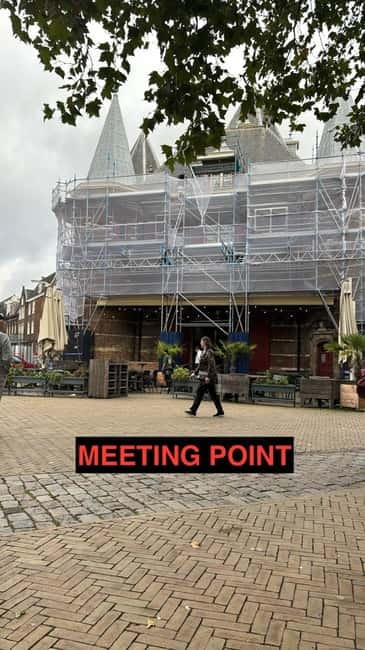
The tour starts at the entrance to De Waag, a historic building in the middle of Nieuwmarkt. It’s the kind of place that looks like it belongs in a fairy tale, and that helps: it’s easy to anchor yourself here, then follow the group on foot.
Look for the guide wearing a red name tag. Also, take the Google Maps shortcut problem seriously. The route sometimes points you to the back side of the building. If you spot the coffeeshop Jolly Joker, you’re on the wrong side—walk around the castle-like façade and go to the entrance. It’s a small thing, but starting the tour right means you lose less time and get more story.
You can also read our reviews of more walking tours in Amsterdam

Nieuwmarkt Square and the Jewish Triangle: why this place mattered

From De Waag you step into the heart of the area often connected to the Jodenbuurt (Jewish Quarter), and you’ll hear how this part of Amsterdam changed over centuries. One of the most important threads the guide will pull on is the impact of Spanish Inquisition expulsions. Jews who were forced to leave elsewhere helped reshape Amsterdam into a major commercial hub, and that influence shows up in the cityscape around you.
At Nieuwmarkt Square, the guide typically sets the timeline: what life looked like here when the community was growing, how neighbors of different backgrounds lived close to each other, and how that closeness didn’t protect anyone once Nazi persecution arrived.
This is one of the reasons I like this tour: it doesn’t treat the neighborhood as frozen-in-time. It explains why people wanted to live here, then shows how quickly that reality was crushed.
Zuiderkerk to Huis de Pinto: big names, real streets

Next comes Zuiderkerk, a recognizable landmark that helps you understand how religious and social life sat side by side in the same city blocks. The tour uses stops like this to connect the physical space to the human story: where people gathered, where identity was visible, and how the neighborhood developed through trade and community networks.
Then you’ll reach Huis de Pinto. This is one of those stops that makes the history feel less abstract because it’s tied to prominent families in the Jewish community. You’ll hear how wealth, merchant life, and long-term settlement shaped the “why” behind the Jewish Triangle area—not just the “what” of WWII.
At this point, keep an eye on the guide’s pace. A good guide will slow down just enough for you to notice street details and memorial objects, without turning the walk into a stop-and-start slog.
Rembrandt House: a reminder that the quarter was never only Jewish
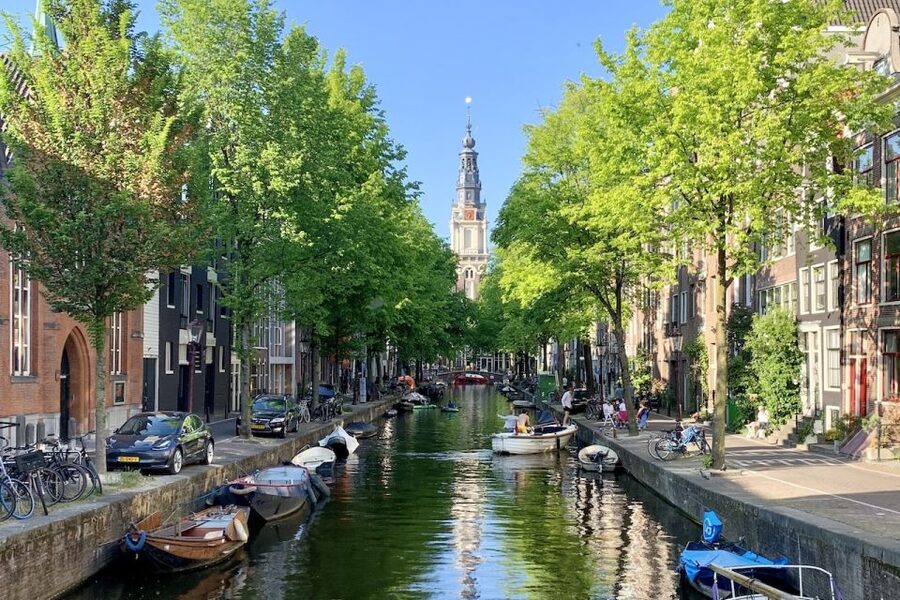
The tour includes Rembrandt House as a stop. That matters. The neighborhood you’re walking through wasn’t only Jewish. The guide points out that non-Jews also lived here, and Rembrandt van Rijn is a common example they use to make the point.
I like that the tour builds this contrast early, because it makes the later persecution feel worse in a realistic way. You’re not looking at a story that starts with separation; you’re seeing how a mixed city block could still be swept into catastrophe.
This is also a good moment to ask questions if you’re curious about how Amsterdam’s social mix worked day to day. Guides like Emilia and Deborah are often praised for answering questions clearly and shaping explanations around what you’re seeing right then.
Sint Antoniesluis, Stolpersteine, and the memorial layer under your feet
As you continue, you’ll pass through Sint Antoniesluis, and the tone of the tour shifts from “community life” toward “what happens when discrimination becomes policy.”
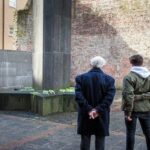
This part of the walk is where the route’s memorial “texture” becomes obvious. The tour highlights Stolpersteine—small commemorative stones placed in front of homes tied to victims—and it also points out other testimonies such as the gate connected to the old plague cemetery and monuments honoring resistance and WWII history.
One warning: on this section, you may feel the emotional weight more than you expected. The guide is essentially walking you through grief in layers—personal, neighborhood, then national. It’s handled with care, but it’s still heavy.
If you need a breather, step slightly to the side during a reading or a longer explanation. The group moves at a steady pace, and you don’t have to stay pressed against the crowd to follow along.
You can also read our reviews of more guided tours in Amsterdam




Portuguese Synagogue and Jewish Historical Museum: past, present, and community

The Portuguese Synagogue is next. The tour includes a photo stop plus a guided look, not just a quick “here it is” moment. This site anchors the story in Jewish heritage and community life, and the guide usually uses it to explain why the neighborhood mattered culturally, not only historically.
From there you continue to the Jewish Historical Museum area. You’re not being asked to buy tickets for the museum as part of this experience, but the stop still matters because it frames the bigger story of Jewish life in Amsterdam—before the Nazi period, during it, and after.
A strong part of this tour is that it doesn’t end at WWII. It points out how Jewish Amsterdam lives today in a multicultural city. That shift helps you avoid the trap of treating the neighborhood as a single tragic chapter. You’re leaving with a sense of continuity, even as the history remains brutally clear.
Auschwitz Monument, The Dokwerker, and the final names memorial
After the synagogue and museum stops, the tour heads into the memorial stretch, where the guide’s storytelling becomes more direct and solemn.
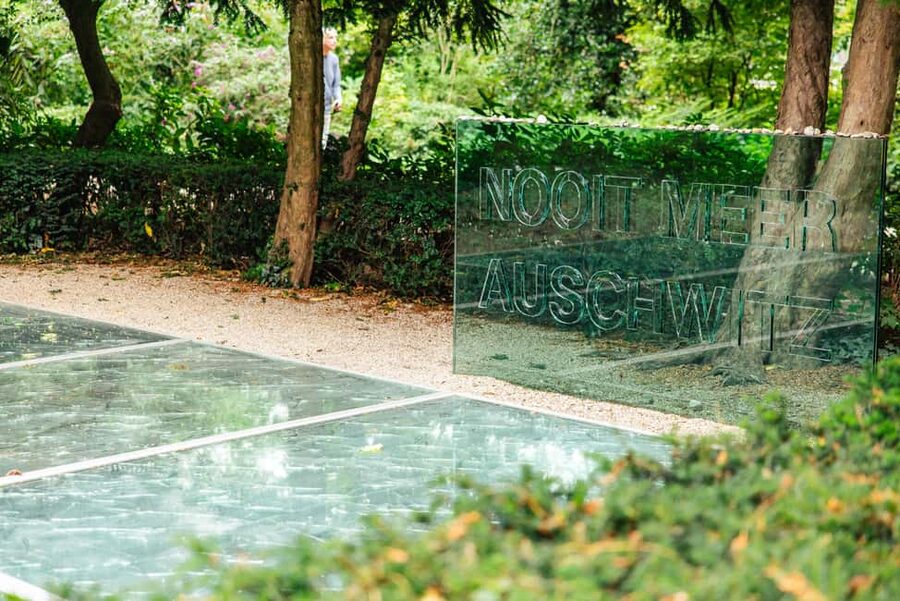
The Auschwitz Monument (Amsterdam) is a key stop. It’s there to keep the scope of what happened from feeling like a distant concept. From a practical standpoint, this is also where the tour design helps: you’re no longer hearing only background. You’re being guided toward remembrance with a clear emotional arc.
Next is The Dokwerker. It’s another WWII-linked memorial stop that reinforces the theme of how people were dragged into the machinery of terror. The name itself is a reminder that victims and survivors came from real lives and ordinary jobs, not a faceless “everyone.”
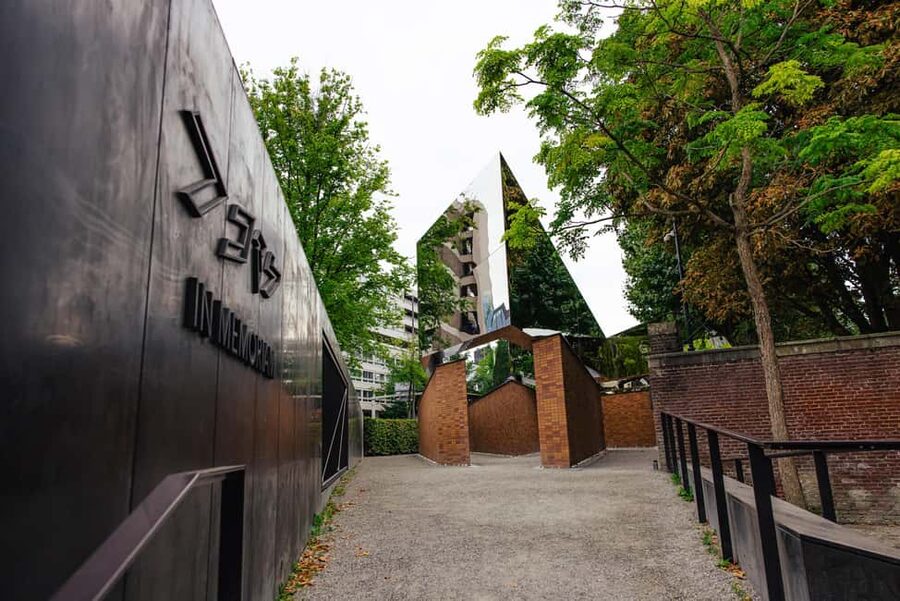
Finally, you finish at the National Holocaust Names Monument. This is the closure stop, and it typically gives you time to sit with what you just learned and what the names are meant to represent. If you want one reason to book the tour, this is it: you end at a place built for remembering, not just photographing.
How the 2-hour format feels in real life
This is a 2-hour walking tour covering about 2–3 kilometers. That’s not extreme, but it is enough distance that you’ll feel it if you wear flimsy shoes or skip water. The good news is the route is designed so you can handle the pacing. Reviews commonly praise guides for keeping things well-paced and for checking in with the group.
The tour runs in all weather conditions. Bring water, wear comfortable shoes, and pack an umbrella if rain is possible. Amsterdam can change its mind fast.
Language choice is also a practical deal-breaker. You pick one of these: English, German, Spanish, or Italian. It is not bilingual. If you choose the wrong language option, you’ll be stuck for the entire 2 hours, so double-check before you go.
Also, remember one important detail: you will not visit or see the Anne Frank House. The tour uses passages from her diary, read during the walk, to connect the timeline to where you stand. That can be deeply moving, but it won’t replace the museum visit if that’s on your checklist.
Value check: is $28 a good deal?
$28 per person for a guided walk that lasts about 2 hours can be great value—if you actually want the guide’s narrative. Here, the value is in the structure: you get a live guide, a route packed with historically meaningful stops, and diary excerpts used to connect the places to the timeline.
You also shouldn’t need to pay admission for the sights included in the walk, since the stops are visitable for free as part of the route design. So you’re mostly paying for storytelling and direction, not ticket costs.
Where it might not be as good a deal is if you’re only hunting for quick photos or only want the Anne Frank House experience. This tour is about the neighborhood story around the diary, not about entering the Anne Frank House.
Who should book this tour (and who might skip it)
You’ll love this if:
- You want a walking tour that connects Anne Frank’s diary to real Amsterdam locations.
- You’re interested in Jewish community history as well as WWII persecution and resistance.
- You prefer guided context over reading plaques alone.
- You like having time to ask questions and clarify what you’re seeing.
You might skip it if:
- You’re only looking for the Anne Frank House itself, since this tour does not include it.
- You know you don’t handle Holocaust-related memorials well. This is respectful, but it is not light.
Should you book the Amsterdam Anne Frank Walking Tour?
Yes—if you approach it with the right expectations. This is not a casual stroll or a trivia walk. It’s a focused, guided route through a neighborhood tied to Jewish life, Nazi persecution, and the resistance that followed.
What seals the deal for me is the combination of on-the-ground memorial stops and the way diary passages give a personal thread through places like Auschwitz Monument and the National Holocaust Names Monument. If you choose the correct language, wear good shoes, and plan to be emotionally present for a couple of hours, it’s the kind of experience that sticks with you long after you’re back by the canals.
FAQ
How long is the Amsterdam: Anne Frank Walking Tour?
The tour lasts about 2 hours.
How much does the tour cost?
The price is $28 per person.
Where do I meet the guide?
Meet at the entrance to De Waag in Nieuwmarkt. The guide wears a red name tag.
Does this tour include the Anne Frank House?
No. The Anne Frank House is not visited or seen on this tour.
Which languages are available?
You can choose German, English, Spanish, or Italian.
Is the tour bilingual?
No. It’s offered in one language at a time, so you need to select the option you want.
Do I have to pay admission fees for the stops?
No. Admission fees are not needed during the tour as all sights on the route can be visited for free.
How far do we walk?
The walking distance is about 2–3 kilometers.
What should I bring?
Bring comfortable shoes, water, and weather-appropriate clothing. An umbrella is recommended for rain.
Is the tour wheelchair accessible?
Yes, the tour is wheelchair accessible.
What is the cancellation policy?
You can cancel up to 24 hours in advance for a full refund.
Can I reserve and pay later?
Yes, you can reserve now and pay later.
If you tell me which language you plan to use and when you’re visiting, I can help you pick the best start-time windows and what to pair this with for the rest of your day in Amsterdam.