REVIEW · AMSTERDAM
Amsterdam: Guided Cultural Walking Tour
Book on GetYourGuide →Operated by Amsterdamliebe · Bookable on GetYourGuide
Dam Square hits you fast, then the stories keep going. This 2-hour walking tour is built to help you get oriented and understand Amsterdam beyond the postcard views. You’ll move through the city center while your guide ties the old merchant city, the Golden Age, and the post–World War II world to the places you see today.
I love the mix of big landmarks and street-level details—Dam Square, the Royal Palace area, bridges, and canal houses—so the history feels human, not textbook. I also like that you end with a clear “where to next” mindset, because the guide shares what to eat and which neighborhoods make sense to explore by bike. One thing to consider: it’s a walking tour with lots of stops, so plan for cobblestones and bring comfortable shoes (and an umbrella if the forecast looks soggy).
In This Review
- Key highlights to look for
- First stop: National Monument at Dam Square (why this start matters)
- Dam Square and Royal Palace zone: founding, power, and everyday life
- Beurs van Berlage, Magna Plaza, and the city’s changing faces
- Multatuli statue, bridges, and the tiny-house detail
- Anne Frank monument area, Westerkerk, and Homomonument: learning through place
- De Negen Straatjes and Begijnhof: the calm after the city noise
- Amstel River return and the WWII memorial meaning shift
- Price and value: what $29 buys you in Amsterdam time
- Who this walking tour is for (and who should skip it)
- Practical tips for your 2-hour walk in Amsterdam
- Should you book Amsterdamliebe’s cultural walking tour?
- FAQ
- Where do I meet for the tour?
- How long is the tour?
- What’s included in the price?
- Is food included?
- What language is the guide available in?
- Is the tour wheelchair accessible?
- Is the tour appropriate for children?
- What is the cancellation policy?
Key highlights to look for
- Dam Square orientation: start at the National Monument, then build your bearings around the founding heart of the city
- Canals plus context: Amstel River and canal-side houses, explained in plain language
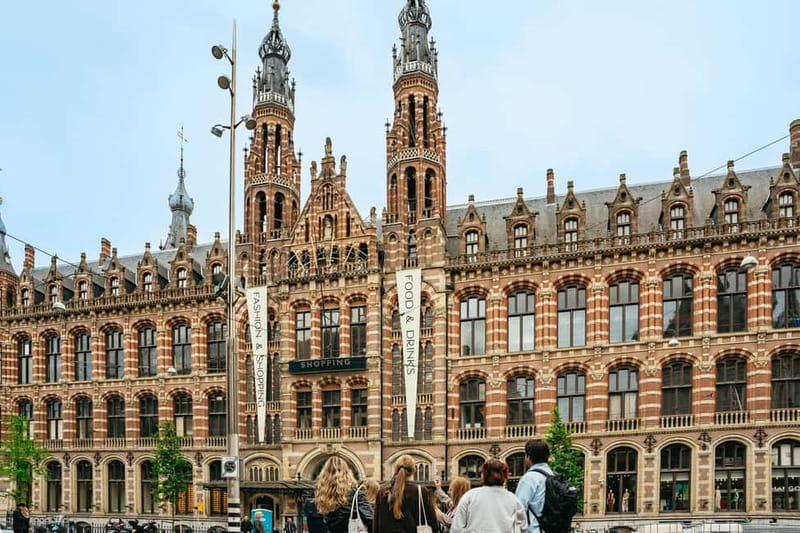
- Architecture snapshots: quick photo stops at spots like Beurs van Berlage and other standout buildings
- History you can point to: Multatuli statue, Anne Frank monument area, and memorials tied to real events
- Begijnhof calm: a surprisingly quiet pocket of the city after the busy core
- Local next-steps: practical suggestions on foods and districts to explore on your own (especially by bike)
First stop: National Monument at Dam Square (why this start matters)
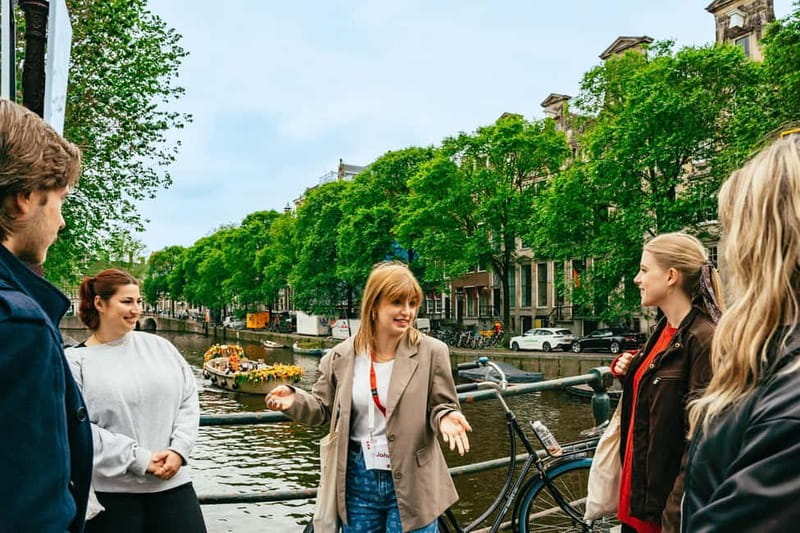
You meet at the National Monument, a big white pillar/obelisk on Dam Square. It’s an instantly recognizable landmark, which matters here because Dam Square can feel like a magnet for crowds, noise, and selfie missions. From that first moment, your guide frames the walk around memory—what Amsterdam built, what it survived, and what people chose to remember.
This opening also sets the tone for how you’ll experience the rest of the tour. Instead of treating the city as a list of sights, you’re learning a timeline you can see. Even if it’s your first day in Amsterdam, you’ll leave with a mental map that connects multiple neighborhoods without needing a transit app or constant guessing.
A practical tip: stand near the monument steps and watch for the guide’s red name tag. If you’re arriving a minute late, don’t panic—Dam Square is wide, but the landmark is obvious once you’re there.
You can also read our reviews of more walking tours in Amsterdam


Dam Square and Royal Palace zone: founding, power, and everyday life
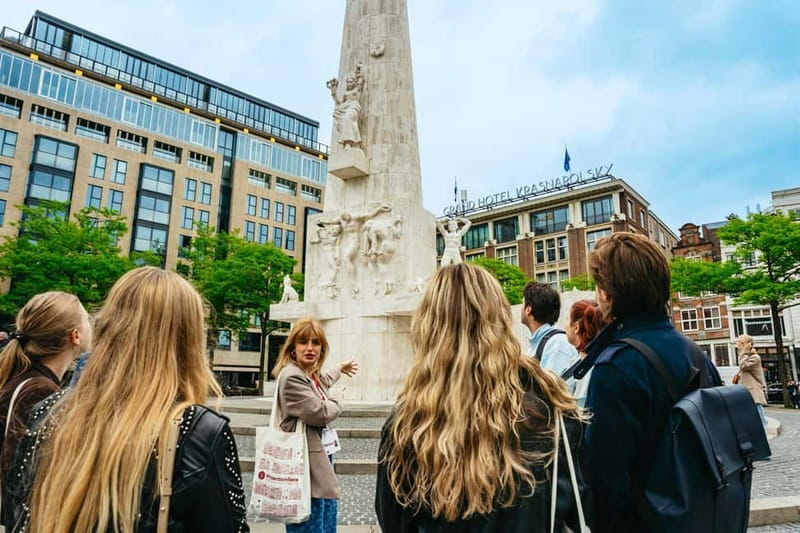
From the monument, you’ll spend real time around the Dam Square area, including a photo stop that helps you learn the layout of the place. Your guide explains why this square matters—this is where Amsterdam’s story as a city begins.
Next comes the Royal Palace area and the Nieuwe Kerk (New Church) vicinity, plus the feel of the neighborhood when you’re standing at street level. The tour doesn’t just say “royalty lived here.” It talks about how merchant life, business, and social class shaped the city. You’ll hear how merchants and shopkeepers lived side-by-side with people at the other end of society—an important context when you later look at the canals and think about who could afford what.
You’ll also pause for short photo moments that feel fast on paper but add up in real life. Those quick stops keep the walk moving while still giving you enough time to look up at facades, notice angles of buildings, and understand why certain areas became important.
Beurs van Berlage, Magna Plaza, and the city’s changing faces
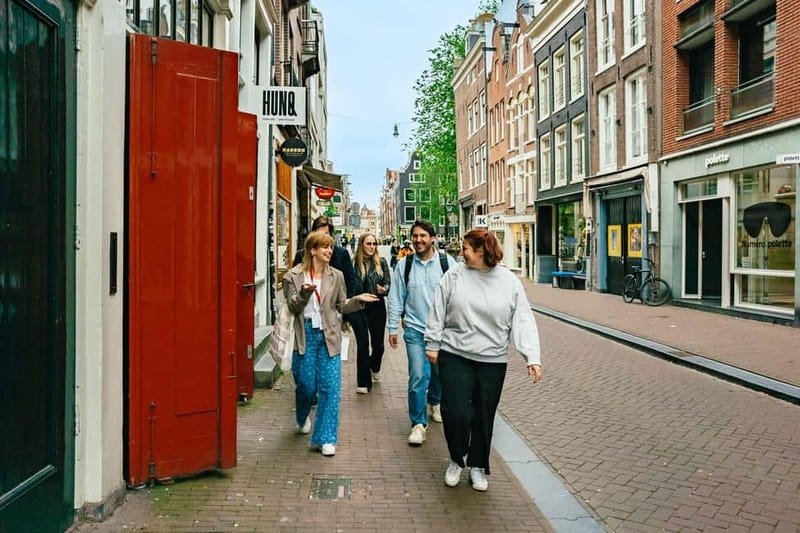
This is one of the tour’s strengths: it uses contrasts. You’ll hit photo stops that show how Amsterdam’s identity shifted over time, from the commercial pulse to modern urban life.
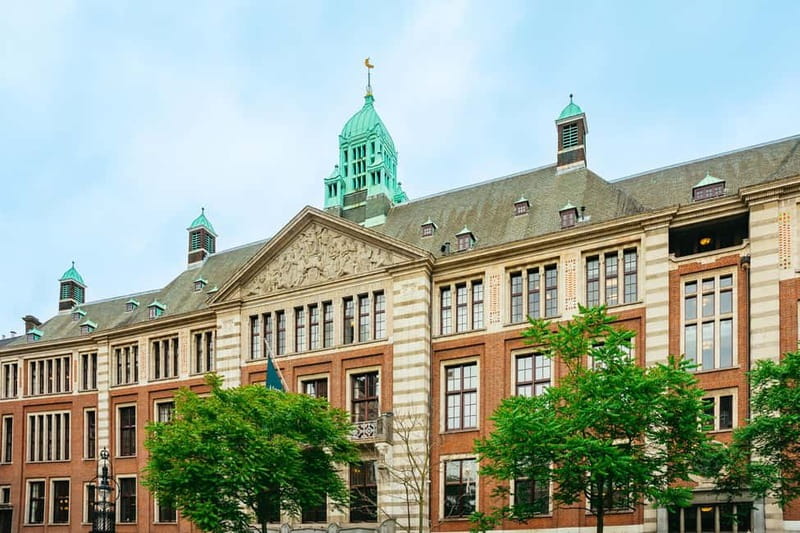
Beurs van Berlage gives you a chance to look at how the city treated business as something monumental—literally designed as architecture worth attention. Magna Plaza is the opposite vibe: modern retail energy. Together, those stops help you understand Amsterdam as a city that keeps adapting, not a museum frozen in time.
Even if you’re not a building nerd, these pauses do something useful. They teach you what to look for as you wander later on your own: the way Amsterdam uses design language to signal purpose, class, and era. That means when you return to these streets later, you won’t just see pretty stone—you’ll see intent.
If you’re traveling with someone who hates long explanations, this section is also a good sign. The guide balances quick context with visual payoffs, so you’re not stuck listening nonstop.
Multatuli statue, bridges, and the tiny-house detail
A standout moment comes around the Torensluis Bridge area and the statue of Multatuli. Your guide connects the monument’s meaning to the colonial era—so it’s not just a photo location. You’ll also hear about the tiniest house in the city, which is one of those Amsterdam details that makes you stop and think: how people lived, what space meant, and why the city developed the way it did.
This is where the tour turns from “pretty city walk” into “you finally understand why Amsterdam looks like Amsterdam.” The canal layout, the bridge network, and the pressure of limited space all make more sense once you hear the social context behind it.
One more plus: you’ll cross between areas and squares—so you’re not only looking at canals. You’ll also move through squares like Spui Square, which helps you feel how different parts of the center connect without needing a map.
Anne Frank monument area, Westerkerk, and Homomonument: learning through place
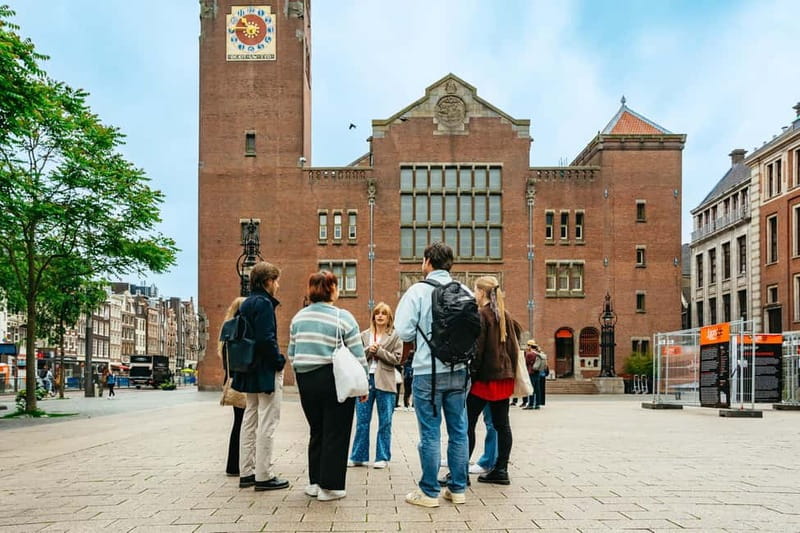
You’ll walk past several memorial-minded stops that carry emotional weight. The Anne Frank monument area is part of the route, and the tour also includes Westerkerk and the Homomonument.
Here’s what I’d call the practical value: the guide helps you see why these places belong together in your mental map of Amsterdam. You’re not learning dates in isolation. You’re learning how the city remembers different kinds of harm—war, persecution, and discrimination—and how public space becomes a tool for recognition.
Westerkerk is a reminder that Amsterdam’s story isn’t only about trauma. It’s also about faith, community, and buildings that shaped daily life. And then Homomonument brings in another layer—an explicit statement about human rights and visibility in public memory.
This part of the walk tends to be where questions happen. Guides vary in personality, but multiple guides from this operator are praised for answering questions and keeping the tone respectful. If you’re the type who likes to ask why something was built (and why it looks the way it does), you’ll likely leave satisfied.
You can also read our reviews of more guided tours in Amsterdam





De Negen Straatjes and Begijnhof: the calm after the city noise
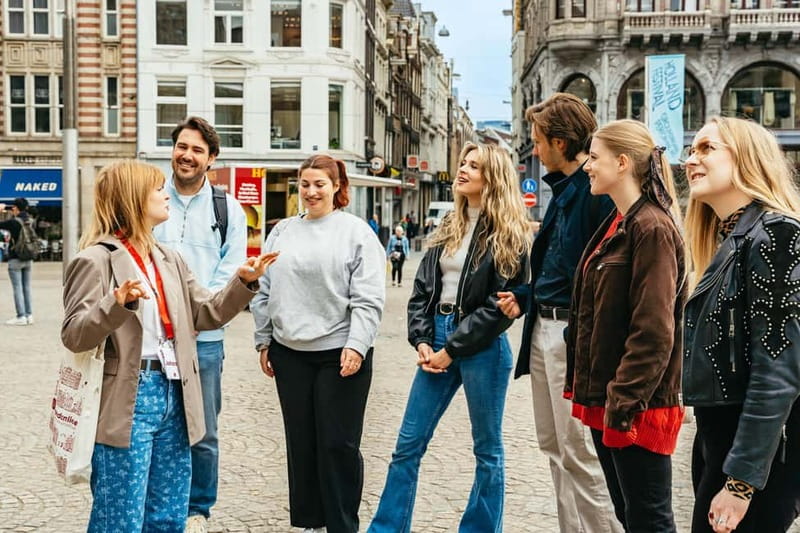
At some point, Amsterdam’s center can feel like it’s speaking at full volume. That’s why the route to Begijnhof works so well. You’ll cross Spui Square and head toward Begijnhof, often described as the pearl of Amsterdam for a reason that shows up fast once you’re inside the space.
Begijnhof is quiet and enclosed-feeling compared to Dam Square and the busy canal streets outside. Your guide uses it to explain local life and architectural design choices that were popular in the past. This is a good moment to slow down, look around, and absorb. If you’ve been rushing in the city, this stop basically gives your brain permission to rest.
On the way, there’s also time around De Negen Straatjes (The Nine Streets). Even with a shorter guided segment, you get the sense of why this area is so popular: small streets, boutique energy, and a layout that makes strolling feel easy. For the rest of your trip, you can use what you learned here as a “choose-your-own-wander” starting point.
If you’re traveling with kids, this section is also friendly because it’s visually rewarding without being overwhelming. Just keep your eye on slipping by the edges—Begijnhof boundaries are easy to miss when you’re scanning for photos.
Amstel River return and the WWII memorial meaning shift
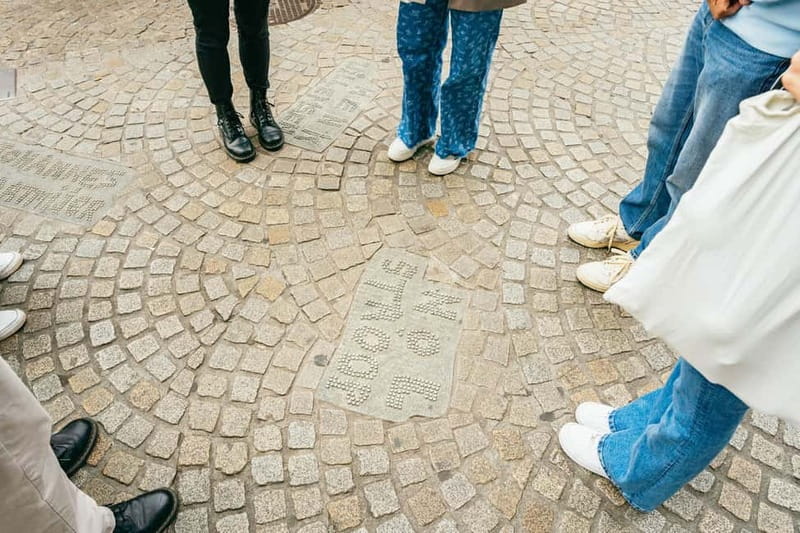
As the tour wraps up, you’ll walk back toward Dam Square along the Amstel area. This is the part where the city’s name becomes more than trivia. Your guide explains the connection between the river and the name Amsterdam owes to it, and you’ll see how water shapes movement, trade, and neighborhood structure.
Then you finish where you started: at the National Monument. The important nuance is how your guide frames it. It began as a place built to remember victims of World War II, but it now serves as a memorial for victims of war across the world. That shift helps you understand why Amsterdam places memorials right in the middle of everyday life—it’s not tucked away.
This ending is also practical. After two hours of orientation, you’ll have a clearer sense of where to grab dinner, which direction to head next, and what kinds of sights you might prioritize depending on your interests. Guides associated with this tour are often praised for local tips—some even mention snack ideas like bitterballen, which is the kind of quick local suggestion that saves time later.
Price and value: what $29 buys you in Amsterdam time
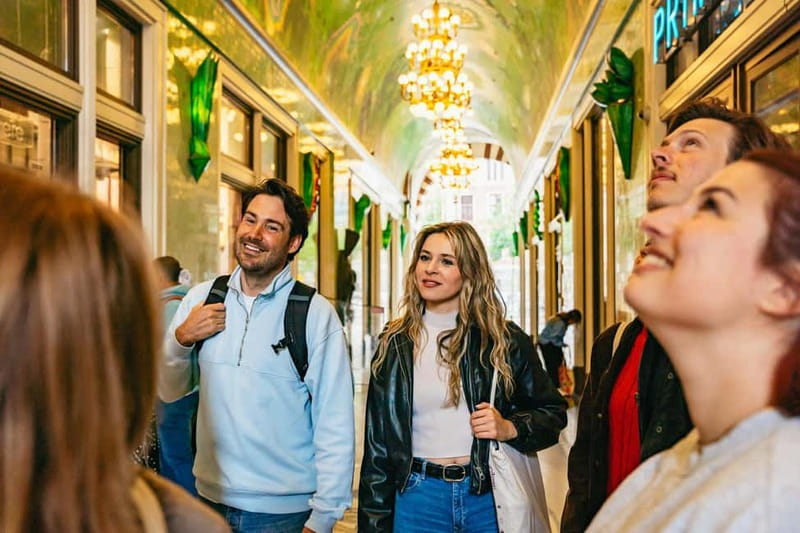
At $29 per person for a roughly 2-hour guided walk, the main value is not the number of stops. It’s the way the guide compresses context into a short format.
Amsterdam rewards people who understand what they’re looking at. A self-guided walk can be lovely, but you’ll likely miss the connections: why the Golden Age mattered, how WWII changed city life, how tolerance and multicultural reality show up in modern public space, and why certain monuments exist where they do. This tour aims to give you that backbone quickly.
Also, the tour is structured so you don’t pay admission during the walk. That means your money goes to time with a guide and the storytelling that makes the city click. You’re not stuck calculating ticket costs while trying to enjoy the street experience.
One more value point: languages are English and German, and private group options are available. That’s useful if you’re traveling with a partner who prefers a specific language, or if your schedule needs flexibility.
Who this walking tour is for (and who should skip it)
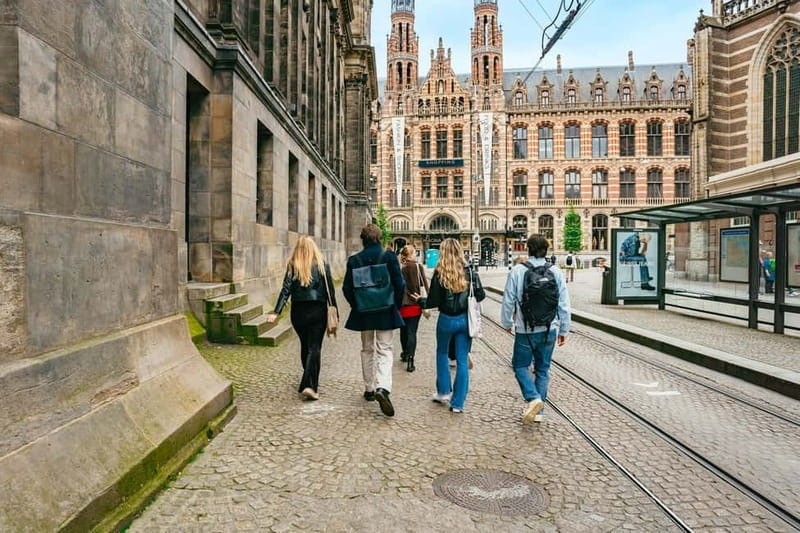
I think this fits best if you’re:
- Here for your first 1–3 days and want fast orientation
- Interested in how Amsterdam’s present connects to major historical shifts
- The type who likes short photo stops paired with explanations
- Traveling with kids, because the pace and structure are designed to be family-friendly
You might choose something else if:
- You hate memorial sites or prefer lighter, purely visual sightseeing
- You’re expecting a slow, fully unhurried stroll with no stops
- You want food included (you’ll need to plan meals separately)
A language note too: the tour runs in English and German. If you’re sensitive to accents, pick the language you feel most comfortable with. That’s not about quality—it’s about comfort.
Practical tips for your 2-hour walk in Amsterdam
Bring comfortable shoes. Even when you’re walking “just a couple hours,” cobblestones add up. I’d also bring water and an umbrella if rain is in the forecast. Your guide will likely keep moving, and you’ll enjoy the tour more if you’re not getting soaked and stressed.
Once you’re on the tour, use the guide like a resource. Ask what neighborhoods make sense next. The tour is designed to give you choices afterward, especially regarding exploring by bike, but you’ll get better suggestions if you tell the guide your interests—art, food, architecture, history, or people-and-culture stories.
Finally, take a moment during the quieter parts like Begijnhof. If you rush through, you’ll miss the contrast that makes the walk worth it.
Should you book Amsterdamliebe’s cultural walking tour?
If you want a quick hit of Amsterdam that connects landmarks to real meaning, this is an easy yes. The route checks the big boxes—Dam Square, canals/Amstel, Begijnhof—and it adds the pieces that most first-time visitors only understand after a few days of wandering. For $29, you’re paying for clarity and direction, not just walking.
Book it if you like guided context, short stops, and respectful memorial learning in public spaces. Skip it if you want food included or you’d rather explore without historical framing.
If you do book, show up early enough to spot your guide’s red name tag at the National Monument stairs. Then let the city do what Amsterdam does best: look gorgeous, feel layered, and keep teaching you as you walk.
FAQ
Where do I meet for the tour?
Meet on the stairs of the National Monument at Dam Square. The monument is the big white pillar/obelisk, and the guide will be wearing a red name tag.
How long is the tour?
It’s about 2 hours. Starting times vary, so check availability for the next departure.
What’s included in the price?
You get the walking tour, a live guide (English or German), and city tax. Admission fees are not required during the tour.
Is food included?
No. The tour does not include food or drinks, so plan meals separately.
What language is the guide available in?
Live guide options are English and German.
Is the tour wheelchair accessible?
Yes, it is wheelchair accessible.
Is the tour appropriate for children?
Yes, the tour is suitable for children.
What is the cancellation policy?
There is free cancellation up to 24 hours in advance for a full refund.