REVIEW · DUBROVNIK
Dubrovnik Old Town Walking Tour
Book on Viator →Operated by Elite Travel Ltd · Bookable on Viator
Dubrovnik hits hard, even before you reach the main square. This 90-minute Old Town walking tour strings together the places that explain how the city worked, drank water, kept records, and rebuilt after disaster. I like that it gives you real local context (not just dates), and I also like the smart, walkable route that avoids the full-on wall climb. One caution: if you end up with an unusually hard-to-hear guide or a loud group moment, you may miss some of the finer details.
Guides such as Elvis, Toni, Natalia, Sara, Kat, and Tihomir show up in the stories and reviews, and the common theme is clear: you’re not just looking at stones—you’re getting the why behind them. The tour keeps you moving at an easy pace for a small group (max 16), starting at 10:30 am right at Elite Travel Walking Tours in Brsalje ul. 1.
If you want a quick orientation so you can plan the rest of your day, this tour is built for that. You’ll see Dubrovnik’s signature highlights—Pile Gate, Onofrio’s Fountain, the Franciscan monastery and cloister, Stradun, Orlando Column, Sponza Palace, Rector’s Palace, Church of St Blaise, and the Baroque Cathedral of the Assumption—without turning your whole trip into a steep-stairs workout.
In This Review
- Key Things That Make This Tour Worth Your Time
- Pile Gate to Onofrio’s Fountain: Dubrovnik’s Entrance and Its Lifeline Water
- Franciscan Monastery Cloister: Old Pharmacy Feel and Gothic Calm
- Stradun to Sponza Palace: The Main Street and the City’s Paper Trail
- Orlando Column and Rector’s Palace: The Clock Detail You’ll Actually Remember
- Church of St Blaise and Dubrovnik Cathedral: Baroque Beauty After Destruction
- How the Tour Works in Real Life: Timing, Pace, and Heat
- Price and Value: Why About $31 Feels Fair for 90 Minutes
- What to Do Before and After the Walk
- Should You Book This Dubrovnik Old Town Walking Tour?
- FAQ
- How long is the Dubrovnik Old Town Walking Tour?
- What time does the tour start?
- Where does the tour meet?
- Is the tour offered in English?
- How much does it cost?
- What is included in the price?
- Is hotel pickup or drop-off included?
- Is food and drink included?
- What group size should I expect?
- What if the weather is bad?
- Is there free cancellation?
Key Things That Make This Tour Worth Your Time
- Pile Gate to Onofrio’s Fountain: a walk from Dubrovnik’s western entrance to the multi-faucet fountain fed by a long aqueduct (12 km / 7.5 miles).
- Franciscan Monastery: one of the oldest still-functioning pharmacies in Europe, plus a 14th-century Gothic cloister.
- Sponza Palace and archives: the Renaissance stop that now houses the State Archives, right in the flow of the Old Town.
- Orlando Column’s clock quirks: Arabic and Latin numerals, with the time changing every five minutes.
- Baroque cathedral after an earthquake: the Cathedral of the Assumption rebuilt in the 18th century after the original was destroyed.
- Small group rhythm: up to 16 people, so you can ask questions and get answers without shouting.
Pile Gate to Onofrio’s Fountain: Dubrovnik’s Entrance and Its Lifeline Water
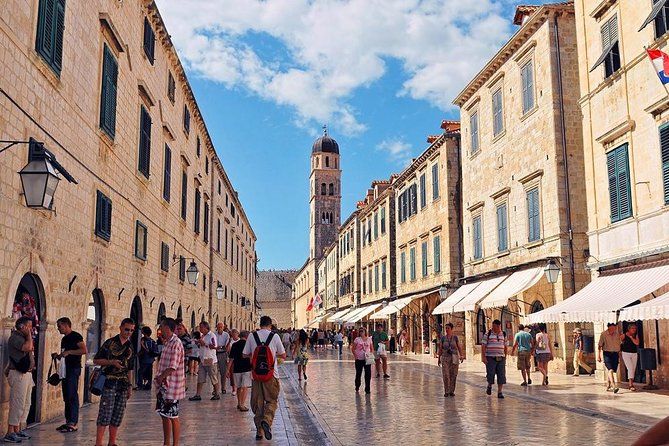
The tour starts in the morning at 10:30 am at Elite Travel Walking Tours, Brsalje ul. 1 (right in the Dubrovnik Old Town area). From there, you begin at Pile Gate, which is described as one of the three ways into Stari Grad, the Old Town. This first stretch matters because it sets the map in your head. Before you wander on your own later, you’ll know where you entered and how the main pedestrian streets connect.
Then you move to Onofrio’s Fountain, Dubrovnik’s famous multi-faucet drinking fountain. What makes it more than a pretty photo stop is the story tied to it: it’s connected to an aqueduct that brings drinking water into the city from a spring 7.5 miles (12 km) away. That’s the kind of detail that changes how you see the city. Instead of thinking of Old Town as only walls and views, you start thinking about systems—how people actually lived here day to day.
In practice, this section is a good warm-up. You’re outdoors, you’re getting your bearings, and your guide is setting the tone for the rest of the walk. On a sunny day, it also reminds you to take sun breaks seriously. Some guides are attentive about shade, but Dubrovnik can be bright fast.
You can also read our reviews of more walking tours in Dubrovnik

Franciscan Monastery Cloister: Old Pharmacy Feel and Gothic Calm
Next up is the Franciscan Monastery, paired with the Franciscan Church and Monastery stop. The key draw here is that it’s home to one of the oldest still-functioning pharmacies in Europe. That alone gives the stop a living feel. You’re looking at an active piece of history, not a sealed museum exhibit.
The monastery cloister is also the kind of place where you slow down naturally. The tour points you toward the 14th-century Gothic cloister, and you have time to wander the edges visually while your guide explains what you’re seeing. One detail that stands out is the mention of a restored sculpture of the Pieta. Even if you’re not a big art person, it’s an effective anchor for the stop: a human, emotional focal point inside a space designed to hold centuries of daily life.
Potential drawback: this part can feel quieter than the big-square stops, so you’ll want to stay tuned to the guide’s stories rather than letting your mind wander. If you’re traveling with people who get impatient easily, it helps to agree in advance that cloisters are meant for a slower pace.
Stradun to Sponza Palace: The Main Street and the City’s Paper Trail
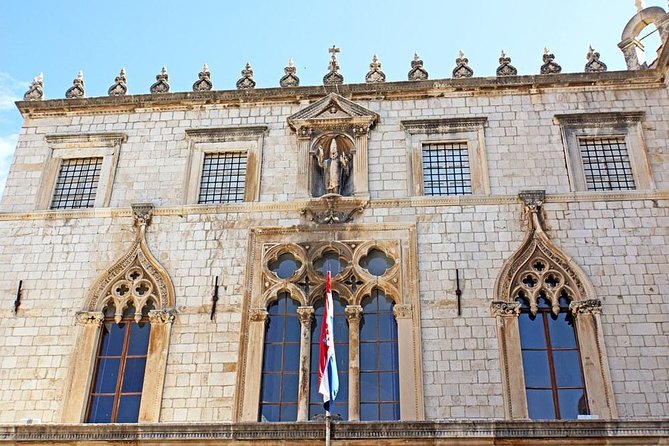
After the monastery, the walk shifts toward Stradun, described as the limestone-covered main pedestrian street. This is where Dubrovnik looks most like its postcards—but with your guide’s framing, it also starts to read like a timeline.
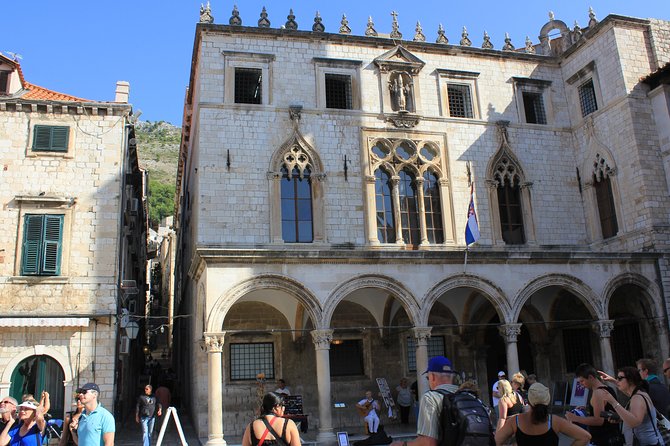
As you stroll, one of the Renaissance highlights arrives: Sponza Palace, which now houses the State Archives. That’s a very practical kind of history. It tells you how Dubrovnik preserved decisions, names, and records—information that helps you understand why the city could hold its own during major moments in its past.
If you plan to do other sightseeing later, this is also a useful transition point. Stradun becomes your reference line. When you come back on your own after the tour, you’ll recognize the street instantly and know which directions lead toward the cathedral area, toward Rector’s Palace, and toward the places your guide flagged.
One thing I like about this phase: it’s paced for orientation. Reviews and guide behavior point to a gentle rhythm—good for visitors who don’t want their trip to be dominated by steep climbs and constant stair battles.
Orlando Column and Rector’s Palace: The Clock Detail You’ll Actually Remember
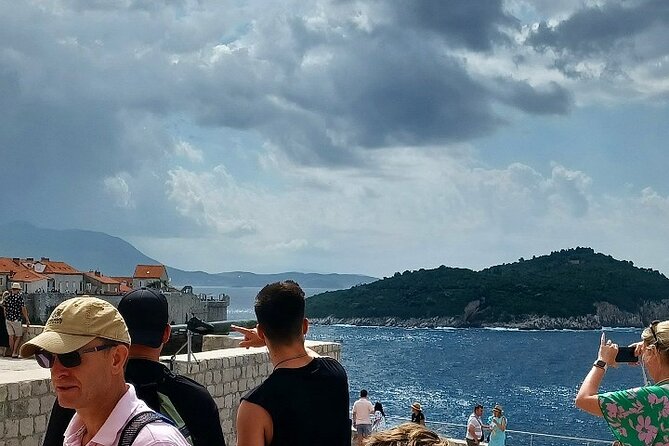
The tour then hits the iconic civic core: Orlando Column and Rector’s Palace. Orlando Column is famous for a very specific reason—your guide will point it out as you come to the main square area. The clock there shows the time in Arabic and Latin numerals, and the time changes every five minutes. That’s the kind of detail you don’t get from a quick stop-by. It turns the column into something you can watch and verify yourself.
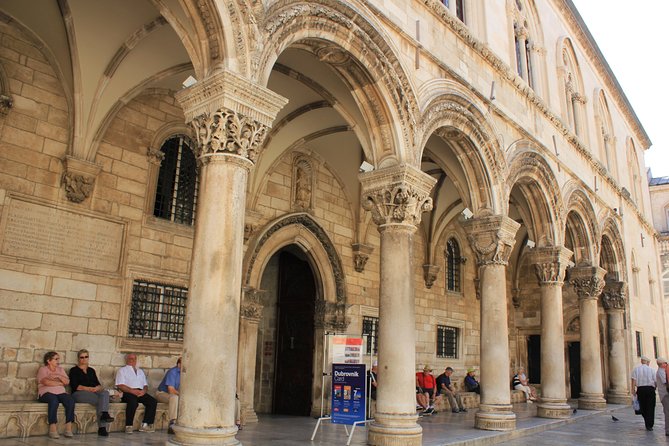
Next comes Rector’s Palace and the surrounding sights. Even if you don’t spend time inside (the tour is a walking orientation), learning what you’re looking at makes the architecture easier to read on your own. You start noticing proportions, the way public buildings face the square, and how the city’s layout supports gatherings.
Also included in this stretch are the bell tower and related cathedral-square viewpoints, depending on the flow that day. If you’re the sort of person who likes a good “stand here, look around, now I get it” moment, this part delivers.
Tip for you: if the square is crowded, step slightly aside where you can hear. The only repeat complaint about this kind of tour is that, in certain moments, it’s harder to hear the guide. Being positioned well makes a big difference.
Church of St Blaise and Dubrovnik Cathedral: Baroque Beauty After Destruction

You’ll next visit the Church of St Blaise, including the fact that St Blaise is the patron saint of Dubrovnik. That’s useful context because it adds meaning to what could otherwise feel like just another church stop.
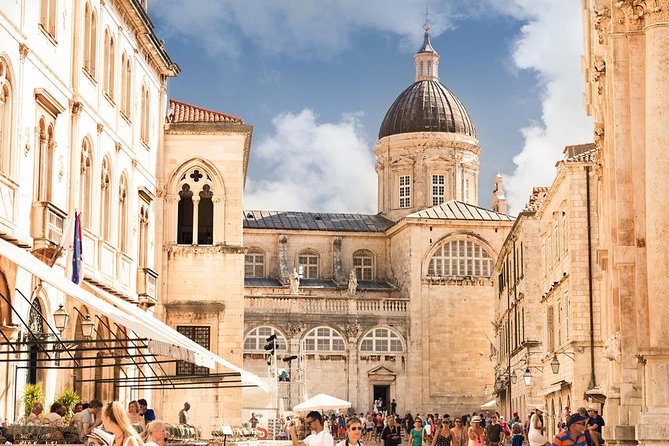
Then the big set-piece: the Cathedral of the Assumption. This cathedral is described as a beautiful Baroque sanctuary, built in the 18th century after an earthquake destroyed the original one. That rebuilding detail matters. It explains why the cathedral looks the way it does and why Dubrovnik’s architecture often carries evidence of restoration—not just original design.
Your route also includes stops around the cathedral area, such as Dubrovnik Cathedral Treasury, plus the bell tower as part of the nearby sightseeing. Even without going deep into everything, you get the “shape” of the cathedral complex and the reasons different sections exist.
This is the part of the tour that often feels most emotionally satisfying. If Dubrovnik had a theme song, it would likely be this contrast: survival, rebuilding, and civic pride—right in the middle of the Old Town.


How the Tour Works in Real Life: Timing, Pace, and Heat
The whole experience lasts about 1 hour 30 minutes and starts at 10:30 am. That’s short enough to fit into almost any plan, especially if you want the rest of the day free for beach time, restaurant wandering, or doing the Walls later if you decide you want the full climb.
The tour limits the group to 16 travelers, which is a practical advantage. Small groups mean it’s easier to ask a question and not feel like you’re interrupting. The reviews also highlight that guides often tailor the pace and even look for spots of shade during listening moments—an underrated detail when Dubrovnik is sunny and bright.
Also note: the tour is offered in English, and it includes a mobile ticket. That’s helpful because you’re not digging through paper booking confirmations while trying to find the starting point.
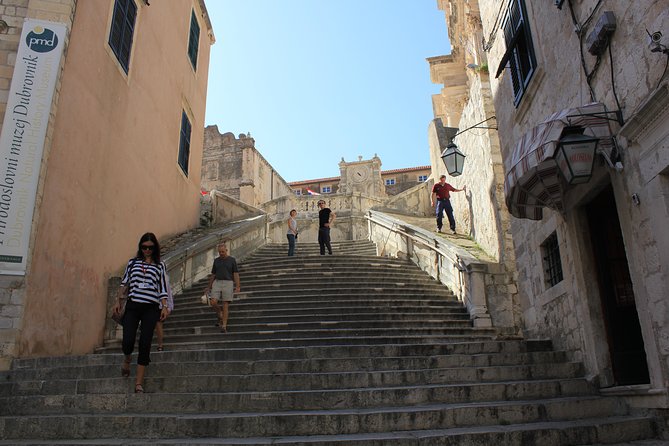
One practical consideration: Dubrovnik Old Town is compact, but it’s still a walking tour. Comfortable shoes are non-negotiable. If your group includes anyone who’s not steady on their feet, this is still usually manageable because the tour is designed as an overview walk (and not a wall hike), but you’ll still be on cobblestones and curving streets.
Price and Value: Why About $31 Feels Fair for 90 Minutes
At $31.46 per person, this tour sits in the budget-friendly zone for guided Old Town experiences. The value is strongest if you’re trying to do two things at once:
- Get oriented fast so you can choose what to revisit on your own later.
- Understand what you’re seeing so Dubrovnik stops being only scenery and starts being a story.
A key part of that value is the cost-to-time ratio. At roughly 90 minutes, you’re not paying for a full day, and you’re not stuck in a long “wait for the group” format. It also helps that the major stops are either free-entry as listed for the tour’s starts, or they’re structured around seeing the sights from the street and square areas.
One more value point: your guide isn’t just reciting facts. The strongest feedback patterns mention guides who were engaging, story-driven, and tuned in to questions. That’s what you’re really paying for—the human filter that turns Dubrovnik into something you remember.
If you already have a Museums Multipass, check whether it lines up with what’s included on your broader plan. The pass is listed as including several Dubrovnik museums and sites (including the Rector’s Palace). That can reduce the cost of adding other stops later on.
What to Do Before and After the Walk
Before you go:
- Bring water. It’s not listed as included, and Dubrovnik’s morning can still feel hot.
- Wear shoes you’d trust for cobblestones.
- Decide where you want to spend extra time after the tour: cathedral area, archives/Renaissance buildings, or the Stradun street life.
After the tour:
- Use the main lines you learned—Stradun and the square connections—to steer your self-guided wandering.
- If you skipped the Walls, you now know the Old Town core without needing to fight a full stair-and-breathing workout first.
- If you want the broader museum plan, you can pair your favorite stop with the Multipass-listed options.
Also, since this experience is weather-dependent, it’s smart to keep your expectations tied to conditions. The tour notes that it requires good weather; if it’s canceled due to poor weather, you’ll be offered a different date or a full refund. And if it’s popular, you may want to book ahead—this one is commonly booked about 21 days in advance.
Should You Book This Dubrovnik Old Town Walking Tour?
If you’re coming to Dubrovnik for the first time and you want the Old Town to make sense quickly, I’d book it. This is the right kind of tour for you if you like guided structure: start at a real entrance (Pile Gate), hit the water history (Onofrio’s Fountain), pass through a monastery that’s still active (Franciscan pharmacy), then connect the civic and religious anchors (Sponza Palace, Orlando Column, Rector’s Palace, St Blaise, and the Cathedral of the Assumption).
I’d also choose it if you’re traveling with mixed energy levels. It’s short, it’s small-group, and guides seem set up to keep the walk enjoyable rather than turning it into a march.
I might think twice if you strongly dislike guided commentary or you know you struggle hearing in outdoor groups. In rare cases, the experience can feel less satisfying if the guide is hard to hear and the pacing doesn’t fit your style. Still, for most people, the guide quality plus the tight route make it an efficient and memorable start to Dubrovnik.
FAQ
How long is the Dubrovnik Old Town Walking Tour?
It’s approximately 1 hour 30 minutes.
What time does the tour start?
The start time is 10:30 am.
Where does the tour meet?
The meeting point is Elite Travel Walking Tours, Brsalje ul. 1, 20000, Dubrovnik, Croatia.
Is the tour offered in English?
Yes, it’s offered in English.
How much does it cost?
The price is $31.46 per person.
What is included in the price?
A local guide is included.
Is hotel pickup or drop-off included?
No, hotel pickup and drop-off are not included.
Is food and drink included?
Food and drinks aren’t included unless specified.
What group size should I expect?
The tour has a maximum of 16 travelers.
What if the weather is bad?
This experience requires good weather. If canceled due to poor weather, you’ll be offered a different date or a full refund.
Is there free cancellation?
Yes. You can cancel up to 24 hours in advance for a full refund.