REVIEW · BAKU
Baku Oil Heritage & Old Town Walking Tour
Book on Viator →Operated by Azerbaijan Traveller · Bookable on Viator
Baku runs on oil stories. This 2.5-hour walking tour pulls together oil heritage, UNESCO Old City sights seen from the outside, and the city’s later Soviet-era layers into one practical route. I like how the guide turns architecture into real-life context, not just dates on a wall.
One of my favorite parts is the private guide attention. You’re moving at a sensible pace, and you’re not stuck waiting on the slowest person in the group—so you actually cover the highlights without turning it into a half day of delays. Guides such as Gani (and also Lina, based on past groups) tend to keep the mood lively with clear, well-paced explanations.
The main drawback to plan for: lots of the big-name stops are “look and learn” rather than “go inside.” If you were hoping for lots of ticketed museum time, you’ll need to manage expectations, especially since admission is listed as not included.
In This Review
- Key things to know before you go
- Why This Oil Heritage Walk Makes Sense in Baku
- Start at Fountain Square: a Trading Street Legacy
- Icherisheher (Old City): UNESCO Sights, But With Time-Efficient “No Entry” Views
- Gosha Gala gate and the XII-century city walls
- Maiden Tower and Muhammad Mosque: see it up close, learn at the threshold
- Narrow streets and the “how a city breathes” feeling
- Shirvanshakh’s Palace: exterior understanding instead of interior touring
- Museum of miniature books
- Istiglaliyyat Street: the Oil-Baron Makeover of the City
- Philharmonic Fountain and Ali and Nino: Story Meets City Streets
- Oil-Era Architecture Stops: Town Hall, Saadet Sarayi, and the “Love Story” Buildings
- Baku Town Hall: European influence in the oil-boom spotlight
- Saadet Sarayi: a mansion love story that still lives today
- The Former Taghiyev School for Girls: Modern Baku and Early Independence Signals
- Ismailiyya Palace: Venetian Gothic and Memory in Stone
- How the “Private” Format Changes Your Experience (and Why It’s Worth It)
- Price and Value: Is $70 a Fair Deal?
- What to Expect on the Ground (Walking, Weather, and Practical Timing)
- When to Book This Tour (and Who Should Skip It)
- FAQ
- How long is the Baku Oil Heritage & Old Town walking tour?
- What does the tour cost?
- Where do we meet for the tour?
- Is bottled water included?
- Is lunch included?
- Do we enter the Maiden Tower and Shirvanshahs Palace?
- Are admission fees included in the price?
- Is this a private tour or a group tour?
- Are service animals allowed?
- What is the cancellation policy if weather is bad?
Key things to know before you go
- Half-day timing: around 2 hours 30 minutes, ideal for packing in more Baku
- Old City without the fuss: you see major UNESCO areas like gates, walls, and towers with explanations
- Oil-baron architecture route: you’ll connect European-influenced buildings to the oil boom
- Story-driven stops: love stories, modernization, and everyday life come up as you walk
- Small-group scale: maximum of 30 travelers, with strong guide focus
- Weather matters: it requires good weather to run
Why This Oil Heritage Walk Makes Sense in Baku
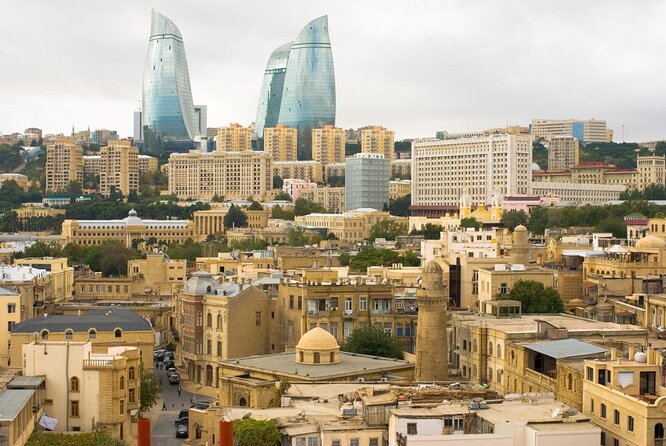
Baku can feel big fast. The coastline is dramatic, the modern skyline is loud, and the old streets can scramble your sense of direction. This tour helps you get your bearings quickly by threading together the city’s turning points—oil boom wealth, European architectural influence, and later Soviet influence—into a route you can repeat on your own afterward.
You’ll also walk with a guide who can explain why certain buildings exist at all. That matters in Baku. Many places look like they’re just “pretty architecture,” but the stories behind them explain the city’s social shape: who had power, who got an education, who built for status, and who tried to reshape the future.
And since this is a structured walking format—meet, walk, learn, end in the same area—you don’t waste time guessing what to see first.
You can also read our reviews of more walking tours in Baku
Start at Fountain Square: a Trading Street Legacy
You meet near the fountains at Fountain Square. The tour uses this as a bookend, which is handy: you’re not left stranded miles from where you started. Fountain Square is downtown and functions as an entertainment and leisure center today. The interesting twist is that the neighborhood grew into the main trading street during the oil boom era in the late 1800s and early 1900s.
What I like here is the framing. Starting with a place that’s lively now makes it easier to hear how it became powerful then. The guide can connect the modern look of the area to the economic engine that changed Baku’s streets, money, and cultural mix.
Practical note: since this is your first anchor point, arrive a touch early. You’ll be standing around for a moment no matter what, and it’s better to start your photos and meeting calm than scramble.
Icherisheher (Old City): UNESCO Sights, But With Time-Efficient “No Entry” Views
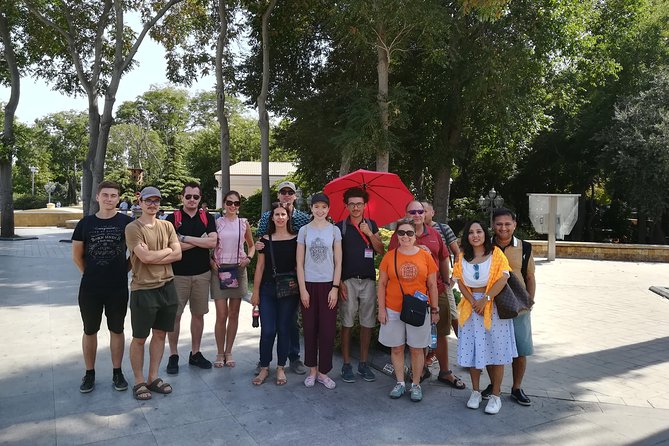
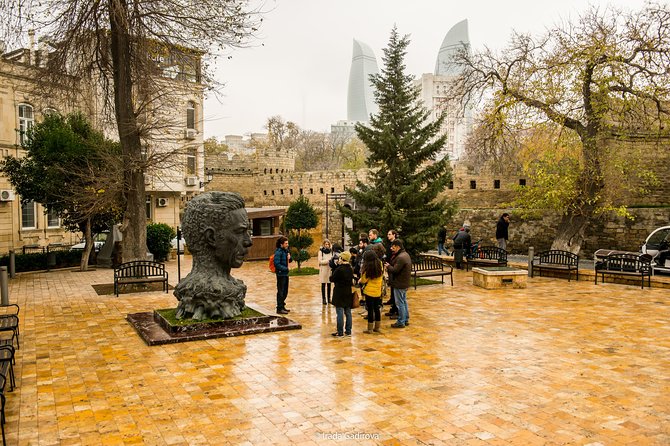
Old City Baku is called Icherisheher, and it includes four UNESCO World Heritage sites. The tour’s Old City section is designed for understanding, not ticket collecting. You walk through narrow lanes and hit the key points, but the emphasis is on the explanations at gates and entrances rather than going inside.
Here’s what you can expect, in plain terms:
Gosha Gala gate and the XII-century city walls
You start with Gosha Gala gate, the main entry to the Old City. From there you see the citadel walls dating to the XII century, part of what makes Icherisheher feel enclosed and separate from modern Baku. These are the kinds of structures that help you feel the old city’s defensive mindset—and then understand how oil wealth later transformed everything around it.
Maiden Tower and Muhammad Mosque: see it up close, learn at the threshold
The guide includes Maiden Tower (XII century) and Muhammad Mosque (XI century). You won’t enter the most famous interiors on this walk. Instead, you get an explanation at the entry points. That approach is efficient. It also helps if you’re trying to fit Baku into a short visit, since you still get the “why this matters” without losing an hour to ticket lines.
Narrow streets and the “how a city breathes” feeling
The narrow streets are a big part of the experience even when nothing is “officially” listed. They slow you down. They make you notice window details, wall textures, and how people move through space. It’s also the kind of place where your guide’s context makes the photos better—because you’re capturing meaning, not just corners.
Shirvanshakh’s Palace: exterior understanding instead of interior touring
You’ll pass Shirvanshakh’s Palace (XV century). Like the Maiden Tower, it’s explained rather than entered. Still, the guide can point out what makes it an oil-era conversation starter: how Baku’s later wealth and outside influences collided with older power structures.
Museum of miniature books
You also stop for the Museum of Miniature Books. The tour doesn’t promise a long museum session in the data you were given, so think of this as a highlight stop within the Old City walk rather than a deep museum afternoon.
The trade-off: If you want maximum inside time, you’ll need to add separate visits on your own. The payoff is you get a strong overview that helps you decide what to revisit later.
Istiglaliyyat Street: the Oil-Baron Makeover of the City
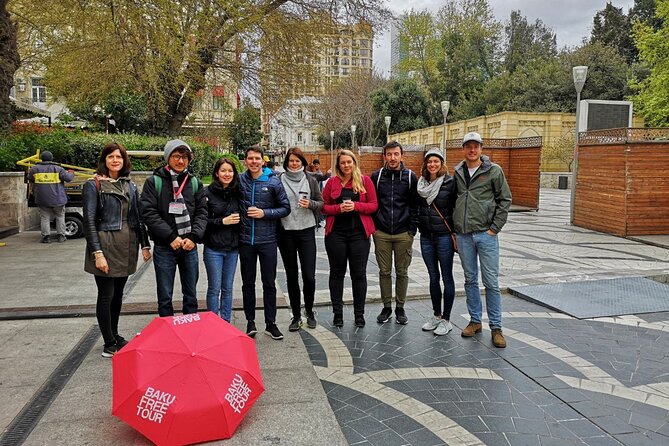
After the Old City, the tour heads toward Istiglaliyyat Street, historically known as Nikolayevskaya and Kommunisticheskaya. This is where Baku’s timeline becomes visible. The street represents shifts in power and priorities, moving from imperial-era influence to later Soviet naming and identity.
The guide’s angle here is transformation tied to oil barons and their pursuit of fame. You’ll walk past key buildings and institutions associated with that urban reshaping, including:
- Governor’s Garden
- Town Hall
- Philharmonic Hall
- Palace of Happiness
- Institute of Manuscripts of Azerbaijan
- Ismaliyya Palace (Muslim Charitable Society)
- Literature Museum
- A statue of Nizami
What makes this stretch valuable is the way it connects “big money” with daily life. Oil wealth didn’t just build grand facades. It funded public-looking institutions and created a city that drew different groups into shared space.
And yes, it’s a lot of names in a short time. That’s why the guide’s pacing matters. You don’t want to sprint down this street as a checklist. You want to absorb the logic: how the city changed, and why those changes stuck.
Philharmonic Fountain and Ali and Nino: Story Meets City Streets
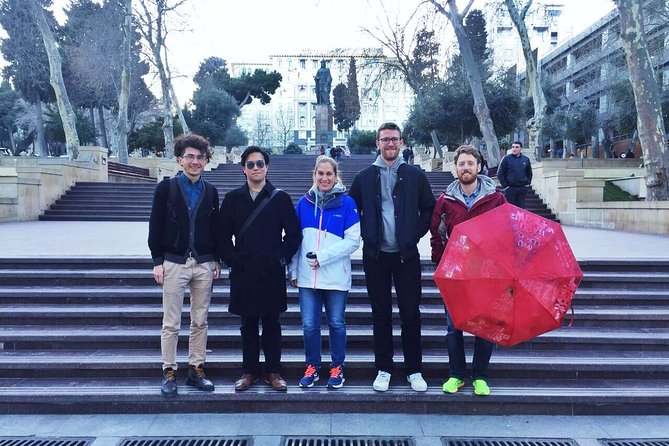
Next you reach the Philharmonic Fountain. This is an environment and garden built as Baku expanded beyond the fortress wall, which helps explain why certain spots feel like they belong to a later Baku era rather than the old defensive layout.
There’s also a literary link: the garden story is connected to the book Ali and Nino. Even if you’re not going to read the book right away, this kind of cultural tie adds texture. You’re no longer seeing a fountain as a fountain. You’re seeing it as a clue about how Baku wanted to present itself—romance, identity, and modern life.
Oil-Era Architecture Stops: Town Hall, Saadet Sarayi, and the “Love Story” Buildings
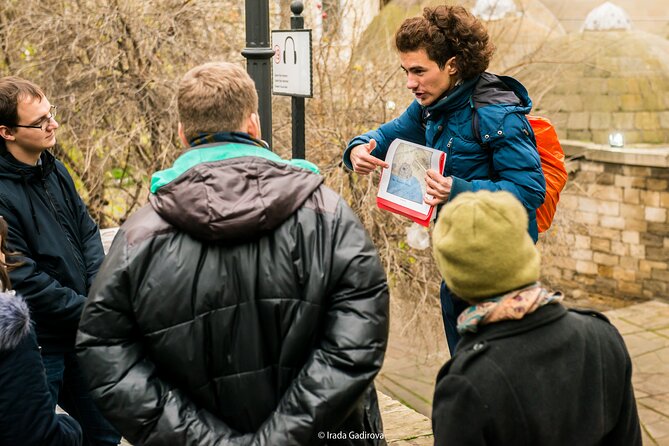
The tour then focuses on the oil boom era’s architectural footprint.
Baku Town Hall: European influence in the oil-boom spotlight
You’ll spend time at Baku Town Hall, described as a monumental landmark from the oil boom era. The big idea is architectural influence from Europe and how that fit (and competed) with Baku’s diverse population. If you like seeing the “why” behind styles—baroque-ish details, formal proportions, civic pride—this is a good stop.
Saadet Sarayi: a mansion love story that still lives today
Saadet Sarayi comes next. This stop is built around the story of an oil baron and his wife. The love story is retold through modern practice: the mansion serves as a marriage registry today. That’s one of my favorite types of heritage here: the building keeps a purpose, not just a plaque.
If you’re the type who enjoys people-as-part-of-history (not just kings and emperors), this stop gives you that angle immediately.
The Former Taghiyev School for Girls: Modern Baku and Early Independence Signals
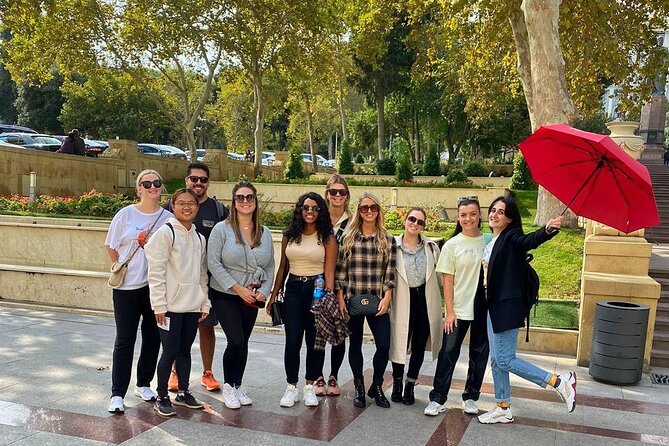
At Former Taghiyev School for Girls, now the Institute of Manuscripts of Azerbaijan, you get a shift from mansions to education. The story centers on the first secular school for Muslim women and the process of modernization in Baku, leading toward Azerbaijan’s first independence.
This is an important emotional contrast in the tour. Oil money appears again, but not just as status. It shows up as social change: who gets educated, who gets new opportunities, and how modernization creates momentum.
It also helps you understand Azerbaijan as more than just “a place with oil.” It’s a place where ideas about society and identity were actively shaped.
Ismailiyya Palace: Venetian Gothic and Memory in Stone
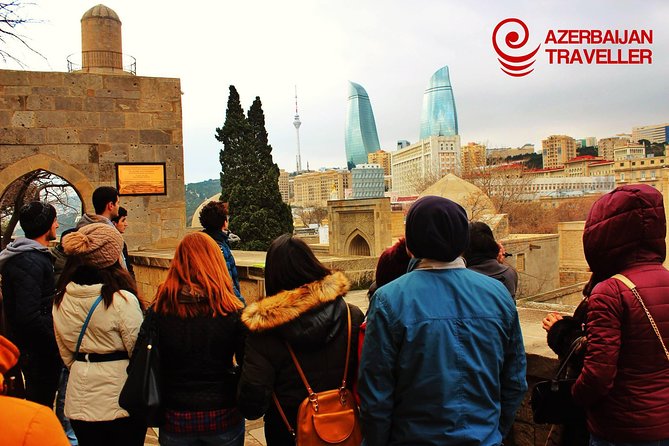
To wrap up the main sightseeing flow, you’ll reach Ismailiyya Palace, tied to an oil baron commissioning a palace in memory of his son. The style is noted as Venetian Gothic. That detail matters because it signals Baku’s open door to outside aesthetics during the era when oil wealth was reshaping everything.
And even if the architecture is the hook, the story keeps it human. Memory buildings are never only about the person who commissioned them. Over time, they become part of the city’s shared landscape and daily route.
How the “Private” Format Changes Your Experience (and Why It’s Worth It)
Even though this is a walking tour with a maximum group size (up to 30), the promise is a private guide feel: undivided attention and no time wasted waiting on other travelers.
In practical terms, that affects:
- Pace: you move through tight old streets without a constant slowdown.
- Q&A: you can ask follow-ups without feeling rushed.
- Photo timing: you can stop when a view actually makes sense instead of trying to catch up.
The guides’ English is mentioned as strong in the feedback tied to both Gani and Lina. That’s not a small detail. Good language skill is what turns a walking circuit into a story you can actually remember.
Price and Value: Is $70 a Fair Deal?
At $70 per person for about 2 hours 30 minutes, this tour sits in the “worth it if you care about context” zone.
Here’s the honest value equation:
- Included: bottled water.
- Not included: lunch, private transportation, and admission fees.
- Most stops are free to view from the outside with explanations, which keeps costs from ballooning mid-walk.
- You get guided structure through areas that would otherwise be harder to connect: oil boom wealth, Old City UNESCO areas, and later shifts in the city’s identity.
If your goal is to just take photos, you can probably self-tour and save money. But if your goal is to understand why Baku looks the way it does—then $70 can feel like a bargain because it buys time and meaning.
One more timing reality: this tour tends to get booked ahead, with an average lead time of about 25 days. If your dates are fixed, book sooner rather than later.
What to Expect on the Ground (Walking, Weather, and Practical Timing)
This is a walking-heavy experience. The Old City lanes alone encourage slow movement, and the rest of the route stacks multiple short stops. The upside is you’ll feel productive without needing a car.
There’s also a weather requirement: it runs only when conditions are good, and if poor weather cancels it, you’ll be offered another date or a full refund.
Bring:
- Comfortable walking shoes (you’ll thank yourself in the Old City).
- Sun protection or a light layer depending on the season.
- A fully charged phone for photos.
And because it’s a tour that runs on a tight loop, you’ll want to avoid scheduling something immediately afterward that requires fast transit across the city.
When to Book This Tour (and Who Should Skip It)
You should book this walking tour if:
- You’re short on time and want a guided overview of Baku’s oil-era transformation.
- You like UNESCO places but prefer learning first, then deciding what to enter later.
- You want a guide to connect architecture to everyday life, education, and politics.
You might skip it (or pair it with other plans) if:
- You want lots of inside museum time. Many major highlights here are explained at the entrances rather than fully toured.
- You’re mainly interested in modern Baku only. This route leans heavily into older and oil-era context.
If you’re trying to choose between self-guided wandering and guided storytelling, I’d pick guided for day one. It helps you steer your remaining Baku time with confidence.
FAQ
How long is the Baku Oil Heritage & Old Town walking tour?
It lasts about 2 hours 30 minutes.
What does the tour cost?
The price is $70.00 per person.
Where do we meet for the tour?
The meeting point is KFC9RCP+28F, Nizami St, Baku, Azerbaijan.
Is bottled water included?
Yes, bottled water is included.
Is lunch included?
No, lunch is not included.
Do we enter the Maiden Tower and Shirvanshahs Palace?
You do not enter those sights. The tour provides explanations without entering the museums or the Maiden Tower.
Are admission fees included in the price?
Admission fees are not included. Most stops listed have free admission, but the tour notes that admission fee is not included overall.
Is this a private tour or a group tour?
It’s described as a private tour with a private guide feel, and the maximum group size is 30 travelers.
Are service animals allowed?
Yes, service animals are allowed.
What is the cancellation policy if weather is bad?
You can cancel for a full refund up to 24 hours in advance. The experience requires good weather; if it’s canceled due to poor weather, you’ll be offered a different date or a full refund.