REVIEW · AMSTERDAM
Amsterdam: Anne Frank and Jewish Quarter Walking Tour (TOP RATED)
Book on Viator →Operated by Trigger Tours · Bookable on Viator
Anne Frank’s story starts with streets, not rooms. This walking tour takes you through Amsterdam’s Jewish Quarter with a tight group size of up to 15 and stops tied to real places from WWII history. I love how it connects Jewish community life before the war to what happened during deportations, and I also like that many of the key stops are quick, focused, and low-stress to see on foot. One drawback to plan for: it’s emotionally heavy and mostly outdoors, so you’ll want comfortable shoes and layers.
What makes this different from the usual Anne Frank route is the pace and the range. You get a guided thread through the Portugese Synagoge, several major WWII memorial sites, and the Plantage area—then the tour eases you toward Dam Square and ends at Nieuwmarkt while tying the story back to Anne Frank.
In This Review
- Key Reasons This Tour Works Well in Amsterdam
- A Guided Walk Through Anne Frank’s Amsterdam, Not the Anne Frank House
- Portuguese Synagogue: The Sephardic Heartbeat of Amsterdam
- Auschwitz Monument and Hollandsche Schouwburg: How Deportation Landed in Real Places
- Verzetsmuseum Amsterdam: Resistance Comes Into Focus
- De Plantage and Spinoza Monument: A Beautiful Area With a Sharp Past
- Dam Square Royal Palace Walk: Zooming Out to See the City’s Layers
- Nieuwmarkt Finish: Tying the Story Back to Anne Frank
- Price and Time: Does $33.26 Feel Worth It?
- Small Group Size, Hotel Pickup, and the Outdoor Reality
- When You’ll Get the Most Out of This Tour
- Should You Book This Anne Frank and Jewish Quarter Walking Tour?
- FAQ
- How long is the Amsterdam Anne Frank and Jewish Quarter walking tour?
- How much does the tour cost?
- What language is the tour offered in?
- Is this tour limited to a small group?
- Where does the tour start?
- Does the tour use a mobile ticket?
- Is admission included for the stops?
- Does this tour visit the Anne Frank House?
- What happens if the weather is poor?
- Can I cancel and get a full refund?
- Is the tour accessible for most people?
Key Reasons This Tour Works Well in Amsterdam

- Small group cap (15 travelers) keeps it personal enough to ask questions and hear the details
- Jewish Quarter focus gives context beyond a single museum stop
- Multiple WWII memorial locations help you understand how deportations unfolded across the city
- Quick, efficient stops fit well into a packed Amsterdam itinerary
- Guides praised by name (James, Aaron, Guido, Maria, Andrea) for storytelling that keeps the tone respectful
- Outdoor walking time is substantial, so warm clothes matter on chilly days
A Guided Walk Through Anne Frank’s Amsterdam, Not the Anne Frank House

If you’re choosing between the Anne Frank House visit and something else in the same neighborhood, this walking tour is a smart alternative. It doesn’t try to replace the Anne Frank House experience. Instead, it gives you the broader city setting: where Amsterdam’s Jewish communities worshiped, organized resistance, and—tragically—where the Nazi system hit hardest.
I like that the tour frames Amsterdam as more than background. You’ll talk about the Sephardic Jewish community during the Dutch Golden Age and how the community shaped parts of the city. Then the walking thread moves to resistance and deportation—so when you later visit any museum or read about Anne Frank, you’re not starting from a blank page.
Also, guides matter here. Multiple past participants named guides like James, Aaron, Guido, Maria, and Andrea, praising their ability to bring the story to life while keeping it sensitive. That’s key because this is not a light sightseeing loop.
One thing to keep in mind: a small number of participants reported a negative experience with one guide (named Pilar). If you’re the type who needs strict dates and careful sourcing, consider asking the operator how the tour is handled and check the most recent feedback before you lock it in.
You can also read our reviews of more walking tours in Amsterdam


Portuguese Synagogue: The Sephardic Heartbeat of Amsterdam
The first stop is the Portuguese Synagogue, and it sets the tone in the right way. Before the war, the tour turns your attention to the Jewish community’s place in Amsterdam—especially the Sephardic community, which became one of the largest and wealthiest Jewish communities in Europe during the Dutch Golden Age. The synagogue’s scale and prominence are part of that story.
You’ll also hear that it remains an active place of worship, not just a museum building. That detail changes how you see it. Instead of treating the synagogue like a relic, you understand it as part of an ongoing community history.
Logistics-wise, this is also one of the easiest ways to start: the stop is only about 10 minutes, and the admission is free for this stop. That makes it a good opener even if you’re a bit jet-lagged or want to keep the day moving.
Auschwitz Monument and Hollandsche Schouwburg: How Deportation Landed in Real Places
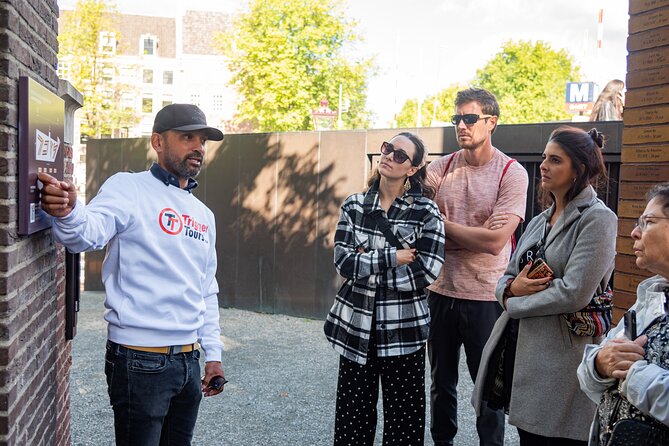
After that first historical anchor, the tour moves into WWII. Two stops do a lot of heavy lifting here: the Auschwitz Monument and Hollandsche Schouwburg.
At the Auschwitz Monument stop, the focus is on Jewish deportation—what it meant and how Amsterdam fit into the larger machinery of the Holocaust. It’s brief (again, about 10 minutes), but the monument context is powerful because it’s tied to a specific place, not a general lesson.
Then you’ll shift to Hollandsche Schouwburg, where the tour discusses the deportation camps and how the city’s institutions were entangled with what followed. This is the kind of stop where your brain starts connecting dots. You stop thinking about history as something that happened “somewhere else,” and you start seeing it as something that unfolded through locations you can point to on a map.
A key point for your planning: you’ll want to take a breath between stops. The tour keeps moving, but you don’t need to rush your emotional reactions. Even if you only get 10 minutes at each site, the guide’s framing helps you stay oriented and grounded.
Verzetsmuseum Amsterdam: Resistance Comes Into Focus
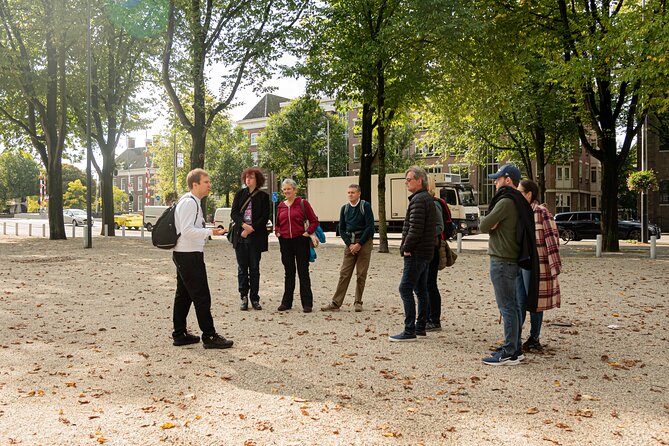
If the memorial stops feel like a wall closing in, Verzetsmuseum Amsterdam gives you a different angle: the resistance of Amsterdam’s Jewish community.
It’s easy to think of WWII stories as purely victimhood or survival. This stop pushes you to consider agency and decision-making—people organizing, resisting, and refusing to disappear quietly. That matters because it balances the emotional weight with a clearer sense of what people did, not just what happened to them.
Like the other key stops, the visit window is about 10 minutes, and the admission is free. So you’re not paying to layer another museum on top of your day. What you’re paying for, in a way, is the guide’s ability to connect the site to the wider story you’re building.
De Plantage and Spinoza Monument: A Beautiful Area With a Sharp Past
Then the tour slows down into a quieter kind of learning. De Plantage is where you see the area’s character and history, and it becomes a chance to understand how these events sat inside a living city neighborhood—not a movie set.
Right after Plantage, you’ll also see the Spinoza Monument. Spinoza is a name that connects philosophy, Jewish intellectual life, and European history. The tour uses the monument to help you understand how ideas and culture were part of the community’s identity long before WWII.
This combination can feel surprising in a good way. After monuments and deportation sites, a walking pause in Plantage can help your mind reset without ignoring the past. If you’ve been in Amsterdam before, you might recognize the general vibe of the area; if you haven’t, you’ll still get the sense that the Jewish Quarter story is embedded in everyday streets and architecture.





Dam Square Royal Palace Walk: Zooming Out to See the City’s Layers

After the memorial-heavy stops and the Plantage area, the tour includes a walk to Dam Square, including the Royal Palace monument area.
This is a smart shift in framing. The earlier stops teach you where the tragedy happened. The Dam Square section reminds you you’re in a major European capital that keeps layering meanings on top of each era. It’s not a distraction from the story—it’s a way to end with a broader Amsterdam view.
The walking element also helps you digest. By the time you reach Dam Square, you’ll likely have heard several concise segments of history. Seeing a central landmark area helps you place Amsterdam’s Jewish history into the overall city geography.
Nieuwmarkt Finish: Tying the Story Back to Anne Frank
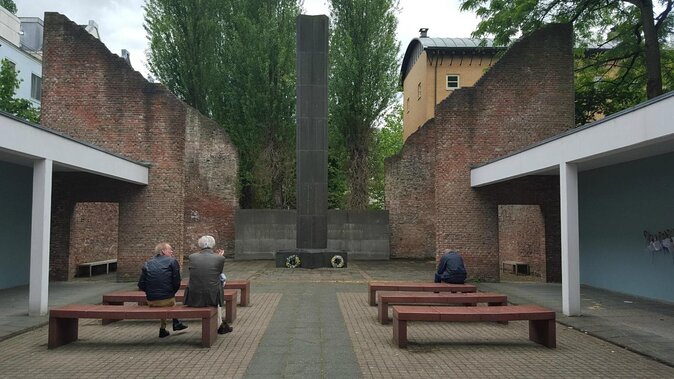
The final stop is Nieuwmarkt, and this is where the tour brings the story back to Anne Frank and wraps the experience.
The Nieuwmarkt segment is about 10 minutes, and the data indicates admission is not included for this stop. That doesn’t mean you must pay to enjoy it, but it does mean you should check what, if anything, is an entry-based component at that final point.
What I like about ending at Nieuwmarkt is the practical reality: it’s a lively area where you can keep moving after the tour. You’ll likely be ready for coffee, a snack, or a second museum visit. And because you’ll have context from the neighborhood sites, you’ll find it easier to make sense of what you do next.
Also worth noting: this tour ends back near where you started, so you’re not left wandering without a plan at the end.
Price and Time: Does $33.26 Feel Worth It?
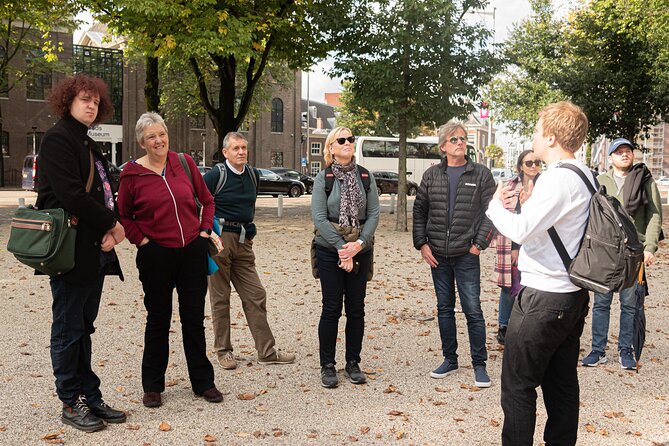
At $33.26 per person for about 2 hours, this tour is priced like a “guide-driven experience,” not a “museum ticket” day. That’s good value here.
Most of the stop admissions are free in the schedule, so you’re mostly paying for:
- A guide to explain what you’re seeing (and what you might otherwise miss)
- A carefully paced route that covers multiple memorial sites without turning it into a marathon
- The small-group format, capped at 15 travelers, which helps the guide keep control of the tone and pace
If you’re the kind of traveler who learns best through walking conversations—like you get more out of hearing context in place—this price-to-time ratio holds up.
If you’re the kind who only wants the Anne Frank House itself, then you’ll likely feel this is different, not better. But if you want the neighborhood setting and the WWII geography, it’s a very efficient way to get there.
Small Group Size, Hotel Pickup, and the Outdoor Reality
This is capped at 15 travelers, which is a big deal for a topic like this. In a small group, you can actually hear the guide, and questions feel welcome rather than swallowed by the crowd.
The tour also offers pickup from select city center hotels, which can be convenient if you don’t want to figure out the meet-up spot with luggage or after a long travel day.
One very practical tip: the walking time is substantial, and you should plan for outdoor time. A review noted that 90% of the tour is outside, and it was chilly on that day—so bring warm layers and something comfortable for standing.
Finally, the tour is in English, and it’s close to public transportation. That matters because it makes it easier to fit into a day of trams, bikes, and Museumplein-type planning.
When You’ll Get the Most Out of This Tour
This tour fits best if you want a guided route that connects sites and names to a larger story. You’ll get the most when you’re open to emotional content and you’re willing to walk through it step by step.
It also suits travelers who:
- Want an alternative to the Anne Frank House without skipping Jewish Quarter context
- Like memorials and want them explained carefully in place
- Prefer small groups over large, rushed tours
- Want a framework for learning, then extra time on your own afterward
It may be less ideal if you’re expecting a purely factual timeline with zero reflection. Even with excellent delivery, the topic is inherently sad and can be tear-tinged for many people. Go anyway if you can handle that. Skip it if you need something lighter today.
Should You Book This Anne Frank and Jewish Quarter Walking Tour?
Book it if you want to understand Amsterdam’s Jewish story across time—before the war, during resistance, and through deportation sites—in a tight 2-hour walk with a small group. It’s also a great move if you’re trying to avoid overloading yourself with museum lines and prefer learning through street-level places.
Skip it only if you specifically want the Anne Frank House visit itself, because this experience doesn’t focus on that building. Also, if you strongly prefer a strictly neutral, document-heavy approach, do a quick check of recent feedback and consider asking the operator what guide training looks like for handling sensitive history.
FAQ
How long is the Amsterdam Anne Frank and Jewish Quarter walking tour?
It runs about 2 hours.
How much does the tour cost?
The price is $33.26 per person.
What language is the tour offered in?
The tour is offered in English.
Is this tour limited to a small group?
Yes. It has a maximum of 15 travelers.
Where does the tour start?
The meeting point is Amstel 51C, 1018 EJ Amsterdam, Netherlands.
Does the tour use a mobile ticket?
Yes, it includes a mobile ticket.
Is admission included for the stops?
Many of the scheduled stops list free admission, but Nieuwmarkt is noted as admission ticket not included.
Does this tour visit the Anne Frank House?
It is positioned as an alternative and does not include a visit to the Anne Frank House itself.
What happens if the weather is poor?
This experience requires good weather. If it’s canceled due to poor weather, you’ll be offered a different date or a full refund.
Can I cancel and get a full refund?
Yes. You can cancel for a full refund if you cancel at least 24 hours before the experience’s start time.
Is the tour accessible for most people?
It says most travelers can participate, and it’s near public transportation. Service animals are allowed.