REVIEW · DUBLIN
Dublin Traditional Irish Music Walking Tour with Live Performance
Book on Viator →Operated by Original Dublin · Bookable on Viator
Dublin has plenty of history tours, but this one comes with music. You’ll walk through the center of the city and hear old folk ballads used like a storytelling tool, with your guide performing as you move. It’s a simple format: short walks, quick stops, and a song that explains what you just saw.
I love that it starts right in Temple Bar and keeps you close to the key landmarks you came for, including Christ Church Cathedral and Saint Patrick’s Cathedral. I also like the pace: you’re not stuck in one spot, and you get multiple photo moments without turning the day into a marathon.
One possible drawback: meeting at Temple Bar can be chaotic, and if you end up in the wrong group or struggle to hear over street noise, the magic can feel muted. If that worries you, arrive a bit early and be ready to confirm you’re with the music guide before you start walking.
In This Review
- Key things to know before you go
- Why Irish Music Changes How You See Dublin’s Old Center
- Where You Start at Temple Bar and How to Nail the Meeting Spot
- Two Hours of History With Songs: The Best Way to Handle the Street Noise
- Smock Alley Theatre 1662: A Free Stop That Sets the Tone
- Grattan Bridge and the River Liffey: Where Quick Snap Stops Work
- Fishamble Street: Vikings and the First Handel Performance Link
- Christ Church Cathedral: Medieval Dublin and the Darker Side in Song
- Dublin Castle Near Ship Street Gate: Famous Steps and Big-Photo Moments
- Saint Patrick’s Cathedral Finish: A Calm Landing After the Lively Lanes
- Price and Value: How $27.81 Works for a Music-Led Walk
- Guides, Songs, and the Fun Part You Can Expect
- Who Should Book This Tour (and Who Might Want a Backup Plan)
- Should You Book This Traditional Irish Music Walking Tour?
- FAQ
- How long is the Dublin Traditional Irish Music Walking Tour?
- Where is the meeting point for the tour?
- What time does the tour start?
- Where does the tour end?
- Is there live music during the walking tour?
- What landmarks are included on the walk?
- Are there admission fees for the stops?
- What’s the group size?
- Is mobile ticketing used?
- What is the cancellation policy?
Key things to know before you go
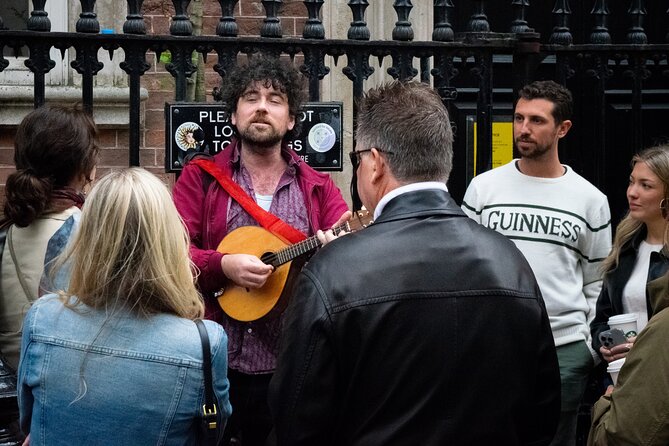
- Live traditional performance: The guide uses Irish songs, ballads, and storytelling to connect the streets to the city’s past.
- Small group size (max 20): You’ll have a better shot at hearing the music and joining in when the guide invites it.
- Historic stops on foot: Temple Bar lanes, Smock Alley Theatre, Grattan Bridge, Fishamble Street, cathedrals, and Dublin Castle approach.
- Music-history links you can picture: Medieval Dublin and even darker sides of the cathedral story come through song, not just facts.
- Free admission at several stops: Smock Alley Theatre and the key landmark photo moments are listed as free during the walk.
- Finish near Saint Patrick’s Cathedral: You end at Saint Patrick’s Cathedral grounds, which makes it easy to keep exploring after the tour.
Why Irish Music Changes How You See Dublin’s Old Center
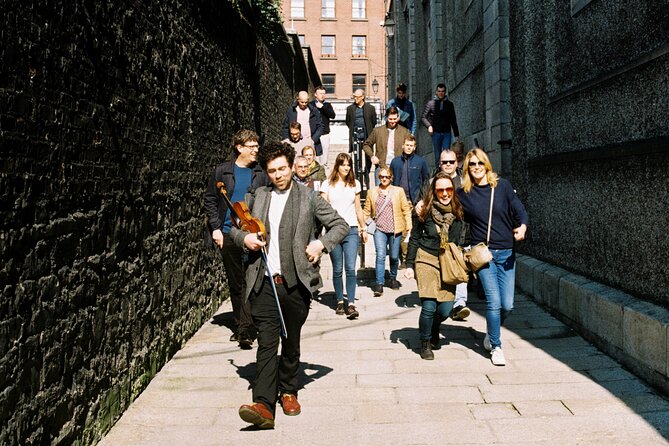
If you want Dublin’s history served cold and academic, pick a standard walking tour. If you want it with a pulse, this format works because the guide treats each stop like a chapter in a shared songbook. You’re moving through the city, and the music acts like a bridge between modern street life and much older layers.
The strongest part for me is the pacing of the experience. You get short stretches on foot between landmarks, so you’re always oriented. Then at each stop, you’re guided through what matters in that location, with the performance timed to the setting. It’s the difference between reading a plaque and hearing the place talk back to you.
And don’t underestimate how useful this is for first-timers. Dublin’s center can be confusing at ground level. A guide who points you to the important landmarks, plus adds a memorable song moment, helps you build a mental map faster.
You can also read our reviews of more walking tours in Dublin



Where You Start at Temple Bar and How to Nail the Meeting Spot
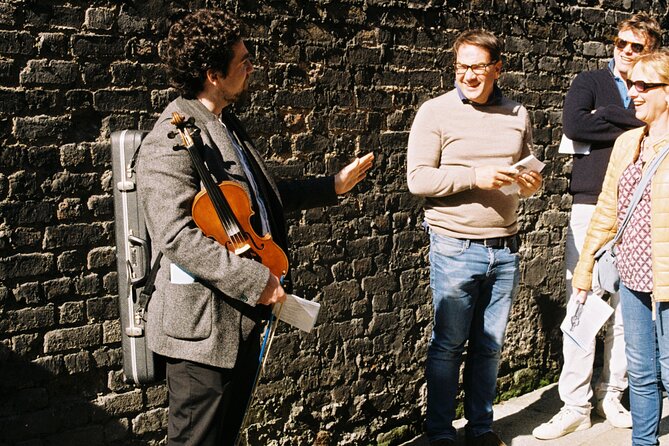
The tour begins at 3 Crown Alley, Temple Bar at 1:00 pm. That matters because Temple Bar is a busy area, and that’s exactly where things can go wrong if you arrive late or assume you’ll be waved over.
Here’s my practical advice: give yourself buffer time, especially if you’re coming from another part of the city. Before you step into the crowd, check that the guide you see is the musician leading the music-focused walk. One snag that shows up in the tour’s past groups is mix-ups between different walks meeting at the same general area, so confirming you’ve got the right group protects the whole experience.
The good news? The starting point is specific, and the tour uses a mobile ticket, so you’re not hunting paperwork. Once you’re lined up, you’ll spend the next couple hours walking a tight loop through central Dublin.
Two Hours of History With Songs: The Best Way to Handle the Street Noise
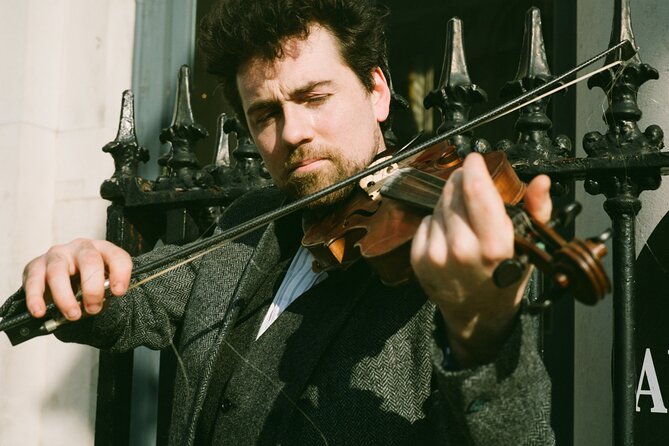
This experience runs for about 2 hours with a maximum group size of 20. That size is part of the value. When there’s music involved, sound matters, and in a smaller group you’re more likely to hear the guide clearly.
Street noise is real in central Dublin, especially around Temple Bar and major sights. If you’re sensitive to loud surroundings, plan to stand where you can hear best, not where the view is perfect for photos. You can still snap pictures at the stops; just don’t let camera positions block your ability to listen.
Also, the format is designed for participation without forcing you. Some guides encourage sing-alongs and even brief dance or movement moments if the mood fits, but you can still enjoy the tour by watching and clapping along. If you’re not feeling it at first, you’ll usually have time to warm up as the guide gathers the group.
Smock Alley Theatre 1662: A Free Stop That Sets the Tone
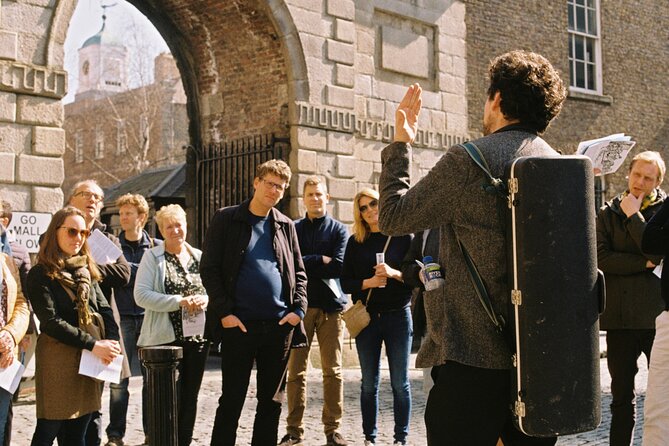
Your first stop is Smock Alley Theatre 1662, placed right in the heart of Temple Bar. Admission is listed as free, and the value here is that it quickly tells you what Dublin’s entertainment culture has been doing for centuries.
This isn’t just a roadside photo break. The guide uses song and story to give you a sense of why theatres mattered—where performance wasn’t separate from daily life, but part of how people shared ideas and emotions. It’s a smart opening. Instead of starting with a random fact, the tour begins with the city’s long relationship with staging stories.
If you love theatre history, you’ll likely enjoy this stop even if you’re not a music person. It’s one of those early moments that makes the rest of the walk click.
Grattan Bridge and the River Liffey: Where Quick Snap Stops Work
Next you cross into Grattan Bridge, a picturesque bridge across the River Liffey. The detail that makes this stop special is the connection between places: it links Capel Street and Parliament Street, two key streets you’ll likely recognize from walking around Dublin.
The tour gives you about 10 minutes here, which is just enough time for a few photos and a short story. This is a good rhythm checkpoint. After Smock Alley, you’ve got a little geography under your feet, and Grattan Bridge helps you orient yourself to the river’s role in the city.
Practical tip: if you care about photos, pause just long enough for the guide’s key point, then do your own quick angle hunt. Don’t overstay. The tour is built on moving and listening.






Fishamble Street: Vikings and the First Handel Performance Link
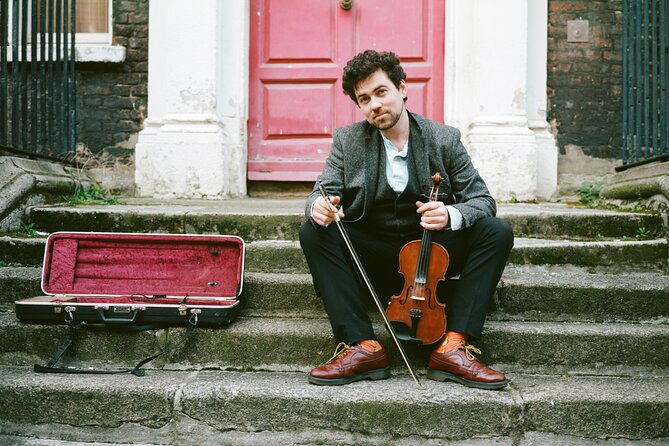
Fishamble Street is often described as Dublin’s oldest street, and the tour leans into two standout connections: Viking presence and music history. The street is tied to the largest Viking settlement found outside Scandinavia, and it’s also linked to the first ever performance of Handel’s Messiah.
That combination is exactly why this stop works inside a music-and-history walk. You’re not just learning that old stuff existed—you’re seeing how different eras overlap in one small patch of Dublin. The guide’s job is to make those connections feel human, which is easier when you’ve got a musician telling the story through song instead of dumping dates.
You’ll get another short 10-minute stop, so don’t expect a museum-style explanation. Think of it as a highlighted chapter. The moment you understand how the street got its reputation, the tour moves on to the heavier stop ahead.
Christ Church Cathedral: Medieval Dublin and the Darker Side in Song
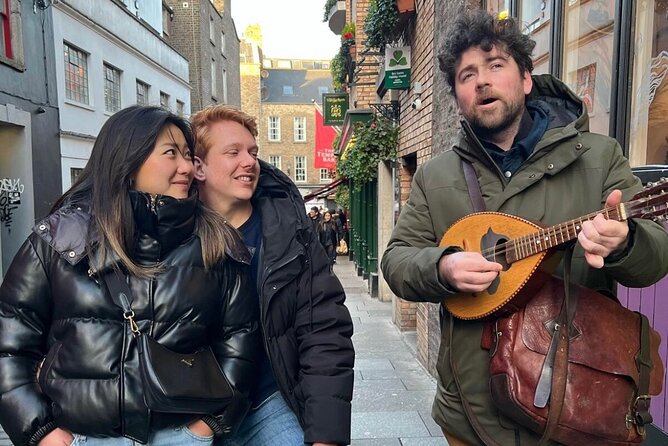
At Christ Church Cathedral, the tour focuses on the cathedral as the heart of medieval Dublin, where medieval and Victorian splendor meet. More importantly, the guide frames it as a place with a darker angle, shared through song.
This is often the emotional high point of the tour, because cathedral visits can go one of two ways: either it’s all architecture talk, or it’s all reverence. Here, you get a story-driven performance that uses the site’s mood to carry the lesson. The result is that you walk around understanding what the space has meant, not just what it looks like.
You’ll also spend about 10 minutes here, including some surrounding environs as the guide sets the scene. That time limit means you should do two things when you arrive: listen first, and then decide what you want to photograph. If you chase every angle immediately, you might miss the guide’s most memorable lines.
If you like culture that’s a little unfiltered, this stop is where the tour feels most original.
Dublin Castle Near Ship Street Gate: Famous Steps and Big-Photo Moments
Then you swing by Dublin Castle, specifically the ship street gate approach and some of the famous steps in the area. This is another quick 10-minute stop, but it’s strategically placed for the kind of photos people actually want: clear landmark views without needing a separate ticket.
This is also a good place to connect the dots between the music and the politics of city life. Even if you don’t remember every historical detail, you’ll likely remember the feeling of the place once a song frames it. That’s the tour’s trick: the performance makes the landmark stick in your memory.
If your goal is Instagram-worthy Dublin in a short time, you’ll be glad you didn’t skip this segment.
Saint Patrick’s Cathedral Finish: A Calm Landing After the Lively Lanes
The walk ends at Saint Patrick’s Cathedral, in Saint Patrick’s Park adjoining the cathedral. Ending near this site is smart because it gives you a natural place to continue on your own. When the tour finishes, you’re not stuck at a random corner. You’re right where many visitors want to be anyway.
The tour gives you around 10 minutes for this last stop, which is enough for a final song moment and a wrap-up from the guide. If you feel the tour helped you see Dublin with sharper eyes, this ending helps solidify that effect. You end with a sense of closure, not an abrupt stop.
Price and Value: How $27.81 Works for a Music-Led Walk
At $27.81 per person for about 2 hours, you’re paying for more than a guided stroll. You’re paying for live performance—Irish folk songs and ballads delivered as part of the city storytelling. You’re also paying for multiple landmark stops packed into central locations that are often spread out across several areas.
The best value angle for this tour is that the guide doesn’t treat music as background entertainment. Music is the teaching method. If you enjoy sing-alongs or you like seeing how art connects to place, that changes what you get for your money.
One more value point: several stops are listed with free admission for the time you’re there, including Smock Alley Theatre 1662. So you’re not paying extra just to get a few minutes in key spots.
And because the group size is limited to 20, you’re paying for a more personal show than a huge bus-style performance.
Guides, Songs, and the Fun Part You Can Expect
The strongest feedback points from past groups are consistent: the guide’s performance blends history with humour, and the song choices reinforce what you just learned. Names that have shown up in guided experiences include Ciarán, Sean, Dylan, and Shaun, and multiple guides mention Irish banter plus interactive moments.
You can also expect variety. Some performances include songs in Gaelic, and the guide may handle audience requests at times, like the cockles and mussels style moment that’s been mentioned. That doesn’t mean you should expect surprises every time, but it does mean the guide is often a performer, not just a lecturer with a guitar or mandolin.
If you’re the kind of person who enjoys poems, sing-alongs, and even a little movement, this is a great fit. If you prefer quiet sightseeing, you’ll still learn a lot, but you may enjoy it more if you lean into listening rather than expecting a silent walk.
Who Should Book This Tour (and Who Might Want a Backup Plan)
This tour is a great match if:
- You want Dublin in a short time but with personality.
- You like Irish music and want it tied to real locations.
- You learn better when stories come with a memorable tune.
- You’re okay with walking a bit and stopping often for short moments.
It might not be ideal if:
- You struggle to hear over street noise and you need a super quiet environment.
- You plan to arrive late, which increases the chance of confusion at the Temple Bar meeting spot.
- You’re expecting a ticketed cathedral tour with long inside time, because the format is fast and focused on song-and-story moments.
If you’re unsure, treat this as a cultural sampler. After it, you’ll likely know exactly which landmarks are worth a longer visit.
Should You Book This Traditional Irish Music Walking Tour?
Yes, I’d book it—if your idea of a great Dublin afternoon includes live folk music and city history that feels told by a performer. The price is reasonable for what you get: multiple major landmarks, free stop moments like Smock Alley Theatre 1662, and a guide who turns each location into a story you can remember.
Just do two things to protect your experience: arrive early at 3 Crown Alley to confirm you’re with the music guide, and be flexible about how you position yourself so you can hear. Get that right, and this tour is one of the most enjoyable ways to see central Dublin without feeling like you’re rushing through a checklist.
FAQ
How long is the Dublin Traditional Irish Music Walking Tour?
The tour is about 2 hours.
Where is the meeting point for the tour?
The meeting point is 3 Crown Alley, Temple Bar, Dublin, D02 CX67, Ireland.
What time does the tour start?
The start time is 1:00 pm.
Where does the tour end?
The tour finishes at Saint Patrick’s Cathedral, at St Patrick’s Close, Dublin, D08 H6X3.
Is there live music during the walking tour?
Yes. Your guide performs traditional Irish folk songs and ballads as you visit stops.
What landmarks are included on the walk?
Key stops include Smock Alley Theatre 1662, Grattan Bridge, Fishamble Street, Christ Church Cathedral, Dublin Castle (ship street gate area), and Saint Patrick’s Cathedral.
Are there admission fees for the stops?
Smock Alley Theatre 1662 is listed as free during the tour, and admission is noted as free for the other stops as well.
What’s the group size?
The tour has a maximum of 20 travelers.
Is mobile ticketing used?
Yes, the tour uses a mobile ticket.
What is the cancellation policy?
You can cancel for a full refund up to 24 hours before the start time. If you cancel within 24 hours, the amount paid is not refunded.