REVIEW · DUBLIN
90 Minute Dublin Walking tour and Sightseeing tips
Book on Viator →Operated by Finn McCools Tours · Bookable on Viator
Dublin in 90 minutes is a real jump start. This walk connects the city’s Viking-era beginnings to modern streets you’ll recognize fast, using stop-by-stop stories that help you see what you’re passing.
Two things I love: you get an easy first-day orientation across major landmarks, and the guide keeps it lively and question-friendly, with guides like Alex and Sam described as fun, engaging, and able to tie Irish events to what you already know.
One consideration: this is history-forward, so if you’re mainly after architecture-only trivia or a slow, freeform stroll, you may want to ask your guide to focus more on what interests you and to keep the pace where you can hear everything on busy, windy streets.
In This Review
- Key highlights to know before you go
- A fast Dublin walk that actually helps you plan the rest of your trip
- Where you meet at Aston Quay (and how to start strong)
- O’Connell Street: the wide boulevard where modern Ireland begins
- Inside the General Post Office: rebellion, the Gunboat Helga, and Cú Chulainn
- Trinity College and College Green: shifting from early saints to student life
- Temple Bar at Meeting House Square: local opinions and what to do next
- City Hall to Dublin Castle area: Dubhlinn, vikings, and buried layers
- Dublin Castle: power center to quiet gardens and a library stop
- Christ Church Cathedral over the River Liffey: the final myth-to-ship bridge
- Pace, group size, and hearing the guide in real street noise
- Food, tickets, and what’s included in the $21.77 price
- How to time this walk for the best return on your day
- Who should book this Dublin walking tour
- Should you book this Dublin 90-minute walk?
- FAQ
- FAQ
- How long is the Dublin walking tour?
- What is the price per person?
- Is the tour offered in English?
- Do I get a mobile ticket?
- Where do I start and where does it end?
- How big are the groups?
- Is food included in the price?
- Can children join the tour?
- What happens if the weather is bad or the minimum number of travelers isn’t met?
- Can I get a refund if I cancel?
Key highlights to know before you go
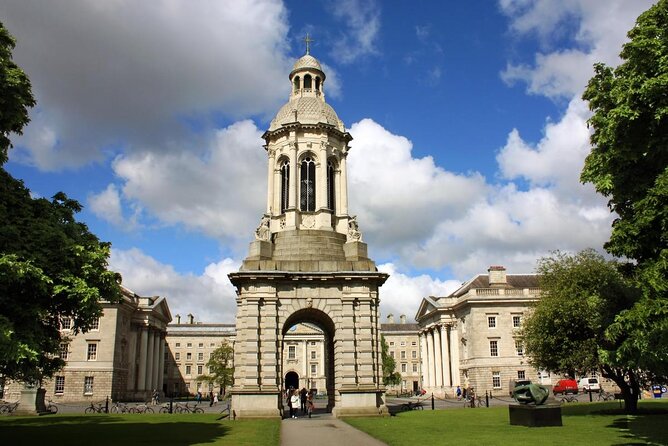
- A tight route through Dublin’s top landmarks: Grand Post Office, Trinity College, Temple Bar, Dublin Castle, Christ Church Cathedral
- Guides who answer questions and (when the group is small) can tune the walk to your interests
- Real-world Dublin orientation so you’ll know where things are after the walk
- Viking-to-modern connections: Dubhlinn becoming Dublin, plus long views from the Liffey
- Temple Bar local tips for where to get good music and a classic Guinness pint
- A manageable time box of about 1 hour 45 minutes with a moderate walking level
A fast Dublin walk that actually helps you plan the rest of your trip
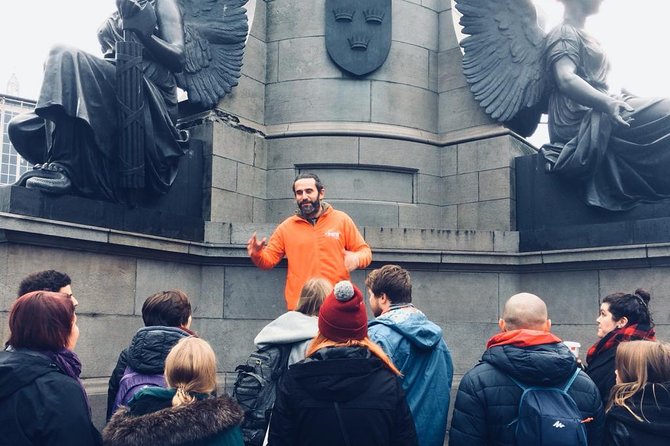
If you only have a day (or even half a day) in Dublin, this type of walking tour is a smart move. It’s long enough to connect the dots across the city center, but short enough that you don’t burn your whole schedule on one activity.
The biggest value is orientation. By the time you finish near Christ Church Cathedral, you’ll understand how Dublin’s main sights link together by street and river, not just as a list in a guidebook.
It’s also designed for real conversations. You’ll start with a quick meet-and-greet, and you’re encouraged to ask questions not just at the beginning but along the way. That matters, because Dublin has layers, and a good guide helps you make sense of what you’re seeing in the moment.
You can also read our reviews of more walking tours in Dublin



Where you meet at Aston Quay (and how to start strong)
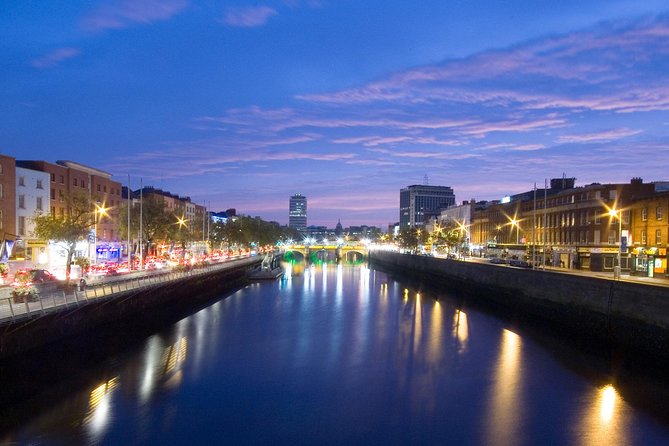
You begin at ThingsToDoDublin, 12 Aston Quay, in the Temple Bar area (D02 TE81). This is convenient because it puts you right near the tourist core without starting you in the middle of nowhere.
In the first few minutes, you’ll do a quick meet and greet with your guide. This is the moment to set your tone. If you care more about politics, myths, architecture, pubs, or everyday Dublin life, tell your guide early. Several guides have been described as tailoring the tour in small-group situations, so your questions can shape what you notice.
Practical tip: Dublin weather changes fast, and the route spends time outdoors. Dress for wind and cold, and don’t assume you’ll feel warm just because the sun comes out for a minute.
O’Connell Street: the wide boulevard where modern Ireland begins
The tour heads toward O’Connell Street, often described as the widest street in Ireland. You’ll hear how the name got to what you see today, after it was renamed twice.
But the real point of this stop is what happened here. You’ll learn about the Irish War for Independence starting at the Statues and Stand, and how the Irish Civil War kicked off immediately after independence was established. That’s not just dry timeline stuff. It helps you understand why certain places feel heavy even when they look like everyday city real estate.
You’ll also hear the story of Nelson’s Pillar and how windows along the street were broken all at once. This stop is short, but it sets the mood for the rest of the walk.
Inside the General Post Office: rebellion, the Gunboat Helga, and Cú Chulainn
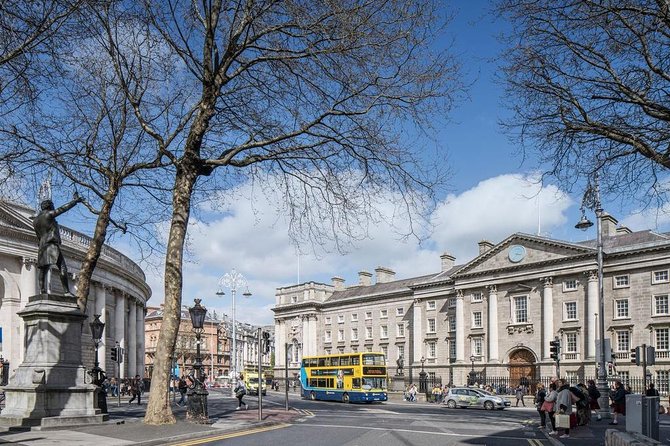
Next up is the An Post General Post Office (the GPO). This is one of Dublin’s most important sites for modern Irish history, and the guide uses it to connect several dramatic threads.
You’ll hear about rebels at the Battle of O’Connell Street, the sailing of the Gunboat Helga up the River Liffey, and the bombardment of the city center. Then the story turns to what happened after the fighting—how executions influenced the revolution that followed. You’ll also get context on the rebels’ end, not just the battle itself.
There’s a nice “look closely” angle here: you might get a chance to walk under the high ceiling inside the post office. If not, you can still see exterior damage tied to bullets fired over a century ago. Either way, this stop gives you something more than a photo op. It gives you a sense of how history left physical marks.
And then you hit myth. You’ll be introduced to The Death of Cú Chulainn, a statue cast in 1935 by Oliver Sheppard. It’s a reminder that Dublin’s identity isn’t only built on politics—it also lives in legend.
Trinity College and College Green: shifting from early saints to student life
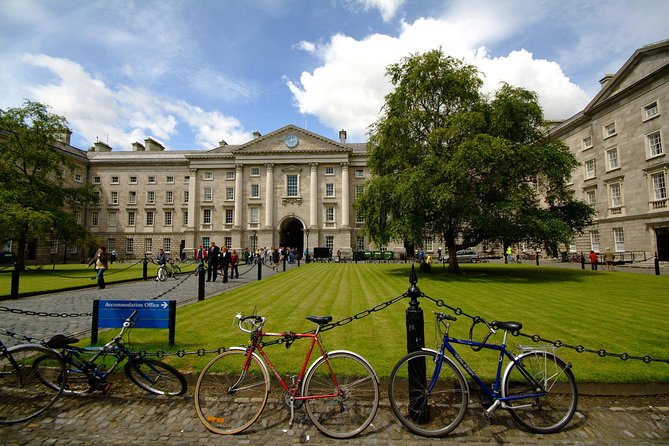
From the post office area, the walk moves toward Trinity College Dublin and College Green. This section is all about Dublin’s shift over time—religion, power, education, and the everyday rhythm of modern students.
You’ll hear that this area once held a monastery, said to be linked to St Patrick converting early Celtic pagans. Then the guide brings you forward through early Christians and later into the building of Trinity College.
One practical way to think about this stop: it helps you “read” the streets. You stop seeing it as a straight line from one famous building to another and start recognizing how Dublin’s center changed function while staying in the same geographic heart.
Timing is tight here (about 5 minutes), so don’t expect long wandering. Instead, treat this as a guided orientation point. You’ll leave knowing what you want to come back and explore on your own, whether that’s the college area, the river views, or the nearby lanes.




Temple Bar at Meeting House Square: local opinions and what to do next
Then you hit Temple Bar, with a meetup at Meeting House Square. This is where the tour shifts slightly from heavy history to lived Dublin.
You’ll hear what locals think about Temple Bar, plus practical tips that are harder to find in a standard checklist: where to find the best Guinness pint in the way your guide recommends, and where to catch good Irish music.
This is also where the walk becomes very usable for the rest of your day. By the time you leave, you’re not just going home with facts—you’re going home with a short list of places to check next.
Quick note: Temple Bar can be noisy and crowded depending on the hour. If you’re sensitive to hearing the guide clearly, stand closer to the guide and keep your attention on what they’re pointing out rather than on the surrounding street chaos.
City Hall to Dublin Castle area: Dubhlinn, vikings, and buried layers
From Temple Bar, the route continues toward Dublin City Hall and then into the wider castle area by way of the site of the original Viking settlement, Dubhlinn.
This stop is a great example of why guided walking beats self-guided wandering. You’re shown how Dubhlinn became Dublin, and how the Viking settlement was lost and then rediscovered—only to be buried and built over. That’s a big concept, but it’s explained in a way you can hold onto as you walk.
The guide also ties this area into Ireland’s wider cultural mix, including references to Shakespeare’s Hamlet and Handel’s Messiah, plus a nod to old soap factories. That may not be what you expect to hear at a city hall/castle-adjacent stroll, which is exactly the point: you start seeing connections you wouldn’t notice on your own.
This part of the walk is about 10 minutes, and it moves briskly. If you like lingering, use this as the “bookmark” section: look, absorb, and then plan to return later if something grabs you.
Dublin Castle: power center to quiet gardens and a library stop
The tour brings you to Dublin Castle, which you’ll hear about as the former center of authority—home of the Lord Lieutenants of Ireland up until 1922.
You’ll also get the key timeline anchor: construction finished around 1230 under orders of King John of England (the son of Richard the Lionheart). The guide frames the castle as a place that’s seen kings, lords, soldiers, rebels, and changing eras of control.
What I liked about this stop is that it’s not just facts. It’s a “how to look at buildings” lesson. You get a crash course in Irish architecture and how to spot the feeling of the place—then you’re directed toward softer spaces too, like the Dubh Linn Gardens and the Chester Beatty Library with its spiritual texts.
This is your chance to connect the politics you heard earlier on O’Connell Street with the physical center of power you’re standing beside now. Even in a short time, the guide makes that link clear.
Christ Church Cathedral over the River Liffey: the final myth-to-ship bridge
The last stop is Christ Church Cathedral, standing over the River Liffey. This is where the walk finishes its arc from the Viking world to Dublin’s modern river life.
You’ll hear that Christ Church was founded by Viking King Sigtrygg Silkbeard, who ruled for over 40 years before his defeat at the Battle of Clontarf. Then the guide brings it back to the river: Viking longships, and later Guinness barges chugging toward Dublin Harbour.
As you stand within the cathedral’s shadow, you’re encouraged to ask final questions and figure out what to explore next. The end point is at Christchurch Pl, Wood Quay area, which is a practical location to continue your sightseeing on your own.
This ending works well because the guide doesn’t leave you stranded with facts. It leaves you oriented—ready to choose your next stop based on what you’re most curious about.
Pace, group size, and hearing the guide in real street noise
This walk is about 1 hour 45 minutes (approx.). You’ll cover a downtown route with several short stops, plus a meet-and-greet at the beginning. The walking pace is described as solid and not slow, which is good if you’re trying to maximize a limited time window.
Group size matters here. The tour caps at maximum 25 travelers, and the booking is capped at maximum 40 people per booking. Smaller groups usually mean more chances for questions and a more conversational feel, and that’s consistent with the guide experiences shared in the past.
Physical requirement is listed as moderate physical fitness. That usually means you should be able to handle steady walking on city pavement for about the whole duration, plus short outdoor pauses.
And yes, street sound is real. One review noted the guide was hard to hear on a noisy day and suggested a mic would help. If you know you struggle in traffic noise, stand near the guide and keep your attention up front. Windy weather can also make sound travel less clearly.
Food, tickets, and what’s included in the $21.77 price
The price is $21.77 per person, which sounds modest for a guided walk that hits multiple major landmarks.
Here’s what you get value-wise:
- A local guide plus a professional guide (as listed)
- All taxes, fees, and handling charges included
- A mobile ticket
- Admission at the stops is listed as free where applicable
- The tour is in English
What’s not included is equally important: food and drinks. No lunch is provided. So plan to eat before or after, not during.
Also, you’re not buying the attractions one by one. You’re buying context. And that’s what makes the price feel fair. Walking these sites without a guide can be a photo marathon; walking them with a guide helps you understand why each place matters and what to look for.
How to time this walk for the best return on your day
This tour is at its best when you use it as a first pass. After the walk ends near Christ Church Cathedral, you’ll have a strong sense of what neighborhoods connect and where you might want to spend more time.
In particular, Temple Bar tips can steer your evening. Ask your guide right at that Meeting House Square moment, then act on it. The walk is short at each stop, so don’t wait until you’re done to ask where you should go next.
A simple strategy:
- Take the tour early in your stay if you can.
- Use your remaining hours to return to the places that felt most meaningful to you, whether that’s the post office area, Trinity College surroundings, or the castle grounds.
Who should book this Dublin walking tour
Book this if:
- You want major Dublin landmarks in one organized loop
- You like history that connects to places you can stand in, not just dates
- You want a guide you can ask questions of, in plain language
- You’re okay with a brisk, city-center walk with outdoor time
Skip it (or go in with your eyes open) if:
- You want a food-focused or bar-focused tour with long stops for tasting
- You prefer long, unstructured wandering rather than a planned route with quick stop durations
- You’re extremely sensitive to hearing difficulty in wind and traffic (the route will include both)
Should you book this Dublin 90-minute walk?
Yes, if your goal is to get your bearings fast and learn how Dublin hangs together. The route hits the big names—O’Connell Street, the GPO, Trinity College, Temple Bar, Dublin Castle, and Christ Church Cathedral—without wasting your time.
The strongest reason to book is the combination of tight timing and guide-led storytelling that turns landmarks into meaning. If you go in ready to ask questions and keep an eye on what your guide is pointing out, you’ll leave with a mental map and a short list of what to explore next.
FAQ
FAQ
How long is the Dublin walking tour?
The tour lasts about 1 hour 45 minutes.
What is the price per person?
It costs $21.77 per person.
Is the tour offered in English?
Yes, the tour is offered in English.
Do I get a mobile ticket?
Yes, the tour includes a mobile ticket.
Where do I start and where does it end?
It starts at ThingsToDoDublin, 12 Aston Quay, Temple Bar, Dublin (D02 TE81). It ends at Christ Church Cathedral, Christchurch Pl, Wood Quay, Dublin (D08 TF98).
How big are the groups?
The tour lists a maximum of 25 travelers, and bookings are capped at a maximum of 40 people per booking.
Is food included in the price?
No. Food and drinks are not included, and there is no lunch provided.
Can children join the tour?
Children must be accompanied by an adult.
What happens if the weather is bad or the minimum number of travelers isn’t met?
The experience requires good weather. If it’s canceled due to poor weather, you’ll be offered a different date or a full refund. If it’s canceled because the minimum isn’t met, you’ll also be offered a different date or a full refund.
Can I get a refund if I cancel?
You can cancel for a full refund up to 24 hours in advance of the experience start time. If you cancel less than 24 hours before, the amount paid won’t be refunded.